
Reviewed · ALMERIA TOURS
Almería: Visit to the shelters of the Spanish Civil War
Almería keeps its wartime story underground. I like the chance to walk nearly a full kilometer of original galleries, and I like the small hospital with its operating room and child-made wall art. The main drawback is that the tour is in Spanish, although English information panels and occasional English help can make it workable.
For $14, this is a strong-value history visit, especially if you want more than sunny plazas and film-set scenery. The tunnels are dark, nine to sixteen meters below ground, and unsuitable for wheelchairs, large bags, people with mobility impairments, or anyone uneasy in enclosed spaces.
In This Review
- Key points to know before you go
- Why Almería’s underground shelters matter
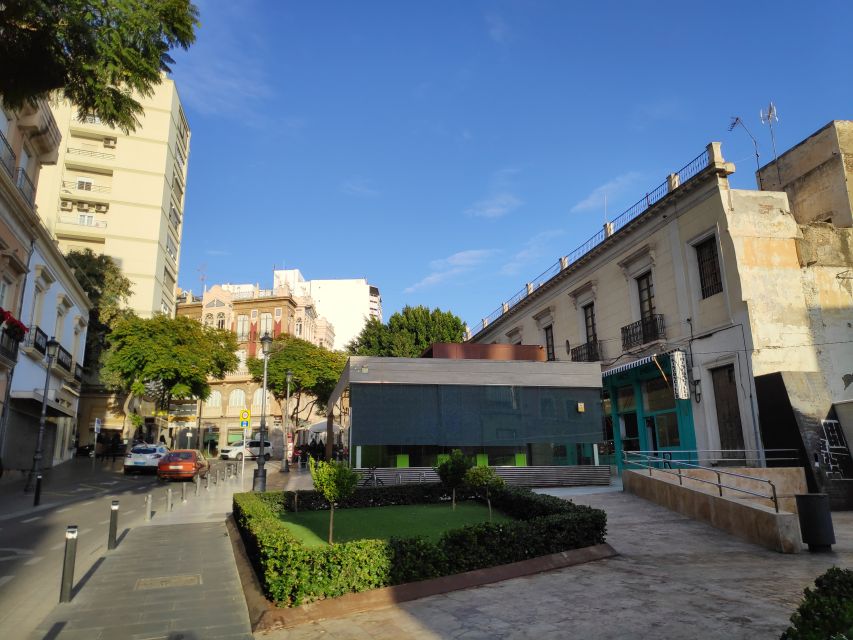
- Meeting the guide beside Manuel Perez Garcia Square
- Walking through nearly one kilometer of galleries
- The hospital, operating room, and private rooms
- Going nine meters below the surface, and possibly sixteen
- The old pantry and the practical side of survival
- Spanish commentary and making the most of the visit
- How the $14 price compares with the experience
- Who should book this underground Almería visit?
- Should you book the shelters tour?
- FAQ
- Where does the Spanish Civil War shelters tour begin?
- How early should I arrive?
- How long does the visit last?
- Is the tour available in English?
- How far underground do you go?
- How much of the shelter system can I see?
- Are the shelters suitable for wheelchair users?
- What should I bring, and what cannot I take inside?
Key points to know before you go
- Nearly 1 kilometer underground: You see part of a 4.5-kilometer shelter system built for about 40,000 people.
- A hospital inside the tunnels: The route includes a small medical area with an operating room.
- Child-made wall art: One private room preserves drawings created by children during the war.
- Spanish-language guiding: The live commentary is in Spanish, with English panels and some guides able to explain parts in English.
- Easy central meeting point: Meet at the monument entrance beside Manuel Perez Garcia Square and arrive 10 minutes early.
- Good value at $14: The 75-minute visit includes admission, a local guide, and insurance, with no separate transport cost because you make your own way there.
Why Almería’s underground shelters matter
The shelters tell a different story of Almería. Above ground, the city can feel open, bright, and relaxed. Below it, you see how ordinary people coped with bombing during the Spanish Civil War.
About 4.5 kilometers of galleries were built to protect around 40,000 people. That figure gives the visit its scale. This was not a small basement used by a few families. It was a major underground refuge built for a large part of the city.
You will not walk all 4.5 kilometers. The guided route covers nearly one kilometer, which is long enough to give you a clear sense of the system without turning the visit into a tiring underground march. I like that balance. You see enough physical evidence to understand the plan, while the guide adds the human details that bare walls cannot provide.
The visit also helps put modern Almería in context. Civil War history can seem distant when presented only through dates and military movements. Here, the subject becomes much more direct. You are looking at the spaces where families waited during air raids, where children spent frightening hours, and where medical care was arranged below street level.
A few more Spain ideas to compare
- Cabo de Gata Active. Guided kayak and snorkel route through coves of the Natural Park
★ 5.0 · 1,531 reviews - From Almeria: Tabernas Desert 4WD Joyriding Tour
★ 4.9 · 1,344 reviews - Fort Bravo Entrance Ticket
★ 4.0 · 470 reviews
Meeting the guide beside Manuel Perez Garcia Square
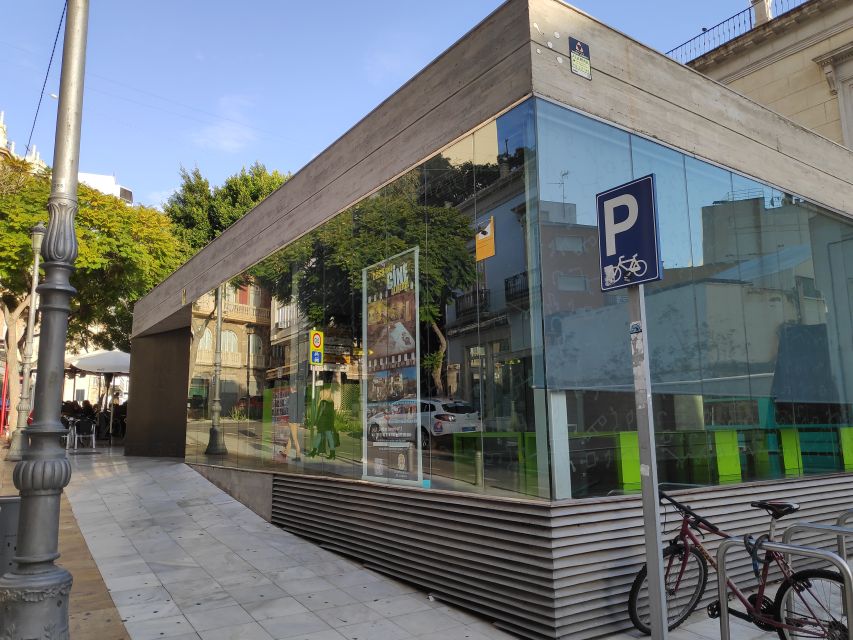
The meeting point is at the entrance to the monument next to Manuel Perez Garcia Square. You need to arrive 10 minutes before the scheduled start, since the group enters together and the tour lasts only 75 minutes.
There is no transport included, so plan to reach the meeting point on your own. That keeps the price low and makes this easy to fit into a walking day in central Almería. You return to the same place at the end, so you do not need to arrange a second pickup.
The tour includes a local guide, admission to the remains of the Spanish Civil War shelters, and insurance. Food, drinks, and transport are not included. At $14 per person, I consider that a fair price for a guided historic site with a substantial underground route.
The price matters because a guide changes what you get from the visit. On your own, you might see corridors and rooms but miss why they were built, how they were used, and what happened in them. The guide provides anecdotes about the shelters’ less visible stories, which gives the stone and concrete a human scale.
Walking through nearly one kilometer of galleries
Once underground, the atmosphere changes at once. The galleries have no natural light, so the experience depends on artificial lighting and the guide’s explanation. You should wear comfortable shoes, since the route involves walking through the tunnel system rather than simply viewing one display room.
The full shelter network measured about 4.5 kilometers, but this visit takes you through nearly one kilometer. That distance gives you time to notice the shape of the refuge and imagine how it operated as a public shelter.
The galleries are the main reason to book. They are not a polished museum set built to imitate wartime conditions. They are the remains of a real underground network, and that plainness is part of their value. The route lets you see the physical solution Almería created when the city needed protection.
Your guide also tells anecdotes about the galleries’ hidden stories. These details are especially useful because wartime shelters can otherwise feel repetitive. A long corridor becomes more meaningful when you understand who used it, what purpose a room served, or how people tried to make life possible below ground.
The lack of natural light is worth taking seriously. You are entering a dark enclosed place for more than an hour. If you dislike tight spaces or feel uneasy underground, this may not be the right activity for you. The tour is specifically unsuitable for people with claustrophobia.
The hospital, operating room, and private rooms
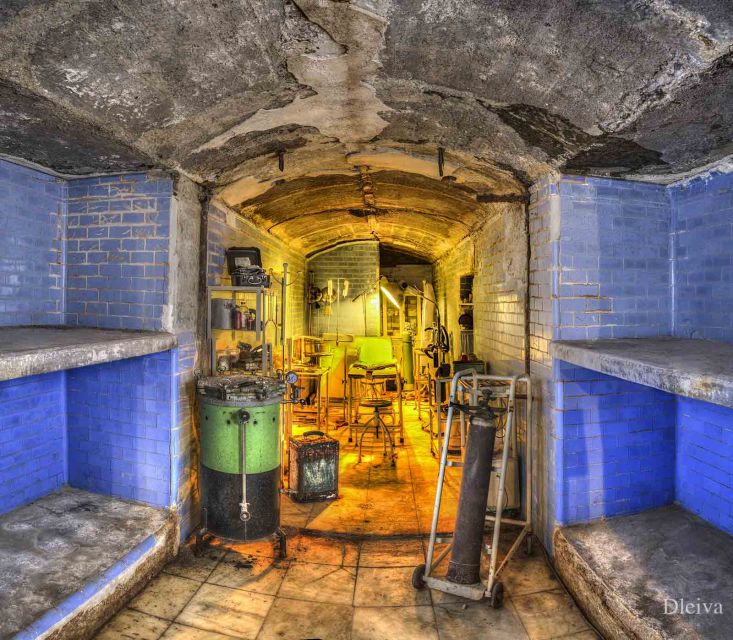
One of the strongest parts of the route is the hospital built into the shelter system. You see a small hospital with an operating room, a reminder that the galleries were designed for more than short-term hiding.
That medical space adds an important layer to the visit. Bombing created injuries that could not wait until people returned to the surface. A hospital underground shows how the shelter system tried to support the city during an emergency, not just shield people from falling bombs.
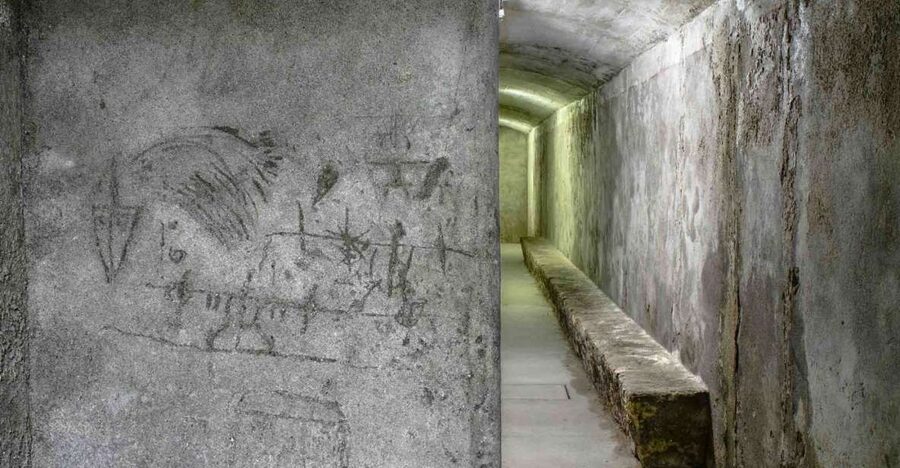
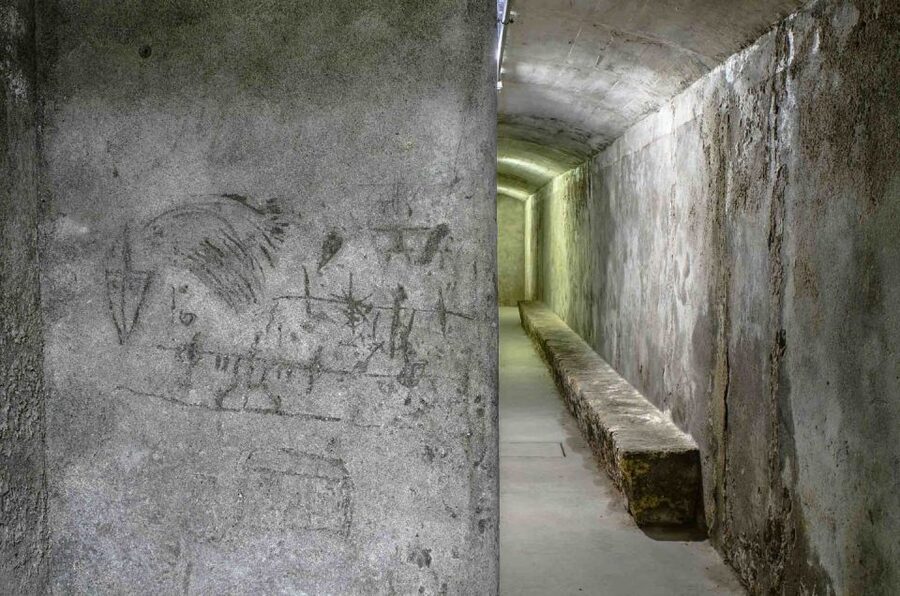
The route also includes one of the private rooms. Look carefully at the walls. Children left artwork there, and those marks give the space an emotional weight that a standard historical display cannot easily create.
I find this kind of detail more affecting than a long list of dates. The drawings show that children spent time in these rooms and tried to bring some sense of ordinary life into a frightening setting. You do not need an elaborate reconstruction to understand the human cost when the walls preserve traces of the people who waited there.
The private rooms also help you picture the shelters as lived spaces. The galleries were not empty passageways. People brought their fears, routines, family life, and small acts of creativity underground.
Same base, a different kind of afternoon:
- Barcelona: Sagrada Familia Entry Ticket with Audio Guide
★ 4.6 · 105,312 reviews - Barcelona: Park Güell Admission Ticket
★ 4.4 · 76,534 reviews - Seville: Royal Alcázar Entry Ticket
★ 4.6 · 28,378 reviews - Barcelona: Casa Batlló Entry with Self-Audioguide Tour
★ 4.7 · 25,359 reviews
Going nine meters below the surface, and possibly sixteen
The shelters reach about nine meters underground in the part of the visit described for the standard route, with an option to go as deep as 16 meters if you are willing. The deeper section adds a sense of discovery, but it is not essential to understand the main story.
That depth also explains why the visit feels separate from the city above. Once below ground, you are dealing with a purpose-built refuge rather than a surface monument with a few wartime objects. The underground setting is the central exhibit.
If you are concerned about stairs, uneven access, or physical strain, take the restrictions seriously. The site is not suitable for wheelchair users or people with mobility impairments. Large bags and luggage are not allowed, and pets cannot enter.
Comfortable shoes are the one item specifically recommended. I would also keep your belongings light. The visit is easier when you can walk without carrying a bulky bag through narrow underground areas.
The old pantry and the practical side of survival
The tour includes an old and fascinating pantry. This is a small feature, but it helps you think about the shelters as functioning places rather than emergency holes in the ground.
People needed supplies during bombardments. A pantry points to the practical work behind survival: storing food, organizing resources, and keeping a large group sheltered below the city. The hospital shows medical planning, while the pantry shows everyday logistics.
These details are why I would choose this visit over a quick exterior look at a monument. You see several parts of the underground system, each revealing a different need. The galleries offered protection, the hospital addressed injuries, private rooms provided space for families, and the pantry supported basic life.
The tour lasts 75 minutes, so the guide has to keep the route moving. You get a focused introduction rather than an entire course on the Spanish Civil War. If you want a long academic discussion of military strategy, this may feel brief. If you want a clear, physical introduction to what civilians endured in Almería, the timing works well.
Spanish commentary and making the most of the visit
The live tour is in Spanish. That is the most important language consideration before booking. Some English information panels are available in the tunnels, and guides have sometimes been able to explain parts in English to English-speaking visitors.
The practical advice is simple: do not assume you will receive a full English-language tour. If you understand Spanish, you will get the richest version of the guide’s anecdotes and explanations. If you do not, the English panels and a helpful guide may still let you follow the main points, but the experience can vary.
I appreciate that the guides can make an effort with English when possible. English-speaking visitors have been welcomed and given extra explanations, including near one-to-one help when the group was otherwise Spanish-speaking. Still, that should be treated as a bonus, not a guaranteed format.
You can improve your visit by reading the English panels carefully and staying close to the guide. Pay attention to the physical spaces as well as the spoken commentary. The operating room, private room, drawings, pantry, and galleries communicate a great deal even if you miss some Spanish.
For an English-only visitor, I would book this tour if the site itself matters more to you than catching every spoken detail. I would skip it if you need a fully narrated English tour.
How the $14 price compares with the experience
At $14, the tour offers good value. You receive admission, a 75-minute guided route, a local guide, and insurance. Since transport and food are not included, the cost is mainly paying for access and interpretation, which is exactly what you want at a site like this.
The visit also fills a useful amount of time. Seventy-five minutes is long enough to make the underground journey worthwhile but short enough to fit before or after other plans in Almería. You finish back at the original meeting point, which simplifies the rest of your day.
The strongest value comes from the combination of scale and detail. You see nearly a kilometer of a shelter system built for 40,000 people, then move into specific spaces such as the hospital, operating room, private room, and pantry. That is much more substantial than a short display of photographs.
Free cancellation up to 24 hours before the start and the option to reserve now and pay later also reduce the risk of fitting this into a changing schedule. Those policies are useful, but the site’s accessibility and Spanish-language format should guide your decision more than the booking flexibility.
Who should book this underground Almería visit?
I would recommend it to you if you enjoy Civil War history, local history, or places that show how ordinary people lived through major events. It also suits anyone who prefers a focused cultural activity over a large museum.
Families with older children may find the child-made artwork especially memorable, though the dark galleries and serious subject matter are worth considering. The tour is also a good choice for visitors who want to understand Almería beyond its surface attractions.
I would be cautious if you have mobility limitations, use a wheelchair, dislike enclosed spaces, or are carrying luggage. Pets are not allowed, and large bags cannot go inside.
Language is the other dividing line. Spanish speakers should get the most from the live guide. English speakers can still find value through the panels and possible English explanations, but you should book with realistic expectations.
Should you book the shelters tour?
Book it if you want a direct, physical connection to Almería’s Civil War past. The nearly one-kilometer route, underground hospital, operating room, pantry, private room, and child artwork make this more than a quick historical stop.
At $14, it is an easy recommendation for Spanish speakers and for English speakers comfortable reading panels. Just arrive 10 minutes early, wear comfortable shoes, carry no large bag, and be ready for a dark underground setting with no natural light.
Skip it if you need wheelchair access, cannot manage enclosed spaces, or require a guaranteed English-language guide. For everyone else, this is one of Almería’s most meaningful monuments and a practical way to spend 75 minutes learning how a city protected its people during wartime.
FAQ
Where does the Spanish Civil War shelters tour begin?
The tour begins at the entrance to the monument beside Manuel Perez Garcia Square in Almería.
How early should I arrive?
You should arrive 10 minutes before the scheduled starting time.
How long does the visit last?
The visit lasts 75 minutes.
Is the tour available in English?
The live tour guide speaks Spanish. English information panels are available in the tunnels, and guides may be able to provide some information in English, but a full English-language tour is not guaranteed.
How far underground do you go?
The visit takes you about nine meters underground, with the option to reach a depth of 16 meters if you are willing.
How much of the shelter system can I see?
You can visit nearly one kilometer of underground galleries. The full system measures about 4.5 kilometers.
Are the shelters suitable for wheelchair users?
No. The activity is not suitable for wheelchair users or people with mobility impairments.
What should I bring, and what cannot I take inside?
Wear comfortable shoes. Pets, luggage, and large bags are not allowed.
Recently listed in Spain
- Transfers From Cruise Port to Barcelona Airport★ 4.5 · 155 reviews
- Bohemian Barcelona Neighborhood Evening Tapas & Wine Tour★ 5.0 · 419 reviews
- Park Guell Guided Tour with Skip the Line Tickets★ 4.0 · 739 reviews
- Barcelona Sunset Cruise with Light Snacks and Open Bar★ 5.0 · 476 reviews
- Montserrat very early : Hiking, Abbey, very small group★ 5.0 · 127 reviews
- Barcelona: Sagrada Familia, Park Guell & Tapas Private Tour★ 5.0 · 903 reviews
- Authentic Flamenco Show Barcelona : Intimate Casa Sors Experience★ 5.0 · 809 reviews
- Barcelona Expert Tour with Local Guide in Eco Tuk Tuk Private★ 5.0 · 216 reviews
Almeria Tours, compared.

Cabo de Gata Active. Guided kayak and snorkel route through coves of the Natural Park
Read our review →

Cabo de Gata: Natural Park Kayaking and Snorkel Excursion
Read our review →
Tabernas: MiniHollywood Oasys Entry Ticket & Optional Buffet
Read our review →
Cabo de Gata: Kayak & Snorkel Excursion in Natural Park
Read our review →
San José: Cabo de Gata Natural Park Kayak and Snorkel Tour
Read our review →
Browse the lists this tour appears in