
Reviewed · CYCLING TOURS
Barcelona: 2.5-Hour Bike or E-Bike Historical Tour
Barcelona reveals itself quickly on two wheels. This 2.5-hour Gaudí bike tour links the city’s grandest sights with quieter streets, historic squares, and easy cycling routes. I like the mix of famous architecture and less obvious stops, especially El Born, Parc de la Ciutadella, and Vila de Gràcia. I also like that the electric bike takes the sting out of uphill sections and repeated starts at traffic lights. The main drawback is that this is an outside-view tour, so you will not tour the interiors of Casa Batlló, La Pedrera, or Sagrada Familia.
At $28 per person, I see this as a strong introduction to Barcelona, particularly if you have limited time or want a quick sense of how the city fits together. The route covers a lot, so some stops are brief photo pauses rather than long visits. Guides such as Sergio, Peter, Sergey, Marina, Maria, Liuba, and Alex have been praised for being friendly, flexible, and good at adjusting the pace or answering questions.
In This Review
- Key points at a glance
- Starting beside Arc de Triomf
- Parc de la Ciutadella and the first easy miles
- El Born, Mercat del Born, and Santa Maria del Mar
- Casa Calvet and the move toward Gràcia
- Casa Batlló and La Pedrera from street level
- Vila de Gràcia and Casa Vicens
- Passeig de Sant Joan and the approach to Sagrada Familia
- What the electric bike changes
- Guides, group size, and the human side
- Is $28 a good value?
- Who should book this ride?
- Practical verdict: book it or skip it?
- FAQ
- Where does the Barcelona Gaudí bike tour begin?
- How long does the tour last?
- Does the tour include Sagrada Familia admission?
- Can I choose a regular bicycle instead of an e-bike?
- What languages are available?
- Can young children join the tour?
Key points at a glance
- The route connects major Gaudí sights: See Casa Batlló, Casa Milà, Casa Calvet, Casa Vicens, and Sagrada Familia from the outside.
- Arc de Triomf is the starting landmark: The office is only a few minutes from Arc de Triomf Metro station and Parc de la Ciutadella.
- The e-bike helps on Barcelona’s broad urban route: Several uphill sections become easier, and restarting after traffic lights is less tiring.
- El Born adds more than architecture: You pass Mercat del Born, Santa Maria del Mar, and Plaça Sant Jaume.
- Small groups keep the ride manageable: Groups are limited to 2 to 15 people per guide, with private tours also available.
- The tour offers real value at $28: You get a bike, helmet, insurance, water, and a live multilingual guide without paying for monument admission.
Starting beside Arc de Triomf
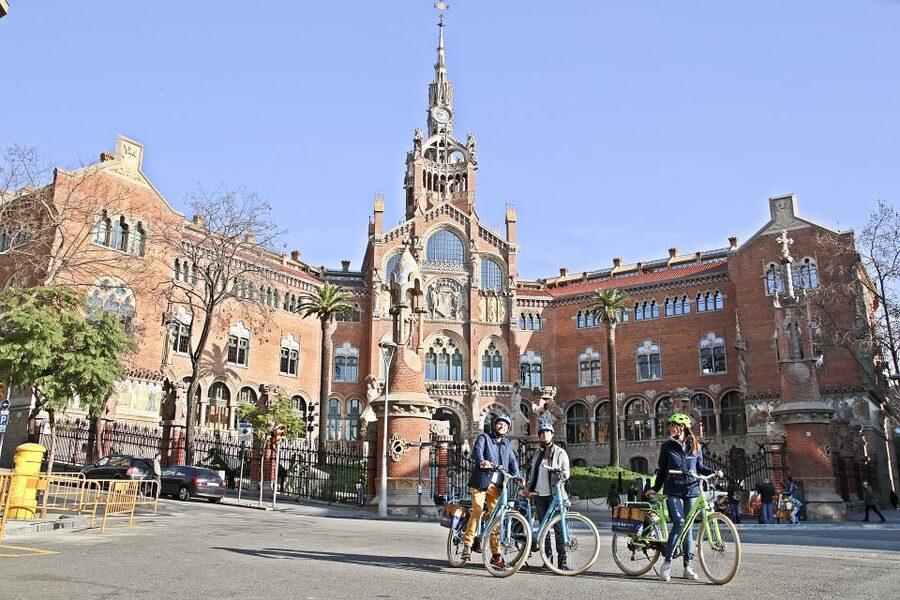
The meeting point is the activity provider’s office at Passeig de Lluís Companys, 10. This is a handy location, not a random shop tucked away in a side street. Arc de Triomf Metro station, on the red L1 line, is about a three-minute walk away.
I would arrive early enough to find the office, choose the right bike, and listen to the safety briefing without rushing. From Arc de Triomf, walk along the broad promenade toward Passeig de Sant Joan. The office is on the left. Buses 39, 40, 51, and H14 stop nearby as well.
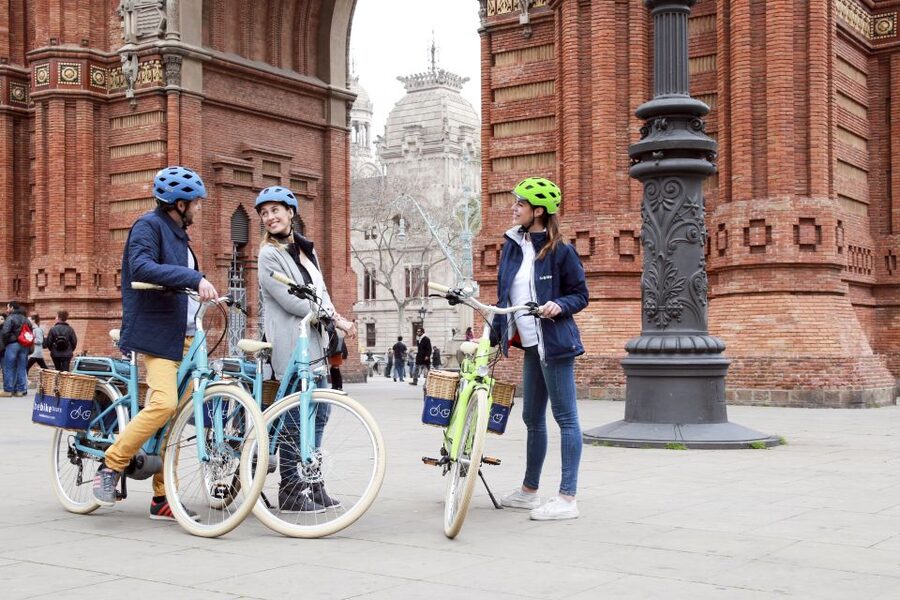
The tour begins with the Arc de Triomf, built in a neo-Mudéjar style for the 1888 Barcelona Universal Exposition. It is more decorative and welcoming than the stern triumphal arches found in some European capitals. Your guide will usually pause here for photographs and a short explanation before the group rolls into the park.
More Bike Tours in Barcelona
- Barcelona 3-hour Bike or E-Bike Tour: Highlights and Hidden Gems
★ 5.0 · 1,429 reviews - Barcelona E-Bike Photography Tour
★ 5.0 · 843 reviews - Barcelona: E-Bike Tour with Montjuic Cable Car & Boat Ride
★ 4.6 · 817 reviews
Parc de la Ciutadella and the first easy miles
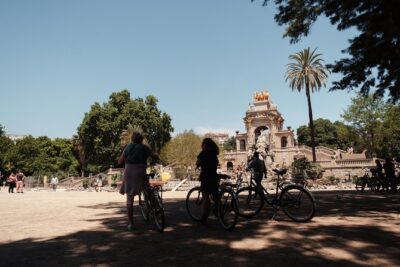
Parc de la Ciutadella gives you a pleasant change from traffic and stone façades. The park’s monumental fountain has Italian-inspired details, and a young Antoni Gaudí may have contributed to its construction while working as an assistant.
The stop is useful because it gives you an early taste of Barcelona’s mix of civic design, public parks, and ambitious architecture. You also get a chance to settle into the bike before the route becomes more urban.
You should not expect a long park visit. The tour is designed to keep moving, and the fountain is primarily a photo and explanation stop. That is a fair trade on a short tour, but anyone hoping for a relaxed park walk will need to return later.
El Born, Mercat del Born, and Santa Maria del Mar
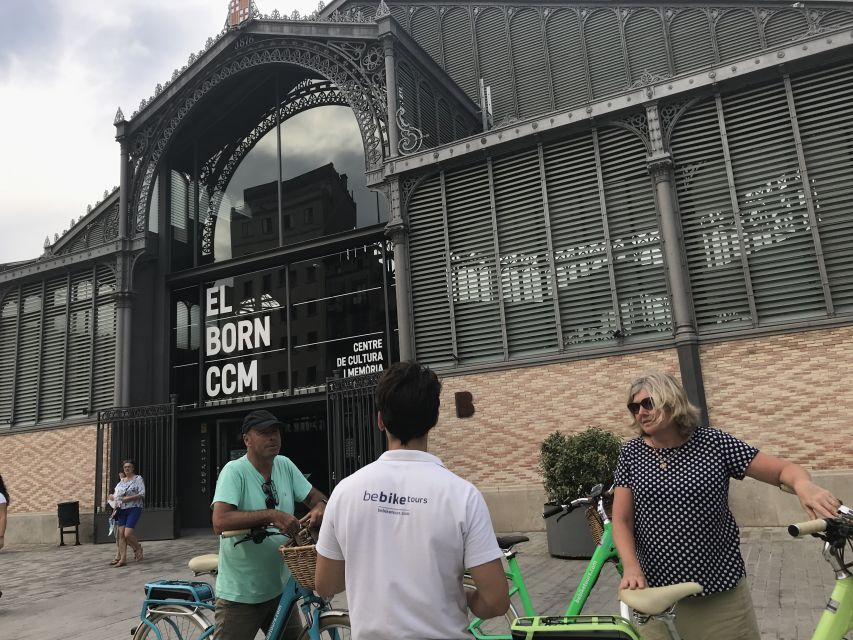
From the park, the route heads into El Born, one of Barcelona’s most appealing central districts. It was once a seaside resort area for medieval aristocracy, but today its streets lead you through layers of old Barcelona.
The tour passes Mercat del Born, a striking former market structure that now serves as a cultural site. You will also see the exterior of the Basilica of Santa Maria del Mar, often called the cathedral of the sea. Its connection with medieval Barcelona gives this part of the ride a different character from Gaudí’s later, highly personal architecture.
Plaça Sant Jaume provides another change of mood. This important square sits in the old city and is linked with Barcelona’s civic and political life. Since you are riding, the visit is mainly a guided look and a short photo stop. The benefit is coverage: you see several historic areas in a single morning or afternoon without spending the whole day walking between them.
The drawback is that you will not have much time to explore the market, enter the church, or wander the side streets. I would treat these stops as a preview and mark your favorites for a later walk.
Casa Calvet and the move toward Gràcia
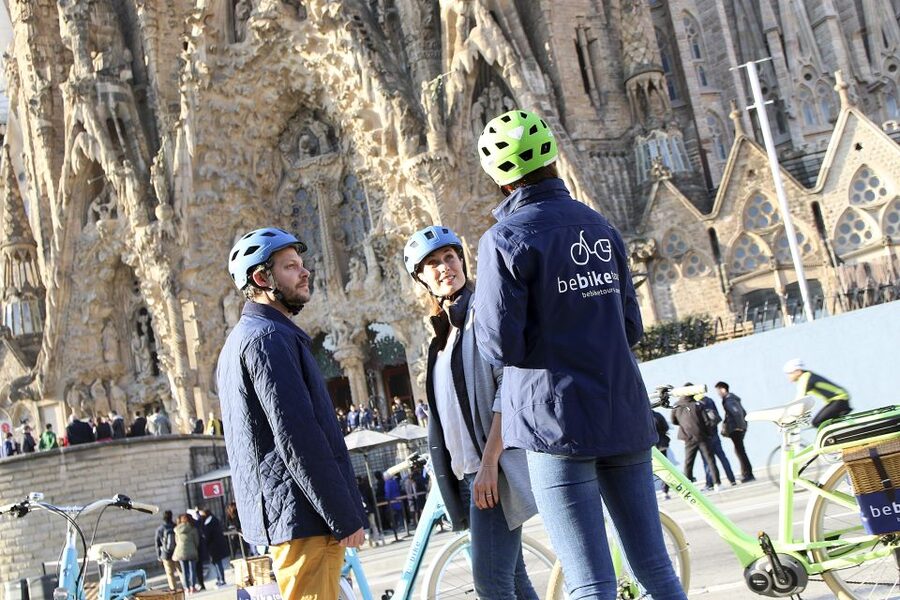
Casa Calvet is one of the less familiar Gaudí buildings on the route. Gaudí designed it as a residence and workplace for the Calvet family, and it was declared a Place of Cultural Interest in 1969.
Its appearance is more restrained than Casa Batlló or Casa Milà. That makes it a useful stop for understanding that Gaudí did not use the same visual language on every commission. You can look for the careful stonework, curved details, and ornamental touches that hint at the architect’s style without the wilder shapes found in his later work.
The route then heads toward the modern quarter of Gràcia. This part of Barcelona feels different from the old center. Vila de Gràcia was once a separate town and still has a strong local identity, with its own administrative and commercial center.
One detail to watch for is the 33-meter bell tower crowned by the bell known as Marieta. It gives the district a clear visual marker and helps you see Gràcia as more than just a collection of famous Gaudí houses.
More History Tours in Barcelona
- Barcelona: Tapas Walking Tour with Food, Wine, and History
★ 4.8 · 4,261 reviews - Barcelona Tapas Walking Tour: Food, Wine & History
★ 4.5 · 1,928 reviews - Barcelona Erotic Museum – Explore Art, History & Fun
★ 4.4 · 450 reviews - Barcelona: Dark History Night Walking Tour
★ 4.8 · 344 reviews
Casa Batlló and La Pedrera from street level
Passeig de Gràcia brings the tour to two of Barcelona’s most recognizable façades: Casa Batlló and Casa Milà, commonly called La Pedrera.
Casa Batlló is the more theatrical of the pair. Its flowing stone façade, irregular windows, colorful ceramic details, and bone-like forms show Gaudí turning an ordinary city block into something almost dreamlike. From the street, you can appreciate the overall design and hear how the building fits into Barcelona’s Catalan Modernism movement.
La Pedrera has a more sculptural presence. Its rippling stone exterior looks as if it is moving, while the wrought-iron balconies add another layer of detail. The building is formally called Casa Milà, but its nickname, meaning the stone quarry, gives you a good idea of how locals responded to its unusual appearance.
This is one of the most efficient parts of the tour. Seeing both buildings on a bike saves you a long walk along Passeig de Gràcia, and your guide can point out details you might miss while moving through the city on your own.
Still, keep your expectations clear. The tour does not include interior admission. If you want Gaudí’s rooftop sculptures, courtyards, apartments, or Casa Batlló’s immersive rooms, you will need separate tickets and more time. I recommend using the bike ride to decide which building deserves a proper visit later.
Vila de Gràcia and Casa Vicens
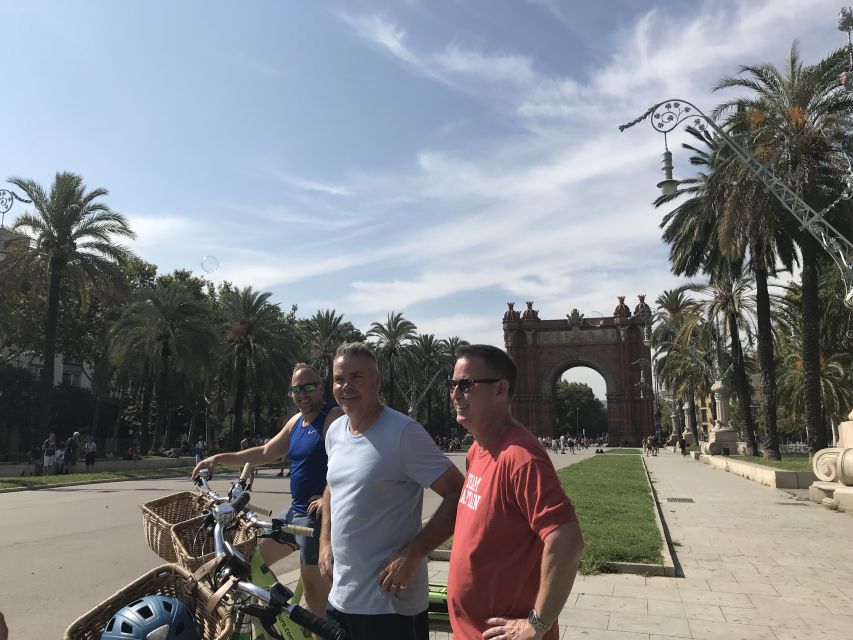
The route continues through Vila de Gràcia, described as Barcelona’s coolest suburb and its administrative and commercial center. The cycling here helps you see how quickly the city changes from grand boulevard to neighborhood streets.
Casa Vicens is especially important in Gaudí’s career. It is considered one of the first buildings of the Art Nouveau movement and was Gaudí’s first house project. The exterior uses colorful tilework and strong geometric patterns, giving it a very different feel from Casa Batlló and La Pedrera.
The tour offers brilliant views of the building, but again, the emphasis is on seeing it from the street. That is enough to understand why Casa Vicens matters, though you will not receive the full interior experience during this ride.
I like this portion because it gives the route a sense of progression. You see Gaudí’s earlier work, his mature masterpieces, and his monumental religious project later in the ride. The guide’s storytelling matters here. Several guides have been praised for adding useful facts and local recommendations, not just pointing at façades.
Passeig de Sant Joan and the approach to Sagrada Familia
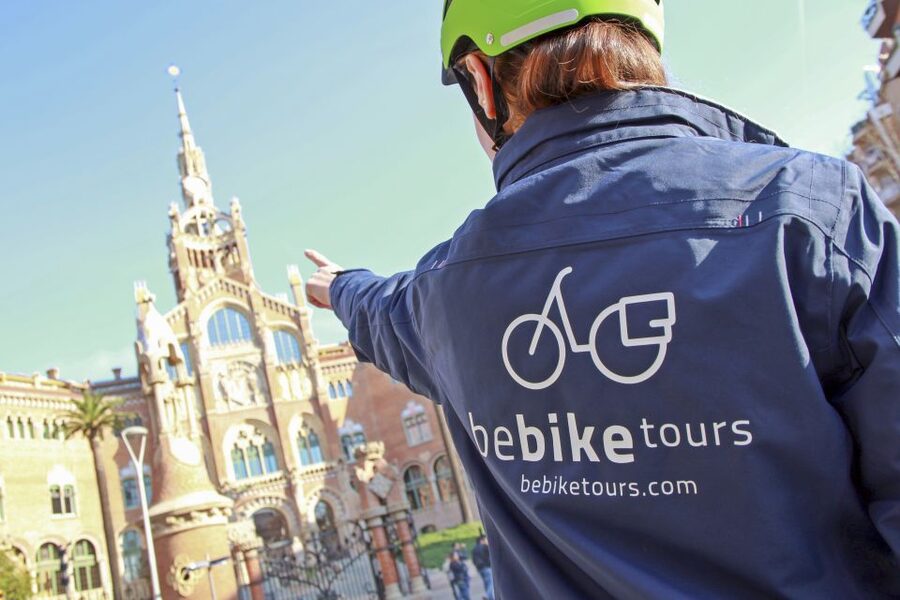
The ride follows Passeig de Sant Joan toward Sagrada Familia. This broad avenue makes for a practical connection between Gràcia and Gaudí’s basilica, and an e-bike is useful if your legs are already feeling the distance.
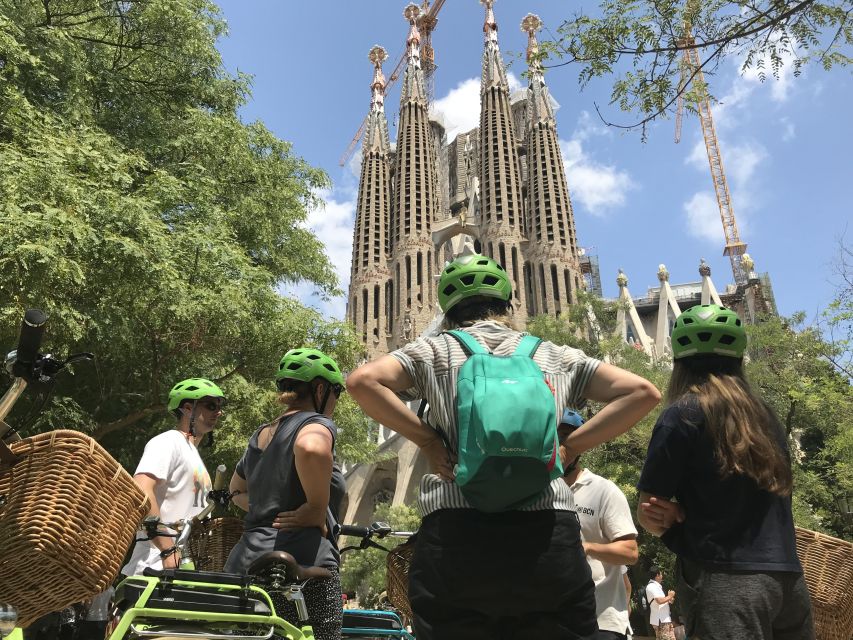
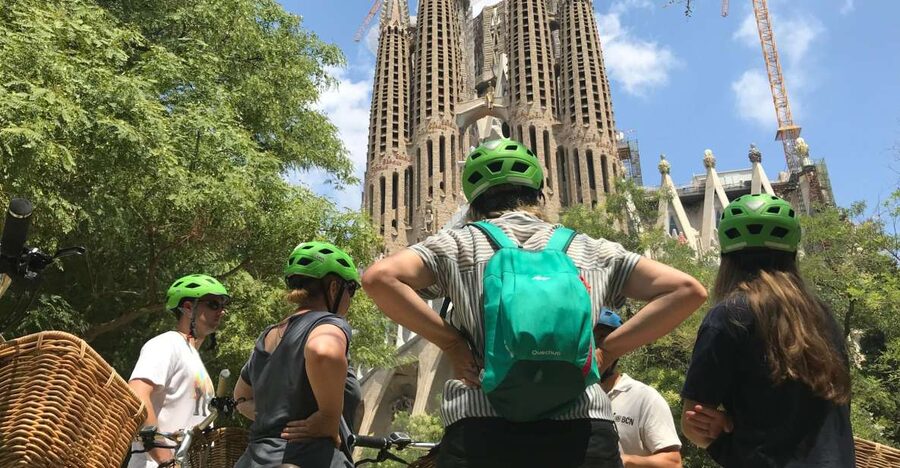
The final approach builds anticipation. Suddenly the towers of Sagrada Familia appear above the surrounding buildings, and the scale changes completely. Construction began in 1883, and the basilica remains Gaudí’s unfinished masterpiece.
You will have time for photographs, views of the spires and façades, and a guided explanation. This is not an entry ticket, so you will not see the interior, museum, or famous columns from inside. That limitation is important because Sagrada Familia is the one place on this route where many people will want more than a quick exterior look.
I see the outdoor stop as a strong preview. You can study the Nativity and Passion façades from different angles, take in the dense sculptural details, and decide if an interior visit belongs on your schedule. If you plan to go inside, arrange that separately and avoid booking it too close to the bike tour. The tour can return at the stated starting point, but city traffic and group timing make a generous gap sensible.
What the electric bike changes
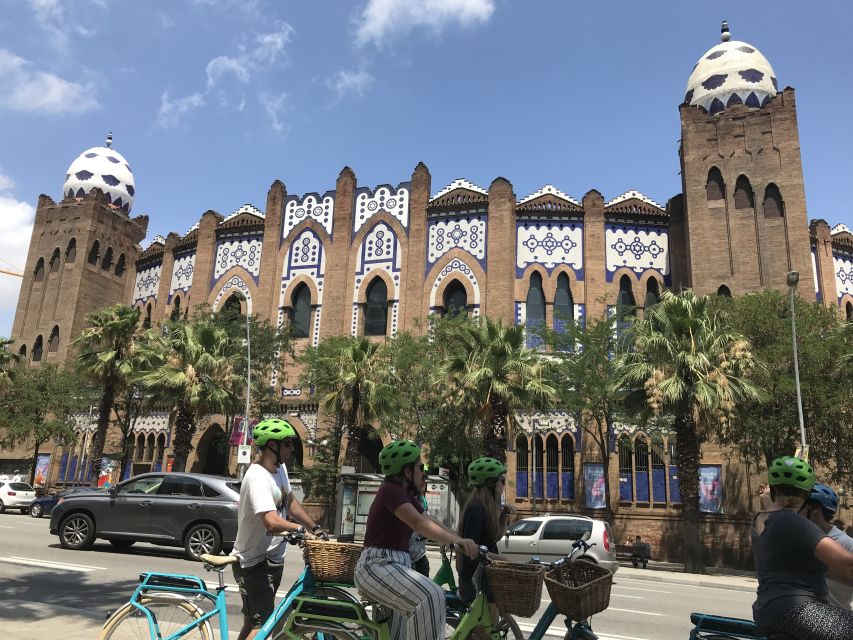
You can choose a regular bike or an electric bike, depending on the option selected. The e-bike is not simply a novelty here. It helps with uphill stretches, keeps the group together, and makes it easier to start again after traffic lights.
A rider who is comfortable on a normal bicycle may find the standard bike perfectly adequate. One guide has described the route as mostly flat, with only a few uphill sections. Still, I would choose the e-bike if you do not cycle often, if you are recovering from a long flight, or if you want to focus on the architecture rather than your legs.
The bikes have been described as easy to use and well maintained. One particularly useful incident involved a bike problem that brought out a mechanic, allowing the group to wait at a nearby café instead of losing the whole outing. That kind of backup matters more than a glossy equipment promise.
You still need to be comfortable riding in a city. The route includes streets, crossings, traffic lights, and group riding. The guide leads the way, but you remain responsible for watching the road and following instructions.
Guides, group size, and the human side
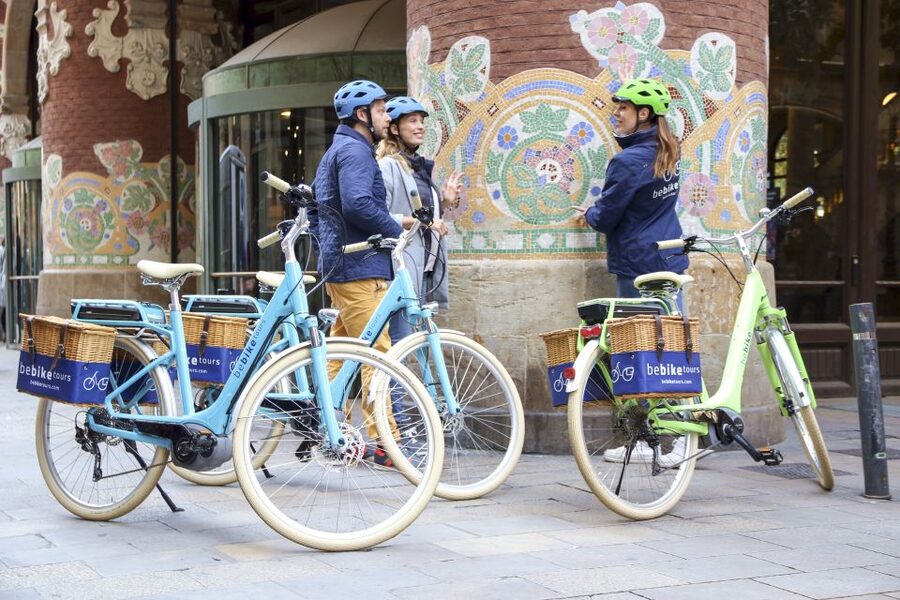
Groups run from 2 to 15 people per guide, with private and small-group options available. Fifteen is not an intimate group, but it is still workable for a guided city ride. A smaller group will give you more opportunity to ask questions and may make the pace easier to adjust.
The strongest praise has gone to guides who make the route personal. Peter adapted one solo ride to the rider’s interests and cycling level, even adding a beach ride. Sergio handled a bike problem with patience, while Marina offered a relaxed pace and useful information about Barcelona. Alex was also praised for history, restaurant suggestions, and local shopping advice.
Those details tell you what to look for from your guide. This tour is not only about reaching the buildings. A good guide can explain why Catalan Modernism looks the way it does, point out details on a façade, and help you plan the rest of your time in the city.
Languages include Spanish, English, French, German, Italian, Russian, Dutch, and Portuguese. Check the available language and starting time when you book.
Is $28 a good value?
At $28, this is a good-value sightseeing introduction. Your price includes the regular or electric bike, helmet, insurance, water, and a live guide. You are also covering a wide area in only two and a half hours, from Arc de Triomf and El Born to Gràcia and Sagrada Familia.
The value is strongest if you want orientation. You can see where the major Gaudí buildings are, learn which ones deserve interior visits, and cover distances that would take much longer on foot. The tour also saves you from planning a route through several districts on your own.
The value is weaker if you want extended time at each sight. Monument entry is not included, and several locations are viewed from outside. You are paying for transport, guiding, and context, not a series of long visits.
Free cancellation up to 24 hours before departure and reserve-now, pay-later booking add flexibility. Starting times vary, so check availability before you arrange the rest of your day.
Who should book this ride?
I would recommend it for first-time visitors, short-break visitors, and anyone who wants a clear introduction to Gaudí without committing to a full day of walking. It also suits people who enjoy architecture but prefer seeing a city in motion.
The e-bike option is a smart choice for mixed-ability groups. Experienced cyclists can use regular bikes, while less confident riders can choose electric assistance. Families should note that children under six can ride free in a child safety seat on a parent’s bike. Children up to 20 kilograms and 130 centimeters can also take part at no cost in the child seat. Children under two are not accepted, and the activity is not suitable for people with heart problems.
Practical verdict: book it or skip it?
Book this tour if you want broad coverage, friendly guiding, and an easy ride between Barcelona’s major architectural sights. The best part is the way the route links old neighborhoods, Gràcia, and Gaudí’s grandest buildings without making you spend the day on foot.
Skip it if your priority is entering Sagrada Familia, Casa Batlló, or La Pedrera. In that case, spend your money on timed admission and explore fewer places at greater length.
For most visitors, I would choose the e-bike, arrive early at Passeig de Lluís Companys, and keep the rest of the day flexible. At $28, it is a practical first look at Barcelona, with enough history and local detail to help you plan what deserves a closer visit.
FAQ
Where does the Barcelona Gaudí bike tour begin?
The meeting point is the activity provider’s office at Passeig de Lluís Companys, 10. It is about a three-minute walk from Arc de Triomf Metro station on the red L1 line.
How long does the tour last?
The tour lasts 2.5 hours and returns to Passeig de Lluís Companys, 10.
Does the tour include Sagrada Familia admission?
No. The tour includes an outdoor guided visit and photo stop at Sagrada Familia, but monument admission is not included.
Can I choose a regular bicycle instead of an e-bike?
Yes. You can select either a regular bike or an electric bike when booking, depending on the available option.
What languages are available?
Live guides are available in Spanish, English, French, German, Italian, Russian, Dutch, and Portuguese. Check the selected departure for the language offered.
Can young children join the tour?
Children under six can join free in a child safety seat on a parent’s bike. Children up to 20 kilograms and 130 centimeters can also ride free in the child seat. Children under two are not permitted.
More E-Bikes in Barcelona
- Barcelona: Sagrada Familia or Coastal City Sights by eBike
★ 4.8 · 812 reviews - Barcelona e-Bike Tour: Gaudí & Old Town Small Group
★ 5.0 · 769 reviews - Barcelona E-Bike Small Group Tour with Tapas & Wine Tasting
★ 5.0 · 638 reviews - Barcelona: Guided Bike or E-Bike City Tour
★ 4.8 · 581 reviews
Recently listed in Barcelona
- Transfers From Cruise Port to Barcelona Airport★ 4.5 · 155 reviews
- Bohemian Barcelona Neighborhood Evening Tapas & Wine Tour★ 5.0 · 419 reviews
- Park Guell Guided Tour with Skip the Line Tickets★ 4.0 · 739 reviews
- Barcelona Sunset Cruise with Light Snacks and Open Bar★ 5.0 · 476 reviews
- Montserrat very early : Hiking, Abbey, very small group★ 5.0 · 127 reviews
- Barcelona: Sagrada Familia, Park Guell & Tapas Private Tour★ 5.0 · 903 reviews
- Authentic Flamenco Show Barcelona : Intimate Casa Sors Experience★ 5.0 · 809 reviews
- Barcelona Expert Tour with Local Guide in Eco Tuk Tuk Private★ 5.0 · 216 reviews
Cycling Tours, compared.

Quad Bike Tour, Snorkeling, and Cliff Jumping
Read our review →
Barcelona 3-hour Bike or E-Bike Tour: Highlights and Hidden Gems
Read our review →
Best of Madrid: 3-Hour Guided Bike Tour in Small Groups
Read our review →Browse the lists this tour appears in