
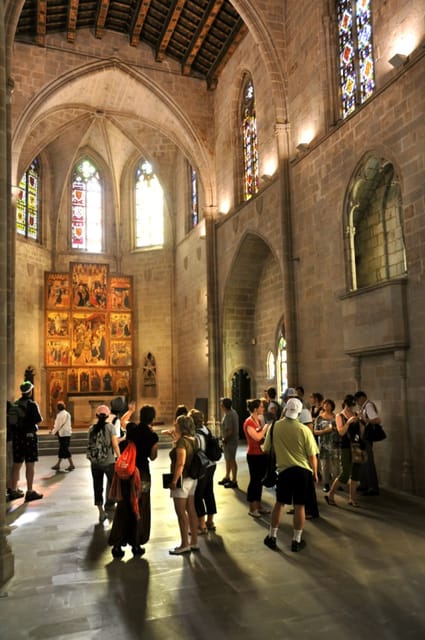
Reviewed · WALKING TOURS
Barcelona 2-Hour Gothic Walking Tour
Look closely, Barcelona’s oldest quarter rewards patience. This $32 walking tour gives you a clear route through Roman remains, medieval palaces, Gothic churches, and quiet squares that are easy to miss on your own. I especially like the strong historical focus and the way the guides connect architecture with stories of Catalan rulers, merchants, saints, and ordinary city life.
I also like the compact route. Most sights sit close together, so you see a great deal without crossing the whole city. Guides such as Olga Escribano, Jordi, Alex, Pilar, and Alexandra have earned praise for their warmth, humor, and command of the subject. The main consideration is simple: you walk for two hours, often over old cobblestones, and the schedule leaves little room to linger at every stop.
In This Review
- Key points to know before booking
- Why the Gothic Quarter deserves a guided walk
- Meeting at Plaça de la Seu
- Barcelona Cathedral and its peaceful cloister
- Roman columns and the Temple of Augustus
- Plaça del Rei and the royal quarter
- Santa Àgata Chapel and medieval detail
- Carrer del Bisbe and the old city streets
- Plaça Sant Felip Neri and a sobering history
- The Museu d’Història de Barcelona connection
- Free time at Museu Frederic Marès
- Is $32 a fair price?
- Who should take this Gothic Quarter tour?
- My practical advice for a better two hours
- Should you book the Barcelona Gothic walking tour?
- FAQ
- How long is the Barcelona Gothic walking tour?
- Where does the tour meet?
- What language is the tour offered in?
- Does the tour visit Barcelona Cathedral?
- Is Museu Frederic Marès included?
- Can I cancel the booking?
Key points to know before booking
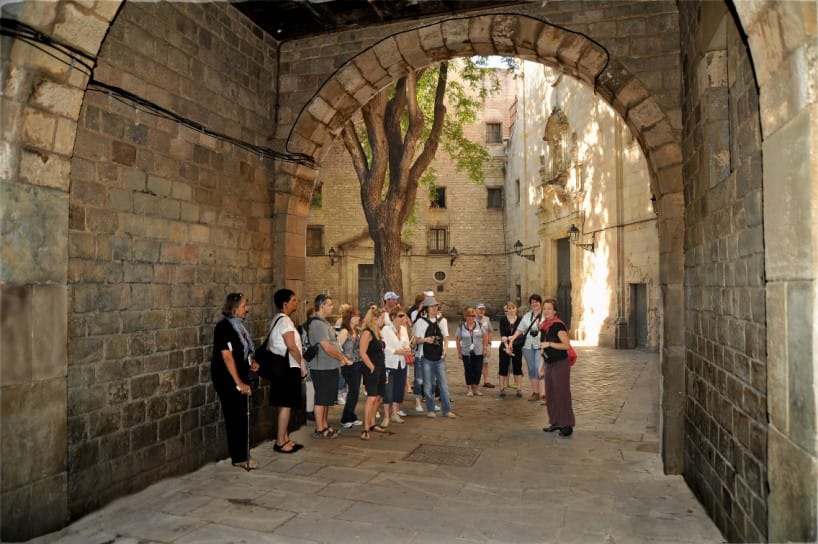
- Roman Barcelona appears behind medieval walls: See the Temple of Augustus and learn how Barcino developed beneath the modern city.
- The cathedral visit includes the cloister: This adds a quieter, more detailed look at one of Barcelona’s major landmarks.
- Plaça del Rei brings royal history to life: The former royal palace, Santa Àgata Chapel, and Saló del Tinell form one of the tour’s strongest clusters.
- Plaça Sant Felip Neri adds a serious pause: Its damaged walls and peaceful setting tell one of the city’s most moving stories.
- English tours include Museu Frederic Marès: You can continue exploring after the guided walk with free time in this unusual museum.
- The pace suits a first day in Barcelona: You get bearings, historical context, and practical ideas for further sightseeing.
Why the Gothic Quarter deserves a guided walk
Barcelona’s Gothic Quarter is not a single perfectly preserved medieval neighborhood. It is a layered part of the city, with Roman foundations, medieval buildings, later changes, and modern life all pressed into a tight network of lanes.
That layering can be confusing without help. You might pass an ancient column, a grand church, or a palace entrance without understanding what you are seeing. A good guide gives those fragments a timeline and explains how they fit together.
This tour is especially useful early in your visit. It introduces the old city before you tackle Barcelona’s larger museums and famous modernist sights. After two hours, you should have a better sense of where the cathedral, royal quarter, Roman remains, and surrounding streets fit together.
The guides also appear to be a major part of the experience. Olga Escribano is praised for her energy, personal attention, and ability to adjust her stories to the group. Other guides, including Jordi, Alex, Pilar, and Luca, are described as friendly, funny, and ready with recommendations for food and other sights.
That matters in a crowded district. The streets can feel like a maze, and a guide who knows when to pause, explain, and move on can make the difference between a pleasant walk and a tiring history lecture.
More Walking Tours in Barcelona
- Barcelona Tapas and Wine Experience Small-Group Walking Tour
★ 5.0 · 5,804 reviews - Barcelona: Tapas Walking Tour with Food, Wine, and History
★ 4.8 · 4,261 reviews - Barcelona Tapas Walking Tour: Food, Wine & History
★ 4.5 · 1,928 reviews
Meeting at Plaça de la Seu
The tour begins at the tourist information office at Plaça de la Seu, beside Barcelona Cathedral. Look for the office marked with the familiar i symbol.
This is a practical starting point because the cathedral gives you an immediate landmark. Arrive with time to spare so you are not searching for the meeting point among the narrow streets. The route ends back at Plaça de la Seu, which makes it easy to continue sightseeing, find lunch, or return to your hotel.
The two-hour length is well judged for a first introduction. You cover plenty of ground, but the route remains concentrated in the old center. One particularly useful observation from the experience is that you do not need to walk great distances between sights. The challenge is the surface and the steady pace, not a long cross-city trek.
Bring water and eat beforehand. One visitor specifically warned that hunger became an issue toward the end, a reminder that this is a continuous walking experience rather than a stop-and-snack outing. Comfortable shoes are a wise choice, too.
Barcelona Cathedral and its peaceful cloister
Barcelona Cathedral is the tour’s most obvious landmark, but the guided visit helps you look beyond its facade. You get a closer explanation of the Gothic architecture, the building’s place in the old city, and the details that are easy to miss when you simply walk past.
The cloister is especially worthwhile. It offers a calmer setting than the square outside and gives you time to notice the cathedral’s smaller architectural features. The contrast between the busy streets and this enclosed space is part of the appeal.
The cathedral area can be crowded, and a two-hour tour cannot provide an exhaustive visit to every chapel or feature. Still, the guided stop gives you a useful framework. If you want a slower, more detailed cathedral visit, plan to return independently if opening hours and admission arrangements allow.
The start near the cathedral also makes this tour easy to pair with other central sights. You could schedule it on a morning devoted to the old city, then continue toward the market area or waterfront afterward. The main advantage is orientation: you begin to understand the quarter before wandering through it alone.
Roman columns and the Temple of Augustus
One of the tour’s best surprises is the Roman Temple of Augustus. Its columns are tucked into a medieval courtyard, a setting that shows how Barcelona’s older layers are often concealed in plain sight.
This is where a guide adds real value. A guidebook can tell you that Roman Barcelona was called Barcino, but standing beside surviving columns in such an unexpected location makes the point more memorable. You begin to see the Gothic Quarter not only as a medieval district, but as a city built over a Roman one.
The tour also helps place the Roman remains in the wider story of Barcelona. The route moves from the ancient city to the medieval period, then toward the political and cultural changes that shaped Catalonia. That broad sweep keeps the walk from becoming a string of disconnected dates.
Do not expect a large archaeological site. The appeal lies in the remains, the setting, and the explanation. This is a brief stop, but it can be one of the moments you remember most clearly.
Same base, a different kind of afternoon:
- Barcelona: Sagrada Familia Entry Ticket with Audio Guide
★ 4.6 · 105,312 reviews - Barcelona: Park Güell Admission Ticket
★ 4.4 · 76,534 reviews - Barcelona: Casa Batlló Entry with Self-Audioguide Tour
★ 4.7 · 25,359 reviews - Barcelona: 24 or 48-Hour Hop-On Hop-Off Bus Tour
★ 4.4 · 20,872 reviews
Plaça del Rei and the royal quarter
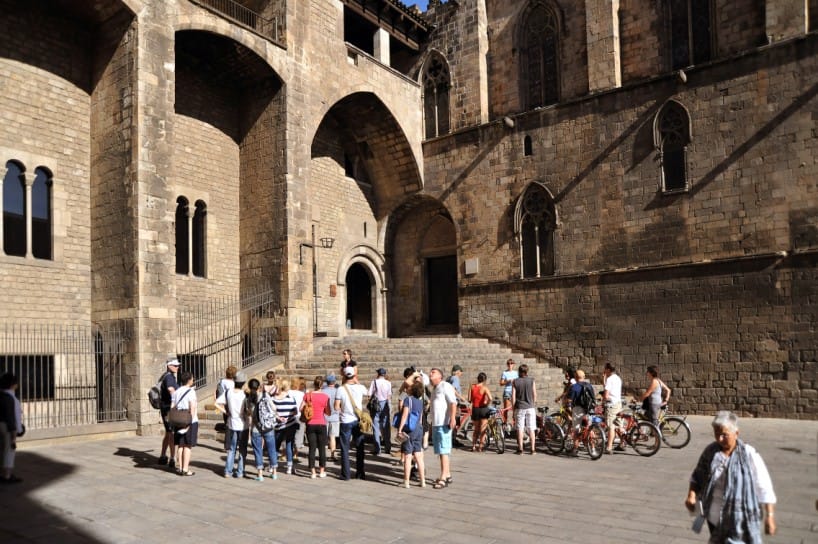
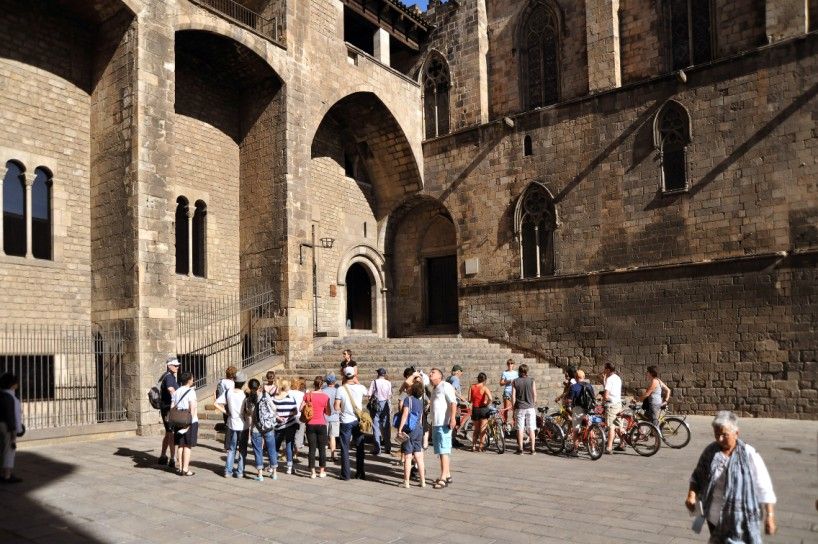
Plaça del Rei is among the most atmospheric points on the route. Its enclosed feel, stone buildings, and surrounding royal structures make it an ideal place for a guide to explain medieval Barcelona.
Here you encounter the Palau Reial Major, the former palace of Catalan kings, along with the Capella de Santa Àgata and the Saló del Tinell. Together, these buildings create a concentrated lesson in royal power, religion, ceremony, and civic history.
The Saló del Tinell is particularly important. It is a large ceremonial hall connected with the royal palace, and the tour uses the site to discuss major events in Barcelona’s past. The palace is also associated with Ferdinand and Isabella receiving Columbus after his return from the Americas, a detail that gives the square a wider place in European history.
The benefit of seeing these sights with a guide is context. You learn why a chapel sits beside a royal hall, how political authority was displayed, and how the quarter functioned as more than a residential area.
This section may appeal most to anyone who enjoys architecture and political history. If your interest is mainly shopping or food, it may feel slower. For everyone else, Plaça del Rei is one of the tour’s strongest stretches.
Santa Àgata Chapel and medieval detail
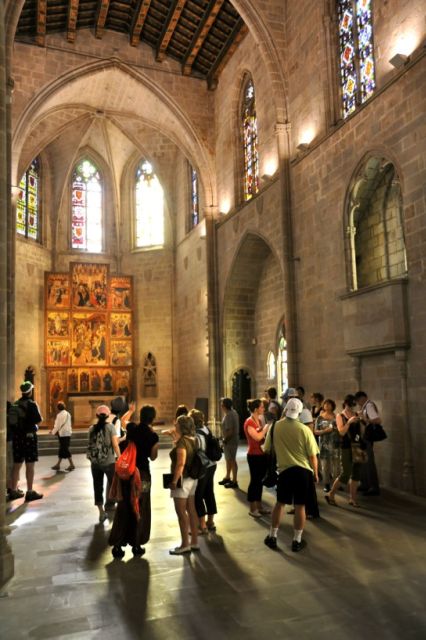
The Capella de Santa Àgata adds a more intimate stop to the grander royal buildings. Instead of looking only at monumental facades, you get a chance to consider how religion shaped daily and political life in medieval Barcelona.
The chapel also helps break up the walk. The route alternates between open squares, narrow lanes, major monuments, and smaller historic spaces. That variety keeps the two hours moving at a comfortable pace for most people.
Guides use visual material at times, including pictures that help explain how buildings and sites changed over the centuries. This is useful when you are looking at a place that has been altered, rebuilt, or is difficult to understand from the outside.
The exact amount of time at each site depends on the guide and group. Some visitors praised the thorough explanations, while others valued the efficient pace. You should expect a well-filled overview, not a long stop at every monument.
Carrer del Bisbe and the old city streets
The Gothic Quarter is often best understood while walking between the major stops. Carrer del Bisbe, with its Gothic-style bridge and decorated facades, is a natural place to pause and discuss the district’s visual character.
The narrow lanes can feel dramatic, but they are not all untouched medieval streets. Part of the guide’s job is to explain what is genuinely old, what was restored, and how the quarter has been shaped over time. That distinction helps you avoid the usual postcard version of the area.
Look up as you walk. The details are often above eye level, from balconies and carved stone to changes in facade and roofline. The tour is useful here because guides point out things you might otherwise pass without noticing.
The streets are also where you feel the modern quarter. Artisan shops, tapas bars, and local businesses share space with historic buildings and heavy foot traffic. That mixture can be lively, but it can also make the area feel crowded. The guide helps you find the character beneath the surface.
Plaça Sant Felip Neri and a sobering history
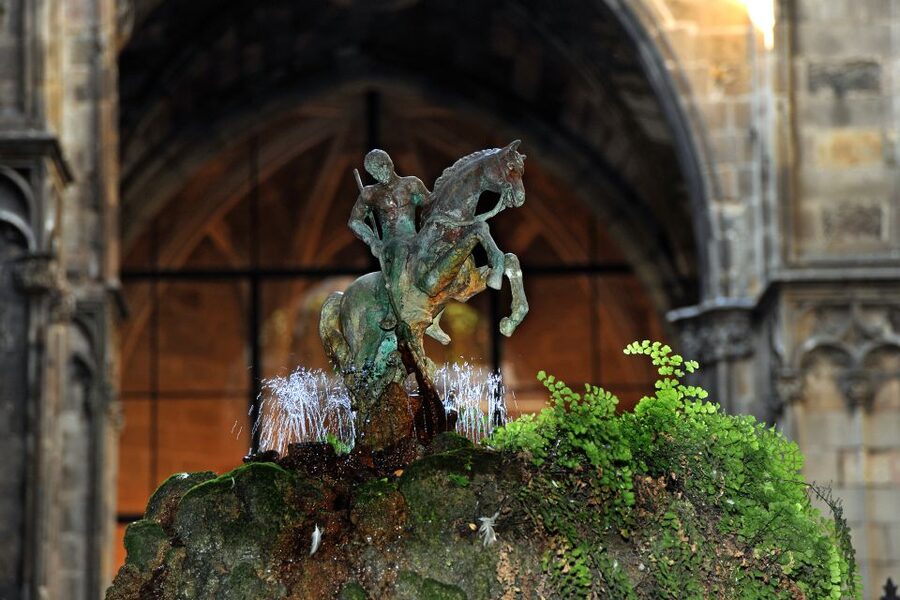
Plaça Sant Felip Neri is the emotional center of the walk. It is a quiet square with a Baroque church, a small fountain, and walls marked by damage from Spanish Civil War bombings.
The setting is striking because the square is not presented as a grand monument. Children may play there, and musicians may sometimes perform, while the pockmarked walls quietly preserve a painful memory. The contrast makes the history feel close and human.
This stop shows why a walking tour can be more meaningful than a checklist of famous buildings. You are not only learning architectural terms. You are considering how war, faith, community, and memory remain visible in the city.
The subject is serious, so the guide’s tone matters. A thoughtful guide can give the square weight without turning it into a theatrical performance. The guides praised throughout this experience appear to handle the historical material with warmth and respect.
The Museu d’Història de Barcelona connection
The route includes a guided stop connected with the Museu d’Història de Barcelona. This fits the tour’s main theme: understanding the city through physical layers and historical evidence.
The museum context helps explain the transition from Roman Barcino to medieval Barcelona. Even when your time inside or around the museum is limited, the connection gives the streets more meaning. You begin to recognize that the old quarter is also an archaeological record.
Keep your expectations realistic. Two hours is not enough for a full museum visit and a detailed walk through every nearby site. The tour works best as an introduction, with the option to return later if a particular period catches your interest.
Free time at Museu Frederic Marès
For the English-language tour, admission to the Museu Frederic Marès is included after the walking portion. This is a useful bonus, especially if you like sculpture, religious art, or unusual collections.
The museum occupies a medieval palace and includes sculptures, antique curiosities, and personal objects collected by artist Frederic Marès. Its displays range from medieval religious works to everyday objects from the 19th century.
I like this addition because it gives the tour a quiet finish. After moving through narrow streets and busy squares, you can continue at your own pace. You are not rushed through the museum as part of the guide’s commentary.
The free admission adds value to the $32 price, though the benefit depends on your interests and energy. If you have already spent the day in museums, you might prefer to stop after the walk. If you want more cultural context, this is a convenient way to extend the experience without another ticket.
Is $32 a fair price?
At $32 per person, this is not the cheapest way to walk through the Gothic Quarter. You can wander the streets for free, and many major buildings are visible from public squares.
The price becomes easier to justify if you value explanation. You are paying for an official local guide, a planned two-hour route, access to the cathedral cloister as part of the visit, and free admission to Museu Frederic Marès on the English tour.
I would call it good value for a first visit, especially if you are interested in architecture and history but do not want a full-day tour. The route covers enough ground to feel substantial, yet it does not consume an entire morning or afternoon.
The value also depends on the guide. Feedback about Olga Escribano, Jordi, Alex, Pilar, Alexandra, and others suggests that personality and preparation are central strengths. A guide who answers questions and adjusts the stories to the group can make the same streets feel far more rewarding.
Free cancellation up to 24 hours ahead and the option to reserve now and pay later make the booking less rigid. Starting times vary, so check the available schedule before planning other timed visits.
Who should take this Gothic Quarter tour?
I would recommend it most strongly to first-time visitors, history fans, architecture lovers, and anyone who wants help getting oriented in central Barcelona.
It also suits families with older children and teenagers. Several guides use stories and humor to keep the material lively, and one family with teenage daughters found the walk both interesting and enjoyable.
The tour can work for people with some movement difficulty if the pace and guide are accommodating. One guide, Miguel, was specifically praised for helping a participant with mobility concerns. Still, you should remember that this is a two-hour walk over historic streets. Ask about your own needs before booking if walking surfaces are a serious concern.
You may want something else if you dislike group tours, prefer to spend ten minutes photographing each building, or want a specialized focus on art, food, or architecture. This is a broad historical introduction, not an in-depth study of one subject.
Rain does not necessarily ruin the experience. Participants have completed the walk in wet weather with umbrellas, and an earpiece helped them hear the guide. Bad weather can affect access to certain features, though, including a tower that was closed during one rainy visit.
My practical advice for a better two hours
Arrive at the tourist information office by the cathedral and look for the i sign. The Gothic Quarter’s lanes can make the final approach slower than expected.
Eat before you go and bring water. There is no suggestion of a planned food stop, and the pace continues from one historic site to the next.
Wear shoes with a firm sole. The route is not long in distance, but old paving can be tiring, especially if you are not used to walking on uneven streets.
Pay attention between the headline sights. Some of the most useful information comes when the guide points out a small facade, a tucked-away courtyard, or a clue to how the quarter changed.
If you enjoy the tour, use the final recommendations. Several guides have helped people choose other sights and local food spots, so keep a short list of questions ready. The tour ends back at Plaça de la Seu, giving you a convenient base for the next part of your day.
Should you book the Barcelona Gothic walking tour?
Book it if you want the old city to make sense. For $32, you get a focused two-hour introduction to Roman Barcelona, the medieval royal quarter, the cathedral, Santa Àgata Chapel, Plaça Sant Felip Neri, and the surrounding streets.
The free Museu Frederic Marès visit makes the English tour a better deal, while the strong guide quality can turn familiar sights into memorable ones. I would schedule it near the beginning of your Barcelona stay, then revisit the places that caught your attention.
Skip it if you want total freedom or a slower photographic walk. Otherwise, this is a practical, well-paced way to meet Barcelona’s oldest quarter, with enough stories to keep you looking up as you walk.
FAQ
How long is the Barcelona Gothic walking tour?
The guided walking tour lasts two hours.
Where does the tour meet?
It meets at the tourist information office at Plaça de la Seu, 2. Look for the office marked with the i symbol.
What language is the tour offered in?
The tour is offered in English with a live local guide.
Does the tour visit Barcelona Cathedral?
Yes. The route includes a guided visit to Barcelona Cathedral and a closer look at its cloister.
Is Museu Frederic Marès included?
English-language tours include free admission to Museu Frederic Marès after the walking tour, with time to explore the museum independently.
Can I cancel the booking?
You can cancel up to 24 hours in advance for a full refund. You can also reserve now and pay later.
Recently listed in Barcelona
- Transfers From Cruise Port to Barcelona Airport★ 4.5 · 155 reviews
- Bohemian Barcelona Neighborhood Evening Tapas & Wine Tour★ 5.0 · 419 reviews
- Park Guell Guided Tour with Skip the Line Tickets★ 4.0 · 739 reviews
- Barcelona Sunset Cruise with Light Snacks and Open Bar★ 5.0 · 476 reviews
- Montserrat very early : Hiking, Abbey, very small group★ 5.0 · 127 reviews
- Barcelona: Sagrada Familia, Park Guell & Tapas Private Tour★ 5.0 · 903 reviews
- Authentic Flamenco Show Barcelona : Intimate Casa Sors Experience★ 5.0 · 809 reviews
- Barcelona Expert Tour with Local Guide in Eco Tuk Tuk Private★ 5.0 · 216 reviews
Walking Tours, compared.
Barcelona Tapas and Wine Experience Small-Group Walking Tour
Read our review →
Tapas Walking Tour with Food, Wine, and History
Read our review →
Albaicín and Sacromonte Guided Sunset Walking Tour
Read our review →
Toledo Tour & Vineyard Walk with Wine Tasting from Madrid
Read our review →
Madrid Walking Tour from Puerta del Sol to Retiro Park
Read our review →
Barcelona Tapas Walking Tour: Food, Wine & History
Read our review →
Madrid Old Town & Royal Palace Walking Tour Skip the Line Ticket
Read our review →
Browse the lists this tour appears in