Reviewed · TICKETS
Barcelona: Casa Batlló Be The First Entry Ticket
Gaudí’s house feels best before Barcelona wakes. The limited-capacity first entry gives you a calmer look at Casa Batlló, with better chances to study the strange curves, colored glass, and soft morning light. I especially like the extra breathing room for photographs and the clever audio guide with its virtual reality tablet. The main tradeoff is price: at about $53 per person, this is not a cheap sightseeing stop.
The early time matters more than the word first suggests. Several morning visitors found the house already getting much busier by the time they left, often after about 90 minutes. I would choose the earliest slot you can manage, arrive before your entry time, and head in promptly.
The visit is self-guided, not led by a live person. You collect the headset and tablet at Casa Batlló, then follow a clearly marked route through Gaudí’s masterpiece, finishing with the Gaudí Dome and Gaudí Cube. The equipment adds useful context, though carrying the tablet can become tiring and one visitor found the Cube’s moving images uncomfortable.
In This Review
- Key points to know before booking
- Why Casa Batlló deserves a morning visit
- Getting inside before the main crowd
- The main rooms and Gaudí’s playful details
- The audio guide and virtual reality tablet
- The Gaudí Dome and its digital atmosphere
- The Gaudí Cube at the end
- Kengo Kuma’s floating marble staircase
- The original Concierge Room and extra displays
- How long the visit takes and how to use your time
- Is the $53 ticket good value?
- Who will enjoy this experience most?
- Should you book the first entry ticket?
- FAQ
- What does the Casa Batlló Be The First Entry ticket include?
- Is there a live guide?
- Which languages are available for the audio guide?
- How long is the ticket valid?
- Is Casa Batlló wheelchair accessible?
- Can I store luggage or a stroller?
Key points to know before booking
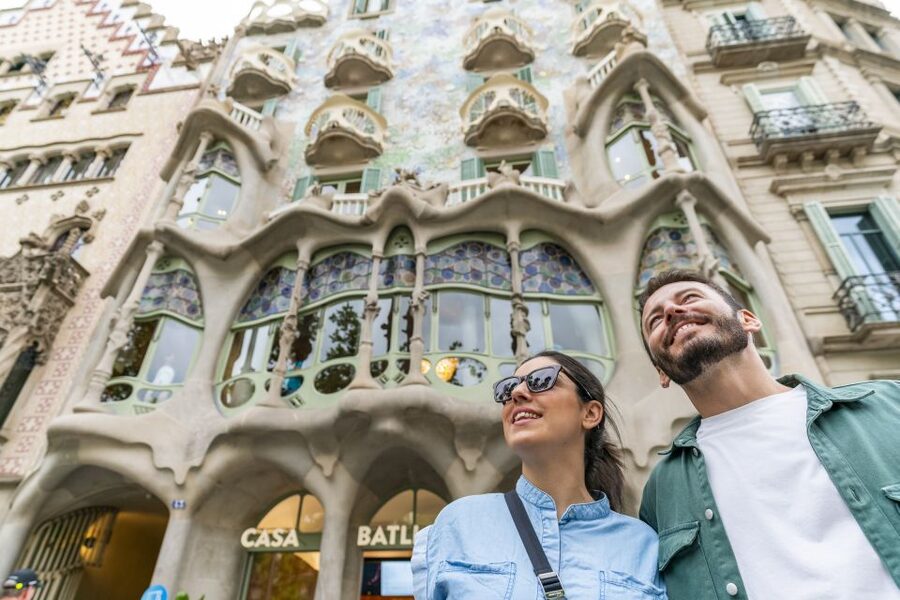
- Early entry is the real luxury: The quiet first slots offer more space for photographs and a slower look at the rooms.
- The tablet does more than play audio: Virtual reality and augmented reality show furnishings, past appearances, and details that are easy to miss.
- The Gaudí Cube is the grand finale: A six-sided LED room creates a powerful digital light show, though it may bother people prone to motion sickness.
- The Gaudí Dome adds atmosphere: More than 1,000 screens create a dome shaped around Gaudí-inspired imagery.
- You follow your own pace: The route is signed, and most people allow roughly 90 minutes without hurrying.
- Check the ticket level carefully: Some ticket categories can limit access to certain rooms, even when early entry is included.
Why Casa Batlló deserves a morning visit
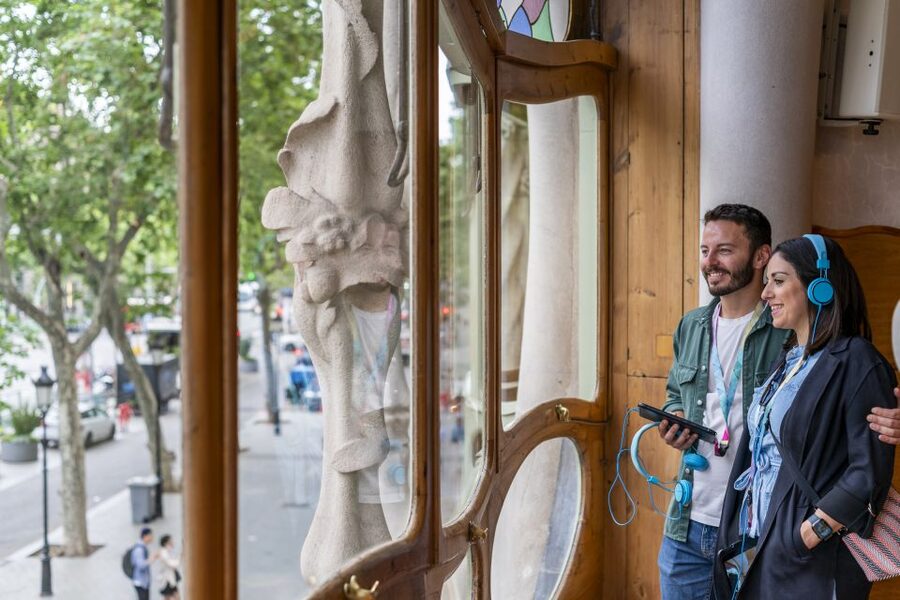
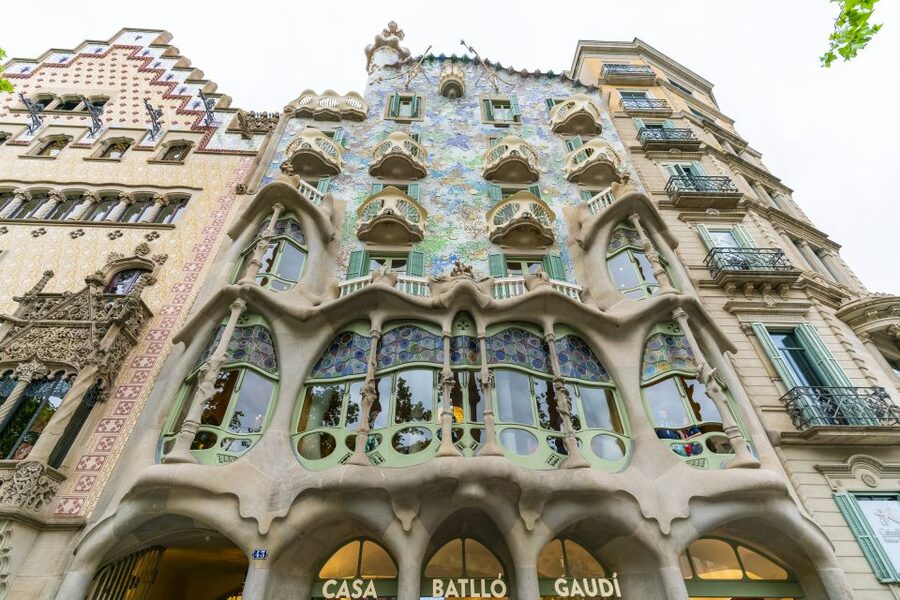
Casa Batlló is not simply a handsome old house with a famous architect attached to it. Gaudí treated the building as a complete work of art, shaping the walls, windows, ceilings, furniture, light, and ventilation as parts of one idea.
That is why the interior rewards slow looking. A quick circuit shows you colorful surfaces and odd-shaped doors. A quieter visit lets you notice how one room flows into the next, how light changes across the main floor, and how often Gaudí replaces a straight line with a curve.
The building is a UNESCO World Heritage Site, but you do not need to be an architecture expert to enjoy it. The audio guide explains the key features in an accessible way, while the tablet helps you picture the house as it may have looked when furnished.
I would allow about an hour and a half. You can finish faster, but that would mean rushing past details that justify the admission cost. The early ticket helps because you are less likely to feel pushed along by a packed room.
A few more Barcelona ideas to compare
- Barcelona: Sagrada Familia Entry Ticket with Audio Guide
★ 4.6 · 105,312 reviews - Barcelona: Park Güell Admission Ticket
★ 4.4 · 76,534 reviews - Barcelona: Casa Batlló Entry with Self-Audioguide Tour
★ 4.7 · 25,359 reviews
Getting inside before the main crowd
The first entry option is designed for people who want the house at its calmest. Early bookings commonly begin around 8:30 or 8:45 am, though you need to check the available starting times for your date.
Arrive a little early and collect your audio guide and virtual tablet at Casa Batlló. One useful practical point is that there is a checkroom for luggage and strollers, which can make the visit easier if you are carrying more than a small day bag.
The first group is not necessarily tiny. One July booking still found quite a few people in the earliest slot. Even so, the difference later in the morning can be substantial. By the time some early visitors reached the exit, lines at the entrance had grown and the interior felt much fuller.
For photographers, this timing is especially valuable. You can often frame the main rooms, stairways, and windows without waiting for a clear patch. You will still need patience around popular viewpoints, but early entry gives you a fair chance instead of asking you to compete with a constant stream of people.
The main rooms and Gaudí’s playful details
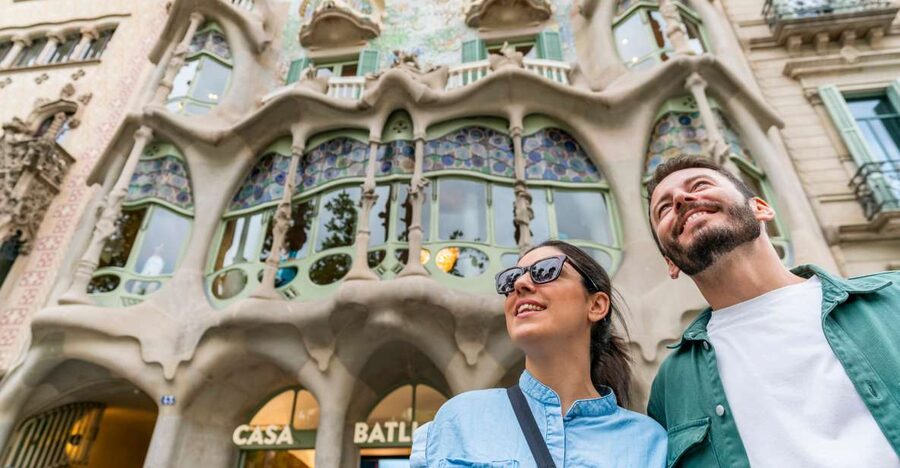
The route takes you through Casa Batlló at your own pace. It is well signed, so you do not need to follow a live group or worry about missing the next stop.
The furnished areas are among the most rewarding parts. They make the building feel less like an empty monument and more like a home designed around unusual ideas. The shapes are playful, but they are not random. Curved ceilings, organic forms, and carefully handled light show Gaudí’s interest in nature and movement.
The main room is a good reason to visit early. Morning light can stream through the windows and change the mood of the space. If you enjoy photography, pause here rather than simply taking one quick picture and moving on. The changing light reveals details that can disappear when the room is crowded.
The route also lets you examine the house from close range. You can see how decorative features work with practical parts of the building, rather than treating decoration as an afterthought. The audio guide supplies background as you go, so you can listen in the rooms instead of trying to absorb a long explanation at the entrance.
The provided headset is useful for this style of visit. You can stop the commentary, look around, and continue when ready. That freedom is a major advantage over a tightly timed group tour.
The audio guide and virtual reality tablet
The audio guide is available in 15 languages: Catalan, Spanish, English, Italian, French, Chinese, Dutch, German, Japanese, Korean, Polish, Portuguese, Romanian, and Russian.
The tablet is the more unusual part of the package. It uses augmented reality, virtual reality, and machine learning to add digital views to selected areas. You may see how a room was furnished, how an original feature looked, or how Gaudí’s ideas can be read through a modern visual layer.
I like this addition because Casa Batlló can otherwise be difficult to interpret. You are looking at an extraordinary building, but not every design choice explains itself. The tablet gives you a visual comparison that plain text cannot provide.
There is a price for that convenience. You must carry the device as you walk. One person found the tablet annoying to hold, while others felt it added greatly to the visit. My advice is to use it selectively. Watch the digital scenes where they clarify the architecture, then lower it and look at the actual room with your own eyes.
You should also keep your attention balanced. Gaudí’s real surfaces are the reason to come. The screen is a helpful guide, not a replacement for the carved wood, colored glass, unusual ceilings, and daylight in front of you.
Same base, a different kind of afternoon:
- Barcelona: 24 or 48-Hour Hop-On Hop-Off Bus Tour
★ 4.4 · 20,872 reviews - Barcelona: Park Guell Guided Tour with Skip The Line Entry
★ 4.7 · 17,563 reviews - Barcelona in 1 Day: Sagrada Familia, Park Guell,Old Town & Pickup
★ 5.0 · 13,541 reviews - Barcelona Aquarium: Entry Ticket
★ 4.3 · 13,335 reviews
The Gaudí Dome and its digital atmosphere

The Gaudí Dome is one of the newer additions to the route. It uses more than 1,000 screens to create a dome filled with shifting images and light.
This room changes the tone of the visit. The earlier spaces ask you to inspect material details. The Dome offers a sensory pause, surrounding you with moving visuals and sound inspired by Gaudí’s ideas.
The soundtrack was created by Dani Howard and performed by the Berlin Symphony Orchestra. That musical element gives the room a more theatrical feel, and it helps explain why some people describe the experience as more than a standard historic-house tour.
Still, you should know what you are buying. The Dome is a digital installation, not an original Gaudí room. If your ideal visit focuses only on preserved architecture, you may find it less important than the furnished interiors. If you enjoy the meeting of art, technology, and music, it adds real value.
The Gaudí Cube at the end
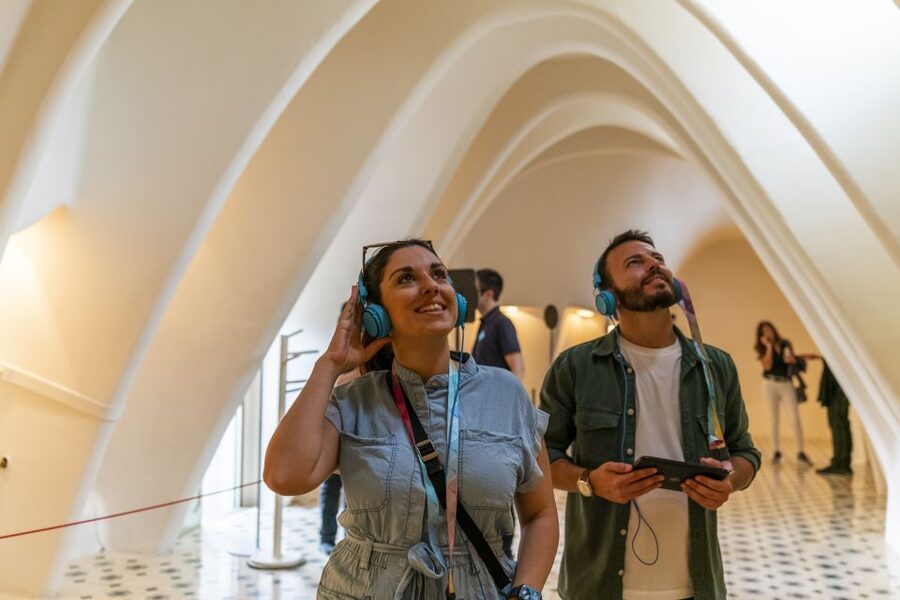
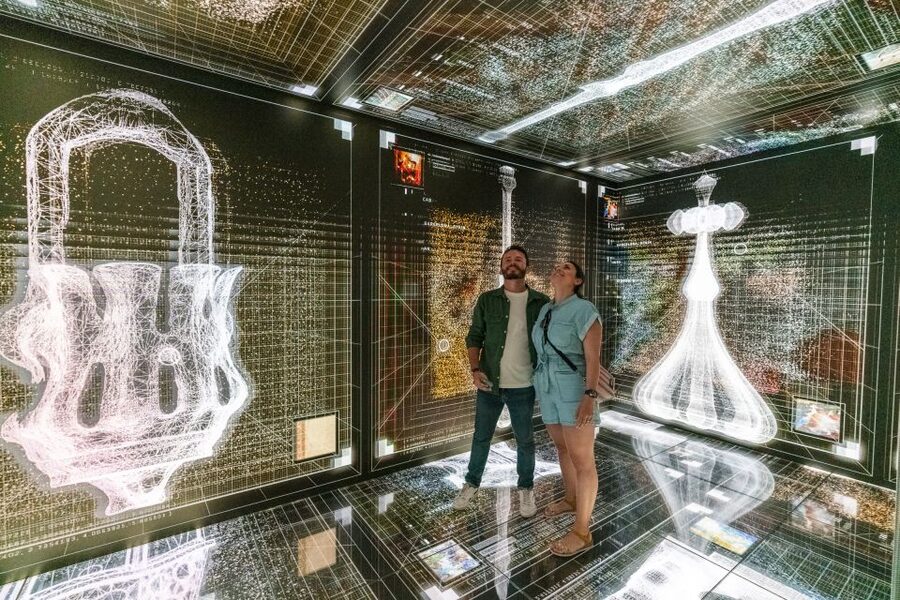
The Gaudí Cube is a six-sided LED cube, described as unique in the world. It uses indoor mapping and moving imagery to create a highly visual final room.
This is the attraction’s big finish. The Cube presents Gaudí’s work from a different angle, using scale, light, and motion instead of conventional labels. One early visitor entered with only four other people and could see the entire room clearly, a strong argument for choosing the first time.
The Cube will not suit everyone. One person reported feeling nauseous inside it. If moving images or enclosed digital installations affect you, step in carefully and leave if you feel uncomfortable. The experience is optional in spirit, even if it forms part of the route.
For most people, it is a memorable conclusion, particularly after seeing the real house first. I would not book Casa Batlló only for the Cube, but I do think it makes the ticket feel more distinctive than a basic audio tour.
Kengo Kuma’s floating marble staircase
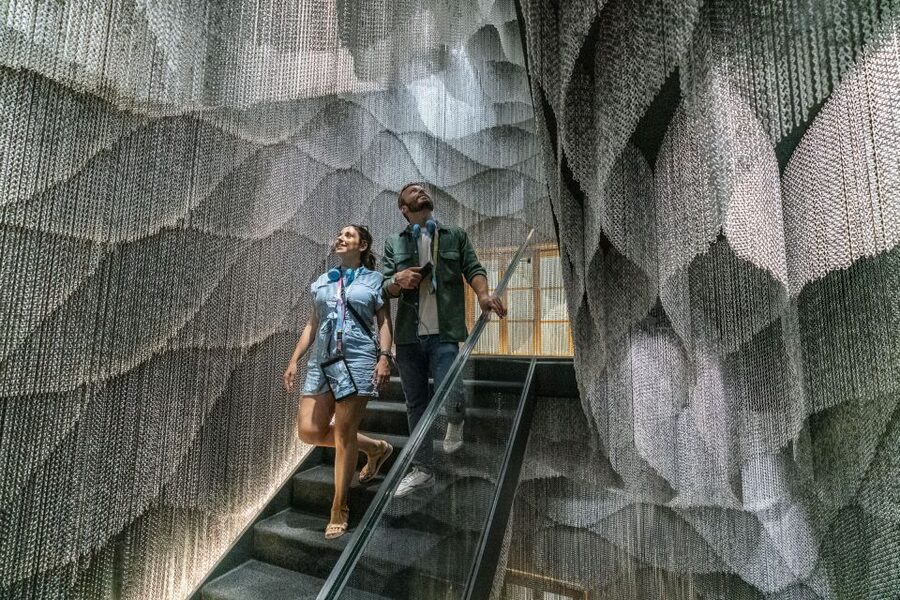
The visit also includes a new vertical communication area designed by Japanese architect Kengo Kuma. Its central feature is a floating ladder made from 13 tons of polished marble.
That detail gives the experience a modern counterpoint. Much of the visit is about Gaudí’s historic design language, while Kuma’s structure shows how contemporary architecture can respond to the older building without copying it.
The staircase is worth taking a moment to view rather than treating it as a passage between rooms. Its weight and suspended appearance create an appealing visual contradiction. It also gives the route another photo opportunity, though the best angle will depend on how crowded the area is.
The original Concierge Room and extra displays
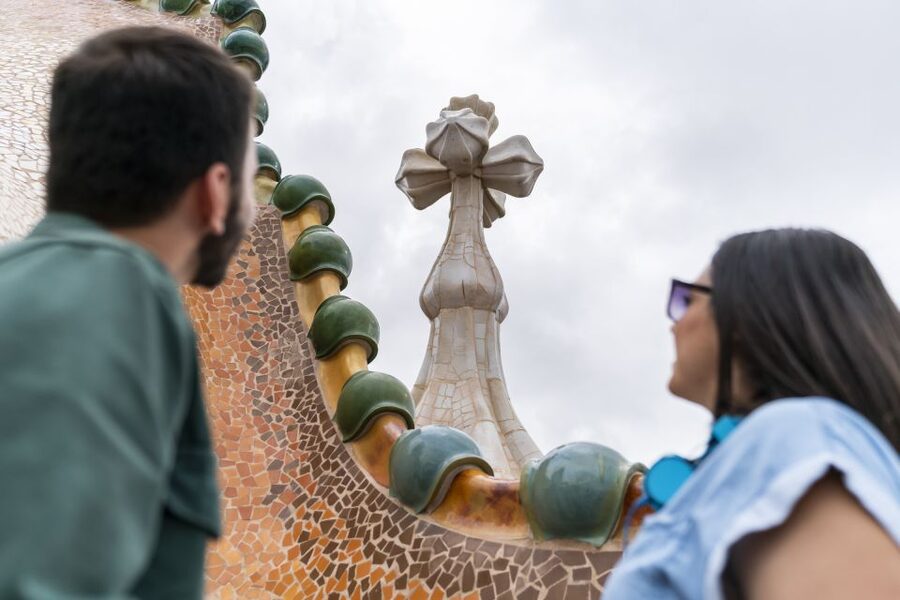
The original Concierge Room is included with this experience. It offers another glimpse into the practical side of the house, rather than showing only its grand decorative spaces.
That balance matters. Casa Batlló can seem like a parade of beautiful surfaces, but the smaller service areas help explain how the building functioned as a home. The audio commentary is useful here because it gives you a reason to notice rooms that might otherwise receive only a passing glance.
The route also includes a six-sided indoor mapping feature on a patio associated with Gaudí’s use of light. Together with the Dome and Cube, it creates a technology-heavy finish to a building that is often introduced through its stonework and balconies.
A new Simbolic store follows the exhibition route. It sells design-related souvenirs and other items connected to the house. You do not need to buy anything, but it is worth leaving a little time if you like museum shops with a stronger connection to the building than generic postcards.
How long the visit takes and how to use your time
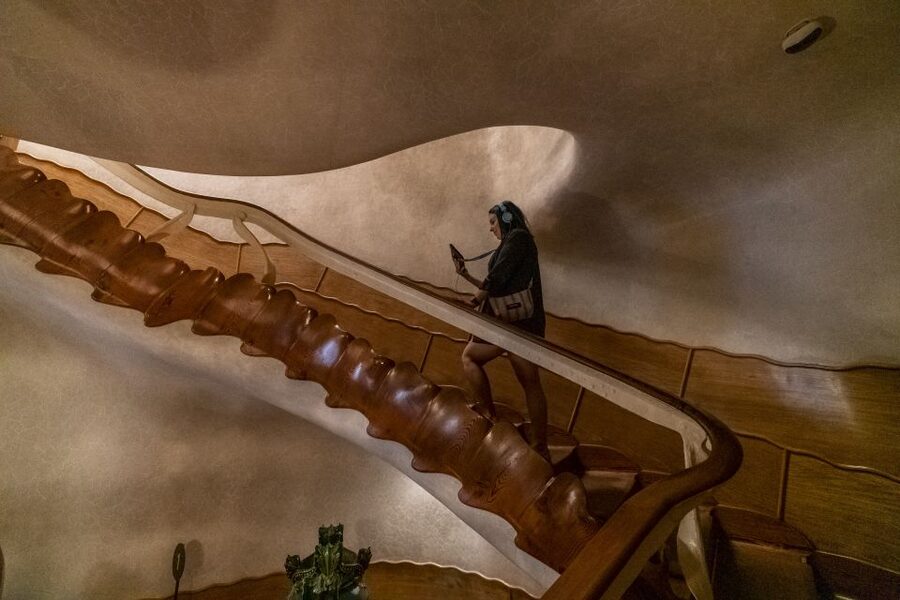
You can see the house in about 90 minutes without rushing. That timing allows for the audio guide, tablet scenes, photographs, and the final digital rooms.
I would not try to listen to every explanation while walking continuously. Stop in the main rooms, look up and around, and use the commentary to focus your attention. The best moments come when you let the technology support your observation instead of turning the visit into a screen-based tour.
A simple plan works well:
- Enter early and take the first rooms slowly.
- Spend extra time in the main room while morning light is at its best.
- Use the tablet for the virtual reconstructions, then look at the original details without it.
- Pause for photographs before the route becomes more crowded.
- Give yourself time for the Gaudí Dome and Cube at the end.
- Browse the Simbolic store only after you have finished the house.
Some early bookings have reported that the attraction was already busy even at the first time. That is possible, especially in high season. First entry does not guarantee an empty building, but it gives you your best chance at a peaceful visit.
Is the $53 ticket good value?
At roughly $53 per person, this is an expensive self-guided attraction. You do not receive a live guide, and the tour can be completed in around 90 minutes.
The value comes from four things: the building itself, the reduced crowd level, the audio guide, and the digital additions. If you would otherwise visit during a crowded midday period, paying more for the first slot can make the house far easier to appreciate. The extra cost is buying time and space, not just entry.
I would be less enthusiastic about the price if you are mainly interested in seeing Casa Batlló from the street. The exterior is impressive, and the interior ticket may feel excessive if your schedule is tight or your interest in architecture is limited.
For Gaudí fans, photographers, and people who enjoy well-designed museum technology, the cost is easier to justify. Several bookings described the early admission as worth every dollar or euro, especially because the crowds increased quickly after the first entry.
Check the exact ticket category before paying. One booking described a silver ticket that did not include access to certain rooms reserved for gold tickets. The experience described here includes the Gaudí Dome, Gaudí Cube, original Concierge Room, audio guide, and virtual tablet, but ticket categories can differ, so read the inclusions carefully.
Who will enjoy this experience most?
I would recommend it to you if you want to:
- Photograph Casa Batlló without people filling every frame.
- Study Gaudí’s designs at a relaxed pace.
- See furnished rooms rather than only an empty architectural shell.
- Use audio and digital tools to understand what you are seeing.
- Combine historic architecture with modern sound and visual installations.
- Visit one of Barcelona’s major cultural sites before the day becomes crowded.
Families may appreciate the tablet and the Cube because they add movement and interaction to rooms that could otherwise require long stretches of quiet looking. Strollers can be stored in the checkroom if needed.
It also works well for solo visitors and couples because you can move independently. You are not tied to a guide’s pace, and you can pause for photographs or skip commentary that does not interest you.
The experience is wheelchair accessible. Casa Batlló also works with Specialisterne and has a neurodivergent team assisting visitors, part of its commitment to autism and employment inclusion. That is a thoughtful practical feature for people who value more attentive support during a cultural visit.
Should you book the first entry ticket?
Yes, if Casa Batlló is high on your Barcelona list. The early start is the strongest part of the package. It gives you better photographs, more room to look around, and a quieter period before larger groups arrive.
I would book it for architecture lovers, first-time visitors who want the full experience, and anyone willing to pay extra for comfort. I would skip it if you only want an exterior photograph, dislike digital installations, or prefer a live guide explaining the building in person.
Arrive early, choose the first available time, confirm your ticket category, and use the tablet as a tool rather than letting it distract you from the real rooms. Done that way, Casa Batlló offers a memorable mix of Gaudí’s imagination, morning light, music, and modern technology.
FAQ
What does the Casa Batlló Be The First Entry ticket include?
It includes entry to Casa Batlló, an audio guide, a virtual reality tablet, and access to the Gaudí Cube, Gaudí Dome, and original Concierge Room.
Is there a live guide?
No. This is a self-guided visit using the audio guide and virtual tablet.
Which languages are available for the audio guide?
The audio guide is available in Catalan, Spanish, English, Italian, French, Chinese, Dutch, German, Japanese, Korean, Polish, Portuguese, Romanian, and Russian.
How long is the ticket valid?
The ticket is valid for one day. Starting times vary, so you need to check availability for your chosen date.
Is Casa Batlló wheelchair accessible?
Yes, the experience is wheelchair accessible.
Can I store luggage or a stroller?
Yes. Casa Batlló has a checkroom where you can store luggage and strollers if needed.
Recently listed in Barcelona
- Transfers From Cruise Port to Barcelona Airport★ 4.5 · 155 reviews
- Bohemian Barcelona Neighborhood Evening Tapas & Wine Tour★ 5.0 · 419 reviews
- Park Guell Guided Tour with Skip the Line Tickets★ 4.0 · 739 reviews
- Barcelona Sunset Cruise with Light Snacks and Open Bar★ 5.0 · 476 reviews
- Montserrat very early : Hiking, Abbey, very small group★ 5.0 · 127 reviews
- Authentic Flamenco Show Barcelona : Intimate Casa Sors Experience★ 5.0 · 809 reviews
- Barcelona Expert Tour with Local Guide in Eco Tuk Tuk Private★ 5.0 · 216 reviews
- Barcelona: Sagrada Familia, Park Guell & Tapas Private Tour★ 5.0 · 903 reviews
Tickets, compared.
Sagrada Familia Entry Ticket with Audio Guide
Read our review →