Reviewed · SKIP THE LINE
Barcelona: Fundació Joan Miró Skip-the-Line Entry Ticket
Miró’s museum is art inside art. I like the peaceful Montjuïc setting and the way Josep Lluís Sert’s bright, open building gives every painting room to breathe. I also like the clear presentation of Miró’s changing style, from his links with surrealism to his paintings, sculptures, and experiments with other media. The one drawback is simple: the museum is smaller and more remote than Barcelona’s major headline attractions, and the skip-the-line benefit may not matter much on a quiet day.
At about $8 per person, this is one of Barcelona’s more affordable museum visits. You can enter for a full day, see the permanent collection and temporary exhibitions, and take a break in the café or outdoor spaces. I would plan around two hours for a focused visit, and closer to three hours if you want to sit with the art, see the sculptures, and enjoy the views.
In This Review
- Key points to know before you go
- Why the Fundació Joan Miró feels different
- Getting to Montjuïc and starting your visit
- Seeing Miró’s work in chronological stages
- The building by Josep Lluís Sert
- Temporary exhibitions and Espai 13
- How long to stay and how to pace the visit
- Audio guides, phones, and useful extras
- Is $8 good value?
- Who should visit the Fundació Joan Miró?
- Practical booking advice
- Should you book it?
- FAQ
- Where is the Fundació Joan Miró?
- What does the ticket include?
- How much does admission cost?
- How long is the ticket valid?
- Does the ticket include a tour guide?
- Is the museum wheelchair accessible?
- Where do I exchange the voucher?
- Does the ticket include the audio guide?
- What should I bring?
- Can I eat inside the museum?
- Does the skip-the-line ticket include a senior discount?
- When is the foundation closed?
Key points to know before you go
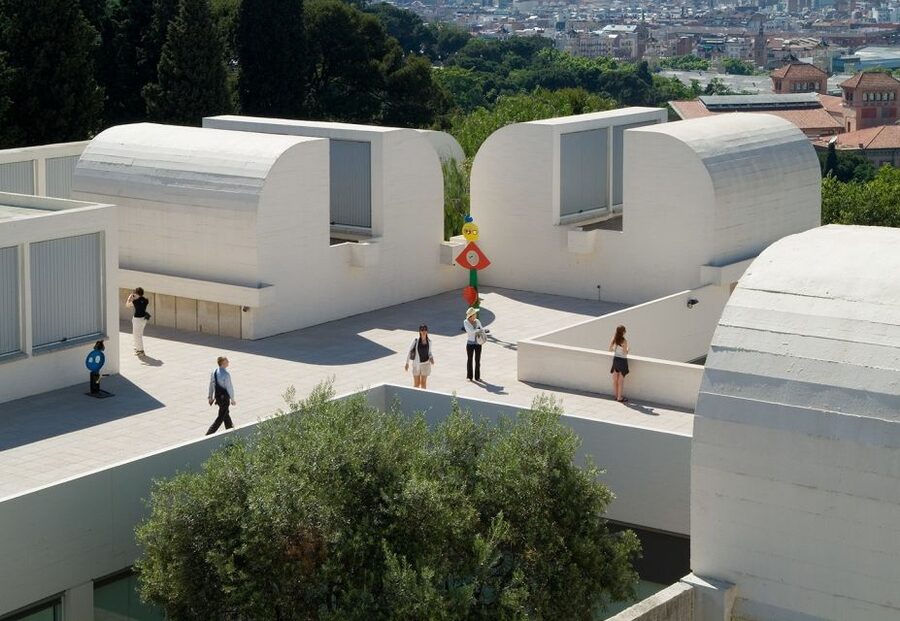
- Sert’s building is part of the experience: Miró’s friend Josep Lluís Sert designed a light-filled modernist space that feels more like a calm art garden than a conventional museum.
- The setting is Montjuïc: You get art, open air, gardens, and broad views over Barcelona in one stop.
- The collection covers Miró’s artistic life: Expect paintings, sculptures, and work linked to his interest in poetry, surrealism, and unusual forms of expression.
- The skip-the-line ticket is useful but not essential: Several people found the museum quiet, so buying ahead is mainly helpful for keeping your plans flexible.
- Temporary exhibitions are included: Your ticket also covers changing shows and Espai 13, which focuses on emerging artists and activities for different ages.
- Early morning works well: The museum is at its most peaceful before the later crowds, giving you a better chance to appreciate the building’s light and space.
Why the Fundació Joan Miró feels different
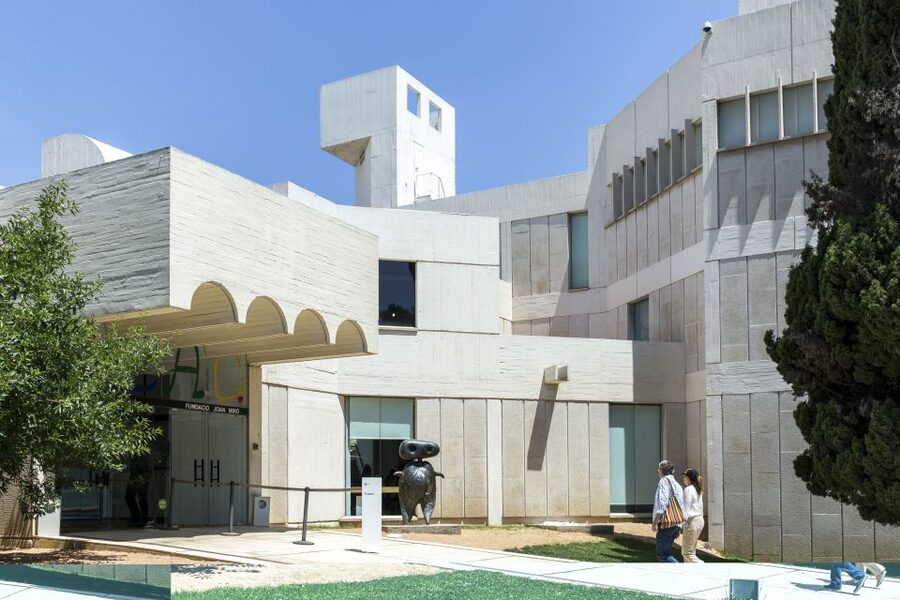
Barcelona has no shortage of famous museums, but the Fundació Joan Miró offers a slower kind of outing. You are not simply moving from one packed room to another. The building, terraces, courtyards, and views are all part of the visit.
Miró helped establish the foundation in 1975 as a place where art could be shown in a setting connected to nature and everyday life. Sert’s design supports that idea with white walls, skylights, open courtyards, and long sight lines. You get frequent changes in scale and light, which keeps the building from feeling like a plain box for paintings.
I especially like that the museum does not treat architecture as a separate attraction. The building frames the works without competing with them. A sculpture seen against the sky feels different from a painting shown in a tightly enclosed gallery, and the museum makes good use of that contrast.
The location also changes the rhythm of your day. Montjuïc is greener and quieter than the old city center, so this visit can be a welcome pause after busy streets, crowded churches, and Gaudí sites. The tradeoff is that you need to make your way uphill to the museum area, so it takes more planning than a museum in the Gothic Quarter.
A few more Barcelona ideas to compare
- Barcelona: Sagrada Familia Entry Ticket with Audio Guide
★ 4.6 · 105,312 reviews - Barcelona: Park Güell Admission Ticket
★ 4.4 · 76,534 reviews - Barcelona: Casa Batlló Entry with Self-Audioguide Tour
★ 4.7 · 25,359 reviews
Getting to Montjuïc and starting your visit
Your voucher is shown at the Fundació Joan Miró reception, where it is exchanged for the museum ticket. The ticket is valid for one day, but access is allowed only until one hour before closing, so do not leave this stop until the final part of the afternoon.
Public transport links include the funicular railway, which makes the Montjuïc location easier to reach than it might first appear. You can also combine the museum with other sights in the area. One useful plan is to visit the National Museum of Catalan Art nearby, then continue through the parks toward the Miró foundation.
The museum is wheelchair accessible, an important practical point for anyone planning a full day around Montjuïc. Food and drinks are not permitted in the galleries, although you can use the café for a break. The café and courtyard are useful because this is a place where you may want to slow down rather than rush through.
Show your voucher at reception even if there is no queue. On quiet days, the entrance process may be just as quick without a skip-the-line product. The advantage of booking is less about saving a dramatic amount of time and more about having your entry arranged in advance.
Seeing Miró’s work in chronological stages
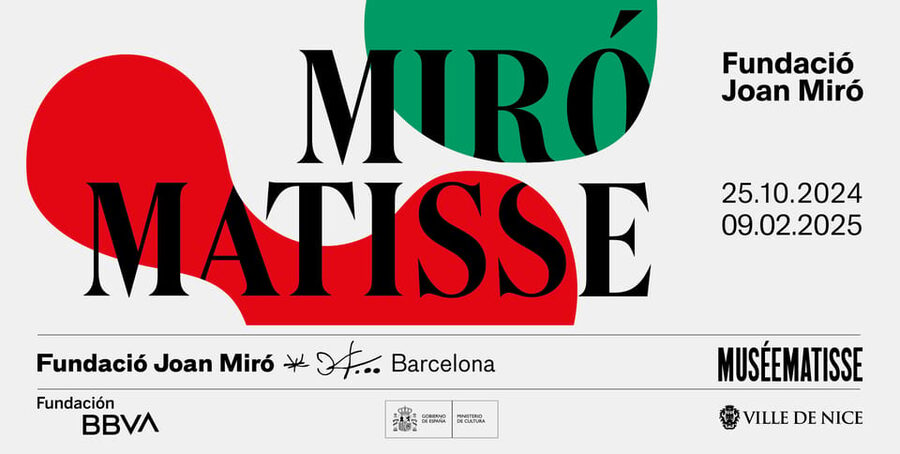
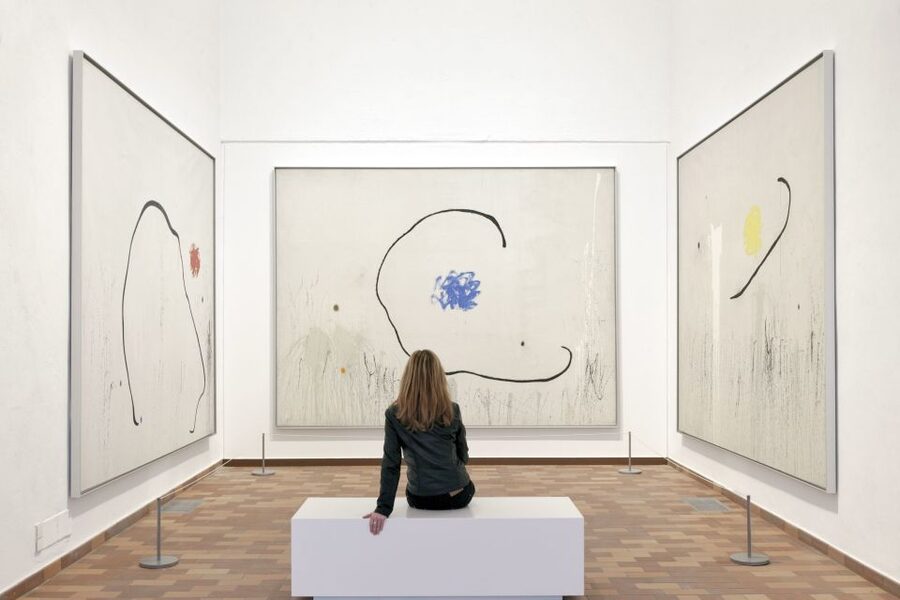
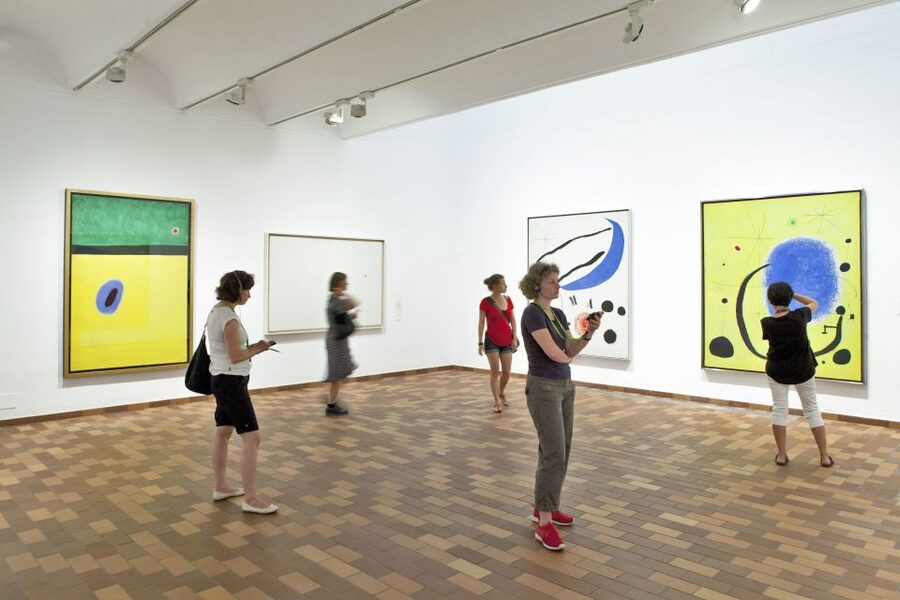
The permanent collection gives you an overview of Miró’s development rather than presenting a random selection of famous images. You can follow his contact with the avant-garde, his relationship with surrealism, and the growing influence of poetry on his personal visual language.
That background matters because Miró’s work can look deceptively simple. A few lines, bold shapes, or strange symbols may seem easy to copy, but the museum helps show how those ideas developed over decades. You get a better sense of his process and his refusal to remain tied to one conventional form of painting.
I would not approach the collection expecting a traditional story of Spanish art. Miró’s work is more private and imaginative. His symbols can suggest stars, birds, figures, or fragments of writing, but they do not always offer a single clear answer. The useful question is not always what an image represents. It can be more interesting to ask how the marks, colors, and empty spaces make you feel.
The displays include paintings and sculptures, along with work in other media. One particularly worthwhile detail is the presentation of the Constellations pieces, where you may be able to see both sides of individual works. That kind of display helps you notice the physical nature of the art, rather than treating each piece as a flat image on a wall.
If you know little about Miró, do not worry. The written descriptions are clear enough to provide a helpful introduction, and the layout allows you to build an understanding as you move through the rooms. If you already admire his work, you will have enough variety to make the visit worthwhile without needing to know every detail beforehand.
The building by Josep Lluís Sert
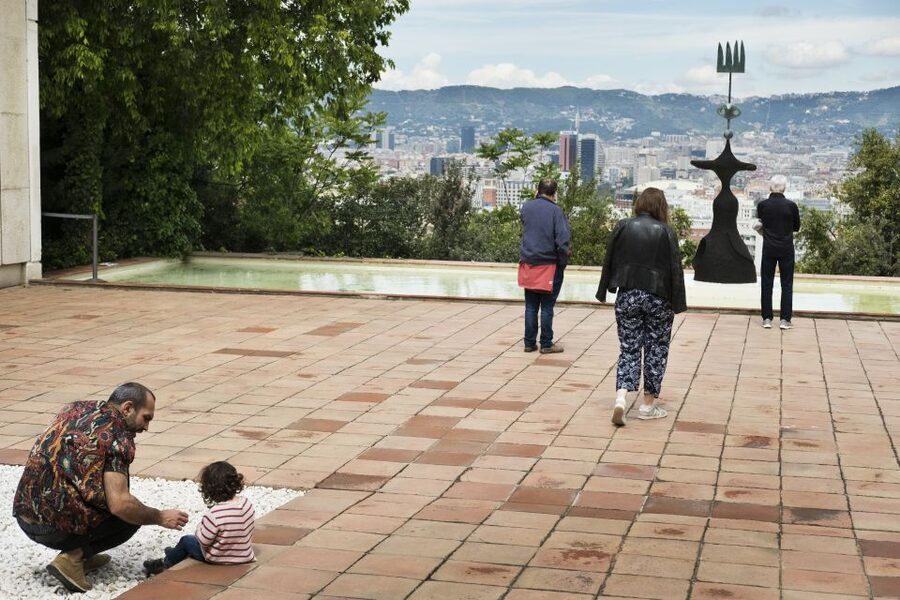
Sert was a close friend of Miró, and his design is one of the strongest reasons to visit even if modern art is not your usual choice. The building uses light, white surfaces, courtyards, terraces, and simple geometric forms to create a calm setting.
Several parts of the museum give you space to pause. There is seating in the galleries, and a relaxation area on the ground floor. That may sound minor, but it makes a real difference with abstract art. You can sit for a few minutes instead of treating the collection like a checklist.
Look outside as you go. The outdoor areas include sculptures, and selected points provide views over Barcelona. It is easy to focus only on the indoor galleries and miss these spaces, so I would make a deliberate loop through the terraces and sculpture areas.
The setting is especially pleasant in the morning, when the museum can feel open and uncrowded. That is also when the building’s light is easiest to appreciate. Later in the day, you may still enjoy the visit, but a quiet start gives you more room to think and take photographs where permitted.
Same base, a different kind of afternoon:
- Barcelona: 24 or 48-Hour Hop-On Hop-Off Bus Tour
★ 4.4 · 20,872 reviews - Barcelona: Park Guell Guided Tour with Skip The Line Entry
★ 4.7 · 17,563 reviews - Barcelona in 1 Day: Sagrada Familia, Park Guell,Old Town & Pickup
★ 5.0 · 13,541 reviews - Barcelona Aquarium: Entry Ticket
★ 4.3 · 13,335 reviews
Temporary exhibitions and Espai 13
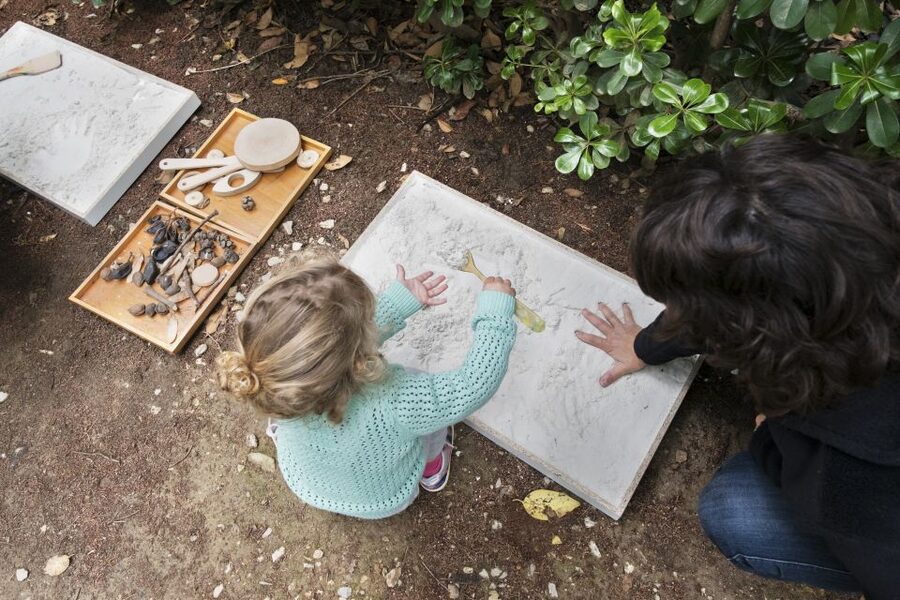
Your admission includes temporary exhibitions, so the experience is not limited to Miró’s permanent collection. The program can add a different voice to the visit, especially through Espai 13, which presents work by emerging artists.
This section may appeal to you if you want to connect Miró’s experimental spirit with newer forms of art. It also helps prevent the museum from feeling frozen in the past. You see the foundation as both a home for Miró’s work and a place that supports current artistic practice.
The quality and size of temporary shows can change, so I would check what is scheduled for your date if a particular exhibition is important to you. The ticket information also notes that the collection presentation may occasionally be renewed, with some rooms affected during installation or refurbishment.
That point is worth taking seriously. If the main reason for your visit is to see a specific group of Miró works, confirm what is on display before you book. During one stated renewal period, reduced prices were offered because access to some collection rooms was limited, while other exhibitions remained open.
How long to stay and how to pace the visit
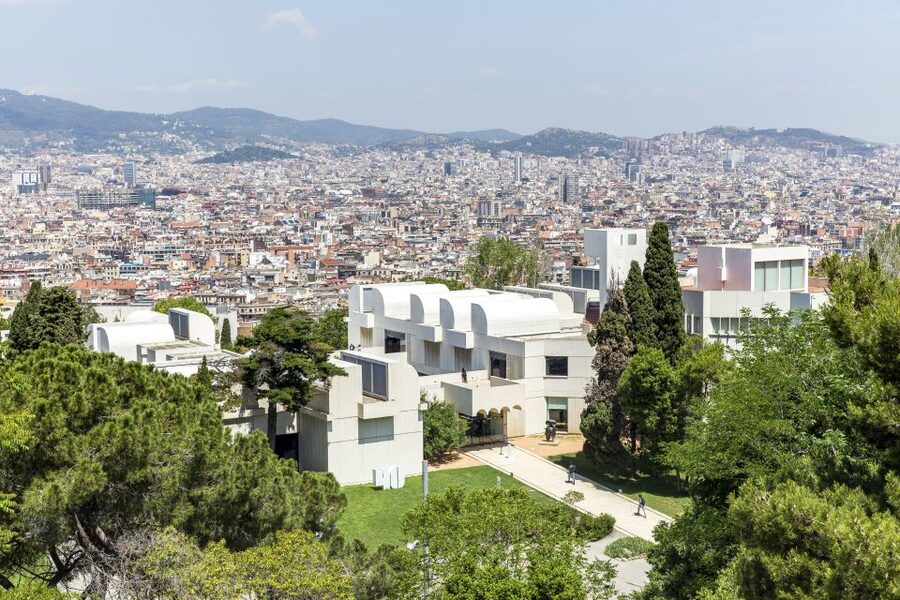
You can technically see the museum in about two hours, but I would not rush it. Two hours is enough for the main collection, the temporary displays, and a quick look at the outdoor sculptures.
Allow around three hours if you want to read the labels, sit with several works, stop at the café, and enjoy the Barcelona views. One person spent two hours before closing and still did not see everything, which is a useful warning against arriving too late.
A sensible route is:
- Begin with the main Miró collection while your attention is fresh.
- Stop at the temporary exhibitions and Espai 13.
- Return to any work that caught your attention.
- Walk through the outdoor sculpture areas and viewpoints.
- Finish with the café, courtyard, or gift shop.
You do not need to understand every painting. Miró’s work rewards a little time and curiosity, but it is not an exam. If a particular piece leaves you cold, move on. The museum gives you enough variety to find another doorway into his work.
Audio guides, phones, and useful extras
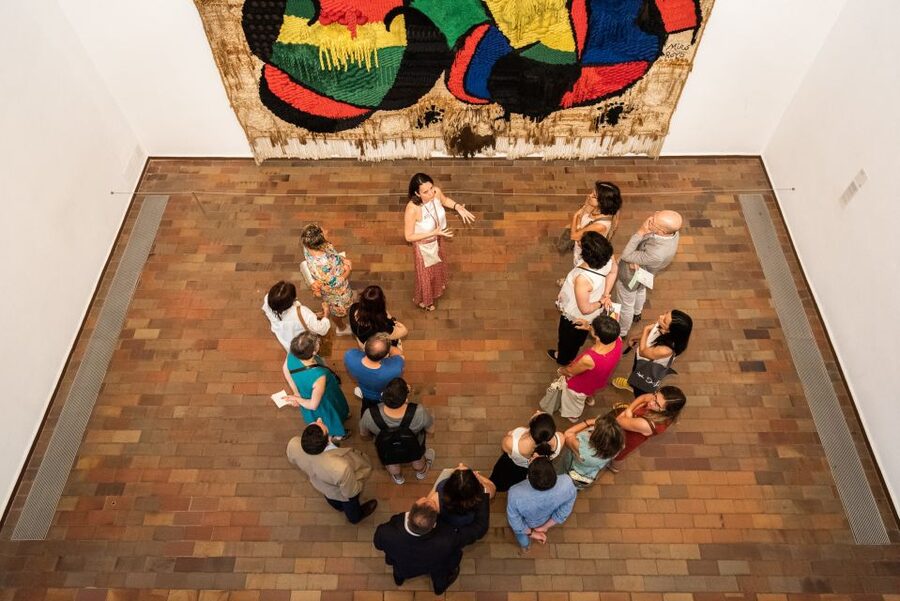
Bring a charged smartphone and headphones. The practical instructions specifically recommend both, although the audio and video guides are purchased separately inside the museum rather than included with this ticket.
Video guides are available in Catalan, Spanish, English, French, German, and Italian. Audio guides are listed in Japanese, German, and Italian. The language choices may not suit everyone, so check at the museum if you want a guided layer to the visit.
Written explanations are clear enough for a basic introduction, especially if you do not know much about Miró. Still, an audio guide can add useful context about his artistic development and the meaning of particular works. If you prefer a human guide, guided visits may be available separately, but no tour guide is included with this admission.
The gift shop is worth a short look. It has a good selection of posters at reasonable prices, which is a practical way to take home something connected to the museum without buying an expensive original work. The selection of Miró drawings may not satisfy everyone, so expectations should stay modest.
Is $8 good value?
At $8, this is a strong-value museum ticket for Barcelona. You receive entrance to the permanent collection, temporary exhibitions, and Espai 13 for one day. The price also makes it easier to return or spend more time on a second visit if your schedule allows.
The value depends partly on your interest in modern art. If Miró’s abstract symbols and surrealist ideas appeal to you, the price is excellent. You get a dedicated museum, a notable building, outdoor sculpture areas, views, and a quiet setting without paying the prices associated with some of Barcelona’s biggest attractions.
If you are trying to see only the most famous sights, the uphill journey may feel like extra work. The collection is not enormous, and one person described the museum as limited in the number of works. I would not call this an all-day attraction for most people, but the modest size can also be a benefit because you can see it properly without exhausting yourself.
The skip-the-line element is the least important part of the value on many days. The museum has often been fairly quiet, and some people found no queue at all. I would choose this ticket for the low price and included exhibitions first, then treat faster entry as a useful bonus.
Who should visit the Fundació Joan Miró?
I would recommend it most strongly to:
- Anyone who already likes Miró or wants a focused introduction to his work.
- People interested in modernist architecture and museum design.
- Families who prefer a manageable museum with activities connected to different ages.
- Art lovers looking for a quieter stop away from central Barcelona.
- Anyone combining Montjuïc with the National Museum of Catalan Art and the surrounding parks.
- Repeat Barcelona visitors who have already seen the major central sights.
I would be more cautious if you have only a few hours in the city and no interest in modern or surrealist art. In that case, the location may take too much time compared with sights closer to your hotel.
The museum also works well for people who think they do not like Miró. The clear displays and range of paintings and sculpture give you a chance to understand the ideas behind the work. You may not leave converted, but you will likely have a fairer view of the artist than you would get from seeing one famous print in a crowded shop.
Practical booking advice
You can cancel up to 24 hours before the visit for a full refund, and the reserve-now, pay-later option keeps your plans flexible. The ticket does not include transport, food, drinks, souvenirs, or a guide.
The foundation closes on January 1 and December 25 and 26. Seniors do not receive a reduction on this skip-the-line ticket, so compare the available ticket types if you qualify for another discount.
For the best experience, go early, keep your phone charged, and leave time for the sculpture terraces. Do not arrive less than an hour before closing. A quiet two to three hours here is far more rewarding than a hurried visit squeezed between other appointments.
Should you book it?
I would book the Fundació Joan Miró ticket if you want a calm, thoughtful museum visit with excellent architecture and city views. The $8 price is hard to argue with, especially since temporary exhibitions are included.
I would not book it solely to avoid a queue. On many days, entry may be quick anyway. Book because you want Miró, Sert’s building, Montjuïc, and a museum that gives you space to look closely. If that combination sounds right, this is one of Barcelona’s best-value art stops.
FAQ
Where is the Fundació Joan Miró?
It is in the Parc de Montjuïc in Barcelona, Catalonia, Spain.
What does the ticket include?
The ticket includes entrance to the museum and the temporary exhibitions, including exhibitions presented through Espai 13.
How much does admission cost?
The listed price is $8 per person.
How long is the ticket valid?
The ticket is valid for one day.
Does the ticket include a tour guide?
No. A tour guide is not included.
Is the museum wheelchair accessible?
Yes, the foundation is wheelchair accessible.
Where do I exchange the voucher?
Show your voucher at the Fundació Joan Miró reception. Staff will exchange it for the museum ticket.
Does the ticket include the audio guide?
No. Audio and video guides can be purchased separately inside the museum.
What should I bring?
Bring a charged smartphone and headphones, particularly if you plan to use a guide or museum content on your device.
Can I eat inside the museum?
Food and drinks are not permitted inside the foundation, except in the café.
Does the skip-the-line ticket include a senior discount?
No. The skip-the-line ticket does not include a senior reduction.
When is the foundation closed?
The foundation is closed on January 1 and December 25 and 26.
Recently listed in Barcelona
- Transfers From Cruise Port to Barcelona Airport★ 4.5 · 155 reviews
- Bohemian Barcelona Neighborhood Evening Tapas & Wine Tour★ 5.0 · 419 reviews
- Park Guell Guided Tour with Skip the Line Tickets★ 4.0 · 739 reviews
- Barcelona Sunset Cruise with Light Snacks and Open Bar★ 5.0 · 476 reviews
- Montserrat very early : Hiking, Abbey, very small group★ 5.0 · 127 reviews
- Barcelona: Sagrada Familia, Park Guell & Tapas Private Tour★ 5.0 · 903 reviews
- Authentic Flamenco Show Barcelona : Intimate Casa Sors Experience★ 5.0 · 809 reviews
- Barcelona Expert Tour with Local Guide in Eco Tuk Tuk Private★ 5.0 · 216 reviews
Skip the Line, compared.

Park Guell Guided Tour with Skip The Line Entry
Read our review →
Cathedral of Mallorca Skip-the-Line Entry Ticket
Read our review →
Sagrada Familia Skip-the-Line Entry Ticket & Tour
Read our review →
Park Guell Guided Tour with Skip the Line Ticket
Read our review →
Royal Palace Expert Guided Tour with Skip-the-Line
Read our review →
Cordoba Mosque-Cathedral: Skip-the-Line Guided Tour
Read our review →
Park Guell and Sagrada Familia Tour with Skip the Line Tickets
Read our review →