Reviewed · BARCELONA TOURS
Barcelona & Gaudi. Regular Tour
Barcelona’s buildings tell a stranger story than postcards suggest. This three-hour architecture walk connects Gaudí’s major works with politics, religion, class, and Barcelona’s Modernist movement, led by practicing architects who can explain how these buildings work, not just how they look. I like the small maximum of 20 people, and I like that the route includes Casa Calvet, Casa Amatller, and the Antoni Tàpies Foundation alongside the better-known landmarks.
The $54.44 price feels fair if you want ideas and context rather than entry tickets. You will see the exteriors only, so this is not the right choice if your main goal is to tour the interiors of Casa Batlló or La Pedrera. Also, the talk can become intellectually dense, especially when it moves into utopian socialism, anarchism, and Gaudí’s religious vision.
In This Review
- Key points to know before you book
- Why this Barcelona architecture walk is different
- Starting at Monument al Llibre on Gran Via
- Casa Milà, or La Pedrera, and Gaudí’s mature style
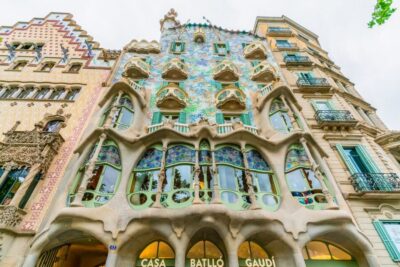
- Casa Batlló and the façade that demands attention
- Casa Calvet, a quieter side of Gaudí
- La Mansana de la Discordia and Modernist competition
- Fundació Antoni Tàpies and the wider Modernist story
- Courtyards, context, and details above the street
- The guide makes or breaks this experience
- Is $54.44 a fair price?
- Who should book this walk?
- Booking, weather, and cancellation details
- My final call on Barcelona and Gaudí
- FAQ
- How long does the Barcelona and Gaudí tour last?
- What time does the tour begin?
- Where does the tour begin?
- Where does the tour end?
- Is the tour offered in English?
- What is the maximum group size?
- Do I enter Casa Batlló or Casa Milà?
- Which buildings are included?
- How much does the tour cost?
- Can I cancel for a full refund?
Key points to know before you book
- Practicing architects lead the walk: You get more than dates and decorative trivia. The guides explain Modernist design, materials, form, and the social ideas behind the buildings.
- Gaudí is placed in his proper setting: Casa Batlló and Casa Milà make more sense when you compare them with work by Domènech i Montaner and Puig i Cadafalch.
- The maximum group size is 20: That should give you a better chance to hear the guide and ask questions than a large coach-style outing.
- The route stays outside the buildings: You will not enter Casa Batlló, Casa Milà, Casa Calvet, or the other architectural sites.
- Pia receives especially warm praise: The feedback describes her as funny, kind, passionate, and exceptionally strong at explaining Gaudí and Barcelona’s development.
- The tour begins at 10:30 a.m.: It starts at Monument al Llibre on Gran Via de les Corts Catalanes and returns there after about three hours.
Why this Barcelona architecture walk is different
Many Gaudí walks stay at the level of colorful tiles, curved balconies, and quirky chimneys. This one aims higher. It follows Barcelona’s Modernism Route and treats architecture as a record of changing ideas.
That means you may hear about the intellectual bourgeoisie, positivist materialism, utopian socialism, the Spanish Civil War, anarchism, beatification, and the religious drive that shaped Gaudí’s later work. Those subjects are not decorative extras. They help explain why Barcelona’s new urban buildings looked so experimental, and why Gaudí moved from social concerns toward a near-total focus on the divine.
I like that approach because it keeps Gaudí from becoming a cartoon genius who simply made strange houses. You get a sense of the debates and pressures around him. The phrase last great cathedral builder becomes easier to understand when you see his work as part of a long spiritual and architectural project, not just a collection of unusual façades.
The trade-off is pace. Three hours is enough time for a strong introduction, but not enough for every building or historical question to receive equal attention. If you prefer a light stroll with a few amusing facts, some of the material may feel serious. If you enjoy seeing how art connects to society, the extra context is the main reason to book.
A few more Barcelona ideas to compare
- Barcelona: Sagrada Familia Entry Ticket with Audio Guide
★ 4.6 · 105,312 reviews - Barcelona: Park Güell Admission Ticket
★ 4.4 · 76,534 reviews - Barcelona: Casa Batlló Entry with Self-Audioguide Tour
★ 4.7 · 25,359 reviews
Starting at Monument al Llibre on Gran Via
The meeting point is Monument al Llibre at Gran Via de les Corts Catalanes, 634, in the Eixample. The tour starts at 10:30 a.m. and ends at the same place, which makes planning easier if you have another activity later in the day.
Because the experience lasts about three hours, you should treat it as a walking tour rather than a quick photo stop. Wear practical shoes and arrive ready to listen outdoors. The exact walking conditions are not described, so I would keep your morning flexible and avoid scheduling a timed attraction immediately afterward.
The Eixample setting matters. Barcelona’s broad, planned blocks provide the backdrop for much of the Modernist story. The streets help you see how private homes, public ambitions, commercial wealth, and artistic competition came together in one part of the city.
The group limit of 20 is another practical advantage. That is not a private tour, but it is small enough to feel more personal than a large group moving from façade to façade. A smaller group also matters when the guide points out details above street level or pauses to compare two neighboring buildings.
Casa Milà, or La Pedrera, and Gaudí’s mature style
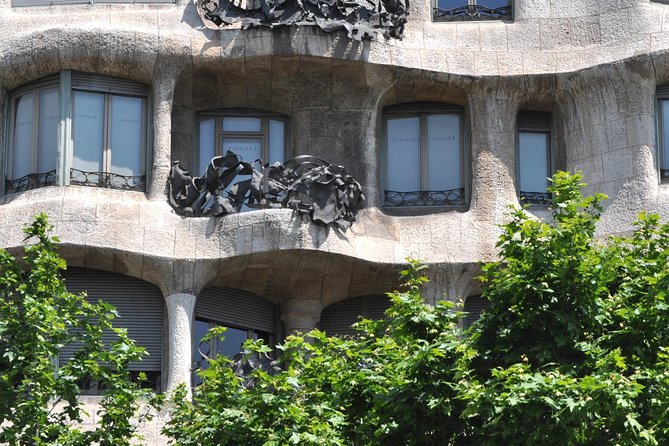
Casa Milà is one of the main stops, and it gives the guide a strong place to discuss Gaudí’s mature approach to structure and appearance. The building is famous for its flowing stone façade and irregular forms, but the point of the visit is not simply to admire its silhouette.
You will view the exterior rather than enter. That limits what you can learn about the building’s interior layout, roof, and structural details, so anyone wanting the full La Pedrera experience should plan a separate admission. Still, an architect-led explanation can help you notice the relationship between the façade, windows, balconies, and the building’s broad shape.
I would pay close attention to comparisons. Gaudí’s work becomes clearer when the guide sets it beside other Modernist buildings instead of treating it as an isolated act of imagination. Casa Milà can look like pure fantasy at first glance. The architectural discussion should show you where design choices, function, and artistic freedom meet.
Casa Batlló and the façade that demands attention
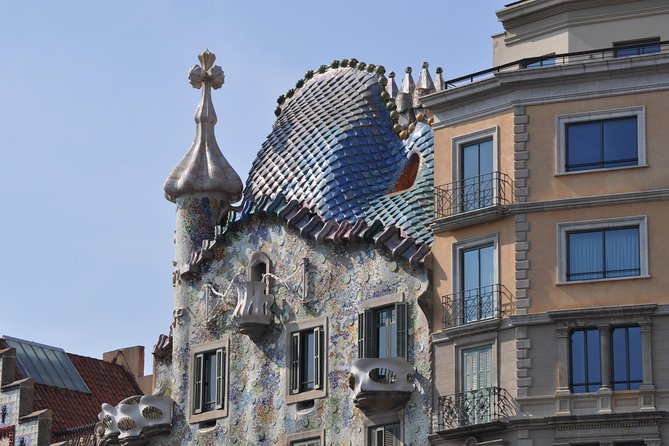
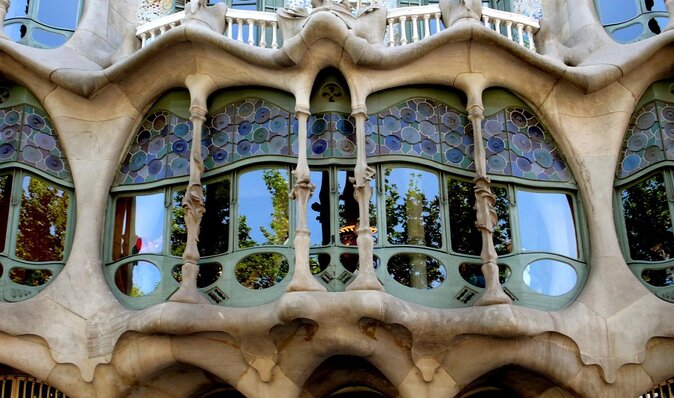
Casa Batlló is another major Gaudí stop. Its exterior is one of the easiest buildings in Barcelona to recognize, with curved surfaces, unusual color, and details that invite several interpretations.
Since you do not go inside, the visit focuses on the street-facing design and the ideas the guide can draw from it. That is useful for a first orientation, but it is also the clearest limitation of the tour. Casa Batlló’s interior spaces are a major part of the paid visitor experience, and this walk cannot replace that.
I like seeing Casa Batlló as part of a group of competing buildings rather than as a stand-alone masterpiece. The surrounding architecture gives you a sense of how much visual ambition was concentrated along this stretch of the Eixample. You are not just looking at a famous house. You are looking at a public display of taste, status, invention, and rivalry.
Take time to look up. The most memorable details are not always at eye level, and the guide’s architectural training should help you understand how the parts relate to the whole.
Same base, a different kind of afternoon:
- Barcelona: 24 or 48-Hour Hop-On Hop-Off Bus Tour
★ 4.4 · 20,872 reviews - Barcelona: Park Guell Guided Tour with Skip The Line Entry
★ 4.7 · 17,563 reviews - Barcelona in 1 Day: Sagrada Familia, Park Guell,Old Town & Pickup
★ 5.0 · 13,541 reviews - Barcelona Aquarium: Entry Ticket
★ 4.3 · 13,335 reviews
Casa Calvet, a quieter side of Gaudí
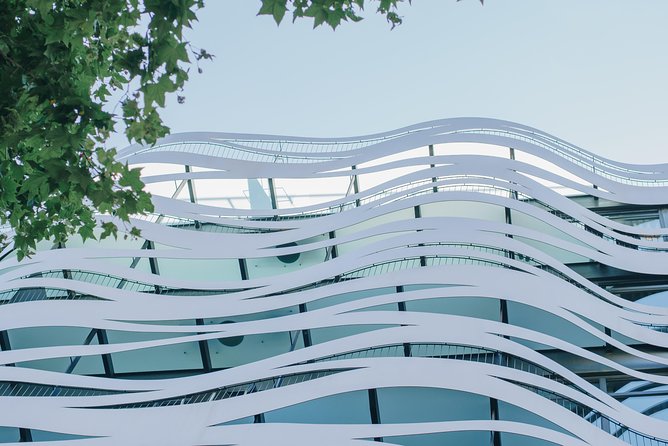
Casa Calvet offers a useful contrast with Casa Batlló and Casa Milà. It is still Gaudí, but the building can help show a more restrained side of his work and the ways an architect adapts to a particular commission.
This is one of the stops that makes the tour more useful than a simple greatest-hits walk. You see that Gaudí did not rely on one fixed visual formula. His work changed according to setting, client, purpose, and the stage of his career.
The tour does not include entry to Casa Calvet. That is less of a problem here because the exterior comparison is the point. I would listen for how the guide explains the relationship between practical building needs and Gaudí’s artistic choices.
La Mansana de la Discordia and Modernist competition
La Mansana de la Discordia, often translated as the Block of Discord, brings several important architects into the same view. The stop includes Casa Batlló, Casa Amatller by Puig i Cadafalch, and Casa Lleó Morera by Domènech i Montaner.
This is one of the strongest parts of the route. You can compare three different approaches to Modernism without crossing the city or relying on photographs. The buildings share a neighborhood and a broad period, yet they express different ideas about ornament, proportion, history, and identity.
Casa Amatller adds an important counterpoint to Gaudí. Casa Lleó Morera brings Domènech i Montaner into the story, while the broader route also points toward the Antoni Tàpies Foundation. I like this wider frame because it prevents the familiar mistake of treating Barcelona’s Modernist movement as if one architect created it alone.
The name of the block also gives the guide an opening to discuss competition among wealthy clients and architects. In this setting, architecture was not only shelter. It was also a very public statement.
Fundació Antoni Tàpies and the wider Modernist story
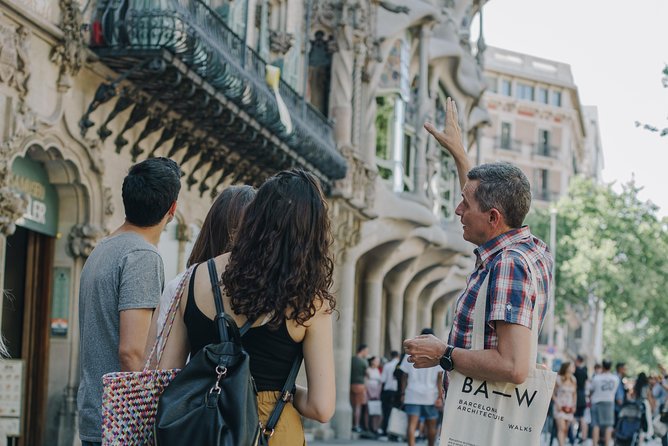
The Antoni Tàpies Foundation is included in the route, adding a later artistic layer to the walk. It helps move the discussion beyond Gaudí’s buildings and toward the way Barcelona continues to engage with modern and contemporary art.
You should not expect an interior museum visit here. The stop is part of the exterior route and the architectural discussion. Its value comes from placing the building within a broader sequence, so you can see how the city’s artistic identity developed beyond the Modernist period.
This is also where the tour’s title, Barcelona and Gaudí, becomes slightly broader than a standard Gaudí outing. Gaudí remains the central figure, but the route gives you names, movements, and buildings that make Barcelona’s architecture feel less like a one-man show.
Courtyards, context, and details above the street

The route includes some hidden Eixample courtyards. These smaller spaces may not have the instant recognition of Casa Batlló, but they can make the urban plan easier to understand.
I value this kind of pause because famous façades can turn a city walk into a checklist. Courtyards give you a chance to consider how the buildings work beyond their public faces. They also offer a change of scale after the grander monuments.
The guide may point out details that are easy to miss on your own, particularly when explaining materials, decorative choices, and the connection between architecture and social life. Since the tour is led by practicing architects, the strongest moments should come when the guide turns a visual detail into a clear explanation of how or why it was designed.
The guide makes or breaks this experience
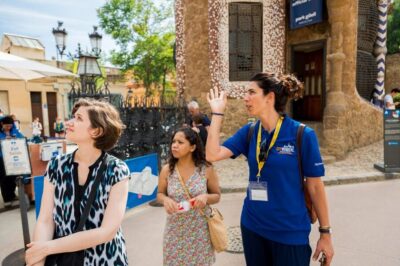
The most strongly praised feature is the guiding. The feedback gives special attention to Pia, describing her as warm, funny, compassionate, passionate, and unusually strong at explaining both Gaudí and Barcelona’s development.
That combination matters. Architecture tours can become dry when every stop turns into a list of names and dates. A guide who can connect technical ideas with humor and human stories makes three hours easier to follow. The praise for Pia also suggests that the tone can be personal rather than stiff.
You should still understand the nature of the subject. The planned material includes dense ideas such as positivist materialism, utopian socialism, anarchism, beatification, and the Spanish Civil War. A lively guide can make those topics more approachable, but the tour is not designed as a purely casual introduction.
The group size helps here. With no more than 20 people, you have a better chance of hearing explanations and raising a question. The tour is offered in English, so it suits you if you want the discussion in English rather than trying to piece together architectural terms from a multilingual group.
Is $54.44 a fair price?
At $54.44 per person, this is not the cheapest way to see Gaudí’s buildings. It is also not priced like a simple orientation walk. You are paying for a focused route, a small group, and guides who practice architecture.
The value depends on what you want. If you mainly need photographs of Casa Batlló and Casa Milà, you can see the exteriors without joining a tour. In that case, the price may feel high. If you want to understand why the buildings look as they do, how they relate to one another, and how politics and social ideas shaped Barcelona’s Modernism, the cost is easier to justify.
Entry fees are not part of the experience because the buildings are not entered. I would budget separately if you want to visit Casa Batlló or La Pedrera from inside. The walk works best as a foundation for those visits, not as a replacement for them.
The high rating and 99 percent recommendation suggest strong satisfaction, but I would focus less on the number and more on the repeated praise for the guide’s teaching and the walk’s organization. Those are the parts that determine value here.
Who should book this walk?
I would recommend it to you if you enjoy architecture, urban history, or the social forces behind famous art. It is especially useful early in a Barcelona stay, when you want a framework for understanding the Eixample and deciding which buildings deserve a separate interior visit.
It also suits repeat visitors who have already seen Gaudí’s main façades but want more context. The inclusion of Casa Amatller, Casa Lleó Morera, Casa Calvet, the Tàpies Foundation, and Eixample courtyards gives the route more range than a basic Gaudí checklist.
Families and casual sightseers can participate, since most travelers can take part and service animals are allowed. Still, the subject matter is serious enough that very young children may not enjoy the full three hours. The experience is also weather dependent, so keep some flexibility in your schedule.
You should choose something else if you want interior access, a short photo walk, or a tour devoted only to Gaudí’s personal life. This experience is about architecture in context, and it asks you to pay attention.
Booking, weather, and cancellation details
Confirmation is provided at booking. The activity is near public transportation, starts at 10:30 a.m., and returns to the original meeting point.
You can cancel for a full refund up to 24 hours before the start time. Cancellations or changes made inside that 24-hour window are not refunded or accepted. The local time in Barcelona controls the cut-off.
Bad weather can lead to a new date or a full refund. The activity also requires a minimum number of participants, so if that minimum is not reached, you will be offered another option or a refund.
My final call on Barcelona and Gaudí
I would book this tour if you want to understand Barcelona’s Modernist buildings instead of simply collecting pictures of them. The architect-led explanations, small group, and comparisons among Gaudí, Domènech i Montaner, and Puig i Cadafalch give the walk real substance.
I would not book it as your only Gaudí experience if you hope to see the interiors of Casa Batlló or La Pedrera. Use it as a well-organized outdoor introduction, then choose one or two buildings for separate entry. At $54.44, it earns its price through interpretation, not access.
FAQ
How long does the Barcelona and Gaudí tour last?
The tour lasts approximately three hours.
What time does the tour begin?
The start time is 10:30 a.m.
Where does the tour begin?
It begins at Monument al Llibre, Gran Via de les Corts Catalanes, 634, in Barcelona’s Eixample district.
Where does the tour end?
The activity ends back at the meeting point.
Is the tour offered in English?
Yes. The tour is offered in English.
What is the maximum group size?
The maximum is 20 travelers.
Do I enter Casa Batlló or Casa Milà?
No. The tour visits the buildings from outside and does not include interior access.
Which buildings are included?
The route includes Casa Milà, Casa Batlló, Casa Calvet, La Mansana de la Discordia, and the Fundació Antoni Tàpies. It also includes Casa Amatller, Casa Lleó Morera, and some Eixample courtyards.
How much does the tour cost?
The listed price is $54.44 per person.
Can I cancel for a full refund?
Yes. You can cancel at least 24 hours before the experience start time for a full refund. Cancellations made less than 24 hours before the start are not refunded.
Recently listed in Barcelona
- Transfers From Cruise Port to Barcelona Airport★ 4.5 · 155 reviews
- Bohemian Barcelona Neighborhood Evening Tapas & Wine Tour★ 5.0 · 419 reviews
- Park Guell Guided Tour with Skip the Line Tickets★ 4.0 · 739 reviews
- Barcelona Sunset Cruise with Light Snacks and Open Bar★ 5.0 · 476 reviews
- Montserrat very early : Hiking, Abbey, very small group★ 5.0 · 127 reviews
- Barcelona: Sagrada Familia, Park Guell & Tapas Private Tour★ 5.0 · 903 reviews
- Authentic Flamenco Show Barcelona : Intimate Casa Sors Experience★ 5.0 · 809 reviews
- Barcelona Expert Tour with Local Guide in Eco Tuk Tuk Private★ 5.0 · 216 reviews
Barcelona Tours, compared.
Sagrada Familia Entry Ticket with Audio Guide
Read our review →

Park Guell Guided Tour with Skip The Line Entry
Read our review →
Barcelona in 1 Day: Sagrada Familia, Park Guell,Old Town & Pickup
Read our review →