

Reviewed · AQUARIUMS
Barcelona: Hop-On Hop-Off Bus & Aquarium Tour
Barcelona rewards a good route plan. This combo pairs a 24 or 48-hour hop-on, hop-off bus ticket with entry to the Barcelona Aquarium, giving you an easy way to cover far-flung sights without arranging separate transport. I like the freedom to start at any stop, and I like that both bus routes are included on one ticket. The main drawback is practical: stop signs can be hard to spot when you want to get back on.
The bus is most useful for getting your bearings, reaching places spread across the city, and saving your legs between major sights. The aquarium adds a pleasant indoor break, especially around the harbor. Just remember that the aquarium ticket is for one visit, while the bus ticket runs on consecutive days.
In This Review
- Key points to know before you book
- How the Barcelona City Tour bus works
- The orange route from the harbor to Montjuïc and Sagrada Familia
- The green route from Barceloneta to Park Güell
- Where the aquarium fits into your day
- Making the $73 price work for you
- A practical plan for one day
- A more relaxed two-day plan
- Who will get the most from this combination
- Booking flexibility and small details worth knowing
- Should you book the Barcelona bus and aquarium combo?
- FAQ
- Where can I start the Barcelona hop-on, hop-off tour?
- Are both bus routes included in one ticket?
- How long is the bus ticket valid?
- How often do the buses run?
- Is Barcelona Aquarium admission included?
- Which languages are available for the audio guide?
- Are meals or drinks included?
Key points to know before you book

- Two routes cover a wide sweep of Barcelona: The orange West route reaches Montjuïc, Plaça d’Espanya, Camp Nou, Sagrada Familia, the Olympic Port, and the waterfront.
- The green East route links the center with the coast: You can reach Barceloneta, the beaches, Torre Glòries, Sant Pau, Park Güell, Casa Batlló, and the Born district.
- The aquarium is a single-use visit: Plan it for a convenient stop near the harbor rather than treating it as an attraction you can revisit.
- Buses run about every 30 minutes: Seasonal frequency can vary from roughly 5 to 30 minutes, so allow extra time when changing routes.
- Audio commentary comes in 17 languages: The system also includes a multilingual looping option adapted for people with auditory disabilities.
- The $73 price works best over a full day or two: It offers better value when you use the bus repeatedly and include the aquarium in your sightseeing plan.
How the Barcelona City Tour bus works
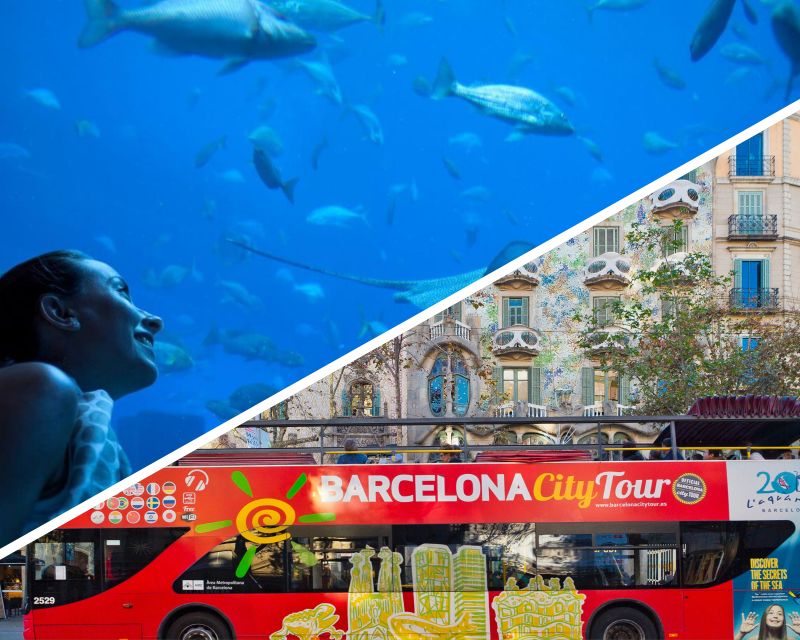
Your ticket is valid on both the West, or orange, route and the East, or green, route. You can board at Plaça Catalunya, the main stop, or begin at any listed stop around the city.
The open-top, air-conditioned double-decker buses give you two useful choices. Sit upstairs for a broad view of the streets and major buildings, or stay below when the sun is strong or the weather turns. An audio guide plays through the ride in English, Catalan, Spanish, French, German, Russian, Portuguese, Chinese, Japanese, Dutch, Hebrew, Italian, Arabic, Swedish, Norwegian, and Turkish.
Each route takes about two hours if you stay aboard. That makes the bus useful in two different ways. You can ride a full loop to get a broad introduction to Barcelona, or you can use it as public transport between sights. The second approach usually gives you better value, since the whole point is to hop off and explore.
Bus frequency varies by season, from about 5 to 30 minutes. The regular operating information gives departures from around 9:00 AM until 7:00 PM, with the last return at that time. I would not plan a tightly timed evening around the bus. Traffic, events, demonstrations, sports, and cultural activities can change the route or slow service.
One practical weakness deserves attention. Stop identification is not always obvious, particularly after you have left the bus and want to board again elsewhere. Keep the stops guide with you, check the route color before walking away, and note the exact stop name where you get off. This small bit of discipline can prevent a frustrating wait.
A few more Barcelona ideas to compare
- Barcelona Aquarium: Entry Ticket
★ 4.3 · 13,335 reviews - Barcelona Aquarium Skip the Line Ticket
★ 4.0 · 109 reviews - Mallorca: Palma Aquarium Entry Ticket w/ Optional 3D Cinema
★ 4.5 · 2,280 reviews
The orange route from the harbor to Montjuïc and Sagrada Familia
The West route begins at the World Trade Center and follows a strong mix of harbor, Montjuïc, museum, stadium, and modernist stops. It is the route I would use for Barcelona’s southwest side.
At the World Trade Center, you are close to the port and the city’s waterfront. From there, the route reaches the Jardins de Miramar and the Fundació Joan Miró. These stops make sense if your interests run toward gardens, art, and Montjuïc rather than only the central shopping streets.
The next group, Anella Olímpica and the Museu Nacional d’Art de Catalunya, gives you access to Barcelona’s large Montjuïc complex. The stop at Poble Espanyol offers a different kind of visit, while Caixafòrum and the Pavelló Mies van der Rohe suit you if modern architecture and exhibitions appeal more than grand city views.
Plaça d’Espanya is one of the most useful places to leave the bus. It connects several parts of the city and works well as a break point between Montjuïc and the central route. The nearby Estació de Sants is also practical if you are linking the tour with rail travel.
Football fans will want the Camp Nou, Museu FC Barcelona stop. The ticket described here does not include entry to the stadium or museum, so treat this as a transport stop rather than a bundled admission.
The route then crosses toward L’Illa Diagonal and Avinguda Diagonal before reaching La Pedrera. La Pedrera is one of the key Gaudí stops, but the bus ticket does not include entry. You will need to arrange that separately if you want to go inside.
Sagrada Familia is another major stop on the orange route. It also functions as a connection point. Orange-route passengers can transfer toward Park Güell without continuing the entire way to Port Olímpic, while green-route passengers can reach Sagrada Familia without riding the whole green loop. This connection can save a surprising amount of time.
The route continues to Estació del Nord, the Zoo and Poblenou, Port Olímpic, Pla de Palau, and Passeig de Colom. The final section is useful for combining the city’s eastern side with the waterfront and aquarium area.
The green route from Barceloneta to Park Güell

The East route is the better choice for Barcelona’s coast, central modernist sights, and Park Güell. It begins at Pla de Palau and passes through Barceloneta, a logical stop if you want to explore the old waterfront district.
From there, the bus reaches Port Olímpic, Platja del Bogatell, and Nova Mar Bella. These stops spread along the coast, so the route gives you a simple way to connect the harbor with the beaches. The Fòrum stop extends the trip farther northeast, while Torre Glòries brings you back toward one of the city’s more recognizable modern structures.
The Recinte Modernista de Sant Pau stop is valuable for anyone interested in architecture and Barcelona’s grand civic buildings. As with the other major attractions, the bus ticket itself does not state that admission is included. You are paying for transport and audio commentary, not a general entry pass to every stop.
Park Güell is one of the most important reasons to use this route. It saves you from organizing a separate ride to the hilltop area, but you should check the connection details before setting off. The route information specifically uses Sagrada Familia as a transfer point for green-route passengers who want to reach that attraction without taking the full route to La Pedrera.
After Park Güell, the green bus reaches La Pedrera, Casa Batlló, and Plaça Catalunya. This section is particularly handy if you want to connect Gaudí sites with the city center. Casa Batlló and La Pedrera are separate attractions, and no admission to them is included in this package.
The route then passes Arc de Triomf and El Born, with the Parc de la Ciutadella stop serving as an access point. These central stops are useful for combining the bus with walking time through Barcelona’s older quarters.
Where the aquarium fits into your day

The Barcelona Aquarium is near the port, making it easy to pair with the orange route’s waterfront stops or the green route’s Pla de Palau and Barceloneta area. You receive one admission, so I would not use it as a quick filler between two hurried bus rides. Give it a proper block of time.
This is the largest Mediterranean-themed aquarium in the world, and its focus is more specific than a general collection of exotic marine life. The displays introduce the marine communities of the Mediterranean and explain traits of the species living in each setting.
Two habitats draw particular attention. One is based on the Ebro Delta, and the other on the Medes Islands, both protected coastal areas in Spain. These displays connect the animals to real Spanish coastal environments rather than presenting them as isolated specimens.
The Oceanarium is the aquarium’s signature section. Its acrylic tunnel runs through the length of the exhibit, creating the impression of moving through the water with sharks overhead and around you. That tunnel is likely to be the most memorable part of the visit, especially for children, though the regional habitats give the aquarium its stronger sense of place.
Because the aquarium ticket is valid only once, plan carefully. A harbor visit, a waterfront meal, and the aquarium can make a sensible half-day. Lunch and drinks are not included, so you will need to budget separately for food.
Same base, a different kind of afternoon:
- Barcelona: Sagrada Familia Entry Ticket with Audio Guide
★ 4.6 · 105,312 reviews - Barcelona: Park Güell Admission Ticket
★ 4.4 · 76,534 reviews - Barcelona: Casa Batlló Entry with Self-Audioguide Tour
★ 4.7 · 25,359 reviews - Barcelona: 24 or 48-Hour Hop-On Hop-Off Bus Tour
★ 4.4 · 20,872 reviews
Making the $73 price work for you

At $73 per person, this is not a cheap transport ticket. Its value depends on how actively you use it.
The package makes the most sense if you want to visit sights on both sides of Barcelona and would otherwise need several separate rides. Montjuïc, Plaça d’Espanya, Camp Nou, Sagrada Familia, Park Güell, the beaches, and the central districts are spread over a large area. The bus removes some of the planning and gives you a direct way to move between them.
The price is also easier to justify if you choose the 48-hour option and use it on two consecutive days. You can devote one day to the orange route and Montjuïc, then use the green route for Park Güell, the coast, and central Gaudí stops. Add the aquarium when you are already near the port.
The value is weaker if you plan to walk most of the time, visit only one or two central attractions, or take the bus just once. The ticket does not include entry to La Pedrera, Casa Batlló, Park Güell, the Museu Nacional d’Art de Catalunya, Camp Nou, or other listed attractions. The aquarium is the notable admission included.
The discount booklet may help with additional spending, but the available details do not specify each discount. I would treat it as a bonus rather than build your budget around savings you have not checked.
A practical plan for one day
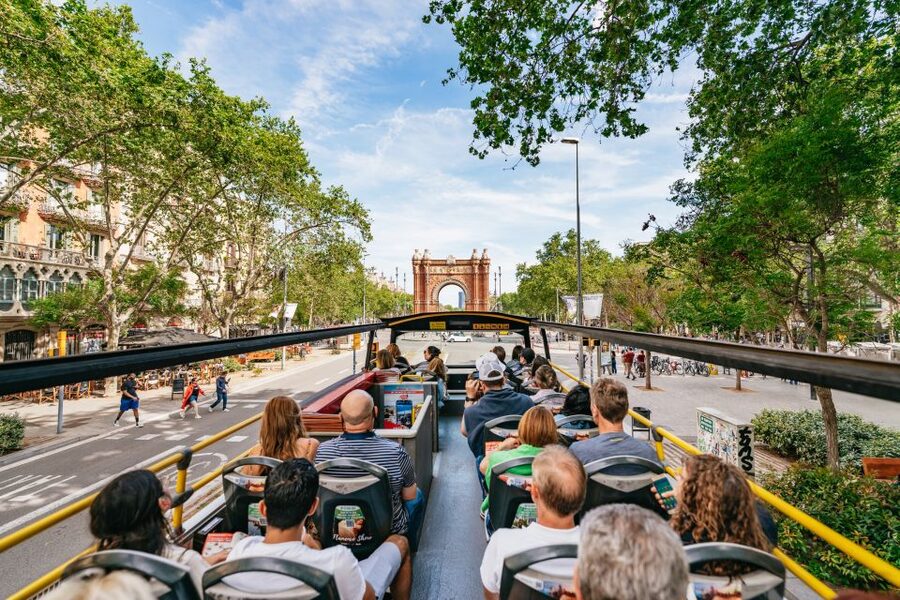
The 24-hour option can work, but you need to accept that you will not thoroughly visit every stop. Start early at Plaça Catalunya or another convenient point, then choose one route rather than trying to conquer the whole city.
One workable approach is to ride the orange route toward Montjuïc, leaving the bus at Plaça d’Espanya, the MNAC area, or one of the nearby cultural stops. Continue later toward Sagrada Familia, then use the connection point to reach the waterfront and aquarium.
Another approach is to begin with the green route, visit Park Güell, continue toward La Pedrera and Casa Batlló, then head down to Pla de Palau or Port Olímpic for the aquarium. This plan gives you a mix of architecture, the coast, and marine life without crossing the city repeatedly.
Allow extra time for the bus itself. A route takes about two hours without getting off, and buses may come only every 30 minutes. The 24-hour ticket is best for a broad sample of Barcelona, not a checklist visit to every stop.
A more relaxed two-day plan

The 48-hour option gives the tour its best chance to be useful. On the first day, focus on the orange route. Use Montjuïc and Plaça d’Espanya as your main sightseeing area, then continue to Sagrada Familia or Camp Nou according to your interests.
On the second day, take the green route. Park Güell, Sant Pau, Casa Batlló, La Pedrera, Arc de Triomf, and the coast can easily fill the day. Place the aquarium near the harbor portion of the route, when you are already in the right area.
Do not assume the bus will provide exact door-to-door service for every attraction. The route names tell you where the official stops are, but you may still need to walk from the stop to the entrance. The supplied stop guide is worth keeping in your pocket.
The two-day plan also gives you a cushion for altered routes. Barcelona events can affect the itinerary, and a second day means one delay does not ruin the whole plan.
Who will get the most from this combination
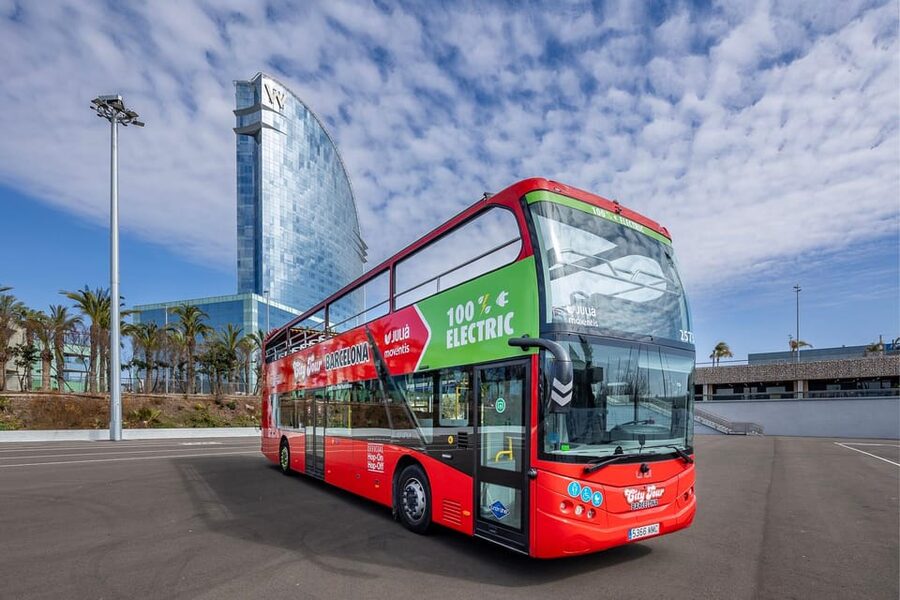
I would recommend this for a first visit when you want a quick sense of Barcelona’s layout before choosing where to spend more time. It also suits families and mixed-interest groups, since one person can enjoy architecture, another the coast, and everyone can meet at the aquarium.
It is helpful if you are staying outside the central core or find long walks difficult. The air-conditioned buses provide a more comfortable way to cover distance, and the audio system lets you learn about the city while moving between stops.
The package is less appealing if your priority is a slow, street-level experience. You will see the city from a bus and then explore selected stops, but you will not get the same feel as walking from neighborhood to neighborhood. It is also not ideal if you want entry to multiple major attractions, since only the aquarium admission is included.
The hearing-accessible audio system is a useful feature. It includes a multilingual looping system adapted for people with auditory disabilities, while the standard audio guide offers 17 languages.
Booking flexibility and small details worth knowing
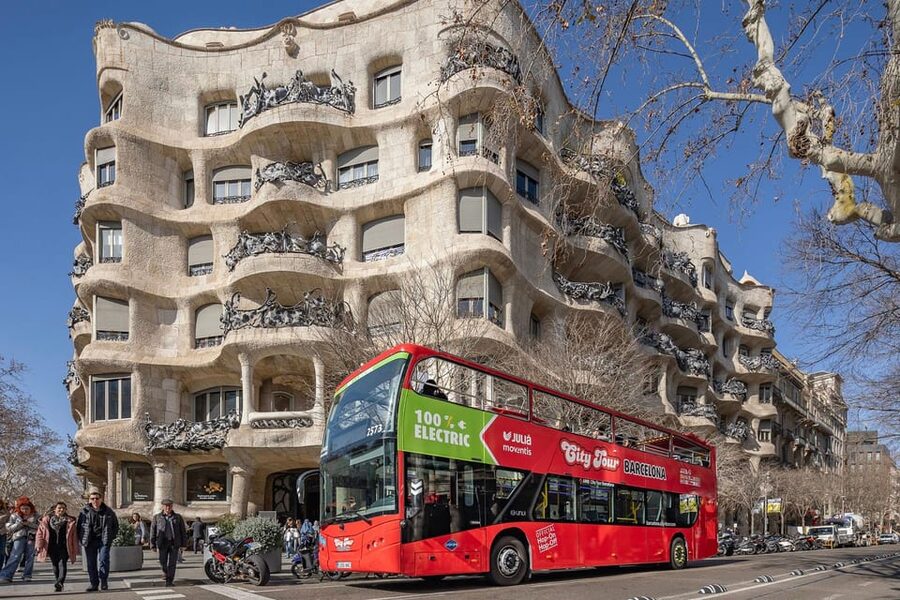
You can cancel up to 24 hours before the activity for a full refund. The reserve-now, pay-later option also helps if your Barcelona schedule is still shifting.
The bus ticket is valid for one or two consecutive days, depending on the option you select. The aquarium admission is separate in one important way: it can be used only once.
The meeting point at Plaça Catalunya is the easiest place to orient yourself, but you do not have to begin there. You may board at any Barcelona City Tour stop. Check current availability for the exact starting times, since service schedules and route conditions can change.
Julia Travel Gray Line Spain operates the experience. No individual guide is assigned, since the main commentary comes through the onboard audio system rather than a personal escort.
Should you book the Barcelona bus and aquarium combo?
Book it if you want easy citywide transport, a flexible sightseeing plan, and one worthwhile indoor attraction in the same purchase. The 48-hour version is the stronger choice if your schedule allows it, since the routes cover a lot of ground and buses may arrive 30 minutes apart.
Choose the 24-hour ticket if you are organized and mainly want a broad overview plus the aquarium. Skip the combo if you prefer walking, already have local transport arranged, or plan to pay for several major attraction entries separately.
My practical verdict: use the bus as a framework, not as the entire Barcelona experience. Get off often, keep track of stop names, allow for traffic, and place the aquarium near your waterfront sightseeing. Used that way, the $73 price can be fair value and the day feels much less like a transport exercise.
FAQ
Where can I start the Barcelona hop-on, hop-off tour?
You may begin at Plaça Catalunya, the main stop, or at any stop served by the Barcelona City Tour routes.
Are both bus routes included in one ticket?
Yes. The ticket includes all stops on both the West orange route and the East green route.
How long is the bus ticket valid?
The bus ticket is valid for 24 hours or 48 consecutive hours, depending on the option selected.
How often do the buses run?
Bus frequency varies by season from approximately 5 to 30 minutes. General operating information gives departures from around 9:00 AM until 7:00 PM, with the last return at 7:00 PM.
Is Barcelona Aquarium admission included?
Yes. The aquarium entrance fee is included, but the ticket is valid for one aquarium visit only.
Which languages are available for the audio guide?
Audio commentary is available in English, Catalan, Spanish, French, German, Russian, Portuguese, Chinese, Japanese, Dutch, Hebrew, Italian, Arabic, Swedish, Norwegian, and Turkish.
Are meals or drinks included?
No. Lunch, drinks, pickup, drop-off, and services not specifically listed are not included.
Recently listed in Barcelona
- Transfers From Cruise Port to Barcelona Airport★ 4.5 · 155 reviews
- Bohemian Barcelona Neighborhood Evening Tapas & Wine Tour★ 5.0 · 419 reviews
- Park Guell Guided Tour with Skip the Line Tickets★ 4.0 · 739 reviews
- Barcelona Sunset Cruise with Light Snacks and Open Bar★ 5.0 · 476 reviews
- Montserrat very early : Hiking, Abbey, very small group★ 5.0 · 127 reviews
- Barcelona: Sagrada Familia, Park Guell & Tapas Private Tour★ 5.0 · 903 reviews
- Authentic Flamenco Show Barcelona : Intimate Casa Sors Experience★ 5.0 · 809 reviews
- Barcelona Expert Tour with Local Guide in Eco Tuk Tuk Private★ 5.0 · 216 reviews
Aquariums, compared.
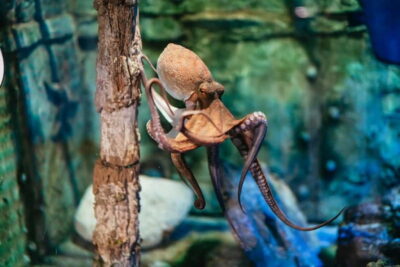

Palma Aquarium Entry Ticket w/ Optional 3D Cinema
Read our review →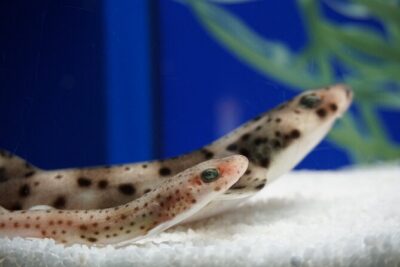



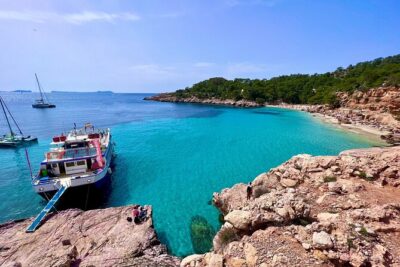
Cala Salada and Unspoiled North Beach Tour. Snorkelling and Aquarium
Read our review →
Browse the lists this tour appears in