
Reviewed · WALKING TOURS
Barcelona: Jewish Quarter 2-Hour Walking Tour
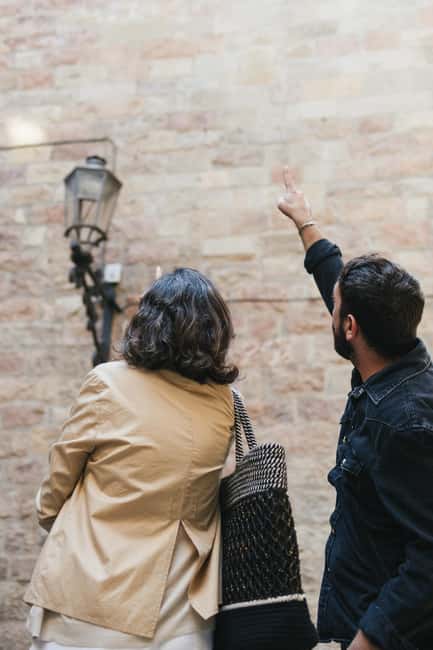
Ancient stones tell difficult stories. This two-hour walk through Barcelona’s Gothic Quarter connects the city’s narrow medieval lanes with its Jewish past, from the Sinagoga Mayor Barcelona to synagogue ruins, a medieval Mikve, and the former Jewish quarter near the Roman walls. I especially like the small groups of no more than six and the way guides use maps, images, and conversation to make a vanished community easier to understand. The main drawback is that the synagogue museum entrance costs extra, and the Old Synagogue may occasionally be closed.
You meet at Plaça Sant Jaume, next to the Alcampo store, then finish back at the same spot. Guides including Edu, Ella, Alan, and Lilach have earned strong praise for clear English, patience, careful pacing, and genuine interest in Barcelona’s past. If you need rest stops or walk slowly, tell your guide at the start.
In This Review
- Key points at a glance
- Why Barcelona’s Jewish Quarter deserves two hours
- Starting at Plaça Sant Jaume
- The small lanes of the medieval Jewish quarter
- Sinagoga Mayor Barcelona and the Old Synagogue
- Four synagogue locations and the medieval Mikve
- The Jewish alchemist’s house and its surviving details
- The guides make the difference
- Pace, access, and what to wear
- Is $76 a fair price?
- Who should book this walk?
- Should you book the Barcelona Jewish Quarter walk?
- FAQ
- How long does the Barcelona Jewish Quarter tour last?
- Where does the tour begin?
- Where does the tour end?
- What language is the tour offered in?
- Is the synagogue museum entrance included?
- How many people can join the tour?
- Is hotel pickup available?
Key points at a glance
- Sinagoga Mayor Barcelona: Visit the building presented as Spain’s oldest synagogue and one of Europe’s oldest surviving synagogue sites.
- Four synagogue locations: Trace the places connected with four historic synagogues in the city center.
- Medieval Mikve: See the site of a Jewish ritual bath, an unusual reminder of daily religious life.
- Alchemist’s house ruins: Explore the remains of a house linked to a Jewish alchemist, with art and architecture tied to the medieval quarter.
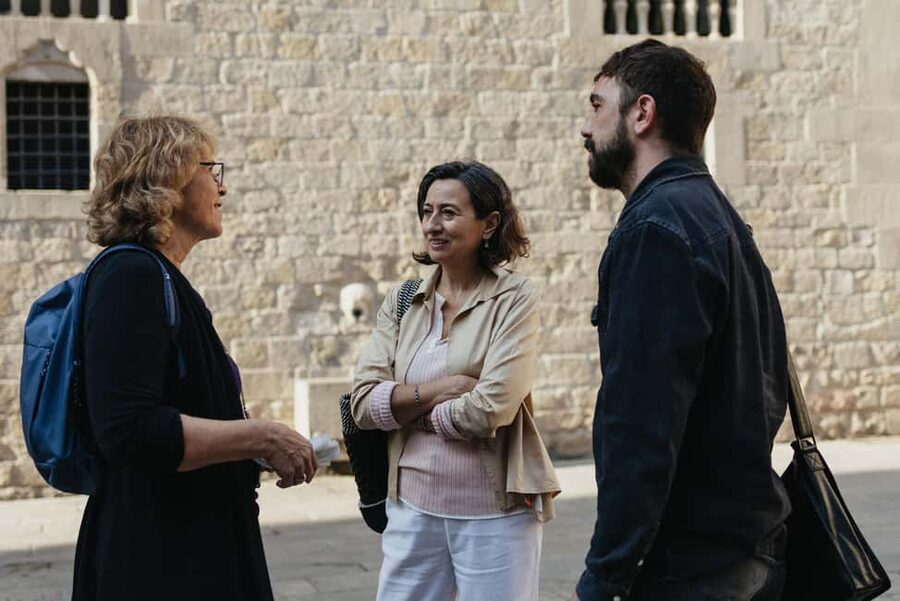
- Small-group attention: With a maximum of six people, you can ask questions and set a comfortable walking pace.
- Useful planning detail: The walk lasts two hours, costs $76 per person, and includes the walking tour but not the synagogue museum entrance.
Why Barcelona’s Jewish Quarter deserves two hours
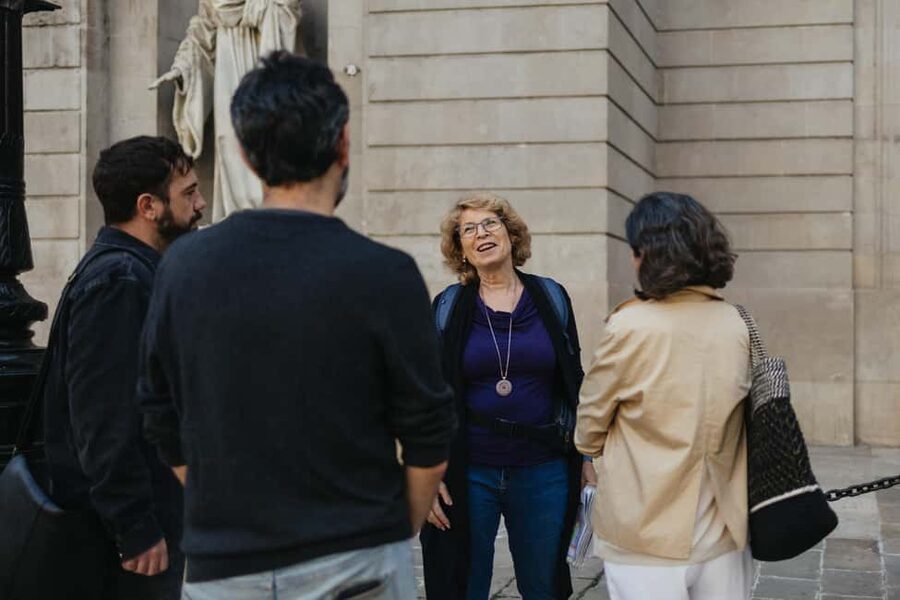
Barcelona’s Jewish heritage is easy to miss if you simply wander the Gothic Quarter. The streets are narrow, old, and full of striking buildings, but many Jewish connections are now marked by modest remains rather than grand monuments. That is why a guide matters here.
This tour helps you read the city beneath its later layers. You walk through the small Jewish Quarter near the Roman walls and hear how the community developed in Barcelona over many centuries. The tour places Jewish life within the wider story of Catalonia and the city, rather than treating the quarter as an isolated attraction.
The historical outline is sobering. Jewish communities began arriving in Spain as early as the third century, after the destruction of the Second Temple in Jerusalem in 70 CE. In Barcelona, the community grew in size and importance, with political, commercial, and spiritual influence.
That period of relative peace ended violently in 1391. The attack brought a dramatic break with Jewish life in Spain, and the tour explains how that upheaval changed Barcelona. You should expect a serious subject, but the walk is not only about persecution. It also shows the work, worship, homes, and intellectual life of the people who lived here.
More Walking Tours in Barcelona
- Barcelona Tapas and Wine Experience Small-Group Walking Tour
★ 5.0 · 5,804 reviews - Barcelona: Tapas Walking Tour with Food, Wine, and History
★ 4.8 · 4,261 reviews - Barcelona Tapas Walking Tour: Food, Wine & History
★ 4.5 · 1,928 reviews
Starting at Plaça Sant Jaume
The meeting point at Plaça Sant Jaume is practical. This central square is easy to identify, and meeting next to the Alcampo store gives you a fixed landmark in a busy part of the Gothic Quarter. Arrive with comfortable shoes and a little time to spare, since the tour starts on foot and remains in the historic center.
Your guide introduces the story before leading you into the older lanes. This opening matters because the quarter can feel confusing at first. Roman walls, medieval buildings, later renovations, shops, and public spaces overlap in a tight area.
The best guides make the first few minutes useful rather than rushing straight to a photo stop. Edu has been praised for confirming the meeting the night before, speaking clearly, and adjusting his pace to the group. Ella is also singled out for her command of Catalan and Barcelona history, as well as Jewish medieval history.
The experience is conducted in English. Since the group is limited to six, you have a real chance to ask about family history, religious practice, architecture, or Barcelona today. That small size is one of the strongest reasons to consider the tour instead of trying to piece the story together from plaques.
The small lanes of the medieval Jewish quarter
The Jewish Quarter is not presented as a perfectly preserved district. Much of the original community has disappeared, and the remaining evidence can be subtle. You may see architectural fragments, old street lines, ruins, and locations that only make sense once the guide explains what stood there.
That can be both the strength and the weakness of the tour. If you want a large, intact historic complex, this will not provide it. If you enjoy connecting scattered clues, the walk gives you much more than a standard Gothic Quarter stroll.
The lanes date back to the Middle Ages, and their tight layout helps you picture a neighborhood within the larger city. Your guide explains where Jewish residents lived and how the quarter related to the Roman walls and surrounding streets. The physical setting is compact, so the tour spends more time on interpretation than on covering long distances.
This is also where the tour can connect with personal family research. One participant found it useful for filling gaps in family history. That does not mean the guide can identify every ancestor or document, but the setting and historical framework may help you understand where to continue your own research.
Sinagoga Mayor Barcelona and the Old Synagogue
The central stop is Sinagoga Mayor Barcelona, described on the tour as Spain’s oldest synagogue and one of Europe’s oldest synagogue sites. Its importance comes from both its age and its survival. You are not simply seeing another religious building in the Gothic Quarter. You are entering a place that connects present-day Barcelona with Jewish worship in the medieval city.
The synagogue museum entrance is not included in the $76 tour price. Check the current admission arrangement when booking, and budget for that separate cost if you want the full interior experience. The walking tour itself is included, and the activity includes skip-the-line access, but the information provided specifically excludes the museum entrance fee.
You will also visit the ruins of the Old Synagogue, associated with Shlomo Ben Adret. This stop adds a useful contrast. Sinagoga Mayor offers a surviving place of worship, while the ruins require more explanation and imagination.
One important caution: the Old Synagogue has been closed at times. If access is unavailable on your date, the tour can still cover the location and its history, but you should not assume every interior will be open. Ask about current conditions if that stop is especially important to you.
Same base, a different kind of afternoon:
- Barcelona: Sagrada Familia Entry Ticket with Audio Guide
★ 4.6 · 105,312 reviews - Barcelona: Park Güell Admission Ticket
★ 4.4 · 76,534 reviews - Barcelona: Casa Batlló Entry with Self-Audioguide Tour
★ 4.7 · 25,359 reviews - Barcelona: 24 or 48-Hour Hop-On Hop-Off Bus Tour
★ 4.4 · 20,872 reviews
Four synagogue locations and the medieval Mikve
The walk identifies four historic synagogue locations in Barcelona’s city center. This is valuable because it broadens the story beyond one preserved building. You begin to see that Jewish life once occupied several connected spaces, even though modern Barcelona does not present them as a single intact attraction.
The guide’s explanations are the key to this section. A street corner or altered building may not speak for itself. Alan, one of the praised guides, uses maps, photographs, and reconstructions to show how earlier buildings and neighborhoods may have fit together. Those visual aids are particularly helpful when the original structure is no longer standing.
The medieval Mikve is another unusual stop. A Mikve is a ritual bath, and seeing its location adds a more personal dimension to the tour. Synagogues and public history often focus on leaders, laws, and conflict. The Mikve points toward religious practice and the rhythms of ordinary community life.
Do not expect a large bathing complex or a long museum visit. The value is in understanding what the site represented and how it fitted into the quarter. This is a stop where a well-informed guide can turn a small physical remnant into a meaningful part of the story.
The Jewish alchemist’s house and its surviving details
The remains of a house owned by a Jewish alchemist bring another side of medieval Barcelona into view. The stop includes art and architecture, not just dates and names. It helps show that Jewish residents were involved in intellectual and practical work as well as religious life.
The alchemist connection gives the tour a welcome change of pace. After hearing about community growth and the tragedy of 1391, you get a more focused look at one person’s home and profession. The ruins cannot recreate the entire building, but they offer tangible evidence of a life lived in this quarter.
This is also a good example of why I would not recommend exploring the route without a guide if Jewish heritage is your main interest. You could pass the same remains and see old stone. With context, you can think about ownership, craftsmanship, science, and the role of a Jewish household in medieval Barcelona.
The guides make the difference
The strongest part of this experience is the guiding. Nearly every supplied comment praises the guides for being clear, friendly, patient, and well prepared. That consistency matters because the subject requires careful explanation, especially when buildings have been altered or lost.
Edu receives especially warm praise. He is described as personable, flexible, and genuinely interested in the subject. He adjusted his pace for a group that included teenagers, made room for questions, and kept the information conversational. Another group of six appreciated having what felt like a private walk, with enough time to cover the quarter in detail.
Ella is praised for her thorough presentation and her ability to connect Jewish medieval history with the wider history of Catalonia and Barcelona. Lilach is described as engaging, informative, and able to answer questions. Alan used maps and images and paid attention to group safety during rain.
These details tell you what to expect from a good departure: not a memorized speech delivered at full speed, but a discussion shaped around the people in the group. The guide can explain difficult history while still keeping the walk approachable.
Pace, access, and what to wear
The tour lasts two hours and remains within the Gothic Quarter. You are walking on historic streets, so comfortable footwear is a sensible choice. The pace has been adjusted for older participants and people with walking difficulties, and one guide stopped for rests when needed.
The activity is listed as wheelchair accessible. Still, the Gothic Quarter includes old, narrow streets and historic sites, and individual buildings may have their own access limits. If you use a wheelchair or have mobility concerns, contact the provider ahead of time and ask about the exact route and the synagogue interiors.
Rain is worth considering. The walk operates outdoors between indoor or historic stops, and one guide was praised for taking safety seriously during wet weather. Bring suitable clothing and check the forecast before setting out.
Hotel pickup is not part of the standard arrangement. It can be requested for an additional €30, but meeting at Plaça Sant Jaume is the simpler and less expensive choice for most people already in central Barcelona.
Is $76 a fair price?
At $76 per person, this is not a budget stroll. The value depends on how much you want interpretation rather than a quick look at old buildings. You are paying for two hours with a live English-speaking guide, a small group capped at six, and access to a specialized subject that is not always easy to follow independently.
The price makes more sense if you are interested in Jewish history, medieval Barcelona, genealogy, architecture, or the way religious communities shaped the city. It also works well as an early activity, since the walk gives you a clearer sense of the Gothic Quarter before you explore it on your own.
The museum entrance fee is extra, so include that in your calculation. If you only want general Gothic Quarter sightseeing, you may find the cost high. If you want a focused story and the chance to ask detailed questions, the small group gives the experience a stronger value than a large city walk.
Who should book this walk?
I would recommend it to anyone with a serious interest in Jewish Spain, especially if you want to understand Barcelona beyond its churches, Roman remains, and Gaudí buildings. It is also a thoughtful choice for visitors tracing family connections or trying to place medieval Jewish life within the broader history of Catalonia.
Families can make good use of it. Edu’s tour worked well for a group with 15 and 17 year olds because he mixed information with conversation. Older participants may appreciate the gentle pace and the guide’s willingness to pause.
I would think twice if you dislike history-heavy walks, prefer large visual attractions, or have only a short time in Barcelona and want to cover many unrelated sights. Two hours goes quickly, and the tour concentrates on one subject.
For the best experience, schedule it early in your Barcelona stay. You will learn the quarter’s street pattern, understand details you might otherwise overlook, and have a chance to return later with a sharper eye.
Should you book the Barcelona Jewish Quarter walk?
Book it if you want a focused, human account of Barcelona’s Jewish past and value a guide who can answer questions. The strongest reasons are the six-person limit, the clear historical storytelling, the Sinagoga Mayor, and the chance to connect four synagogue sites, a Mikve, an alchemist’s house, and synagogue ruins within one compact walk.
Before paying, confirm the Old Synagogue’s opening status and the separate museum fee. If those details work for your plans, this is a worthwhile addition to a Barcelona visit, particularly for history-minded families, small groups, and anyone interested in Jewish heritage in Spain.
FAQ
How long does the Barcelona Jewish Quarter tour last?
The walking tour lasts two hours. Check availability for the current starting times.
Where does the tour begin?
The tour starts at Plaça Sant Jaume, next to the Alcampo store.
Where does the tour end?
The activity ends back at the meeting point in Plaça Sant Jaume.
What language is the tour offered in?
The live tour guide conducts the tour in English.
Is the synagogue museum entrance included?
No. The entrance fee to the Synagogue Museum is not included in the tour price.
How many people can join the tour?
The group is limited to six participants.
Is hotel pickup available?
Hotel pickup is not included. It can be arranged for an additional €30.
Recently listed in Barcelona
- Transfers From Cruise Port to Barcelona Airport★ 4.5 · 155 reviews
- Bohemian Barcelona Neighborhood Evening Tapas & Wine Tour★ 5.0 · 419 reviews
- Park Guell Guided Tour with Skip the Line Tickets★ 4.0 · 739 reviews
- Barcelona Sunset Cruise with Light Snacks and Open Bar★ 5.0 · 476 reviews
- Montserrat very early : Hiking, Abbey, very small group★ 5.0 · 127 reviews
- Barcelona: Sagrada Familia, Park Guell & Tapas Private Tour★ 5.0 · 903 reviews
- Authentic Flamenco Show Barcelona : Intimate Casa Sors Experience★ 5.0 · 809 reviews
- Barcelona Expert Tour with Local Guide in Eco Tuk Tuk Private★ 5.0 · 216 reviews
Walking Tours, compared.
Barcelona Tapas and Wine Experience Small-Group Walking Tour
Read our review →
Tapas Walking Tour with Food, Wine, and History
Read our review →
Albaicín and Sacromonte Guided Sunset Walking Tour
Read our review →
Toledo Tour & Vineyard Walk with Wine Tasting from Madrid
Read our review →
Madrid Walking Tour from Puerta del Sol to Retiro Park
Read our review →
Barcelona Tapas Walking Tour: Food, Wine & History
Read our review →
Madrid Old Town & Royal Palace Walking Tour Skip the Line Ticket
Read our review →
Browse the lists this tour appears in