
Reviewed · AUDIO TOURS
Barcelona: Mies van der Rohe Pavilion Ticket and Audio Guide
Less building, more idea. Barcelona’s Mies van der Rohe Pavilion is a compact lesson in modern architecture, where stone, glass, water, and open space do most of the talking. I like its calm atmosphere and the chance to see a building that changed the way architects thought about walls, rooms, and movement.
I also like that your $10 ticket includes an audio guide in Spanish, Catalan, English, French, or German. The main drawback is simple: the Pavilion is small, and some people feel the admission charge is high for a visit that may be fairly brief. If you prefer grand monuments packed with objects and decoration, this can feel spare.
In This Review
- Key Points Before You Go
- Why This Small Pavilion Matters
- Entering the German Pavilion From 1929
- Marble, Glass, Water, and Open Space
- What the Audio Guide Adds
- A Visit That May Be Short, But Not Empty
- When Photography Becomes Part of the Scene
- What the $10 Admission Buys You
- Who Will Appreciate the Pavilion Most
- Access, Rules, and Useful Visit Tips
- Should You Book the Mies van der Rohe Pavilion?
- FAQ
- Where is the Mies van der Rohe Pavilion located?
- How much does admission cost?
- How long is the ticket valid?
- What languages are available for the audio guide?
- Is the Mies van der Rohe Pavilion wheelchair accessible?
- Can I cancel my booking?
- Can I reserve now and pay later?
- Are food, drinks, pets, or tripods allowed?
Key Points Before You Go
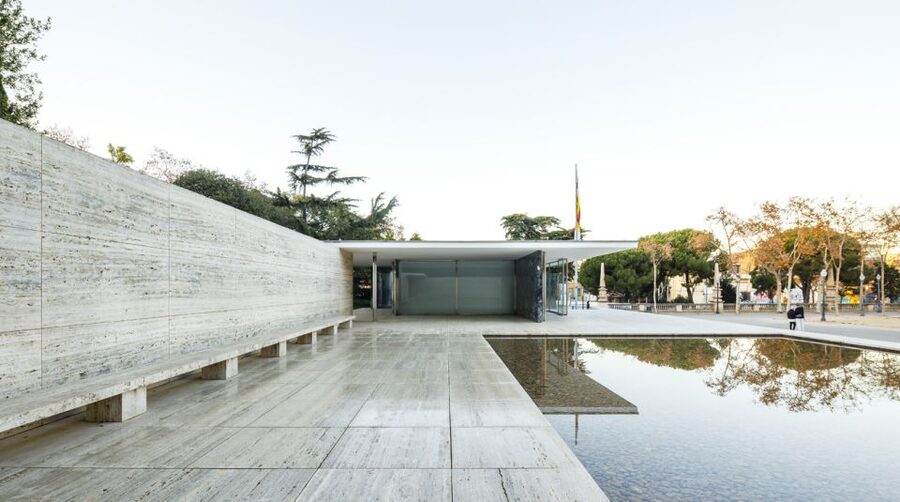
- Built for the 1929 Barcelona International Exhibition: Mies van der Rohe and Lily Reich designed it as the German national pavilion.
- Reconstructed on its original site in 1986: The first Pavilion was dismantled after the exhibition, but its importance led to a careful return.
- Materials are part of the main attraction: Marble and other stone came from places including the Alps, Tivoli, Atlas, and Tinos.
- The audio guide adds useful context: It explains the building’s history, design, and reconstruction in five languages.
- Expect a quiet, compact visit: The Pavilion is best for people who enjoy looking closely rather than rushing from room to room.
- Photography can affect the mood: Professional photographers and models may sometimes be using the space during your visit.
Why This Small Pavilion Matters
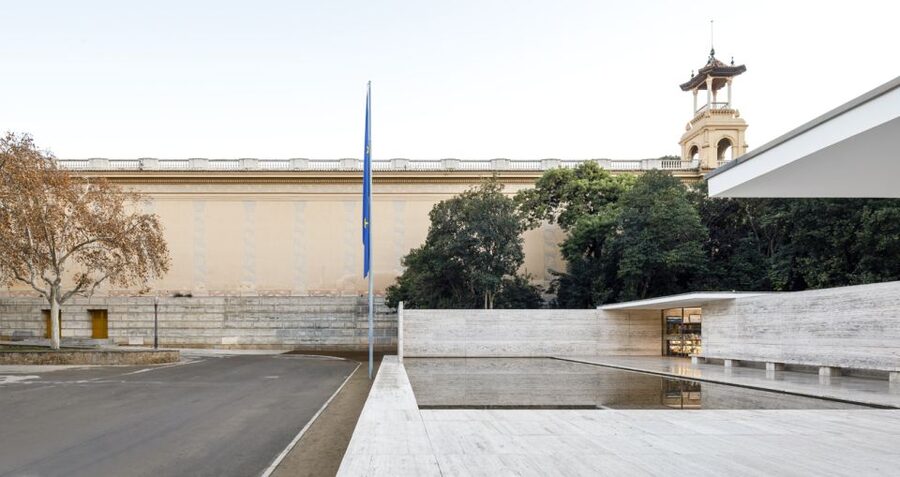
The Pavilion was created for the 1929 Barcelona International Exhibition, an event that brought national displays and new ideas to the city. Germany’s contribution was not a palace, museum, or crowded showcase. It was a carefully arranged modern building meant to express a new way of living and building.
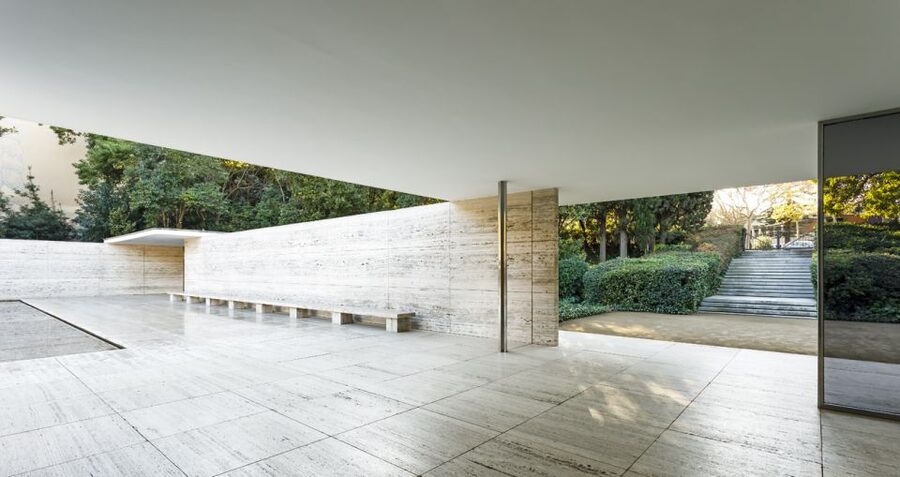
Mies van der Rohe designed it with Lily Reich, an important collaborator whose role deserves attention. The result is low, open, and restrained. You do not enter through a grand staircase or pass rows of exhibits. Instead, you move through a series of spaces shaped by walls, reflections, stone surfaces, and changing views.
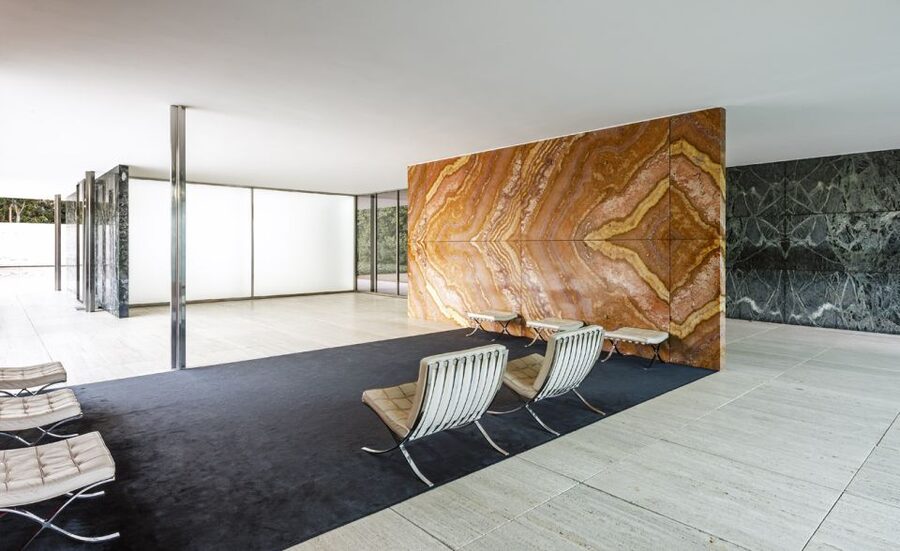
That simplicity is the point. The Pavilion asks you to notice proportion, texture, and balance. A wall does not merely close a room. It directs your path. Glass does not simply let in light. It connects the interior to the water and the surrounding setting. A stone surface is not background decoration. Its color and pattern help define the room.
I find this kind of architecture rewarding because it gives you very little to ignore. In a highly decorated building, your eyes can jump from one ornament to the next. Here, small changes matter. The edge of a wall, the reflection in a pool, or the meeting of two materials can become the main event.
A few more Barcelona ideas to compare
- Barcelona: Sagrada Familia Entry Ticket with Audio Guide
★ 4.6 · 105,312 reviews - Barcelona: Park Güell Admission Ticket
★ 4.4 · 76,534 reviews - Barcelona: Casa Batlló Entry with Self-Audioguide Tour
★ 4.7 · 25,359 reviews
Entering the German Pavilion From 1929
Your ticket gives you access to the Pavilion and its audio guide. The building’s original purpose was temporary, yet its influence lasted far beyond the exhibition. After the event ended, it was dismantled. The modern structure you see today is a reconstruction that reopened on the original site in 1986.
That fact changes the way I would approach the visit. You are not looking at an untouched 1929 building, but you are seeing a faithful return of a work that had become too important to lose. The reconstruction itself is part of the story, and the audio guide helps explain why the Pavilion was brought back.
The Pavilion’s design is often described through ideas such as purity of form and sobriety. Those words may sound academic, but you can understand them quickly once you are inside. The building does not try to impress you with size. It uses a limited set of strong choices and repeats them with care.
Give yourself time to walk slowly. A quick circuit can make the Pavilion seem almost empty. A slower visit lets you see how one space changes as you move a few steps. The open plan is not random. It creates a sequence of partial views, sheltered corners, and framed openings.
Marble, Glass, Water, and Open Space
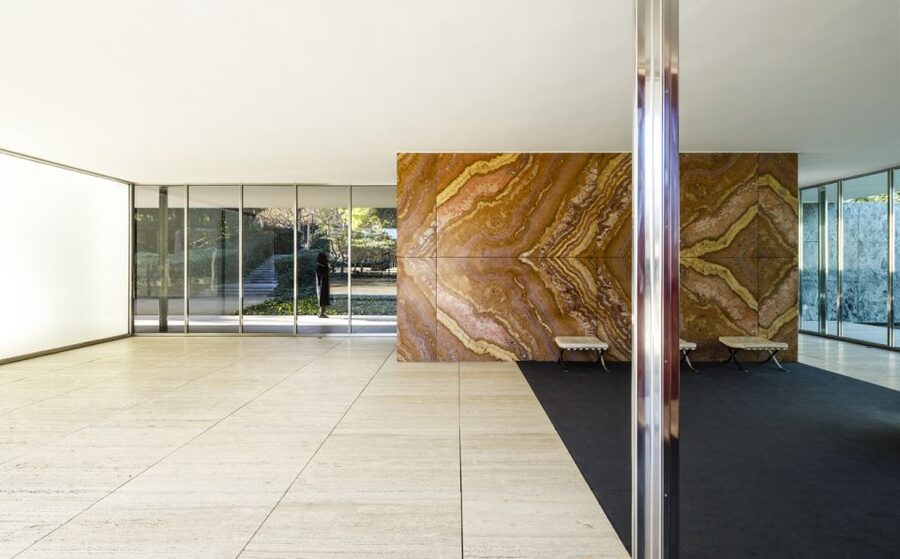
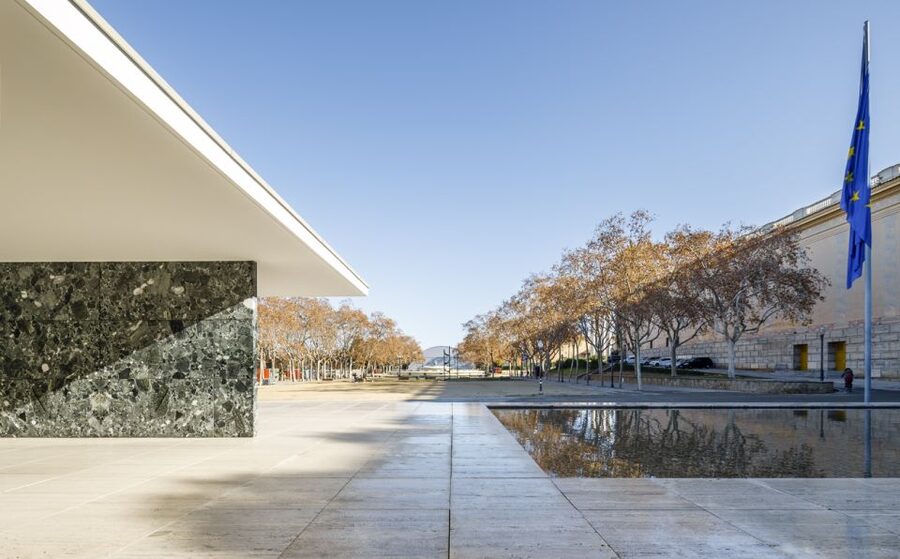
The materials are among the most memorable parts of the experience. Stone brought from the Alps, Tivoli, Atlas, and Tinos contributes much of the Pavilion’s character. The different surfaces create contrast without relying on decoration.
Look closely at the stone patterns rather than treating them as simple walls. Their colors and veining give each area a distinct feel. The architecture is spare, but the materials are not dull. They provide warmth, movement, and visual detail.
Glass helps blur the boundary between inside and outside. Water adds another layer through reflection. These elements make the Pavilion feel larger than its footprint, though the actual site remains compact.
This is also why the visit suits people who like visual details. You do not need advanced training in architecture to appreciate the space, but you do need to look. The Pavilion rewards patience more than speed.
The setting also creates a calm pause from Barcelona’s more crowded sights. One review described the visit as having relatively few people, and that quiet quality is part of its appeal. Conditions can change, but the Pavilion generally offers a more measured experience than a major basilica or large museum.
What the Audio Guide Adds
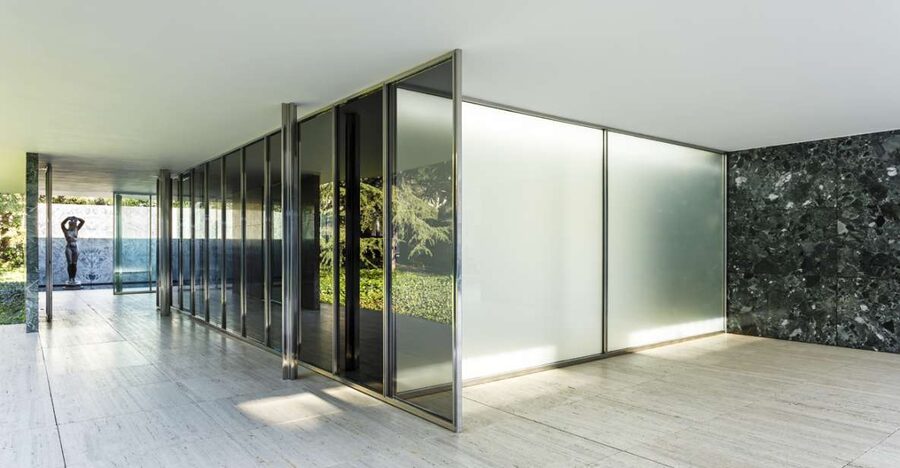
The audio guide is included with admission and is available in Spanish, Catalan, English, French, and German. It provides the background that the plain walls cannot explain on their own.
Without context, you may notice the materials and the open plan but miss the larger story. The guide connects the design to the 1929 exhibition, explains the Pavilion’s importance to modern architecture, and covers its reconstruction in the 1980s.
I recommend using it even if you already know a little about Mies van der Rohe. The Pavilion is easy to enter but not always easy to read. Its meaning lies in relationships between surfaces and spaces, and a guided explanation can help you recognize what the designers were trying to achieve.
One practical caution is worth noting: an audio guide is included in the experience, but one booking reported not receiving it and feeling confused. That may have been an isolated problem, but it is sensible to check that the guide is working before you begin. If it is not immediately available, ask the staff rather than walking through without the promised context.
The audio guide should not turn the visit into a lecture. Use it to get your bearings, then pause and look around without listening for a moment. The Pavilion works best when you combine information with quiet observation.
Same base, a different kind of afternoon:
- Barcelona: 24 or 48-Hour Hop-On Hop-Off Bus Tour
★ 4.4 · 20,872 reviews - Barcelona: Park Guell Guided Tour with Skip The Line Entry
★ 4.7 · 17,563 reviews - Barcelona in 1 Day: Sagrada Familia, Park Guell,Old Town & Pickup
★ 5.0 · 13,541 reviews - Barcelona Aquarium: Entry Ticket
★ 4.3 · 13,335 reviews
A Visit That May Be Short, But Not Empty
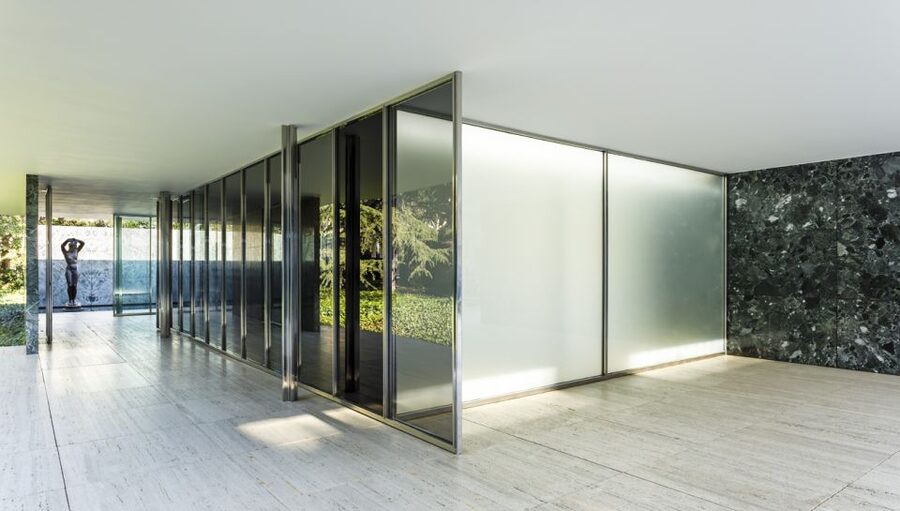
The advertised validity is one day, and you can check available starting times when you book. The visit does not follow a long route with several separate attractions. The Pavilion itself is the focus.
That compact format is both its strength and its limitation. You can fit it into a day of sightseeing without giving up half a day. It works well before or after other Barcelona plans, especially if you want a quiet architectural stop between busier destinations.
At the same time, do not arrive expecting a large museum. There are no long galleries filled with objects in the information provided for this visit. The experience depends on the building itself. If you need many rooms, displays, and activities to feel that admission was worthwhile, the $10 price may seem less appealing.
I would plan a slow visit rather than judging the value by minutes alone. A building can be small and still repay attention, especially when its proportions and materials are the subject. The question is not how many rooms you see. It is how much you notice in the rooms that are there.
One review also praised a short nature trail near the site. That trail is not listed as part of the ticket, so you should not treat it as an included feature. Still, it may be a useful nearby addition if you want to extend your time in the area.
When Photography Becomes Part of the Scene
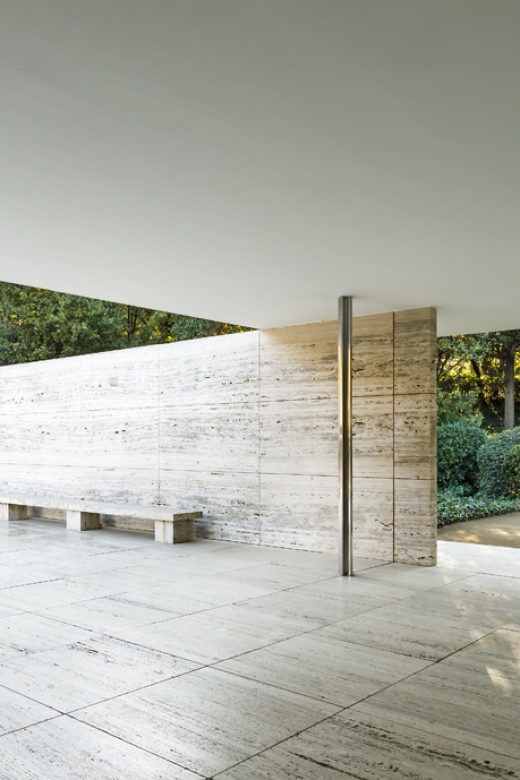
Photography and fashion shoots may occasionally take place in the Pavilion. During one visit, professional photographers and models were using the space, and they became part of the visual scene.
For some people, this adds interest. The Pavilion is famous for its clean lines and carefully controlled composition, so it naturally attracts photographers. Seeing how professionals frame the building can give you another way to understand its design.
For others, cameras and people posing can interrupt the quiet mood. If you want an entirely still visit, you may find this distracting. The Pavilion can also host artistic interventions, which may alter its appearance. That means the space you see is not guaranteed to look exactly like the familiar photographs.
I would treat this as a normal part of visiting a working cultural site. You may see the Pavilion in its most stripped-down form, or you may encounter an installation or photo session that changes how the rooms feel. If your main goal is a particular photograph, check current conditions before booking if possible.
What the $10 Admission Buys You
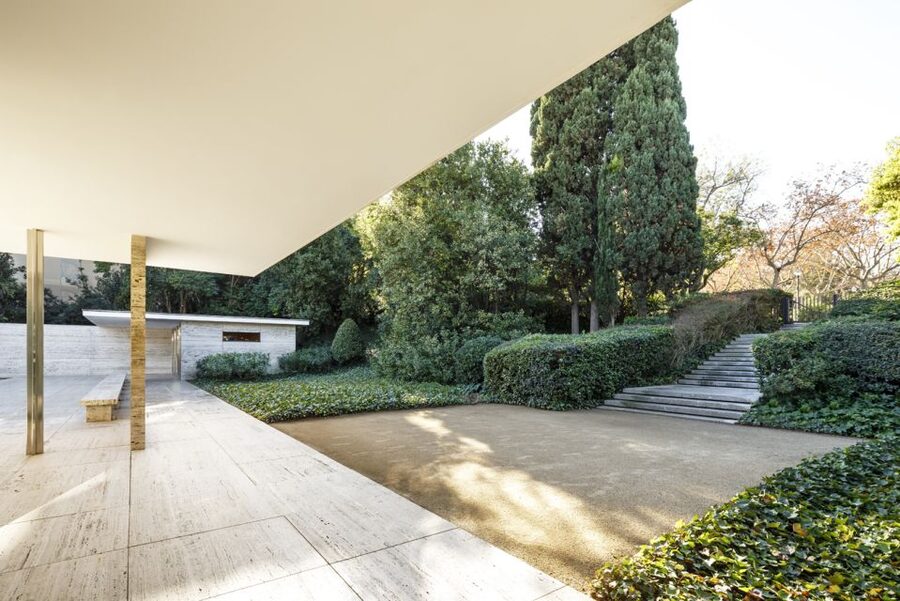
At $10 per person, the ticket is not a major expense by Barcelona sightseeing standards, but value depends on your interests. You are paying for access to a highly influential building, the audio guide, and the chance to spend time in a peaceful architectural setting.
The price feels fair to me if you care about design, modern art, or the history of Barcelona’s 1929 exhibition. It is also reasonable if you want a short stop with clear historical context and little crowd pressure.
The value is weaker if you are choosing attractions only by size or spectacle. The Pavilion does not compete with Barcelona’s biggest landmarks on scale. Its appeal comes from precision. You pay to examine a small number of design decisions that shaped generations of architects and artists.
The ticket also includes skip-the-ticket-line access, which can matter when you are planning a tight sightseeing day. You still need to check the available time and arrive when expected. One review advised arriving on time, and that is good advice for a timed cultural visit.
Free cancellation up to 24 hours before the visit and the option to reserve now and pay later add flexibility. Opening hours can change, so check them before setting out rather than relying only on an old schedule.
Who Will Appreciate the Pavilion Most
I would recommend this experience to:
- People interested in modern architecture and design
- Art and photography enthusiasts
- Visitors who enjoy quiet, thoughtful sights
- Anyone curious about Barcelona’s 1929 International Exhibition
- Travelers who want a compact stop between larger attractions
- Visitors who prefer an audio guide to a live group tour
Families can also visit, but the Pavilion may not hold the attention of young children for long. There are no listed hands-on activities, and the experience depends on looking carefully and listening.
It is a good fit for first-time visitors who want to see more than Barcelona’s famous churches and markets. It is also worthwhile for repeat visitors seeking a different side of the city. You do not need to be an architect, but you should be open to a building where the design itself is the exhibit.
People who dislike minimalism may want to think twice. The Pavilion is intentionally restrained. Its beauty is quiet, not theatrical.
Access, Rules, and Useful Visit Tips
The Pavilion is wheelchair accessible. Smoking, food, drinks, pets, and tripods are not allowed, though assistance dogs are permitted.
I would keep your visit simple. Bring your phone or camera if you want to take pictures, but leave the tripod at home. Avoid planning a snack break inside, since food and drinks are prohibited.
Check the opening hours before you go, since they may change. Also allow enough time to arrive at your chosen starting time. The exact length of a visit is not specified, so you have room to set your own pace, but the site is not designed as a full-day attraction.
If the Pavilion is hosting an artistic intervention, the materials, colors, or arrangement may look different from standard images. That can be a pleasant surprise, but it is worth knowing if you are visiting to study the reconstruction in its familiar form.
Should You Book the Mies van der Rohe Pavilion?
Book it if you enjoy architecture, calm spaces, clean design, or Barcelona’s less obvious cultural sights. The $10 price is sensible for an audio-guided visit to a building with major influence, especially when you take time to study the materials and spatial arrangement.
Skip it if you want a large attraction filled with art, history displays, or dramatic decoration. The Pavilion is compact, and some people will feel that admission should be free.
My advice is to pair it with another nearby plan and arrive on time. Listen to the audio guide, then walk through again at your own pace. The Pavilion will not overwhelm you. It asks for attention instead, and for the right visitor, that is exactly why it works.
FAQ
Where is the Mies van der Rohe Pavilion located?
The Pavilion is in Barcelona, in Catalonia, Spain. The experience takes place at the building’s original site.
How much does admission cost?
The listed price is $10 per person. Admission includes the entrance ticket and audio guide.
How long is the ticket valid?
The ticket is valid for one day. Available starting times can be checked when booking.
What languages are available for the audio guide?
The audio guide is available in Spanish, Catalan, English, French, and German.
Is the Mies van der Rohe Pavilion wheelchair accessible?
Yes. The Pavilion is wheelchair accessible.
Can I cancel my booking?
Yes. You can cancel up to 24 hours in advance for a full refund.
Can I reserve now and pay later?
Yes. The reserve now and pay later option lets you book without paying at the time of reservation.
Are food, drinks, pets, or tripods allowed?
No. Smoking, food and drinks, pets, and tripods are not allowed. Assistance dogs are permitted.
Recently listed in Barcelona
- Transfers From Cruise Port to Barcelona Airport★ 4.5 · 155 reviews
- Bohemian Barcelona Neighborhood Evening Tapas & Wine Tour★ 5.0 · 419 reviews
- Park Guell Guided Tour with Skip the Line Tickets★ 4.0 · 739 reviews
- Barcelona Sunset Cruise with Light Snacks and Open Bar★ 5.0 · 476 reviews
- Montserrat very early : Hiking, Abbey, very small group★ 5.0 · 127 reviews
- Barcelona: Sagrada Familia, Park Guell & Tapas Private Tour★ 5.0 · 903 reviews
- Authentic Flamenco Show Barcelona : Intimate Casa Sors Experience★ 5.0 · 809 reviews
- Barcelona Expert Tour with Local Guide in Eco Tuk Tuk Private★ 5.0 · 216 reviews
Audio Tours, compared.
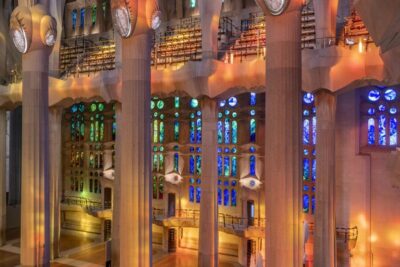
Sagrada Familia Entry Ticket with Audio Guide
Read our review →
Casa Batllo Admission Ticket with Intelligent Audio Guide
Read our review →



Browse the lists this tour appears in