
Reviewed · WALKING TOURS
Barcelona: Old Town and Gothic Quarter Walking Tour
Barcelona rewards anyone willing to walk slowly. This $21 tour connects the Roman wall, medieval squares, La Rambla, and El Born in one well-planned outing. I especially like the small groups of up to 15 and the guides’ mix of history, local stories, food tips, and humor. Guides such as Alba, Joris, Nilo, and Isabel have earned praise for making old stones feel surprisingly alive.
I also like the route’s range: you move from ancient Roman remains to Catalan Gothic churches, then into markets, cafés, and busy city streets. The main consideration is pace. Two and a half to four hours on foot can feel long in rain, heat, or crowded streets, and the meeting point may vary by booking. Wear good shoes and leave large bags behind.
In This Review
- Key points at a glance
- Why this Barcelona walking tour works so well
- Plaça de Sant Jaume and the Roman beginning
- Roman walls and the Pati Llimona baths
- Gothic Quarter lanes, Plaça del Rei, and the royal past
- Barcelona Cathedral and Catalan Gothic style
- La Rambla and the food pause at La Boqueria
- Plaça Reial and the shift from history to city life
- Santa Maria del Mar and El Born
- What the $21 price really buys you
- Who should take this tour
- Practical advice for a better walk
- Should you book the Barcelona Old Town and Gothic Quarter tour?
- FAQ
- Where does the Barcelona Old Town and Gothic Quarter tour start?
- Where does the tour finish?
- How long does the walking tour last?
- What languages are available?
- How much does the tour cost?
- Is the tour private?
- What should I bring?
- Can I bring luggage or a large bag?
- Are children under two charged?
- Are food and personal purchases included?
Key points at a glance
- Roman Barcelona begins at Plaça de Sant Jaume: See the political center of Catalonia and learn about the Roman Forum beneath the modern square.
- The Gothic Quarter is more than pretty façades: Roman walls, medieval courtyards, royal buildings, and narrow lanes give the district its real character.
- La Boqueria adds a food stop to the history lesson: More than 300 stalls sell local products, making this a useful place to pause and look around.
- Santa Maria del Mar brings Catalan Gothic architecture into focus: The church’s quick construction offers a memorable lesson in medieval building skill.
- The guides are the tour’s biggest strength: Alba, Joris, Nilo, Isabel, Ane, Steven, and others are praised for clear storytelling and personal recommendations.
- The finish in El Born is useful: You can continue exploring cafés, shops, and nearby sights after the formal tour ends.
Why this Barcelona walking tour works so well
Barcelona’s Old Town is easy to wander through and surprisingly easy to misunderstand. A narrow lane may follow a Roman boundary. A church may tell a story about medieval merchants. A grand square may look modern while sitting on ground that has shaped Catalan politics for two millennia.
That is where a guide earns the $21 price. You are not simply pointed toward a church and told its name. You get a sequence of connections: Roman Barcelona, medieval Barcelona, modern Catalonia, and the everyday city you see around you today.
The route also gives you a useful first look at several central districts. You visit the Gothic Quarter, pass through or along La Rambla, stop at La Boqueria, see Plaça Reial, and finish around Passeig del Born. You will not explore every museum or enter every monument, but you will learn where the major areas fit together.
The strongest feature is the human delivery. Alba is repeatedly praised for her energy, care, and local suggestions. Joris is described as funny, passionate, and good at answering questions. Nilo receives praise for making the walk interactive and keeping the group together. Isabel is especially effective at helping you picture earlier centuries rather than merely memorizing dates.
Guide quality can never be guaranteed on a group tour, but the broad pattern here is encouraging. The group of guides is repeatedly described as friendly, entertaining, and well informed. Some guides add puzzles or small visual details, such as dragons and a double-tailed mermaid, which can help children and adults look more closely at the buildings.
More Walking Tours in Barcelona
- Barcelona Tapas and Wine Experience Small-Group Walking Tour
★ 5.0 · 5,804 reviews - Barcelona: Tapas Walking Tour with Food, Wine, and History
★ 4.8 · 4,261 reviews - Barcelona Tapas Walking Tour: Food, Wine & History
★ 4.5 · 1,928 reviews
Plaça de Sant Jaume and the Roman beginning
The tour starts at the Movistar Centre, although the exact meeting point can vary with the option you book. From there, the walk reaches Plaça de Sant Jaume, one of the most meaningful places in central Barcelona.
The square occupies the area of the ancient Roman Forum. It has remained a political center for more than 2,000 years, which gives the opening talk real weight. You begin to see that Barcelona is not a city built in neat historical layers that were simply abandoned. Older uses still shape the modern city.
This is a good place to ask questions about Roman origins and Catalan identity. The tour treats the past as part of the city’s current character, not as a detached lesson. Guides also bring in modern political and social context, according to the experience described by several participants.
The drawback is that a public square can be crowded and noisy. You may need to stand close to hear everything, especially when the city is busy. The small group limit helps, but you should still stay near the guide and avoid drifting toward the edge of the gathering.
Roman walls and the Pati Llimona baths
One of the tour’s most useful early stops is a stretch of Roman wall. Barcelona has an unusually well-preserved section, and seeing it in place makes the city’s Roman scale easier to understand.
A wall can sound dull when reduced to a date and a measurement. Here, the point is how it shaped the old settlement and how later buildings grew around it. Look up and around, not only at the stones. The Roman remains are woven into the later city.
The Roman baths at Pati Llimona add a more personal side to the story. Instead of focusing only on emperors, battles, and grand public works, the guide explains what bathing meant in daily Roman life. That shift from famous names to ordinary routines is one of the tour’s better choices.
Some historic sites on this route are viewed from outside or passed by rather than visited as full attractions. If you want lengthy time inside archaeological exhibits, this is not the right format. If you want a clear introduction before exploring museums on your own, it works well.
Gothic Quarter lanes, Plaça del Rei, and the royal past
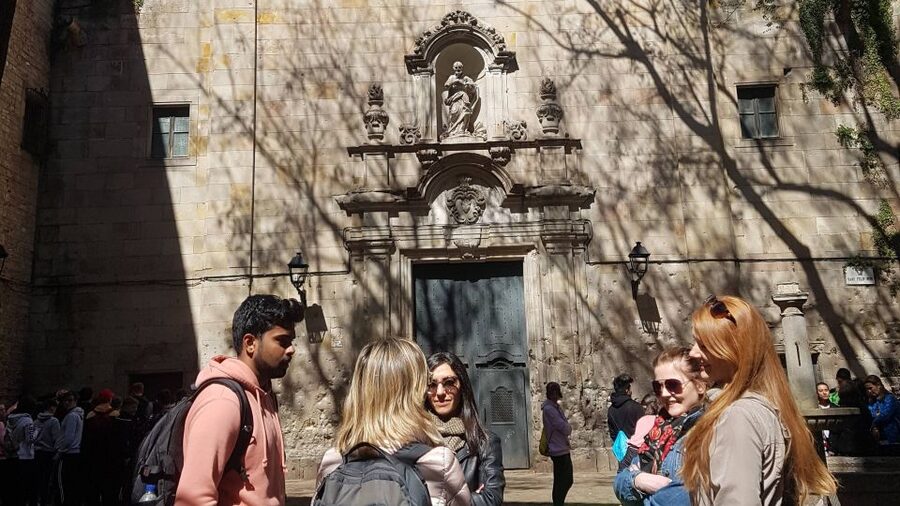
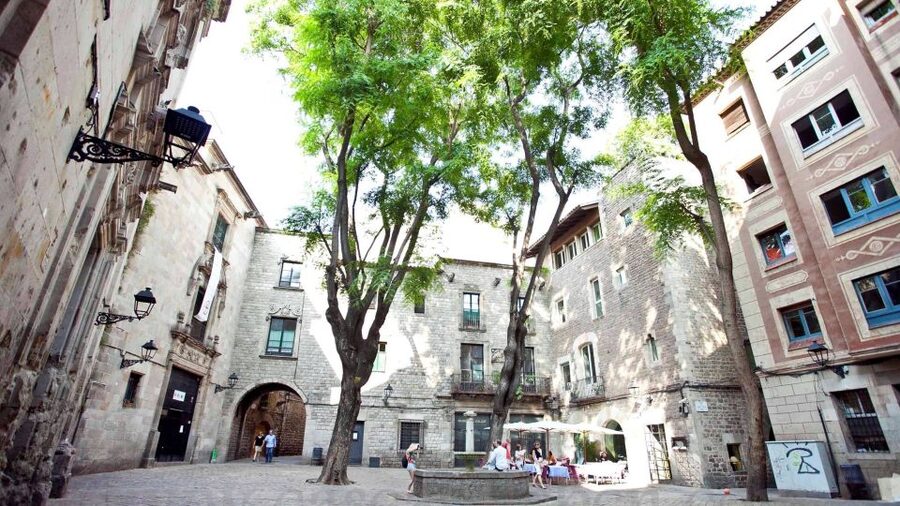
The Gothic Quarter is the heart of the walk. Its narrow streets and medieval buildings create the setting, but the guide supplies the context that makes the area more than a photo stop.
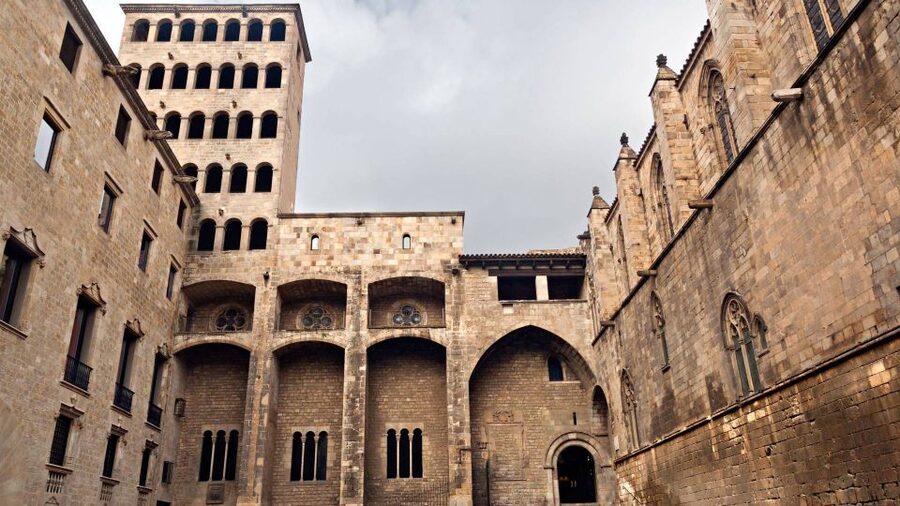
Plaça del Rei is one of the route’s main historical points. The square includes the Palace of the Viceroy and the Palau Reial. It is also connected with Christopher Columbus and his reception by the Catholic Monarchs after his journey to the Americas.
That story carries familiar grand themes, but a good guide can give it shape and place. You stand where royal power, overseas expansion, and the political world of late medieval Spain intersected. The value is not just seeing a handsome square. It is understanding why this corner mattered.
You also get time to notice the district’s present-day life. Cafés, small shops, and busy lanes now occupy spaces that once served very different purposes. The contrast is part of the pleasure. Barcelona’s Old Town is not a preserved stage set. People live, work, eat, and shop among the monuments.
Do not expect a quiet stroll at every moment. The Gothic Quarter attracts plenty of foot traffic, and its lanes can be tight. The guide’s job is partly crowd management, and several accounts praise guides for keeping everyone together and making sure the group could hear.
Same base, a different kind of afternoon:
- Barcelona: Sagrada Familia Entry Ticket with Audio Guide
★ 4.6 · 105,312 reviews - Barcelona: Park Güell Admission Ticket
★ 4.4 · 76,534 reviews - Barcelona: Casa Batlló Entry with Self-Audioguide Tour
★ 4.7 · 25,359 reviews - Barcelona: 24 or 48-Hour Hop-On Hop-Off Bus Tour
★ 4.4 · 20,872 reviews
Barcelona Cathedral and Catalan Gothic style
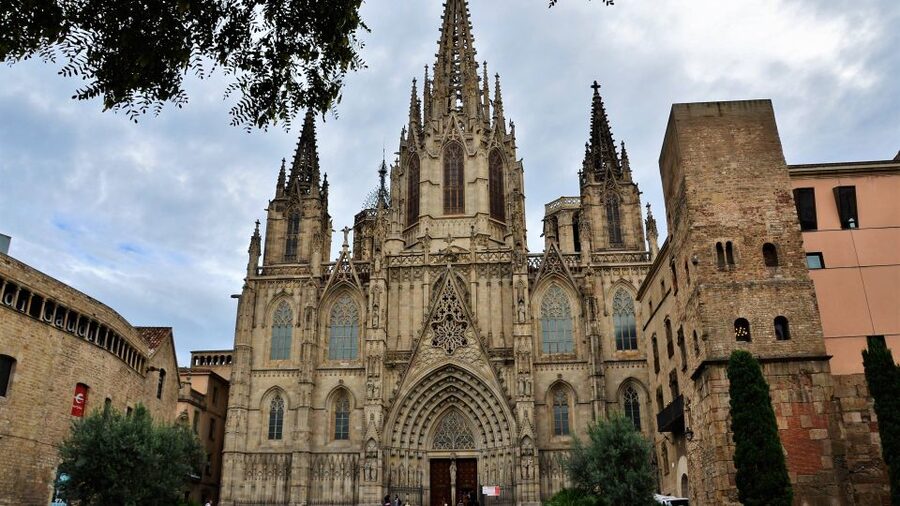
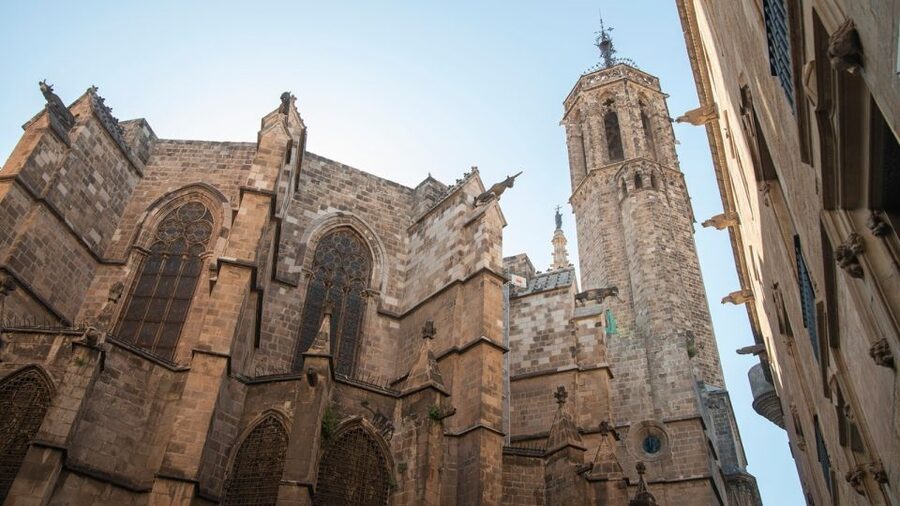
Barcelona Cathedral is viewed during the walk, with the itinerary describing it as a pass-by sightseeing stop rather than a dedicated interior visit. Its scale and detailed Gothic design make it an important visual pause.
This is where the guide’s architectural explanations matter. You learn how to read the building as an expression of medieval religious and civic life. The tour is not designed as a specialist architecture lecture, but some guides bring strong expertise. One guide was praised for having a doctorate in architecture, while others explain buildings through stories, humor, and simple comparisons.
You should think of this stop as an orientation rather than a complete cathedral visit. If you want to study chapels, artworks, or the interior at length, plan separate time. The walking tour gives you the setting and the reasons the cathedral matters, then keeps moving.
That moving format suits a first day in Barcelona. You get enough explanation to recognize what you see later, without spending the whole morning in one building.
La Rambla and the food pause at La Boqueria
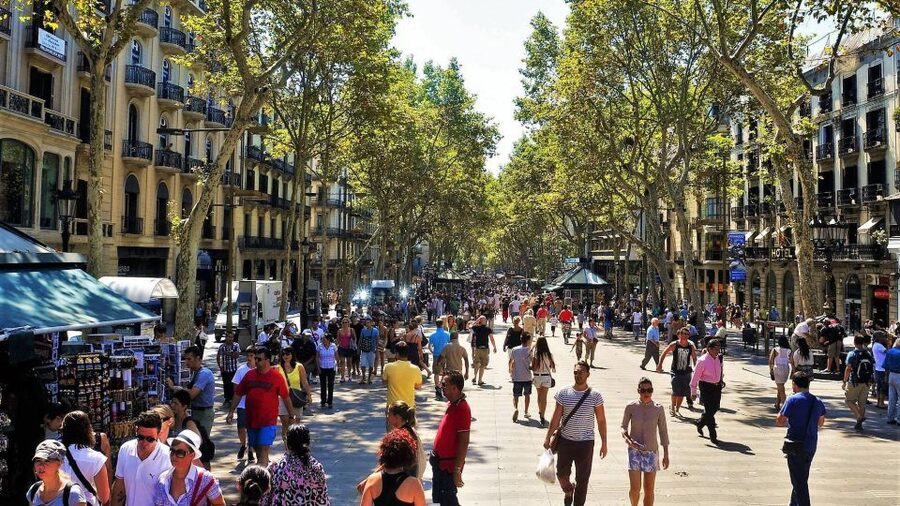
La Rambla changes the mood. After the older lanes of the Gothic Quarter, you enter Barcelona’s famous central boulevard, lined with flower stalls, street performers, cafés, and places to eat.
The tour passes along La Rambla rather than treating it as a formal attraction. That is sensible. The boulevard is best understood through movement and atmosphere. You see how it connects the old districts and how its public life differs from the quieter side streets.
Keep your belongings close here. The guide may mention safety, and Alba in particular was praised for paying attention to participants and their possessions. This is practical advice, not a reason to avoid La Rambla. Carry only what you need, especially since large bags are not allowed on the tour.
La Boqueria is one of the route’s most appealing stops. More than 300 stalls offer local products, and the market gives you an immediate introduction to Catalan food culture. You can look at produce, prepared food, seafood, sweets, and other goods while the guide explains the market’s role in the city.
The stop is described as a guided visit and sightseeing walk, not a meal package. Personal expenses are not included, so bring money only if you want to buy something. The market can be crowded, and a large group would make it awkward, but the 15-person limit keeps this part manageable.
I would not plan your entire lunch around the tour. Market timing and group movement may not allow a long, relaxed meal. Instead, treat La Boqueria as a preview, then ask your guide where to eat afterward. Food recommendations are a recurring strength of guides including Alba, Ane, Steven, and Nilo.
Plaça Reial and the shift from history to city life
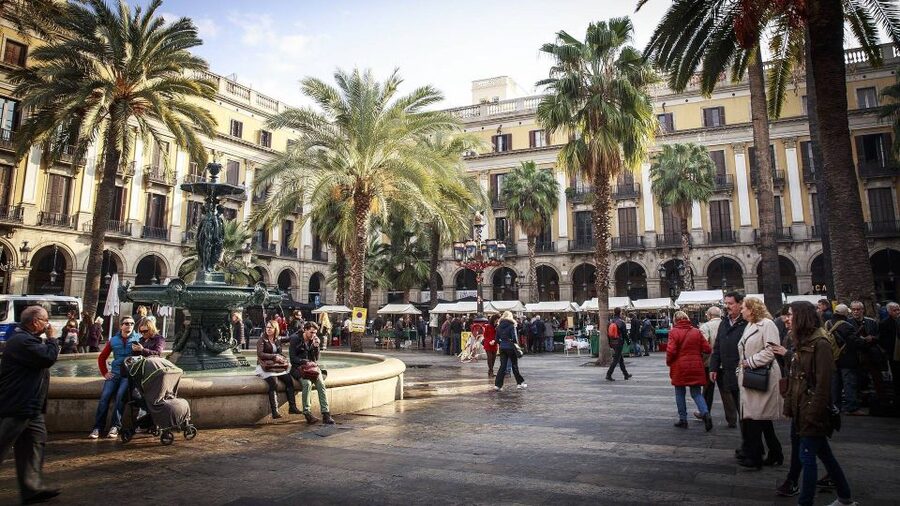
Plaça Reial gives the route another change of scenery. The square is associated with cafés, restaurants, and social life, and it helps show how the Old Town functions today.
The guide uses places like this to connect architecture with daily Barcelona. You are not only hearing about kings and Roman citizens. You are seeing where people meet, eat, and spend an evening.
This section may appeal to you if you want a tour that balances history with practical orientation. It is less useful if you prefer a tightly focused monument tour with long talks at every stop. The walk keeps a steady rhythm, and the best guides avoid burying you under facts.
Several guides are praised for giving enough detail without losing the group. That balance is important on a route with many names, dates, and buildings. You should leave with a working understanding of the city, not a notebook full of facts you cannot place.
Santa Maria del Mar and El Born
The walk continues toward Santa Maria del Mar, one of the finest examples of Catalan Gothic architecture. The church is especially memorable because it was built in a remarkably short time, a detail that gives you a clear way to appreciate medieval planning and engineering.
The church also helps explain El Born, the district where the tour finishes. Here, the atmosphere shifts toward cafés, boutique shops, and lively streets. You are still surrounded by old buildings, but the area feels less like a formal historic quarter and more like a place where Barcelona’s present-day culture is on display.
The itinerary lists Santa Maria del Mar as a pass-by sightseeing stop. That means you should not assume the walk includes a full interior visit or a long architectural inspection. If the church interests you, note its location and return later with more time.
Finishing at Passeig del Born is convenient. You can stay in El Born for food, shopping, or further exploration, or use the new orientation to plan the rest of your day. The Palace of Catalan Music is also included as a pass-by sight, giving you another architectural reference point, though not an extended visit.
What the $21 price really buys you
At $21 per person, this is a strong-value introduction to central Barcelona. Admission tickets, food, and personal expenses are not included, but the cost covers an English or Spanish-speaking live guide and several hours of informed walking.
You are paying for selection and explanation. It would cost nothing to walk La Rambla or enter the Gothic Quarter on your own, but finding the Roman wall, understanding Pati Llimona, and placing Plaça del Rei in context takes research. A good guide also saves you from walking past details you would never notice.
The value rises if this is your first visit. You can use the walk to decide which areas deserve a second visit and which buildings you want to enter later. It is also useful early in a stay because the guides often give suggestions for restaurants and places to visit.
The value falls if you dislike group walking or already know Barcelona’s Old Town well. The route covers a lot of ground, and some stops are viewed from outside. A private group is available if you want a more personal format, but the price and arrangement may differ.
The tour lasts about 2.5 hours in its main description, while booking information gives a possible duration of 2.5 to 4 hours. Check the specific option and starting time before you reserve. Either way, plan for a substantial walk.
Who should take this tour
I would choose this tour for a first visit, especially if you want history without spending hours in museums. It suits couples, families with older children, solo visitors, and anyone who likes to learn while moving through a city.
It is also a good choice for people who want local guidance beyond the formal route. The strongest guides do more than recite history. They answer questions, explain current Barcelona, point out small decorative details, and suggest places to eat afterward.
Children under two can join for free. The walking format may still be tiring for very young children, and you should bring comfortable shoes for everyone. Large bags and luggage are not allowed, so arrange storage before arriving if necessary.
You can take the tour in English or Spanish. Private groups are available, which may suit families or friends who want more control over the pace and questions.
Practical advice for a better walk
Wear shoes that are comfortable on hard city streets. This sounds obvious, but the route covers several districts and includes standing while listening.
Arrive ready to stay with the group. Narrow lanes, crowds, and street noise can make it easy to lose sight of the guide. Guides such as Nilo and Alba were praised for waiting for participants, maintaining group safety, and checking that people could hear.
Bring water and dress for the forecast. A cold, rainy morning did not ruin one small-group outing, but poor weather can make several hours outside less pleasant. In warm weather, shade and pauses become more important.
Use the tour as a framework for the rest of your visit. Mark La Boqueria, Santa Maria del Mar, the cathedral, El Born, and any restaurant suggestions that interest you. Then return independently to the places you want to explore at a slower pace.
Should you book the Barcelona Old Town and Gothic Quarter tour?
Yes, if you want an affordable first look at Barcelona’s oldest districts and prefer stories to silent sightseeing. The route offers Roman remains, medieval power, Catalan Gothic architecture, food culture, La Rambla, and El Born without requiring a complicated day of planning.
The main reason to book is the guide. Alba, Joris, Nilo, Isabel, Ane, Steven, and their colleagues are repeatedly praised for warmth, humor, clear English, local advice, and a real interest in Barcelona. That personal touch is what turns a basic orientation walk into a useful introduction.
Skip it if you want long interior visits, a slow photography walk, or a tour limited to one historical period. Otherwise, $21 buys a sensible route, a small group, and enough context to make Barcelona’s Old Town far easier to understand.
FAQ
Where does the Barcelona Old Town and Gothic Quarter tour start?
The stated starting location is the Movistar Centre, but the meeting point may vary depending on the option booked. Check your selected booking details before setting out.
Where does the tour finish?
The tour finishes at Passeig del Born, 08003 Barcelona, Spain.
How long does the walking tour last?
The main tour description gives a duration of 2.5 hours. Booking information lists a possible duration of 2.5 to 4 hours, so check the specific option and time you choose.
What languages are available?
The live tour is available in English and Spanish.
How much does the tour cost?
The listed price is $21 per person.
Is the tour private?
A private group option is available. The standard tour is a small-group experience with a maximum of 15 participants.
What should I bring?
Bring comfortable shoes. You will be walking and standing for several hours.
Can I bring luggage or a large bag?
No. Luggage and large bags are not allowed on the tour.
Are children under two charged?
Children under two years old can join for free.
Are food and personal purchases included?
No. Personal expenses are not included, so anything you buy at La Boqueria or elsewhere is paid separately.
Recently listed in Barcelona
- Transfers From Cruise Port to Barcelona Airport★ 4.5 · 155 reviews
- Bohemian Barcelona Neighborhood Evening Tapas & Wine Tour★ 5.0 · 419 reviews
- Park Guell Guided Tour with Skip the Line Tickets★ 4.0 · 739 reviews
- Barcelona Sunset Cruise with Light Snacks and Open Bar★ 5.0 · 476 reviews
- Montserrat very early : Hiking, Abbey, very small group★ 5.0 · 127 reviews
- Barcelona: Sagrada Familia, Park Guell & Tapas Private Tour★ 5.0 · 903 reviews
- Authentic Flamenco Show Barcelona : Intimate Casa Sors Experience★ 5.0 · 809 reviews
- Barcelona Expert Tour with Local Guide in Eco Tuk Tuk Private★ 5.0 · 216 reviews
Walking Tours, compared.
Barcelona Tapas and Wine Experience Small-Group Walking Tour
Read our review →
Tapas Walking Tour with Food, Wine, and History
Read our review →
Albaicín and Sacromonte Guided Sunset Walking Tour
Read our review →
Toledo Tour & Vineyard Walk with Wine Tasting from Madrid
Read our review →
Madrid Walking Tour from Puerta del Sol to Retiro Park
Read our review →
Barcelona Tapas Walking Tour: Food, Wine & History
Read our review →
Madrid Old Town & Royal Palace Walking Tour Skip the Line Ticket
Read our review →
Browse the lists this tour appears in