Reviewed · TICKETS
Barcelona: Sant Pau Recinte Modernista Entry Ticket
Beauty once served a medical purpose. Sant Pau Recinte Modernista is far more than a pretty Art Nouveau stop. It is a former public hospital designed by Lluís Domènech i Montaner, where gardens, light, color, and fresh air were planned as part of patient care. I especially like the restored pavilions and the underground passageways, which reveal how the complex worked as a hospital. I also like that you can explore at your own pace for about 1.5 hours, without being tied to a group.
The main drawback is simple: the $21 ticket does not include a guided tour. You get access to the site, but the history is easier to understand if you read carefully or use an audio guide if one is available. Some of the displays are subtle, so hurried visitors may admire the tiles and stained glass without fully grasping how progressive the hospital was.
In This Review
- Key details before you go
- Why Sant Pau deserves your time
- Arriving at Calle Sant Antoni Maria Claret 167
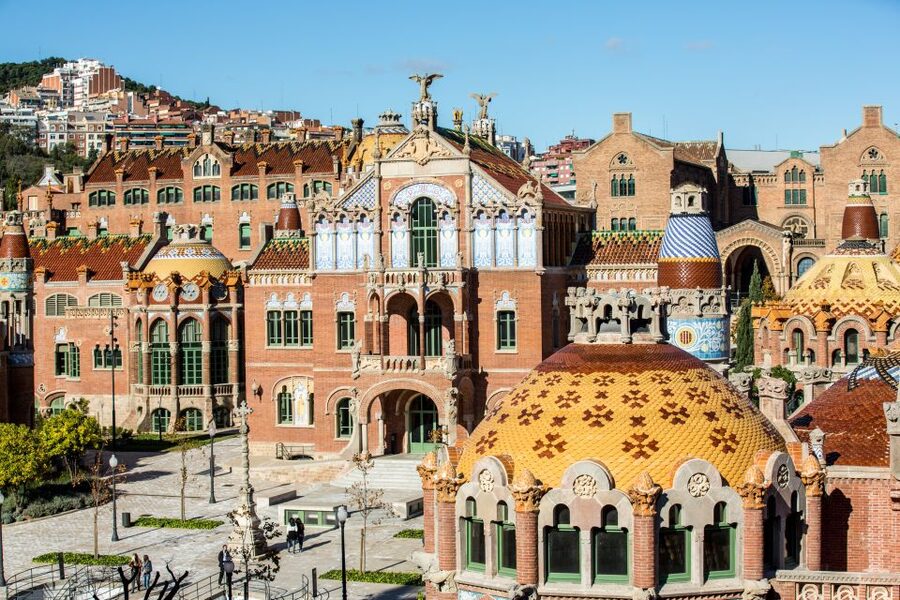
- The central courtyard and the first architectural surprise
- Pavilions filled with mosaics, glass, and sculpture
- Underground passageways and the hospital’s practical design
- The story of healthcare, charity, and public service
- Self-guided or guided visit?
- How Sant Pau compares with Barcelona’s major sights
- Is the $21 ticket good value?
- Who should visit Sant Pau?
- Should you book Sant Pau Recinte Modernista?
- FAQ
- Where is Sant Pau Recinte Modernista?
- How long does the Sant Pau visit take?
- Is a guided tour included?
- Is an audio guide included?
- Is Sant Pau wheelchair accessible?
- Can children visit Sant Pau?
- Can visitors over 65 enter for free?
- Can I cancel my booking?
- Can I reserve now and pay later?
- Are pets allowed at Sant Pau?
Key details before you go
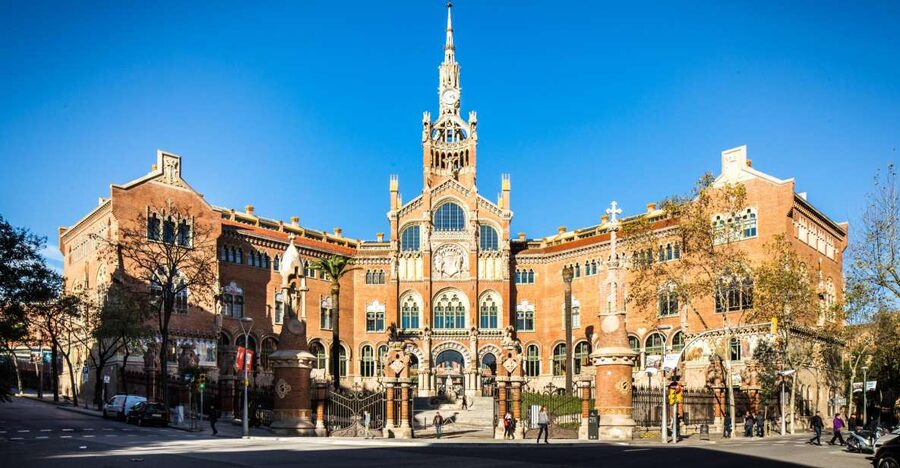
- A hospital designed as a garden city: Lluís Domènech i Montaner planned separate pavilions, gardens, and underground connections to support healing and hygiene.
- A major Art Nouveau landmark: Look closely for mosaics, sculptures, stained glass, decorative tiles, and colorful architectural details.
- A self-paced visit: The ticket is valid for one day, giving you room to spend 1.5 hours or longer if you want to read and examine the rooms.
- A useful contrast with Gaudí: Sant Pau is close to La Sagrada Família and offers another side of Barcelona Modernisme, with order, symmetry, and medical purpose.
- Easy access and a calm setting: The complex is near a metro station, with cafes outside and a quieter feel than many central attractions.
- Good for families and wheelchair users: The site is wheelchair accessible, and children under 12 enter free with a parent or guardian.
Why Sant Pau deserves your time
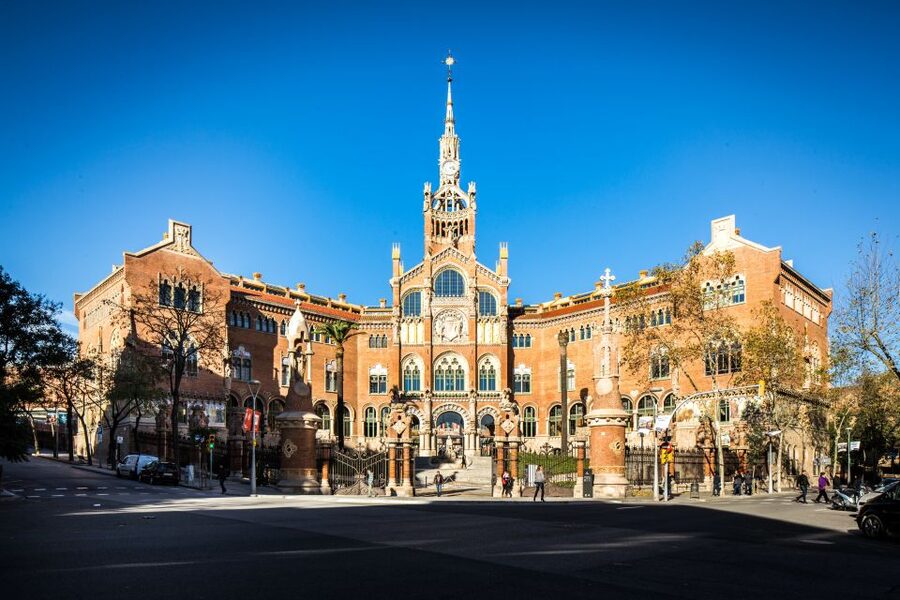
Barcelona has no shortage of famous buildings. La Sagrada Família gets the crowds, and Park Güell gets the postcard treatment. Sant Pau Recinte Modernista gives you something different: a complete architectural plan built for public healthcare.
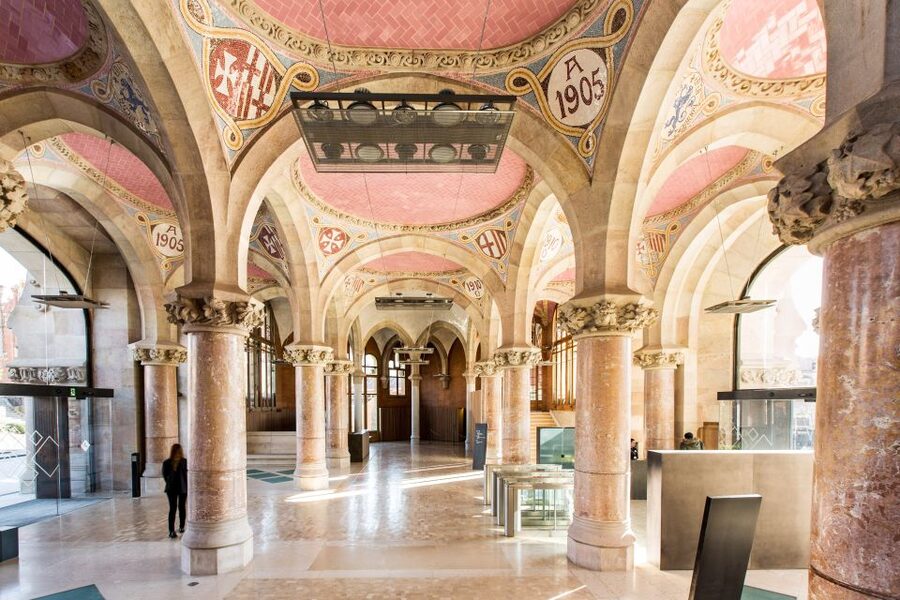
The complex was constructed between 1905 and 1930. It replaced the old Hospital de la Santa Creu in El Raval, which had become too small by the late 19th century. The new hospital reflected fresh ideas about hygiene, fresh air, natural light, charity, and patient welfare.
That purpose matters. The decorative work is not pasted onto an ordinary building. The architecture was intended to improve the experience of people who were sick, many of them poor. Gardens separated the pavilions, while underground passageways allowed staff and patients to move between buildings without crossing the open courtyards.
I find that combination especially rewarding. You are not simply looking at ornament. You are seeing an ambitious attempt to make a hospital humane.
Sant Pau later served as a public hospital for around a century. It has now been restored and adapted as a site for culture and international organizations. The European Forest Institute, Casa Àsia, the Global University Network for Innovation, and the United Nations University Institute on Globalization, Culture, and Mobility are associated with the complex.
A few more Barcelona ideas to compare
- Barcelona: Sagrada Familia Entry Ticket with Audio Guide
★ 4.6 · 105,312 reviews - Barcelona: Park Güell Admission Ticket
★ 4.4 · 76,534 reviews - Barcelona: Casa Batlló Entry with Self-Audioguide Tour
★ 4.7 · 25,359 reviews
Arriving at Calle Sant Antoni Maria Claret 167
The official address is Calle Sant Antoni Maria Claret, 167, 08025 Barcelona. A metro station is nearby, making the site straightforward to reach. One useful practical point is that the nearby metro connection can also be convenient if you are heading toward the airport later in the day.
Allow a little time to identify the correct entrance. One person had trouble with navigation software sending them to the wrong part of Barcelona, so double-check the address rather than following an uncertain map pin. Cafes just outside the complex make it easy to stop for a drink before or after your visit.
The entrance process is generally simple. Online tickets can help you avoid delays, and the site has lockers suitable for small bags or carry-on luggage. Do not count on storing a large suitcase. If you are visiting before a flight, the lockers can be useful, but pack light.
The grounds are wheelchair accessible. Smoking, pets, alcohol, and drugs are not allowed.
The central courtyard and the first architectural surprise
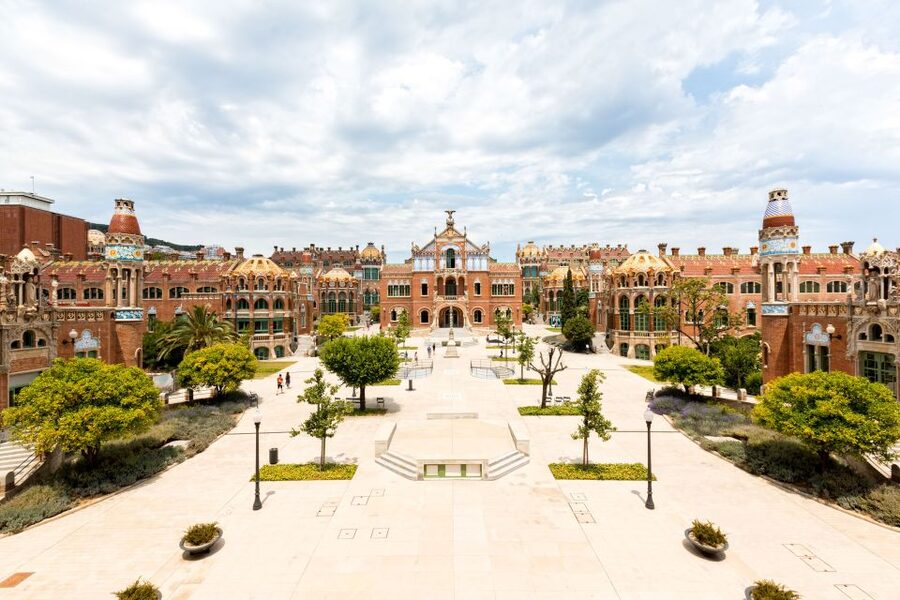
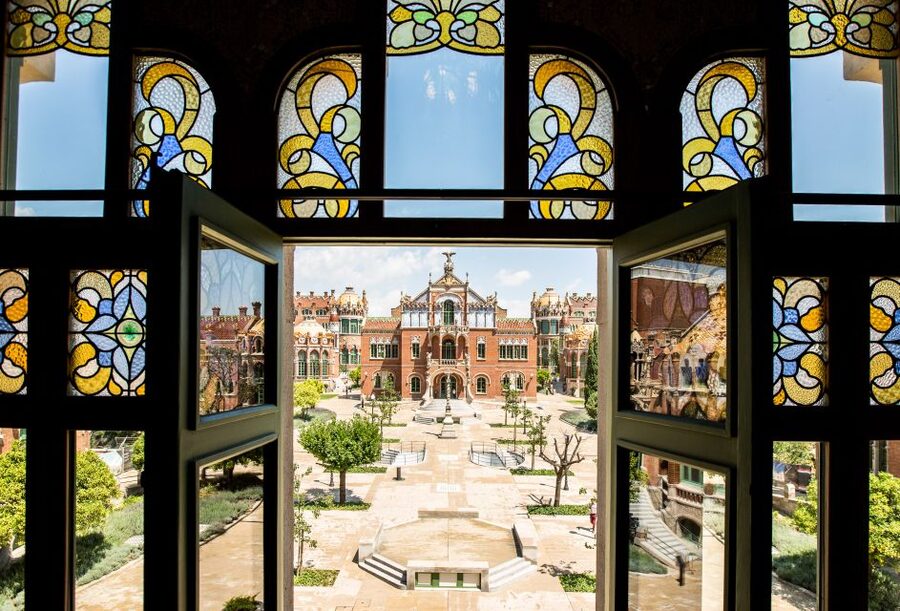
The first major reward is the view into the central courtyard. Sant Pau opens up gradually, and the scale becomes clear once you see the pavilions arranged around the gardens.
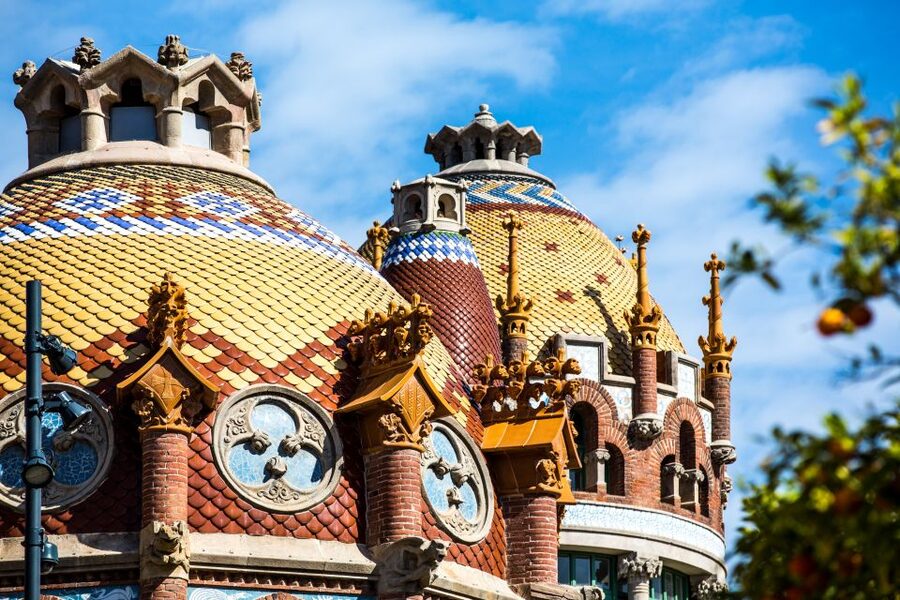
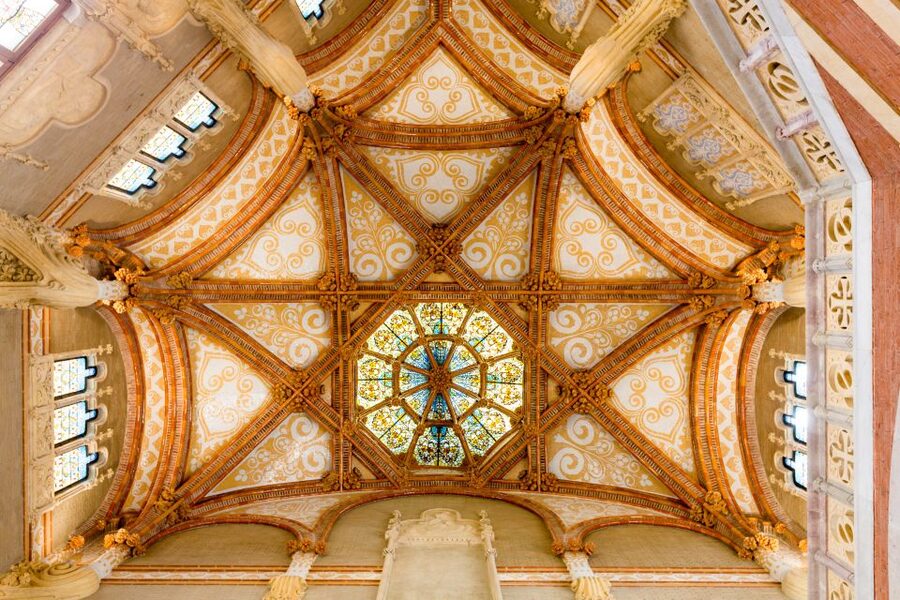
Take a moment before rushing inside. The central building and the surrounding facades are covered with the visual language of Catalan Modernisme. You will see decorative stonework, ceramic details, sculpted figures, and carefully placed color.
This is a good place to remember one rule: look up. Decorative work appears on roofs, arches, ceilings, towers, and upper walls. If you only study eye-level details, you will miss much of the design.
The courtyard also gives you a sense of the original hospital plan. Instead of one giant block, the site was divided into separate buildings. That arrangement allowed air and light into the patient areas and created a more open setting than the cramped old hospital in El Raval.
The outdoor areas are spacious enough for a slow walk or a quiet pause. You might find the courtyard a welcome break if Barcelona feels hot and crowded. Sitting here and studying the buildings is part of the visit, not wasted time.
Pavilions filled with mosaics, glass, and sculpture
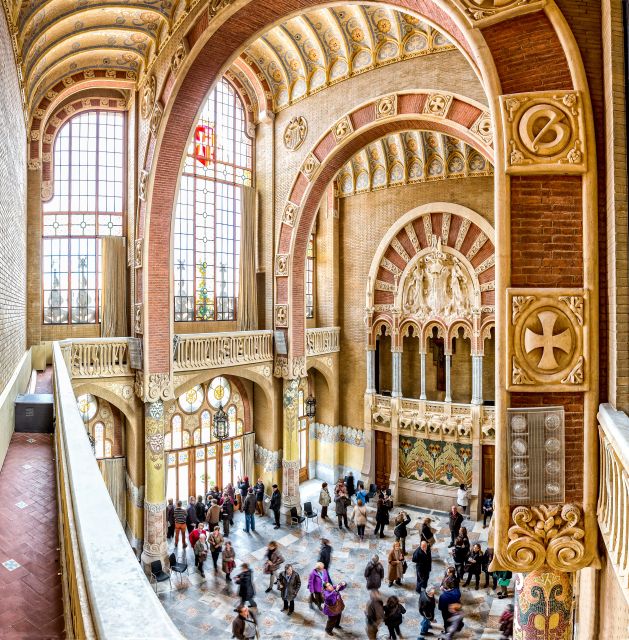
The restored pavilions are the heart of the experience. Each one gives you another view of Domènech i Montaner’s plan, with decorative details tied to the building’s function and setting.
Mosaics are especially easy to miss from the main courtyard. Walk around the sides of the front buildings, where mural mosaics add another layer of color and storytelling. The decoration rewards patience, so I would not treat this as a quick photo stop.
Inside, you can expect rooms and displays that explain the hospital’s past. One preserved hospital room is presented as it was set up in 1932. Medical instruments from the period help connect the architectural beauty with the practical work that took place here.
That historical detail changes the mood. Sant Pau is not only an art museum. It was a working hospital, and people were treated in these rooms until relatively recently. The preserved spaces make the site feel more immediate than a building that was always intended as a monument.
For anyone with a medical or science background, this part can be particularly absorbing. The complex shows how medical care, nursing, hospital administration, nature, and patient surroundings were linked in the early 20th century. You do not need medical training to appreciate it, but a professional connection may give the displays extra meaning.
Same base, a different kind of afternoon:
- Barcelona: 24 or 48-Hour Hop-On Hop-Off Bus Tour
★ 4.4 · 20,872 reviews - Barcelona: Park Guell Guided Tour with Skip The Line Entry
★ 4.7 · 17,563 reviews - Barcelona in 1 Day: Sagrada Familia, Park Guell,Old Town & Pickup
★ 5.0 · 13,541 reviews - Barcelona Aquarium: Entry Ticket
★ 4.3 · 13,335 reviews
Underground passageways and the hospital’s practical design
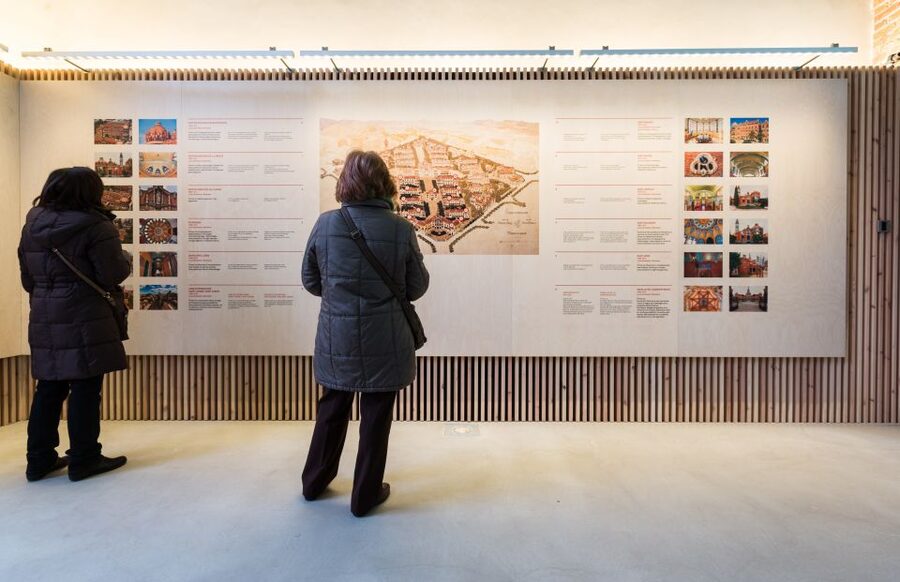
The underground passageways are one of Sant Pau’s most interesting features. They connect the pavilions and show how the complex functioned beyond its handsome facades.
From above, the hospital can look like a collection of elegant villas. The tunnels remind you that this was a carefully organized institution. Movement between buildings had to be efficient, and the underground routes helped keep the gardens and courtyards open.
The passageways also provide a change of pace. After studying the bright exterior decoration and gardens, you move into a more practical part of the hospital plan. The contrast helps you understand that every attractive feature had to work alongside daily medical needs.
The exact route through the complex can depend on which areas are open during your visit. One criticism has been that more buildings could be accessible, so do not assume every pavilion is open as a museum interior. Even with that limitation, the available buildings and tunnels give you a strong sense of the whole plan.
Signage has also been described as less clear than ideal, both outdoors and inside. I recommend picking up any available map or pamphlet at the entrance and checking the direction of the next stop before wandering too far.
The story of healthcare, charity, and public service
Sant Pau’s decoration can easily distract you from its social purpose. The institution was linked to charity, welfare, and care for people who could not afford private treatment. The new hospital was meant to bring better medical conditions to the poor, not simply to create a grand civic monument.
That makes the site valuable for visitors who want more than architecture. You can see how early ideas about hygiene and recovery influenced the layout. Gardens, sunlight, air circulation, and separation between buildings were treated as important parts of patient care.
The displays also place Sant Pau within the development of modern healthcare. Medical instruments and the reconstructed room help you imagine the hospital in use, while the pavilions show how public institutions could express dignity through design.
I found the medical story more moving than I expected from an Art Nouveau attraction. The beauty is not merely decorative. It reflects a belief that the surroundings of sick people mattered.
Self-guided or guided visit?
This ticket is for entry only. No guided tour is included, so you decide how quickly to move and how much time to spend with the exhibits.
That freedom works well if you like to pause for photographs, reread information, or sit in the courtyard. A self-guided visit can take around 1.5 hours, but you may want two hours if you study the buildings closely. Some visitors have spent that long without feeling rushed.
The tradeoff is context. A guide could explain the hospital’s design, social purpose, and architectural details as you go. Without one, you need to make more effort. An audio guide, if available when you visit, is worth considering, especially if you want the restored room and medical displays to mean more than a quick visual stop.
A printed pamphlet may be enough for independent visitors who prefer to read quietly. If you learn best through stories and explanation, book a guided option separately if one is offered, rather than assuming this admission ticket includes one.
How Sant Pau compares with Barcelona’s major sights
Sant Pau works especially well alongside La Sagrada Família. The two sites are close enough to combine in one part of the city, but they offer different architectural experiences.
Gaudí’s work often feels dramatic, irregular, and dreamlike. Sant Pau is also richly decorated, but its pavilions and gardens express a more planned and institutional idea of beauty. Comparing the two helps you understand that Catalan Modernisme was not just one architect’s style.
Sant Pau also tends to feel calmer than Barcelona’s most famous attractions. Early morning can be particularly peaceful. Arriving around 9:30 has, at times, meant finding the grounds nearly empty, which is ideal for photos and quiet observation.
I would not squeeze it into a rushed itinerary between several major bookings. The details deserve attention, and the gardens are best enjoyed at an unhurried pace. If you have only a short time in Barcelona, it may not replace the city’s most famous landmark, but it can be a more satisfying choice for architecture, history, and a quieter atmosphere.
Is the $21 ticket good value?
At $21 per person, Sant Pau is not a throwaway stop, but the price is fair for the size and quality of the site. You are paying to enter a large architectural complex, not a single decorated room.
The value improves if you spend at least 1.5 hours exploring the courtyards, pavilions, tunnels, and displays. It improves again if you care about architecture, hospital history, medical development, or social welfare. A quick walk through the entrance area would not justify the price as well.
The ticket is valid for one day, which gives you some flexibility. You can check the available starting times when booking, and you do not need to pay immediately if you choose the reserve-now, pay-later option. Cancellation is allowed up to 24 hours before the visit for a full refund.
Children under 12 enter free, with a parent or guardian present. On the first Sunday of each month, visitors over 65 can enter free. Those discounts can make the visit especially appealing for families and older visitors.
Who should visit Sant Pau?
I would recommend Sant Pau to:
- Architecture fans who want a major Modernista site beyond Gaudí.
- Medical workers, nurses, and science-minded visitors interested in healthcare development.
- Families looking for a spacious attraction with outdoor areas.
- Visitors who prefer self-paced sightseeing.
- Anyone staying near La Sagrada Família who wants a strong second attraction nearby.
- People with a few hours to spare before heading to the airport, thanks to the nearby metro connection.
You may want to skip it if you dislike reading exhibits, have no interest in architecture or medical history, or need a fast, highly guided experience. The site is beautiful, but it asks you to pay attention.
Should you book Sant Pau Recinte Modernista?
Yes, I would book it if you want to see Barcelona’s Modernisme from a different angle. The restored pavilions, gardens, stained glass, mosaics, sculptures, and tunnels make the visit visually rewarding, while the hospital story gives the beauty a real human purpose.
Book the basic ticket if you like exploring independently and can use a pamphlet or audio guide. Choose a guided option separately if available if you want the architecture and medical history explained as you go. Arrive early for a quieter visit, allow at least 1.5 hours, and remember to inspect the side walls and upper details.
Sant Pau is not the loudest attraction in Barcelona, and that is part of its appeal. It gives you room to look, think, and appreciate how design once served public health.
FAQ
Where is Sant Pau Recinte Modernista?
It is located at Calle Sant Antoni Maria Claret, 167, 08025 Barcelona, in Catalonia, Spain.
How long does the Sant Pau visit take?
The experience is described as a 1.5-hour visit, but the ticket is valid for one day, so you have flexibility to spend longer exploring.
Is a guided tour included?
No. The admission ticket includes entry to Sant Pau Recinte Modernista, but not a guided tour.
Is an audio guide included?
No audio guide is listed as included. If one is available during your visit, it may help explain the architecture, hospital rooms, and medical displays.
Is Sant Pau wheelchair accessible?
Yes. The site is wheelchair accessible.
Can children visit Sant Pau?
Yes. Children aged 11 and under are permitted to attend. Children under 12 receive free admission, but a parent or guardian must be present.
Can visitors over 65 enter for free?
Visitors over 65 can enjoy free access on the first Sunday of each month.
Can I cancel my booking?
Yes. You can cancel up to 24 hours in advance for a full refund.
Can I reserve now and pay later?
Yes. The reserve-now, pay-later option lets you secure your plans without paying at the time of booking.
Are pets allowed at Sant Pau?
No. Pets are not allowed. Smoking, alcohol, and drugs are also prohibited.
Recently listed in Barcelona
- Transfers From Cruise Port to Barcelona Airport★ 4.5 · 155 reviews
- Bohemian Barcelona Neighborhood Evening Tapas & Wine Tour★ 5.0 · 419 reviews
- Park Guell Guided Tour with Skip the Line Tickets★ 4.0 · 739 reviews
- Barcelona Sunset Cruise with Light Snacks and Open Bar★ 5.0 · 476 reviews
- Montserrat very early : Hiking, Abbey, very small group★ 5.0 · 127 reviews
- Barcelona: Sagrada Familia, Park Guell & Tapas Private Tour★ 5.0 · 903 reviews
- Authentic Flamenco Show Barcelona : Intimate Casa Sors Experience★ 5.0 · 809 reviews
- Barcelona Expert Tour with Local Guide in Eco Tuk Tuk Private★ 5.0 · 216 reviews
Tickets, compared.
Sagrada Familia Entry Ticket with Audio Guide
Read our review →