
Reviewed · DRINKING TOURS
Bean to Bar Chocolate Workshop in Barcelona
Chocolate gets better when you see the work behind it. At Kina Chocolates, you roast, peel, grind, and taste cacao before making a bar of your own. I especially like the hands-on format and the clear look at cocoa farming and fair treatment for producing communities. The small groups, limited to eight people, also give the workshop a friendly feel.
The main consideration is that this is partly a lesson and tasting, not a full chocolate-making class where you independently produce every stage from start to finish. You do real work with the beans, but the guide leads much of the process. At $47 per person for two hours, it offers good value if you want food culture, practical activity, and a souvenir in one stop.
In This Review
- Key points at a glance
- Entering Kina Chocolates in Barcelona
- The first lesson begins with the cocoa pod
- Roasting and peeling make the process real
- Grinding cacao into your own cocoa paste
- Cocoa drinks and regional chocolate tasting
- Making your chocolate bar to take home
- What the two-hour schedule feels like
- The guides make or break the experience
- Is $47 per person good value?
- Who should book this chocolate workshop?
- The drawbacks to keep in mind
- Should you book the Kina Chocolates workshop?
- FAQ
- Where does the Bean to Bar Chocolate Workshop take place?
- How long does the workshop last?
- How much does the workshop cost?
- What languages are available?
- What will I do during the workshop?
- Is the chocolate bar included?
- Is the workshop suitable for teenagers?
- Is the workshop wheelchair accessible?
Key points at a glance
- You work with real cacao beans: Roast, peel, grind, and turn them into cocoa paste.
- You taste chocolate in several forms: The workshop includes cocoa-based drinks and chocolate samples from different growing regions.
- You make a bar to take home: Your finished chocolate is the personal souvenir, though Barcelona’s summer heat can make transport tricky.
- The history goes beyond candy: You learn about ancient cocoa use, cultivation, fermentation, geography, and modern bean-to-bar production.
- The group stays small: With no more than eight participants, you have a better chance to ask questions and take part.
- It suits families with older children: Adults and teenagers are welcome, and several families found children around 10 and up engaged.
Entering Kina Chocolates in Barcelona
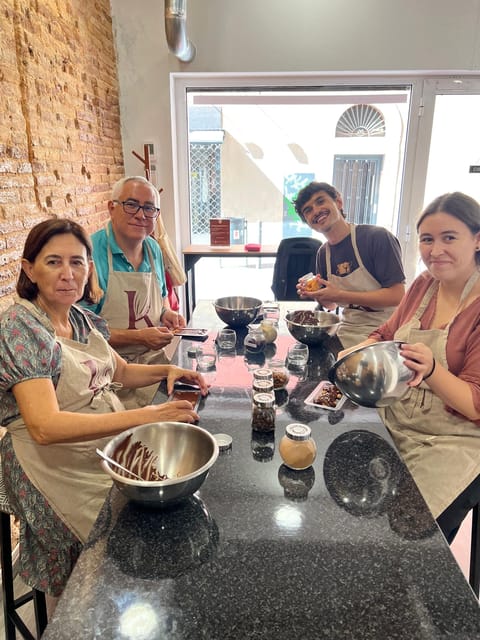
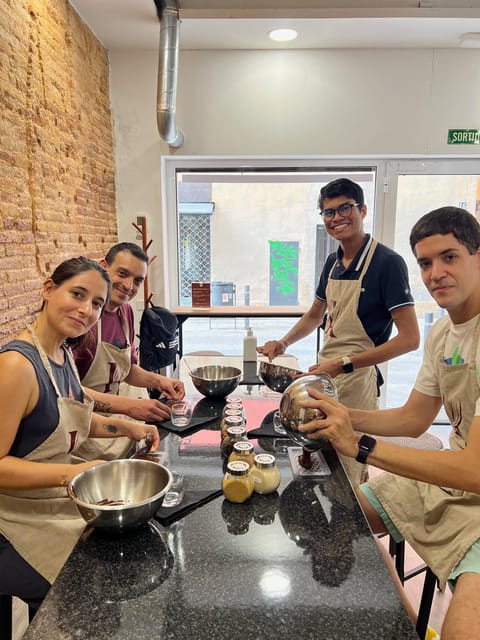
The workshop meets at Local Kina Chocolates, an artisan chocolate shop in Barcelona. The setting matters. You are not sitting in a large cooking school with a conveyor-belt feel. You are learning inside a small specialist business where chocolate is made and sold.
That gives the session a direct connection to the product. After the workshop, you can browse chocolate, cacao ingredients, caramel cacao beans, and cocoa bean shell tea. You are not pressured to buy anything, but the shop gives you a chance to continue the lesson through your taste buds.
The setting also means space may feel cozy rather than roomy. With eight people maximum, that is usually an advantage for an activity involving bowls, beans, utensils, and chocolate. Still, if you prefer a spacious classroom with lots of room to spread out, this may feel compact.
The workshop is offered in Spanish and English. Some content may appear in its original language, so ask questions if a term or explanation moves too quickly.
A few more Barcelona ideas to compare
- Barcelona: Nougat and Chocolate Museum Tour with Tasting
★ 4.5 · 232 reviews
The first lesson begins with the cocoa pod
The session starts with cocoa cultivation and the path from farm to chocolate. You can observe a cocoa pod and learn what happens in the fields before the beans ever reach a chocolate maker.
This is one of the most useful parts of the experience because it corrects the usual supermarket view of chocolate. A bar does not begin as a brown block wrapped in paper. It begins with a tropical fruit, agricultural labor, fermentation, drying, transport, roasting, grinding, and careful recipe choices.
You also learn how cocoa-producing communities live and why traceability and fair treatment matter. That social side gives the workshop more weight than a simple tasting. You come away with a better sense of the people and work behind the ingredient.
The exact balance of farming, history, and production can depend on the guide. Oscar, Oskar, Renee, and Franklin have all led sessions, and their styles vary. The strongest praise goes to guides who make the material lively, answer questions, and connect the technical steps to real flavor.
Roasting and peeling make the process real
Next, you roast the cocoa beans. This is the point where the workshop changes from talk to action. You are not merely watching a chocolatier perform. You handle the raw material and see how it changes.
After roasting, you peel the beans. The outer shell comes away, leaving the cacao nib. This simple task helps you understand why chocolate production takes time. Even before grinding begins, the bean needs preparation.
You then taste parts of the cacao in different forms. The flavor experience is important here. Raw or lightly processed cacao does not taste exactly like a sweet chocolate bar. You might notice bitterness, acidity, roasted notes, or fruit-like flavors. Those differences help explain why origin and processing matter.
The practical work is manageable for teenagers and adults, but it is not entirely tidy. Cocoa shells and crumbs are part of the fun. An apron and hat are provided, along with the required utensils and materials, so you do not need to bring workshop equipment.
Grinding cacao into your own cocoa paste
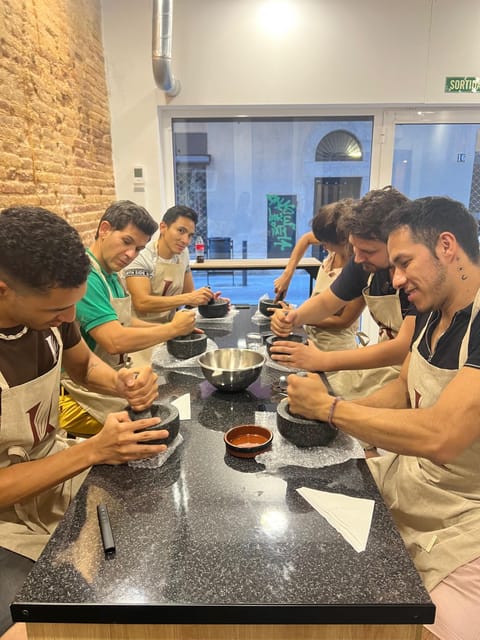
Once the beans are roasted and peeled, you grind them and make cocoa paste. This is a memorable stage because you can see and feel the transformation from firm bean to thick chocolate material.
The word bean-to-bar can sound simple, but this part shows the effort involved. Grinding takes time and changes the texture gradually. You gain a better appreciation for small-batch chocolate and why artisan products cost more than mass-market bars.
One useful point from the experience is that sweetness is not the whole story. Good cacao can produce strong flavor with relatively little added sugar, while lower-quality beans may rely more heavily on sugar, flavorings, or other additions. The workshop encourages you to taste chocolate with more attention rather than treating every bar as the same.
Do not expect to run a complete commercial production line yourself. The session is designed as a guided introduction. You take part in key stages, but the guide explains and manages parts of the process so the group can finish within two hours.
Same base, a different kind of afternoon:
- Barcelona: Sagrada Familia Entry Ticket with Audio Guide
★ 4.6 · 105,312 reviews - Barcelona: Park Güell Admission Ticket
★ 4.4 · 76,534 reviews - Barcelona: Casa Batlló Entry with Self-Audioguide Tour
★ 4.7 · 25,359 reviews - Barcelona: 24 or 48-Hour Hop-On Hop-Off Bus Tour
★ 4.4 · 20,872 reviews
Cocoa drinks and regional chocolate tasting
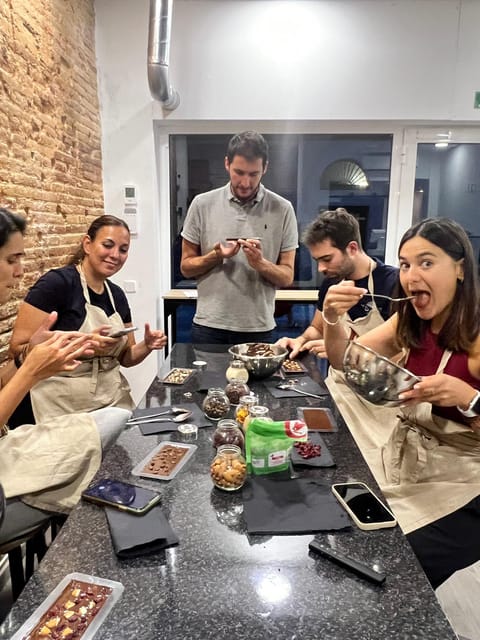
The workshop includes cocoa-based drinks, including two different preparations described by past participants. These drinks show that cocoa has uses beyond the familiar solid bar.
You also taste chocolate samples connected to beans from different climates and regions. This is where the earlier farming lesson becomes deliciously practical. Place, climate, fermentation, and roasting all affect the final taste.
The guide helps you notice flavor rather than simply asking if you like something. You might compare bitterness, fruit notes, roast, sweetness, texture, or aroma. I like this approach because it turns tasting into a skill you can use later in Barcelona’s chocolate shops or at home.
The tasting portion is a major strength, but it may also be the area to watch if you want a long, elaborate sampling menu. The supplied details confirm several samples and cocoa drinks, but the exact number and selection can vary. Think of it as a guided introduction, not a formal professional tasting certification.
Making your chocolate bar to take home
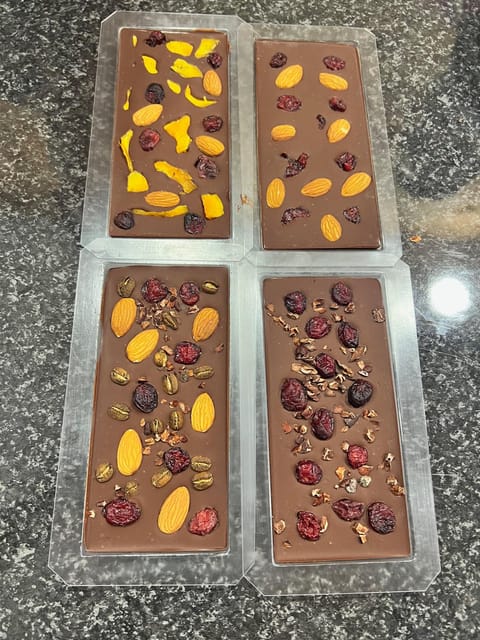
The final practical reward is making your own chocolate bar. You get to shape a bar and take it with you after the workshop.
This gives the experience a clear finish. You have learned about the pod, handled the beans, tasted several preparations, and then produced a personal souvenir. A certificate and a written workshop summary are also included, which is useful if you want to remember the steps after returning home.
There is one practical warning: chocolate and Barcelona heat are not ideal travel companions. One participant found that summer temperatures damaged the bar before it could be enjoyed. Keep this souvenir cool and handle it with care, especially if you are spending the rest of the day outdoors.
The bar is also more meaningful than a standard shop purchase. It reflects the process you just learned, even though the workshop does not have you independently control every technical stage. For children and teenagers, that finished product provides a satisfying sense of achievement.
What the two-hour schedule feels like
Two hours is a good length for this activity. It is long enough to cover cocoa cultivation, history, tasting, roasting, peeling, grinding, drinks, and bar making without taking half a day from your Barcelona plans.
The time can pass quickly because the format changes often. You listen, handle beans, taste, watch a transformation, and make something. That mix works better than a nonstop lecture, especially for families.
The small group limit of eight is another practical plus. You should have more chances to see demonstrations clearly and ask questions than you would in a large class. It also makes the experience easier for a guide to adapt. One family found that the guide adjusted the presentation when younger children became interested in a different part of the subject.
The activity is wheelchair accessible. Starting times vary, so you need to check availability when choosing a session. The duration is fixed at two hours.
The guides make or break the experience
The clearest strength across the workshop is the teaching. Oscar and Oskar are described as passionate and highly informed about chocolate, while Renee is repeatedly praised for her warmth, energy, and clear explanations. Franklin is also noted for being engaging and eager to answer questions.
That matters because cacao has a lot of technical ground to cover. Fermentation, roasting, shells, nibs, grinding, geography, and sugar can become dry topics. A lively guide turns them into a story with things to smell, touch, and taste.
The best sessions seem to balance information with humor. One participant enjoyed playful pranks from the guide, while others appreciated the friendly welcome and willingness to answer questions. You should expect a relaxed tone rather than a formal academic lecture.
The guide can also affect how much chocolate-making you do directly. If you want a highly technical class with detailed tempering practice, ask what the current session covers before booking. The experience clearly focuses on learning, tasting, and taking part in key steps, rather than training you as a professional chocolatier.
Is $47 per person good value?
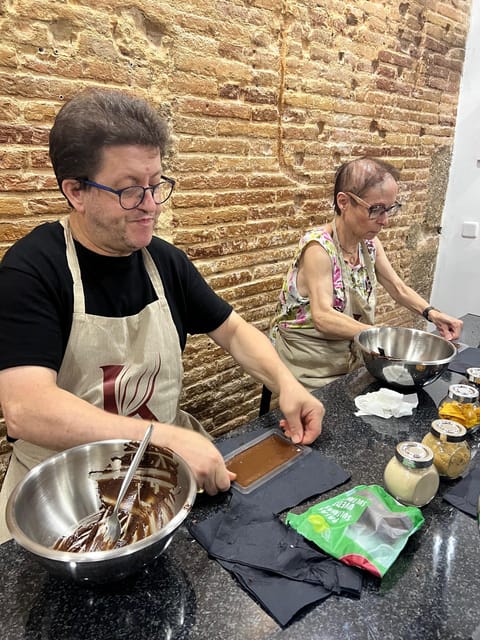
At $47 per person, the price is fair for a two-hour small-group activity in Barcelona. You receive materials, utensils, an apron, a hat, samples, cocoa drinks, your own chocolate bar, a certificate, and a workshop summary.
The value improves if you enjoy food culture and want more than a passive attraction. You are paying for instruction, ingredients, a guided tasting, and a practical activity. A family can also treat it as an indoor cultural stop, not just a sweet snack.
I would compare it with the cost of a standard chocolate tasting. This workshop offers more participation and context, but the final bar is only one part of the experience. If you mainly want to eat a large quantity of chocolate, $47 may feel high. If you want to understand how cocoa becomes chocolate and leave with something you made, the price makes sense.
The ability to reserve now and pay later adds flexibility, and cancellation is free up to 24 hours in advance for a full refund. These policies are useful when Barcelona plans are still shifting.
Who should book this chocolate workshop?
I would recommend it most strongly to:
- Chocolate lovers who want to understand flavor and production
- Adults looking for a compact food-focused activity
- Families with children or teenagers who enjoy hands-on learning
- Couples seeking an unusual indoor activity
- Curious eaters interested in farming, fair treatment, and traceability
- Visitors who want a personal souvenir rather than another mass-produced gift
It also works well on a rainy day. One participant found it a highlight during a wet week in Barcelona, and the two-hour format fits neatly between other plans.
Children younger than 10 may or may not enjoy the full presentation. The activity is officially for adults and teenagers, while family experiences suggest that children around 10 and older can take part happily. Since the workshop includes tasting and several stages of processing, a child’s interest in food and attention span will matter.
People with allergies or intolerances should contact the provider before attending. The workshop can adapt the activity when informed in advance.
The drawbacks to keep in mind
The workshop is not a completely independent chocolate-making class. You participate in the central stages, but the guide directs the group and handles some parts of the production.
The compact shop setting may not suit everyone, especially if you prefer lots of personal workspace. The exact tasting selection and guide can vary, too. Spanish and English are available, but some content may be shown in its original language.
Finally, plan how you will carry your chocolate bar. In hot weather, the souvenir can melt or soften. You may want to schedule the workshop toward the end of your day or protect the bar carefully afterward.
These are small concerns rather than serious faults. The full rating of 5 from 172 bookings reflects how consistently the format delivers what it promises: a friendly, practical introduction to cacao and chocolate.
Should you book the Kina Chocolates workshop?
Yes, if you want a hands-on Barcelona food experience with real educational value. The strongest reasons to book are the small group, passionate guides, cocoa drinks, regional tasting, and the chance to roast, peel, grind, and make your own bar.
I would skip it only if you want a long professional chocolate course or a simple all-you-can-eat tasting. For everyone else, $47 buys two useful hours, a better understanding of cocoa, and a souvenir connected to the work you did. Book it for a rainy afternoon, a family outing with older children, or a break from Barcelona’s major sights that still feels local and memorable.
FAQ
Where does the Bean to Bar Chocolate Workshop take place?
The meeting point is Local Kina Chocolates in Barcelona, Catalonia, Spain.
How long does the workshop last?
The workshop lasts two hours.
How much does the workshop cost?
The listed price is $47 per person.
What languages are available?
The workshop is offered in Spanish and English. Some content may be shown in its original language.
What will I do during the workshop?
You learn about cocoa cultivation and chocolate history, roast and peel cocoa beans, grind them, make cocoa paste, prepare cocoa-based drinks, taste chocolate, and make a chocolate bar to take home.
Is the chocolate bar included?
Yes. You make one chocolate bar to take home with you.
Is the workshop suitable for teenagers?
Yes. The workshop is designed for adults and teenagers. Families have also found it suitable for children around 10 and older.
Is the workshop wheelchair accessible?
Yes, the activity is wheelchair accessible. You should also tell the provider about any allergies or intolerances so the workshop can be adapted.
Recently listed in Barcelona
- Transfers From Cruise Port to Barcelona Airport★ 4.5 · 155 reviews
- Bohemian Barcelona Neighborhood Evening Tapas & Wine Tour★ 5.0 · 419 reviews
- Park Guell Guided Tour with Skip the Line Tickets★ 4.0 · 739 reviews
- Barcelona Sunset Cruise with Light Snacks and Open Bar★ 5.0 · 476 reviews
- Montserrat very early : Hiking, Abbey, very small group★ 5.0 · 127 reviews
- Barcelona: Sagrada Familia, Park Guell & Tapas Private Tour★ 5.0 · 903 reviews
- Authentic Flamenco Show Barcelona : Intimate Casa Sors Experience★ 5.0 · 809 reviews
- Barcelona Expert Tour with Local Guide in Eco Tuk Tuk Private★ 5.0 · 216 reviews
Drinking Tours, compared.
Guided Pub Crawl Madrid Experience and Club Entry
Read our review →

Sunset Boat Party at Ibiza Boat Club with Open Bar
Read our review →
Unique Sunset Sailing Tour with Tapas & Open Bar
Read our review →
Barcelona Sailing: Light Snacks & Open Bar with Private Option
Read our review →
Barcelona Sensational Sunset Tour with Open Bar and Snacks
Read our review →
El Born and Gothic Quarter Wine & Tapas Bar Tour
Read our review →Browse the lists this tour appears in