
Reviewed · FOOD & DRINK
Cazorla: Tour and Tasting at 1 of the Largest Oil Factories
Olive oil tells Cazorla’s story. At Oleotour Cazorla, you go beyond a shop tasting and see how local oil moves from tree to bottle. The visit includes the cooperative’s reception patios, Designation of Origin building, packaging plant, museum and oil mill, gardens with more than 60 native plant varieties, and a colorful photo stop linked to the Cazorla International Blues Festival. I especially like the clear farm-to-bottle focus and the chance to compare oil by smell, taste, and color.
I also like the private format, since only your group takes part, and the guide Laura has earned praise for detailed explanations and a warm manner. The main consideration is timing: the listed visit lasts about one hour, while the full experience runs roughly two to two and a half hours, so you should leave room in your day rather than squeeze it between fixed plans.
In This Review
- Key points at a glance
- Why Cazorla olive oil deserves your time
- Entering the cooperative near Cazorla
- From olive tree to bottle
- The museum and oil mill
- A garden with more than 60 plant varieties
- Learning to taste olive oil
- How the private format changes the visit
- Is $24.20 a fair price?
- Timing, booking, and cancellation
- Who will enjoy this Cazorla tour most?
- Should you book Oleotour Cazorla?
- FAQ
- Where does the Cazorla olive oil tour begin?
- Where does the tour end?
- How long does the experience last?
- How much does the tour cost?
- Is the tour offered in English?
- Is this a private tour?
- What parts of the cooperative can I visit?
- What happens during the tasting?
- Can I cancel for a refund?
Key points at a glance
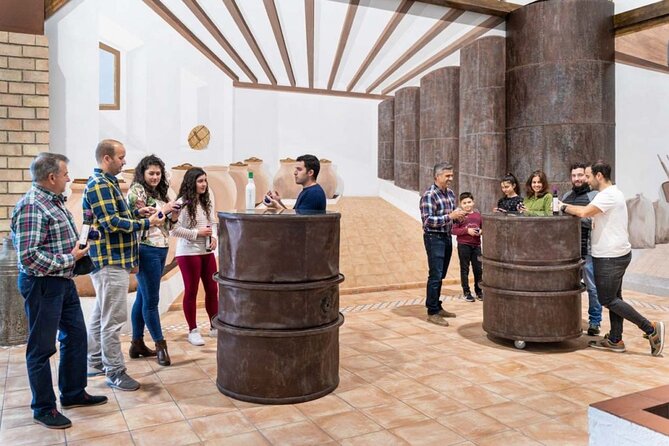
- See a working oil operation: The tour includes reception patios, a packaging plant, and the cooperative’s museum and oil mill.
- Taste oil with a purpose: You learn to compare different types through smell, flavor, and color.
- Explore Cazorla’s olive culture: The visit connects local agriculture, food, history, and regional identity.
- Walk through 60-plus plant varieties: The gardens add a botanical touch to what could otherwise be a factory visit.
- Enjoy a private group experience: Your party participates on its own rather than joining a large public group.
- Pay a moderate admission price: At $24.20 per person, the price is fair if you value both the guided visit and tasting.
Why Cazorla olive oil deserves your time

Cazorla is in Jaén, the Andalusian province closely associated with olive production. This experience gives you a practical way to understand that connection without treating olive oil as just another souvenir.
You begin with the culture of the olive tree, including its role in local history and daily life. That context matters. Many visitors know olive oil as a cooking ingredient, but far fewer can explain how different oils vary or what happens before a bottle reaches a market shelf.
This tour puts the product in its working setting. You are not simply handed a small glass and told that one oil is better than another. You visit the facilities of a cooperative and see the places connected with receiving, producing, packing, and presenting the oil.
The result should appeal to food lovers, curious visitors, and anyone staying in or around Cazorla who wants an activity tied closely to the region. It is also useful for families and mixed-age groups because the subject is easy to understand, yet the details can keep adults interested.
More things to book in Spain:
- Barcelona: Sagrada Familia Entry Ticket with Audio Guide
★ 4.6 · 105,312 reviews - Barcelona: Park Güell Admission Ticket
★ 4.4 · 76,534 reviews - Seville: Royal Alcázar Entry Ticket
★ 4.6 · 28,378 reviews
Entering the cooperative near Cazorla
The meeting point is Oleotour Cazorla, at the Aceites Cazorla cooperative on the road from Peal de Becerro to Cazorla, about 10.5 kilometers along the route. The activity begins and ends at the same location, which makes planning simpler if you are arranging your own day in the area.
The setting gives the experience a practical feel from the start. You are visiting an actual cooperative site rather than a tasting room separated from production. That distinction is important. It lets the guide explain the oil-making process while pointing to the parts of the operation where the work happens.
The cooperative visit covers several areas, and each one adds a different piece to the story. The reception patios help you understand where the process begins at the facility. The Designation of Origin building connects the product with its regional identity and standards.
You also visit the packaging plant. This is a useful stop because the bottle is the final stage most shoppers see, while the steps before packaging are easy to overlook. Seeing the plant helps connect the neat product on a store shelf with the larger agricultural and industrial process behind it.
The exact order can vary, but you should expect the guide to lead your group through the facilities and explain how the pieces fit together. Since the group is private, you can ask questions without having to compete with a large crowd.
From olive tree to bottle
The strongest part of this experience is its full-process approach. The tour explains cultivation, extraction, and production, rather than focusing only on the tasting at the end.
A detailed explanation of cultivation helps you place olive oil in its natural setting. It also gives meaning to the word culture in the tour description. In Cazorla, the olive tree is not just a crop. It is part of the area’s identity, economy, food, and sense of place.
The extraction and production discussion is likely to be the most useful section for first-time visitors. You learn what happens between the fruit and the finished oil, and you can ask for clarification as the guide moves through the facilities.
Laura, one of the guides associated with the experience, has been singled out for taking time with explanations and adding personal anecdotes. That style can make a technical subject easier to follow. Her approach is described as friendly and detailed, which is valuable during a visit that covers several stages of production in a fairly short period.
You should still set your expectations correctly. This is not advertised as a full agricultural day in the olive groves, and the supplied details do not promise a harvest demonstration or a hands-on production session. The focus is the cooperative site, its museum and mill, its packaging operation, and the guided tasting.
The museum and oil mill
The museum and oil mill give the visit a bridge between past and present. You can expect this portion to explain how olive oil production connects with earlier methods and with the modern cooperative operation.
The museum setting adds useful context because production is not only about machines. Olive oil has shaped local work and food traditions for generations, and the visit aims to explain part of that story. The tour begins by introducing local history and culture before moving through the facilities, so the machinery and process have a wider meaning.
The oil mill is also the place where the idea of from tree to bottle becomes concrete. Instead of treating oil as an abstract regional specialty, the tour lets you see the site connected with its production.
The main limitation is that the available details do not specify every exhibit or piece of equipment. I would not book this expecting a large museum with a long independent viewing period. Think of it as one part of a guided experience, tied directly to the cooperative and tasting.
Same base, a different kind of afternoon:
- Barcelona: Casa Batlló Entry with Self-Audioguide Tour
★ 4.7 · 25,359 reviews - Seville: Cathedral and La Giralda Entry Ticket
★ 4.5 · 24,592 reviews - Madrid: Tour Bernabéu Entry Ticket
★ 4.5 · 21,573 reviews - Barcelona: 24 or 48-Hour Hop-On Hop-Off Bus Tour
★ 4.4 · 20,872 reviews
A garden with more than 60 plant varieties
The gardens are an easy-to-miss reason to choose this visit. They include more than 60 varieties of native plants, adding a botanical element to the industrial and food-focused parts of the tour.
This stop broadens the experience beyond olive oil. It gives you another way to think about the local environment and the plants associated with the area. If your group includes someone less interested in machinery or production details, the gardens may offer a welcome change of pace.
Do not expect a separate nature excursion. The gardens are part of the cooperative premises, not a long walk through the surrounding countryside. Their value comes from variety and context, and from the way they break up the indoor portions of the visit.
The property also includes a photo stop created in honor of the Cazorla International Blues Festival. That detail gives the tour a touch of local personality. It is not a standard factory-only route, and the photo point reflects a cultural event connected with the town.
Learning to taste olive oil
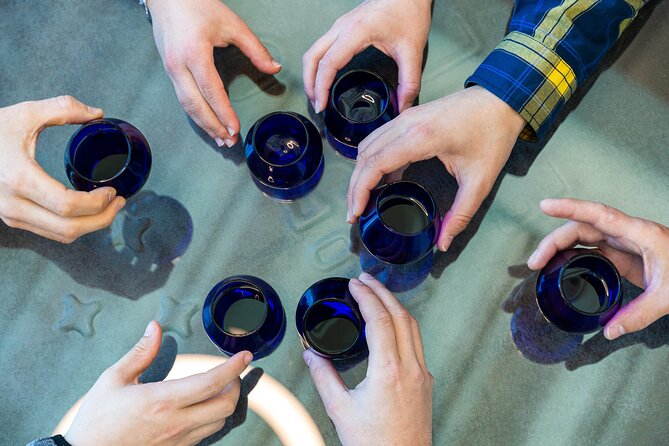
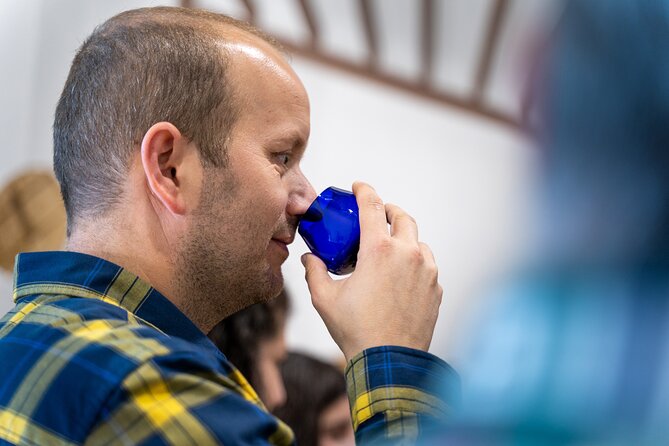
The tasting is the part many people will remember most. You are shown how different types of olive oil vary in smell, taste, and color, rather than simply being asked which one you prefer.
That structure makes the tasting more useful. A casual sample can be pleasant, but guided comparison teaches you what to notice. You begin to pay attention to aroma, flavor, and appearance as separate qualities.
The tasting also helps correct common assumptions. Color alone does not tell you everything about an oil, and a stronger or milder flavor is not automatically better. A guide can explain the differences while you compare the samples for yourself.
The available comments about Laura’s tastings describe them as both detailed and enjoyable. She is praised for making the session feel easy and engaging while still giving plenty of information. That balance matters because olive oil tasting can become overly technical if the explanation is not connected to what is in the glass.
The exact oils offered are not specified, so I would not promise a particular number of samples or a named tasting menu. What you can reasonably expect is a comparison of different types of olive oil, with guidance on how to detect differences.
If you already use olive oil often, you may find the tasting especially worthwhile. It gives you a better basis for choosing bottles later. If you know very little about oil, it provides a simple introduction without requiring specialist knowledge.
How the private format changes the visit

This is a private activity, meaning only your own group participates. That is one of its strongest practical features.
A private visit can feel more relaxed than a large group tour. You can ask about the production process, the Designation of Origin, or the tasting without waiting for a general question period. If one part of the visit interests you more than another, your guide may have more room to respond, subject to the day’s schedule.
The format is also useful for families, couples, and small groups with different levels of interest. One person can ask detailed questions while another simply follows the story and enjoys the tasting.
The trade-off is that a private experience may depend more heavily on the guide assigned to your group. Laura receives especially warm praise for her explanations and personal manner, but the supplied information does not confirm that she leads every departure. The tour is offered in English, so check the language option when booking if clear English commentary is essential for everyone in your party.
The experience is described as suitable for most visitors, and service animals are allowed. That gives you a useful basic accessibility point, but the available details do not describe surfaces, stairs, restroom access, or other mobility information. If anyone in your group has specific access needs, ask the provider before booking.
Is $24.20 a fair price?
At $24.20 per person, the price is reasonable for a two to two and a half hour private visit that combines a guided cooperative tour with a tasting.
The value is strongest if you want more than a quick sample. You are paying for access to several parts of the site, including the reception patios, Designation of Origin building, packaging plant, museum and mill, gardens, and photo point. The guide’s explanations are a central part of the price, too.
A factory visit without context can feel thin. Here, the tasting is linked to the production story, and the production story is linked to Cazorla’s culture. That combination makes the admission more worthwhile than a basic retail tasting.
The price may feel less attractive if you are only looking for a short food stop or if your schedule is packed. The full activity takes up a meaningful part of the day, and the listed main visit itself is about one hour before allowing for the broader experience and tasting.
Group discounts are available, which could improve the value for larger parties. Since this is a private activity, compare the total cost for your group rather than looking only at the per-person amount.
Timing, booking, and cancellation
The experience lasts approximately two to two and a half hours. The site visit portion is listed as one hour, so the remaining time likely covers the tasting and other parts of the guided program. Treat the total duration as an estimate and leave a little breathing room before your next plan.
The meeting point and ending point are the same, at Oleotour Cazorla, which is convenient if you are visiting the town and nearby area by car. No transportation from a hotel or another town is included in the supplied details, so you should plan to reach the cooperative independently.
This experience is often reserved around 20 days ahead. That does not guarantee that every date fills early, but it is a useful sign that advance planning makes sense, especially if your schedule in Cazorla is fixed.
You receive confirmation when you book, and mobile tickets are accepted. Cancellation is free up to 24 hours before the start time for a full refund. Changes or cancellations made within 24 hours are not accepted for a refund, and the cut-off uses local time.
A minimum number of participants is required. If the provider cancels because that minimum is not reached, you are offered another date or experience, or you receive a full refund.
Who will enjoy this Cazorla tour most?
I would choose this experience if you enjoy regional food, want to understand olive oil beyond its label, or prefer a guided visit with a clear local connection.
It suits:
- Food-focused visitors who want to taste oils with guidance
- Couples and families looking for a two-hour cultural activity
- Small groups that value a private format
- Visitors staying near Cazorla who want an activity tied to Jaén’s olive-growing identity
- Anyone who enjoys learning how everyday products are made
- People planning to buy olive oil and wanting better tasting skills first
It may be less suitable if you want a long walk outdoors, a full-day agricultural experience, or a visit conducted entirely at your own pace. The tour is structured and guided, with the cooperative and tasting at its center.
The gardens and festival photo point help add variety, but they do not change the main character of the activity. This is still an olive oil tour first.
Should you book Oleotour Cazorla?
Yes, I would book it if you are near Cazorla and have two to two and a half hours to spare. The price is fair, the private format is appealing, and the visit connects the oil in your glass with the people, facilities, plants, and traditions behind it.
The strongest reason to go is the tasting combined with the production explanation. You learn to notice smell, taste, and color, then see how the cooperative handles the product. Laura’s friendly, detailed style has also helped make the visit especially enjoyable for many groups.
Skip it only if you are short on time or uninterested in food production. For everyone else, this is a practical way to understand one of Jaén’s defining products, with enough variety to keep the visit from feeling like a simple factory tour.
FAQ
Where does the Cazorla olive oil tour begin?
It begins at Oleotour Cazorla, at the Aceites Cazorla cooperative, located at CTRA DE PEAL DE BECERRO A CAZORLA KM 10, 5, 23470 Cazorla, Jaén, Spain.
Where does the tour end?
The activity ends back at the same meeting point.
How long does the experience last?
The full experience takes approximately two to two and a half hours. The listed visit through the main facility areas takes about one hour.
How much does the tour cost?
The stated price is $24.20 per person. Group discounts are available.
Is the tour offered in English?
Yes. English is one of the available languages.
Is this a private tour?
Yes. Only your group participates in the activity.
What parts of the cooperative can I visit?
The tour includes the reception patios, Designation of Origin building, packaging plant, museum and oil mill, gardens with more than 60 native plant varieties, and a photo point honoring the Cazorla International Blues Festival.
What happens during the tasting?
You learn to compare different types of olive oil by smell, taste, and color.
Can I cancel for a refund?
Yes. You can cancel at least 24 hours before the start time for a full refund. Cancellations or changes made less than 24 hours before the start time are not accepted for a refund.
Recently listed in Spain
- Transfers From Cruise Port to Barcelona Airport★ 4.5 · 155 reviews
- Bohemian Barcelona Neighborhood Evening Tapas & Wine Tour★ 5.0 · 419 reviews
- Park Guell Guided Tour with Skip the Line Tickets★ 4.0 · 739 reviews
- Barcelona Sunset Cruise with Light Snacks and Open Bar★ 5.0 · 476 reviews
- Montserrat very early : Hiking, Abbey, very small group★ 5.0 · 127 reviews
- Barcelona: Sagrada Familia, Park Guell & Tapas Private Tour★ 5.0 · 903 reviews
- Authentic Flamenco Show Barcelona : Intimate Casa Sors Experience★ 5.0 · 809 reviews
- Barcelona Expert Tour with Local Guide in Eco Tuk Tuk Private★ 5.0 · 216 reviews
Food & Drink, compared.

Live Flamenco Show with Food and Drinks Options
Read our review →
Montserrat & Cogwheel Train, Gourmet Wine Tasting & Tapas/Lunch
Read our review →
Ibiza Beach Hopping Cruise with Paddleboards, Drinks and Food 6h
Read our review →
Tapas Walking Tour with Food, Wine, and History
Read our review →
Sevilla Food Tour: Tapas, Wine, History & Traditions
Read our review →
Toledo Tour & Vineyard Walk with Wine Tasting from Madrid
Read our review →

Barcelona Tapas Walking Tour: Food, Wine & History
Read our review →Browse the lists this tour appears in