Reviewed · TOURS
Complete Roman Tour in Merida (Spain)
Roman Mérida rewards curious walkers. This three to four-hour tour links the city’s major Roman monuments with clear stories about gladiators, chariot racing, religion, food, homes, and daily life. I like the route because it covers a remarkable amount of Mérida without feeling like a rushed march, and I especially like the guide’s use of pictures, questions, children’s games, and small details that help the ruins make sense.
Lucía GM receives especially strong praise for her warmth, humor, language skills, and command of Roman history. She has even continued with very small groups, including private tours when only one person booked. The main catch is easy to miss: the $29 price does not include the archaeological-site ticket, and the tour involves about three hours of walking, stairs, and outdoor exposure.
In This Review
- Four things to know before booking
- Starting at the Roman House of the Amphitheatre
- Casa del Anfiteatro and the details of Roman home life
- The Roman Circus and the scale of chariot racing
- Roman baths, furnaces, and the snow well
- The Temple of Diana and Mérida’s Roman Forum
- The amphitheatre and the darker side of spectacle
- The Roman Theatre of Mérida
- The optional Archaeological Museum at 1 p.m.
- How Lucía shapes the experience
- Is $29 good value?
- Walking, heat, timing, and practical comfort
- Who will enjoy this tour most?
- Should you book the Complete Roman Tour in Mérida?
- FAQ
- How long does the Complete Roman Tour in Mérida last?
- How much does the tour cost?
- Where does the tour begin?
- Which Roman sites are included?
- Is the archaeological ticket included?
- Can I visit other Mérida sites after the tour?
- Is the museum visit included?
- What languages are available?
- What should I bring?
- Can I cancel the booking?
Four things to know before booking
- The route covers Mérida’s essential Roman sights: You visit the Roman villa, circus, baths, Temple of Diana, amphitheatre, and theatre.
- The Roman Circus is a major highlight: Its broad scale helps you picture chariot races better than a small ruin ever could.
- Lucía is the heart of the experience: Her explanations, humor, pictures, and personal connection with Mérida receive consistent praise.
- The ticket is bought separately: The guide helps explain prices, discounts, and free-entry rules, but the admission cost changes by age, group size, family status, dates, and festivities.
- Plan for heat and walking: Comfortable shoes and sunscreen matter, especially in summer.
- The ticket can help with a second day: After the guided route, you can visit other parts of the archaeological complex on your own, including the Muslim citadel, Muslim quarter, and Basilica of Saint Eulalia.
Starting at the Roman House of the Amphitheatre
The meeting point is in front of the Casa del Anfiteatro on José Ramón Mélida Street, near the large MÉRIDA lettering. Arrive with enough time to buy your archaeological-site ticket before the walking begins. This is not a ticket sold by the tour provider, and the guide cannot simply bundle it into the $29 fee.
That arrangement has two sides. It keeps the booking price low, and the ticket comes from Mérida’s Archaeological Consortium rather than a reseller. On the other hand, you need to handle the admission purchase at the start, and the final amount is not fixed in the tour price. Ask the guide about the current categories before paying, since the cost depends on age, group size, family status, date, and special events.
The tour begins inside a Roman home, which is a smart choice. Instead of starting with a grand public monument, you first see how Roman life worked at home. That gives the rest of the day a human scale.
More things to book in Spain:
- Barcelona: Sagrada Familia Entry Ticket with Audio Guide
★ 4.6 · 105,312 reviews - Barcelona: Park Güell Admission Ticket
★ 4.4 · 76,534 reviews - Seville: Royal Alcázar Entry Ticket
★ 4.6 · 28,378 reviews
Casa del Anfiteatro and the details of Roman home life
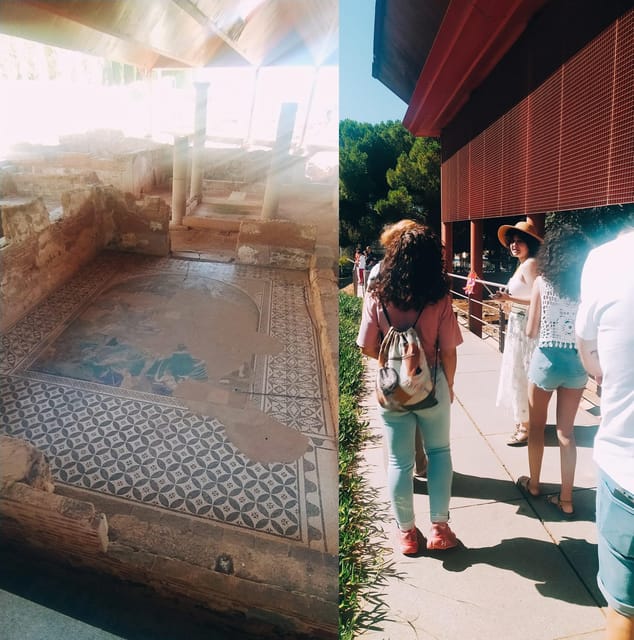
Allow about 30 minutes for the Roman House of the Amphitheatre. This is one of the best-preserved Roman villas in Spain, with bedrooms, gardens, colorful mosaics, and rooms once used for large meals.
The value here is in the ordinary details. You learn about food, toys, pets, gardens, and domestic routines, not only emperors and military victories. The guide uses illustrative images to help you picture rooms as lived-in spaces rather than bare foundations.
I find this kind of introduction useful because Roman monuments can seem grand but remote. A mosaic floor becomes more interesting when you understand who walked across it, what food might have been served nearby, and how a household used each room. Families also get games for children, which can help younger visitors stay involved during the explanations.
The site includes uneven ground and walking, so sturdy shoes are sensible. The advice from the tour is simple: wear comfortable footwear and bring sunscreen. In summer, the exposed areas can feel demanding, and one person specifically found the heat difficult. Morning is the better choice when available.
The Roman Circus and the scale of chariot racing
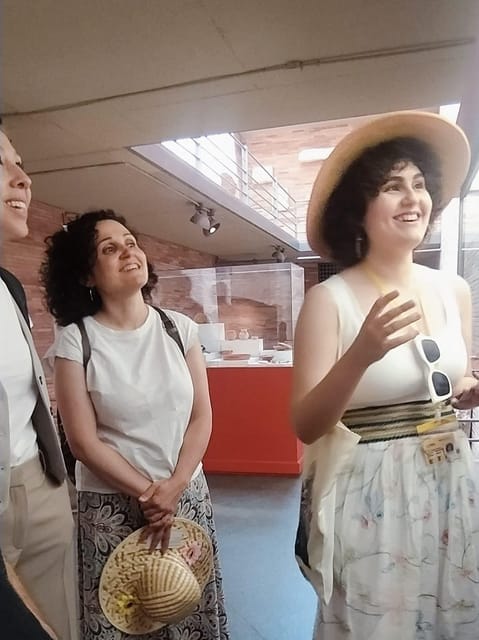
The next stop is the Roman Circus of Mérida, with around 30 minutes to look around. This is one of the most impressive places on the route because its size makes the ancient entertainment industry easier to grasp.
Here you can see the seating areas and pathways connected with chariot racing. The open space is very different from the tighter theatre and amphitheatre, and that change in scale matters. A guide can point out where crowds gathered, how the track worked, and why the circus was designed for mass spectacle.
The tour’s playful references to chariot races and gladiatorial contests suit this stop well. You are not just looking at old stone. You are given a picture of the noise, speed, danger, and public excitement that once filled the venue.
The drawback is that 30 minutes is enough for orientation, not a long independent study. If you enjoy reading every information panel or photographing every angle, you may want to return later using your site ticket. One booking also noted that the schedule did not leave time to read all the information at each monument. That is a fair trade for seeing so many places in one morning.
Roman baths, furnaces, and the snow well
The Roman baths receive another roughly 30-minute visit. This stop explains the practical side of public bathing, especially how different pools were heated or cooled.
The furnaces are a useful reminder that Roman comfort depended on complex engineering. The tour also points out the remarkable snow well, a feature that gives the visit an unexpected twist. The site helps connect Roman leisure with Roman technology, since bathing was not simply a swim and a scrub. It involved heating systems, changing temperatures, and carefully planned spaces.
This is one of the places where a guide adds real value. Ruined bath structures can be difficult to read on your own. With pictures and explanation, you have a better chance of understanding which parts served heat, water, or circulation.
Again, expect outdoor walking between sites rather than a coach-based tour. The route moves through peaceful parks and city streets, giving you a sense of Mérida beyond the fenced ruins. You also get advice about good photo positions throughout the walk.
Same base, a different kind of afternoon:
- Barcelona: Casa Batlló Entry with Self-Audioguide Tour
★ 4.7 · 25,359 reviews - Seville: Cathedral and La Giralda Entry Ticket
★ 4.5 · 24,592 reviews - Madrid: Tour Bernabéu Entry Ticket
★ 4.5 · 21,573 reviews - Barcelona: 24 or 48-Hour Hop-On Hop-Off Bus Tour
★ 4.4 · 20,872 reviews
The Temple of Diana and Mérida’s Roman Forum
At the Temple of Diana, the focus shifts from entertainment and comfort to religion and imperial power. The temple helps explain how public worship worked and how the Roman emperor fitted into the religious life of the city.
The nearby remains of the Roman Forum add context. In ancient times, this was an important civic area. Today, the route passes through a part of central Mérida where handmade terracotta and mosaic crafts are sold, creating an interesting link between the old commercial district and the modern city.
This section is especially useful for understanding that Roman Mérida was not just a collection of arenas. It was a working city with homes, shops, baths, religious buildings, public offices, and entertainment venues. The tour connects those pieces in a way that a map or a quick self-guided visit may not.
Lucía’s use of anecdotes is a strength here. The information is not presented as a long list of dates. Instead, the stories help you think about what people believed, bought, watched, and valued. Several bookings describe her as funny, warm, and easy to question, which matters at a site where the details can otherwise blur together.
The amphitheatre and the darker side of spectacle
The amphitheatre offers the tour’s most dramatic stop. Here, you hear about gladiatorial combats, fights with wild animals, and even staged boat battles.
The setting makes those subjects easier to picture. You can see how the audience areas and arena related to one another, and the guide’s visual material helps fill in what the surviving stones cannot show. The tour does not treat gladiatorial entertainment as harmless fun. The point is to understand how public spectacle, violence, status, and politics worked together in Roman society.
This is a good stop for children who are fascinated by gladiators, especially because the tour includes games. Parents should still know that the subject matter includes combat and death, even if the presentation is framed in an accessible way.
The amphitheatre is also a reminder that the tour is not a slow museum visit. You move from one major site to another, often on foot and sometimes across uneven surfaces. If knee, foot, or mobility problems make stairs and extended walking difficult, this route may not be comfortable. The tour does not provide a dedicated accessibility plan in the available information, so ask before booking if you need specific assistance.
The Roman Theatre of Mérida
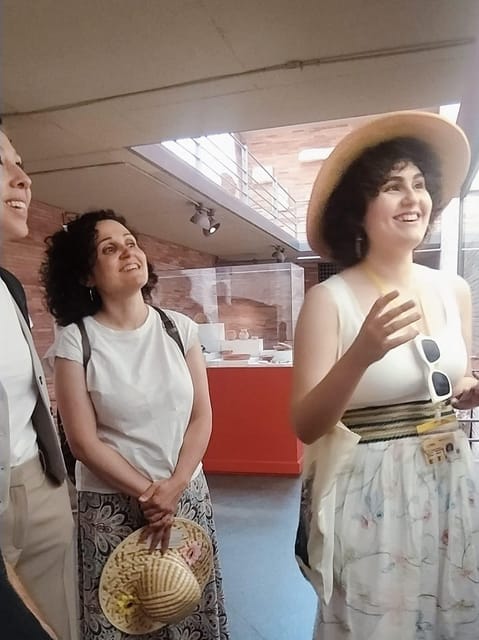
The final major monument is the Roman Theatre, visited for about 30 minutes. It is described as the largest and best-preserved Roman theatre in Spain, and it is easy to see why it forms the grand finale.
The theatre remains connected to performance today through Mérida’s summer classical theatre festival, which brings renowned actors to the stage. That continuing use gives the monument more life than a ruin visited only as a historic shell.
I like ending here because the theatre gathers many themes from the tour. Roman engineering, social hierarchy, public entertainment, architecture, and performance all meet in one place. The guide can explain how the space worked while you look across the stage and seating.
The tour ends near the theatre, with access to restaurants and bars for a lunchtime meal. That is practical planning, especially after three hours outside. You can stop for food before continuing with the optional museum visit or exploring Mérida independently.
The optional Archaeological Museum at 1 p.m.
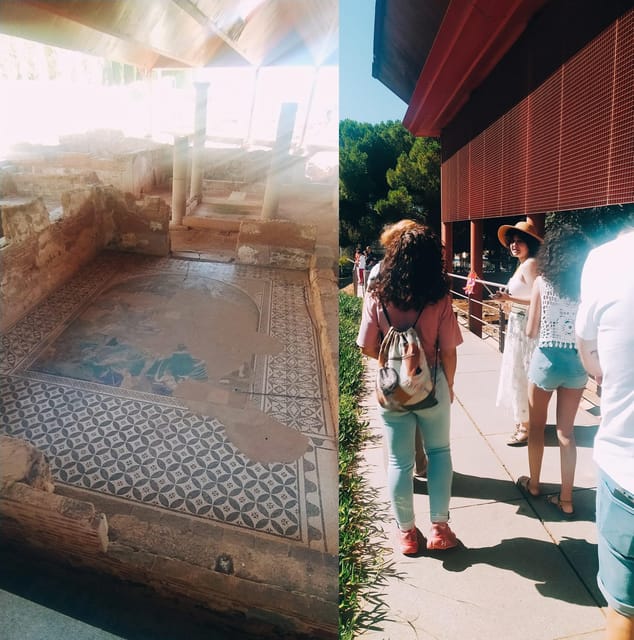
The museum option adds a one-hour guided visit to the National Museum of Roman Art, beginning at 13:00. There is a break for snacks and refreshments first, so the museum is not simply tacked onto the walking route without pause.
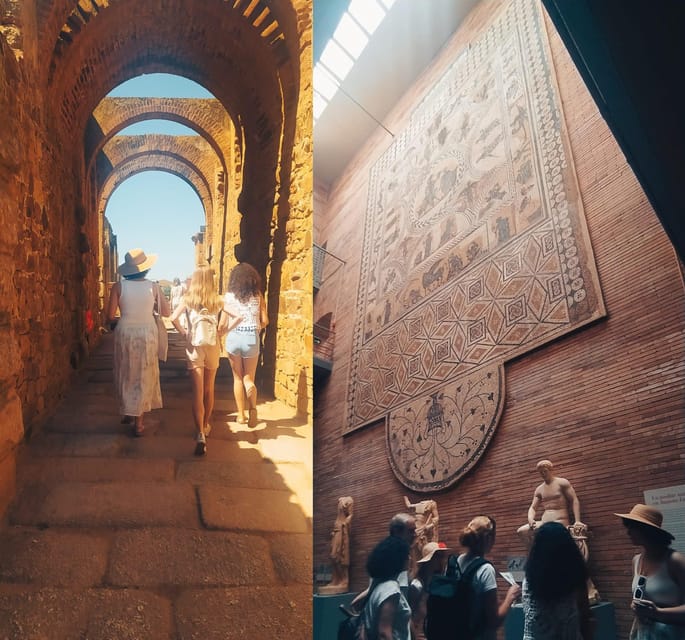
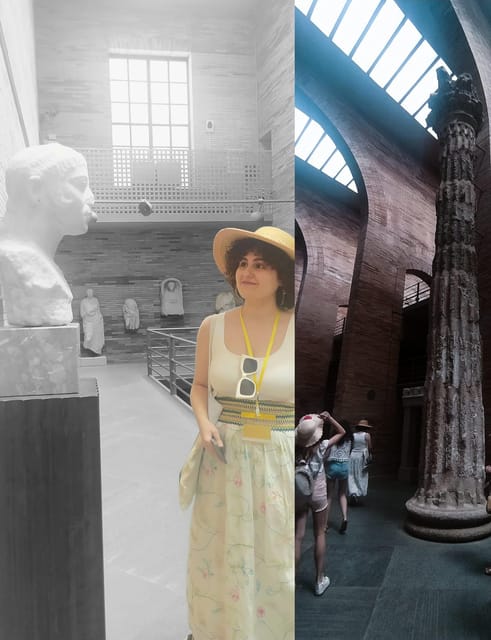
This addition makes sense for people who want objects to go with the monuments. The museum contains finds from Mérida’s excavations, including jewelry, toys, large sculptures, and mosaics. After seeing homes, baths, temples, and arenas, you can examine the objects that belonged to the people who used them.
One particularly useful feature is Lucía’s attention to Latin and small details in the displays. A booking that included the museum found that her language skills revealed features that could easily be missed. The museum option is therefore more than extra indoor time. It helps connect the city’s physical remains with inscriptions, decoration, personal belongings, and art.
You should choose this option if you like museums and want a fuller picture of Roman Mérida. If your priority is only the outdoor monuments, the main route already fills three hours and the museum may make for a long day.
How Lucía shapes the experience
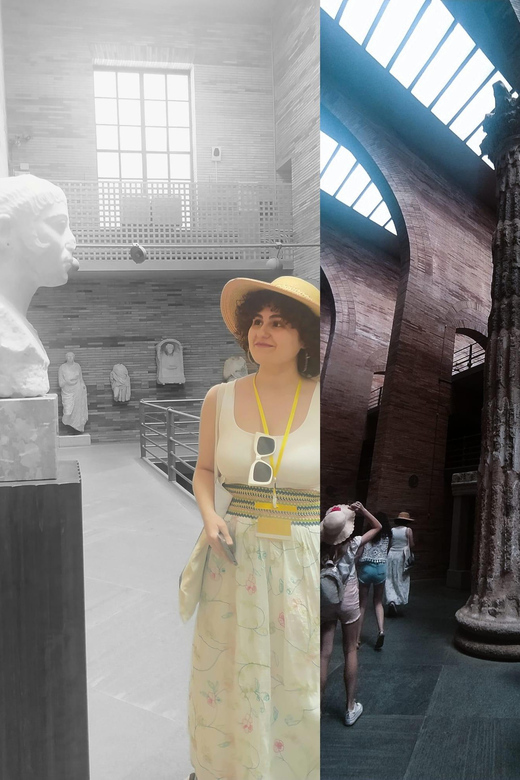
The strongest reason to book this tour is Lucía. Her name appears repeatedly in the feedback, and the praise is unusually consistent: people describe her as friendly, entertaining, patient, professional, and passionate about Mérida.
She is also praised for switching between English and Spanish with ease. The activity lists English and Spanish as the live-tour languages, while the tour description also lists French and Portuguese among the guide’s language abilities. If language choice is important to you, confirm the available language at booking.
Lucía uses pictures, answers questions fully, and adds stories about life in Roman times. She also brings a local point of view, explaining what it is like to grow up and live in Mérida. That personal connection helps the tour avoid feeling like a standard recital of facts.
The tour can work well with mixed-language groups. One booking describes Lucía translating between English and French and handling contributions from different participants. Another notes that she adjusted the pace for an older couple. Still, group size and exact pacing can vary, so do not assume every departure will be private.
Is $29 good value?
At $29 per person, the guide fee is modest for a three to four-hour route covering six important Roman sites. You are paying for a live guide, radio equipment with earphones, illustrative images, children’s games, photo help, and explanations at the villa, circus, baths, Temple of Diana, amphitheatre, and theatre.
The archaeological ticket is extra, and that changes the final price. This is the most important value question. If you were already planning to buy the full site ticket, the guided route gives you much more meaning from that admission. The ticket also lets you visit additional sites later, including the Muslim citadel, Muslim quarter, and Basilica of Saint Eulalia.
The tour is especially good value for a first day in Mérida. It gives you the city’s Roman framework, then lets you return on your own to the places you want to study more closely. A self-guided visit may cost less in guide fees, but it will require more preparation and may leave you guessing about what you are seeing.
Walking, heat, timing, and practical comfort
This is a walking tour, not a sightseeing bus. You should expect roughly three hours of movement, stairs, archaeological surfaces, and time outside. Wear shoes that are comfortable and supportive, and carry sunscreen.
Summer heat is a serious consideration in Mérida. The route is better suited to a cooler morning when possible. One booking noted that the guide began 30 minutes early because the weather was hot, but you should not count on an early start unless it is agreed in advance.
Bring water and leave room for a snack break if you choose the museum option. The tour finishes near restaurants and bars, which makes lunch easy after the theatre.
A radio guide and earphones are included. These can help you hear the explanations while standing in open archaeological spaces or moving with a group. Illustrative images are also included, a useful aid when walls and floors no longer show their original form.
Free cancellation up to 24 hours before the start and reserve-now, pay-later booking make the plan flexible. Check the available start time for your date, since the tour lasts three to four hours depending on the selected option and schedule.
Who will enjoy this tour most?
I would choose this tour for a first visit to Mérida, especially if you want the main Roman sites explained in one connected route. It suits history fans, families interested in Roman life, photographers who appreciate help finding good angles, and anyone who prefers stories to silent signboards.
The museum option works best for people who want a fuller archaeological day. It also suits anyone interested in inscriptions, Latin, mosaics, jewelry, toys, and sculpture.
You may prefer a shorter or more flexible plan if you dislike walking, need frequent rest, want to read every panel, or find summer heat difficult. The route is full and efficient, but it is not designed for lingering at every monument.
Should you book the Complete Roman Tour in Mérida?
Yes, if you want a lively introduction to Mérida’s Roman monuments and are comfortable walking for about three hours. The combination of the home, circus, baths, temple, amphitheatre, and theatre gives you a strong first look at the city, while the guide’s humor and personal connection make the stones easier to understand.
Book the museum option if you want objects and inscriptions to complete the picture. Before paying, confirm the separate archaeological ticket price and language arrangement. Wear good shoes, choose a cooler time of day, and keep the ticket for independent visits to the remaining sites.
FAQ
How long does the Complete Roman Tour in Mérida last?
The main experience lasts about three to four hours. The optional museum visit adds one hour.
How much does the tour cost?
The tour price is $29 per person. The archaeological-site ticket is not included and must be purchased separately.
Where does the tour begin?
The guide waits in front of the Casa del Anfiteatro on José Ramón Mélida Street, near the giant MÉRIDA lettering.
Which Roman sites are included?
The guided route includes the Roman House of the Amphitheatre, Roman Circus, Roman baths, Temple of Diana, amphitheatre, and Roman Theatre.
Is the archaeological ticket included?
No. The ticket is sold separately by the Archaeological Consortium of Mérida. The price can vary based on age, group size, family status, date, and festivities.
Can I visit other Mérida sites after the tour?
Yes. The ticket bought at the beginning also allows you to visit other parts of the archaeological site that are not included in the guided route, including the Muslim citadel, Muslim quarter, and Basilica of Saint Eulalia.
Is the museum visit included?
The museum is available with the +Museum Option. It includes a one-hour visit to the National Museum of Roman Art at 13:00, after a break for snacks and refreshments.
What languages are available?
The live tour is listed in English and Spanish. The tour information also lists French and Portuguese among the guide’s language abilities.
What should I bring?
Bring comfortable shoes and sunscreen. The experience involves extensive walking and outdoor archaeological sites.
Can I cancel the booking?
You can cancel up to 24 hours in advance for a full refund. Reserve-now, pay-later booking is also available.
Recently listed in Spain
- Transfers From Cruise Port to Barcelona Airport★ 4.5 · 155 reviews
- Bohemian Barcelona Neighborhood Evening Tapas & Wine Tour★ 5.0 · 419 reviews
- Park Guell Guided Tour with Skip the Line Tickets★ 4.0 · 739 reviews
- Barcelona Sunset Cruise with Light Snacks and Open Bar★ 5.0 · 476 reviews
- Montserrat very early : Hiking, Abbey, very small group★ 5.0 · 127 reviews
- Barcelona Expert Tour with Local Guide in Eco Tuk Tuk Private★ 5.0 · 216 reviews
- Barcelona: Sagrada Familia, Park Guell & Tapas Private Tour★ 5.0 · 903 reviews
- Authentic Flamenco Show Barcelona : Intimate Casa Sors Experience★ 5.0 · 809 reviews
Tours, compared.



Park Guell Guided Tour with Skip The Line Entry
Read our review →
Sagrada Familia Skip-the-Line Entry Ticket & Tour
Read our review →