

Reviewed · HALF-DAY
Cordoba: Half-Day Medina Azahara Guided Tour
A forgotten palace city waits outside Córdoba. This half-day outing makes Medina Azahara easier to reach and easier to understand, with round-trip transport and a guided walk through the archaeological site. I especially like the way the visit combines the ruins with the museum and its film, giving you both the stones and the wider story.
I also like the price: at $18 per person, tickets, transport, and a guide are bundled together. The main catch is that the tour is conducted in Spanish, with an optional Spanish audio guide, and the site has many stairs, little shade, and no suitability for people with mobility impairments.
In This Review
- Key points before you book
- Why Medina Azahara matters outside Córdoba
- The bus ride and arrival at the archaeological site
- The 90-minute walk through a caliph’s capital
- Ceremonial halls, offices, gardens, and everyday life
- The museum and visitor center complete the picture
- Spanish guiding and the language question
- Is $18 good value for a half-day?
- What to bring for the exposed walk
- Who will enjoy this tour most?
- Should you book Medina Azahara with a guide?
- FAQ
- How long does the Medina Azahara tour last?
- What is included in the price?
- Is food included?
- What language is the tour conducted in?
- Where does the tour meet?
- What should I bring?
- Is the site suitable for people with mobility impairments?
- Can I cancel for a full refund?
Key points before you book
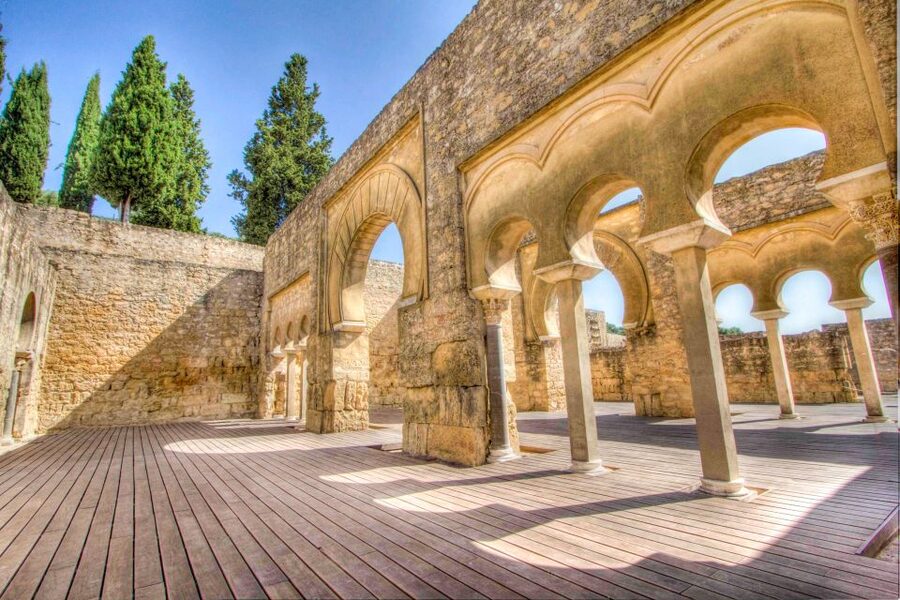
- A 90-minute guided walk takes you through the remains of the medieval palace-city.
- Abd-ar-Rahman III built Medina Azahara between 936 and 940 as the seat of government for Al-Andalus.
- The museum and visitor center add useful context, including a video about the city at its height.
- Spanish is the tour language, so you need enough Spanish to follow a live explanation, or you can use the Spanish audio guide if offered with your booking.
- Bring water, a hat, comfortable shoes, and biodegradable sunscreen, since parts of the site are exposed and stairways are common.
- The $18 price is strong value if you want transport and interpretation without arranging separate tickets and connections.
Why Medina Azahara matters outside Córdoba
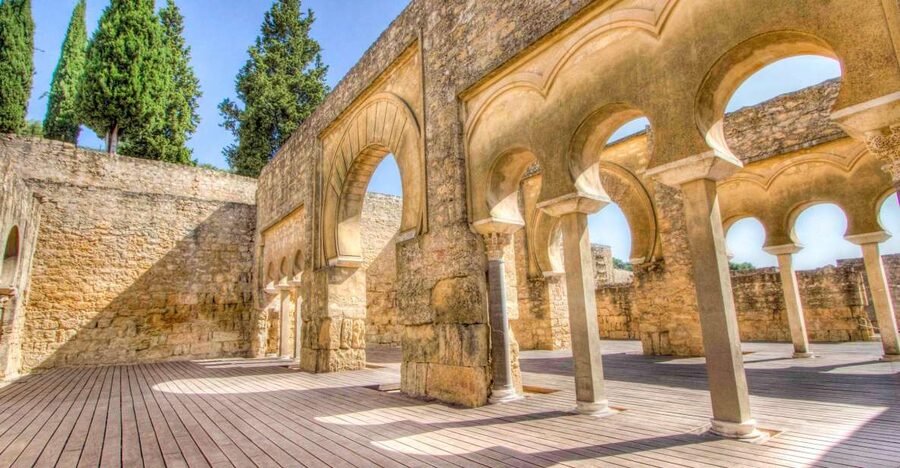
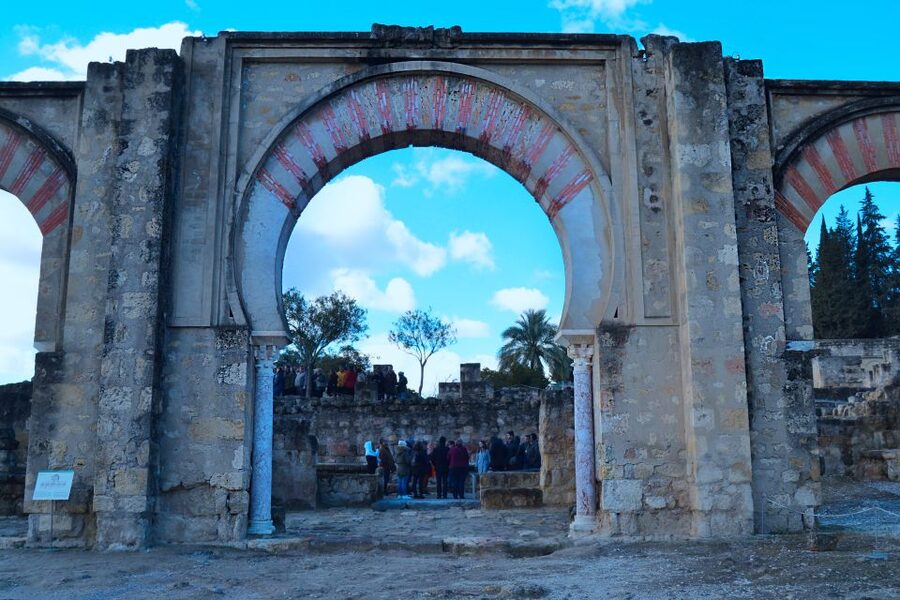
The Alhambra gets the fame, but Medina Azahara gives you a different view of Islamic Iberia. This was not simply a palace for one ruler. It was a fortified city built to house the machinery of power: reception halls, offices, mosques, gardens, workshops, barracks, homes, baths, and a mint.
Abd-ar-Rahman III al-Nasir ordered the city in the 10th century, with construction taking place from 936 to 940. The site became the practical capital of Al-Andalus. Government and administration operated here, and the caliph received major ambassadors within its walls.
That detail changes how you look at the ruins. You are not just walking past fragments of old rooms. You are seeing the remains of a planned center of power, supplied by aqueducts and arranged for both ceremony and daily work. The grand spaces mattered, but so did the infrastructure that kept the city running.
I find that this kind of place benefits from a guide more than a quick solo visit. Walls and foundations can be hard to read without help. A good explanation tells you which areas served public ceremony, which supported administration, and how the city functioned as a living capital.
A few more Cordoba ideas to compare
- Córdoba: Skip-the-Ticket-Line Mosque-Cathedral Guided Tour
★ 4.6 · 9,634 reviews - Cordoba Mosque-Cathedral: Skip-the-Line Guided Tour
★ 4.7 · 6,610 reviews - Córdoba: Jewish Quarter, Mosque, and Alcázar Tour
★ 4.7 · 4,279 reviews
The bus ride and arrival at the archaeological site
The excursion begins in Córdoba, with pickup from a meeting point that can vary according to the option you book. Pay close attention to the exact location and time. One visitor found the meeting point difficult to identify, and the bus arrived at 10:15 precisely, so this is not the moment to rely on a slow breakfast or a last-minute search.
Round-trip transportation is included. That matters because Medina Azahara sits on the western outskirts of Córdoba, away from the central sights. At this price, having the ride included saves you from sorting out your own connection and gives the morning a clear structure.
The transport is described as a comfortable coach in one account, with a punctual pickup. Another person noted that the group was small, which made the visit feel more personal. Group size can vary, so I would not book expecting a private tour, but the available experience suggests that the outing can be orderly rather than chaotic.
Once you arrive, expect a short transition into the visitor complex before the archaeological walk. The bus return is scheduled for around 1:30 PM. Since the complete experience lasts 3.5 hours, check the starting time for your selected date and allow room in your Córdoba plans for the full morning.
The 90-minute walk through a caliph’s capital
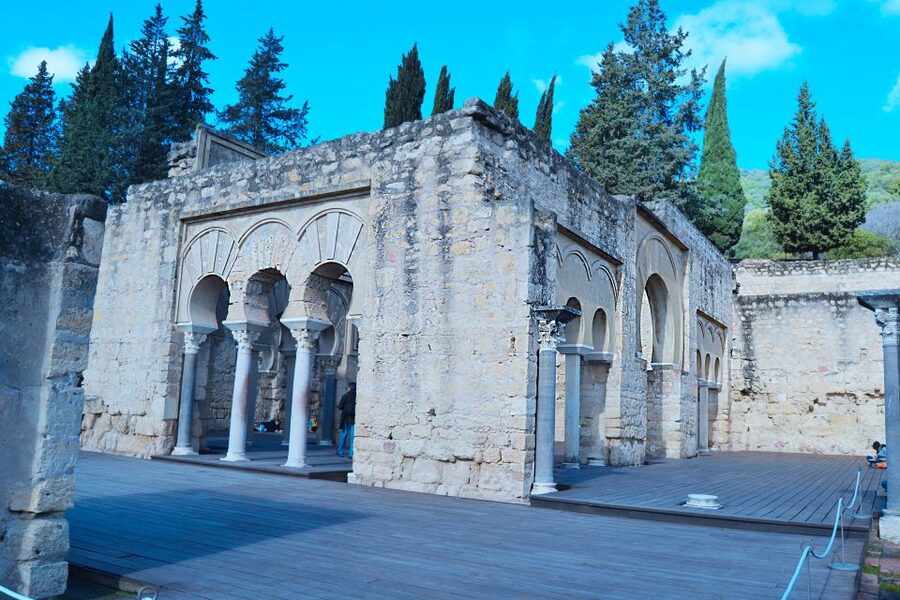
The guided site visit lasts about 90 minutes. That is long enough to move beyond a quick look at the most visible ruins, but short enough that you are not wandering under the sun all day.
The guide’s job here is especially important. Medina Azahara is an archaeological site, not a fully restored palace. You will see foundations, walls, stairways, rooms, and open spaces, but you need interpretation to picture the original city. The best guides connect the remains to the political role of the site and explain why each section mattered.
Several guides have been singled out for their delivery. Lorena was praised for her passion for archaeology and for adding details that a visitor might miss alone. Miguel José was appreciated for a well-paced walk, humor, and knowing where the shade could be found. David was described as informative and clear, while Susana received praise for making a large amount of information easy to remember.
That pattern gives you a useful expectation: the guide can make the difference between seeing scattered masonry and understanding an imperial center. It also explains why the tour may be worth the extra cost over visiting without assistance, even for budget-minded visitors.
The terrain is not effortless. There are many stairs, and the route passes over uneven archaeological ground. You will want shoes with a firm sole rather than thin sandals. The site is not suitable for people with mobility impairments, and the tour does not promise an adapted route.
Ceremonial halls, offices, gardens, and everyday life
The palace-city was designed for several kinds of activity. Ceremonial reception halls represented the authority of the caliph. Administrative and government offices handled the business of ruling Al-Andalus. Mosques served religious life, while workshops, barracks, residences, baths, and gardens supported the people who lived and worked there.
A guided walk helps you notice the contrast between public display and practical service. The reception spaces were meant for important visitors and political theatre. The workshops and service areas reveal the less glamorous work needed to keep a capital operating.
Water was carried through aqueducts, an important point to watch for as you walk. It shows that Medina Azahara was planned as a functioning city, not just a hilltop residence. The gardens and baths also depended on this system, giving you a sense of the engineering behind the courtly image.
You may find that the site feels more open and exposed than Córdoba’s historic center. There are few trees in many areas, and one summer visitor strongly advised bringing a hat. Another visitor pointed out that shade does exist in places, but you should not count on finding it whenever you need it.
The season matters. February and winter visits should be more comfortable for walking in the sun, while July and August demand more care with water and sun protection. The tour data does not provide a seasonal schedule of shade, so pack as if the route will be exposed.
Same base, a different kind of afternoon:
- Cordoba: Equestrian Show General Entry
★ 4.5 · 2,333 reviews - Cordoba: Mosque-Cathedral E-Ticket with Audio Guide
★ 4.1 · 2,124 reviews - Cordoba Mosque & Jewish Quarter Tour with Tickets
★ 4.6 · 1,996 reviews - Cordoba: Alcazar Guided Tour and Skip-the-Line Ticket
★ 4.2 · 1,792 reviews
The museum and visitor center complete the picture
After the ruins, the museum and visitor center help put the site into order. This is a valuable part of the outing because archaeological remains can leave gaps in your understanding. The displays and the video offer a way to picture Medina Azahara when it served as the capital of Islamic Iberia.
I would pay attention to the sequence: first see the surviving structures, then use the visitor center to reinforce what you have just encountered. The film is especially useful if you have trouble imagining the scale and purpose of the city from foundations alone.
The museum also gives your feet a break from the outdoor route. That does not remove the need for water or sun protection, but it balances the morning with an indoor stop. The experience works best as a pair: the site shows you the physical remains, while the visitor center supplies a clearer frame for the story.
Spanish guiding and the language question
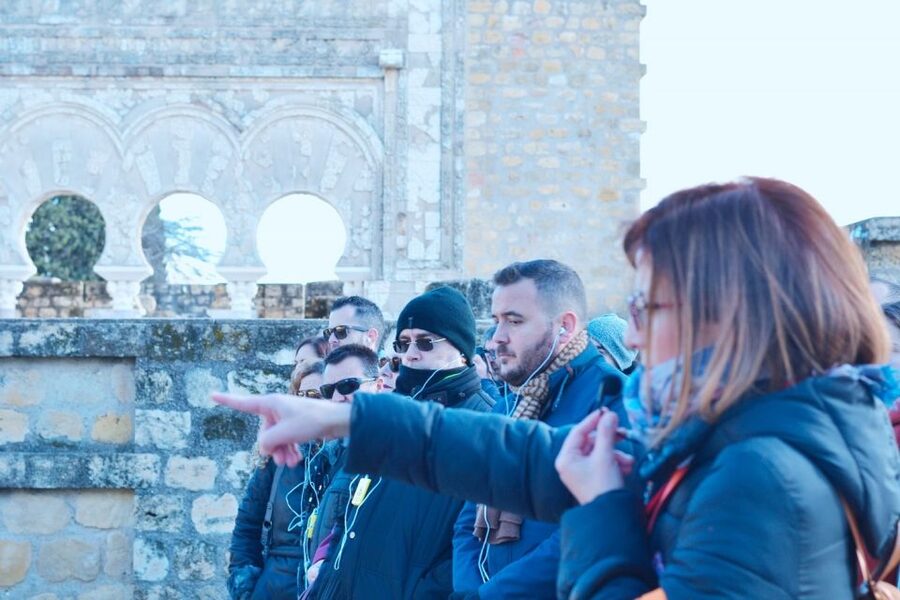
The live guide language is Spanish, and the optional audio guide is also Spanish. This is the most important booking point for many English-speaking visitors.
If you understand conversational Spanish, a live tour can be rewarding because you can follow the guide’s pacing and emphasis. If your Spanish is limited, the explanations may move too quickly for you. One person openly noted that the guide knew the subject well but spoke too fast for their level of Spanish. That is not a criticism of the guide so much as a warning to match the tour to your language ability.
Before paying, check the option shown for your date. English-language availability may not be offered. If Spanish is not comfortable for you, a self-guided visit with English information elsewhere may suit you better, but you would lose the included transport and live interpretation.
For Spanish speakers, the language is a clear advantage. The guide can explain local history, answer questions, and adjust the pace in a way an audio track may not. The strongest praise has gone to guides who combine facts with humor, enthusiasm, and a steady walking rhythm.
Is $18 good value for a half-day?
At $18, this is one of the easier Córdoba excursions to justify. You receive transportation from Córdoba, admission tickets, and a guided tour. You do not need to budget for food or drinks, but the short duration means most people can simply bring water and finish the morning without needing a meal on site.
The value is strongest if you want a simple plan. Arrange your own visit and you still need to manage transport, entry, timing, and interpretation. This tour puts those pieces together for a modest fee.
The price is less compelling if you already have reliable transport, speak enough Spanish to interpret the site yourself, and prefer to set your own pace. The guided walk is structured, and one person found it a little long because many people were tired by the end. The stairs and sun can make 90 minutes feel substantial.
Still, the combination of access and explanation gives this outing a practical edge. I would consider it good value for a first visit, especially if your time in Córdoba is limited and you want the site handled in one morning.
What to bring for the exposed walk
Pack for the conditions, not just the culture. You should bring:
- Comfortable shoes for stairs and uneven archaeological ground
- Plenty of water
- A sun hat
- Biodegradable sunscreen
- Clothing that feels comfortable in direct sun
There is no food or drink included, and the site has limited shade. The exact amount of shade varies along the route, but you should not plan on using trees or covered areas as your main protection.
The practical lesson is simple: arrive ready to walk. A bottle of water tucked into a small bag is more useful than extra sightseeing gear. If you are visiting in warm weather, apply sunscreen before boarding the bus rather than waiting until you reach the ruins.
Who will enjoy this tour most?
I would recommend the outing to anyone who wants to understand Córdoba’s Islamic past beyond the Mosque-Cathedral. It suits visitors who like archaeology, political history, architecture, and the remains of large vanished cities.
It is also a good fit if you prefer a guided plan and do not want to arrange transport to the western outskirts. The 3.5-hour format leaves much of the day available for Córdoba, although the exact start time determines how neatly it fits around lunch or other bookings.
Spanish speakers are the best match. You can also consider it if you understand enough Spanish to follow a 90-minute explanation and are comfortable with a live guide. If you need English, confirm availability before booking rather than assuming it will be offered.
I would be cautious if you have difficulty with stairs, cannot walk over uneven ground, or struggle with heat and sun. This is not a gentle museum outing. The archaeological setting is rewarding, but it asks for some physical effort.
Should you book Medina Azahara with a guide?
Book this tour if you want low-cost transport, admission, and a clear explanation of one of Córdoba’s most important archaeological sites. The guides have earned praise for strong subject knowledge, friendly delivery, good pacing, and memorable detail. Lorena, Miguel José, David, Susana, and other guides have helped make the site understandable rather than merely photogenic.
Skip it, or choose another format, if Spanish is not workable for you, if you need step-free access, or if you want to explore without a fixed schedule. For everyone else, $18 is a fair price for a half-day introduction to the caliphal capital outside Córdoba. Bring water, arrive early at the correct pickup point, and let the ruins do their quiet work.
FAQ
How long does the Medina Azahara tour last?
The full excursion lasts 3.5 hours. The guided walk at the archaeological site lasts about 90 minutes, and the bus returns to Córdoba at around 1:30 PM.
What is included in the price?
The price includes round-trip transportation from Córdoba, entrance tickets, and a guided tour.
Is food included?
No. Food and drinks are not included, so bring sufficient water for the outdoor visit.
What language is the tour conducted in?
The live tour guide speaks Spanish. An optional audio guide in Spanish may also be available, depending on the booked option.
Where does the tour meet?
The meeting point can vary depending on the option you book. Check your booking details carefully, since one pickup time is reported as precisely 10:15.
What should I bring?
Bring comfortable shoes, a sun hat, water, and biodegradable sunscreen. The monument contains many stairs and has limited shade.
Is the site suitable for people with mobility impairments?
No. The tour is not suitable for people with mobility impairments, and the monument contains many stairs.
Can I cancel for a full refund?
Yes. You can cancel up to 24 hours in advance for a full refund. A reserve-now-and-pay-later option is also available.
Recently listed in Cordoba
- Sights, Sounds, and Scents of Córdoba’s Patios★ 4.4 · 109 reviews
- Medina Azahara Guided Tour at Night★ 4.6 · 142 reviews
- Cordóba: Gardens & Fortress of Catholic Monarchs Guided Tour★ 4.3 · 336 reviews
- Córdoba: Viana Palace Gardens and Patios Entry Ticket★ 4.5 · 880 reviews
- Cordoba: Medina Azahara Museum and Archaeological Site Tour★ 4.8 · 199 reviews
- Córdoba: Tablao Flamenco at Doble de Cepa with Optional Meal★ 4.4 · 197 reviews
- Patios of Cordoba Walking Tour★ 4.4 · 199 reviews
- Córdoba: Mosque, Jewish Quarter & Tour with Ticket★ 4.6 · 558 reviews
Half-Day, compared.

Montserrat Half-Day Tour with Tapas and Gourmet Wines
Read our review →
Montserrat: Morning or Afternoon Half-Day Trip with Pickup
Read our review →

Barcelona & Sagrada Familia Half-Day Tour with Hotel Pickup
Read our review →
Half-Day Spanish Cooking Class & Boqueria Market Tour
Read our review →
Browse the lists this tour appears in