
Reviewed · TENERIFE TOURS
Costa Adeje | Cetacean sighting in Tenerife South
The ocean puts on the show here. This small-group cetacean cruise from Costa Adeje carries no more than 10 people, giving you a close view from the low-sided Papacho 2 and plenty of time to speak with the guides. I like the calm, respectful approach to wildlife, and I like the hydrophone, which lets you hear whales communicating beneath the boat. The main drawback is simple: this is a sea trip, so rough water and motion sickness can affect your enjoyment.
At about 2.5 hours, the tour gives you enough time to search a wide stretch of Tenerife’s south coast without eating up your whole day. Biologists such as David, Mirna, Myrna, and Claudine explain what you are seeing, identify individual pilot whales, and discuss conservation rather than treating the animals as scenery. Sightings are never guaranteed, and the boat offers less space and fewer comforts than a large cruise vessel.
In This Review
- Five things that make this cruise special
- Setting out from Puerto Colón in Costa Adeje
- A biologist-led introduction to Tenerife’s marine life
- Finding pilot whales, dolphins, and porpoises
- Hearing whales through the hydrophone
- A conservation focus you can see in practice
- What the 2.5-hour route feels like
- The value of paying $71.35
- What to bring for a sunny Atlantic morning
- Who will enjoy this tour most
- Should you book the Costa Adeje cetacean cruise?
- FAQ
- Where does the cetacean tour start?
- Where does the tour finish?
- How long does the experience last?
- How many people can join the boat?
- What animals might I see?
- Can I hear the whales?
- Is the tour available in English?
- What happens if the weather is poor?
Five things that make this cruise special
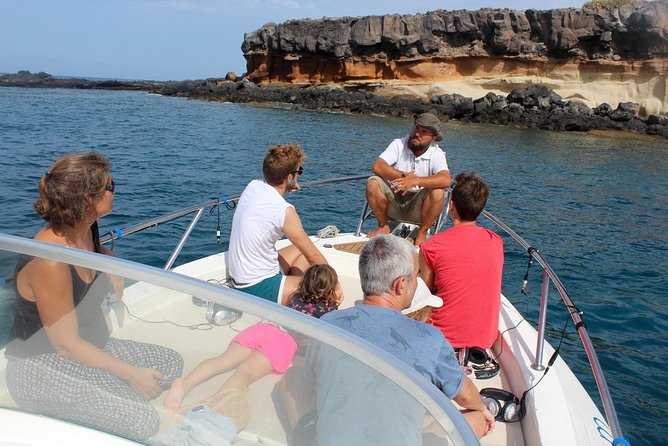
- A maximum of 10 passengers: You get room to move around the boat and direct access to the crew.
- A hydrophone beneath the boat: You may hear whales calling, even when the animals are difficult to see.
- Engines switched off near cetaceans: The crew lets the animals approach instead of chasing them.
- Biologists who collect useful information: The crew can identify some pilot whales by their dorsal fins and family groups.
- A low boat close to the water: You see whales and dolphins from near sea level, not from a high viewing deck.
- More than whales: Sightings can include dolphins, porpoises, sea turtles, flying fish, and seabirds.
Setting out from Puerto Colón in Costa Adeje
The meeting point is at Avenida de Colón 4 in Costa Adeje, at Puerto Colón Marina. Some trip information identifies the departure area as Gate 4, so allow time to find the exact gate and check in before departure. The tour returns to the same place, which makes it easy to fit into a day around Costa Adeje.
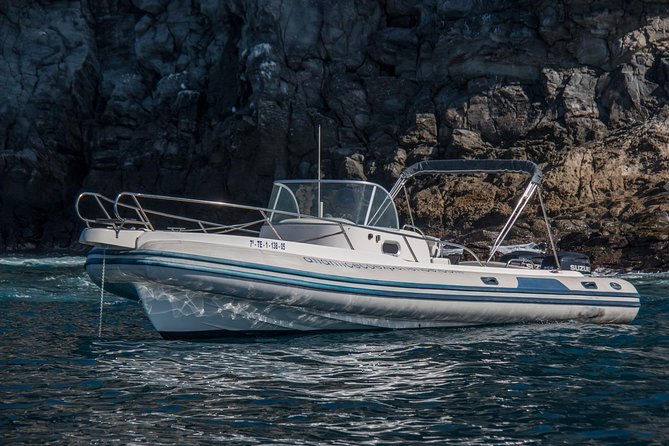
The small boat matters from the first minute. A large whale-watching vessel can give you a stable ride and more indoor space, but it also puts you among many people competing for the same view. Papacho 2 has a maximum capacity of 10 passengers. Several trips have had only a handful of passengers, which means you can change sides, ask questions, and see the water without a wall of bodies in front of you.
The boat sits close to the sea. That gives you a more direct view when a pilot whale surfaces, but it also means you feel the movement of the water more than you would on a big catamaran. If you are prone to seasickness, take your usual precautions before setting off. One person still became ill after taking motion-sickness tablets, so this is not the place to assume the ocean will behave.
A few more Tenerife ideas to compare
- Siam Park Entry Tickets
★ 4.5 · 15,710 reviews - Tenerife: Eco-Yacht Whale and Dolphin Watching and Swimming
★ 4.7 · 15,619 reviews - Los Cristianos Respectful No-Chase Whale and Dolphin Safari
★ 4.6 · 12,782 reviews
A biologist-led introduction to Tenerife’s marine life
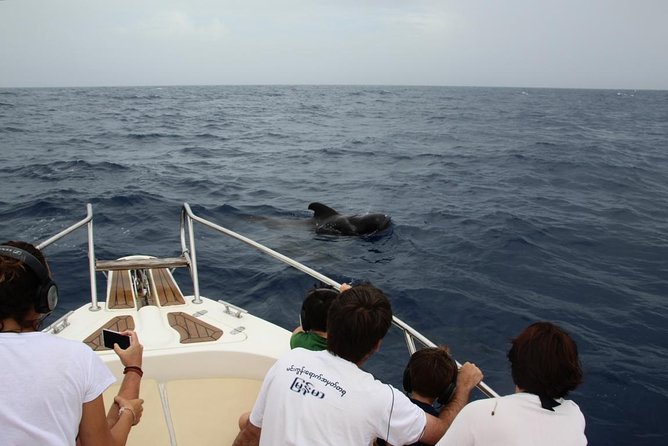
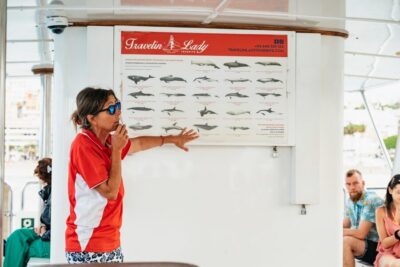
Once you leave the marina, the biologist explains the animals that live in the waters around Tenerife and the rules used to protect them. This opening talk is not filler. It gives you a way to read the water and understand why the boat sometimes slows, waits, or leaves an area instead of pressing closer.
David has received especially warm praise for his storytelling, humor, and ability to make marine biology easy to follow. He has explained the habits of short-finned pilot whales, including their powerful hunting bursts and their ability to reach great depths in search of squid. He also connects the whales to evolution, including the ancient ancestor Pakicetus, a memorable detail for children and adults alike.
Mirna and Myrna are both named in trip feedback, likely reflecting different spellings or members of the crew, while Claudine is also praised as a careful captain and photographer. The important point for you is that this is not a trip with a canned speech and a loudspeaker. The crew talks with you, answers questions, and adjusts the explanation to the group.
The setting helps explain why cetaceans are found here. Tenerife rises dramatically from the Atlantic seabed, creating deep ocean conditions close to the island. That makes the south coast a useful place to look for short-finned pilot whales and other marine life.
Finding pilot whales, dolphins, and porpoises
The main goal is to locate cetaceans, but the search is part of the experience. You may spend periods moving slowly, scanning the water, and waiting for animals to surface. That can feel less exciting than a fast chase, but it is central to the tour’s gentle method.
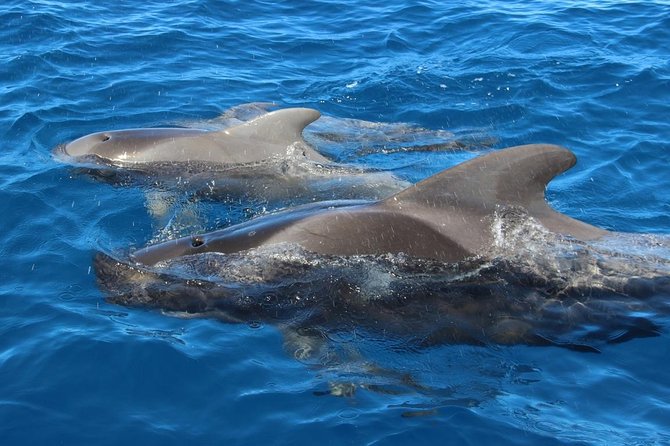
Pilot whales are the regular stars of the trip. The crew keeps a photo catalogue of known animals and can sometimes identify a family group by its dorsal fin. Seeing a mother with a calf, or recognizing a whale the crew has recorded before, turns a quick sighting into a small lesson in animal behavior and local research.
Dolphins and porpoises may also appear. Past outings have included different dolphin species, including striped dolphins, along with pilot whales. Some sightings have been close to the boat, but you should keep expectations sensible. Wildlife moves on its own schedule. A day with brief surfaces can still be worthwhile if you understand that the crew is watching responsibly rather than forcing an encounter.
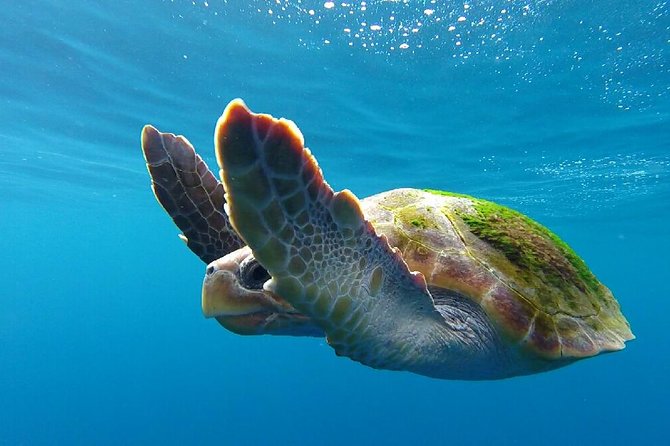
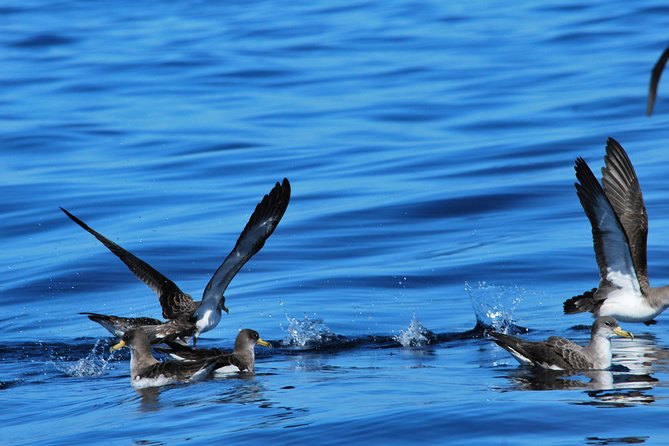
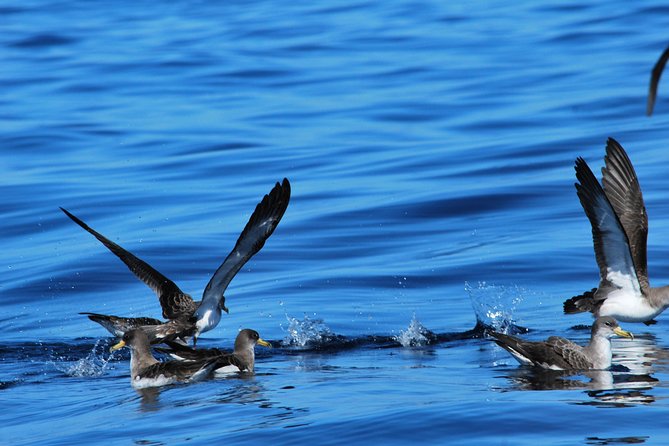
Occasional sightings have included a larger whale, loggerhead turtles, flying fish, Cory’s shearwaters, and other seabirds. One trip even encountered orcas, though that is an unusual event and should not be treated as a normal part of the route. The variety is one reason to keep watching after the first whale appears.
Hearing whales through the hydrophone
The hydrophone is one of the strongest parts of this experience. When the boat reaches a suitable sighting, the crew can switch off the engines and lower the listening device into the sea. You may hear the clicks, calls, and other sounds cetaceans use to communicate or locate food.
This changes the mood on board. Instead of simply waiting for a fin to break the surface, you listen to an unseen world below you. The quiet also makes clear why engine noise and close approaches can be a problem for marine animals.
The crew’s practice of stopping the engines near whales is important. They may leave an area if several other boats are already surrounding the animals, reducing the chance of adding pressure to an already busy encounter. You still get a chance to see the whales, but the boat does not treat them like performers that must remain in position for photographs.
Same base, a different kind of afternoon:
- Tenerife: Loro Parque Entry Ticket
★ 4.8 · 12,411 reviews - Loro Parque and Siam Park Combined Admission Tickets
★ 4.7 · 7,307 reviews - Tenerife: Kayak and Snorkel with Turtles, Wetsuits Included
★ 4.6 · 7,215 reviews - Costa Adeje: Whale & Dolphin Eco-Cruise with Snacks & Drinks
★ 4.6 · 5,096 reviews
A conservation focus you can see in practice
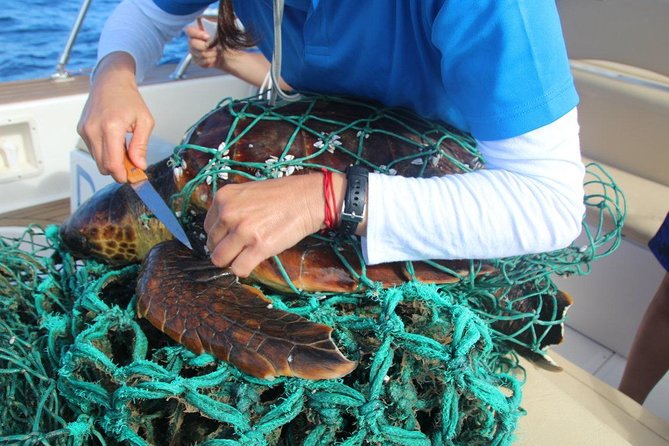
Atlantic Eco Experience presents the trip as an eco-focused outing, and the details make that claim meaningful. The crew explains local marine life and conservation, records observations, identifies known whale families, and keeps distance from animals. On at least one outing, the group also collected plastic litter floating at sea.
The company is described as part of a Blue Flag Certified Whale Watching Organisation. That label alone should not make you switch off your judgment, but the operating choices are more useful: no loud music, no aggressive pursuit, engines off during close observation, and a willingness to move away when other boats are crowding the whales.
You should still understand that any wildlife boat trip has an effect on the sea. A responsible operator reduces that effect rather than eliminating it. For me, the value here comes from learning how to watch animals without turning the encounter into a chase.
What the 2.5-hour route feels like
The exact path changes with sea conditions and animal movement. You begin with the introduction, then travel along Tenerife’s south coast while the crew searches for signs of life. Once cetaceans are found, the boat may idle or float while the guides explain what you are seeing.
The low seating position gives you a strong view at the waterline. You may be able to watch a pilot whale surface beside the boat rather than looking down from a tall deck. On the other hand, you need to pay attention and be ready. Wildlife sightings can be brief, and there is no fixed show schedule.
During the outing, the crew may photograph animals for identification and share pictures afterward. Some passengers received photographs through WhatsApp at no extra charge. That is a thoughtful touch, but it should be viewed as a crew courtesy, not something to count on as a formal part of the package.
A cold drink may be served near the end, and toilet facilities are available below deck. This is useful on a 2.5-hour trip, though the boat is designed for wildlife watching rather than a full meal, party atmosphere, or elaborate onboard service.
The value of paying $71.35
At $71.35 per person, this costs more than a basic high-capacity boat ride in some holiday areas. The price makes more sense if you value a small group, a biologist-led explanation, and a quieter style of wildlife watching.
You are paying for access to a boat with no more than 10 passengers, not just a seat on a vessel. That small number changes the experience. You can hear David or another guide without fighting engine noise and crowds, and you have a better chance of seeing from either side of the boat.
The hydrophone adds something a standard sightseeing cruise may not offer. So does the crew’s local knowledge of pilot whale families and their attention to animal behavior. If all you want is a quick photo of a fin, a cheaper large boat might do the job. If you want to understand what you are seeing, this tour earns its price more convincingly.
The strongest value comes for families and curious adults. A seven-year-old was able to stay engaged for the full trip because the guides mixed sightings with stories and clear explanations. That said, the boat’s movement and the need to watch the water may not suit every child.
What to bring for a sunny Atlantic morning
The south coast of Tenerife can feel hot even offshore. Bring a sun hat with a secure toggle, sunglasses, sunscreen, and water. A loose hat can be a nuisance in the wind, so secure it before the boat leaves the marina.
Wear practical clothing and expect full sun for much of the trip. The sea can change quickly, and reviews include a report of large waves even though the boat felt sturdy. If you have a history of motion sickness, prepare before departure and consider where you feel most comfortable sitting.
The operator allows service animals. Most people can take part, but access to the boat depends on the type of reduced mobility and current sea conditions. Contact Atlantic Eco Experience before booking if accessibility is important to you.
Who will enjoy this tour most
I would choose this outing if you want:
- A quiet, small-group alternative to a crowded whale boat
- Clear explanations from marine biologists
- A conservation-minded approach to wildlife
- The chance to hear cetaceans with a hydrophone
- An activity that suits adults and children who enjoy nature
- A 2.5-hour trip that leaves time for other plans in Costa Adeje
I would think twice if you want music, a party, a large sun deck, a full meal, or a guaranteed close encounter. This is a patient search for wild animals, not a marine theme-park show.
Booking around 17 days ahead is the average pattern, so it is sensible to reserve early if your dates are fixed. Confirmation arrives within 48 hours, subject to availability. You can cancel for a full refund up to 24 hours before the start time. Poor weather or failure to meet the minimum number of passengers can lead to a new date or a full refund.
Should you book the Costa Adeje cetacean cruise?
Yes, if you want the most personal and thoughtful wildlife outing described here. The best parts are not only the pilot whales and dolphins, but also the way David and the crew explain them, identify family groups, use the hydrophone, and stop rather than chase.
I would book this over a packed sightseeing boat if marine life matters more to you than onboard entertainment. Just bring sun protection, prepare for possible motion sickness, and remember that the ocean makes no promises. If you can accept that uncertainty, the combination of close-to-the-water views, patient guiding, and real care for the animals makes this one of Tenerife’s strongest half-day activities.
FAQ
Where does the cetacean tour start?
It starts at Avenida de Colón 4, 38660 Costa Adeje, Santa Cruz de Tenerife, Spain. The departure area is also identified as Gate 4 at Puerto Colón Marina.
Where does the tour finish?
The activity ends back at the original meeting point.
How long does the experience last?
The cruise lasts approximately 2 hours and 30 minutes.
How many people can join the boat?
The maximum group size is 10 travelers.
What animals might I see?
Possible sightings include whales, dolphins, porpoises, sea turtles, and seabirds. Flying fish and different types of dolphins have also been seen.
Can I hear the whales?
Yes. The crew uses a hydrophone to listen to the sounds cetaceans use to communicate or hunt.
Is the tour available in English?
Yes. The experience is offered in English.
What happens if the weather is poor?
If poor weather causes cancellation, you will be offered a different date or a full refund. A full refund is also available if you cancel at least 24 hours before the start time.
Recently listed in Tenerife
- From Puerto de La Cruz: VIP Tour Around Anaga and La Laguna★ 4.5 · 142 reviews
- Tenerife: Beginner’s Dive at a Spot with Turtle Sightings★ 4.7 · 627 reviews
- Private Surfing Lesson at Playa de las Américas★ 5.0 · 167 reviews
- Tenerife Whale Watching and Snorkeling Yacht Trip★ 4.5 · 162 reviews
- Whales & Dolphins watching in exclusive sailboat★ 5.0 · 461 reviews
- 3-hour Whale and Dolphin Watching and Listening Tour★ 5.0 · 808 reviews
- World Class Fishing Charter Trip in Tenerife★ 4.5 · 110 reviews
- Whale Watching and Marine Science Tour★ 5.0 · 111 reviews
Tenerife Tours, compared.
Eco-Yacht Whale and Dolphin Watching and Swimming
Read our review →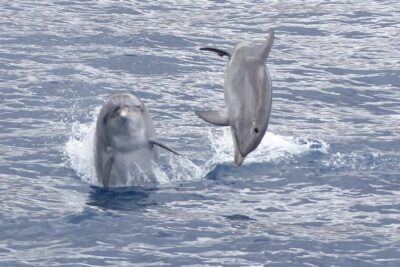
Los Cristianos Respectful No-Chase Whale and Dolphin Safari
Read our review →
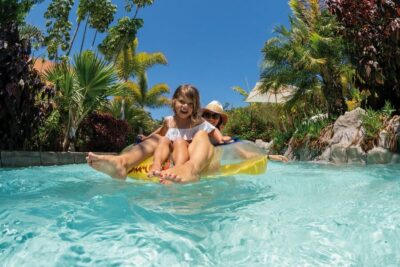
Loro Parque and Siam Park Combined Admission Tickets
Read our review →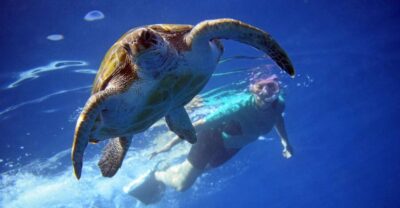
Kayak and Snorkel with Turtles, Wetsuits Included
Read our review →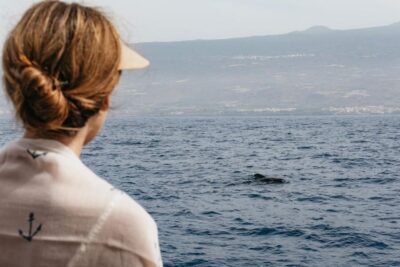
Whale & Dolphin Eco-Cruise with Snacks & Drinks
Read our review →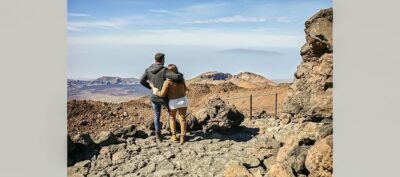
Mount Teide Tour with Cable Car Ticket & Transfer
Read our review →Browse the lists this tour appears in