
Reviewed · SPAIN
Cuenca: Medieval Old Town
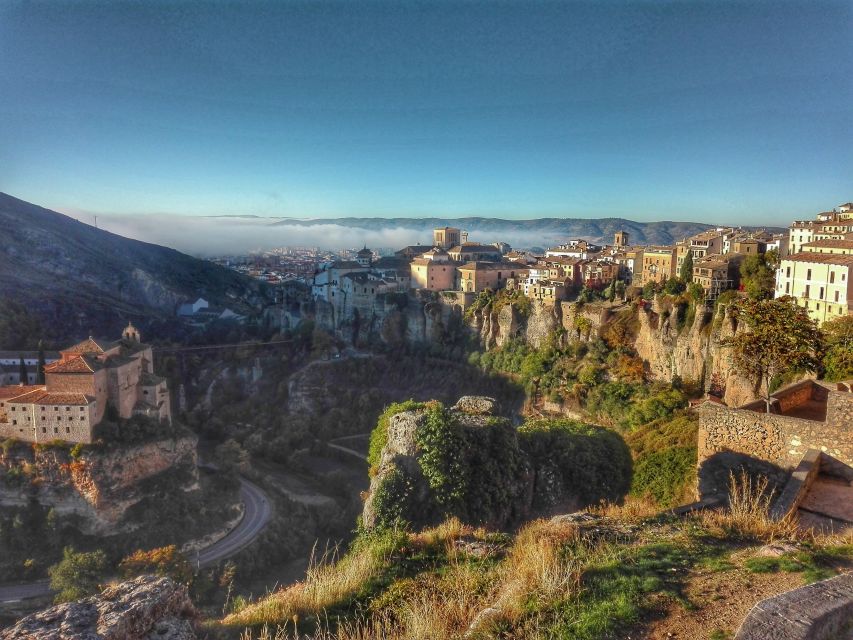
Cuenca seems to balance on air. I like the way this two-hour walk brings together narrow medieval streets and wide views into the Júcar and Huécar gorges. I also like the chance to see Cuenca’s famous hanging buildings up close, including sixteenth-century apartment blocks that rise as high as 12 stories. The main catch is that the tour is conducted only in Spanish, and the pace may feel slow if you prefer to keep moving.
At just $10 per person, this is an inexpensive way to get your bearings in one of Spain’s most unusual historic cities. Guides such as Ángela and Raúl have earned praise for being friendly, funny, and good at handling large groups. Still, make sure the route suits you: steep streets and uneven surfaces mean it is not recommended for wheelchair users or people with mobility impairments.
In This Review
- Key points at a glance
- Why Cuenca’s setting makes this walk special
- Meeting beneath City Hall
- Walking Cuenca’s narrow medieval streets
- The hanging houses and Cuenca’s vertical design
- River gorges and sudden panoramic views
- Ecclesiastical buildings and local stories
- How the two-hour length affects value
- Who should book this Cuenca walk
- Practical details before you go
- Should you book it?
- FAQ
- How long does the Cuenca old town tour last?
- What language is the tour conducted in?
- Where is the meeting point?
- Is hotel pickup included?
- How much does the tour cost?
- Is the tour suitable for wheelchair users?
- Can I cancel for a full refund?
Key points at a glance
- Cuenca sits above two dramatic river gorges: The old town occupies a natural rock formation with the Júcar and Huécar rivers dropping away on either side.
- The hanging architecture is the star: Buildings seem to cling to the rock, creating some of Spain’s most memorable urban views.
- Sixteenth-century apartments reach 12 stories: Cuenca’s vertical construction gives the old town a rare, almost improbable look.
- The tour is Spanish only: You need enough Spanish to follow stories about the monuments, streets, and local life.
- The meeting point is easy to find: Meet below the arches of City Hall, beside the tourist office, and look for guides in red uniforms.
- The pace depends on the guide: Ángela and Raúl have been praised for warmth and humor, but one customer felt there was too much time standing still.
Why Cuenca’s setting makes this walk special
Cuenca is not simply an old town with a few handsome buildings. Its position is the reason the city feels so different from many Spanish historic centers.
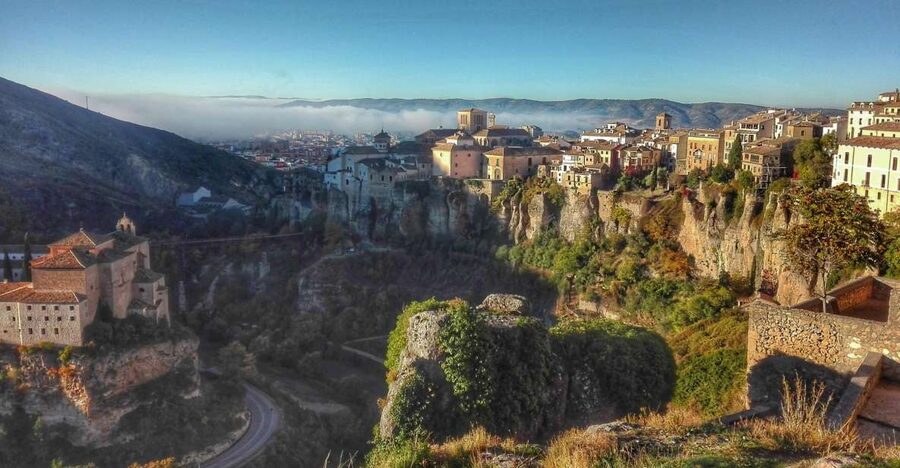
The medieval core sits on a natural rock ridge. The slopes fall into the deep gorges of the Júcar and Huécar rivers, giving Cuenca its famous eagle’s-nest appearance. As you walk, the streets can feel enclosed and ancient, then suddenly open to a huge drop and a long view.
That contrast gives the tour its shape. You move through tight lanes, pause at historic monuments, and then reach viewpoints where the city seems to hang over empty space. I find this kind of setting more memorable than a simple procession from one square to the next, because the geography explains the architecture.
The city was declared a UNESCO World Heritage Site in 1996. That status matters here because Cuenca’s value comes from the way its buildings, streets, religious sites, and natural setting work together. You are not seeing isolated monuments. You are seeing a town built around a difficult piece of rock.
More things to book in Spain:
- Barcelona: Sagrada Familia Entry Ticket with Audio Guide
★ 4.6 · 105,312 reviews - Barcelona: Park Güell Admission Ticket
★ 4.4 · 76,534 reviews - Seville: Royal Alcázar Entry Ticket
★ 4.6 · 28,378 reviews
Meeting beneath City Hall
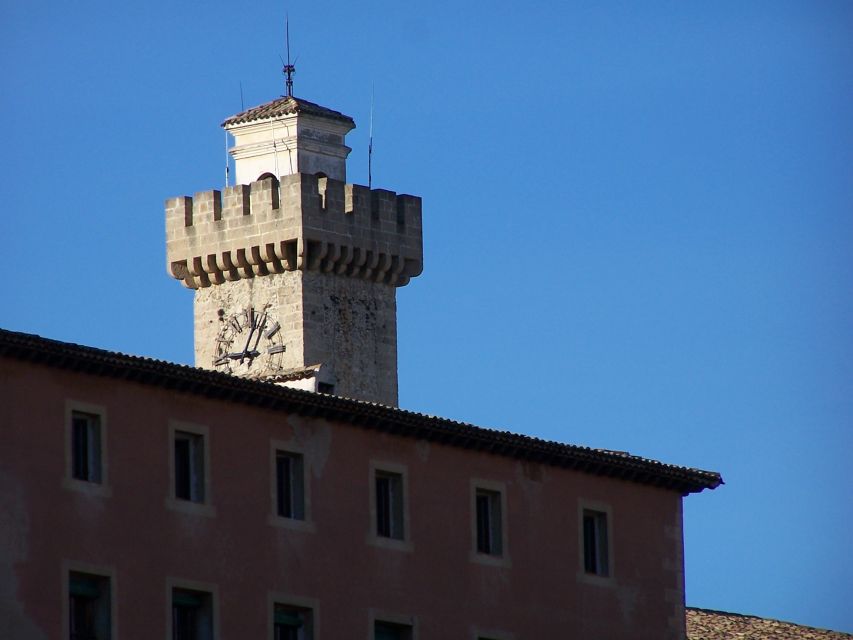
The meeting point is just below the arches of Cuenca City Hall, next to the tourist office. Look for the guides wearing red uniforms.
This is a useful place to begin because you are meeting in the heart of the old town rather than at a distant transport stop. No hotel pickup is included, so you need to make your own way there. Arrive at least five minutes early. In a narrow historic center, a few minutes spent searching for the group can become stressful quickly.
The red uniform should make the guide easier to spot, especially if several groups are gathering near the arches. Once the group comes together, expect the guide to lead you into the old town on foot. The tour lasts two hours, so you get a focused introduction rather than an all-day program.
Walking Cuenca’s narrow medieval streets
The first part of the experience is a walk through Cuenca’s old town. The narrow streets are part of the attraction, not just a route between sights.
You will see how the old city fits onto its rocky perch. The lanes, old facades, and religious architecture create a strong sense of place. A Spanish-speaking guide adds local context, explaining the main monuments and sharing stories connected with Cuenca’s past and daily life.
I like guided walks in places such as this because the most interesting details are often easy to miss. A doorway, an oddly placed building, or a change in street level can make more sense when someone explains how the city developed. Without a guide, you can still enjoy Cuenca’s appearance, but you may miss the reasons behind its unusual form.
The quality of that explanation depends heavily on the guide. Ángela has been praised for being professional, kind, detailed, and funny. Raúl has also received strong praise for connecting with different people in a large group and for leading the group through the city’s winding lanes. Those comments suggest a friendly style rather than a dry lecture.
There is one important qualification. One customer felt the walk could have been much shorter and that too much time was spent standing while the guide told stories that did not add enough to the visit. If you prefer a brisk sightseeing walk, this may test your patience. If you enjoy local stories and pauses, the same approach may feel more relaxed and personal.
The hanging houses and Cuenca’s vertical design
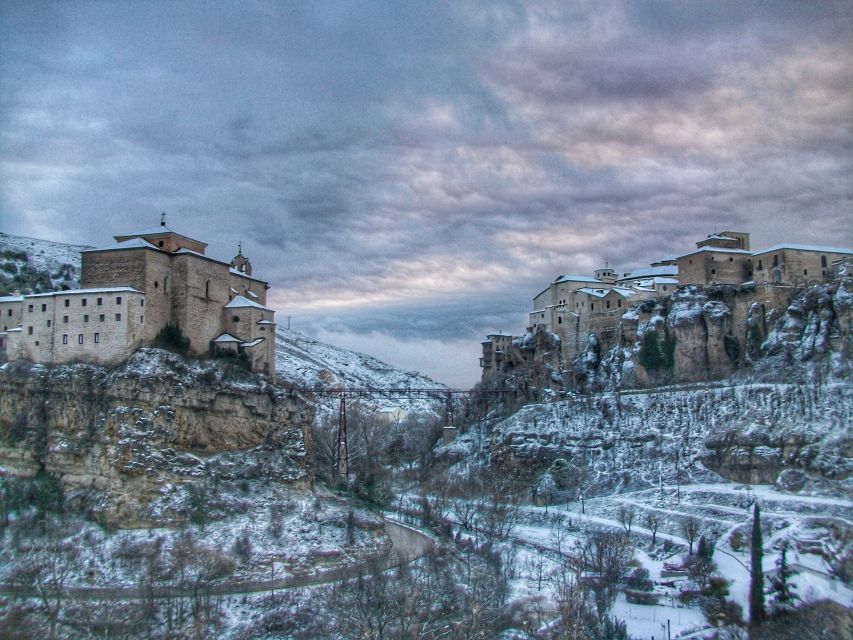
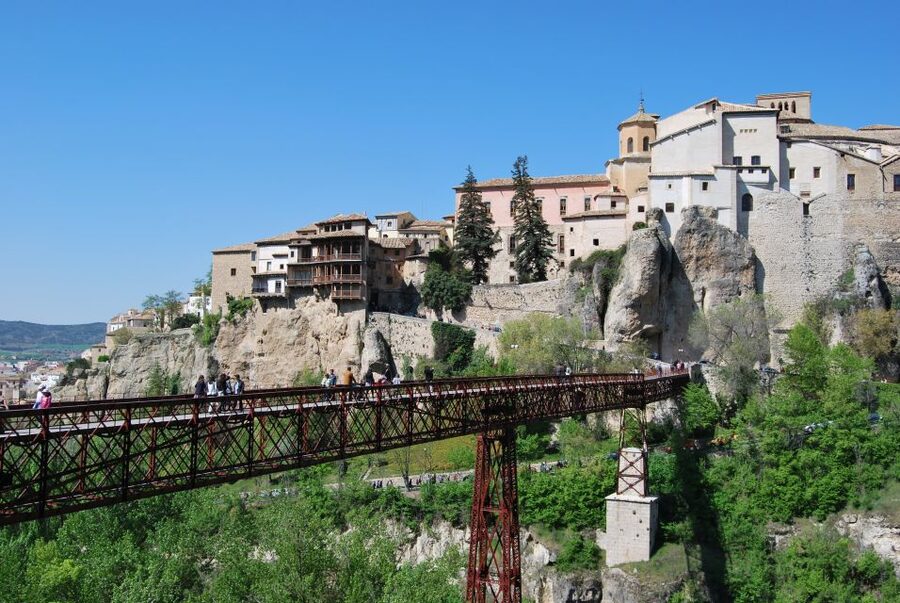
Cuenca’s hanging buildings are the visual centerpiece. They appear to extend over the cliff edges, creating the strange impression that the upper floors are suspended above the gorge.
The architecture looks impossible at first glance, but it reflects the city’s limited space. Cuenca had to build upward and outward on a steep rock formation. The result is a town where height matters as much as width.
The tour highlights apartments dating from the sixteenth century that reach 12 stories. That detail helps you understand just how vertical Cuenca became. These are not modern towers placed beside an old quarter. They belong to the historic structure of the city and show how people adapted buildings to the rock.
You should expect to admire the architecture from the streets and viewpoints included in the walk. The provided details do not confirm that the tour enters the famous houses, so do not book it expecting a full interior visit. The value comes from seeing how the buildings cling to the edge and how their height changes your sense of the city.
One practical point deserves attention. A customer specifically wanted to cross the bridge for what they felt was the finest view of the old town, but the guided route did not include crossing it. I would treat this as a useful planning tip: the tour may bring you near the hanging houses without covering every ideal viewpoint. If the bridge view matters to you, set aside extra time to see it independently after the walk.
Same base, a different kind of afternoon:
- Barcelona: Casa Batlló Entry with Self-Audioguide Tour
★ 4.7 · 25,359 reviews - Seville: Cathedral and La Giralda Entry Ticket
★ 4.5 · 24,592 reviews - Madrid: Tour Bernabéu Entry Ticket
★ 4.5 · 21,573 reviews - Barcelona: 24 or 48-Hour Hop-On Hop-Off Bus Tour
★ 4.4 · 20,872 reviews
River gorges and sudden panoramic views
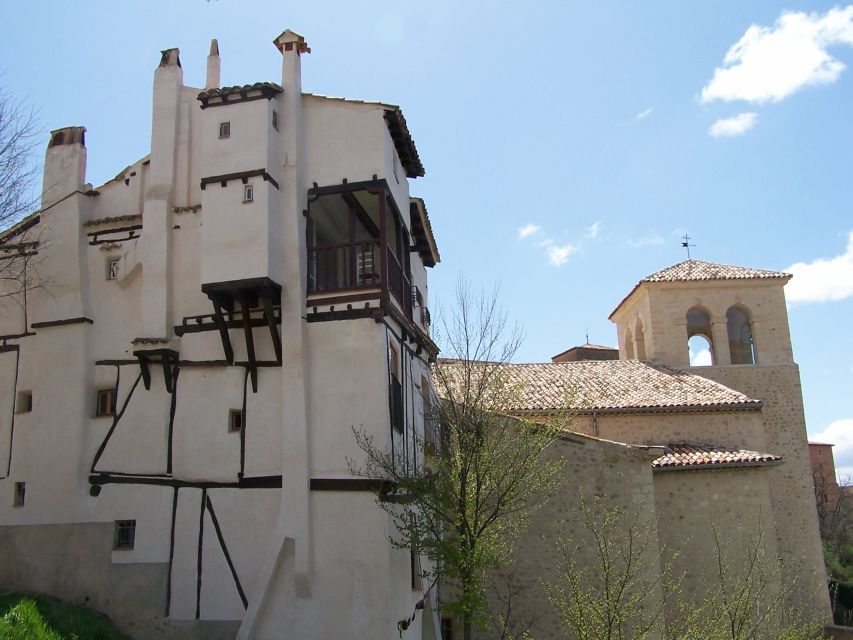
The Júcar and Huécar gorges are more than background scenery. They explain why Cuenca feels so dramatic.
From suitable points along the old town route, you can look down into the deep cuts made by the rivers. The view changes the mood of the walk. One moment you are among close-set medieval buildings, and the next you are looking across open space with the rock and river valleys below.
These viewpoints also help you read the city. The hanging houses make sense when you see the steep ground beneath them. The old town is not perched high for decoration. It occupies a naturally defended and difficult site, and the architecture responds to that terrain.
The exact amount of time spent at each view will depend on the guide and group. Some people will appreciate time for photos and explanation. Others may feel the group pauses too often. If you want to take your own pictures, keep your camera ready rather than assuming every viewpoint will receive a long stop.
Ecclesiastical buildings and local stories
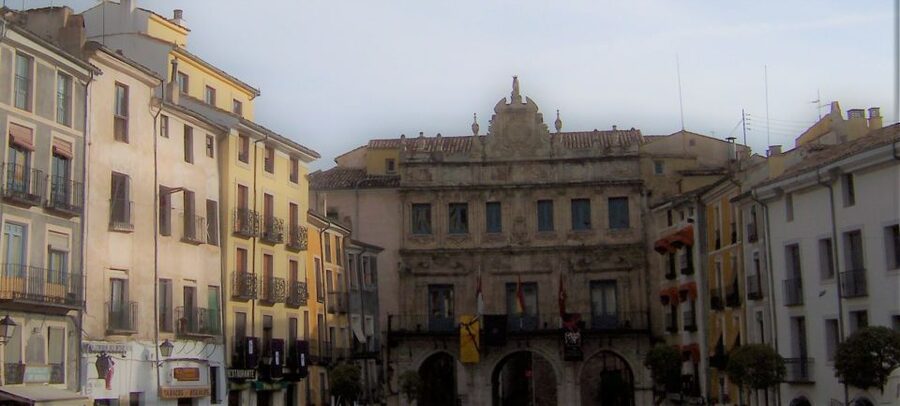
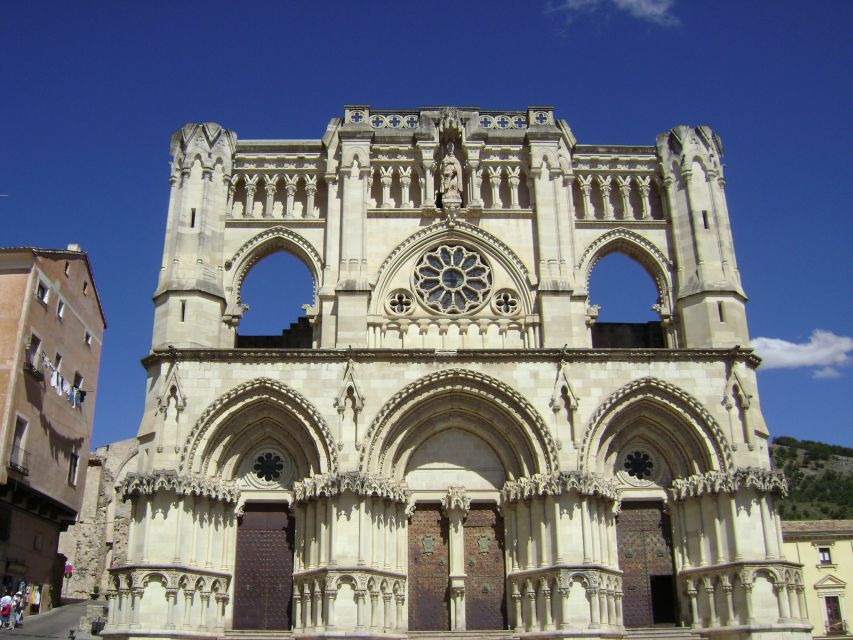
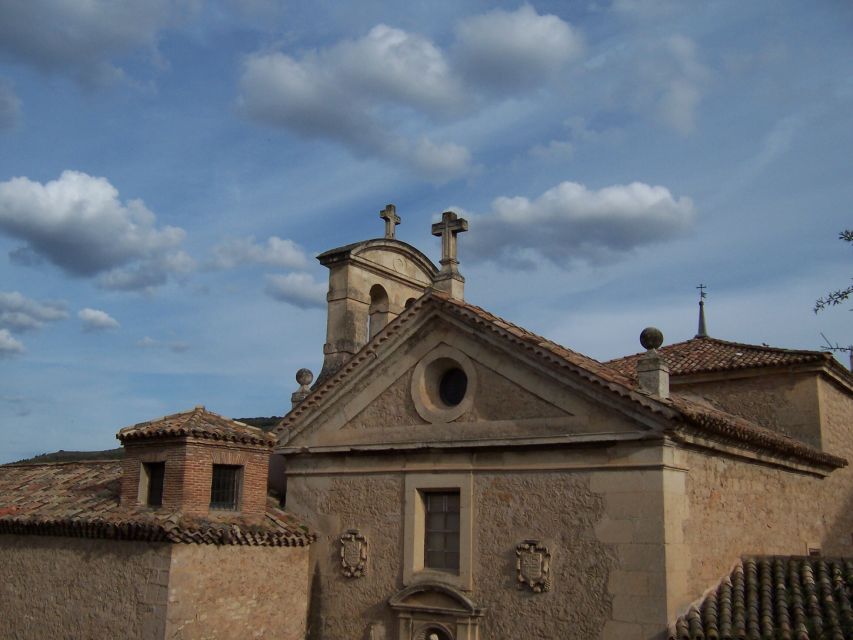
Cuenca is also known for its ecclesiastical architecture. The walk introduces the main monuments and explains their place in the old town.
The supplied details do not name each religious building or promise entry into them, so you should think of this as an exterior-focused orientation walk unless the guide says otherwise. You will gain a better sense of how religious buildings fit into Cuenca’s medieval center, but this is not presented as a museum tour or an interiors program.
That distinction helps set the right expectations. The tour is strongest as a first look at the city’s structure, monuments, and stories. You are getting a guide to the old town, not a ticketed visit to every major building.
The local-life element is also useful. The guide offers insight into how people live in this unusual setting, not just a list of dates and architectural labels. Ángela’s dry humor was especially appreciated by one German-speaking customer, who found her detailed explanations entertaining as well as informative.
Because the tour is in Spanish, you need to be able to follow spoken Spanish at a reasonable level. There is no indication of an English-language option. If you understand only a little Spanish, you can still enjoy the streets and views, but much of the tour’s value will be lost.
How the two-hour length affects value
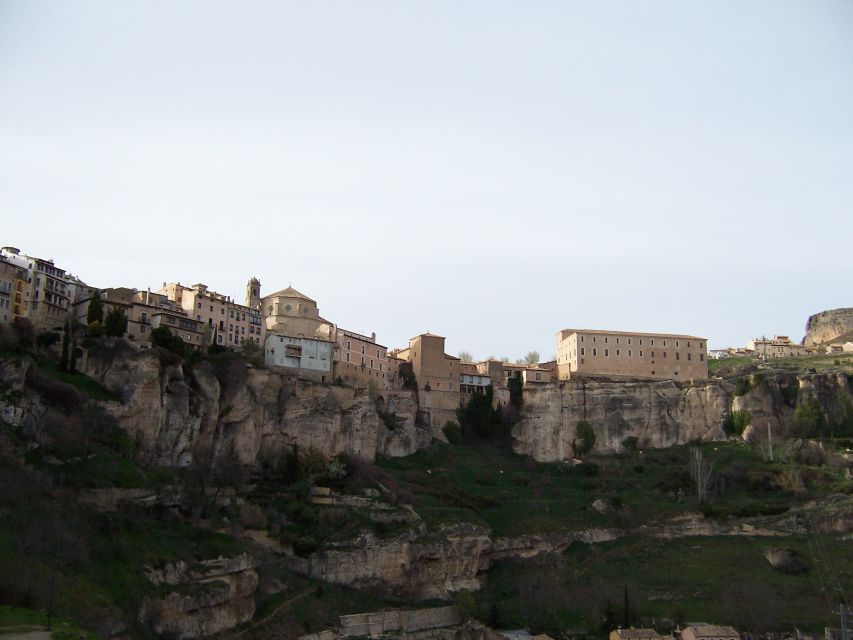
Two hours is a sensible length for a first introduction to Cuenca. You get enough time to walk through the old town, hear about the main sights, see the hanging architecture, and take in the river gorges without committing half a day.
At $10 per person, the value is strong if you want orientation and historical context. The price is low enough that you are mainly paying for the guide’s time and local explanation. You are not paying for transport, hotel pickup, or stated admission to an interior attraction.
The tradeoff is that the experience may feel basic if you already know Cuenca well. It is also less appealing if you want a tightly timed route with constant movement. The $10 price makes the risk modest, but your time still matters, especially if you have only one afternoon in the city.
I would use this tour at the start of a Cuenca visit. Afterward, you can return to the streets and viewpoints that interested you most. You can also make your own way to the bridge near the hanging houses if that view was not part of the guided route.
Who should book this Cuenca walk
This tour suits you best if you want a short, affordable introduction to Cuenca and can follow Spanish. It is particularly useful if you are visiting for the first time and want someone to explain why the old town is built the way it is.
You may also like it if you enjoy architecture, unusual urban settings, and stories about historic streets. The guides’ friendly manner is a real plus. Ángela and Raúl have both been praised for handling people well, even in a large group, and for making the experience pleasant.
Families may find the length manageable. One parent completed the walk with a one-year-old child in a stroller without difficulty, although the official information says the activity is not suitable for people with mobility impairments or wheelchair users. That means you should judge your own needs carefully rather than relying on one successful stroller experience.
You may want to skip it if you need English commentary, dislike stopping for stories, or expect to enter the hanging houses. The tour is not designed as a private, fully flexible route. Its focus is a guided walk through the old town and its main points of interest.
Practical details before you go
The tour is offered with a live Spanish-speaking guide and lasts two hours. Starting times vary, so check availability for the date you want.
Meet below the arches of City Hall beside the tourist office. Look for the red uniforms and arrive at least five minutes before departure. Pickup is not included, so plan to reach the meeting point on your own.
Wear comfortable shoes and be prepared for a walking route through a historic quarter with steep and uneven sections. The activity is not suitable for wheelchair users or people with mobility impairments.
You can cancel up to 24 hours before the scheduled start for a full refund. You can also reserve now and pay later, which is helpful if you are arranging several parts of a Spain trip and want to keep your plans flexible.
Should you book it?
I would book this tour if you want a low-cost introduction to Cuenca’s old town, can follow Spanish, and value a guide’s stories as much as the views. The setting is remarkable, the hanging architecture is genuinely unusual, and the river gorges give the walk a strong sense of place.
I would not choose it if your main goal is a fast route or a full visit inside the hanging houses. Allow extra time for the bridge and other viewpoints, since the guided route may not cover every angle. At $10, this is an easy way to get oriented, provided you accept the Spanish-only format and a pace that may include several extended stops.
FAQ
How long does the Cuenca old town tour last?
The tour lasts two hours.
What language is the tour conducted in?
The tour is conducted only in Spanish with a live Spanish-speaking guide.
Where is the meeting point?
Meet just below the arches of Cuenca City Hall, next to the tourist office. The guides wear red uniforms.
Is hotel pickup included?
No. Pickup service is not included, so you must reach the meeting point yourself.
How much does the tour cost?
The listed price is $10 per person.
Is the tour suitable for wheelchair users?
No. The activity is not suitable for wheelchair users or people with mobility impairments.
Can I cancel for a full refund?
Yes. You can cancel up to 24 hours in advance for a full refund.
Recently listed in Spain
- Bilbao Walking Small Group Tour★ 5.0 · 203 reviews
- Enjoy the Coast of Biscay★ 5.0 · 139 reviews
- Bilbao: Guggenheim Like Never Before: VIP Access. Small Group.Top★ 4.5 · 190 reviews
- Bilbao Historical Small Group Tour★ 4.5 · 159 reviews
- Kayak and snorkel excursion to Cova Tallada★ 5.0 · 526 reviews
- BILBAO-City Highlights Bike Tour★ 5.0 · 116 reviews
- Architectural Rioja Small Group Wine Tour with Lunch from Bilbao★ 5.0 · 128 reviews
- Sunset in Dénia from the Catamaran Mundo Marino★ 4.5 · 107 reviews