
Reviewed · NATIONAL PARKS
Donana National Park and El Rocío: Guided Tour from Seville
Wild Spain begins beyond Seville’s suburbs. This full-day trip combines the bird-filled marshes of Doñana National Park, the sandy pilgrimage village of El Rocío, pine forests, Atlantic dunes, and a sunset return through the park. I especially like the variety of habitats and the chance to explore by 4×4 rather than simply viewing the park from a coach. I also like the small-group format, with a maximum of 15 people and guides such as José, Ramón, Sergio, and Luismi who bring real field knowledge to the day.
The main caution is that this is a wildlife outing, not a zoo visit. Animals may be far away or absent, depending on season and weather. The English guiding can also be uneven on mixed-language departures, and the rear seats in some vehicles offer poor views.
In This Review
- The day in a nutshell
- Why Doñana makes a strong day trip from Seville
- Getting started from Seville
- Puebla del Río and the rice fields
- Dehesa de Abajo and the stork colony
- El Rocío, where sand replaces pavement
- Palacio del Acebrón and the La Rocina walk
- Lunch and the limits of a shared tour
- Matalascañas, dunes, and the Atlantic
- The 4×4 return and the Iberian lynx question
- Vehicles, seating, and comfort
- The guide can make or break the day
- Timing, seasons, and what you might see
- Is the $107.68 price fair?
- Who should book this excursion?
- Final call: book it for variety, not guarantees
- FAQ
- How long does the Doñana and El Rocío tour last?
- What is included in the price?
- Is lunch included?
- Where does the tour start?
- Is the tour conducted in English?
- Can I see the Iberian lynx?
- Can I cancel for a full refund?
The day in a nutshell
- Rice fields near Puebla del Río: A productive wetland where storks and other birds gather.
- Dehesa de Abajo: Ancient olive trees, oaks, marshes, and one of Europe’s largest white stork colonies.
- El Rocío: A striking village of sandy streets, horses, and the famous chapel of the Virgin of El Rocío.
- La Rocina and Palacio del Acebrón: A walking section focused on animal tracks, native plants, and the park’s smaller details.
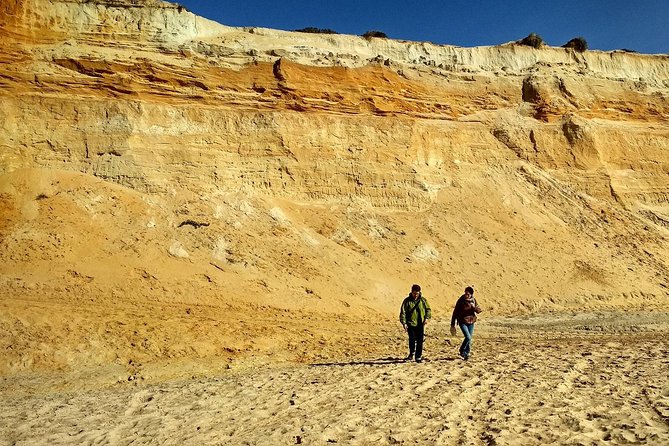
- Matalascañas and the Atlantic coast: Doñana’s changing dunes meet a broad beach.
- Afternoon 4×4 ride: A chance to spot deer, wild horses, boar, birds, and, with great luck, the Iberian lynx.
Why Doñana makes a strong day trip from Seville
Seville gives you grand buildings, tiled courtyards, and tapas bars. Doñana gives you open space, marsh water, pine woodland, sand, and silence broken by birds. The contrast is the point.
Doñana is one of Europe’s key wetland areas. Its habitats change quickly across the day, from rice fields and seasonal marshes to forests and coastal dunes. Around 300 bird species have been recorded in the area, and the rice fields near the Guadalquivir River provide water during parts of the year when other areas are dry.
That variety gives the excursion a useful rhythm. You are not spending ten hours parked in one reserve hoping something moves. You switch between short walks, village sightseeing, marsh viewing, a lunch stop, the beach, and vehicle-based exploration.
I would not book this simply because you want to tick off a famous national park. Book it because you enjoy natural settings and are happy to let the day unfold according to conditions. The best sightings cannot be promised, even by a good guide.
A few more Seville ideas to compare
- Seville: Royal Alcázar Entry Ticket
★ 4.6 · 28,378 reviews - Seville: Cathedral and La Giralda Entry Ticket
★ 4.5 · 24,592 reviews - Seville: Live Flamenco Dancing Show Ticket at the Theater
★ 4.7 · 16,396 reviews
Getting started from Seville
The advertised price is about $107.68 per person, including shared transport, a professional driver-guide, and 4×4 travel. For a ten-hour outing, that is reasonable if you value not having to rent a car, navigate rural roads, or arrange separate visits to El Rocío and the coast.
The departure details need care. Pickup is offered at the closest meeting point to many downtown hotels, but the listed starting point is C. Rastro, 12a. Other pickup points include Calle Trajano near Naturanda’s information office and Hotel Don Paco in Plaza Padre Jerónimo de Córdoba. The practical experience may therefore be a nearby meeting point rather than a door-to-door hotel pickup.
I would confirm your exact pickup location before the morning of departure. One booking may involve a short walk, and an early start means you do not want to begin the day hunting for an unfamiliar address. The tour ends back at the meeting point, although hotel drop-off is also described for many central accommodations.
Puebla del Río and the rice fields
The first proper stop is around Puebla del Río, roughly 40 minutes of the day. This is a useful introduction to Doñana because the rice fields create dependable wet areas for birds.
Rice grows in the warmer months, and the fields can shelter large numbers of white storks. You might also see other wetland birds, depending on the date and water levels. A guide who knows the area can help you understand why a working agricultural zone matters to wildlife. Doñana is not a sealed-off wilderness with no human use. Farms, villages, roads, and wetlands meet here.
This is one section where language matters. The guide may be explaining several species at once, and some departures include both Spanish and English speakers. If the guide spends much longer in Spanish, English-speaking members of the group can miss details. Ask politely for the English explanation to be repeated if needed, especially when the group reaches a good viewing point.
Dehesa de Abajo and the stork colony
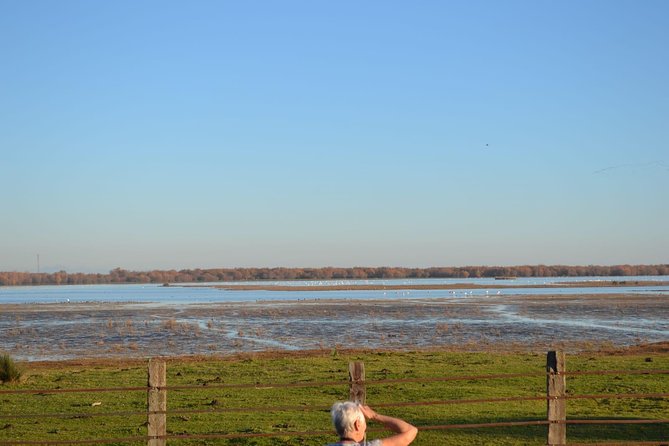
At Dehesa de Abajo, you visit an area of old olive trees and oaks with views toward bird-rich wetlands. The stop lasts about an hour and is one of the strongest parts of the morning for anyone carrying binoculars or a long camera lens.
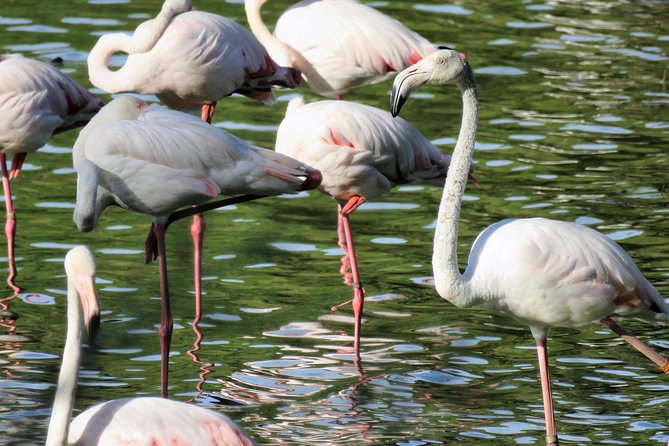
White storks are the headline sight. The colony is described as Europe’s largest, and the nesting activity can be impressive. Depending on conditions, you might also see flamingos, spoonbills, grebes, geese, ducks, larks, swallows, stonechats, and other marsh birds.
This is not close-range wildlife photography. Bring patience. Birds may sit across the water or high in trees, and the quality of your experience depends on water levels, light, and your guide’s ability to find activity. José is praised for spotting birds and explaining plants, mammals, reptiles, and insects. Luismi is also noted for his bird expertise. With the right guide, a quiet marsh stop becomes far more interesting than a quick photo break.
Same base, a different kind of afternoon:
- Seville: Casa de la Memoria Flamenco Show
★ 4.8 · 12,964 reviews - Seville: 1-Hour Guadalquivir River Sightseeing Eco Cruise
★ 4.2 · 10,281 reviews - Seville: Cathedral, Giralda, and Royal Alcázar Guided Tour
★ 4.7 · 9,165 reviews - Seville: Setas de Sevilla Entry Ticket
★ 4.6 · 8,901 reviews
El Rocío, where sand replaces pavement
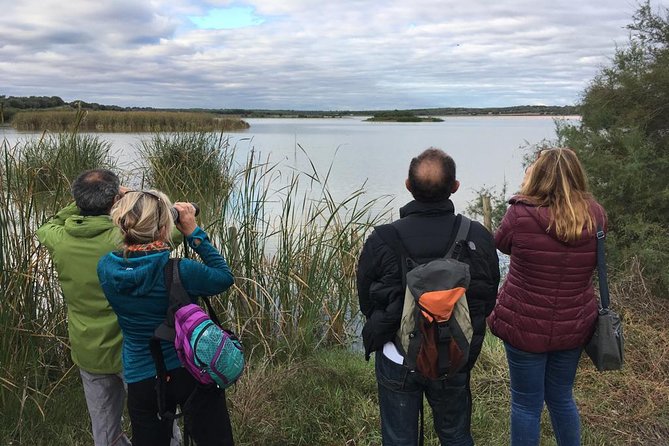
El Rocío feels unlike almost anywhere else in southern Spain. Its streets are sandy, horses pass through town, and the village has a strong connection to the annual pilgrimage to the chapel of the Virgin of El Rocío.
The visit lasts around an hour. You will see the hermitage and have time to absorb the unusual setting. The village can feel theatrical, but it is not a theme park. The sandy roads, horses, religious traditions, and rural buildings create a place with a very particular identity.
I like this stop because it gives the day some human texture. Doñana is not only about birds and mammals. El Rocío shows how local culture developed beside the wetlands and how the region still functions beyond the protected park.
The tradeoff is time. If your main goal is wildlife, you may wish this stop were shorter. If you enjoy places with strong local character, El Rocío may be the most memorable part of the tour.
Palacio del Acebrón and the La Rocina walk
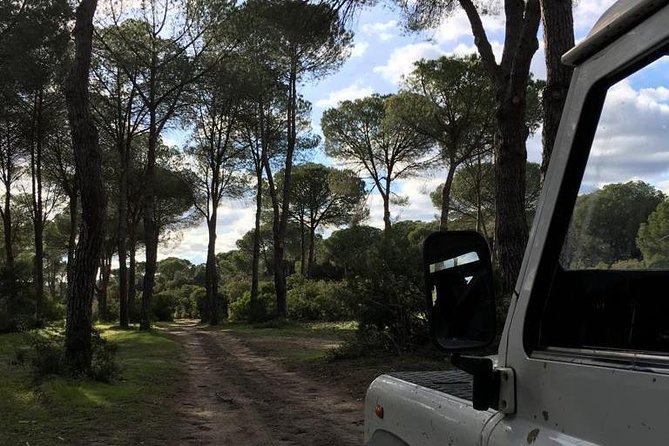
The next section takes you toward Palacio del Acebrón and the Arroyo de la Rocina. The palace adds an architectural pause, while the nearby trails give you a chance to leave the vehicle and walk.
The circular route focuses on reading animal tracks and learning about native plant species. This is where the tour becomes less about spotting a headline animal and more about noticing how the park works. Look down as well as across the marsh. Tracks, plants, insects, and bird calls can tell you plenty even when larger animals stay hidden.
The walk is listed at about an hour. That is enough to stretch your legs, but it is not a long hiking day. I would describe it as an interpretive nature walk rather than a serious trek. Wear shoes that can handle sandy or uneven paths, and bring water.
Lunch and the limits of a shared tour
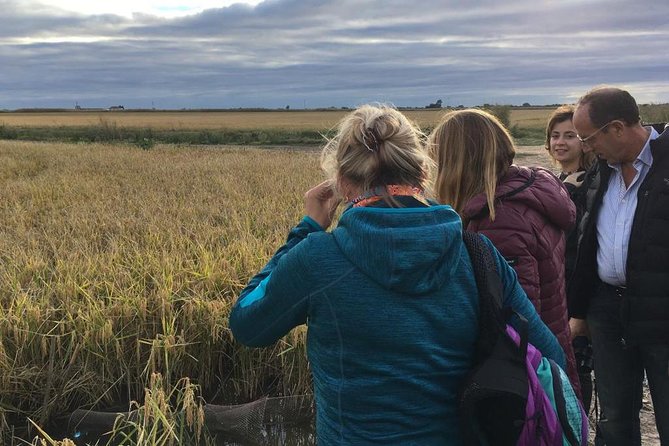
Lunch is not included, so budget separately. The group stops for typical food from the area, and the meal can be a convenient chance to rest and talk with the other people in the vehicle.
Food quality has not been consistent. Some guides choose a welcoming restaurant and help the group have a good break, while Casa Matías has received specific criticism for food and service. Vegetarian choices may also be limited. If you have dietary needs, raise them early rather than waiting until everyone is seated.
The lunch stop is not just about eating. On a ten-hour outing, a proper pause keeps the afternoon from becoming a blur of vehicle rides. Still, if you want every available minute inside the park, this is one part that may feel too long.
Matalascañas, dunes, and the Atlantic
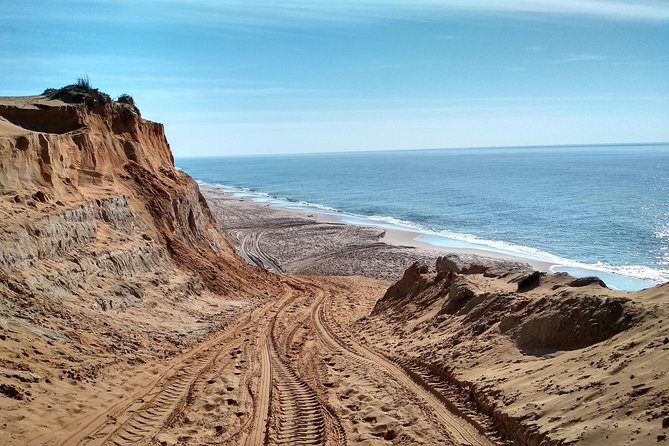
After lunch, the route reaches Playa de Matalascañas, where Doñana meets the Atlantic. The stop lasts around an hour and introduces the coast’s large moving dunes.
This is a different kind of nature experience. The marshes are flat and watery; the coast is open, sandy, and shaped by wind. The dunes shift over time, gradually changing the boundary between forest and beach. You may have time for a short walk and, in warm weather, a swim, so pack accordingly.
Several people have found the beach a welcome change of pace. Others would prefer to spend that hour farther inside the national park. I see the value in both views. If you have already seen many Spanish beaches, the dunes are the more interesting reason to come here. If wildlife is your only priority, the coastal stop may feel like a detour.
The 4×4 return and the Iberian lynx question
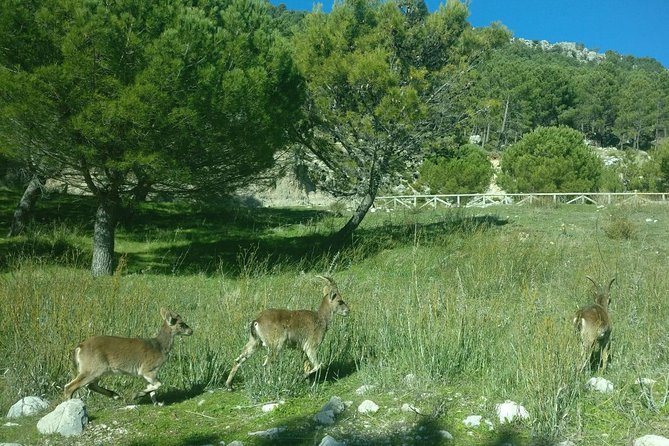
The final major section is a drive through the forested area of Doñana in a 4×4. It can last up to two hours and is intended for mammal spotting. Possible sightings include deer, wild horses, wild boar, rabbits, and signs of less visible animals.
The Iberian lynx is the dream sighting. It has been seen on some departures, including a young cub, but no honest guide can promise one. Treat a lynx sighting as a remarkable bonus, not the product you are buying.
Weather affects this section heavily. Rain can make the ride exciting, with muddy tracks and puddles, but poor conditions can also close routes for safety. On at least one occasion, restricted access meant that the advertised forest crossing could not take place. If roads or park areas are closed, the replacement route may use peripheral public roads, which gives you less wildlife and a less adventurous ride.
That is an important point to understand before paying. The 4×4 is not automatically permission to roam every part of Doñana. Access depends on park rules, weather, road conditions, and the specific vehicle route used that day.
Vehicles, seating, and comfort
The tour is described as 4×4 transport, but the vehicle may be a Toyota 4×4, minivan, or another shared vehicle rather than an open safari jeep. The difference matters.
Rear seats can have tiny, dirty, or non-opening windows. The middle rear seat may be hard and uncomfortable, and getting in and out of the far back can be awkward. The views are also worse, which matters when you are trying to photograph birds or deer.
If the group has six people plus a driver, I would ask the guide to rotate the front passenger seat. Without a plan, the same person may get the best view all day. A small group helps, but it does not erase the limits of a compact vehicle.
The maximum group size is 15, though some outings are much smaller. A departure with four or five people can feel personal and flexible. A full vehicle will feel more cramped, especially on a long day with repeated stops.
The guide can make or break the day
The strongest part of this experience is often the guide. José has received praise for patience, animal knowledge, and an ability to find birds and mammals. Ramón is described as friendly and well informed. Sergio is praised for his biology background, care with safety, and skill at making the most of poor weather. Patricia and Luismi have also made strong impressions.
That said, guide quality and language balance are not guaranteed. Some guides give detailed explanations in English. Others move between Spanish and English unevenly, especially when Spanish-speaking members ask questions. One English-speaking visitor found that almost all of the discussion and even a lynx-related visit were conducted in Spanish.
I would ask direct questions at the start: how much time will be given to English, and can the guide repeat key explanations? If you need a fully English-led day, this mixed-language format carries some risk. A private tour would offer more control, but it would cost more.
Timing, seasons, and what you might see
The tour lasts about ten hours, with an early morning departure and a return after sunset. That is a long day, but it allows the route to cover marshes, forest, village, beach, and dunes.
Spring is often considered a strong period because water can make the marshes greener and more active. Autumn can still be enjoyable, but animal sightings may be fewer. Summer may offer a beach stop and swimming opportunity, while heat can change animal behavior.
Your sightings might include:
- White storks and nesting chicks
- Flamingos and spoonbills
- Grebes, geese, ducks, larks, and swallows
- Deer and wild horses
- Wild boar and rabbits
- Animal tracks, insects, and native plants
- The Iberian lynx, only with exceptional luck
Bring binoculars, sun protection, water, a camera with a useful zoom, and layers for an early start and late return. Comfortable walking shoes are more important than stylish ones.
Is the $107.68 price fair?
I think the price is fair for the right person. You receive round-trip shared transport from Seville, a professional guide, a small-group setting, several nature stops, El Rocío, the beach, and a full day in a difficult area to visit without a car.
The value drops if you expect a guaranteed lynx, a roomy safari vehicle, or uninterrupted English commentary. It also drops when weather closures replace the forest route with ordinary roads. Lunch costs extra, and food may not be the strongest part of the day.
I would compare the price with the effort of arranging your own transport. Driving yourself gives you more freedom, but it does not automatically give you a better understanding of the birds, plants, and protected areas. A good guide is the reason to choose this excursion.
Who should book this excursion?
I recommend it to you if you:
- Want a broad introduction to Doñana in one day
- Enjoy birds, plants, and open-air scenery
- Like combining nature with an unusual village and beach
- Prefer a guide and shared transport to driving
- Accept that wildlife sightings are uncertain
- Are comfortable with a long day and some time in a compact vehicle
I would hesitate if you need guaranteed English interpretation, dislike long drives, want a serious hiking itinerary, or mainly care about seeing the Iberian lynx. For dedicated birdwatchers, the outing can be rewarding, especially with José, Ramón, Sergio, or Luismi. For casual visitors, El Rocío and the dunes may be just as important as the animals.
Final call: book it for variety, not guarantees
I would book this Doñana and El Rocío day trip if I wanted to see several sides of southwestern Spain without organizing a complicated rural route myself. The marshes, stork colonies, sandy village, pine woods, shifting dunes, and Atlantic coast give you a satisfying range of experiences.
Go with realistic expectations. Wildlife may be abundant, or you may see only a few deer and birds. The vehicle may be less comfortable than the phrase 4×4 suggests. Confirm the meeting point, request a fair seat rotation, and speak up if English explanations are being skipped.
Free cancellation is available up to 24 hours before departure. Poor weather or an insufficient number of bookings can also lead to a rescheduled tour or full refund. For nature lovers who value expert guiding and variety, this is a good use of a Seville day. For a guaranteed safari-style animal encounter, it is the wrong promise to make to yourself.
FAQ
How long does the Doñana and El Rocío tour last?
The experience lasts approximately 10 hours, including the early morning departure from Seville and the return after sunset.
What is included in the price?
The price includes a professional driver-guide, shared round-trip transport, 4×4 transportation, pickup and drop-off service in most downtown Seville hotels, and a small-group guided day trip.
Is lunch included?
No. Food and drinks are not included, so you should budget separately for lunch.
Where does the tour start?
The listed starting point is C. Rastro, 12a, 41004 Sevilla, Spain. Other pickup points include Calle Trajano near the Naturanda information office, Hotel Don Paco, and Plaza Padre Jerónimo de Córdoba. Confirm the exact location assigned to your booking.
Is the tour conducted in English?
The experience is offered in English, but some departures include Spanish-speaking participants. English explanations may be shorter than Spanish explanations, so ask the guide to repeat important information in English if needed.
Can I see the Iberian lynx?
You might see one, but sightings are not guaranteed. The tour also looks for deer, wild horses, wild boar, rabbits, birds, and animal tracks.
Can I cancel for a full refund?
Yes. You can cancel at least 24 hours before the local start time for a full refund. Cancellations or changes made less than 24 hours in advance are not accepted for a refund.
Recently listed in Seville
- White Villages and Ronda: Day trip from Seville.★ 4.7 · 171 reviews
- Private Guided Day Trip to the White Villages and Ronda from Seville★ 5.0 · 158 reviews
- Private personalized Seville street tour of 2.5 hours★ 5.0 · 116 reviews
- White Villages and Ronda Day Trip from Seville★ 5.0 · 295 reviews
- White Villages and Ronda Day Trip from Seville★ 4.0 · 142 reviews
- Cathedral of Seville English Guided Tour with Skip the Line & Access to Giralda★ 4.5 · 139 reviews
- Alcazar of Seville with Cathedral & Giralda English Tour★ 4.5 · 661 reviews
- Tourist bus tour of Seville★ 4.5 · 529 reviews
National Parks, compared.

Teide National Park Sunset & Stargazing with Dinner (Star Safari)
Read our review →
Arrecife/Playa Blanca: Timanfaya National Park Area Day Tour
Read our review →
Jávea: Cala Tango and San Antonio Nature Reserve Kayak Tour
Read our review →
Browse the lists this tour appears in