
Reviewed · FOOD & DRINK
Granada: Walking Food Tour
Granada tastes better one stop at a time. This 3.5-hour walk brings you into family-run food shops, tapas bars, and restaurants, with plenty of local ham, wine, olive oil, and traditional dishes along the way. I like the strong mix of food and history, especially the way the tour explains Sephardic, Berber, Nasrid, and Roman influences without turning dinner into a lecture.
I also like the small-group limit of 10 people. Guides such as Katia, Laura, Bruce, Marcel, and Molly have been praised for their food knowledge, local connections, humor, and practical restaurant advice. The main consideration is that the tour is not suitable for wheelchair users, and the exact food stops or dishes may vary. Saturday evening also does not include the Iberian ham tasting.
In This Review
- Key points about Granada’s food walk
- Why Granada makes a good food city
- Starting near Puerta Real
- Ham, mountain air, and Andalusian curing
- Wines, Tinto de Verano, and vermouth
- The old tavern and Granada’s everyday food culture
- Tapas and regional dishes at several stops
- Chikito and Granada’s cultural side
- What the guide adds to the experience
- Is $82 a fair price?
- Who should book this Granada food tour?
- Should you book it?
- FAQ
- How long is the Granada Walking Food Tour?
- What is included in the price?
- Where does the tour meet?
- Is Iberian ham included on every departure?
- How many people can join the tour?
- Can I request food for a dietary requirement?
Key points about Granada’s food walk
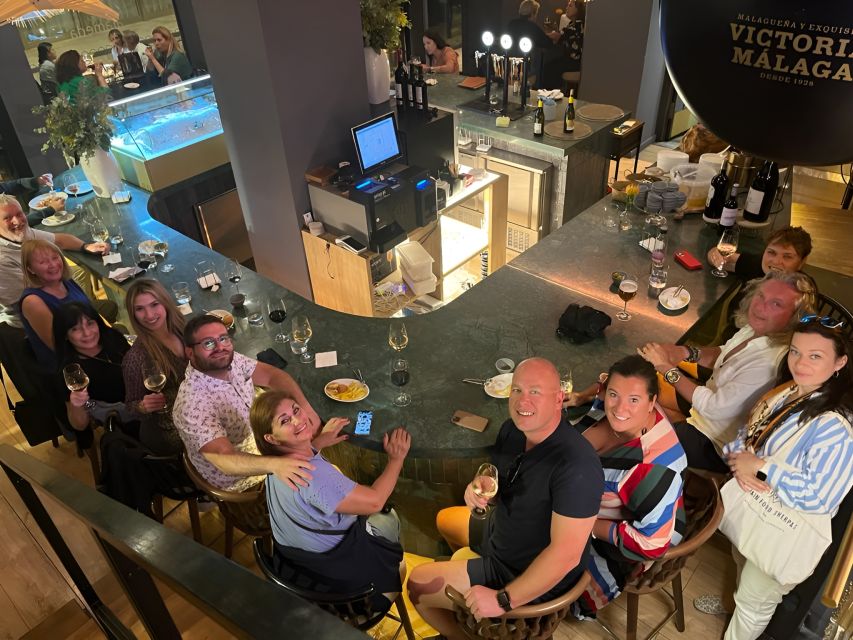
- Local ham takes center stage: Compare Serrano ham from Granada with prestigious Iberian ham from Andalusia, and learn how mountain air helps cure it in the Alpujarras.
- Three and a half hours can replace dinner: The included food and drinks are intended to cover a full lunch or evening meal.
- Chikito adds literary history: This historic restaurant once drew local artists, writers, and poets in the early 1900s.
- The group stays small: A maximum of 10 participants makes it easier to ask questions and keep up with the guide.
- Food goes beyond standard tapas: Expect regional recipes, olive oil, wines, vermouth, sweets, spices, and dishes such as oxtail croquettes or Iberian pork, depending on the route.
- Book early in your stay if possible: The guides provide restaurant tips and help you understand what to order later in Granada.
Why Granada makes a good food city
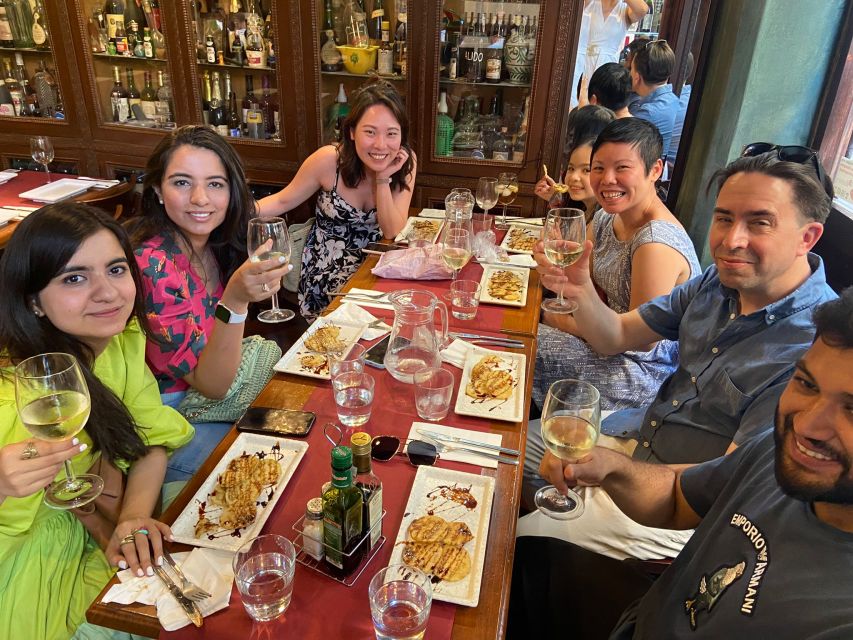
Granada is often treated as a two-stop city: the Alhambra by day and flamenco at night. Food gives you another way in. The city’s cooking reflects centuries of contact between Roman, Jewish, Berber, and Nasrid cultures, and those influences still appear in ingredients, methods, and flavor combinations.
This tour does not simply hand you a plate and name the dish. It explains where food comes from and why it matters. You hear about ham cured in villages of the Alpujarra mountains, where cool air from the Sierra Nevada helps dry the meat. You learn about regional wines and the role of olive oil in Andalusian cooking.
That context is useful because Spanish menus can be short on explanation. Once you understand the difference between Serrano and Iberian ham, or how olive oils vary, you can order with more confidence. You will also have a better sense of why Granada’s food is not just a collection of familiar Spanish snacks.
The setting helps. You move through central Granada between stops, seeing the city through taverns, shops, restaurants, and old streets rather than from a coach window. It is a practical way to get your bearings, especially if you schedule it near the beginning of your visit.
More Walking Tours in Granada
- Granada: Albaicín and Sacromonte Guided Sunset Walking Tour
★ 4.9 · 2,962 reviews - Guided Walking Tour of the Alhambra in Granada
★ 4.0 · 863 reviews - Granada: Albaicín and Sacromonte 2.5-Hour Walking Tour
★ 4.7 · 777 reviews
Starting near Puerta Real
The meeting point is the kiosk beside Teatro Isabel La Catholica, on the Casino sidewalk near Puerta Real. Arrive five minutes early. The operator allows only a 15-minute waiting window, so this is not the time to rely on a leisurely Spanish start.
Puerta Real is a useful central meeting place, but you should check the route from your hotel before leaving. The tour includes walking between food stops, and Granada’s central streets can be confusing if you are unfamiliar with the city.
Once the group gathers, the guide sets the tone. The strongest part of this experience is the person leading it. Guides named in the feedback include Katia, Laura, Bruce, Marcel, Molly, Emma, Kate, and others, so your guide will depend on the date. Their backgrounds vary, but the praise is consistent: clear explanations, easy conversation, humor, and a firm grasp of local food.
Katia is especially well suited to guests who want serious food and wine information. She has worked in Granada’s restaurant trade and has explained food, wine, olive oil production, and local dining customs in detail. Laura has been praised for her local knowledge and friendly style, while Bruce is often noted for clear speaking, historical background, and practical advice. Marcel brings a bigger personality and broad discussion of Spanish food and society.
That variety matters. A food walk depends less on a grand monument than on the guide’s ability to read the group. The best guides slow down for questions, explain unfamiliar foods in plain English, and keep the evening relaxed.
Ham, mountain air, and Andalusian curing
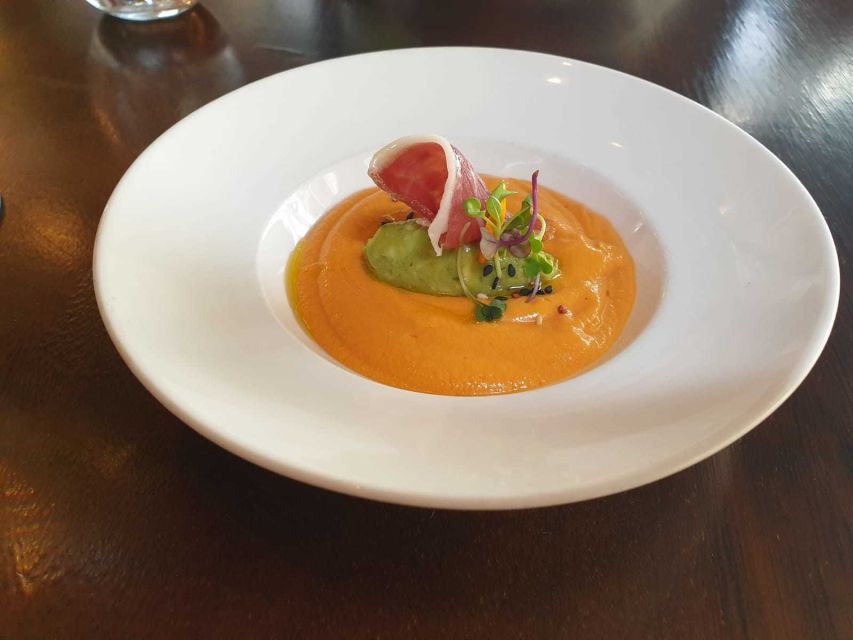
The ham tasting is one of the tour’s clearest themes. You learn about Serrano ham made in Granada and compare it with Iberian ham from Andalusia. These are not identical products, and understanding the difference adds real value to the tasting.
The guide explains how ham is cured in the Alpujarra mountain villages. Fresh Sierra Nevada air helps with the drying process, linking the food directly to the geography around Granada. You are not simply sampling an expensive item. You are learning how climate, place, time, and production shape what is on your plate.
The distinction between Serrano and Iberian ham can be confusing when you first see Spanish menus. A guided tasting lets you compare texture and flavor rather than trying to understand everything from a shop label. The lesson is particularly helpful if you plan to buy ham as a gift or order it later from a tapas counter.
The tour does have one clear limitation here. The Iberian ham tasting is not included on Saturday evenings. If that particular tasting is important to you, check the available schedule before booking. The tour still includes other food and drink, but you should not assume every departure offers the same ham selection.
Wines, Tinto de Verano, and vermouth
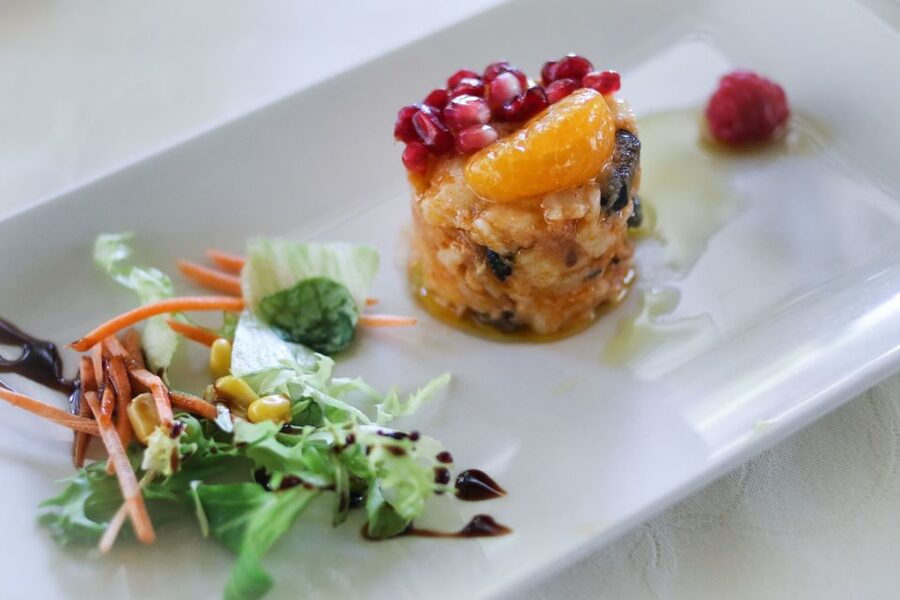
Drinks are part of the meal, not an afterthought. You may taste wines produced in the Granada region, along with Tinto de Verano, a simple red wine drink associated with warm Spanish afternoons. Some routes also include vermouth as an aperitif.
The wine explanations are a strong point for anyone who normally feels lost when choosing Spanish wine. The guides connect the drinks to the food and explain what you are tasting in a way that does not require specialist knowledge.
I would not book this as a formal wine seminar. The focus is regional eating, and wine supports the dishes rather than taking over the entire experience. Still, the amount of food and drink has been generous enough for many participants to treat the tour as dinner.
If you do not drink wine, the tour can still work. Olive oil, ham, tapas, regional recipes, and local history are important parts of the route. One family with children who did not drink wine particularly enjoyed learning about olive oil and later returned to the shop to buy bottles.
Additional drinks are not included. The listed food and drinks are sufficient for a full lunch or dinner, but anything beyond that is at your own expense. Pace yourself. Spanish tasting portions can add up quickly across three and a half hours.
Same base, a different kind of afternoon:
- Granada: Alhambra & Nasrid Palaces Tour with Tickets
★ 4.7 · 19,801 reviews - Granada: Alhambra and Nasrid Palaces Entry Ticket
★ 4.6 · 15,130 reviews - Granada: Alhambra & Generalife Fast-Track Guided Tour
★ 4.7 · 8,313 reviews - Granada: Alhambra & Gardens Tour w/Nasrid Palaces Option
★ 4.5 · 6,437 reviews
The old tavern and Granada’s everyday food culture
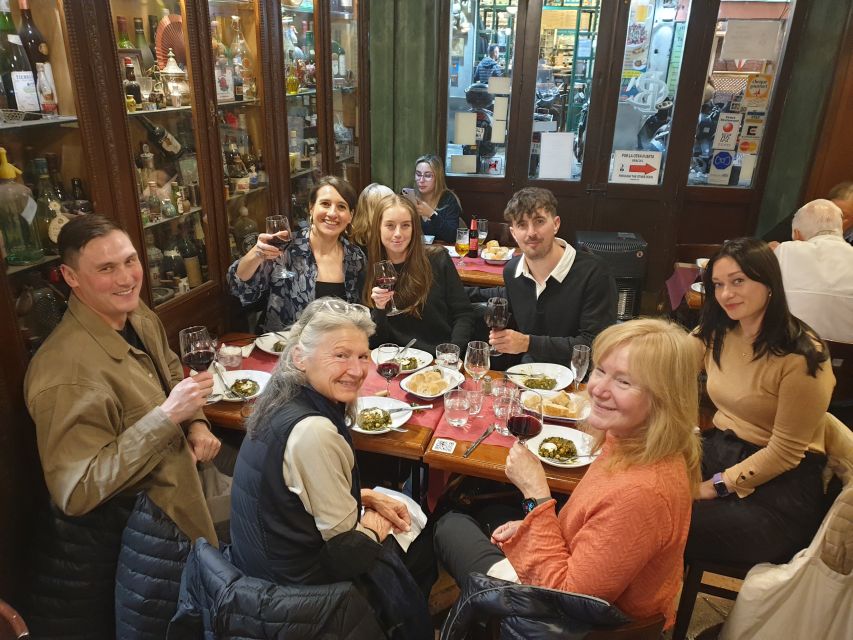
One stop takes you to one of Granada’s oldest taverns. The value here is atmosphere. A tavern gives you a feel for how people have eaten and socialized in the city over time, and it provides a change from polished restaurant dining.
The route also includes food shops and small specialty businesses. Depending on the departure, you might visit places selling herbs, spices, sweets, turrón, or olive oil. These stops are useful because they show the ingredients behind the restaurant dishes.
The spice and sweet-shop visits have been a pleasant surprise for many people on the tour. They add variety and give you something practical to take home. The souk area is another point of interest, connecting modern food shopping with Granada’s long links to North African and Arabic culture.
Do not expect a market tour with hours spent browsing stalls. The food walk moves between several types of businesses, and the main aim is to eat and learn. If shopping is your priority, you may want to return to the specialty stores afterward at your own pace.
Tapas and regional dishes at several stops
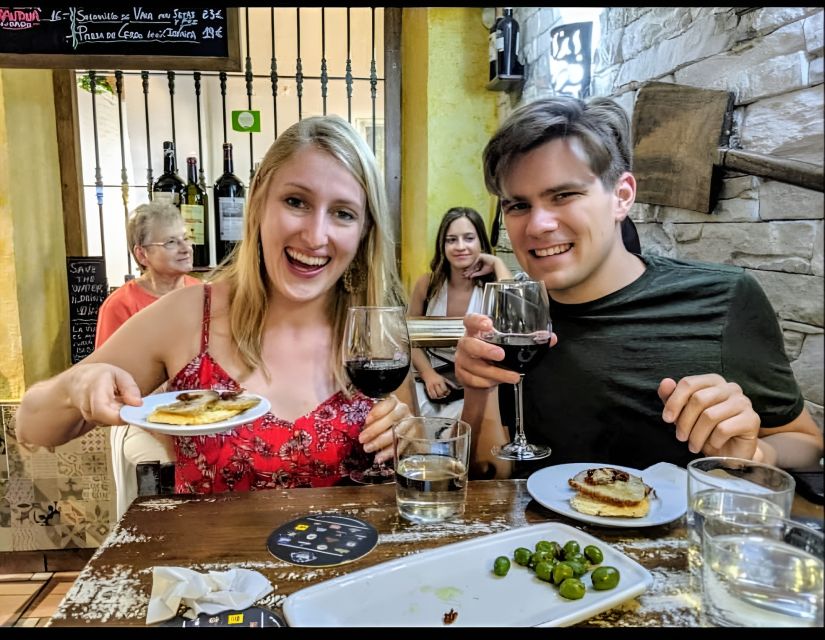
Food is served at several bars and restaurants, with many departures visiting three main restaurant stops. The exact selection can change, but the overall pattern is clear: you receive a spread of local dishes rather than one large meal in a single dining room.
Past menus and tastings have included local cheeses, ham, olive oil, tapas, vermouth, regional wine, oxtail croquettes, Iberian pork, and pork with saffron. One frequently praised dish is the oxtail croquette, while Iberian pork at Chikito has also made a strong impression.
This is where the tour feels more useful than a standard list of tapas recommendations. You are shown dishes you might not think to order on your own. The guides explain the ingredients, preparation, and regional background, then give you enough time to enjoy the food.
Portions have generally been described as generous. Several people noted that they did not need another meal after the tour. That makes the $82 price easier to justify, especially when you consider that the fee covers food and drinks for a full lunch or dinner, not just a few samples.
Still, appetite and expectations matter. You should not expect a luxury tasting menu or a fixed restaurant itinerary. This is a walking food tour with several stops, and the experience depends on the day’s route, the group, and the guide. The appeal is variety and local context, not formal dining service.
Chikito and Granada’s cultural side
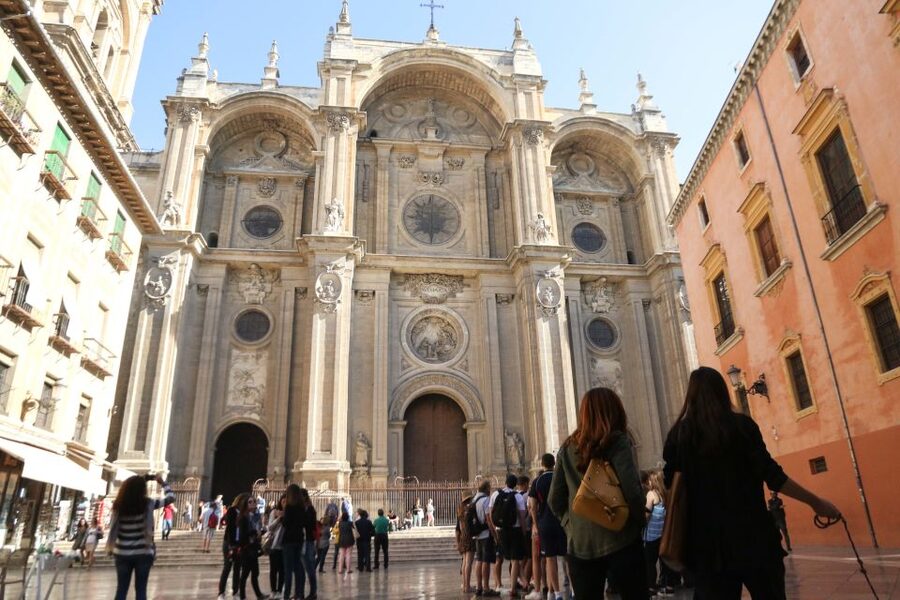
Chikito is the most historically distinctive restaurant on the route. Local artists, writers, and poets met there in the early 1900s, giving the stop a cultural connection beyond its menu.
The restaurant helps explain why food and city history work well together in Granada. You can discuss local recipes while sitting in a place linked to the city’s creative life. That combination gives the meal a sense of place that a generic tapas bar cannot offer.
Dishes at Chikito can include regional preparations such as Iberian pork. The food is presented as part of Granada’s traditional cuisine, but the tour also makes room for creative interpretations. This balance is useful if you want more than a simple introduction to patatas bravas and tortilla.
The restaurant stop may also provide more comfortable seating than a quick bar visit. Several people appreciated that the restaurants offered comfortable, air-conditioned rooms, especially during warm months. Since the tour lasts three and a half hours, a chance to sit and eat properly is welcome.
What the guide adds to the experience
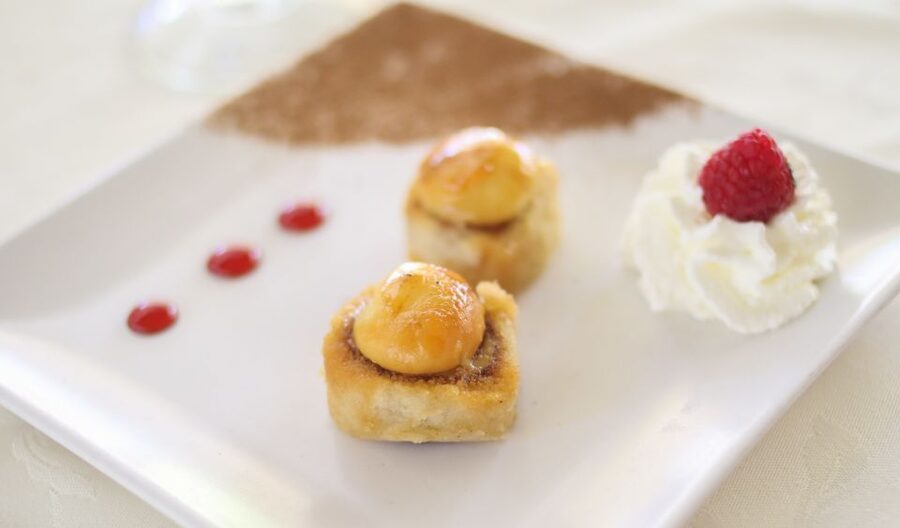
The tour’s strongest feature is not a single dish. It is the explanation around the dishes. Guides have discussed food manufacturing in Spain, production standards, wine, olive oil, local history, and the way Spanish food developed over time.
That broad approach suits curious eaters. You can ask why a dish uses a certain spice, how ham is made, or where Granada’s olive oil comes from. The guides also answer questions about restaurants and bars to visit after the tour.
The historical material is another plus. One guide connected food with Spain’s political and social development, while others focused more closely on Granada’s past. You are not receiving a full city history lesson, but the food gives the stories a clear anchor.
A good guide also makes the group feel comfortable. The maximum group size is 10, though one experience had 11 people. Small numbers make it easier to hear, ask questions, and share food without losing half the meal to logistics. On a departure with only two participants, the conversation can feel almost private.
The tradeoff is that guides have different personalities. Some are theatrical and funny. Others are calmer and more focused on food details. You cannot choose a specific guide from the information provided, so book for the structure and subject rather than expecting one particular person.
Is $82 a fair price?
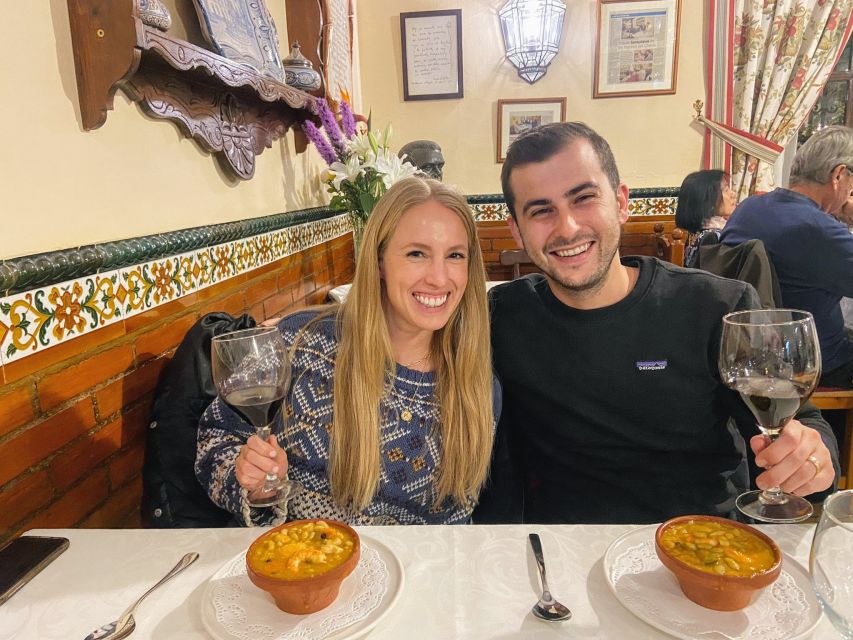
At $82 per person, this is not the cheapest way to eat tapas in Granada. You can find inexpensive drinks and small plates on your own. The question is what you are paying for beyond the food.
You are paying for a three-and-a-half-hour route, an English-speaking food guide, several stops, enough food and drink for a full meal, and explanations that help you order better for the rest of your trip. You are also paying to avoid guesswork. The guide chooses the places and dishes, handles the route, and provides local context.
The value is strongest if you:
- Want dinner and a cultural activity in one booking
- Enjoy trying foods you might not choose yourself
- Appreciate wine, ham, olive oil, and regional products
- Are visiting Granada for the first time
- Want restaurant suggestions for later in your stay
- Prefer a small group to a large bus tour
The value is weaker if you eat very little, do not drink, or mainly want a fast tapas crawl. The food is still the main reason to go, but the tour works best when you enjoy the explanations as much as the plates.
Free cancellation up to 24 hours before the start and the option to reserve without paying immediately make the booking less rigid. You still need to check the departure time and arrive promptly at the theater kiosk.
Who should book this Granada food tour?
I would recommend it to couples, solo visitors, small groups of friends, and families with older children who enjoy food and conversation. It is also a good choice for people who want a gentle introduction to Granada before tackling the city on their own.
The tour is particularly useful early in your stay. You can return to the shops, bars, and restaurants afterward, use the guide’s recommendations, and order with a better understanding of local dishes.
Wine enthusiasts will enjoy the regional tastings, but you do not need to be a wine expert. Food lovers will get the most from the ham, olive oil, and traditional recipes. History fans will appreciate the discussion of Sephardic, Berber, Nasrid, and Roman influences.
You should think twice if walking and standing for several hours is difficult. The experience is not suitable for wheelchair users, and no pickup or drop-off is provided. Specific dietary needs must be given when booking, so do not leave that information until the meeting point.
Should you book it?
Book this tour if you want Granada to make sense through its food, not just its monuments. The small group, full meal, regional drinks, historic Chikito stop, and strong guide-led explanations make the $82 price reasonable for many visitors.
Skip it if you want a cheap, independent tapas evening or a fixed menu with guaranteed dishes. For everyone else, schedule it near the start of your Granada visit, arrive early, mention dietary needs in advance, and keep the rest of the evening free. You will likely leave full, better oriented, and ready to order more wisely around the city.
FAQ
How long is the Granada Walking Food Tour?
The tour lasts 3.5 hours and includes walking between food shops, tapas bars, taverns, and restaurants.
What is included in the price?
Food and drinks sufficient for a full lunch or dinner are included, along with an English-speaking food guide.
Where does the tour meet?
The meeting point is the kiosk at Teatro Isabel La Catholica, on the Casino sidewalk near Puerta Real.
Is Iberian ham included on every departure?
No. The Iberian ham tasting is not included on Saturday evenings.
How many people can join the tour?
This is a small-group tour with a maximum of 10 participants.
Can I request food for a dietary requirement?
Yes. You should provide any specific dietary requirements when booking.
Recently listed in Granada
- Granada: Alhambra and Nasrid Palaces Private Tour★ 4.9 · 242 reviews
- Granada: Sacromonte Caves Flamenco Show with Dinner★ 4.4 · 156 reviews
- Sacromonte Caves Museum Admission Ticket★ 4.6 · 502 reviews
- From Granada: Alpujarra Villages Guided Day Tour★ 4.8 · 217 reviews
- From Granada: Alpujarra Mountain Villages Tour★ 4.7 · 298 reviews
- Granada: Historic Center and Lower Albaicin Walking Tour★ 4.7 · 136 reviews
- Granada: Fast-Track Alhambra & Nasrid Palaces Guided Tour★ 4.8 · 415 reviews
- Granada: Alhambra Palace Guided Tour★ 4.3 · 224 reviews
Food & Drink, compared.
Live Flamenco Show with Food and Drinks Options
Read our review →
Montserrat & Cogwheel Train, Gourmet Wine Tasting & Tapas/Lunch
Read our review →
Ibiza Beach Hopping Cruise with Paddleboards, Drinks and Food 6h
Read our review →
Tapas Walking Tour with Food, Wine, and History
Read our review →
Sevilla Food Tour: Tapas, Wine, History & Traditions
Read our review →
Toledo Tour & Vineyard Walk with Wine Tasting from Madrid
Read our review →
Barcelona Tapas Walking Tour: Food, Wine & History
Read our review →Browse the lists this tour appears in