
Reviewed · WALKING TOURS
Guided Walking Tour of Immortal Toledo
Toledo reveals its secrets after dark. This two-hour walk takes you beyond the headline monuments and into quiet convent streets, old squares, and shadowed corners tied to the Holy Inquisition, epidemics, executions, relics, and Romantic-era legends. I especially like the nighttime setting, which suits Toledo far better than a busy midday stroll, and the route’s focus on unusual stories rather than only famous buildings.
I also like the local guiding. Guides such as Alberto and Lara have earned praise for lively explanations, strong historical detail, and a warm style that keeps the walk from feeling like a lecture. The main consideration is that the tour is largely an outdoor experience, and several stops are viewed from the street, so anyone expecting interior visits should adjust those expectations.
In This Review
- Key things to know before booking
- Why Toledo works so well at night
- Starting at Plaza de Zocodover
- San Ildefonso and a stolen relic
- The high point near San Pedro Mártir
- El Greco’s first Spanish commission
- A small square where legend meets history
- Walls, gates, and the view at Mirador del Azor
- The guides and the tone of the walk
- Is $13.90 a fair price?
- Who will enjoy this Toledo night tour?
- Practical details that affect your evening
- Should you book Guided Walking Tour of Immortal Toledo?
- FAQ
- How long does the Guided Walking Tour of Immortal Toledo last?
- Where does the tour begin?
- Where does the tour finish?
- Are the sites visited from inside?
- What is the maximum group size?
- Can I cancel for a full refund?
Key things to know before booking
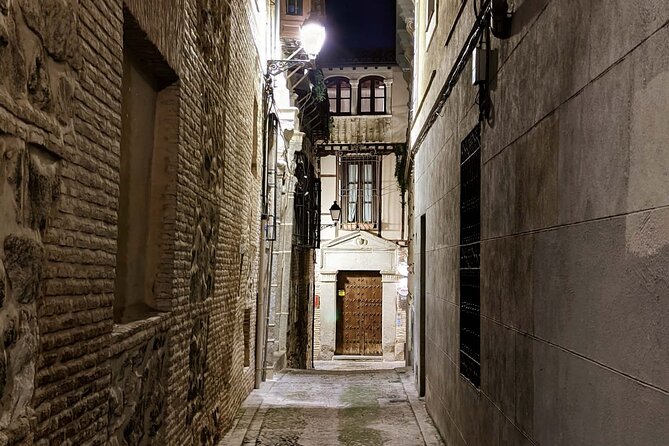
- Toledo after sunset: Quiet lanes and convent districts provide the setting for stories about Imperial Toledo, secret prisons, relics, and old institutions.
- A two-hour historical walk: The route covers six main areas and finishes at the Mirador del Azor, about five minutes from Plaza de Zocodover.
- A strong local guide matters: Alberto and Lara are singled out for clear, passionate explanations and an entertaining pace.
- Several exterior visits: You discuss churches, museums, and historic sites from outside rather than entering them.
- Small enough to stay personal: The maximum group size is 30 people, a useful limit in Toledo’s narrow streets.
- Low-cost evening activity: At $13.90 per person, the tour offers a focused way to learn about Toledo without paying for a major attraction admission.
Why Toledo works so well at night
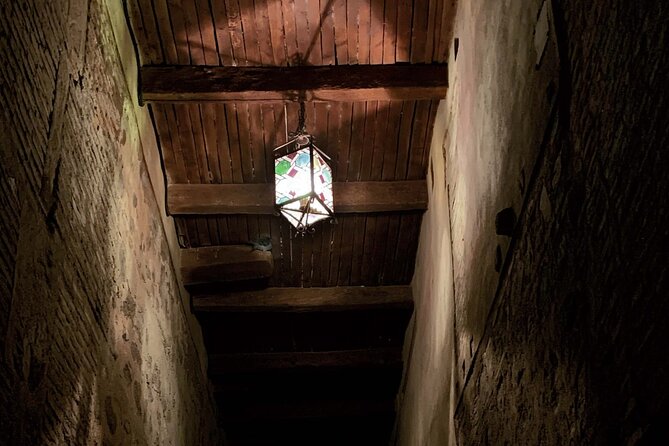
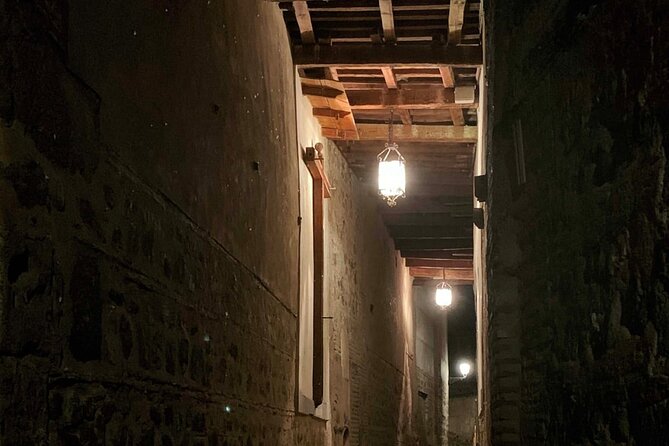
Toledo is already atmospheric by day, but its medieval streets take on a different character after the crowds thin out. The evening route is built around that change. Instead of moving from one grand interior to another, you follow a guide through quiet streets where the absence of noise becomes part of the experience.
The subject matter also suits the hour. This is not a cheerful sightseeing loop centered on royal triumphs. You hear about prisons, executions, disease, relics, religious institutions, and the Holy Inquisition. The darker stories may not suit every family, but they help explain how people lived and died in Toledo during the Renaissance and Baroque periods.
I like that the walk also reaches beyond official history. The guide brings in local legends and the way 19th-century Romantics viewed the city. That gives you two Toledos at once: the historical city shaped by institutions and belief, and the imagined city of mystery, moonlit walls, and old tales.
The tour lasts about two hours, long enough to create a clear sense of place without taking up the whole evening. It works well after a daytime visit to the cathedral, Alcázar, or other major sights. By night, you are not simply repeating what you saw earlier. You are looking at the city through a different lens.
More Walking Tours in Toledo:
- Toledo: Guided Monument Walking Tour with Wristband Pass
★ 4.5 · 487 reviews - Barcelona Tapas and Wine Experience Small-Group Walking Tour
★ 5.0 · 5,804 reviews - Barcelona: Tapas Walking Tour with Food, Wine, and History
★ 4.8 · 4,261 reviews
Starting at Plaza de Zocodover
The walk begins at Plaza de Zocodover, Toledo’s central meeting point. This makes the start easy to find and practical for anyone already exploring the old town. The plaza is also near public transportation, although the supplied details do not specify the exact transit lines or a precise meeting time.
From here, the route turns toward older religious and civic stories. The opening section concerns the Mozarabic community and the Cofradía de la Caridad, described as the oldest brotherhood in Spain. You discuss these subjects from outside, so the value comes from the guide’s explanation and the setting rather than from an interior monument.
The Mozarabs are especially important for understanding Toledo’s mixed religious past. The name points to Christians who lived under Muslim rule and preserved their own traditions. In a city shaped by Christian, Muslim, and Jewish communities, this is a useful opening subject. It reminds you that Toledo’s identity was never simple.
The Cofradía de la Caridad adds another layer. Brotherhoods and charitable institutions were not abstract organizations in earlier centuries. They touched illness, poverty, death, and the care of vulnerable people. The guide’s discussion helps connect Toledo’s grand buildings with the ordinary needs of the people who lived around them.
San Ildefonso and a stolen relic
The next stop deals with Toledo’s patron, San Ildefonso. The story includes the theft of one of his relics in the 17th century, a detail that gives the route one of its more surprising turns.
You view the site from outside, so do not book this walk expecting to inspect a chapel or relic collection from within. Still, the setting provides a useful backdrop for understanding how saints’ remains shaped religious life. Relics were not merely museum objects. They could carry enormous spiritual, political, and economic importance, which helps explain why their theft could become a major event.
This part of the route should appeal to you if you enjoy the human side of religious history. A saint’s name can sound remote when presented as a date and a title. A stolen relic introduces conflict, motives, and consequences. It also shows how faith and public identity were closely linked in Toledo.
The guide’s delivery makes a difference here. Lara, in particular, received praise for explaining stories with passion while keeping the walk light enough to remain enjoyable. That balance matters on an evening tour. The subjects can be grim or solemn, but the experience should not feel heavy from start to finish.
The high point near San Pedro Mártir
The route reaches one of Toledo’s higher points, where you can see the front of the Church of the Convent of San Pedro Mártir, Casa de Mesa, and the former Church of San Román, now the Visigoth Councils Museum.
This section packs several layers of Toledo into one stop. You have convent life, historic residences, and the Visigoth period represented close together. Even without entering, the facades and street plan give the guide something concrete to point toward.
The elevated position also changes the pace. After walking through darker, enclosed streets, a higher point offers a little breathing room and a chance to look across the old city. Toledo is a city of slopes and turns, so a high point helps you understand its physical shape as well as its past.
The drawback is simple: the stops are described as exterior visits. If the Visigoth Councils Museum is high on your list, you will need a separate daytime visit if it is open and available. This tour uses the building as part of a wider story instead of treating it as an attraction to enter.
A few more Toledo ideas to compare
- Toledo Private Tour with Licensed Local Guide
★ 5.0 · 884 reviews - Toledo: City Sightseeing Hop-On Hop-Off Bus Tour & Extras
★ 4.3 · 683 reviews - Madrid: Full-Day Guided Tour of Toledo with Cathedral Visit
★ 4.6 · 647 reviews - Toledo: Tourist Bracelet with Entry to 7 Attractions
★ 4.3 · 597 reviews
El Greco’s first Spanish commission
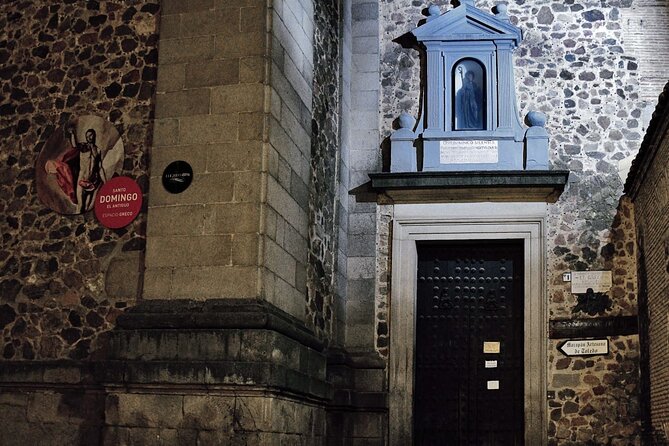
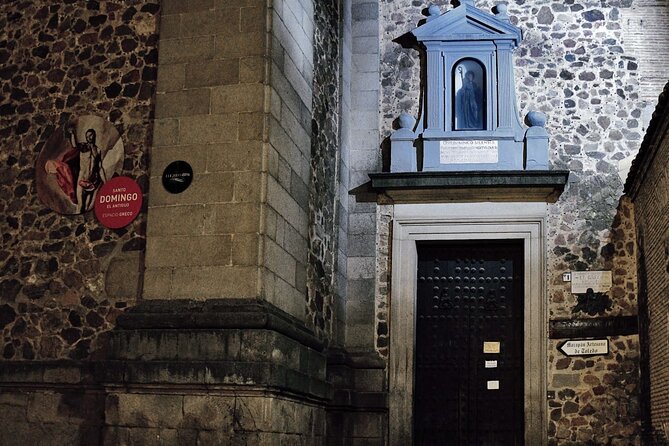
Another stop is tied to El Greco and the first place for which he painted in Spain. Two original works by the Cretan-born artist are still preserved there, though this part of the tour is also viewed from outside.
That detail gives the route an artistic thread. The walk is not only about punishments, disease, and religious power. It also shows how Toledo became linked with one of Spain’s most distinctive painters. El Greco’s connection to the city is one of the great cultural stories in Toledo, and this stop places that relationship in a specific setting.
Because the visit is external, the guide’s interpretation is central. You can expect to learn why the place matters and how it connects to El Greco’s early Spanish career, but you should not count on seeing the original paintings during the walk. The description confirms their presence, not that the tour enters to view them.
I see this as a good example of the tour’s overall approach. It uses places as prompts for stories. You move through the city and learn what happened there, rather than spending long periods inside a single monument. If you prefer a broad sense of Toledo, that is a strength. If you prefer detailed artwork viewing, it is a limitation.
A small square where legend meets history
The route includes the outside of a charming little square where history and legend come together. The exact name is not provided, so you should not book this section expecting a particular famous plaza by name.
That uncertainty does not make the stop unimportant. Small squares often provide a better setting for local stories than major landmarks do. They offer the kind of space where a guide can explain how an event, rumor, or legend became attached to a particular corner of the city.
This is also where the 19th-century Romantic view of Toledo fits naturally. Romantics were drawn to ruins, shadows, old religious buildings, and stories that blurred fact with imagination. The guide uses that outlook to show how Toledo became not only a historic city, but also a city of mood and mystery.
For you, the main benefit is atmosphere. The square itself may not take long to inspect, but the story can make it memorable. As with several other stops, the experience depends more on the guide’s storytelling than on a formal display or admission ticket.
Walls, gates, and the view at Mirador del Azor
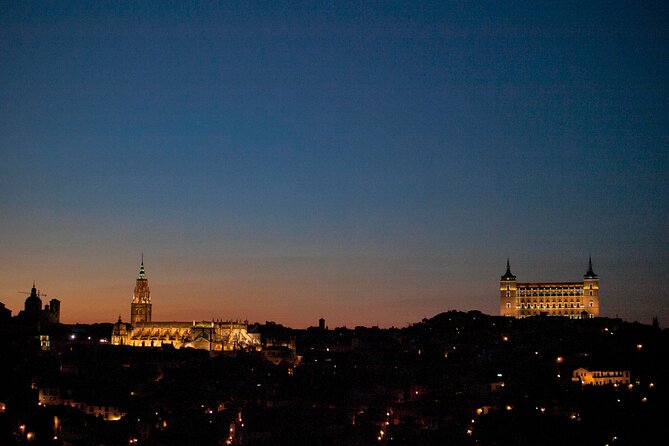
The final section offers a beautiful view across the Toledo district, along with some of the city’s gates and walls. The tour ends at Mirador del Azor on Callejón de San José, about five minutes from Plaza de Zocodover.
Ending at a viewpoint is a smart choice. It gives the walk a clear finish and lets you step back from the narrow lanes to see Toledo as a whole. After hearing about separate churches, institutions, squares, and legends, the view helps join those pieces together.
The walls and gates also make a fitting final subject. Much of the tour concerns what happened inside Toledo, while the fortifications explain how the city was protected and defined from outside. Seeing them at the end reinforces the idea of Toledo as a compact historic city shaped by its boundaries.
The endpoint is not the starting plaza, so plan for that small difference. The final viewpoint is only about five minutes from Plaza de Zocodover, but you should still know where you will be after the tour. The end point may be useful if you want to continue walking through the old town, but it is not the exact place where you began.
The guides and the tone of the walk
The strongest part of this experience is the guiding. Alberto is praised for maintaining a genuine conversation throughout the two hours, while Lara is praised for magnificent explanations and a passionate delivery. The repeated message is clear: the guide keeps the material moving and avoids making the walk feel tiring.
That matters because the subject can become a long list of dates and unpleasant events. A good guide needs to explain the Holy Inquisition, secret jails, epidemics, executions, and relics without turning the evening into a grim recital. The feedback suggests Alberto and Lara succeed by adding conversation, energy, and a sense of place.
You should still allow for variation. A walking tour is shaped by the person leading it, and the guide assigned to your date may be someone else. The provider is Rutas Guiadas Toledo A Pie, described as a group of official local guides. The overall focus is clearly local rather than generic.
The tour has a maximum of 30 people. That is not a tiny private group, but it is a reasonable cap for an affordable public walk. In Toledo’s narrow streets, a much larger group would be harder to keep together and less pleasant to hear. If your visit falls on a full departure, you may find the group less intimate than a private tour.
Is $13.90 a fair price?
At $13.90 per person, I consider this a strong value for a two-hour guided walk. You are paying for local interpretation, a planned route, and access to stories you might miss by wandering alone. There are no stated attraction admissions included, but most of the value comes from the guide rather than from entering paid sites.
The price is especially reasonable for a first evening in Toledo. You get an orientation to the old city, learn which areas deserve a closer look, and finish with a viewpoint. You can then decide which churches, museums, or monuments deserve a separate visit during daylight.
The value drops if you mainly want interiors. Several stops are explicitly external, including the San Ildefonso site and the place connected with El Greco. You should see this as a storytelling walk through the city, not a substitute for museum tickets or guided visits inside Toledo’s major monuments.
The fact that the experience is often booked 24 days ahead suggests you should not leave it until the last minute if the timing matters to you. That booking pattern does not guarantee every departure sells out, but it is a practical signal to reserve early, especially if you have only one night in Toledo.
Who will enjoy this Toledo night tour?
I would recommend it to first-time visitors who want more than a checklist of famous buildings. The route offers context about religious communities, charitable brotherhoods, relics, art, legends, walls, and the city’s darker institutions.
It also suits repeat visitors. If you have already seen Toledo’s main monuments, the nighttime route gives you another way to read the city. The focus on convent neighborhoods and lesser-known stories can add depth to a return visit.
History and folklore fans should get the most from it. The walk brings together real institutions and old legends, then adds the Romantic view of Toledo. That mix is more engaging than a strictly chronological history lesson.
Families may appreciate the short duration and outdoor format, though the subjects include executions, epidemics, prisons, and the Inquisition. Adults should decide if that tone is right for younger children. Most people can participate, and service animals are allowed, but the activity still requires a two-hour walk through an old city.
People who have limited mobility should consider the character of Toledo before booking. The supplied information says most participants can take part, but it does not provide detailed information about slopes, steps, or pavement. Ask the provider if you need specific route guidance.
Practical details that affect your evening
You receive confirmation when booking, and the ticket is mobile, so you do not need a printed voucher. The tour begins at Plaza de Zocodover and finishes at Mirador del Azor, with the endpoint roughly five minutes from the starting plaza.
The experience requires good weather. If poor weather cancels the tour, you are offered another date or a full refund. The tour also requires a minimum number of participants, so a cancellation for that reason comes with the option of another date or experience, or a full refund.
Free cancellation is available until 24 hours before the start time. Cancel at least 24 hours ahead for a full refund. Inside that window, the payment is not refunded and changes are not accepted, with cut-off times based on Toledo’s local time.
I would arrive at Plaza de Zocodover with enough time to find the meeting point and check your phone. Since the exact start time is not provided here, confirm it with your booking rather than assuming every departure begins at the same hour.
Should you book Guided Walking Tour of Immortal Toledo?
Book it if you want Toledo at its quietest and most atmospheric, and if stories about relics, prisons, religious institutions, art, and legends appeal to you. The low price, two-hour length, central start, and viewpoint finish make it easy to fit into an evening.
I would not choose it as your only Toledo tour if your priority is entering monuments or seeing original artworks up close. Several locations are exterior stops, and the experience depends heavily on the guide’s storytelling.
For most first visits, though, this is a smart addition to a daytime sightseeing plan. Guides such as Alberto and Lara have been praised for warmth, passion, and clear explanations, and the perfect overall rating from 1,116 reviews with 100 percent recommendation supports the idea that the format works well. Reserve ahead, wear comfortable shoes, check the weather, and let the old streets provide the atmosphere.
FAQ
How long does the Guided Walking Tour of Immortal Toledo last?
The tour lasts approximately two hours.
Where does the tour begin?
It begins at Plaza de Zocodover, Pl. de Zocodover, 45001 Toledo, Spain.
Where does the tour finish?
The tour ends at Mirador del Azor, Callejón de San José, 19, 45003 Toledo, Spain. The viewpoint is about five minutes from Plaza de Zocodover.
Are the sites visited from inside?
Several stops are specifically external visits. The San Ildefonso site and the location connected with El Greco are viewed from outside.
What is the maximum group size?
The tour can include a maximum of 30 participants.
Can I cancel for a full refund?
Yes. You can cancel at least 24 hours before the experience begins for a full refund. Cancellations or changes made within 24 hours are not refunded or accepted.
Recently listed in Toledo
- Toledo: Guided Monument Walking Tour with Wristband Pass★ 4.5 · 487 reviews
- Toledo: Tourist Bracelet with Entry to 7 Attractions★ 4.3 · 597 reviews
- Toledo: Una Mágica noche Toledana★ 4.2 · 139 reviews
- Toledo: Mysteries and Secrets Tour in Spanish★ 4.7 · 106 reviews
- Toledo: Cathedral Tour with a Local Guide★ 4.4 · 390 reviews
- Toledo and its 7 Monuments: Tourist Bracelet + Guided Visit★ 4.7 · 236 reviews
- Puy du Fou España and El Sueño de Toledo Entry★ 4.7 · 123 reviews
- From Madrid: Toledo & Jewish Quarter Half-Day Tour★ 4.4 · 251 reviews
Walking Tours, compared.

Barcelona Tapas and Wine Experience Small-Group Walking Tour
Read our review →
Tapas Walking Tour with Food, Wine, and History
Read our review →
Albaicín and Sacromonte Guided Sunset Walking Tour
Read our review →
Toledo Tour & Vineyard Walk with Wine Tasting from Madrid
Read our review →
Madrid Walking Tour from Puerta del Sol to Retiro Park
Read our review →
Barcelona Tapas Walking Tour: Food, Wine & History
Read our review →
Madrid Old Town & Royal Palace Walking Tour Skip the Line Ticket
Read our review →
Browse the lists this tour appears in