
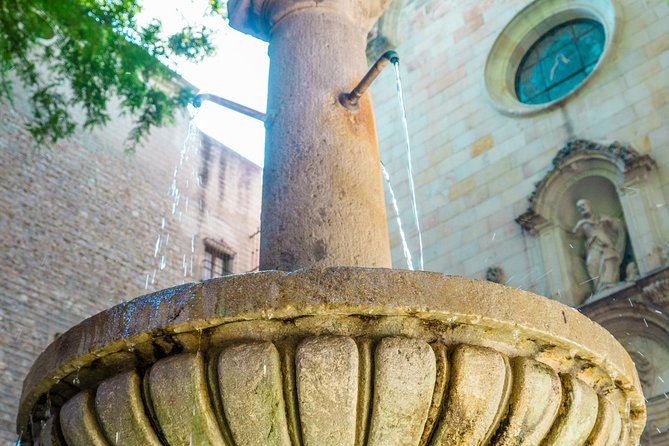
Reviewed · WALKING TOURS
Jewish Walking Tour Barcelona by Expert Jewish Guide 2h
Barcelona’s Jewish story hides in plain sight. This private two-hour walk through El Call brings that story into focus, from Plaça de Sant Jaume to the Ancient Synagogue and Plaça del Rei. I especially like the private format, which lets your group ask questions freely, and the guides’ ability to point out small architectural clues you could easily miss alone. The main drawback is pace: two hours passes quickly, and admission fees are not included.
The tour costs $96.79 per person, a fair price if you value a personal guide and serious historical context rather than a quick photo stop. Guides such as Ella, Dina, Lilach, Leilah, Rina, Eyal, and Alan have been praised for warmth, strong storytelling, and command of both Jewish and Catalan history. You should also be ready for narrow lanes, uneven old-city walking, and a $5 donation at the synagogue.
In This Review
- Key points to know before you book
- Why Jewish Barcelona is best understood on foot
- Plaça de Sant Jaume: beginning at Barcelona’s political heart
- The Ancient Synagogue: a small building with a large story
- MUHBA El Call: following the narrow lanes
- Plaça del Rei: where Jewish and royal history meet
- What the private format adds
- The guides are the main reason to book
- Is $96.79 a good value?
- Who will enjoy this walk most?
- Practical advice for a smoother visit
- Should you book Jewish Walking Tour Barcelona?
- FAQ
- How long does the Jewish Walking Tour Barcelona last?
- Is this a private tour?
- What language is the tour offered in?
- Where does the tour begin?
- Where does the tour end?
- Is admission to the Ancient Synagogue included?
- Is hotel pickup included?
Key points to know before you book
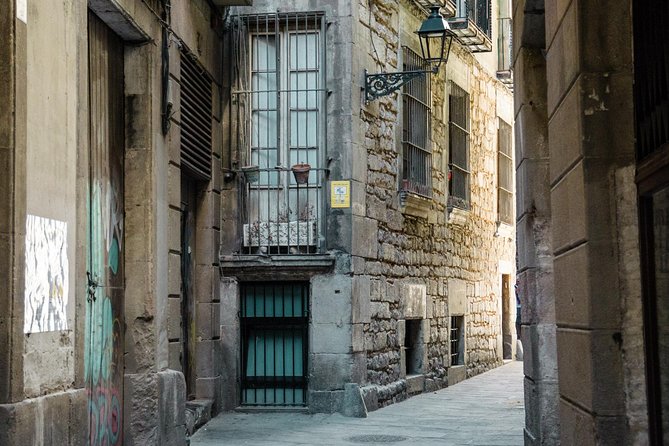
- A private walk through El Call: Only your group takes part, so you can ask questions and set the pace within the two-hour schedule.
- The Ancient Synagogue is the centerpiece: A $5 per person donation is kindly requested onsite, and it is not included in the tour price.
- Four historic areas tell one connected story: Plaça de Sant Jaume, the synagogue, MUHBA El Call, and Plaça del Rei each add a different piece.
- The guides add more than dates: Ella, Dina, Lilach, Alan, and others are praised for personal anecdotes, maps, visual aids, architecture, religion, and politics.
- The meeting point is easy to reach: Start at Conesa Entrepans on Carrer de la Llibreteria, near public transportation, and finish at the same place.
- Book ahead if your dates are fixed: The tour is often reserved about 48 days in advance, suggesting that popular times can fill early.
Why Jewish Barcelona is best understood on foot
Barcelona’s Jewish Quarter, known as El Call, is not a single grand monument with a clear entrance. It is a compact section of the Gothic Quarter where the past appears in street patterns, old walls, doorways, and buildings that now serve very different purposes.
That makes a walking tour especially useful. You need someone to connect the physical setting with the lives once lived there. A guide can explain why a lane matters, what a building may have been used for, and how Jewish life fitted into the wider history of medieval Barcelona.
I like that this experience does not treat Jewish Barcelona as an isolated subject. The guides place it within Catalan politics, Christian rule, the Moorish and Christian kingdoms, the Inquisition, and the wider Jewish diaspora. Several guides also bring personal perspective. One guide described as an Israeli immigrant to Barcelona used personal anecdotes to add modern context to the historical material.
This is not simply a tour of attractive old streets. The story includes achievement, daily life, political change, persecution, and loss. That balance matters. You get a more honest understanding of the neighborhood than you would from a short stop at the synagogue alone.
More Walking Tours in Barcelona
- Barcelona Tapas and Wine Experience Small-Group Walking Tour
★ 5.0 · 5,804 reviews - Barcelona: Tapas Walking Tour with Food, Wine, and History
★ 4.8 · 4,261 reviews - Barcelona Tapas Walking Tour: Food, Wine & History
★ 4.5 · 1,928 reviews
Plaça de Sant Jaume: beginning at Barcelona’s political heart
The tour begins at Plaça de Sant Jaume, the symbolic gateway to Jewish Barcelona. The square is described as Catalonia’s political heart, so it gives the guide a useful place to explain the setting before leading you into the smaller lanes of El Call.
Allow about 15 minutes here. This opening stop helps you understand that the Jewish Quarter was part of a larger urban and political center, not a separate village tucked away from Barcelona’s main life.
Your guide may use the square to establish the broad historical frame. The walk’s strongest praise has gone to guides who explain Jewish history alongside Catalan history, architecture, religion, and political events. That approach makes the first stop more useful than a simple introduction.
There is no admission ticket included for this stop. Plaça de Sant Jaume is a public square, but the tour’s value here comes from interpretation and orientation. Pay attention to the transition from the open square into the narrow streets. That change in scale is one of the walk’s early visual lessons.
The Ancient Synagogue: a small building with a large story
The Ancient Synagogue of Barcelona is the central stop, with about 30 minutes planned for the visit. It is described as one of the oldest synagogues in Europe, making this the most important enclosed historic site on the route.
Do not expect a huge religious complex. The appeal is its age, setting, and connection to the Jewish community that once lived around it. The building helps turn the history into something concrete. After hearing about medieval Jewish life in the streets, you enter a place tied directly to worship and community.
Admission is not included. A $5 per person donation is kindly requested onsite at the synagogue. Include that amount in your budget, along with the $96.79 tour price.
The guides are praised for taking care with this part of the walk. Dina has been singled out for using visual aids, maps, and storytelling, while other guides have been praised for explaining details that are easy to overlook. That is important in a modest historic building where the meaning may not be obvious at first glance.
You should allow the guide to set the tone here. The synagogue is not just another stop to photograph. It is a place where the tour’s broader story of continuity, upheaval, and memory becomes more personal.
MUHBA El Call: following the narrow lanes
The route then moves through MUHBA El Call, with about 30 minutes devoted to the area. The winding alleys reveal centuries of Jewish life and tragedy, and this is where the private walking format earns its keep.
On your own, you might see old stone, tight corners, and attractive medieval architecture without knowing how to read the setting. A good guide points out small details and explains how the streets relate to the community that once lived there.
This section also gives the guide room to discuss the harder parts of the story. The tour is not limited to a nostalgic picture of medieval Jewish Barcelona. It covers the role of Jewish people in Barcelona and Spain, changes under different rulers, the Inquisition, and the later effects of the diaspora.
Several guides receive praise for making this material easy to follow. Ella is described as warm and strong on history and architecture. Lilach is praised for enthusiasm and for continuing to tell useful stories even during heavy rain. Alan is praised for answering questions and going beyond the expected material.
That range of strengths suggests that your experience may depend partly on the individual guide assigned to your booking. The overall pattern is encouraging: the guides bring personality, maps, visual aids, and personal knowledge rather than relying only on a memorized script.
The lanes themselves are a practical consideration. This is an old quarter, so you should expect a genuine city walk rather than a smooth, spacious museum route. Wear comfortable shoes and leave room in your schedule for the tour to end back at the starting point.
Same base, a different kind of afternoon:
- Barcelona: Sagrada Familia Entry Ticket with Audio Guide
★ 4.6 · 105,312 reviews - Barcelona: Park Güell Admission Ticket
★ 4.4 · 76,534 reviews - Barcelona: Casa Batlló Entry with Self-Audioguide Tour
★ 4.7 · 25,359 reviews - Barcelona: 24 or 48-Hour Hop-On Hop-Off Bus Tour
★ 4.4 · 20,872 reviews
Plaça del Rei: where Jewish and royal history meet
The final planned stop is Plaça del Rei, with about 30 minutes set aside. This square connects Jewish history with the royal and political life of medieval Barcelona.
The description of this stop points to Jewish leaders serving kings and to major changes in the city’s story. That makes Plaça del Rei a fitting place to bring the tour’s themes together. Jewish Barcelona was linked to the court, the city’s institutions, trade, religious life, and the changing balance of power.
This stop is useful because it prevents the tour from becoming too narrowly focused on one neighborhood. You see how the Jewish community related to the broader city around it. The guide can explain the setting through architecture, politics, religion, and social history, subjects that have been praised repeatedly on this walk.
The square also gives you a different visual experience after the enclosed lanes of El Call. You move from intimate streets to a more formal public space. That contrast helps you picture the community within the larger medieval city.
No separate admission ticket is included for the stop. Like the other outdoor portions, its value comes from the guide’s explanation rather than a paid attraction.
What the private format adds
This is a private activity, so only your group participates. That changes the feel of a historical walk. You do not have to compete with a large crowd to hear the guide, and you can ask about family history, religious traditions, architecture, or a particular period when the subject catches your interest.
The private setup is particularly useful for a subject that can raise difficult questions. You may want to pause over the Inquisition, ask how Jewish life changed under different rulers, or request more detail about the synagogue. A smaller group makes those conversations easier.
It does not mean you can ignore the schedule. The planned route covers four main areas in about two hours, and each stop has an approximate time allocation. If your group asks many questions, the guide may need to keep the walk moving.
The tour is offered in English and includes a professional local guide. Most people can participate, and the meeting point is near public transportation. Hotel pickup and drop-off are not included, so you need to make your own way to Conesa Entrepans, Gòtic, at Carrer de la Llibreteria, 1.
The walk ends back at the meeting point. That is convenient if you want to continue exploring the Gothic Quarter afterward, though you should not treat the return point as a hotel transfer.
The guides are the main reason to book
The strongest part of this experience is the human guide. The tour is built around interpretation, and the praise focuses on guides who are warm, engaging, energetic, and willing to answer questions.
Ella is repeatedly praised for bringing the narrow streets of El Call to life and for offering useful recommendations. Dina is praised for a thorough presentation, personal attention, maps, and visual aids. Lilach is described as enthusiastic, sweet, and able to keep the history engaging in poor weather.
Other named guides receive similar praise. Alan is noted for going beyond expectations and explaining Barcelona’s Jewish and Catalan past in detail. Rina is praised for making the subject easy to understand. Eyal is described as especially interesting and well informed.
You should not expect every guide to tell the story in exactly the same way. One may focus more on architecture, another on Jewish life, and another on political history. That variety can be a strength, especially if you tell your guide what interests you most at the beginning.
The tour has a 4.9 rating from 297 reviews, with 98 percent of participants recommending it. Those figures point to a consistently strong experience, especially in guide quality. Still, the content is history-focused, so it will suit you best if you enjoy listening, asking questions, and looking closely at old buildings.
Is $96.79 a good value?
At $96.79 per person, this is not the cheapest way to walk around the Gothic Quarter. You are paying for a private guide, focused subject matter, and two hours of interpretation rather than for entry to a large attraction.
The price makes more sense if you are traveling with a small family group, visiting Barcelona for a limited time, or have a strong interest in Jewish history. A public city walk may cost less, but it may cover a much broader area with less time for questions.
Remember that the synagogue donation is extra at $5 per person. Food, drinks, hotel transfers, and other entrance fees are also excluded. The price is therefore easiest to understand as a guide fee, not an all-inclusive sightseeing package.
I would consider it good value for a group that wants depth and privacy. If you only want to see the synagogue quickly, the cost may feel high. If you want the synagogue placed within Barcelona’s wider political and social story, the private format is more persuasive.
Who will enjoy this walk most?
I would recommend this tour to anyone with a serious interest in Jewish history, medieval Spain, Catalan history, religious communities, or old-city architecture.
It is also a good choice for people who have already seen Barcelona’s major sights and want a more focused experience. The route gives you a different way to understand the Gothic Quarter, with attention to details that are easy to pass without a guide.
Families with older children may find the private format useful because questions are welcome and the guide can adjust explanations. History enthusiasts will appreciate the wider time frame, which reaches from early Barcelona through the Inquisition and into the present-day story of the Jewish community.
You may want to skip it if you dislike walking on narrow old-city streets or prefer fast sightseeing with little narration. Two hours is enough for a strong introduction, but not enough to cover every part of Jewish Barcelona in detail.
Practical advice for a smoother visit
Book early if you have fixed dates. The experience is booked, on average, 48 days ahead, so last-minute availability may be limited at popular times.
Meet at Conesa Entrepans on Carrer de la Llibreteria, 1, in Ciutat Vella. The location is near public transportation, but hotel pickup is not provided. Plan your route before the start time so you are not rushing into the first historical explanation.
Wear comfortable shoes. The route is a walking tour through an old quarter, and the narrow streets are part of the experience. The tour is suitable for most people, but anyone who finds extended walking difficult should consider the two-hour duration and historic street setting.
Keep $5 per person ready for the synagogue donation. Since the donation is requested onsite and not included, this small bit of preparation avoids confusion during the visit.
Free cancellation is available if you cancel at least 24 hours before the start time. Changes or cancellations made less than 24 hours before the tour are not accepted for a refund, with cut-off times based on Barcelona’s local time.
Should you book Jewish Walking Tour Barcelona?
Book it if you want Barcelona’s Jewish Quarter explained rather than simply photographed. The best reasons are the private format, the Ancient Synagogue, and guides who bring together Jewish, Catalan, architectural, and political history.
I would be especially happy choosing this for a couple, family, or small group that enjoys asking questions and learning at a personal pace. At $96.79, it is a focused investment, but the subject matter and guide attention justify the cost for the right audience.
Skip it if your priority is low-cost sightseeing or a quick look at one historic building. For anyone who wants to understand how Jewish life fit into Barcelona’s medieval city, this is a thoughtful and well-organized two-hour walk.
FAQ
How long does the Jewish Walking Tour Barcelona last?
The tour lasts approximately two hours.
Is this a private tour?
Yes. Only your group participates in the activity.
What language is the tour offered in?
The tour is offered in English.
Where does the tour begin?
It begins at Conesa Entrepans, Gòtic, at Carrer de la Llibreteria, 1, Ciutat Vella, Barcelona.
Where does the tour end?
The tour ends back at the meeting point.
Is admission to the Ancient Synagogue included?
No. Entrance fees are not included, and a $5 per person donation is kindly requested onsite at the synagogue.
Is hotel pickup included?
No. Hotel pickup and drop-off are not included, so you need to reach the meeting point independently.
Recently listed in Barcelona
- Transfers From Cruise Port to Barcelona Airport★ 4.5 · 155 reviews
- Bohemian Barcelona Neighborhood Evening Tapas & Wine Tour★ 5.0 · 419 reviews
- Park Guell Guided Tour with Skip the Line Tickets★ 4.0 · 739 reviews
- Barcelona Sunset Cruise with Light Snacks and Open Bar★ 5.0 · 476 reviews
- Montserrat very early : Hiking, Abbey, very small group★ 5.0 · 127 reviews
- Barcelona: Sagrada Familia, Park Guell & Tapas Private Tour★ 5.0 · 903 reviews
- Authentic Flamenco Show Barcelona : Intimate Casa Sors Experience★ 5.0 · 809 reviews
- Barcelona Expert Tour with Local Guide in Eco Tuk Tuk Private★ 5.0 · 216 reviews
Walking Tours, compared.
Barcelona Tapas and Wine Experience Small-Group Walking Tour
Read our review →
Tapas Walking Tour with Food, Wine, and History
Read our review →
Albaicín and Sacromonte Guided Sunset Walking Tour
Read our review →
Toledo Tour & Vineyard Walk with Wine Tasting from Madrid
Read our review →
Madrid Walking Tour from Puerta del Sol to Retiro Park
Read our review →
Barcelona Tapas Walking Tour: Food, Wine & History
Read our review →
Madrid Old Town & Royal Palace Walking Tour Skip the Line Ticket
Read our review →
Browse the lists this tour appears in