
Reviewed · TAPAS TOURS
Paella & Sangria Class with Tapas and Market Visit
A good meal starts at the market. This Alicante cooking class combines a tour of the Central Market with hands-on paella making, sangria, and tapas. I especially like the market shopping, where you learn about local shrimp, Iberian ham, olives, salted fish, and other ingredients before cooking with them. I also like that you can choose seafood, meat, or vegetarian paella, rather than being locked into one dish.
The main consideration is that this is a group activity, and the exact experience can change with group size. The advertised limit is around 15 to 16 people, while smaller groups of five to eight make the kitchen work easier. If you expect a restaurant-sized serving loaded with seafood, you may find the Alicante approach more restrained. Here, the rice and stock carry the dish.
In This Review
- Key Points to Know Before You Book
- Why This Alicante Food Class Works So Well
- Meeting at Plaza 25 de Mayo
- Choosing Ingredients Inside Alicante’s Central Market
- Walking to a Real Working Kitchen
- Building Paella From Broth to Rice
- Making Sangria and Sharing Tapas
- Sitting Down to Eat What You Made
- What Makes the Guide Important
- Price, Timing, and Who Should Book
- Should You Book This Alicante Cooking Class?
- FAQ
- Where does the paella and sangria class begin?
- Where does the activity finish?
- How long does the experience last?
- Can I choose my type of paella?
- Is alcohol included, and what is the minimum drinking age?
- How many people can join the class?
- What is the cancellation policy?
Key Points to Know Before You Book
- The Central Market comes first: You spend about an hour seeing local produce and selecting ingredients with your guide.
- You cook in a working restaurant kitchen: This is a real local restaurant rather than a staged demonstration space.
- The paella is made from scratch: You help prepare the broth, salmorreta, seafood or meat, and rice.
- You choose your main dish: Seafood, meat, and vegetarian paella options give the class useful flexibility.
- The meal includes more than paella: Expect tapas, sangria, and side dishes such as tomato salad with salted fish, olives, cured ham, or sausage.
- Federico, also called Fred or Freddy, gets frequent praise: His humor, clear teaching, and ability to switch between English and Spanish help keep the class moving.
Why This Alicante Food Class Works So Well
Alicante is a fine place to learn paella because the dish is tied to local products and local habits. The class does not begin with a pile of premeasured ingredients in a classroom. It starts at the Mercat Central d’Alacant, where you see the food before it reaches the pan.
That small change matters. You learn that seafood size is not the only measure of quality, that different olives are prepared in different brines, and that ingredients such as cuttlefish and local shrimp have their own place in Alicante cooking. You also get a quick lesson in Spanish food customs, rather than only a recipe to copy at home.
The class lasts about three and a half hours and costs $59.26 per person. For that price, you receive a market visit, instruction from a guide and chef, a full meal, drinks, and recipes to take home. I see this as good value if you want an activity that fills much of an afternoon and gives you a proper meal at the end.
It is less compelling if you only want to watch a chef cook paella or if you prefer a short market tour. You will spend real time chopping, preparing, stirring, and taking turns at the cooking station. The reward is participation, not speed.
More Tapas Tours in Alicante
- Alicante Historic Small Group Tour with Tapas Tasting
★ 5.0 · 559 reviews - Alicante Food and Tapas Tour with a Local Guide
★ 5.0 · 485 reviews - Alicante Paella Cooking Class, Tapas, Drinks and Marketplace
★ 5.0 · 349 reviews
Meeting at Plaza 25 de Mayo
The class begins at Plaza 25 de Mayo, outside the Central Market at Pl. 25 de Mayo, 03004 Alicante. This is a practical starting point in central Alicante, and the area is near public transportation.
Bring your booking confirmation on your phone, since the activity uses a mobile ticket. Arrive ready to walk through the market and then continue roughly three blocks to the kitchen, as described during the class. The activity finishes back at the original meeting point.
The meeting arrangement is simple, but do not treat this as a hop-on, hop-off tour. You remain with the group for the market visit and walk to the restaurant kitchen. Comfortable shoes make sense, since the first part involves moving among market stalls and the second part keeps you on your feet during food preparation.
Choosing Ingredients Inside Alicante’s Central Market
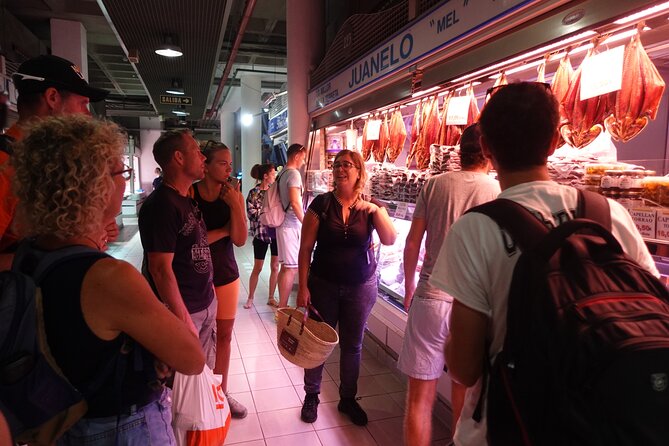
The market visit is one of the strongest parts of the experience. Alicante’s Central Market is a large indoor market filled with stalls selling produce, meat, seafood, cured foods, olives, and other local products. You are not simply given a list and sent off to shop. Your guide explains what you are seeing and helps select what will go into the meal.
This is where Federico, often called Fred or Freddy, seems to make the biggest difference. He explains local ingredients in clear English, and he can move between English and Spanish while keeping the group involved. His market explanations include Iberian ham, the different shrimp found around Alicante, olives and their brines, squid, cuttlefish, and other foods used in Spanish cooking.
You might help select vegetables, fruit, fish, meat, and wine for the meal. The shopping gives useful context to the later cooking. When you see the ingredients whole and learn what to look for, the finished plate makes more sense.
The market portion can also be the best choice for people who are more interested in Spanish food culture than in cooking technique. You get to browse stalls and watch ordinary food shopping take place. It is not a private shopping trip, though, so the pace and attention are shared with the group.
Walking to a Real Working Kitchen
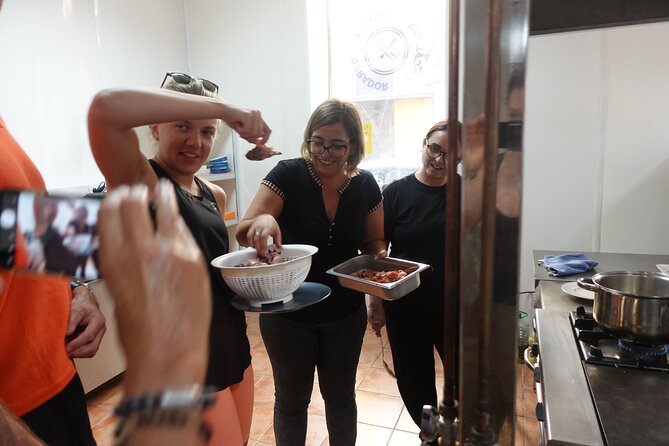
After the market, the group walks to a local restaurant kitchen. The setting is part of the appeal. You are not cooking in a glossy demonstration studio designed only for tourists. You work inside a functioning restaurant, with a professional chef and host guiding the session.
Chef Maria is named in one of the class accounts, while Federico handles much of the teaching and hosting. The two-person setup is useful because one person can explain the process while the other helps with preparation and cooking. That matters in a group, especially when several people want a turn.
Group size can vary. The listed maximum is 15 to 16 people, but some sessions have only five, seven, or eight participants. A small group gives you more direct time at the counter and makes it easier to follow the explanations. A larger group can still work, but expect turns rather than constant access to the pan.
The class is designed for beginners. You do not need to arrive with professional cooking skills. The process is broken into clear jobs, and everyone gets a chance to help with something.
Same base, a different kind of afternoon:
- From Alicante: Roundtrip to Tabarca Island
★ 4.3 · 3,992 reviews - Alicante: Secret Flavors Food Tour
★ 4.8 · 1,514 reviews - Alicante: 2-Hour Late Afternoon Catamaran Cruise
★ 4.5 · 1,265 reviews - From Alicante: Guadalest, Altea & ticket in Algar Waterfalls
★ 4.7 · 1,027 reviews
Building Paella From Broth to Rice
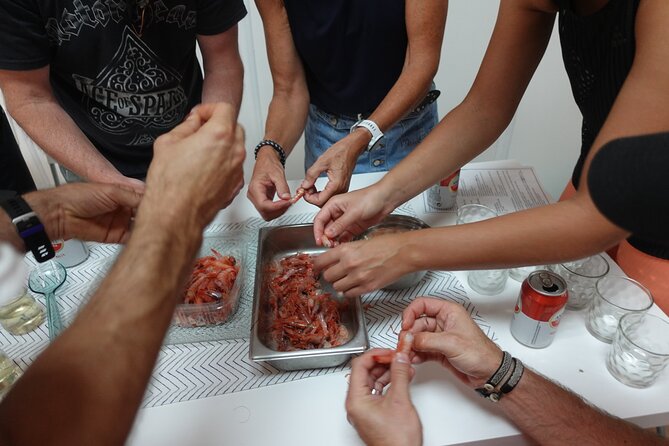
The teaching begins well before the rice hits the pan. You help prepare the broth, which forms the base of the dish, and make salmorreta, the sofrito-style mixture that gives Alicante paella much of its flavor.
This is an important point for anyone used to oversized restaurant paellas covered with seafood. In Alicante, the goal is not to bury the rice under a mountain of ingredients. The stock and seasoning do much of the work. A smaller local shrimp or a tender piece of cuttlefish can contribute more than its size suggests.
The class may include preparing fish with a blowtorch before it goes into the dish. You take turns with practical jobs such as cleaning seafood, chopping ingredients, stirring, and helping manage the paella as it cooks. The guide explains what is happening instead of asking you to follow unexplained instructions.
You then choose your paella style:
- Seafood paella
- Meat paella
- Vegetarian paella
The seafood version can include local shrimp and squid or cuttlefish. One session used sepionet, a small local squid, when the usual cuttlefish was unavailable. That detail shows how the class responds to market supply instead of pretending every day has identical ingredients.
If you want a seafood paella packed with large prawns, clarify your expectations before booking. The local Mediterranean shrimp may be smaller than ocean prawns. That is not necessarily a quality problem, but it can surprise anyone who judges a seafood dish by size alone.
Making Sangria and Sharing Tapas
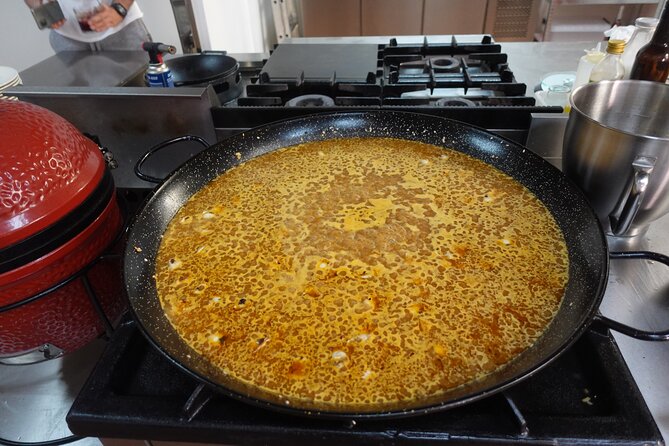
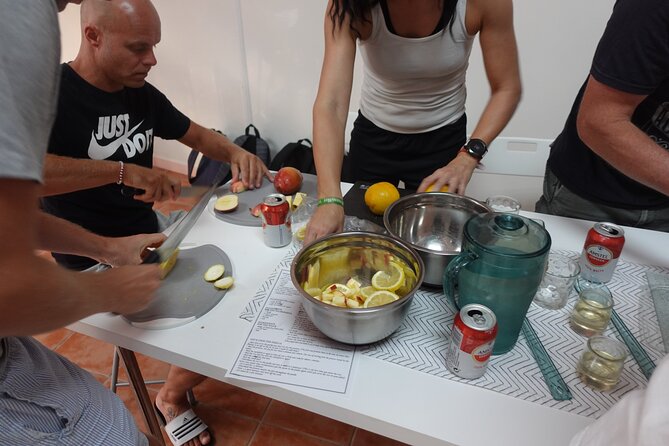
While the paella cooks, you prepare fresh sangria. The recipe includes wine, orange juice, soda, fruit, syrup, and liqueur. If you prefer strong, straight wine, this may taste light to you. If you want traditional sangria, the juice and soda are part of the point, not a mistake.
The class also includes tapas while the rice finishes. The exact selection may vary, but the meal can include Iberian ham, sausage from the surrounding mountains, olives, crisps, and tomato salad with salted fish. Fresh fruit may also appear at the end.
That spread gives the session a social rhythm. You are not standing silently beside a stove for three hours. You shop, prepare food, taste small dishes, mix drinks, and talk with the people in your group.
The tomato and salted fish salad is especially useful for understanding how simple Spanish dishes work. Strong ingredients, good tomatoes, quality olive products, and the right balance can do more than a complicated recipe. The tapas also keep hunger away while the paella cooks.
Alcohol is served only to adults aged 18 and over. The class information does not say that a nonalcoholic sangria substitute is available, so ask in advance if that matters to you.
Sitting Down to Eat What You Made
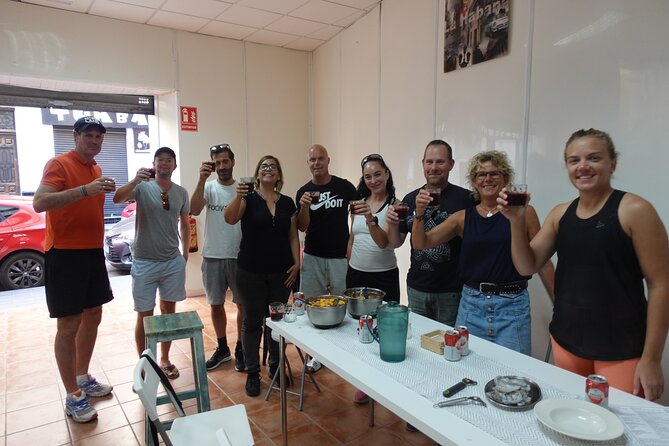
The best part comes when the paella is ready and you sit down together. You eat the rice, drink the sangria, and share the tapas in a relaxed setting.
The final dish is not just a meal. You have seen the ingredients at the market, prepared the stock, helped with the seasoning, and watched the rice cook. That makes the finished paella easier to understand and gives you a recipe you can try at home.
Do keep your expectations realistic. A group class has shared labor, and the serving size of seafood or meat will not match a lavish à la carte platter. The traditional Alicante method places the rice first. If you want a heavy portion of protein in every bite, this may feel modest.
For most people, though, the meal is the payoff for the process. The cooking is fun, but eating together turns the class into a social occasion rather than a technical lesson.
What Makes the Guide Important
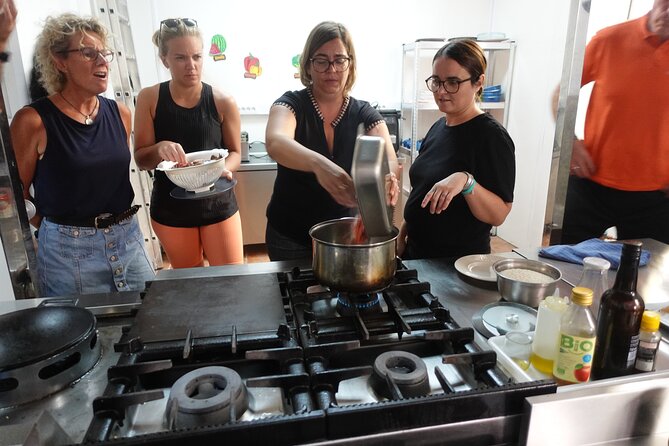
Federico receives the strongest praise, and it is easy to see why his role matters. A food class depends on more than a recipe. You need someone who can explain unfamiliar ingredients, keep several people busy, answer questions, and maintain a good mood when the kitchen gets crowded.
His teaching style is described as patient, funny, and clear. He gets people involved rather than allowing one confident cook to take over. He also explains the history and regional differences behind paella and sangria, so you learn why the steps matter.
His English is described as very strong, and he can switch to Spanish when useful. That helps if your group includes people with different language backgrounds. Chef Maria adds another practical layer by helping with the food preparation and cooking.
The class will still depend on the group you join. A friendly group of strangers can become part of the fun, but you should not book this expecting a private lesson.
Price, Timing, and Who Should Book
At $59.26, this is fairly priced for a three-and-a-half-hour activity that includes a market tour, cooking instruction, tapas, sangria, and the meal you prepare. You are also paying for two hosts, fresh ingredients, the restaurant kitchen, and the chance to learn a local recipe rather than simply eat one.
The value is strongest for:
- Couples looking for a social food activity
- Families with older children who can participate in cooking
- Solo visitors who want an easy way to meet people
- Food lovers interested in Alicante ingredients
- Beginners who want a practical introduction to paella
- Anyone who enjoys markets as much as restaurants
The class is less suitable if you dislike group activities, cannot stand for food preparation, or want a quiet private meal. It may also disappoint you if you expect a large seafood feast or a very strong sangria.
The activity is offered in English, and confirmation is provided at booking. Free cancellation is available up to 24 hours before the start time. A minimum number of participants is required, so if the class does not run, you are offered another date or experience, or a full refund.
Should You Book This Alicante Cooking Class?
I would book it if you want to understand Alicante through its food, not just take a picture of paella. The Central Market visit gives the class a local beginning, the cooking keeps you involved, and the shared meal gives the afternoon a warm finish.
Choose a smaller group if you can, since five to eight people makes the market visit and kitchen work more personal. Select seafood if you want the classic coastal connection, meat or vegetarian if that better suits your diet, and remember that Alicante paella is about seasoned rice and stock rather than piles of toppings.
For $59.26, you receive a useful introduction to local ingredients, a meal, a drink-making lesson, and cooking skills you can carry home. If that sounds better than another passive sightseeing stop, this is a smart addition to an Alicante visit.
FAQ
Where does the paella and sangria class begin?
It begins at Plaza 25 de Mayo, outside the Central Market at Pl. 25 de Mayo, 03004 Alicante, Spain.
Where does the activity finish?
The activity ends back at the original meeting point.
How long does the experience last?
The class lasts approximately three hours and 30 minutes.
Can I choose my type of paella?
Yes. You can choose seafood, meat, or vegetarian paella.
Is alcohol included, and what is the minimum drinking age?
Sangria is included. The minimum age for alcohol consumption is 18.
How many people can join the class?
The maximum is listed as approximately 15 to 16 participants. Group size can be smaller, with some sessions having only five to eight people.
What is the cancellation policy?
You can cancel at least 24 hours before the start time for a full refund. Cancellations or changes made less than 24 hours before the start time are not refunded or accepted.
More Shopping Tours in Alicante
- Paella Cooking Class, Wine Tasting & Central Market in Valencia
★ 5.0 · 1,150 reviews - Valencian paella cooking class, tapas and visit to Ruzafa market.
★ 5.0 · 828 reviews - Seville: 3.5-Hour Spanish Cooking Class & Triana Market Tour
★ 4.9 · 751 reviews - Valencia: Paella Cooking Class with Central Market Tour
★ 5.0 · 721 reviews
More Paella Classes in Alicante
- Alicante Paella Cooking Class, Tapas, Drinks and Market
★ 4.9 · 301 reviews - Alicante: Paella and Sangría Workshop with Market Visit
★ 4.8 · 158 reviews - Barcelona: Paella Cooking Experience & Boqueria Market Tour
★ 4.8 · 3,661 reviews - Barcelona Paella Cooking Class with Market Visit, Tapas & Sangria
★ 5.0 · 2,531 reviews
Recently listed in Alicante
- Alicante: Small-Group Countryside Wine Tour with 4 Tastings★ 5.0 · 162 reviews
- Museum of Illusions Alicante Entrance ticket★ 4.5 · 105 reviews
- Parasailing in Alicante★ 4.5 · 116 reviews
- Guadalest & Algar Falls Excursion – From Albir, Benidorm & Calpe★ 4.5 · 380 reviews
- Guadalest and Algar Waterfalls Tour from Alicante or Benidorm★ 4.5 · 140 reviews
- Alicante City & Beach Bike Tour★ 5.0 · 113 reviews
- Alicante Wine Tasting and Tapas Club★ 5.0 · 126 reviews
- From Albir & Benidorm: Guadalest Village Excursion★ 4.5 · 150 reviews
Tapas Tours, compared.
Montserrat Half-Day Tour with Tapas and Gourmet Wines
Read our review →
Montserrat & Cogwheel Train, Gourmet Wine Tasting & Tapas/Lunch
Read our review →
Barcelona Tapas and Wine Experience Small-Group Walking Tour
Read our review →
Montserrat with Black Madonna & Medieval Winery with Tapas/Lunch
Read our review →
Montserrat and Winery Tour with Tapas or Lunch
Read our review →
Tapas Walking Tour with Food, Wine, and History
Read our review →
Sevilla Food Tour: Tapas, Wine, History & Traditions
Read our review →
Valencia Old Town Tour with Wine & Tapas in 11th Century Historic Monument
Read our review →Browse the lists this tour appears in