
Reviewed · SAGRADA FAMILIA TOURS
Sagrada Familia & Barcelona Small Group Tour with Hotel Pick-up
Barcelona rewards a well-planned first look. I like the hotel pickup and drop-off, which removes the fuss of finding a meeting point, and I like the maximum group size of eight, which gives you a better chance to hear your guide and ask questions. The main catch is that Sagrada Familia admission costs an extra €26, and the five-hour schedule gives you only about an hour inside the basilica.
This is a fast-moving introduction rather than a slow, specialist tour. Guides such as Luis, Pablo, Miguel, Adrian, Gaspar, and Daniela have earned especially warm praise for their clear explanations, humor, patience, and help with photographs. Still, afternoon departures can lose daylight after hotel pickups, and some people found the walking pace brisk.
In This Review
- Key points before you book
- What the five-hour format really gives you
- Starting in the Gothic Quarter
- Roman columns in a medieval courtyard
- Barcelona Cathedral and Plaça Sant Felip Neri
- From Las Ramblas to Barceloneta
- Montjuïc views and the 1929 exhibition
- Passeig de Gràcia and Gaudí’s façades
- Inside Sagrada Familia
- Morning or afternoon: which works better?
- Guides, group size, and the human factor
- Who should book this Barcelona tour?
- FAQ
- Is Sagrada Familia admission included?
- How many people are in the group?
- Does the tour include hotel pickup and drop-off?
- What start times are available?
- Is food included?
- How long is the tour?
- Should you book it?
Key points before you book
- Hotel pickup saves valuable time: You can be collected from a hotel or apartment in Barcelona city, with the exact time sent the day before.
- Eight people is the limit: The small van and compact group feel more personal than a large city coach.
- You see Barcelona in layers: The route links Roman remains, medieval lanes, Montjuïc views, Modernisme façades, and Gaudí’s Sagrada Familia.
- Sagrada Familia tickets cost extra: Budget €26 per person for admission. The private option includes the entrance ticket.
- Morning is the safer choice: Afternoon departures can start late after several pickups, leaving less daylight for city sights.
- It is an overview, not a deep study: You cover a lot in five hours, but the basilica deserves more than the allotted hour if you want to examine every detail.
What the five-hour format really gives you
At $96.10 per person, this tour sits in a useful middle ground. You are paying for a local guide, an air-conditioned vehicle, hotel transport, a walking tour, and a route that connects several parts of Barcelona in one outing. You are not paying for Sagrada Familia entry, food, or drinks, so the practical total is closer to $96.10 plus €26.
I see the value most clearly if you have only a day or two in Barcelona. The city spreads out, and moving from the Gothic Quarter to Montjuïc, Passeig de Gràcia, and the basilica by yourself takes planning. Here, the van handles the long jumps while your guide supplies the story tying the districts together.
The trade-off is depth. You may pass several sights from the vehicle rather than enter them. The cathedral, La Boquería, Casa Batlló, and La Pedrera are included as views or drive-bys, not full visits. If you want detailed time inside each building, book separate visits.
The tour runs in the morning or afternoon. Pickup takes place roughly between 8 and 9 am or 2 and 3 pm, but the exact time depends on your address and the other pickups. The company sends the specific time, guide’s name, and phone number the day before. That message matters, so keep an eye on the booking system.
More Sagrada Familia tickets:
- Barcelona: Sagrada Familia Entry Ticket with Audio Guide
★ 4.6 · 105,312 reviews - Barcelona in 1 Day: Sagrada Familia, Park Guell,Old Town & Pickup
★ 5.0 · 13,541 reviews - Barcelona: Sagrada Familia Skip-the-Line Entry Ticket & Tour
★ 4.8 · 12,789 reviews
Starting in the Gothic Quarter
The walking portion begins in Barcelona’s medieval Old Town, where the city’s oldest layers are packed into narrow lanes and small squares. I like this opening because you get out of the van and see Barcelona at walking speed, not just through a window.
The streets follow routes that reach back to Roman times. Medieval and Gothic buildings sit beside later changes, making the quarter feel less like a preserved museum and more like a working part of the city. Your guide may explain Catalan customs, Barcelona’s origins, and how the old city changed as Barcelona grew into a modern European center.
Expect about 45 minutes on foot. That is enough to get your bearings and notice the architecture, but not enough for every alley, church, and museum. Wear supportive shoes. One rating described the walking as tiring for people using canes, and another noted that a guide moved too quickly for some members of the group.
The small group helps here. With eight people or fewer, it is easier to stop for a photo or ask why a particular arch, plaza, or façade matters. Guides have also been praised for taking pictures of couples at stops, a small favor that is useful when you are traveling without a good photographer.
Roman columns in a medieval courtyard
Near the Gothic Quarter, the MUHBA Temple d’August appears in an easy-to-miss medieval courtyard. Four columns from the Temple of Augustus have survived for more than 2,000 years, offering a sharp reminder that Barcelona began long before its Gothic churches and Gaudí buildings.
You spend about 10 minutes here. That sounds brief, but it suits the site. The columns are compact, and the value comes from the contrast: Roman remains enclosed by later city walls and medieval buildings.
This is one of the moments when a guide adds real value. Without context, you could walk past the courtyard and see only four old columns. With an explanation of their age and place in Barcelona’s story, the stop becomes more memorable.
Barcelona Cathedral and Plaça Sant Felip Neri
The route passes Barcelona Cathedral, whose construction began in 1298 and was completed around 1890 in neo-Gothic form. Its appearance reflects several periods, including Romanesque, Gothic, and neo-Gothic work. Medieval brotherhoods and guilds helped fund the building, an insight that connects the church to the civic life of old Barcelona.
You get about 20 minutes to see the exterior. The entrance fee is not included, and the tour does not promise an interior visit. If the cathedral is high on your personal list, plan a separate visit.
Plaça Sant Felip Neri follows, with about 10 minutes in the square. It is a quiet, slightly faded place centered on a Baroque church. Its historic details and enclosed feel offer a calmer pause after the narrow streets of the Old Town.
The time here is short, so I would listen closely to your guide rather than expect a long stop. A guide such as Pablo can make these brief visits count by explaining how the district developed and how art, architecture, and local life overlap.
A few more Barcelona ideas to compare
- Barcelona: Park Güell Admission Ticket
★ 4.4 · 76,534 reviews - Barcelona: Casa Batlló Entry with Self-Audioguide Tour
★ 4.7 · 25,359 reviews - Barcelona: 24 or 48-Hour Hop-On Hop-Off Bus Tour
★ 4.4 · 20,872 reviews - Barcelona: Park Guell Guided Tour with Skip The Line Entry
★ 4.7 · 17,563 reviews
From Las Ramblas to Barceloneta
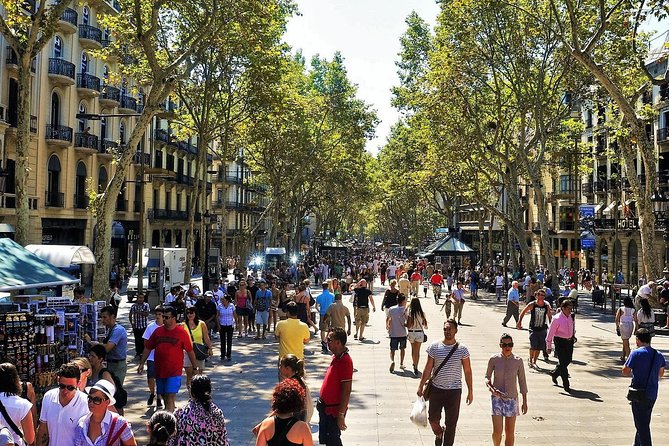
After the walking tour, you continue by vehicle toward the waterfront. The route passes Las Ramblas, Barcelona’s best-known avenue, lined with shops, restaurants, and bars. You may also pass La Boquería, the city’s famous covered market.
The important word is pass. You might see the market entrance from the minivan rather than browse the stalls. That is useful for orientation, but it is not a substitute for visiting La Boquería when you have time. If you want to sample food or study the market, return on your own.
The van then continues toward Barceloneta. This former fishing district has narrow, straight streets laid out on a military grid. It was built to house people displaced from La Ribera after the Citadel Park was constructed. The neighborhood’s working roots and later popularity show another side of Barcelona, away from the grand Modernisme façades.
Driving these sections saves your legs and lets you cover more ground. The downside is that traffic and hotel pickups can eat into the schedule. One afternoon group did not get properly underway until after 4 pm, despite booking a 2:30 departure. That left some sights in darkness.
Montjuïc views and the 1929 exhibition

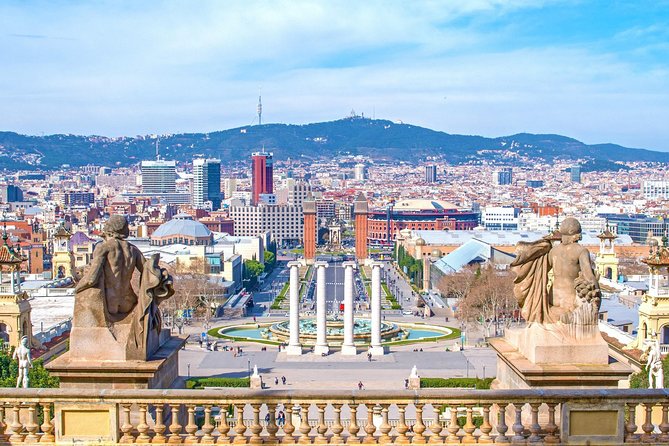
Montjuïc is one of the strongest scenic parts of the route. You spend about 45 minutes on the mountain, where the city opens out below you. The elevated position helps you understand Barcelona’s layout, especially after the tight streets of the Gothic Quarter.
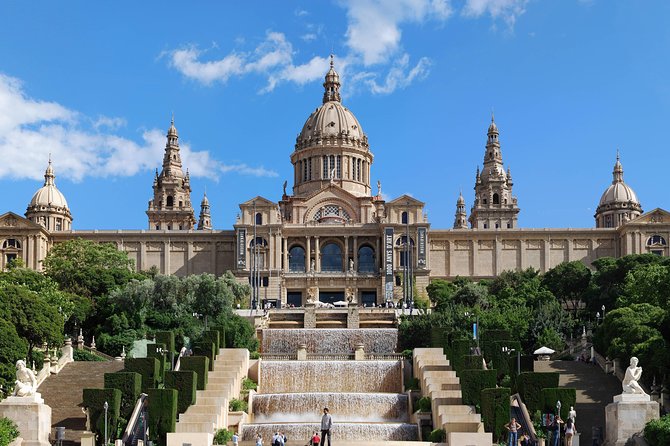
Montjuïc was once valued as a defensive position. Today, it contains cultural buildings such as the Miró Foundation and CaixaForum, along with examples of modern art and contemporary architecture. Several structures reflect the planning and design connected to the 1929 International Exhibition.
I like this stop because it gives the tour a visual pause. Instead of looking up at buildings, you look across the city and place the districts you have just seen. Guides have been praised for choosing good viewpoints and explaining Barcelona in a way that makes the city easier to understand.
Not everyone will rank Montjuïc as a highlight. One person felt the stop was less worthwhile than the rest of the tour. If you care most about Gaudí and the basilica, this portion may feel like time taken from Sagrada Familia. If you are seeing Barcelona for the first time, the views and city planning context are more useful.
Passeig de Gràcia and Gaudí’s façades
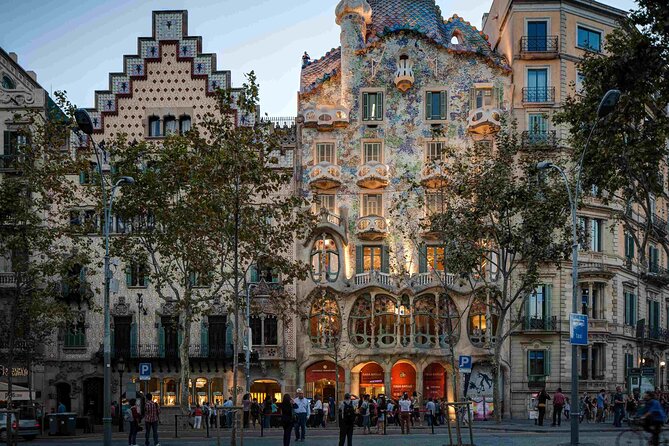
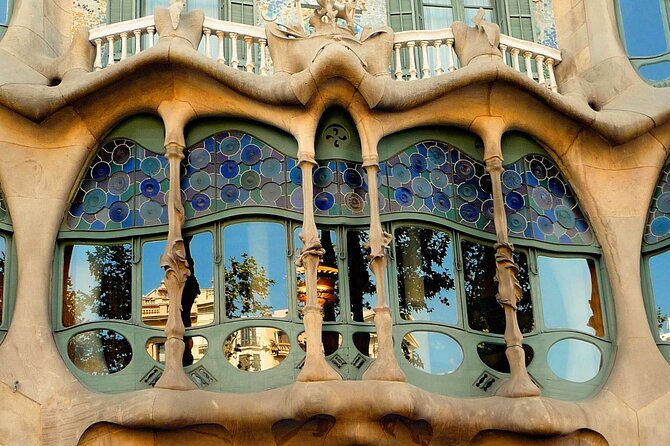
The vehicle then moves along Passeig de Gràcia, the grand avenue known for its Catalan Modernisme architecture. You pass Casa Batlló, with its colorful façade and unusual decorative details, and Casa Milà, also called La Pedrera, with its wave-like stone exterior.
You may also see Casa Lleó-Morera by Domènech and Casa Ametller. Together, these façades show how Barcelona’s early 20th-century architects competed through shape, ornament, color, and materials.
This is a good example of the tour’s limits and strengths. You get a broad look at several major buildings without waiting in multiple entry lines. You also do not get the time to study their interiors or climb their rooftops. I would treat this part as a preview, then choose one building for a separate visit if Modernisme interests you.
The vehicle is especially helpful here because Passeig de Gràcia is a busy avenue. A well-informed driver-guide can point out details while handling Barcelona traffic, a combination that one highly praised guide, Liana, was specifically credited for doing well.
Inside Sagrada Familia
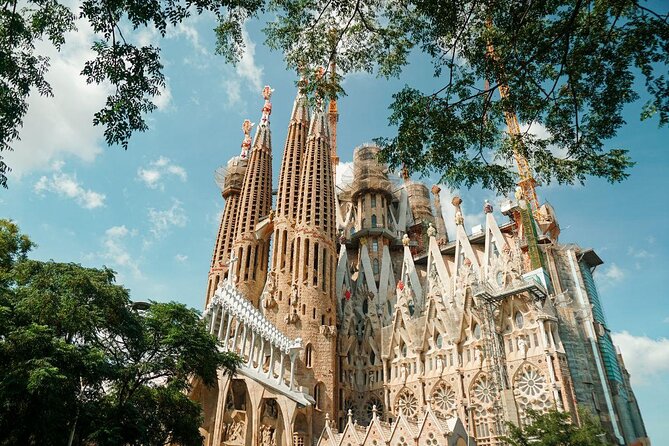
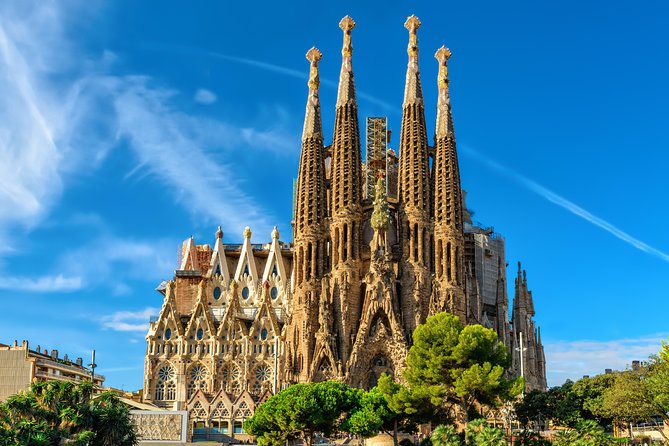
The final major stop is Basilica de la Sagrada Familia, the tour’s clear centerpiece. You get about one hour inside, and admission is not part of the $96.10 price. Set aside €26 per person for the ticket, and read the instructions carefully before the day of the tour.
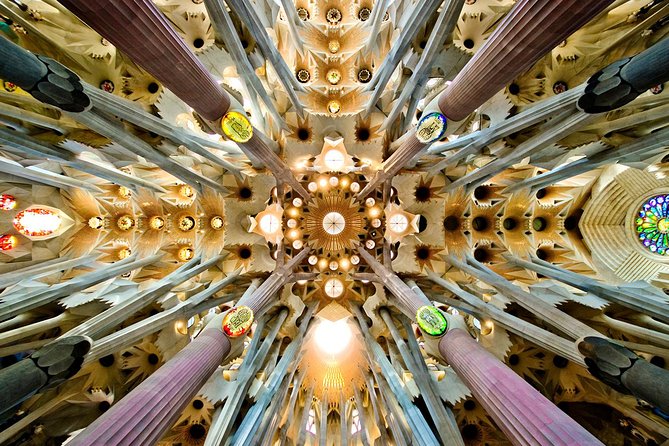
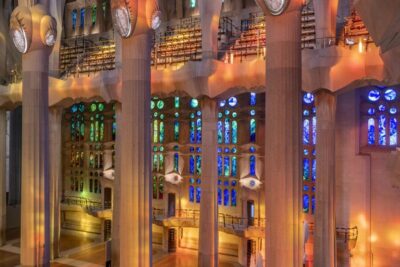
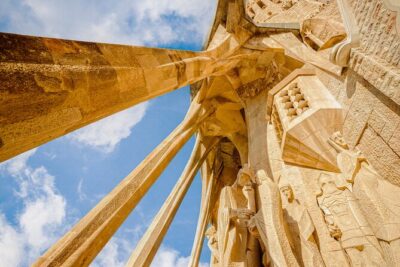
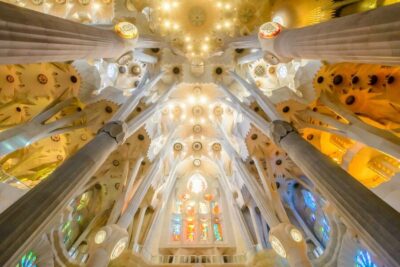
Inside, the building is all about structure, light, and symbolism. Organic forms run through the design, while stained glass changes the mood of the interior. The sculpted façades carry layers of meaning connected to Gaudí’s vision. Even with a short visit, the basilica can leave the strongest impression of the day.
Several guides have received strong praise for their explanations of Gaudí and the building. Mireia, who led one group inside, was singled out for her close knowledge of the basilica and its architect. Other guides, including Luis and Adrian, were praised for making the visit easy to follow and for responding carefully to questions.
Still, one hour is a tight limit. One person felt Sagrada Familia needed at least 90 minutes, and I agree if you want to examine the stained glass, columns, façades, and symbolism without rushing. The city portion also competes with the basilica for time, so this tour works best when you want an introduction, not your only Sagrada Familia visit.
Prepare your phone before entering. The official Sagrada Familia app has a red cathedral icon, and you may need earbuds and time to download or access tickets on the day. Some groups lost time sorting out phones and internet access. That is avoidable if you install the app and bring earbuds in advance.
Morning or afternoon: which works better?
I would choose the morning departure whenever possible. Pickup takes place between 8 and 9 am, and starting earlier gives you more daylight for Montjuïc, Passeig de Gràcia, and exterior views. It also leaves your evening free to return to a favorite neighborhood or visit a site that received only a quick look.
The afternoon option suits people who arrive late, prefer a slower morning, or have other plans earlier in the day. Just understand the timing risk. Pickup from several hotels can delay the true start, and winter darkness can make exterior sights harder to see.
The booking pattern, averaging 61 days ahead, suggests that planning early is sensible, especially if your Barcelona dates are fixed. The tour is recommended by 96 percent of those providing feedback and carries a 4.8 rating from 1,758 ratings, so popular dates may fill well before arrival.
Guides, group size, and the human factor
The guide can make or break a tightly scheduled city tour. The strongest guide reports describe people who were friendly, clear, patient, and generous with local advice. Daniela helped put the city into context and offered ideas for later exploration. Gaspar adjusted well to questions and physical limits. Pablo explained how Barcelona developed and connected local art with figures such as Picasso and Gaudí.
The small group is a real advantage. Eight people maximum means less time waiting, easier conversation, and a better chance to hear explanations in the street or van. It also makes hotel pickup practical without the feel of a full-size coach excursion.
Service is not perfectly uniform. One group found that its guide focused on one person, walked too fast, and shared too little history. Another had an unclear meeting arrangement and did not receive the expected drop-off, eventually taking a taxi back. These are not reasons to reject the tour outright, but they are reasons to confirm your pickup and drop-off details and speak up early if the pace is too quick.
Hotel or apartment pickup and drop-off are offered within Barcelona city. Include the full address when booking, even if your accommodation does not appear on the standard list. Children must travel with an adult, service animals are allowed, and most people can participate, though the route includes walking and uneven city streets.
Who should book this Barcelona tour?
I would book it if you have limited time and want a guided first look at Barcelona without arranging several separate transfers. It is particularly useful for first-time visitors, cruise passengers with a short stay, and anyone who wants both the old city and Gaudí’s modern architecture in one half-day.
You will also appreciate it if you prefer a small group, hotel transport, and a guide who can explain Catalan traditions, Roman remains, medieval architecture, and Modernisme in one connected story.
I would choose a different plan if Sagrada Familia is your main reason for visiting Barcelona. A basilica-focused tour or a separate self-guided visit gives you more time inside. I would also avoid the afternoon departure if daylight matters to you or if you walk slowly.
The tour has free cancellation up to 24 hours before the start time. Changes or cancellations inside that window are not refunded, so make your plans before the cutoff.
FAQ
Is Sagrada Familia admission included?
No. Admission costs €26 per person and is paid separately. The private tour option includes the entrance tickets.
How many people are in the group?
The group is limited to a maximum of eight people.
Does the tour include hotel pickup and drop-off?
Yes. Pickup and drop-off are offered from hotels or apartments within Barcelona city. Include your accommodation address when booking.
What start times are available?
You can choose a morning departure with pickup generally between 8 and 9 am, or an afternoon departure with pickup generally between 2 and 3 pm. The exact time is sent the day before.
Is food included?
No. Food and drinks are not included.
How long is the tour?
The experience lasts approximately five hours, including the Old Town walk, vehicle sightseeing, Montjuïc, and the Sagrada Familia visit.
Should you book it?
Book this tour if you want a broad Barcelona introduction in one half-day, with hotel transport and a small group that keeps the experience personal. Choose the morning, prepare the Sagrada Familia app in advance, bring earbuds, and budget the extra €26 entrance fee.
Skip it if you want a slow examination of the basilica or full interior visits to the cathedral, Casa Batlló, and La Pedrera. For most first-time visitors with limited time, though, the combination of Roman columns, medieval lanes, city views, Modernisme façades, and Sagrada Familia makes this a useful and fairly priced starting point.
Recently listed in Barcelona
- Transfers From Cruise Port to Barcelona Airport★ 4.5 · 155 reviews
- Bohemian Barcelona Neighborhood Evening Tapas & Wine Tour★ 5.0 · 419 reviews
- Park Guell Guided Tour with Skip the Line Tickets★ 4.0 · 739 reviews
- Barcelona Sunset Cruise with Light Snacks and Open Bar★ 5.0 · 476 reviews
- Montserrat very early : Hiking, Abbey, very small group★ 5.0 · 127 reviews
- Barcelona: Sagrada Familia, Park Guell & Tapas Private Tour★ 5.0 · 903 reviews
- Authentic Flamenco Show Barcelona : Intimate Casa Sors Experience★ 5.0 · 809 reviews
- Barcelona Expert Tour with Local Guide in Eco Tuk Tuk Private★ 5.0 · 216 reviews
Sagrada Familia Tours, compared.
Sagrada Familia Entry Ticket with Audio Guide
Read our review →
Barcelona in 1 Day: Sagrada Familia, Park Guell,Old Town & Pickup
Read our review →
Sagrada Familia Skip-the-Line Entry Ticket & Tour
Read our review →
Park Guell and Sagrada Familia Tour with Skip the Line Tickets
Read our review →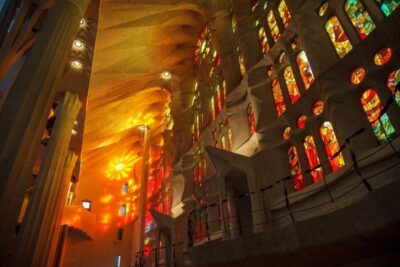
Browse the lists this tour appears in