
Reviewed · COSTA BRAVA TOURS
Sant Feliu de Guixols: Climb Via Ferrata Cala del Molí
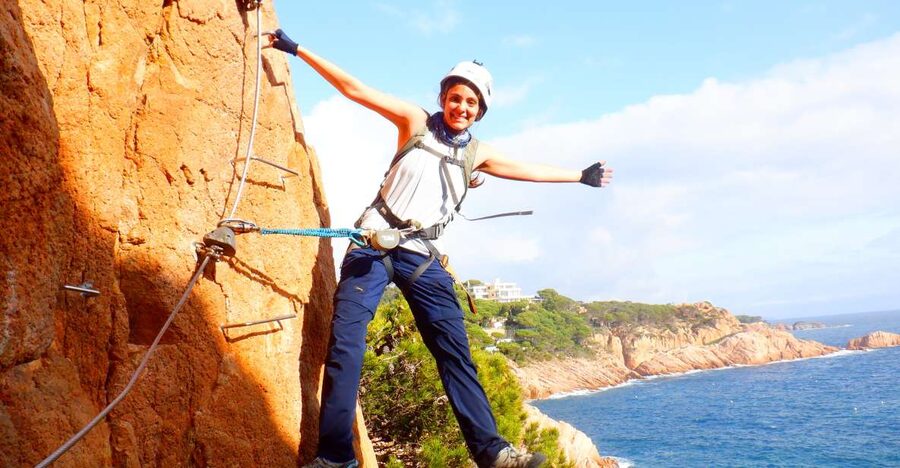
The sea is your climbing partner. This three-hour outing from Sant Feliu de Guíxols takes you along the Cala del Molí via ferrata, a cliff route famous for running directly above the Mediterranean. I like the small groups, capped at eight people, and the patient, encouraging guides, including Cristina, Miguel, Ariana, Kim, and Eva. I also like that the price includes equipment, insurance, photos, and refreshments. The main caution is simple: this is not a gentle sightseeing walk. The route can feel scary and physically demanding, especially in the harder sections.
You meet your certified guide at Calle Sicilia n50, then head toward the rocky coast for a safety briefing and equipment fitting. From there, you use fixed cables, metal footholds, and ladders to move along the cliffs. The views are exceptional, but you need a fair level of fitness, a steady head for heights, and punctuality. Miss the meeting time and the activity is treated as completed, so allow extra time to arrive.
In This Review
- Key points to know before booking
- What the Cala del Molí route is really like
- Meeting at Calle Sicilia n50
- The safety briefing and gear fitting
- The first section: a good test of your nerves
- The midway point and the tougher second section
- The guides make the difference
- Views, photos, and the coastal setting
- What the $41 price includes
- Who should book this climb?
- Final verdict: should you book it?
- FAQ
- Where does the Cala del Molí via ferrata activity meet?
- How long does the activity last?
- Is transportation included?
- What languages do the guides speak?
- Is the full via ferrata open all year?
- What should I bring?
Key points to know before booking
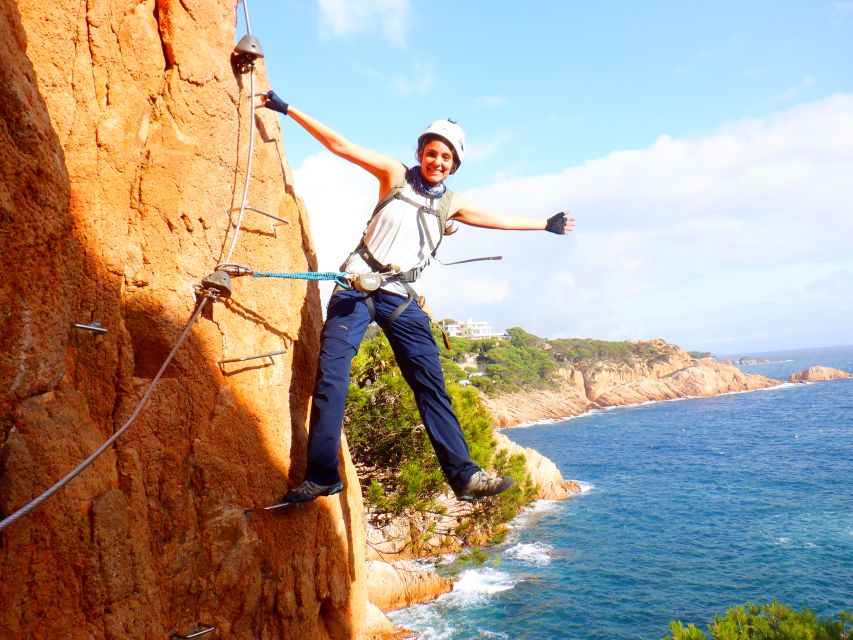
- The route runs above the sea: Cala del Molí is presented as the only via ferrata in the world built along the coast above the Mediterranean.
- The second section is seasonal: From December 1 through June 1, only the first part is available.
- The group is small: Up to eight participants can join, allowing the guide to offer help at difficult points.
- The hardest part is optional in practice: You can leave the route at a midway point before the more challenging sections.
- Photos are included: The guide takes pictures during the climb and shares them without an extra charge.
- Parking needs planning: If you park at the port, the walk to the meeting point includes a long, steep climb with many stairs.
What the Cala del Molí route is really like
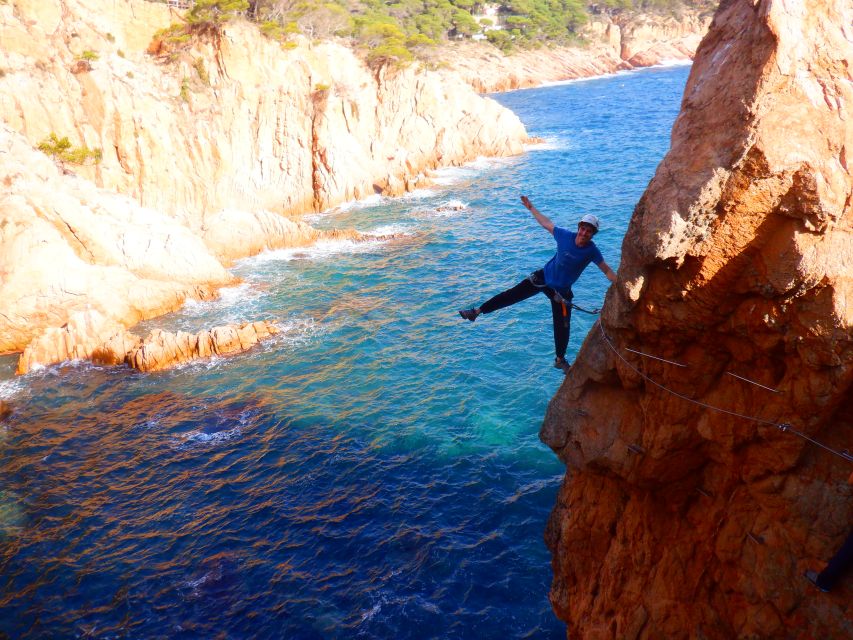
A via ferrata is a protected climbing route. You are not simply hiking beside the sea. You wear a harness and helmet, connect yourself to a safety cable, and use iron rungs, chains, steps, and ladders fixed into the rock.
That setup makes the route possible for people without advanced climbing experience, but it does not make it easy. You still need to pull yourself upward, balance on small footholds, and move confidently from one section to the next. The sea below adds drama, and sometimes a little extra fear.
The appeal here is the setting. Many via ferratas run through mountain gorges or high alpine rock. Cala del Molí offers something quite different: cliffs, open horizon, Mediterranean air, and the sound of the sea below you. The route brings you close to the rock and then suddenly opens to wide coastal views.
The experience lasts about three hours, though the pace depends on the group. A small group matters here. With no more than eight people, the guide can watch how each person is coping and give help where needed. Some outings have included two guides for eight participants, which is especially useful when the route has mixed ability levels.
A few more Costa Brava ideas to compare
- Lloret de Mar: Catamaran Sailing Cruise with BBQ and Drinks
★ 4.5 · 3,812 reviews - From L’Estartit: Snorkeling Trip to the Medes Islands
★ 4.5 · 1,243 reviews - Costa Brava: Sea Caves Kayaking and Snorkeling Tour
★ 4.8 · 1,060 reviews
Meeting at Calle Sicilia n50
Your first task is getting to the meeting point on time. Transportation to the activity is not included, so you need to make your own way to Calle Sicilia n50 in Sant Feliu de Guíxols.
Do not cut this close. One useful practical warning is that parking at the port may leave you with a long, steep walk up many stairs to the meeting point. If you are driving, arrive early enough to park, walk uphill, and still be ready at the appointed time.
Punctuality is treated seriously. If you arrive late, the activity may be considered finished, with no guarantee that you can join the group. This is not the sort of excursion where you should plan to stroll in at the last minute with a coffee in hand.
Wear sports shoes with a secure grip, comfortable outdoor clothing, and hiking pants. Bring water and a small daypack. The supplied information does not call for special climbing experience, but your clothing should allow you to lift your legs and move freely around the harness.
The safety briefing and gear fitting
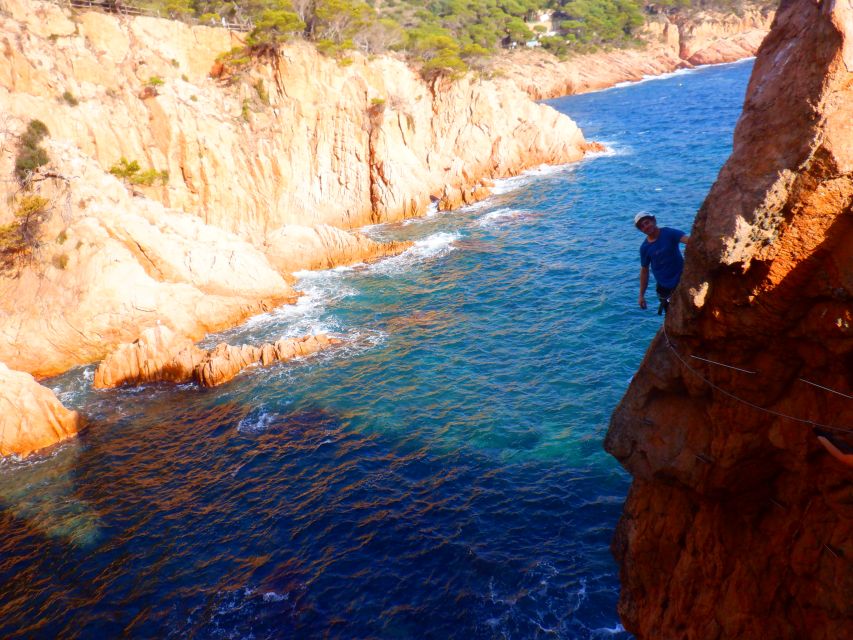
Once you meet the guide, you receive the climbing material and insurance is included. Your certified guide explains how to use the equipment and how to stay attached to the safety cable.
This part deserves your full attention. The system is manageable, but you need to understand when and how to move your connections from one cable section to the next. The guide also sets the pace and explains how to approach the more exposed or physically demanding points.
Guides work in English, Italian, French, and Spanish. That language range is useful in a mixed group, but you should still tell the guide if you feel unsure about a technique or section. Cristina in particular has been praised for clear instructions, patience, and encouragement, while Miguel has been described as friendly, funny, and ready to help.
The mood is supportive rather than stern. That matters because the first challenge is often mental. You may know the harness is secure and still find yourself staring at a drop, wondering why you thought this was a good idea. A calm guide can get you moving again without making you feel rushed.
The first section: a good test of your nerves
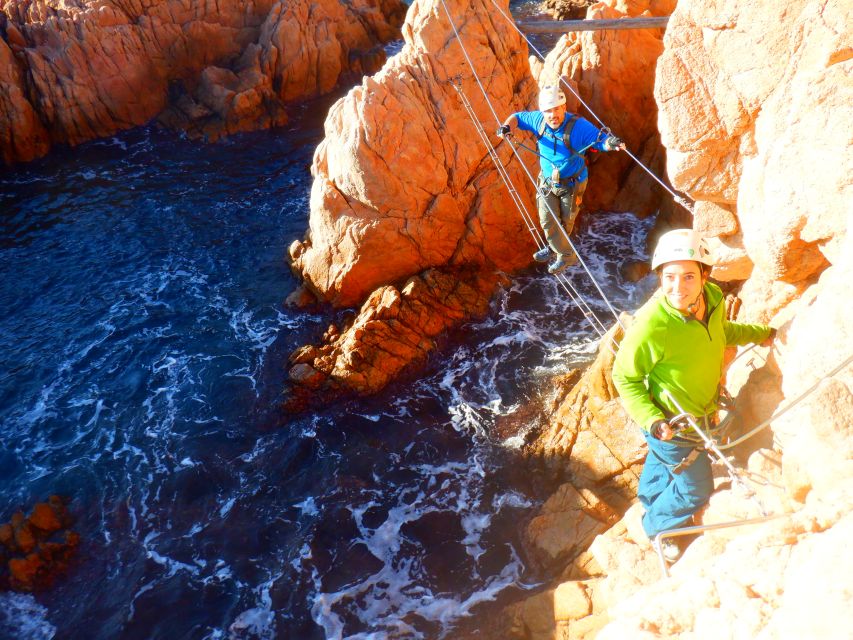
The first part lets you settle into the rhythm of the route. You move along the cliff using the fixed cable and metal aids, gradually learning how much effort each step requires.
This section can suit people with little or no via ferrata experience, provided they are fit and comfortable with heights. It still gives you exposure and physical work, but it is a useful place to learn how to place your feet, use your arms sparingly, and keep moving steadily.
The scenery begins working its magic quickly. Instead of looking at the sea from a promenade, you see it from the rock face itself. The horizon gives the route a sense of space, while the cliff keeps you focused on the next handhold.
The guides also take photos along the way. That is a real benefit. You will be busy with the cable, footholds, and balance, so taking your own pictures can be awkward or unsafe. The included photos give you a record of the climb without requiring you to hold a phone in one hand.
Same base, a different kind of afternoon:
- Blanes: Marimurtra Botanical Garden Entry Ticket
★ 4.7 · 998 reviews - From Roses: Catamaran Cruise Cap Norfeu – Cadaqués
★ 4.7 · 716 reviews - From Roses: Catamaran Cruise to Cap de Creus
★ 4.6 · 569 reviews - From Roses: Sunset Catamaran Cruise
★ 4.5 · 475 reviews
The midway point and the tougher second section
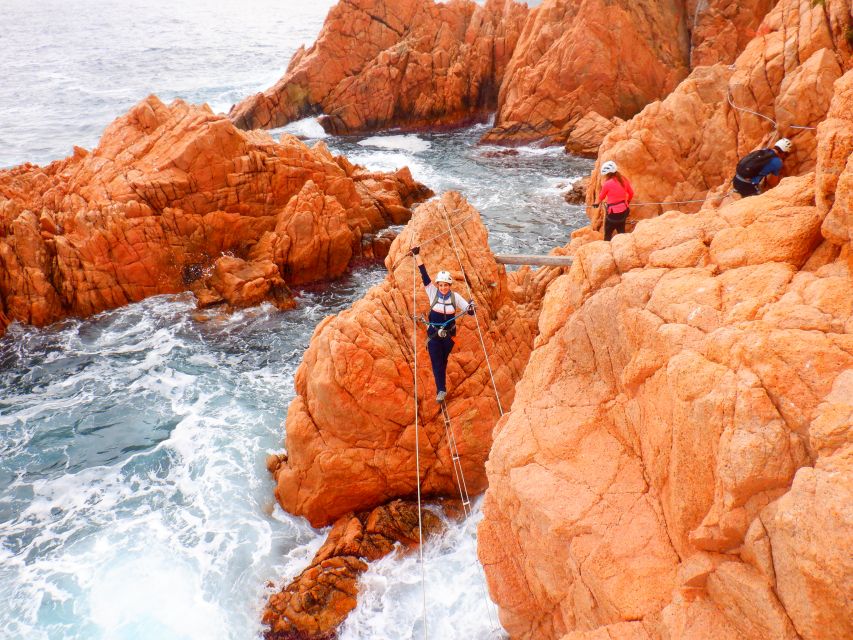
A useful feature of the route is the chance to stop before the hardest section. If you are tired, uncomfortable, or simply satisfied with the first part, you may be able to exit halfway through.
That option makes the experience more flexible than the word climbing might suggest. You can still enjoy the coastal setting and the first section without forcing yourself into terrain beyond your ability. At the same time, do not assume that the full route will feel moderate. One experienced couple in their mid-60s found it the most physically demanding of their three via ferratas, despite being in good condition.
The second part brings the greater challenge. Expect more demanding movement and a stronger sense of exposure. The route remains protected, but the safety equipment does not remove the need for strength, balance, and focus.
If you want to complete the full route, train for sustained activity rather than just a short walk. A low fitness level is specifically listed as a reason this activity may not suit you. People who are afraid of heights may also find the setting too stressful, even with a guide and safety system.
There is also a seasonal restriction. From December 1 to June 1, the second section is closed, so the experience includes only the first part. The first section can still be enjoyable, particularly for beginners, but you should book with the shorter route in mind during those months.
The guides make the difference
The strongest part of this activity is not only the route. It is the way the guides manage the different reactions in a small group.
A good guide has to do several things at once: explain the equipment, keep the group moving, watch for fatigue, offer technical help, and reassure anyone whose confidence drops. That combination comes through in the guide feedback. Cristina is repeatedly singled out for patience and encouragement, while Ariana, Kim, Eva, and Miguel are also praised for making the climb feel safe and enjoyable.
You may find the hardest moments are not the steepest ones. A particular step, a long reach, or a section where you cannot immediately see the next foothold can stop you cold. The guide can show you where to put your feet or help you find a better position.
The small-group limit of eight is important for this reason. A large crowd would mean more waiting and less personal attention. Here, the guide has a better chance of noticing if you are struggling before the problem grows.
Views, photos, and the coastal setting
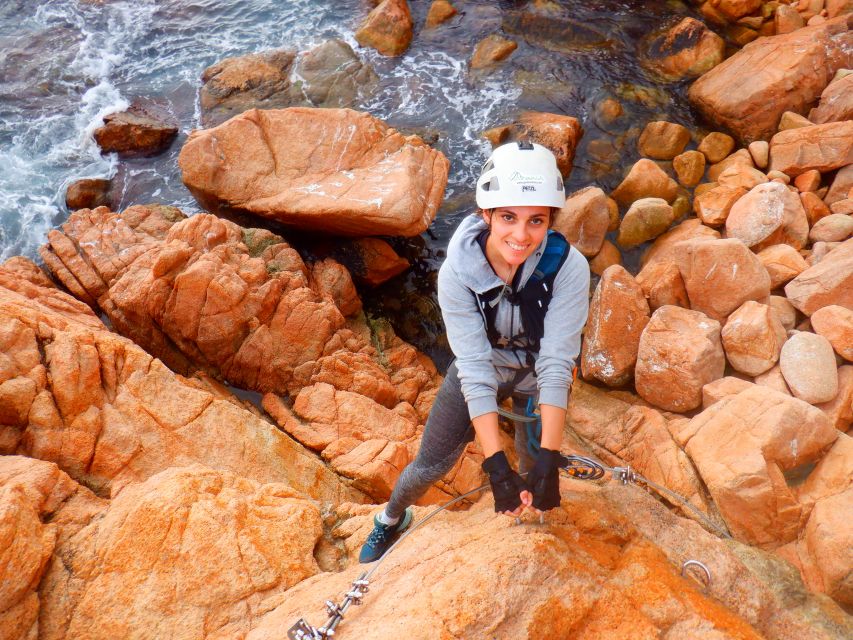
The scenery is the reward for every awkward step. You climb along enormous cliffs with the Mediterranean stretching toward the horizon. The combination of rock close to your body and open sea beneath you creates a viewpoint you cannot get from a normal coastal path.
The route also makes a strong holiday memory because it gives you an active way to see the Costa Brava. You are not just stopping for a photograph. You become part of the scene, clipped to the cliff while the sea rolls below.
Photos are included in the price, and this is one of the experience’s most practical extras. You can concentrate on climbing instead of worrying about protecting your phone. The images can also show the scale of the rock and the sea better than a quick selfie from a safe platform.
One caution is the weather and heat. A July outing was described as very hot, even though the scenery was excellent. Comfortable clothing, water, and a sensible start time matter. The tour duration is three hours, so you should not treat hydration as an afterthought.
What the $41 price includes
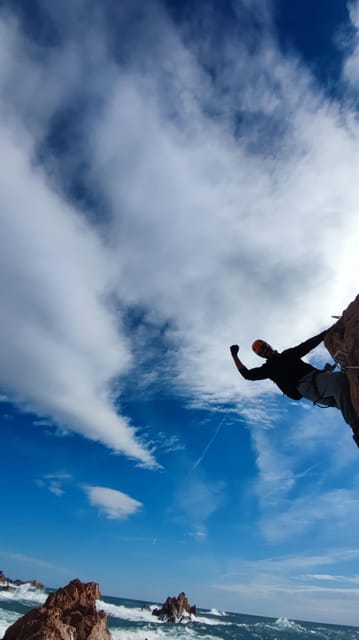
At $41 per person, this is a fair price for an activity that combines a certified guide, climbing equipment, insurance, photos, and refreshments at the end.
The value depends on how much of that package you would otherwise need to arrange yourself. Equipment rental and a guide are not minor details on a via ferrata. Proper instruction and supervision are what let a beginner try the route with a reasonable safety structure.
The photos add value too, especially if you are visiting for a special occasion or want a record of the experience. Refreshments after the climb are a small but welcome finish, particularly after a hot or strenuous morning.
You still need to pay for or arrange your own transportation to the meeting point. The price also does not change the physical demands of the activity. If you join only to admire the coast and dislike exertion, a standard coastal outing would be a better use of your money.
Free cancellation up to 24 hours before the activity and the option to reserve now and pay later make planning easier. Still, read the meeting instructions carefully. Flexibility with payment does not mean flexibility with arrival time.
Who should book this climb?
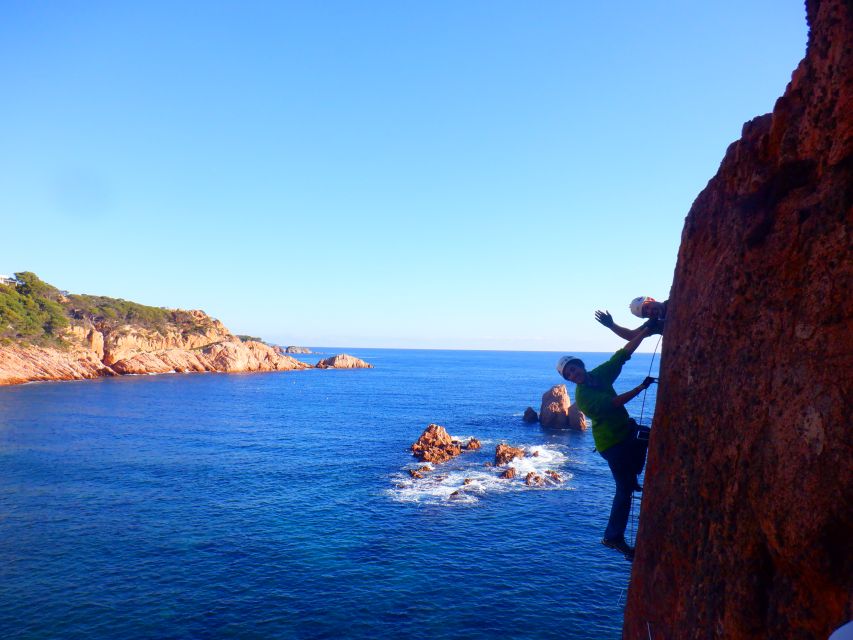
I would recommend Cala del Molí to you if you enjoy outdoor activity, have a reasonable fitness level, and want something more memorable than a normal beach day. It is especially suitable for adventurous couples, active families with older children, and first-time via ferrata participants who want professional instruction.
Children under 10 are not accepted. The activity is also not suitable for pregnant women, wheelchair users, people with mobility impairments, people who are afraid of heights, or anyone over 130 kilograms or under 40 kilograms.
You do not need to be an expert climber, but you do need to be willing to climb. Beginners can enjoy the first part, and the midway exit offers a useful safety valve. If your main concern is fear rather than fitness, know that the views come with real exposure. A guide can support you, but cannot make the cliffs disappear.
Final verdict: should you book it?
Book this experience if you want a genuine Costa Brava adventure with excellent sea views, a small group, and attentive instruction. The included equipment, insurance, guide, photos, and refreshments make $41 strong value for a three-hour activity.
I would be more cautious if you have low fitness, serious mobility limits, or a strong fear of heights. Also check the date carefully, since the second section is closed from December 1 through June 1. For most active visitors who want a challenge without signing up for technical mountaineering, Cala del Molí offers an unusual and rewarding way to meet the Mediterranean coast.
FAQ
Where does the Cala del Molí via ferrata activity meet?
The meeting point is Calle Sicilia n50 in Sant Feliu de Guíxols, Catalonia.
How long does the activity last?
The activity lasts about three hours. Starting times vary, so you need to check availability when booking.
Is transportation included?
No. You must arrange your own transportation to the meeting point.
What languages do the guides speak?
The guides provide instruction in English, Italian, French, and Spanish.
Is the full via ferrata open all year?
No. The second part is closed from December 1 through June 1. During that period, you complete only the first section.
What should I bring?
Bring water, comfortable clothes, outdoor clothing, sports shoes, a daypack, and hiking pants. Bare feet, alcohol, and drugs are not allowed.
Recently listed in Costa Brava
- Tossa de Mar: Scuba Diving Experience for Beginners★ 4.9 · 232 reviews
- Tossa de Mar: PADI Discovery Scuba Diving in Costa Brava★ 4.8 · 276 reviews
- From Sant Feliu de Guíxols: Kayak and Snorkel in Costa Brava★ 4.6 · 297 reviews
- Lloret de Mar: Scuba Diving Experience no License Required★ 4.7 · 107 reviews
- Lloret de Mar: Sunset Catamaran Cruise with DJ and Drinks★ 4.6 · 286 reviews
- Lloret de Mar: 3-Hour Kayak and Snorkel Tour on Costa Brava★ 4.6 · 117 reviews
- L’Estartit: Costa Brava Boat Trip to Les Illes Medes★ 4.7 · 101 reviews
- L’Estartit: Boat Trip to the Medes Islands and the NP Caves★ 4.6 · 207 reviews
Costa Brava Tours, compared.
Lloret de Mar: Catamaran Sailing Cruise with BBQ and Drinks
Read our review →
From L’Estartit: Snorkeling Trip to the Medes Islands
Read our review →
Costa Brava: Sea Caves Kayaking and Snorkeling Tour
Read our review →Blanes: Marimurtra Botanical Garden Entry Ticket
Read our review →
From Roses: Catamaran Cruise Cap Norfeu – Cadaqués
Read our review →
Cap Norfeu: Costa Brava Catamaran Trip with Underwater Views
Read our review →Browse the lists this tour appears in