Reviewed · TICKETS
Sant Pau Recinte Modernista Entrance Ticket in Barcelona
A hospital can be a work of art. Sant Pau Recinte Modernista gives you that rare combination: dazzling Catalan Modernisme architecture and a thoughtful look at how medical care worked in the past. I like the freedom to explore without a large group, and I love the restored pavilions, tiled tunnels, stained glass, and peaceful gardens. The $21.78 admission is reasonable if you value architecture and history, though the self-guided route can feel confusing.
You’ll begin with a mobile ticket at the Administration Pavilion and set your own pace during opening hours. The site is near the Sagrada Família, making it an easy pairing, and advance booking protects you from being turned away during a busy period. The main caution is that the ticket does not include a guide or audio device, and some visitors find the printed directions and signs less clear than they should be.
In This Review
- Key points to know before you go
- Why Sant Pau feels different from most Barcelona sights
- Starting at the Administration Pavilion
- Sant Salvador Pavilion and the hospital story
- Pavilions, mosaics, and the art of medical care
- The underground tunnels are more than a curiosity
- The Main Hall and Sant Jordi Pavilion
- How long should you allow?
- Is the $21.78 ticket good value?
- Using the map and optional audio guide
- Getting there and planning your visit
- Who will enjoy Sant Pau most?
- Should you book the Sant Pau entrance ticket?
- FAQ
- How long does the Sant Pau visit take?
- Is the ticket guided?
- Does the ticket include the audio guide?
- Can I use a mobile ticket?
- Is Sant Pau near public transportation?
- What is the cancellation policy?
Key points to know before you go
- The former hospital is a full Modernisme complex: You move among several pavilions rather than visiting one grand room.
- The underground tunnels are part of the story: These tiled passages once connected the hospital buildings and helped move patients around the site.
- Your visit is self-guided: A map and written information help, while an audio device costs an additional €4.
- Sant Pau is close to Sagrada Família: You can combine two major Barcelona sights without crossing the city.
- Plan on 1 to 2 hours: One and a half hours works well for a steady visit, but readers, photographers, and architecture fans may want longer.
- Prebooking has practical value: It guarantees entry and can provide more flexibility than buying directly, according to the booking details supplied.
Why Sant Pau feels different from most Barcelona sights
Barcelona has no shortage of ornate buildings, but Sant Pau asks you to look at architecture through a practical lens. This was a hospital complex, designed not simply to impress but to create a better setting for care. The pavilions, gardens, corridors, and service tunnels all formed part of that idea.
The complex is linked to the Hospital de la Santa Creu i Sant Pau, whose story reaches back to 1401 and continues into the 21st century. That long timeline gives the visit more weight than a simple architecture stop. You are not only admiring colorful tiles and sculpted façades. You are seeing a former medical institution and learning how its buildings supported patients and staff.
The site also gives you breathing room. Several Barcelona attractions can feel packed and hurried, but Sant Pau is often quiet by comparison. That makes it easier to stop beneath a dome, read an exhibit, or study a mosaic without being pushed along.
I would especially recommend it if you want something beyond the usual Gaudí circuit. You still get the elaborate forms, bright ceramics, and decorative details associated with Barcelona’s Modernisme movement, but the setting feels more open and less theatrical.
A few more Barcelona ideas to compare
- Barcelona: Sagrada Familia Entry Ticket with Audio Guide
★ 4.6 · 105,312 reviews - Barcelona: Park Güell Admission Ticket
★ 4.4 · 76,534 reviews - Barcelona: Casa Batlló Entry with Self-Audioguide Tour
★ 4.7 · 25,359 reviews
Starting at the Administration Pavilion
Your visit begins at the Administration Pavilion, where you show the mobile voucher at the entrance. The check-in process is simple. One useful detail from the supplied experience information is that advance tickets may offer some flexibility if you arrive earlier than the time printed on your ticket, though you should not count on that during the busiest periods.
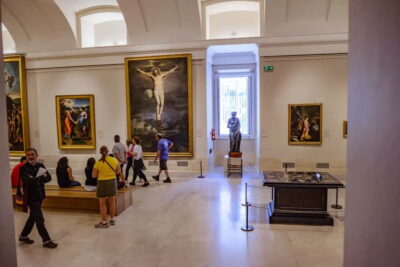
The first indoor section introduces the hospital’s development and its artistic purpose. An interactive touch table and video presentation help explain how the institution changed over time. This is a good place to slow down for a few minutes because the rest of the visit makes more sense once you understand that Sant Pau was planned as a working medical campus.
The entry ticket is not a guided tour. You will explore independently, using the available map and written information. The exhibits are translated into English, which makes the visit manageable for English-speaking visitors, but the quality of the route-finding seems uneven. Some people find the map easy to follow, while others feel they missed rooms or buildings because the signs were not always obvious.
My advice is simple: take a moment at the start to study the map. Do not rush into the first attractive courtyard. Sant Pau is large enough that a little planning will help you cover the areas that matter most.
Sant Salvador Pavilion and the hospital story
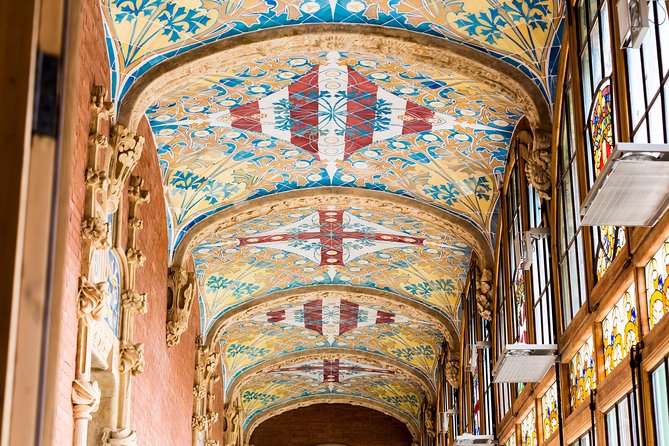
The Sant Salvador Pavilion presents the timeline of the Hospital de la Santa Creu i Sant Pau, from its medieval foundation in 1401 through its later development and modern era. This stop gives the complex a human purpose. The buildings are beautiful, but the hospital story explains why they were arranged as they were and how medical treatment changed.
On the upper floor, you will find a contemporary installation representing a dragon. It honors Lluís Domènech i Montaner, the key Modernisme architect behind the complex. The piece adds a modern note to an otherwise historic setting and connects the hospital to the imagination and symbolism of Catalan Art Nouveau.
If you are mainly interested in architecture, you might be tempted to skip the historical displays. I would not. The exhibition helps you see Sant Pau as more than decorative façades. It explains the thinking behind the complex and gives meaning to the separation of pavilions, open spaces, and underground routes.
This part is also useful for families and anyone who does not usually seek out architectural sites. A touch table and video are easier to absorb than a long wall of text, and they provide a clear starting point for the rest of the visit.
Pavilions, mosaics, and the art of medical care
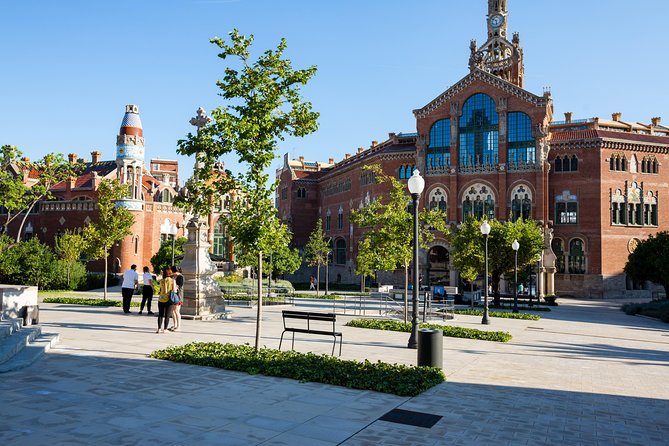
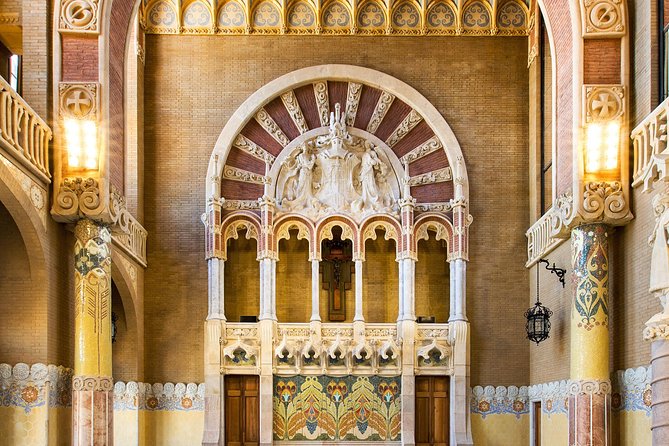
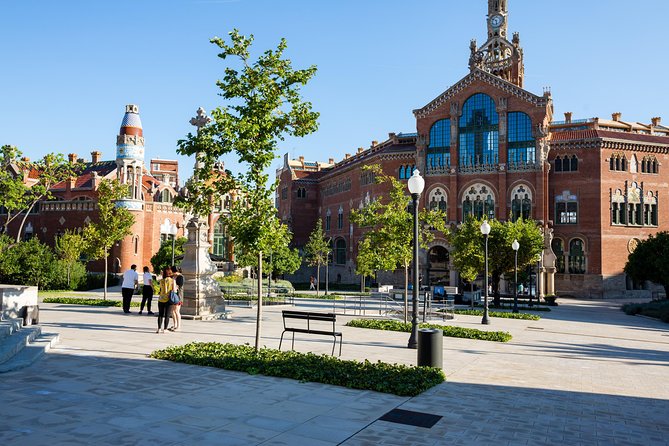
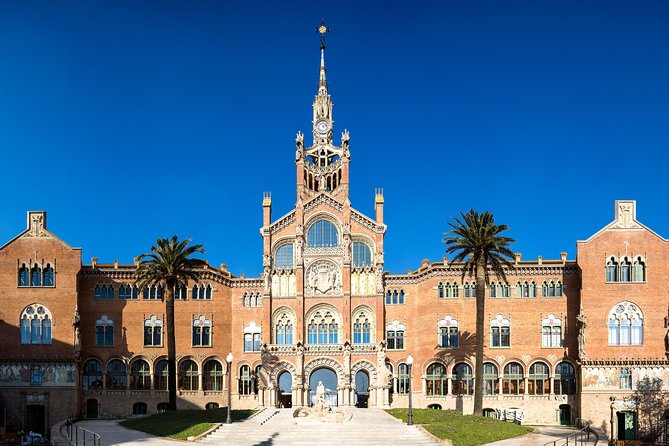
From the exhibition spaces, you continue through the restored pavilions and gardens. The strongest visual impact comes from the color and detail. Expect stained glass, sculptures, domes, ceramic tile, exterior frescoes, and carefully restored decorative work.
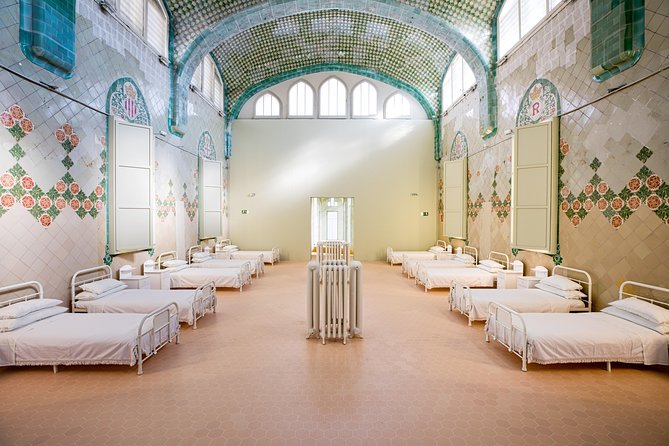
The Sant Rafael Pavilion is one of the important interior stops. It helps you picture how the hospital operated, while also giving you a close look at the materials used throughout the complex. Tilework is especially impressive, and the restoration has preserved the strong colors and patterns that make Sant Pau so memorable.
The old Surgery Room adds a more direct connection to medical history. It is not just another ornate hall. Here, the building’s beauty is placed beside the practical realities of treatment. You can also see old hospital equipment, a small but valuable detail for anyone interested in medicine or social history.
The Lluís Domènech i Montaner Room, Pau Gil Room, and Main Hall continue the architectural tour. Each space contributes something different, from grand proportions to decorative surfaces. I found the variety important: Sant Pau does not rely on one famous room. Its appeal builds as you move from pavilion to pavilion.
Look up and look outward. Rooflines, domes, stained glass, sculptural details, and painted surfaces reward a slow pace. The gardens also matter. They soften the institutional setting and help explain the original idea that light, air, plants, and pleasant surroundings could support recovery.
Same base, a different kind of afternoon:
- Barcelona: 24 or 48-Hour Hop-On Hop-Off Bus Tour
★ 4.4 · 20,872 reviews - Barcelona: Park Guell Guided Tour with Skip The Line Entry
★ 4.7 · 17,563 reviews - Barcelona in 1 Day: Sagrada Familia, Park Guell,Old Town & Pickup
★ 5.0 · 13,541 reviews - Barcelona Aquarium: Entry Ticket
★ 4.3 · 13,335 reviews
The underground tunnels are more than a curiosity
The network of underground tunnels is one of Sant Pau’s most memorable features. These passages connect the pavilions and extend toward the gardens. They were used to move patients and supplies without sending every activity through the outdoor areas.
The tunnels make the complex easier to understand. Above ground, the pavilions can look like separate works of art. Below ground, you see the infrastructure that tied them together. The tiled passageways also give the visit a change of mood, shifting from open gardens and decorated façades to a more enclosed route.
Allow enough time for this section. It is easy to spend most of your visit looking at the exteriors and then hurry through the tunnels. That would miss one of the clearest examples of how Sant Pau combined design with hospital function.
The route can be less straightforward than expected. Signposting is not always consistent, and some sections may be closed for events or other reasons. Keep your map with you and ask staff if you are unsure where a tunnel or pavilion leads.
The Main Hall and Sant Jordi Pavilion
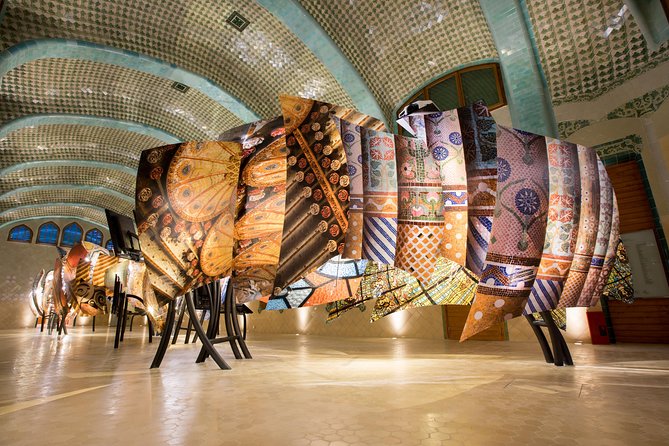
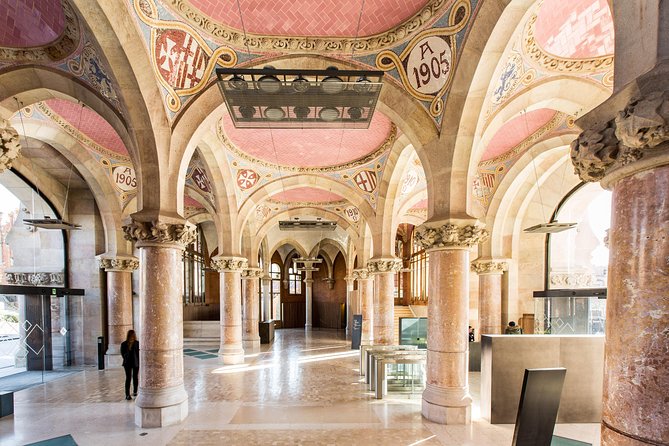
The Main Hall provides one of the grandest interior moments of the visit. It gives you a sense of the scale and ambition of the complex. After the smaller displays and service areas, this room feels like a visual payoff.
The Sant Jordi Pavilion is used for rotating temporary exhibitions. Its contents can change, so it is best to treat it as an added feature rather than the main reason to buy your ticket. If a temporary show interests you, it can extend the visit. If not, the permanent architecture and hospital displays remain the main attraction.
The order of the route may vary depending on closures and how you move through the site. This is one reason the experience does not feel as polished as a fully guided visit. Still, the flexible format has a real advantage: you can spend ten minutes on a mosaic or move quickly through a display that does not interest you.
How long should you allow?
The stated visit time is about one to two hours. I think 90 minutes is a useful target for most people. That gives you time for the main exhibition, several pavilions, the tunnels, gardens, and the key rooms without turning the visit into an all-day project.
You should allow more time if you read every panel, use the audio guide, or take photographs. Architecture fans may want to linger over the façades and roof details. People with a strong interest in medicine will also find plenty to examine in the hospital displays and old equipment.
A short visit can work, but rushing reduces Sant Pau to a quick photo stop. The point is not only to see a pretty building. It is to understand the relationship between the buildings and the care they once provided.
Is the $21.78 ticket good value?
At $21.78 per person, the ticket is not a bargain-basement attraction, but it offers more than a single room or façade. You get access to a large complex with restored pavilions, gardens, tunnels, exhibitions, and historic medical spaces.
I consider the price fair for architecture lovers and first-time Barcelona visitors who want a major sight that is often calmer than the city’s busiest attractions. It is also good value if you plan to spend the full 90 minutes to two hours inside.
The value is weaker if you only want outdoor photographs or if you dislike self-guided museums. One visitor found little benefit in paying for entry when parts of the complex were blocked for an influencer event. That is an important reminder: temporary closures can affect what you see, and the experience depends on access to the route.
The ticket can cost the same as booking directly through the Sant Pau site, while offering useful cancellation or change flexibility under the stated terms. You can cancel for a full refund up to 24 hours before the start time. Less than 24 hours is too late for a refund or accepted changes.
Using the map and optional audio guide
The printed guide is helpful, and the exhibits have English translations. Still, I would pay the extra €4 for the audio device if you want more context. Several people found it worthwhile, while others felt the listening device and directions were not well organized.
This is not a deal-breaker, but it shapes the visit. Without audio, you will get the visual experience and the basic historical information. With audio, you may better understand the hospital’s design, treatment practices, and the role of Domènech i Montaner.
Do not assume the prepaid admission includes the audio guide. It does not. The ticket covers entry only, and food and drinks are also not included.
Getting there and planning your visit
Sant Pau is located on Sant Antoni Maria Claret in central Barcelona. It is near public transportation, and the green line of the hop-on hop-off bus stops directly outside at stop 12. The complex is also a short distance from the Sagrada Família, making the two sights a natural combination.
You can begin the self-guided visit at the Administration Pavilion during opening hours. The ticket is offered as a mobile voucher, and confirmation arrives at booking. Service animals are allowed, and most people can participate.
Accessibility may require a little planning. The route includes stairs, and access to lifts may not always feel easy or immediate. If you have bad knees or prefer to avoid stairs, ask staff about the available lift access when you arrive.
The site has indoor areas with air conditioning and seats, which can help on a hot day or during rain. Barcelona weather can change quickly, and Sant Pau gives you enough indoor space to keep the visit comfortable.
Who will enjoy Sant Pau most?
I would choose this experience for:
- Architecture fans who want to see Catalan Modernisme beyond the most famous names.
- History lovers interested in hospitals, public health, and changes in medical treatment.
- Visitors looking for a quieter major sight.
- Families who appreciate visual displays and room to move at their own pace.
- Anyone combining Sant Pau with Sagrada Família.
- Photographers who enjoy mosaics, stained glass, domes, and garden views.
I would think twice if you want a live guide, a tightly directed route, or a short attraction with no reading. The self-guided format is flexible, but it places more responsibility on you. The route may also feel incomplete if a pavilion is closed.
Should you book the Sant Pau entrance ticket?
Yes, if you like architecture, hospital history, or unusual Barcelona sights. Sant Pau gives you beautiful buildings, meaningful exhibits, underground tunnels, and gardens in one visit. Its 4.6 rating from 230 reviews and 90 percent recommendation rate fit my assessment: the site itself is excellent, while the navigation and optional audio arrangements are the weaker points.
Book ahead if your Barcelona schedule is tight or you are visiting during a busy period. Arrive ready to spend at least 90 minutes, study the map, and consider adding the €4 audio guide. If you want a polished guided experience, this ticket may feel too bare-bones. If you prefer freedom and a chance to explore at your own speed, it is a smart and worthwhile stop.
FAQ
How long does the Sant Pau visit take?
The visit lasts approximately one to two hours. Around 90 minutes is enough for the main exhibitions, pavilions, tunnels, rooms, and gardens, while architecture fans may want longer.
Is the ticket guided?
No. The admission ticket provides entry for a self-guided visit. A map and English-translated exhibits are available, and an audio device can be rented for €4.
Does the ticket include the audio guide?
No. The audio guide is not included in the admission ticket. It can be rented separately at the entrance for €4.
Can I use a mobile ticket?
Yes. The experience provides a mobile ticket, and confirmation is received at the time of booking.
Is Sant Pau near public transportation?
Yes. Sant Pau is near public transportation. The green line of the hop-on hop-off bus stops outside at stop 12, and the site is a short distance from Sagrada Família.
What is the cancellation policy?
You can cancel up to 24 hours before the experience start time for a full refund. Cancellations or changes made less than 24 hours before the start time are not accepted for a refund.
Recently listed in Barcelona
- Transfers From Cruise Port to Barcelona Airport★ 4.5 · 155 reviews
- Bohemian Barcelona Neighborhood Evening Tapas & Wine Tour★ 5.0 · 419 reviews
- Park Guell Guided Tour with Skip the Line Tickets★ 4.0 · 739 reviews
- Barcelona Sunset Cruise with Light Snacks and Open Bar★ 5.0 · 476 reviews
- Montserrat very early : Hiking, Abbey, very small group★ 5.0 · 127 reviews
- Barcelona: Sagrada Familia, Park Guell & Tapas Private Tour★ 5.0 · 903 reviews
- Authentic Flamenco Show Barcelona : Intimate Casa Sors Experience★ 5.0 · 809 reviews
- Barcelona Expert Tour with Local Guide in Eco Tuk Tuk Private★ 5.0 · 216 reviews
Tickets, compared.
Sagrada Familia Entry Ticket with Audio Guide
Read our review →