
Reviewed · TENERIFE TOURS
Santa Cruz de Tenerife Palmetum Entry Ticket
A rubbish dump became a palm paradise. The Palmetum of Santa Cruz de Tenerife turns a former 12-hectare municipal landfill into a botanical garden filled with about 3,000 tropical and subtropical plant species. I like the mix of worldwide palm collections and sweeping views over the city and sea. I also like the project itself: you are enjoying a calm green space created from an urban eyesore.
The visit is easy to fit into a cruise day or a city break, and the $7 price is hard to fault. The main drawback is that some ponds and signs may need more care, and visitors with walking difficulties should know that the garden is built on a former rubbish mound with sloping paths.
In This Review
- Key points before you go
- From rubbish mound to botanical garden
- The palm collection is the main event
- A walk shaped by water and volcanic stone
- The best views are part of the ticket
- How long should you allow?
- Walking conditions and accessibility
- Birds, butterflies, and small details
- Food, rules, and what to pack
- Is $7 good value?
- Who will enjoy the Palmetum most?
- Should you book the Palmetum?
- FAQ
- Where is the Palmetum located?
- How much does admission cost?
- How long is the Palmetum ticket valid?
- How many plant species are in the Palmetum?
- How many palm species can I see?
- Is the Palmetum wheelchair accessible?
- Are food and drinks included?
- Can I cancel my booking?
- Are English-language services available?
Key points before you go

- More than 600 palm species: The collection is arranged by geographic origin, with strong displays from Madagascar, the Caribbean, Polynesia, and other island regions.
- A former landfill with a new purpose: The garden is a long-running environmental and horticultural project, not just a decorative park.
- Ocean and city viewpoints: Benches around the upper sections give you room to pause above the coastline.
- Water features and volcanic rock: Two lakes, a stream, three waterfalls, and large volcanic stones add variety to the walk.
- Good cruise-port option: A walk from the ship can take about 30 minutes along a pleasant route, according to one detailed visit.
- Bring modest expectations for refreshments: There may be a small coffee or snack area, but this is not a full restaurant attraction.
From rubbish mound to botanical garden
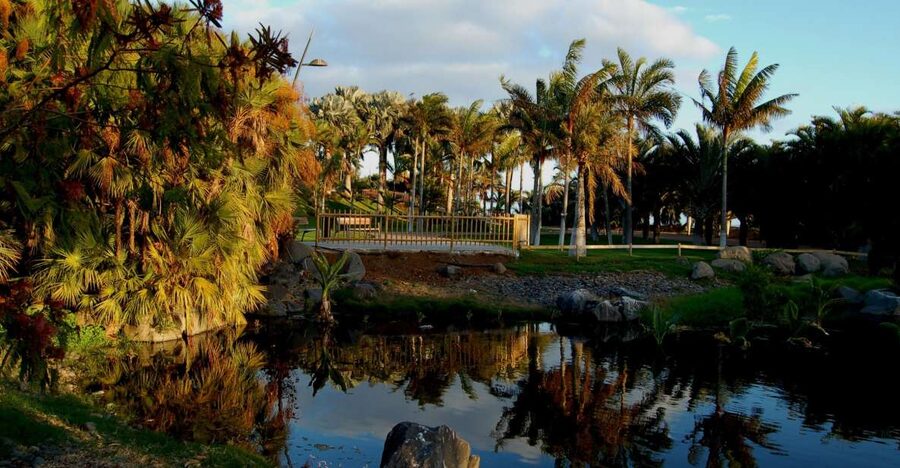
The Palmetum has an unusual beginning. This was once a municipal rubbish dump. Years of garden work, planting, drainage, water features, and cooperation with botanical institutions around the world changed the site into a public garden.
That background gives the visit more meaning than a simple stroll among ornamental plants. You can see how a difficult piece of city land has been given a useful second life. I find that the garden works best when you pay attention to both sides of the story: the plants are the immediate pleasure, while the reclaimed site provides the larger lesson.
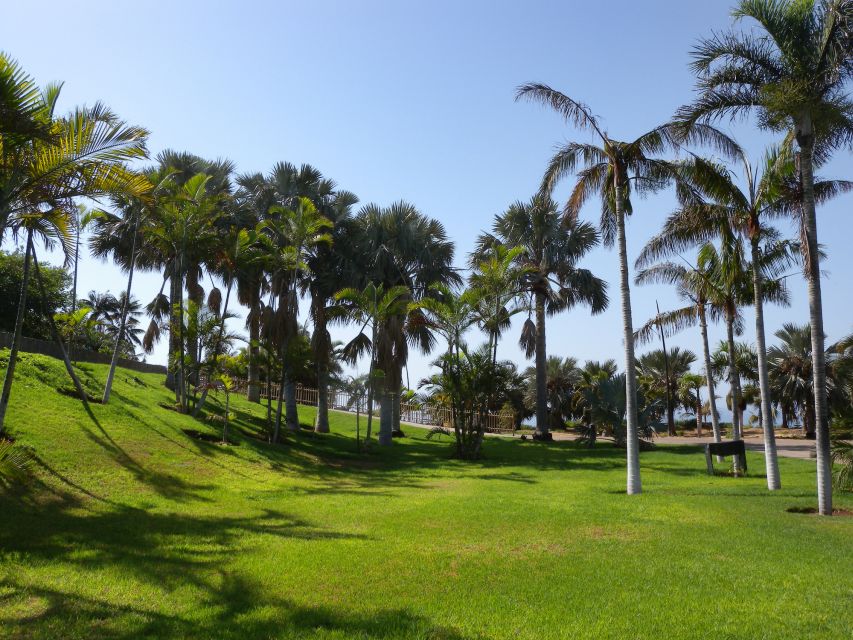
The garden covers 12 hectares, so it is not a tiny collection squeezed into a few glasshouses. You walk through a series of planted areas on the slopes and upper sections of the former landfill. The setting also gives the Palmetum a natural viewing platform. From several points, you can look toward the ocean and across Santa Cruz de Tenerife.
This is a botanical garden built for wandering rather than rushing. You can spend a short visit seeing the main areas, or stretch the outing over several hours by stopping at benches, reading plant information, and watching birds around the water.
A few more Tenerife ideas to compare
- Siam Park Entry Tickets
★ 4.5 · 15,710 reviews - Tenerife: Eco-Yacht Whale and Dolphin Watching and Swimming
★ 4.7 · 15,619 reviews - Los Cristianos Respectful No-Chase Whale and Dolphin Safari
★ 4.6 · 12,782 reviews
The palm collection is the main event
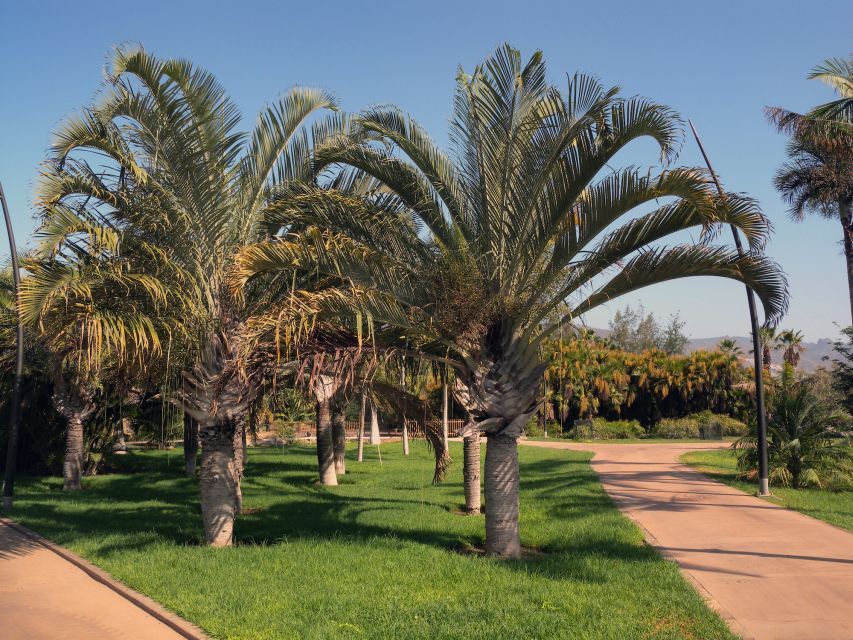
The Palmetum’s strongest feature is its palm collection. More than 600 palm species are represented, making this one of the most important palm collections in Europe. The plants are arranged according to their geographic origin, which gives the garden an educational shape rather than leaving you with a random collection of attractive trees.
You might see palms connected with island environments from Madagascar, the Caribbean, and Polynesia. The focus on island territories is especially fitting for Tenerife, itself part of an Atlantic archipelago. It also helps explain why the collection contains plants from many warm parts of the world.
I recommend taking your time with the different sections instead of treating the palms as one large display. Palm trees can look similar at a glance, but their trunks, leaves, growth patterns, and sizes vary widely. Some are tall and dramatic. Others sit lower among flowering plants, rocks, or dense greenery.
The collection is also a good reason to visit even if you are not a serious gardener. You do not need specialist knowledge to enjoy the forms and scale of the plants. If you do care about botany, the geographical arrangement and species information give the walk more substance.
A walk shaped by water and volcanic stone
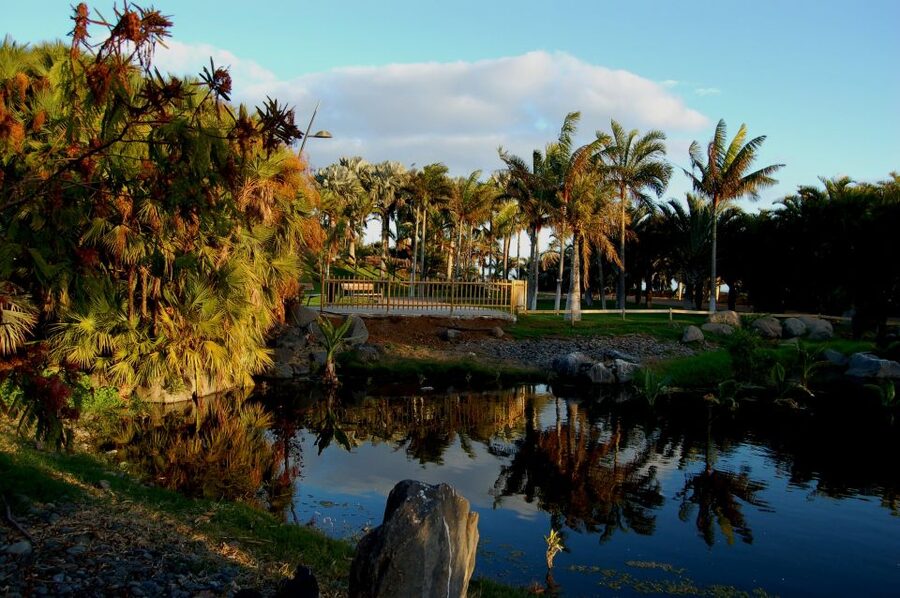
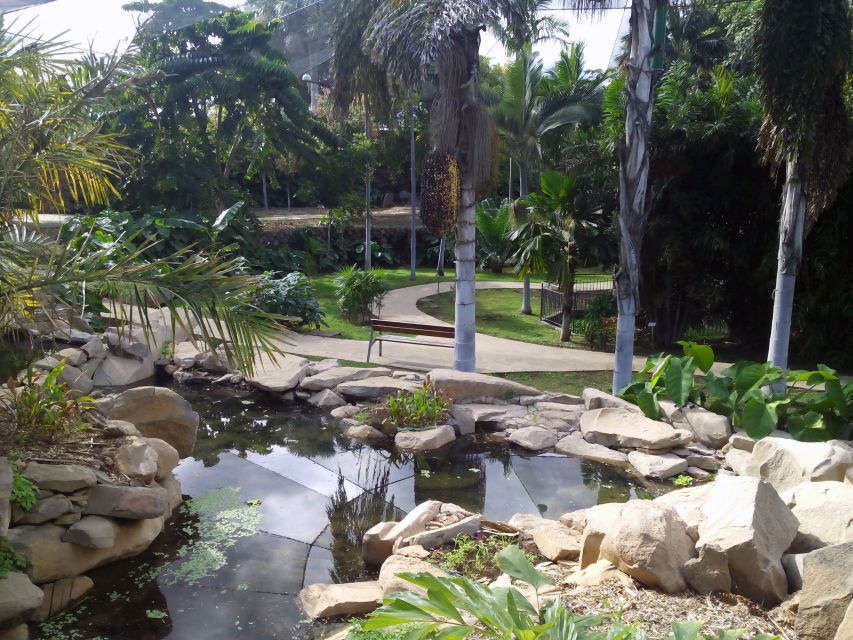
The Palmetum is not only a palm garden. Two lakes, a stream, and three waterfalls break up the route and create quieter corners. Immense volcanic rocks help the garden feel linked to the island rather than like a collection shipped in from somewhere else.
The water features add welcome variety, especially on a warm day. They provide places to stop and change the pace. They also help attract birds and insects, adding movement to what could otherwise be a very still garden.
The condition of the water may vary. One visit found some ponds looking dirty, so I would not come expecting perfectly polished displays at every turn. That is a fair criticism, though it does not erase the wider pleasure of the garden. The planting and views remain the main attractions.
The paths lead through sections with different textures and heights. You will find palms among other tropical and subtropical plants, plus areas decorated with stone and water. The design has been developed over years, and the result feels more like a series of connected garden rooms than a single open lawn.
The best views are part of the ticket
The Palmetum’s elevated position is one of its quiet advantages. As you move around the former landfill mound, the city and ocean open up below you. Several seating areas make it easy to stop for photographs or simply watch the water.
The views are especially useful if you are visiting Santa Cruz on a cruise call. A garden visit gives you something different from the usual streets, shops, and port facilities. You get fresh air, plant life, and a broad view of the coastline without leaving the city.
One particularly appealing combination is the sight of palms and pine trees set against the sea. It gives the garden a distinctly Canarian feel, even though many of the plants come from far beyond the islands.
Bring your camera, but leave time to look without it. The viewing areas are not just photo stops. They are among the best places to rest during the walk, particularly if you need regular breaks.
Same base, a different kind of afternoon:
- Tenerife: Loro Parque Entry Ticket
★ 4.8 · 12,411 reviews - Loro Parque and Siam Park Combined Admission Tickets
★ 4.7 · 7,307 reviews - Tenerife: Kayak and Snorkel with Turtles, Wetsuits Included
★ 4.6 · 7,215 reviews - Costa Adeje: Whale & Dolphin Eco-Cruise with Snacks & Drinks
★ 4.6 · 5,096 reviews
How long should you allow?
The ticket is valid for one day, and the garden can take longer than expected. A quick visit is possible, but I would allow several hours if you want to see the main plant areas, read the signs, stop at the water features, and enjoy the viewpoints.
A detailed visit lasted around four hours, with the garden becoming busier later in the day. That suggests a morning arrival may be sensible if you prefer a quieter walk. The exact length depends on your pace, mobility, interest in plant labels, and how long you spend at the overlooks.
For a cruise visitor, the Palmetum can work as a half-day outing. A walk from the ship takes about 30 minutes along a pleasant path, so you may not need a taxi for the approach. Allow extra time for the return journey and your ship’s boarding deadline.
If you are staying in Santa Cruz, the garden is easy to combine with other city sights, though the Palmetum deserves more than a rushed look from the entrance. The large site and sloping layout reward a slower visit.
Walking conditions and accessibility
The Palmetum is wheelchair accessible, which is important information for planning. Still, accessibility does not mean every visitor will find the route effortless. The garden rises over the old landfill site, and one visitor using two walking sticks found the experience difficult.
I would plan for slopes, changes in level, and a walk that may feel tiring if you have limited mobility. Benches are a real help, with seating placed at some of the ocean viewpoints and around the garden.
An elevator takes you up to the start of the walking route, according to one detailed visit. That can make the first part easier, but you should still expect movement through a large sloping park rather than a flat indoor museum.
Wear comfortable shoes and give yourself permission to stop. This is not an attraction you need to conquer quickly. The design encourages pauses, and you will enjoy the visit more if you treat the route as a gentle garden walk.
Birds, butterflies, and small details
Plants remain the reason to come, but the garden also supports wildlife. You may notice butterflies and birds moving among the trees and water areas. A kestrel hunting and hoopoes seen at close range added an unexpected wildlife element to one visit.
These sightings cannot be promised, so I would not book the Palmetum as a dedicated birdwatching tour. Still, carry binoculars if you already have them, and keep your eyes open near the lakes and planted sections.
The small details make the place feel less like a formal display. Look for the relationship between palms, volcanic stone, water, and the open sea. The Palmetum is at its best when you notice how these parts work together.
Plant signs provide information about the species and their origins. Some signs may be worn and due for replacement, so the educational side is not always perfectly maintained. Even so, the labels help explain why the collection is special and make the geographical arrangement easier to understand.
Food, rules, and what to pack
Food and drinks are not included in the ticket. There may be a small coffee or snack area with seating near a pond, but reports differ on how substantial the refreshment facilities are. I would bring water and avoid depending on the garden for a full meal.
The rules are strict but straightforward. Smoking, alcohol, drugs, drones, bikes, scooters, skateboards, skates, and pets are not allowed. Assistance dogs are permitted. You also cannot feed animals, litter, make fires, or enter while intoxicated.
The site does not allow party groups, including bachelor and bachelorette groups. Nudity is also prohibited. These rules keep the garden peaceful and protect the plants and wildlife.
Pack water, sun protection, a camera, and shoes suitable for sloping paths. If you plan to spend several hours there, a small snack may be useful, provided you follow the site rules and dispose of waste properly.
Is $7 good value?
At $7 per person, I consider this a strong-value attraction. The ticket gives you access for a full day to a 12-hectare garden with about 3,000 plant species, more than 600 palm species, water features, volcanic rock formations, and city and ocean views.
The value is even clearer for families. One family visit described the Palmetum as a low-cost break, and the space gives children room to see unusual plants, birds, water, and large rocks without the expense of a major theme attraction.
It also works well for cruise passengers who want an affordable outing close to the port. A walk of roughly 30 minutes means the overall cost can remain low, though you should watch the time carefully on a ship day.
The price does not guarantee perfect maintenance. Dirty ponds and worn signs may disappoint visitors expecting a highly polished botanical institution. I see those as limitations worth noting, but not reasons to dismiss the visit. The scale, views, plant range, and reclaimed-landfill story offer a lot for the admission fee.
The experience has an overall rating of 4.7 from 246 reviews, with especially strong praise for the palm collection, peaceful atmosphere, sea views, and value. Those strengths match what the attraction is designed to provide.
Who will enjoy the Palmetum most?
I would recommend it to plant lovers, photographers, families, cruise passengers, and anyone who wants a quiet break in Santa Cruz. You will get the most from it if you enjoy walking slowly and noticing different plant forms rather than looking for a tightly scheduled tour.
It is also a good choice for visitors interested in practical environmental projects. The transformation from rubbish dump to botanical garden gives the place a clear purpose.
You may want to choose another activity if you need a completely flat route, a full restaurant, or a short indoor attraction with guaranteed shade. The Palmetum is open-air, sloped, and spread across a sizeable area.
There is no guided tour included. A host or greeter is available in Spanish and English, but the ticket mainly provides entry. That suits independent visitors who like setting their own pace.
Should you book the Palmetum?
Book it if you want an inexpensive, peaceful outing with exceptional palms and fine views. The combination of more than 600 palm species, island-based plant sections, waterfalls, volcanic rock, and a reclaimed landfill story gives the visit real character.
I would book ahead if you want flexible planning, since cancellation is free up to 24 hours before the visit and you can reserve now and pay later. If you are unsure, the low price also makes this one of the easier Santa Cruz attractions to add to your plans.
My main advice is simple: allow more time than you first expect, wear good shoes, carry water, and do not rely on the snack area for lunch. If you can manage the slopes, the Palmetum offers a lot of nature and thoughtful design for very little money.
FAQ
Where is the Palmetum located?
The Palmetum is in Santa Cruz de Tenerife in Spain’s Canary Islands. The meeting point is at the entrance of the Palmetum park.
How much does admission cost?
The listed price is $7 per person.
How long is the Palmetum ticket valid?
The ticket is valid for one day.
How many plant species are in the Palmetum?
The garden contains about 3,000 plant species from tropical and subtropical climates around the world.
How many palm species can I see?
More than 600 palm species are represented in the collection. They are arranged according to their geographical origin.
Is the Palmetum wheelchair accessible?
Yes, the attraction is wheelchair accessible. However, the garden is built on a former landfill site, so some visitors may find the sloping route difficult.
Are food and drinks included?
No. Food and drinks are not included in the admission ticket. A small coffee or snack area may be available, but it is sensible to bring water.
Can I cancel my booking?
Yes. You can cancel up to 24 hours in advance for a full refund.
Are English-language services available?
Yes. Host or greeter services are available in Spanish and English.
Recently listed in Tenerife
- Las Galletas: Whale & Dolphin Tour with Local Skipper★ 4.8 · 397 reviews
- Tenerife: Teide, Icod de los Vinos & Garachico Full Day Tour★ 4.3 · 602 reviews
- Tenerife: Loro Parque & Siam Park Entry Ticket with Transfer★ 4.6 · 732 reviews
- Tenerife: Teide National Park Guided Buggy Tour★ 4.6 · 299 reviews
- Tenerife: Sunset Night Tour and Stargazing at Teide + Dinner★ 3.8 · 316 reviews
- Tenerife: Surfing Lesson for All Levels, Photos included★ 4.9 · 861 reviews
- Tenerife: Siam Park Full-Day VIP Entry Ticket★ 4.5 · 183 reviews
- Tenerife: Sunset Catamaran Tour with Transfer, Buff & Drinks★ 4.8 · 570 reviews
Tenerife Tours, compared.

Eco-Yacht Whale and Dolphin Watching and Swimming
Read our review →
Los Cristianos Respectful No-Chase Whale and Dolphin Safari
Read our review →

Loro Parque and Siam Park Combined Admission Tickets
Read our review →
Kayak and Snorkel with Turtles, Wetsuits Included
Read our review →
Whale & Dolphin Eco-Cruise with Snacks & Drinks
Read our review →
Mount Teide Tour with Cable Car Ticket & Transfer
Read our review →Browse the lists this tour appears in