
Reviewed · TAPAS TOURS
Seville: Small Group Jewish Quarter Tour with Tapas & Drinks
History tastes better with tapas. This three-hour walk through Seville’s former Jewish Quarter combines medieval stories, narrow lanes, and a shared Andalusian meal. I especially like the small groups of no more than 10 and the chance to eat with the guide afterward. The main consideration is that the food comes at one restaurant after the walk, not as a series of stops around the neighborhood.
Guides such as Carmen, Barbara, Clara, Miguel, and Valentin have earned especially warm praise for clear storytelling and strong local knowledge. I also like the way the tour deals with both peaceful coexistence and painful chapters in Seville’s past. Some dishes may be merely good rather than memorable, so book this mainly for the history, company, and setting, with dinner as a valuable extra.
In This Review
- Key points at a glance
- Starting beside Seville Cathedral
- Plaza del Triunfo and Patio de Banderas
- Plaza de Doña Elvira and Santa Cruz
- Calle Agua and the old palace wall
- Legends, symbols, and the darker side of the past
- Murillo Gardens and the quieter lanes
- Why the small group makes a difference
- Dinner at a local restaurant in Calle Lope de Rueda
- The old bodega and underground feature
- Is $59 a fair price?
- Who will enjoy this Seville experience?
- Should you book the Jewish Quarter walk?
- FAQ
- Where does the tour meet?
- How will I recognize the guide?
- How long is the walking portion?
- What places are included on the route?
- What food is included?
- How many drinks are included?
- Can dietary requirements be accommodated?
- What happens if I am the only person booked?
Key points at a glance
- A 1-hour-45-minute walk through Santa Cruz: See the area around the Alcázar, Calle Agua, Plaza de Doña Elvira, Santa Cruz Square, and Murillo Gardens.
- Stories give the quarter meaning: Hear about Jewish, Christian, and Muslim life, old water pipes, local legends, and figures such as Susona.
- One relaxed meal follows the walk: Expect three courses of Andalusian tapas rather than several rushed food stops.
- Drinks are part of the price: Two drinks per person are included, followed by a local liquor for a toast.
- The restaurant has an underground surprise: The meal takes place in an old bodega setting with an archaeological feature.
- A good first-night choice: The route helps you understand Santa Cruz before you explore Seville on your own.
Starting beside Seville Cathedral
Meet at the large statue of the Immaculate Conception in Plaza del Triunfo, between the Cathedral and the Alcázar. This is a busy meeting area, so allow extra time to locate the guide. Look for a white lanyard and white bag marked Seville Unique Experiences, and check your messages for final meeting details.
Punctuality matters. Once the group leaves Plaza del Triunfo, late arrivals cannot join. The tour runs rain or shine, so bring suitable shoes and a light rain layer if the forecast looks doubtful.
The opening location is useful because Seville’s biggest sights crowd together here. You will not enter the Cathedral or Alcázar on this tour, but the guide uses them to explain the setting and the political power that shaped the surrounding quarter.
More Tapas Tours in Seville
- Sevilla Food Tour: Tapas, Wine, History & Traditions
★ 5.0 · 3,468 reviews - Ultimate Seville Tapas, Wine & History Small Group Tour
★ 5.0 · 1,766 reviews - Seville: Tapas Crawl
★ 4.9 · 1,705 reviews
Plaza del Triunfo and Patio de Banderas
The walk begins around Plaza del Triunfo, then moves toward Patio de Banderas. This first section sets up the story of Seville’s changing rulers and religious communities.
Patio de Banderas also gives you a helpful view toward the Alcázar walls. The tour does not replace a full visit inside the royal palace, but it gives you context for the building’s role and for the border between palace grounds and the former Jewish neighborhood.
I find this opening especially useful if you are new to Seville. Instead of seeing the Alcázar as an isolated monument, you begin to understand how its walls affected daily life in the lanes beside them.
Plaza de Doña Elvira and Santa Cruz
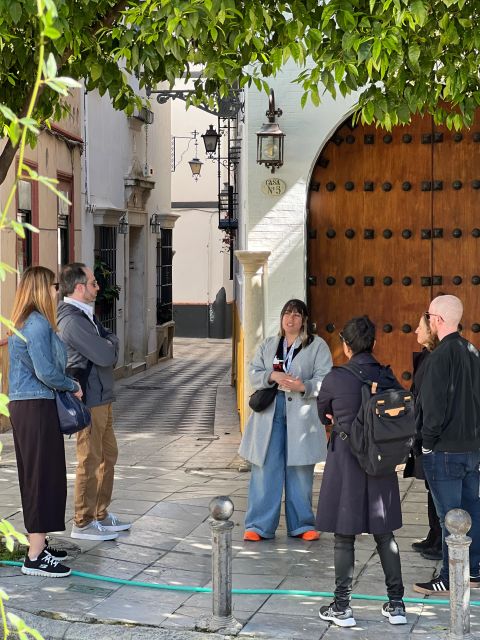
From there, the group continues through Plaza de Doña Elvira and into the Santa Cruz area. This is the Seville many people picture: whitewashed buildings, flower-filled balconies, narrow passages, traditional patios, and streets that seem to turn without warning.
The beauty can also make the area feel like a decorative stage if you do not know what you are looking at. A strong guide helps move the quarter beyond pretty photographs by explaining who lived here, how the streets developed, and what changed after the Jewish community was expelled.
Carmen received repeated praise for making the area easy to understand and for answering questions in a warm, relaxed way. Barbara was also praised for adapting the walk when she had only one participant. Those details matter because a history walk can become dry when the guide simply recites dates. Here, the best guides appear to use stories and conversation instead.
Calle Agua and the old palace wall
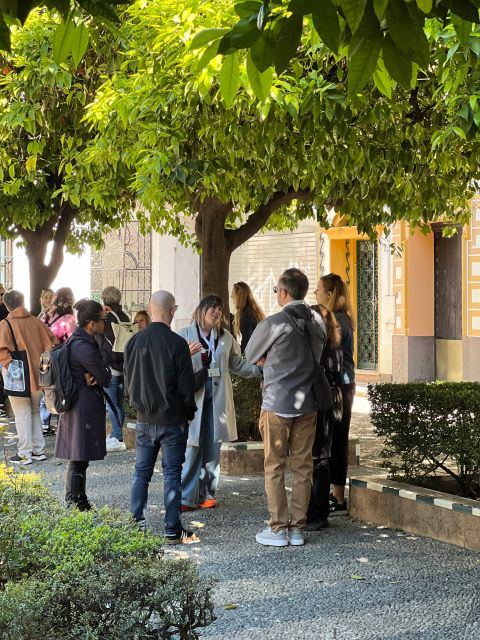
Calle Agua, or Water Alley, is one of the most atmospheric parts of the route. It runs beside the walls of the Alcázar and takes its name from the old water channels associated with the palace.
Look closely as you walk. The lane is a good example of how Seville’s past survives in street names and small features rather than only in grand monuments. One participant specifically appreciated seeing old water pipes along Calle Agua, a detail easy to miss when walking alone.
This is also where the guide can explain the physical relationship between Santa Cruz and the Alcázar. The palace wall is not just scenery. It marks a line between royal space and the neighborhood that grew beside it.
Same base, a different kind of afternoon:
- Seville: Royal Alcázar Entry Ticket
★ 4.6 · 28,378 reviews - Seville: Cathedral and La Giralda Entry Ticket
★ 4.5 · 24,592 reviews - Seville: Live Flamenco Dancing Show Ticket at the Theater
★ 4.7 · 16,396 reviews - Seville: Casa de la Memoria Flamenco Show
★ 4.8 · 12,964 reviews
Legends, symbols, and the darker side of the past
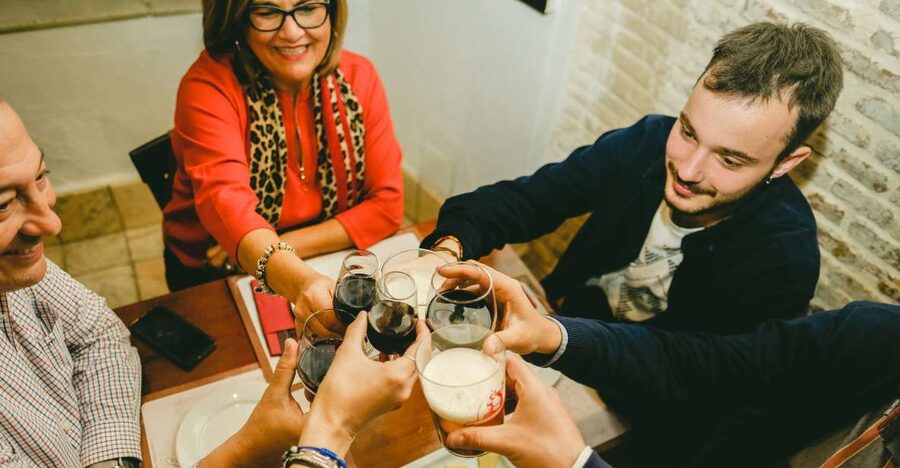
The walk does not present Seville’s past as one long story of harmony. You will hear about periods when Christian, Jewish, and Muslim communities lived together, along with later conflict, persecution, and expulsion.
The legend of Susona is one of the darker stories connected with Seville. It gives the tour an emotional turn and shows how local memory can attach itself to a particular street or character. Carmen’s storytelling received particular praise for handling difficult subjects without making the experience feel heavy from start to finish.
You may also hear about unusual discoveries connected with the old quarter, including an ancient Jewish sarcophagus found during excavation for an underground car park. Details like this help explain why the neighborhood still matters even though relatively little of the original Jewish Quarter remains visible.
That point is important. You are not touring a perfectly preserved medieval Jewish district. Much has changed, and the experience depends heavily on interpretation. If you want intact buildings with extensive original interiors, this may feel limited. If you want to understand how a vanished community shaped present-day Seville, the guide adds real value.
Murillo Gardens and the quieter lanes
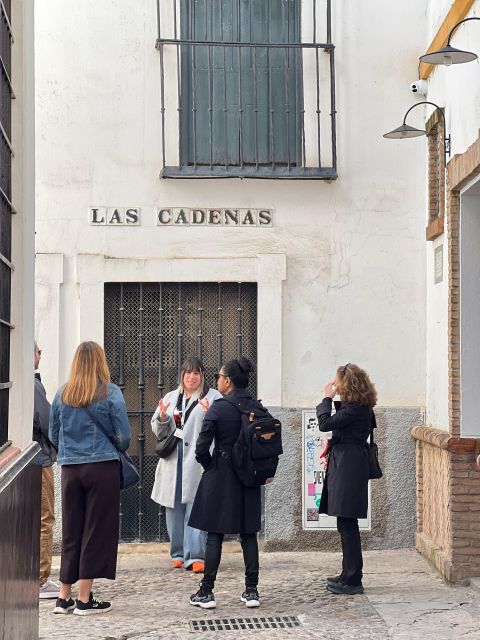
The route includes the Murillo Gardens, then continues through Santa Cruz Square, Iglesia de Santa María la Blanca, Calle Cano y Cueto, and Calle Lope de Rueda. These stops create a good rhythm, moving between open garden space, churches, small plazas, and tight residential lanes.
The listed timing gives most stops about 15 minutes, with shorter attention at Calle Cano y Cueto. That suggests a steady walking tour rather than long lectures in one place. Several participants praised the pace, saying the group did not linger too long at each introduction.
Santa María la Blanca adds another layer to the neighborhood’s religious story. You should not expect a full interior visit to every site, since the experience is primarily a walking tour. Instead, the guide uses the church and surrounding streets to show how buildings and spaces changed use over time.
The Murillo Gardens offer a welcome pause from the tight lanes. They also help connect the quarter to the wider city. By this stage, you have seen enough of Santa Cruz to recognize its layout, but the walk is not so long that your attention fades before dinner.
Why the small group makes a difference
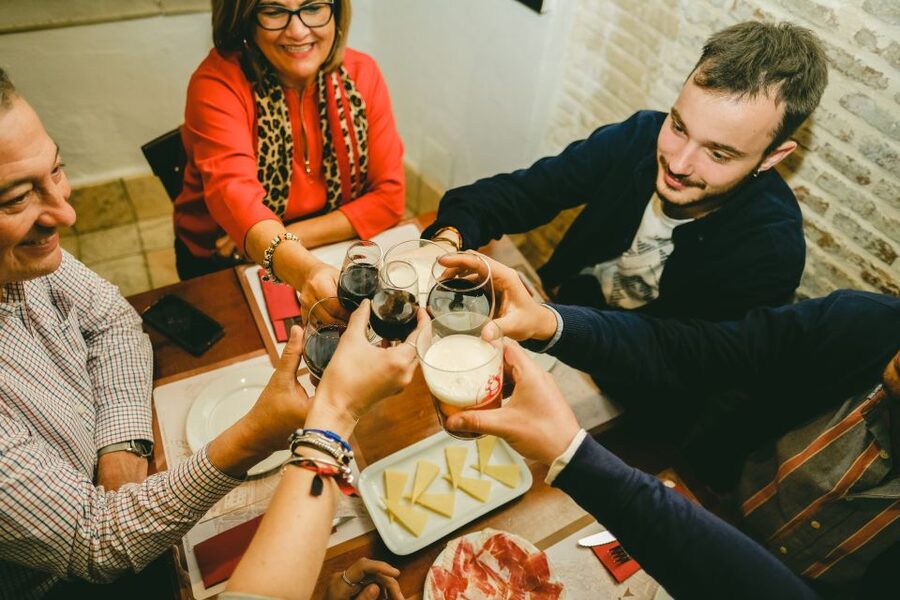
The maximum group size is 10, and that is one of the tour’s strongest features. You can ask questions without having to interrupt a large crowd, and the guide can respond to the interests of the people present.
The difference is even greater if only two or three people book the session. Several participants found themselves in tiny groups, and one person had what felt like a private tour. Solo visitors should note that at least two people are recommended for the experience to run. If nobody else has booked, the provider may contact you with other date options.
Carmen, Clara, Barbara, Miguel, Manuel, and Valentin all received strong praise at different times. The common thread is not a single personality or scripted performance. It is the combination of local pride, solid historical training, and willingness to answer questions.
Valentin was praised for bringing archaeology and history together, while Miguel was appreciated for explaining Spain’s religious past in a clear way. Clara was described as lively and entertaining, and Manuel was praised as a thoughtful host for solo participants. Your guide will vary, but the range of positive comments suggests the company has several capable people on its team.
Dinner at a local restaurant in Calle Lope de Rueda
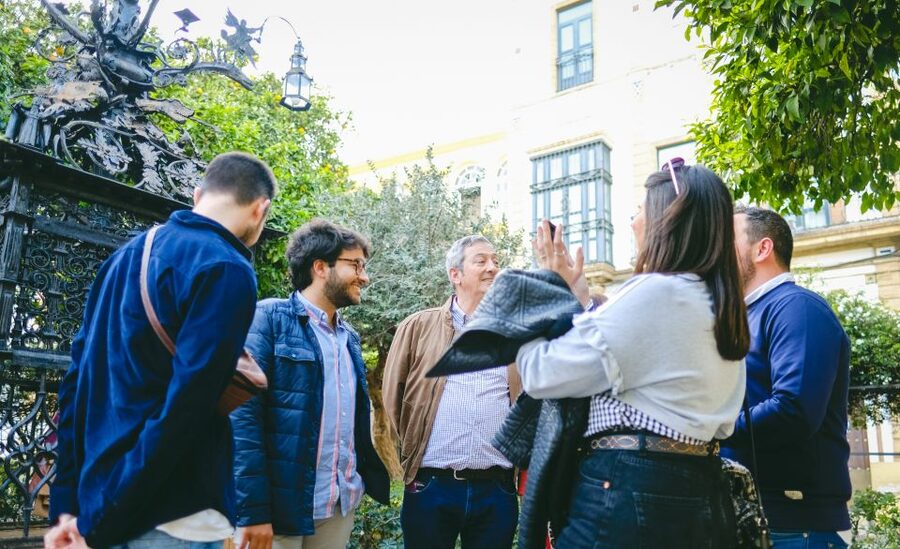
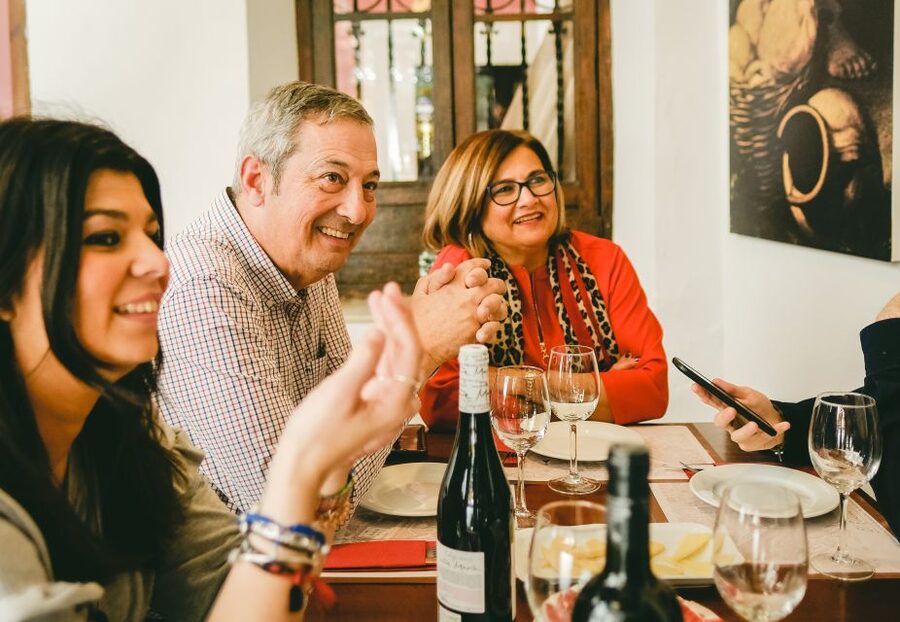
After about an hour and 45 minutes on foot, the tour ends at a restaurant in Calle Lope de Rueda. This is not a quick tasting in which you grab one bite and hurry to the next address. You sit down for roughly 65 minutes and share a three-course meal.
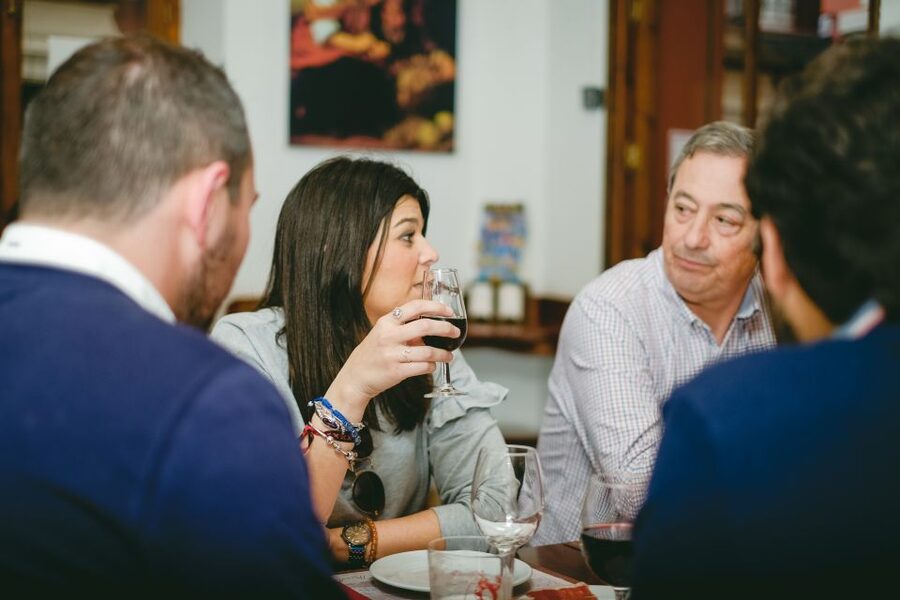
The dishes change by session, but the food usually combines vegetables with meat, fish, or both. Possible plates include salmorejo, croquetas, oxtail, spinach with chickpeas, pisto, pork cheeks, aubergines, anchovies, calamari, gazpacho, and mushrooms.
That list gives you a fair idea of the experience. You are sampling familiar Andalusian flavors in a group meal, not choosing from a full menu or taking a formal cooking class. The portions were described as generous by some participants, and several praised both the food and the wine.
The meal is also a social part of the experience. The guide usually eats with the group, which changes the tone from a standard guided walk. You can ask follow-up questions, compare notes with people from different countries, and get recommendations for the rest of your stay.
One practical point: the food is served at the end. If you expected to stop at several tapas bars during the walk, adjust your expectations. A participant specifically suggested making that order clear when booking. The single stop has an advantage, though. You can enjoy a proper shared meal without watching the clock for the next venue.
The old bodega and underground feature

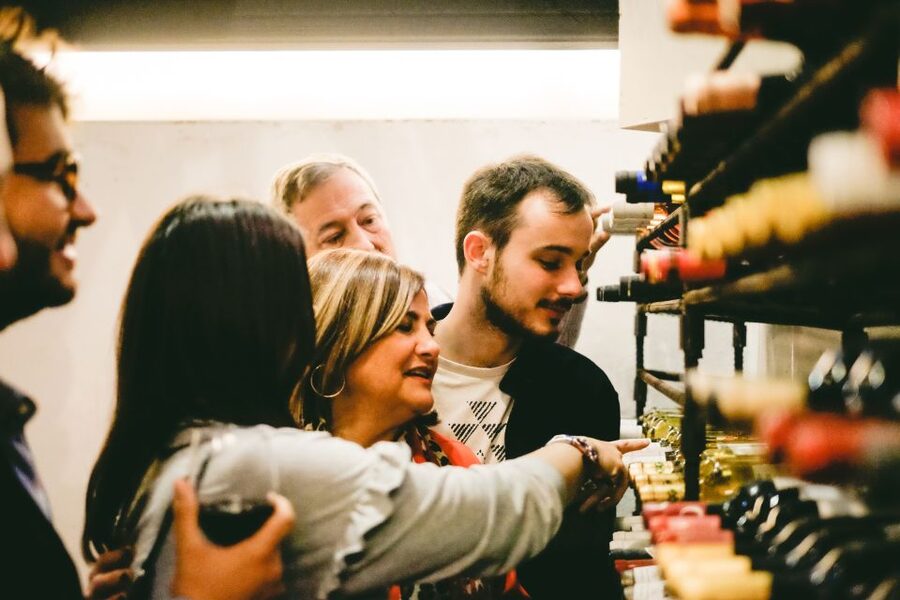
The restaurant includes an underground surprise, described by participants as a cellar or old bodega with archaeological interest. One person called the restaurant its own small archaeological site, while another returned there later in the trip.
This feature gives the meal more character than a stop in an ordinary dining room. It also fits the theme of the afternoon: Seville’s past is often found beneath, behind, or alongside modern life.
The exact setup may vary by session, so do not treat the cellar as a full museum visit. The archaeological element is a pleasant extra rather than the central attraction. Still, it is a memorable way to finish a walk focused on layers of history.
The meal includes two drinks per person, followed by a local liquor for a toast. Spanish wine is commonly served, though the included drinks should not be confused with unlimited beverages. Extra food and drinks cost more.
Is $59 a fair price?
At $59 per person, the tour is sensibly priced if you want both a guided neighborhood walk and dinner. You are paying for three hours, a live English-speaking guide, a group capped at 10, three courses of tapas, two drinks, and a local toast.
A separate walking tour plus a restaurant meal could easily cost a similar amount, especially once drinks are added. The value here is the connection between the two parts. The guide gives you the background first, then joins you for food in the same historic quarter.
The price is less attractive if you mainly want a food crawl or a long palace tour. The Alcázar and Cathedral are nearby, but admission and interior visits are not part of this activity. You should budget separately if those are priorities.
Food quality may also be uneven from one session to another. Most comments praised the meal, but one person found the tapas only average while still rating the overall experience highly. That is a useful warning: the history and guide are the main reasons to book.
Who will enjoy this Seville experience?
I would recommend it to first-time visitors who want a clear introduction to Santa Cruz. It works well on your first evening because it helps you recognize the quarter before returning on your own, and the shared meal makes solo dining easier.
It is also a good fit for anyone interested in Jewish history in Spain, religious change, medieval Seville, local legends, or the way old communities leave traces in modern streets. You do not need to be Jewish to appreciate this subject. The walk places Jewish life within the wider story of Christian and Muslim Seville.
The tour may suit you less if you dislike group meals, need a highly structured food itinerary, or want extensive access inside monuments. It is also not the best choice if you plan to arrive late, since the group cannot wait once the walk begins.
Tell the provider about allergies or food intolerances when booking. The restaurant can be informed in advance, but the meal remains a set shared experience rather than a fully customized menu.
Free cancellation is available up to 24 hours before the start, and you can reserve without paying immediately. The experience is listed as wheelchair accessible. Since the route passes through narrow historic streets, you should still confirm any route-specific needs before booking.
Should you book the Jewish Quarter walk?
Book it if you want Seville to make more sense, not just look beautiful. The strongest part is the guide-led storytelling, especially with a guide such as Carmen, Clara, Barbara, Miguel, Manuel, or Valentin. The tapas, drinks, and old bodega setting then give you an easy way to end the evening.
I would choose this tour early in a Seville visit, when the history can shape the way you see Santa Cruz afterward. Go for the small group, the local guide, and the thoughtful look at a community that is no longer easy to see. Treat the meal as a generous bonus, and the $59 price makes good sense.
FAQ
Where does the tour meet?
It meets at the large Monument to the Immaculate Conception in Plaza del Triunfo, between Seville Cathedral and the Alcázar.
How will I recognize the guide?
The guide will wear a white lanyard and carry a white bag with the inscription Seville Unique Experiences. The provider will also send tour details by WhatsApp, text, or email.
How long is the walking portion?
The historical walk lasts about 1 hour and 45 minutes. The full experience, including the meal and drinks, lasts about three hours.
What places are included on the route?
The route includes Patio de Banderas, Plaza de Doña Elvira, Calle Agua, Santa Cruz Square, Murillo Gardens, Iglesia de Santa María la Blanca, Calle Cano y Cueto, and Calle Lope de Rueda.
What food is included?
You receive three courses of traditional Andalusian tapas. Dishes can include items such as salmorejo, croquetas, oxtail, spinach with chickpeas, pisto, pork cheeks, aubergines, anchovies, calamari, gazpacho, and mushrooms.
How many drinks are included?
Two drinks per person are included with the meal, followed by one local liquor for a toast.
Can dietary requirements be accommodated?
You should report allergies or food intolerances when booking so the restaurant can be informed in advance.
What happens if I am the only person booked?
At least two participants are recommended for the experience to take place. If you are traveling alone and no one else books your session, the provider may contact you with alternative dates.
Recently listed in Seville
- Seville: Alcázar Fast-Track Access with Guided Tour★ 4.2 · 432 reviews
- Seville: Small-Group Jewish Quarter Discovery Walking Tour★ 4.9 · 499 reviews
- Seville: VIP Exclusive Early Access Tour of The Alcazar★ 4.8 · 276 reviews
- Seville: Sunset Roof Top Walking Tour★ 4.5 · 122 reviews
- Seville: 3.5-Hour Spanish Cooking Class & Triana Market Tour★ 4.9 · 751 reviews
- Seville: Flamenco Show at Tablao Almoraima in Triana★ 4.6 · 483 reviews
- Seville: Authentic and Romantic Horse-Drawn Carriage Ride★ 4.5 · 341 reviews
- Seville: Sunset and Evening Paddle Boarding Tour★ 4.8 · 355 reviews
Tapas Tours, compared.
Montserrat Half-Day Tour with Tapas and Gourmet Wines
Read our review →
Montserrat & Cogwheel Train, Gourmet Wine Tasting & Tapas/Lunch
Read our review →
Barcelona Tapas and Wine Experience Small-Group Walking Tour
Read our review →
Montserrat with Black Madonna & Medieval Winery with Tapas/Lunch
Read our review →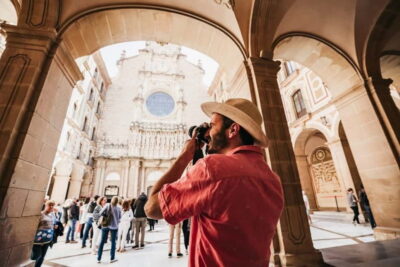
Montserrat and Winery Tour with Tapas or Lunch
Read our review →
Tapas Walking Tour with Food, Wine, and History
Read our review →
Sevilla Food Tour: Tapas, Wine, History & Traditions
Read our review →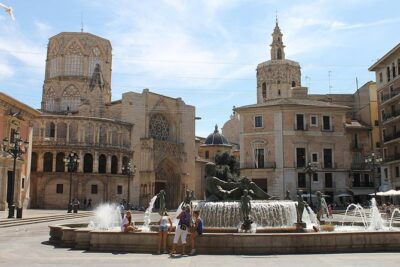
Valencia Old Town Tour with Wine & Tapas in 11th Century Historic Monument
Read our review →Browse the lists this tour appears in