
Reviewed · NATIONAL PARKS
Teide National Park: Guided Large Telescope Stargazing Tour
The stars get serious after sunset. This three-hour Teide National Park experience combines a small group, a huge 32-inch Dobsonian telescope, and guide Alessandro’s clear, enthusiastic explanations. I especially like the limited groups of up to 12 and the chance to see galaxies, nebulae, star clusters, and supernova remnants through equipment far larger than a typical holiday telescope. The main drawback is simple: mountain nights can be very cold, windy, and weather-dependent.
I also like that this is not just a quick look through an eyepiece followed by a rushed bus ride home. You have time to ask questions, compare what you see with photographs from the telescope, and get a professional astrophotography package to remember the night. If someone in your party has little interest in astronomy, the detailed explanations may feel long, though a shorter private experience is available.
In This Review
- The tour in six useful facts
- Why Teide is such a good place for stargazing
- Arriving for a cold mountain night
- The opening astronomy talk
- Looking through the 32-inch Dobsonian
- What the Night Vision Voyage changes
- Seeing the sky with the naked eye
- The astrophotography package
- The guide makes or breaks the evening
- Is $58 a fair price?
- Who will enjoy this most
- Practical booking advice for Teide
- Should you book this stargazing tour?
- FAQ
- How long does the Teide stargazing tour last?
- Where does the tour meet?
- Is hotel pickup included?
- Which telescopes are available?
- What should I wear and bring?
- What happens if the weather is bad?
The tour in six useful facts
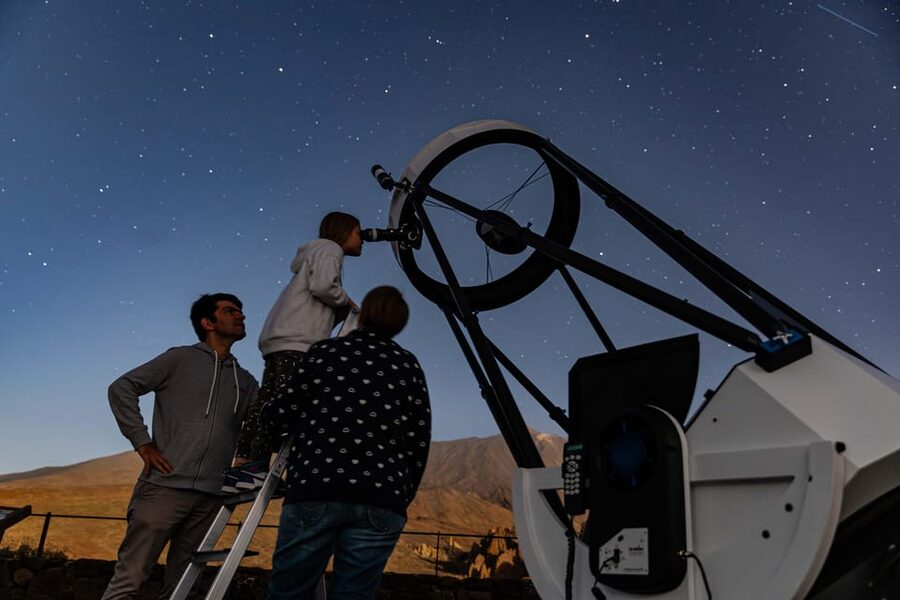
- A 32-inch telescope is the star of the show: This computerized Dobsonian is described as the largest private telescope in the Canary Islands.
- Small groups make a real difference: With no more than 12 people in the standard experience, each person gets time at the eyepiece.
- Alessandro brings astronomy down to earth: His explanations cover basic ideas for beginners while still offering enough detail for amateur astronomers.
- Night Vision is a separate option: The modified 12-inch telescope uses a light-amplifying system for real-time viewing.
- Your meeting point can change: The provider sends GPS coordinates through WhatsApp on the day, based on wind and weather.
- Bring serious warm layers: Shorts and open-toed shoes are not allowed, and Teide can feel bitterly cold after dark.
Why Teide is such a good place for stargazing
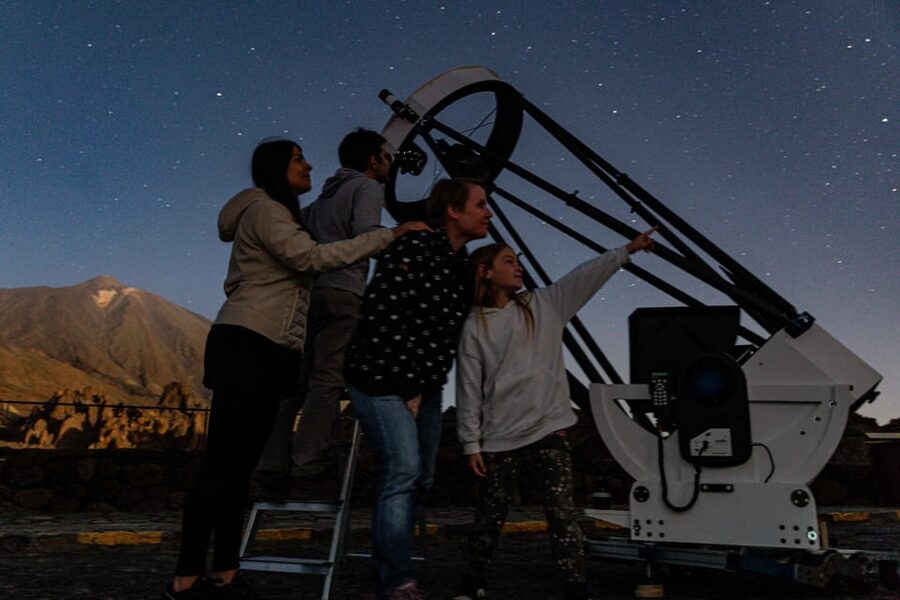
Teide National Park gives this activity a strong setting. You are not looking at the sky from a hotel terrace with bright signs and traffic nearby. The tour takes place in a high mountain environment where the night sky is the main event.
That setting matters because a telescope is only as useful as the sky above it. The provider chooses the meeting area according to wind direction because a large telescope needs a steadier position. This means you do not get a fixed, predictable meeting point, but the flexibility helps protect the quality of the viewing.
The exact starting time changes with sunset and the season. A winter session may begin earlier than a summer one, so do not plan another fixed evening activity too close to this tour. The provider confirms the time and GPS coordinates through WhatsApp at around 9:30 in the morning on the day of the experience.
A few more Tenerife ideas to compare
- Siam Park Entry Tickets
★ 4.5 · 15,710 reviews - Tenerife: Eco-Yacht Whale and Dolphin Watching and Swimming
★ 4.7 · 15,619 reviews - Los Cristianos Respectful No-Chase Whale and Dolphin Safari
★ 4.6 · 12,782 reviews
Arriving for a cold mountain night
There is no hotel pickup or drop-off included, so you need to arrange your own way to the meeting point. The provider sends the final location rather than using one permanent rendezvous, and that is worth noting when planning your evening drive.
Bring warm clothing, water, and snacks. Comfortable clothes are best, but shorts and open-toed shoes are not permitted. The cold is not a minor detail. Several people found winter conditions severe enough to appreciate the spare coats, hot tea, and biscuits Alessandro and his wife have sometimes provided.
You should also leave the flashlight at home. Bright light makes it harder for everyone’s eyes to adjust to the dark. A phone screen can cause the same problem, so keep it dim and use it only when needed.
The tour is not suitable for children under five. Older children can enjoy it, especially if an adult helps them follow the explanations. Alessandro has been praised for giving children time to look through the telescope and for adjusting his language so younger listeners can keep up.
The opening astronomy talk
The evening begins with an explanation of what you are about to see. This is more than a list of constellation names. Alessandro has been praised for explaining the origins and chronology of the universe in a way that beginners can follow, while still including ideas that appeal to amateur astronomers.
That balance is one of the strongest parts of the experience. You may hear about how stars form, change, and end, then see those stages represented by actual objects in the sky. The guide’s passion is a major part of the value. He is not simply pointing a telescope at random bright spots. He explains why a galaxy, nebula, cluster, or remnant matters.
The format works best if you enjoy asking questions. You can ask about celestial objects, telescope design, astrophotography, or the wider story of the universe. The explanations are intended to suit the interests of the group, so the evening can be fairly detailed.
That is also the main caution. If your companion only wants a quick look at the Moon or a planet, the astronomy talk may feel more involved than expected. The standard tour is built for curiosity, not a short entertainment stop.
Looking through the 32-inch Dobsonian
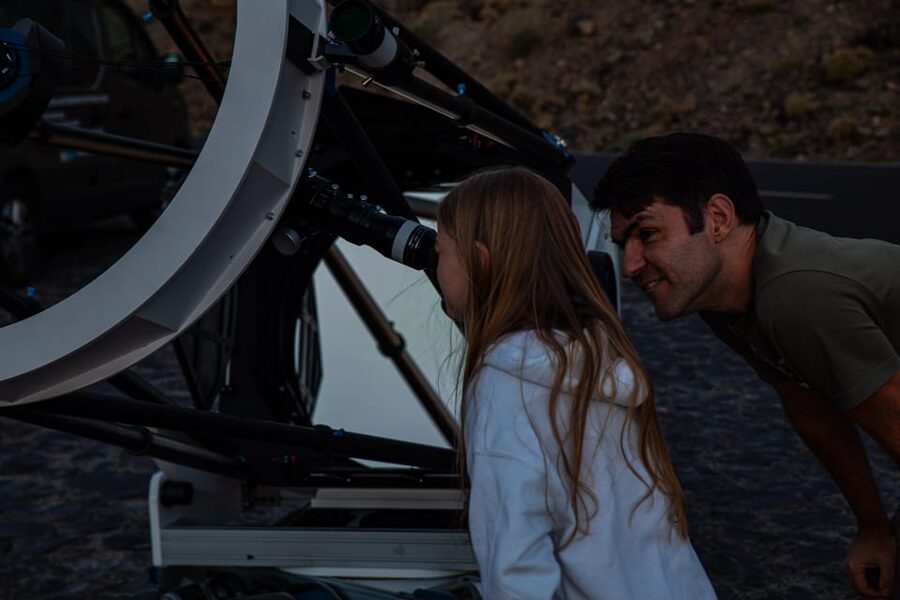
The main telescope is a computerized 32-inch Dobsonian. Its mirror is described in the supplied information as about one metre in diameter, and several people were impressed by the amount of detail it revealed compared with ordinary telescopes.
This size makes a difference with faint deep-sky objects. Galaxies and nebulae are not always bright, colorful shapes like you see in a space photograph. Through a telescope, they may appear as pale, subtle forms. More light-gathering power can help reveal structure and detail that a smaller instrument cannot show as easily.
The telescope is used for real-time observation, so you look through the eyepiece yourself. That direct view is important. A photograph on a screen can be spectacular, but seeing a distant object with your own eye gives the activity a more personal edge.
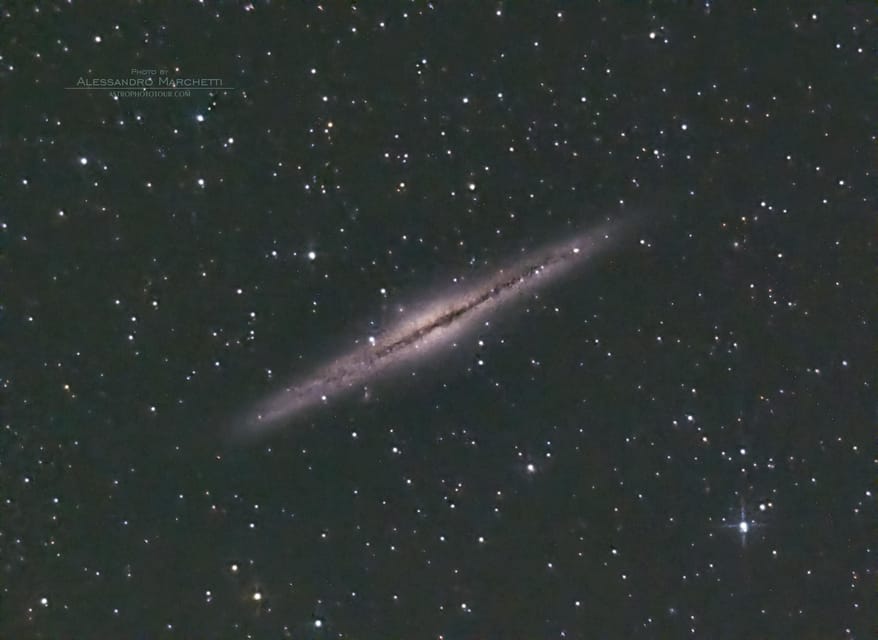
Possible targets depend on the season, visibility, and conditions. Past sessions have included galaxies, protostellar nebulae, planetary nebulae, star clusters, supernova remnants, Jupiter, Saturn, Mars, and major moons. You might see a satellite galaxy beside the Whirlpool Galaxy, an exploded star, or the rings of Saturn. The exact selection is not fixed, and that is part of the appeal.
With a maximum of 12 people, the standard group is not private, but it is still small enough to give each person time at the eyepiece. One larger group found that fewer people would have been even better, so if personal attention matters greatly, consider the private option.
Same base, a different kind of afternoon:
- Tenerife: Loro Parque Entry Ticket
★ 4.8 · 12,411 reviews - Loro Parque and Siam Park Combined Admission Tickets
★ 4.7 · 7,307 reviews - Tenerife: Kayak and Snorkel with Turtles, Wetsuits Included
★ 4.6 · 7,215 reviews - Costa Adeje: Whale & Dolphin Eco-Cruise with Snacks & Drinks
★ 4.6 · 5,096 reviews
What the Night Vision Voyage changes
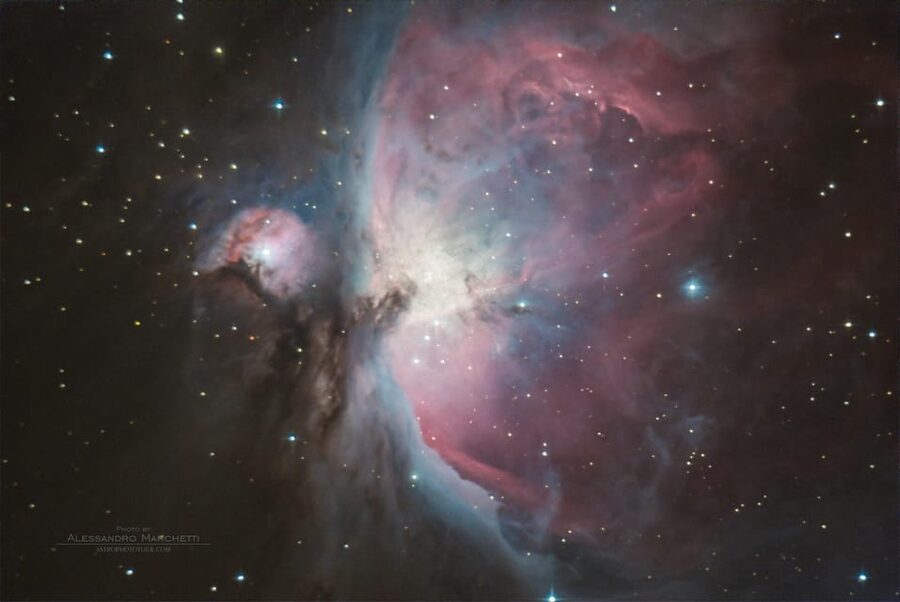
The Night Vision Voyage uses a modified 12-inch telescope fitted with a Night Vision system. The telescope is smaller than the 32-inch scope, but the technology amplifies available light and changes the feel of the observation.
Instead of relying only on conventional eyepiece viewing, you get a real-time look at faint objects through a system designed to reveal more in low light. This option may appeal to you if you have already used ordinary telescopes or want something different from a standard stargazing session.
The choice is not simply between a good telescope and a bad one. The Grand 32 Scope Adventure is the classic experience and offers the largest private telescope. The Night Vision option is a separate style of observation with its own character. Ask yourself whether you want maximum aperture or a more unusual light-amplified view.
An Exclusive Starlight Experience is also available for couples, families, or groups of friends. It uses the same impressive equipment but removes other participants from the session. This is the better fit if your group has mixed interests, needs extra time for questions, or wants a more relaxed pace.
Seeing the sky with the naked eye
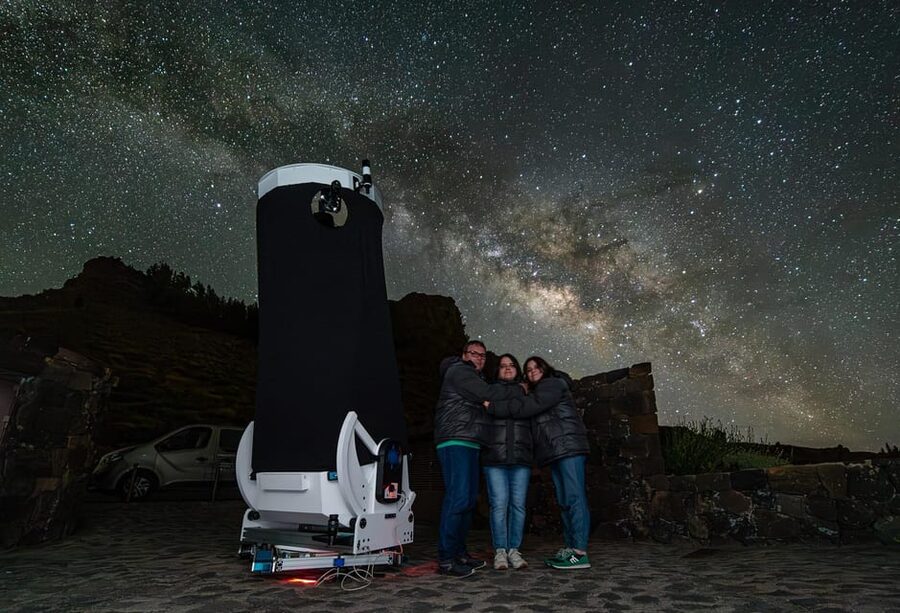
The telescope is the headline, but do not expect every minute to be spent at the eyepiece. Naked-eye astronomy is part of the experience, especially if wind or other conditions prevent telescope use.
On one session, strong winds forced the telescope work to stop early. The group stayed, and Alessandro used his photographs while also pointing out constellations and other visible objects without the telescope. That backup matters because mountain weather can change the program.
This is not a guaranteed list of celestial sights. The sky changes with the season, and clouds or wind can affect what is possible. If conditions are unsuitable, the activity may be postponed to the next day or refunded.
That weather policy gives you some protection, but it does not remove the risk of disappointment. I would schedule this tour early in your Tenerife stay if possible. That leaves room to accept a postponement rather than losing your only free evening.
The astrophotography package
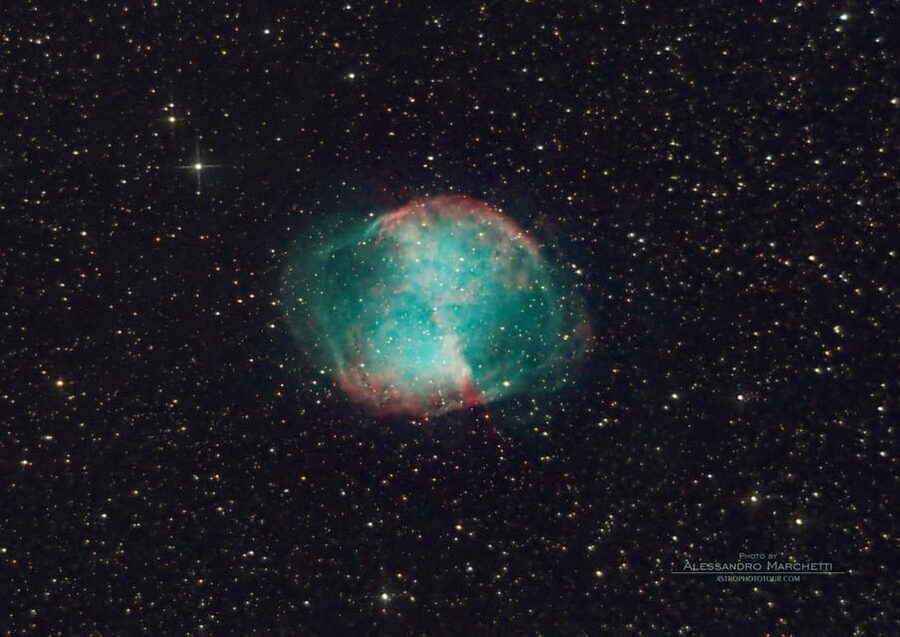
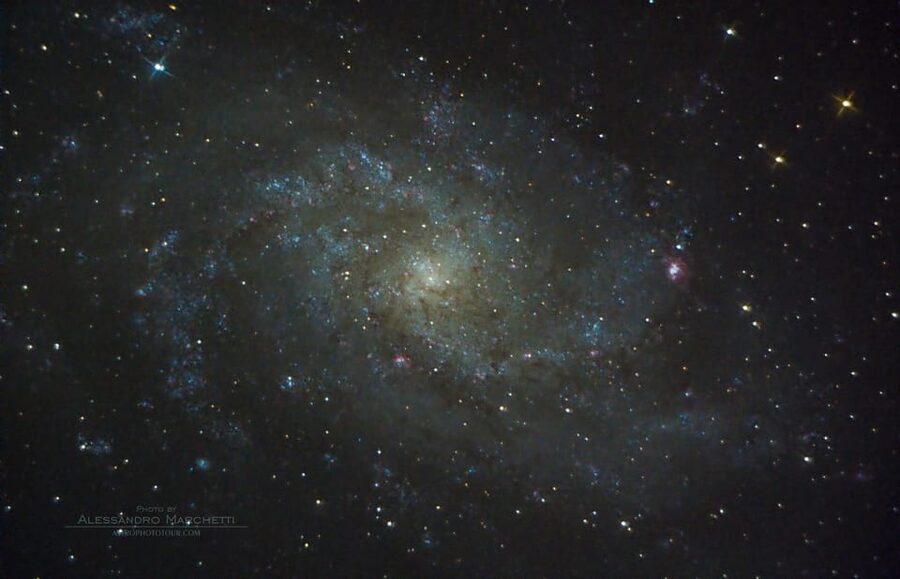
The dedicated cooled astro-camera is attached to the telescope to capture images of selected objects. You receive photographs from the session, along with images from previous observing sessions.
This is a useful extra rather than a throwaway souvenir. Deep-sky objects are often difficult to photograph without specialist equipment, long exposures, and careful processing. The included images give you a record of what you saw and help explain why the faint shape in the eyepiece matters.
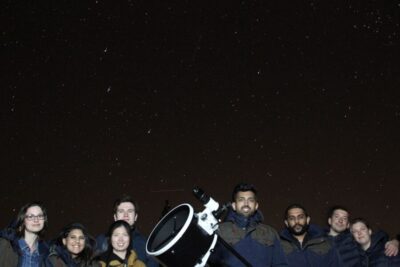
There is also a fun group photo at the end, taken with the night sky behind you. Because the camera exposure requires you to remain still, faces can come out blurred. That is not a technical failure so much as the price of making a night-sky portrait in darkness. The result can still be a memorable keepsake, especially for children.
If you are an amateur astrophotographer, you will probably appreciate the chance to ask about the camera, telescope, and image-making process. If you are not, the photographs still add value because they show details your eyes may not catch during a short observation.
The guide makes or breaks the evening
Alessandro receives the strongest praise throughout the supplied feedback. He is described as patient, friendly, funny, and able to explain difficult ideas in plain language. His wife, Antonella, also helps create a warm atmosphere on some sessions.
The best guides do more than identify objects. They watch the group, make sure everyone gets a view, answer questions without rushing, and change the level of detail when needed. Alessandro appears to do exactly that. Beginners can follow the broad story of the universe, while amateur astronomers can ask more technical questions.
His enthusiasm is not a small bonus. Astronomy can seem abstract when it is reduced to distances and scientific terms. A guide who clearly enjoys the subject helps turn those facts into a story you can follow.
Languages offered are English, Spanish, and Italian. If you need to translate for a family member, allow extra time. One family appreciated having enough time to pass explanations along to children.
Is $58 a fair price?
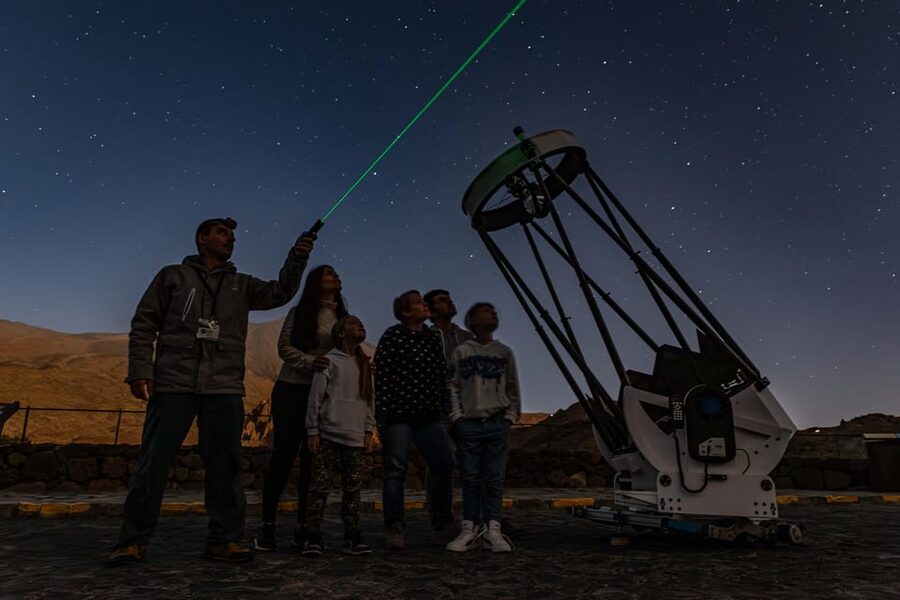
At $58 per person, this is not the cheapest way to look at the sky in Tenerife. You are paying for a three-hour guided session, a small group, specialist equipment, an expert guide, and photographs.
The value is strongest if you care about the telescope itself. A standard stargazing talk can introduce constellations and planets, but the 32-inch instrument gives this experience a more specialized purpose. You are paying for access to equipment that is unusual in a normal holiday setting, plus the time to use it.
The price also compares well for a small group. The standard experience allows up to 12 people, while a private option is available if you want exclusive attention. The Night Vision Voyage gives you another technical choice rather than forcing every participant into the same format.
It is less convincing value if you mainly want a quick scenic look at the stars or dislike long explanations. You also need to budget for your own transport, food, and drinks because none of those are included.
Who will enjoy this most
I would recommend the tour to:
- Adults and older children with a real interest in space
- First-time telescope users who want clear explanations
- Amateur astronomers who want to see faint objects through a much larger scope
- Families willing to dress warmly and spend three hours outdoors
- Couples or friend groups who prefer the private version
- Anyone interested in astrophotography and telescope design
I would think twice if you dislike cold weather, need guaranteed viewing conditions, or want hotel transportation included. The activity is also not suitable for children under five.
The tour works especially well for mixed-age families when the adults are willing to help younger children stay engaged. The guide’s patient style helps, but this is still a serious astronomy session rather than a short amusement ride.
Practical booking advice for Teide
Book with the weather in mind. Since the start time depends on sunset and the meeting point depends on wind direction, keep your schedule flexible on the day. Check WhatsApp around 9:30 am for the final instructions and GPS coordinates.
Choose the 32-inch experience if your priority is the largest possible telescope. Choose Night Vision if the light-amplified format sounds more appealing. Select the private experience if you want to ask many questions, have a group with mixed interests, or simply prefer not to share the session.
Free cancellation is available up to 24 hours before the activity for a full refund, and you can reserve now and pay later. If weather makes observation impossible, the session can be moved to the following day or refunded.
Should you book this stargazing tour?
Yes, if you want more than a quick look at a few bright stars. The combination of Teide’s dark mountain setting, a rare 32-inch private telescope, careful guidance, and included astrophotography gives this tour a clear purpose.
I would choose it over a large bus-based stargazing outing if you value time at the telescope and direct access to the guide. Just arrive prepared for cold, accept that the sky is never fully under human control, and leave room in your itinerary for weather changes.
If your group is serious about astronomy, book the private option. If you are curious but new to the subject, the standard small-group session should give you a friendly, useful introduction. At $58, it is a worthwhile splurge for a memorable night above Tenerife.
FAQ
How long does the Teide stargazing tour last?
The experience lasts three hours. The starting time changes with sunset and therefore varies by season.
Where does the tour meet?
The exact meeting point depends on wind direction because the large telescopes need a less windy area. The provider sends GPS coordinates and meeting details through WhatsApp at around 9:30 am on the day of the activity.
Is hotel pickup included?
No. Hotel pickup and drop-off are not included, so you need to arrange your own transport to and from the meeting point.
Which telescopes are available?
The main experience uses a computerized 32-inch Dobsonian telescope. The Night Vision Voyage uses a modified 12-inch telescope with a Night Vision system.
What should I wear and bring?
Bring warm clothing, comfortable clothes, water, and snacks. Shorts and open-toed shoes are not allowed, and flashlights are not permitted.
What happens if the weather is bad?
If conditions are unsuitable for observation, the activity may be postponed to the next day or you can receive a refund. The meeting location and time may also change because of weather conditions.
Recently listed in Tenerife
- Las Galletas: Whale & Dolphin Tour with Local Skipper★ 4.8 · 397 reviews
- Tenerife: Teide, Icod de los Vinos & Garachico Full Day Tour★ 4.3 · 602 reviews
- Tenerife: Loro Parque & Siam Park Entry Ticket with Transfer★ 4.6 · 732 reviews
- Tenerife: Teide National Park Guided Buggy Tour★ 4.6 · 299 reviews
- Tenerife: Sunset Night Tour and Stargazing at Teide + Dinner★ 3.8 · 316 reviews
- Tenerife: Surfing Lesson for All Levels, Photos included★ 4.9 · 861 reviews
- Tenerife: Siam Park Full-Day VIP Entry Ticket★ 4.5 · 183 reviews
- Tenerife: Sunset Catamaran Tour with Transfer, Buff & Drinks★ 4.8 · 570 reviews
National Parks, compared.
Teide National Park Sunset & Stargazing with Dinner (Star Safari)
Read our review →
Arrecife/Playa Blanca: Timanfaya National Park Area Day Tour
Read our review →
Jávea: Cala Tango and San Antonio Nature Reserve Kayak Tour
Read our review →
Browse the lists this tour appears in