
Reviewed · WALKING TOURS
The Spanish Civil War & Franco Barcelona Walking Tour
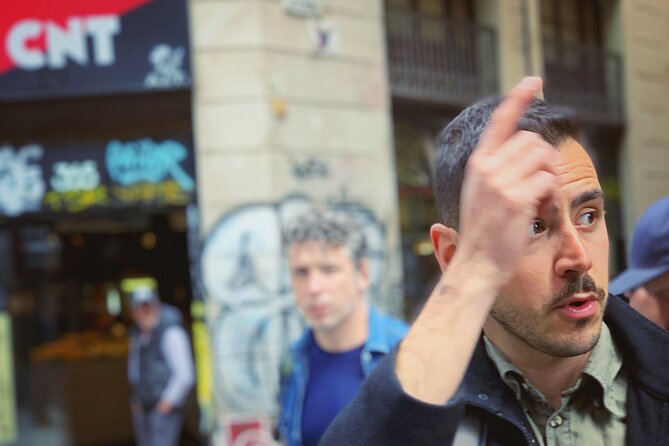
Barcelona carries its political scars quietly. This walking tour brings them into view, linking Plaça Catalunya, La Rambla, and the Old Town to the Spanish Civil War and Franco’s dictatorship. I especially like its local focus and the use of historic photographs, which help you picture events that are not always marked by plaques or monuments. The main drawback is that the subject is complex, and the quality depends heavily on how clearly your guide explains the many factions.
I like that the tour goes beyond the usual Gaudí-and-tapas version of Barcelona. I also like its attention to working-class life, anarcho-syndicalism, and the experience of ordinary people during the conflict. Bring comfortable shoes and patience: this is a serious, walking-intensive history lesson, not a breezy sightseeing stroll.
In This Review
- Key points before you book
- Why this Barcelona history tour is different
- Plaça Catalunya: starting with power and conflict
- La Rambla: a famous street with a darker past
- The former Santa Creu Hospital and the Old Town
- Santa Maria del Pi and its less obvious connection
- Plaça Sant Felip Neri: beauty beside destruction
- Making sense of the political factions
- From wartime Barcelona to Franco’s dictatorship
- Historic photos make the streets easier to read
- Walking demands, group size, and timing
- Is $47.16 good value?
- Who should book this walk?
- Guide quality can shape the whole experience
- Practical booking advice
- Should you book the Spanish Civil War and Franco Barcelona Walking Tour?
- FAQ
- Where does the tour start?
- Where does the tour end?
- How long does the tour last?
- What language is the tour offered in?
- How much does the tour cost?
- Is the radio headset included?
- What places does the route visit?
- Is admission to the Basilica de Santa Maria del Pi included?
- How large is the group?
- Can I cancel for a full refund?
Key points before you book
- Barcelona’s Civil War scars are easy to miss: The route shows how familiar streets and buildings were affected by the conflict.
- The political story gets proper attention: You’ll hear about Republican factions, anarchists, the Nationalists, and Franco’s dictatorship.
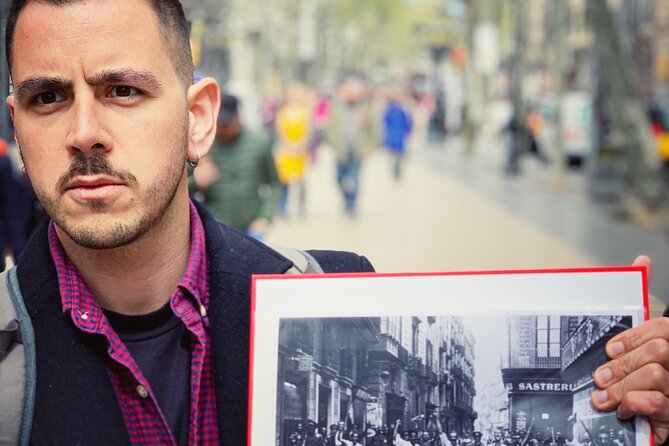
- Historic images add useful context: Guides use photographs, posters, maps, and other visual material to connect past events with present-day streets.
- The Old Town provides the setting: Plaça Sant Felip Neri and the former Santa Creu Hospital add a strong sense of place.
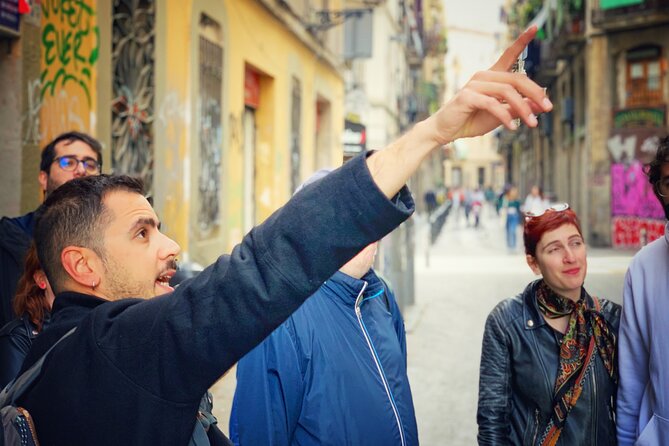
- Guide quality matters: Henrieta, Chrysa, Evangelos, Yannis, Filipa, Evan, Onno, and other guides have been praised for clear explanations and strong subject knowledge, though one report found Henrieta’s presentation confusing.
- Budget for the small extra charge: A guide radio headset costs €1 per person and is paid at the meeting point to an outside provider.
Why this Barcelona history tour is different
Most first-time Barcelona walks concentrate on Roman ruins, medieval lanes, Modernisme, or food. This one asks a harder question: what happened here during the Spanish Civil War, and how did those events shape Barcelona afterward?
That focus makes ordinary places more revealing. Plaça Catalunya is not simply a broad urban square. La Rambla is not only a pleasant route toward the sea. A church, hospital, and small plaza become clues in a story about social division, political violence, idealism, repression, and memory.
I like this approach because it changes how you see the city for the rest of your stay. A shopfront or old wall may look different once you understand what happened nearby. The tour also gives you a clearer sense of Catalonia’s working-class past and the role of anarcho-syndicalism, a subject often skipped by standard city tours.
The subject needs careful handling. The Spanish Civil War involved several political groups within the Republican side as well as the Nationalist forces led by Francisco Franco. The conflict cannot be reduced to a simple two-sided story, and the best guides take time to explain who wanted what, which groups cooperated, and where they disagreed.
More Walking Tours in Barcelona
- Barcelona Tapas and Wine Experience Small-Group Walking Tour
★ 5.0 · 5,804 reviews - Barcelona: Tapas Walking Tour with Food, Wine, and History
★ 4.8 · 4,261 reviews - Barcelona Tapas Walking Tour: Food, Wine & History
★ 4.5 · 1,928 reviews
Plaça Catalunya: starting with power and conflict
The tour begins at Foot Locker, Plaça de Catalunya, 20. That practical meeting point is easy to identify, but the square itself is the real opening chapter.
You’ll spend about 10 minutes here, learning why Plaça Catalunya mattered during the Civil War. Its size and central position made it an important place in Barcelona’s public and political life. The guide uses the square to establish the wider setting before leading you into the Old Town.
This is a useful beginning because the tour does not throw you straight into names and dates. A strong guide can first explain how Barcelona functioned as a major center of political activity, then connect that setting to the events you’ll see later.
The square is also a busy modern location, so do not expect a preserved battlefield or a dedicated museum. Much of the evidence is visual and verbal. You’ll need to listen closely while the guide points out what has changed and what survives.
La Rambla: a famous street with a darker past
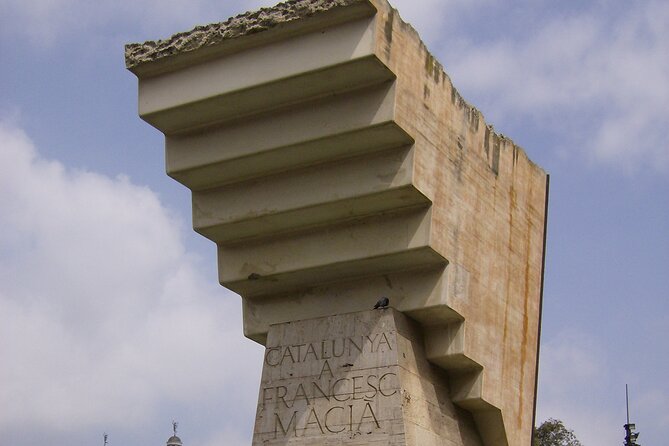
From Plaça Catalunya, the route continues to La Rambla, where you’ll spend about 10 minutes examining several Civil War-related locations.
La Rambla is one of Barcelona’s best-known streets, usually associated with flowers, cafés, performers, and crowds. This tour shifts your attention from the present-day scene to the political and military activity that once took place along and around it.
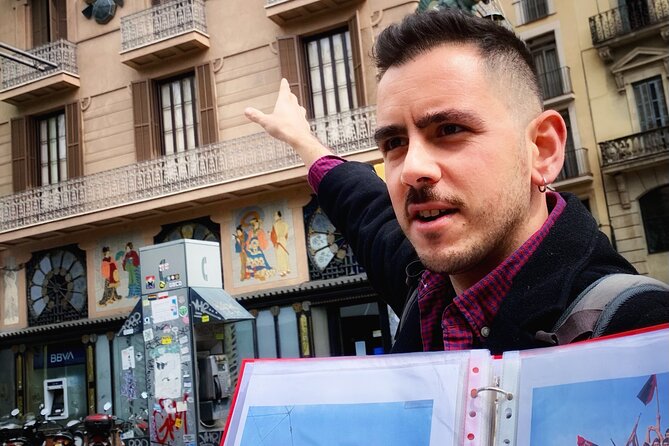
The guide may use photographs and posters here to show how the street looked during the conflict. These images are especially helpful because the modern city can hide the scale of change. You are not simply told that an event happened somewhere in Barcelona. You are shown how the same urban spaces looked when the city was under pressure.
This stop also helps explain the city’s social divisions. The tour’s focus on workers, anarchist groups, and competing Republican factions gives La Rambla a more complicated meaning. You’ll hear not only about Franco’s forces, but also about internal conflict among groups that opposed the Nationalists.
That wider view is one of the tour’s strongest features. If you already know the basic outline of the war, the Barcelona context adds useful detail. If you know very little, the guide’s clarity becomes crucial.
The former Santa Creu Hospital and the Old Town
The next stop is the Antic Hospital de la Santa Creu, a 15th-century hospital in the Old Town. The scheduled explanation here lasts about five minutes.
The building gives the tour a change of pace. Its medieval origins remind you that Barcelona’s story did not begin in the 1930s. At the same time, its connection to the Civil War shows how older buildings became part of modern political and social crises.
This is a good example of the route’s method. You are not visiting a single large war museum with objects arranged behind glass. Instead, the city itself supplies the backdrop. The guide provides the missing context, helping you understand how historic buildings and ordinary streets were drawn into the conflict.
The short stop means the main value comes from the explanation rather than a long interior visit. The tour information does not promise admission inside the hospital, so treat it as an exterior history stop.
Same base, a different kind of afternoon:
- Barcelona: Sagrada Familia Entry Ticket with Audio Guide
★ 4.6 · 105,312 reviews - Barcelona: Park Güell Admission Ticket
★ 4.4 · 76,534 reviews - Barcelona: Casa Batlló Entry with Self-Audioguide Tour
★ 4.7 · 25,359 reviews - Barcelona: 24 or 48-Hour Hop-On Hop-Off Bus Tour
★ 4.4 · 20,872 reviews
Santa Maria del Pi and its less obvious connection
The Basilica de Santa Maria del Pi is another brief stop, planned for about five minutes. Admission is not included, so the tour’s focus is the church’s connection to the Civil War rather than a formal church visit.
This is the sort of stop I find most useful on a history walk. The building may appear to be another beautiful medieval church, but the guide reveals how it connects to a much more recent period of upheaval.
You’ll want to listen for the link between religious institutions, political identity, and wartime Barcelona. The tour does not treat the Civil War as a detached sequence of battles. It looks at how beliefs, class, institutions, and local loyalties affected daily life.
Because this is a short stop, you should not expect a full architectural tour. If you want to explore the basilica inside, you may need to return separately and pay any applicable admission.
Plaça Sant Felip Neri: beauty beside destruction
Plaça Sant Felip Neri is the emotional high point of the route. The stop lasts about five minutes, but its effect may last much longer.
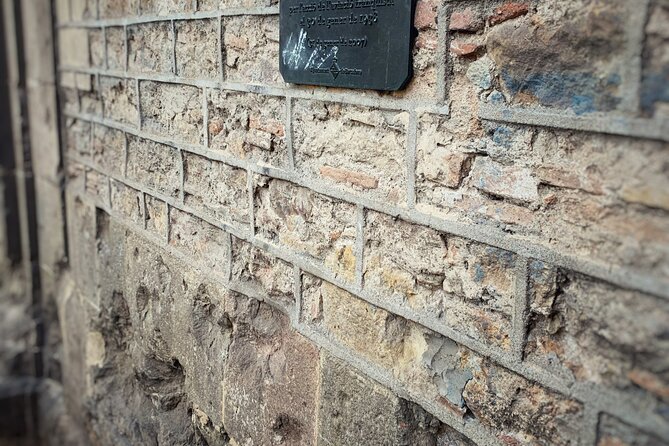
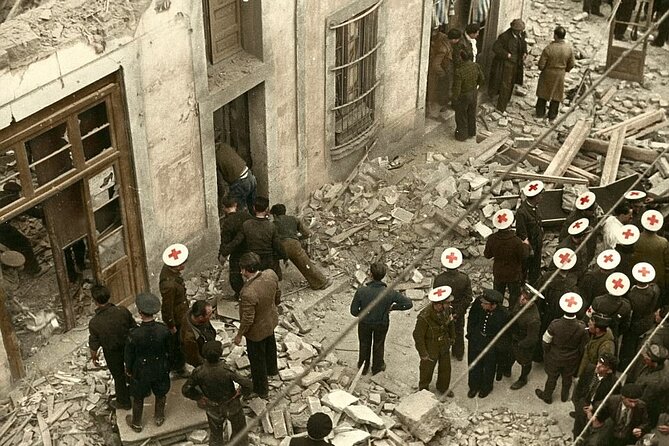
The plaza is visually striking and quiet compared with many parts of the Old Town. It is also one of Barcelona’s clearest reminders of the destruction associated with the Civil War. The contrast between its graceful appearance and its painful past gives the stop real force.
This is where the tour’s use of images and on-site storytelling matters most. The guide helps you connect the marks and history of the plaza with the human cost of the conflict. You are not asked to look at a distant monument and imagine the past. You are standing in a place where the past remains part of the setting.
The stop is brief, so the guide must be precise. A good explanation can make five minutes enough. A rushed or unclear explanation would leave you with only a pretty square and a vague sense that something terrible happened there.
Making sense of the political factions
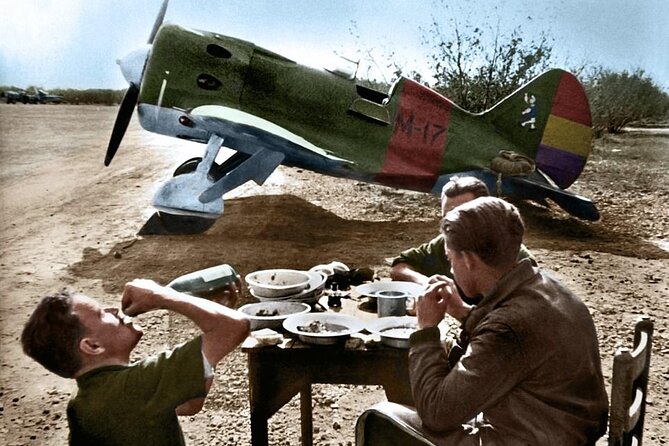
The Spanish Civil War is difficult to follow because it was not a clean contest between two unified teams. The Republican side included groups with different political goals, including anarchists, socialists, communists, and other factions. Franco’s Nationalist forces formed the opposing side, but the political forces supporting them also had their own interests and relationships.
This tour promises to explain those groups rather than bury you in disconnected names. That is important. You’ll get more from the walk if you understand the broad lines of disagreement before trying to remember every organization and individual.
Several guides have been praised for making the politics understandable. Yannis is described as clear and compelling, while Evan is noted for taking time with the difficult points and explaining the tensions within the period. Evangelos has also been praised for welcoming questions and making complicated material accessible to people with little prior background.
The experience can vary by guide. One account describes Henrieta’s presentation as disorganized, with people and factions introduced before they were properly explained. That criticism is worth taking seriously because this subject quickly becomes confusing if the guide moves too fast.
From wartime Barcelona to Franco’s dictatorship
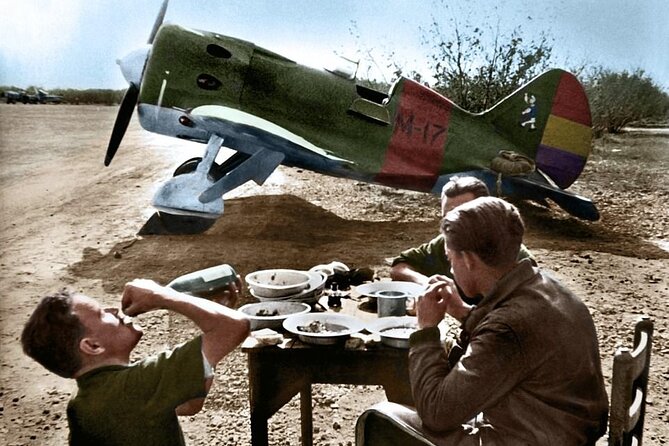
The tour does not stop in 1939. It also covers the Franco period and the long shadow of dictatorship.
That wider time frame makes the experience more useful. The war explains the immediate destruction and political upheaval, but Franco’s rule shaped public memory, language, political expression, and everyday life for decades afterward. The guide’s stories about the dictatorship help you see why some parts of Spain still discuss this period with care.
The tour also addresses the idea that Spain has often struggled with how to remember or publicly confront the conflict. You will not get a full academic course in two and a half hours, but you should come away with a better sense of why the war still matters.
Chrysa has been praised for combining strong historical detail with thoughtful treatment of a sensitive subject. Filipa is also noted for covering the social and political forces behind the conflict in an engaging way. Those qualities matter here. A guide must be accurate, but also aware that the topic involves real suffering and continuing political feeling.
Historic photos make the streets easier to read
The visual material is one of the tour’s best practical features. Guides use historic photographs, posters, maps, and related images to show how locations looked during the war.
Without those aids, many stops could feel abstract. Barcelona has changed enormously, and the city does not always display clear markers explaining what happened during the Civil War. A photograph held up beside a modern street can bridge that gap.
One useful tip is to keep your attention on the guide rather than trying to take photographs constantly. The route moves through public spaces, and some explanations may be easy to miss if you are distracted.
The €1 radio headset is a small but relevant detail. It is paid at the meeting point to an outside provider, and several comments underline the importance of hearing the guide clearly. If your hearing is easily affected by street noise, the headset should help you follow the talk. One person also suggested bringing your own headphones for concentration, but the supplied information does not confirm compatibility or whether personal headphones can replace the radio system.
Walking demands, group size, and timing
The tour lasts about two hours and 30 minutes and has a maximum group size of 25 people. That is a reasonable size for a city walk, though a full group can make it harder to gather around a guide in narrow streets.
The route is more walking-focused than the short stop times suggest. The five listed stops account for only about 45 minutes, leaving the rest of the time for walking, explanations, questions, and connections between sites.
Wear comfortable shoes. One person described it as walking-intensive, while another found the walking minimal, so your experience may depend on pace, group movement, and the guide’s exact route. Either way, this is not a seated lecture.
The guides appear willing to adapt. Yannis is praised for offering breaks and checking how the group was doing. Onno is noted for changing the route slightly to answer questions. That kind of flexibility is valuable, especially when a group includes people with very different levels of background knowledge.
The tour is offered in English and is suitable for most people. Service animals are allowed, and the starting point is near public transportation. The ending point is different from the starting point, but the supplied details do not specify the final address, so check the exact end point before planning a tight reservation afterward.
Is $47.16 good value?
At $47.16 per person, this is not the cheapest walking tour in Barcelona. The value depends on what you want from a city experience.
If your main goal is a quick introduction to famous buildings, you can find less expensive options. This tour does not include major paid attractions, and admission to Santa Maria del Pi is not included.
The price makes more sense if you want a focused history lesson led by a specialist guide. You are paying for the preparation, local interpretation, visual material, and the effort required to explain a complicated period in a short time. The route also takes you to places you might pass without noticing their wartime connections.
Group discounts may be available, which could improve the value for families or small parties. The extra €1 headset charge is modest, but remember to include it in the final cost.
I would place the tour in the good-value category for visitors who care about modern Spanish history. It is less compelling for someone who wants only architecture, shopping, or light sightseeing.
Who should book this walk?
I would recommend it to you if you:
- Want to understand Barcelona beyond its famous architecture
- Have little background on the Spanish Civil War but want a clear introduction
- Already know some of the war and want its Barcelona setting explained
- Are interested in working-class history and anarcho-syndicalism
- Prefer a guide who welcomes questions and discussion
- Want to take the tour early in your visit, so later sights carry more meaning
I would hesitate if you dislike serious historical subjects or find long spoken explanations tiring. You should also think twice if you need a very relaxed pace or expect a route filled with preserved wartime monuments.
The tour is best approached as a moving classroom. It is not designed to entertain every minute, and its strongest moments come from careful listening.
Guide quality can shape the whole experience
The clearest pattern in the available feedback is the strong praise for the guides. Henrieta, Chrysa, Filipa, Yannis, Evan, Evangelos, and Onno are each described in positive terms, with praise for passion, warmth, accuracy, patience, and storytelling.
Chrysa is noted as an archaeologist who handled questions carefully. Evan is praised for wit and for explaining the political tensions without rushing. Filipa receives high marks for energy and clear delivery, while Yannis is described as a strong teacher who connected history with daily life.
That said, the less favorable account about Henrieta shows why guide delivery matters so much. A guide can know the subject well and still lose a group by introducing too many names or failing to use the visual material consistently.
If you book, arrive ready to ask questions. The guides are presented as approachable, and questions can help keep the story organized around what you most want to understand.
Practical booking advice
Confirmation is provided when you book. The tour requires good weather and a minimum number of participants. If poor weather or low enrollment causes cancellation, you are offered another date or experience, or a full refund.
Free cancellation is available up to 24 hours before the start time. Changes or cancellations made inside that 24-hour window are not refunded or accepted.
I would schedule this walk near the beginning of your Barcelona stay. The route gives you a political and social framework that can sharpen your understanding of the Old Town, local identity, and the city’s modern public spaces.
Should you book the Spanish Civil War and Franco Barcelona Walking Tour?
Book it if you want Barcelona to make more sense, not just look attractive. The route is focused, the subject is important, and the best guides turn a difficult history into a clear story tied to real streets.
The strongest reasons to go are the local setting, the historic photographs, and the attention to groups and working people often left out of standard tours. The main risks are the serious tone, the walking, the small headset fee, and the possibility of a less organized presentation depending on the guide.
For history-minded visitors, I would choose this over another general Old Town walk. Take it early, wear good shoes, listen closely, and leave room for questions. You’ll see Barcelona with a sharper eye afterward.
FAQ
Where does the tour start?
It starts at Foot Locker, Plaça de Catalunya, 20, Ciutat Vella, Barcelona, Spain.
Where does the tour end?
The tour ends at a different location from the starting point. The supplied details do not provide the exact final address.
How long does the tour last?
The walking tour lasts approximately two hours and 30 minutes.
What language is the tour offered in?
The tour is offered in English.
How much does the tour cost?
The listed price is $47.16 per person.
Is the radio headset included?
No. A guide radio headset costs €1 per person and is paid at the meeting point to an external provider.
What places does the route visit?
The route includes Plaça Catalunya, La Rambla, the Antic Hospital de la Santa Creu, Basilica de Santa Maria del Pi, and Plaça Sant Felip Neri.
Is admission to the Basilica de Santa Maria del Pi included?
No. Admission to the basilica is not included.
How large is the group?
The maximum group size is 25 participants.
Can I cancel for a full refund?
Yes. You can cancel up to 24 hours before the experience start time for a full refund. Cancellations made less than 24 hours before the start are not refunded.
Recently listed in Barcelona
- Transfers From Cruise Port to Barcelona Airport★ 4.5 · 155 reviews
- Bohemian Barcelona Neighborhood Evening Tapas & Wine Tour★ 5.0 · 419 reviews
- Park Guell Guided Tour with Skip the Line Tickets★ 4.0 · 739 reviews
- Montserrat very early : Hiking, Abbey, very small group★ 5.0 · 127 reviews
- Barcelona Sunset Cruise with Light Snacks and Open Bar★ 5.0 · 476 reviews
- Barcelona: Sagrada Familia, Park Guell & Tapas Private Tour★ 5.0 · 903 reviews
- Authentic Flamenco Show Barcelona : Intimate Casa Sors Experience★ 5.0 · 809 reviews
- Barcelona Expert Tour with Local Guide in Eco Tuk Tuk Private★ 5.0 · 216 reviews
Walking Tours, compared.
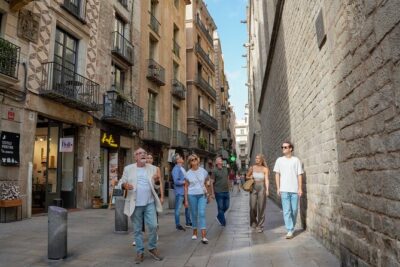
Barcelona Tapas and Wine Experience Small-Group Walking Tour
Read our review →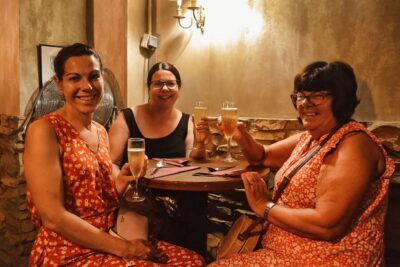
Tapas Walking Tour with Food, Wine, and History
Read our review →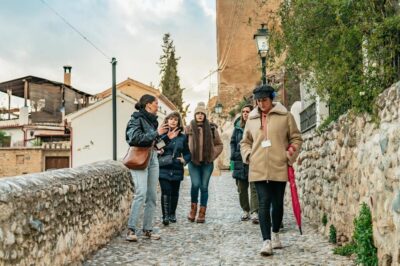
Albaicín and Sacromonte Guided Sunset Walking Tour
Read our review →
Toledo Tour & Vineyard Walk with Wine Tasting from Madrid
Read our review →
Madrid Walking Tour from Puerta del Sol to Retiro Park
Read our review →
Barcelona Tapas Walking Tour: Food, Wine & History
Read our review →
Madrid Old Town & Royal Palace Walking Tour Skip the Line Ticket
Read our review →
Browse the lists this tour appears in