
Reviewed · WALKING TOURS
Valencia: Essentials and World Heritages Sites Walking Tour
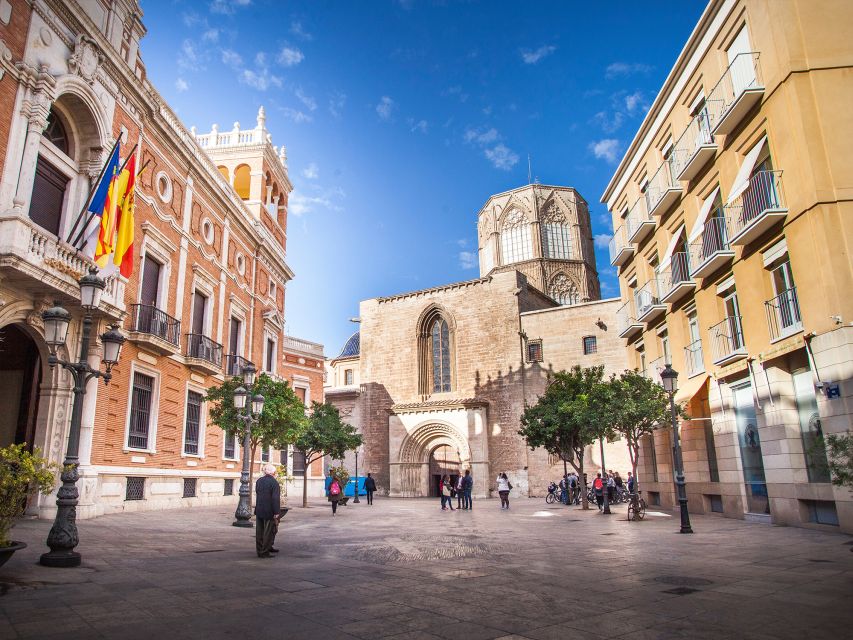
Valencia’s old center rewards a closer look. This two-hour walk is a smart introduction to the city, linking the railway station, City Hall, market, Silk Exchange, plazas, and cathedral area while explaining how Valencia’s past still shapes daily life. I especially like the Silk Exchange visit and the way the tour gives meaning to the city’s three UNESCO-listed cultural properties. The main consideration is time: two hours offers a useful first look, not a full exploration of every monument.
I also like the clear, friendly guiding. Sara, Maria, Gabor, Sofi, Belén, and other guides are praised for good English, steady pacing, local suggestions, and a warm manner. The walk is not built around rushing from one photo stop to another. It is meant to help you get your bearings, understand what you are seeing, and decide where to return later. City Hall access depends on its working schedule, and the Silk Exchange can close for an official event.
In This Review
- Key points at a glance
- Starting at Valencia Nord Station
- City Hall and Valencia’s changing center
- Plazas, the Central Market, and everyday Valencia
- Inside the Lonja de la Seda
- The Water Tribunal and the Fallas connection
- From the old center toward the cathedral
- How the guides shape the experience
- Is two hours enough?
- What the $21 price really buys
- Practical advice before you go
- Should you book the Valencia heritage walk?
- FAQ
- Where does the Valencia walking tour meet?
- How long does the tour last?
- What language is the tour offered in?
- Is the Silk Exchange admission included?
- Is City Hall always open during the tour?
- Can I cancel the booking?
Key points at a glance
- Three UNESCO connections: Learn how the Silk Exchange, the Water Tribunal, and the Fallas festival represent very different parts of Valencia’s culture.
- Silk Exchange entry included: Go inside one of the city’s finest Gothic buildings rather than viewing it only from the street.
- A useful first-morning tour: The route helps you understand the old center before exploring it on your own.
- City Hall may be included: Guided access is available on working days unless an official event prevents entry.
- Strong guide-led experience: Guides such as Gabor, Sara, and Maria are praised for clear English, local history, humor, and restaurant advice.
- Short but active: The walk lasts two hours, covers several central sights, and is wheelchair accessible.
Starting at Valencia Nord Station
The meeting point is the Tourism Hub inside Estación del Norte, Valencia’s main railway station. Look for the west tower, which is the tower on the right when you face the station. The address is Carrer de Xàtiva, 24, and the nearest metro stop is Xàtiva.
This is a practical starting point. The station is easy to reach, and the building itself gives you an immediate taste of Valencia’s decorative style. You are not beginning in a random street corner or outside a hard-to-find café. You start at a major city landmark, then move into the historic center.
It also makes this tour useful on your first morning. Julia said the walk helped her get her bearings in a city she had never visited before. Emese gave the same advice: use it near the start of your stay so the rest of Valencia makes more sense.
The route is central, but you should still wear comfortable shoes. This is a walking tour through streets, plazas, and monument interiors. The distances are not described as strenuous, and Isobelle found the walking fairly light, with short stretches between sights. Still, Valencia can be hot, and Cheryl appreciated that guide Gabor sought out shady places for the group to stand.
More Walking Tours in Valencia:
- Valencia: Historical Walking Tour
★ 4.6 · 390 reviews - Valencia: City Walking Tour with Top Attractions – ITALIAN
★ 4.9 · 242 reviews - Valencia Private Walking Tour with Official Valencian Guide
★ 5.0 · 176 reviews
City Hall and Valencia’s changing center
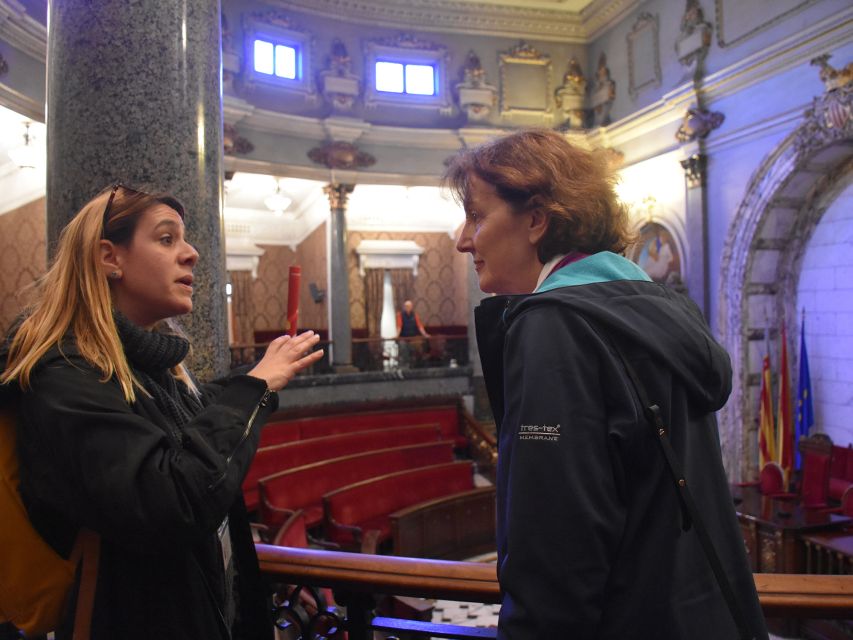
One of the early stops is Valencia City Hall, known locally as the Ayuntamiento. Depending on the day and on official events, the tour may include entry and a guided look inside. This is an important detail when booking: City Hall access is offered on working days, but it is not guaranteed if an official function is taking place.
The building adds a civic side to the tour. Valencia is not only a collection of old churches and grand merchant buildings. It is also a working regional capital, and City Hall helps connect the historic center with the city you see today.
The tour does not treat history as a string of dates. Guides explain how Valencia changed over more than 21 centuries, with different periods leaving marks on the streets, buildings, customs, and public spaces. That wider frame is useful because the old center can otherwise feel like a series of attractive façades without a clear story.
The guide style seems to be one of the strongest parts of the experience. Maria is repeatedly praised for explaining ideas clearly and at the right pace. Sara is described as cheerful, articulate, and able to answer detailed questions. Gabor is often singled out for his friendly manner, strong English, and practical advice.
A good guide also knows when not to overload you. In two hours, you need enough context to understand the city without getting trapped in a lecture. Several guides were praised for keeping the walk moving while still offering plenty of information.
Plazas, the Central Market, and everyday Valencia
The route continues through public squares and the area around the Central Market. This is where the tour can shift from monumental Valencia to everyday Valencia.
The market is an important stop because it shows that the old center is not simply preserved scenery. It remains part of the city’s daily rhythm. Even if the tour does not give you a long shopping break, the location helps you understand the relationship between food, public space, and local life.
This part of the walk is also where local recommendations can be useful. Guides regularly suggest places to eat and sights to visit later. Gabor recommended Armonia to one family, who described the paella there as one of the best they had eaten in Valencia. That does not make the restaurant a guaranteed match for every budget or taste, but it shows the practical value of asking your guide for advice.
You can also ask about what to do after the tour. Sue appreciated receiving suggestions for further visits, while Sara recommended additional places at the end of the walk. I would treat these tips as a starting point, not a fixed dining plan. The best advice usually depends on what you want, and the guides appear willing to answer specific questions.
The market and plazas help keep the tour grounded. You see the city’s public face, not just its grandest monument. For a first visit, that balance matters.
Inside the Lonja de la Seda
The Silk Exchange, or Lonja de la Seda, is the central indoor highlight. Your entrance fee is included, subject to the monument’s opening conditions.
This building tells you a great deal about Valencia’s former commercial power. It was designed for trade, contracts, and business, not royal display. Inside, the impressive Gothic spaces make commerce feel almost ceremonial, with tall columns, stonework, and a serious sense of order.
A guide can point out details that are easy to miss when you enter alone. Cora’s small group received the Silk Exchange portion from a guide in training, who was praised for explaining it well. That is a useful reminder that the quality of this stop depends partly on how the guide connects the architecture to Valencia’s trading past.
The Lonja is also one of the three UNESCO subjects covered by the tour. The other two are not simply similar buildings. The Water Tribunal represents a long-running system of irrigation justice, while the Fallas is a modern annual celebration built around temporary art, fire, and fireworks. Bringing these three together gives you a broader picture of Valencia’s culture.
One is a monument, one is a civic tradition, and one is a festival. The contrast is the point. You learn that heritage can survive in stone, in local institutions, and in public celebrations.
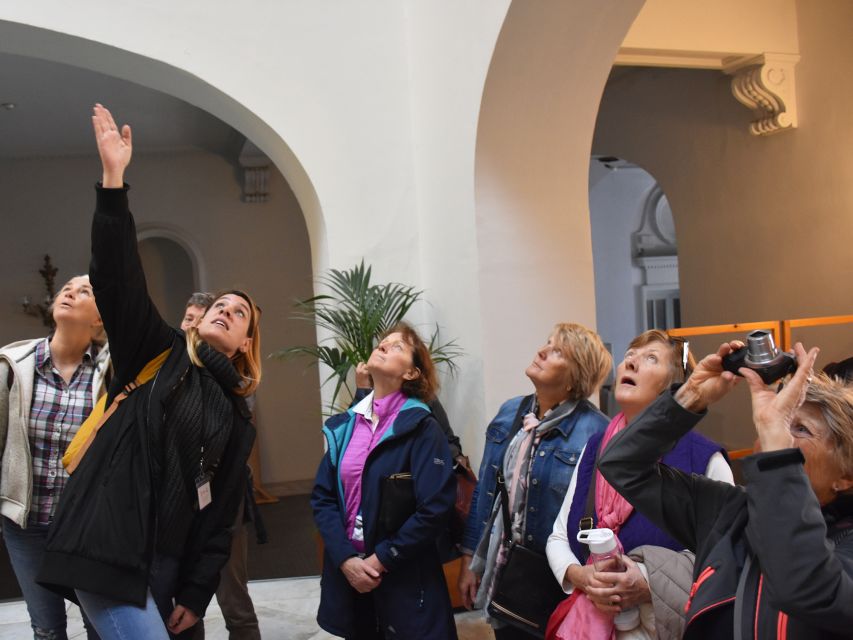
Allow yourself some time to look upward and around once inside. A short guided visit can explain the major features, but it cannot replace a slow museum visit. If the building matters to you, note its details and consider returning if your schedule allows.
There is also a clear contingency plan. If an event closes the Silk Exchange during the scheduled visit, the operator may send you the ticket so you can enter independently in the afternoon, or try to exchange it for admission to another museum or monument of the same value. That arrangement is helpful, but it means you should not assume the indoor visit will always happen at the planned moment.
A few more Valencia ideas to compare
- Valencia: Oceanogràfic Entry Ticket
★ 4.7 · 9,893 reviews - Valencia: 24 or 48-Hour Hop-on Hop-off Bus Ticket
★ 3.9 · 5,611 reviews - Valencia: Palosanto Flamenco Show Ticket
★ 4.8 · 3,876 reviews - Valencia: Catamaran Cruise with Sunset Option
★ 4.0 · 3,566 reviews
The Water Tribunal and the Fallas connection
The title refers to Valencia’s three World Heritage properties, but the tour’s main physical monument visit is the Silk Exchange. The Water Tribunal and the Fallas are presented through explanation and context rather than as equivalent site visits.
The Water Tribunal is tied to Valencia’s irrigation communities. Its place on the UNESCO list reflects the importance of a living legal and social tradition, not a single building that you simply walk into. Your guide can explain why water management mattered so much to the surrounding agricultural region and how local customs became part of Valencia’s identity.
Fallas offers a completely different lesson. Every year, large temporary figures and artworks fill the city before being burned in a festival of fire and fireworks. The works are ephemeral, so the cultural value lies in the tradition, craftsmanship, public participation, and ritual rather than in objects preserved forever.
This is one of the more interesting features of the tour. A standard old-town walk might focus only on medieval walls, churches, and palaces. Here, you also hear about living traditions and temporary art. That helps explain why Valencia’s heritage is more than its stone architecture.
Do not book this tour expecting a full Fallas event experience unless your dates happen to match the festival. The walk explains its importance, but it does not turn two hours into a festival visit.
From the old center toward the cathedral
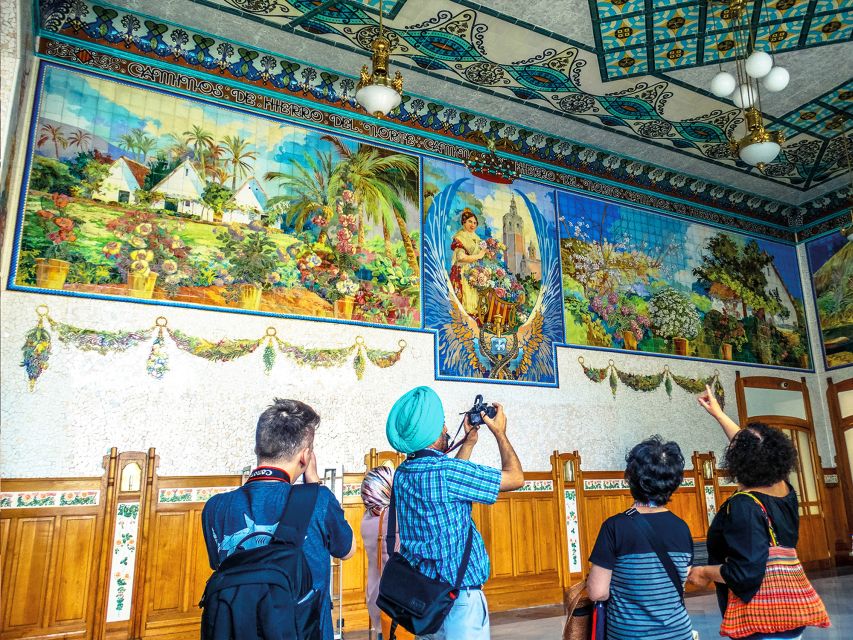
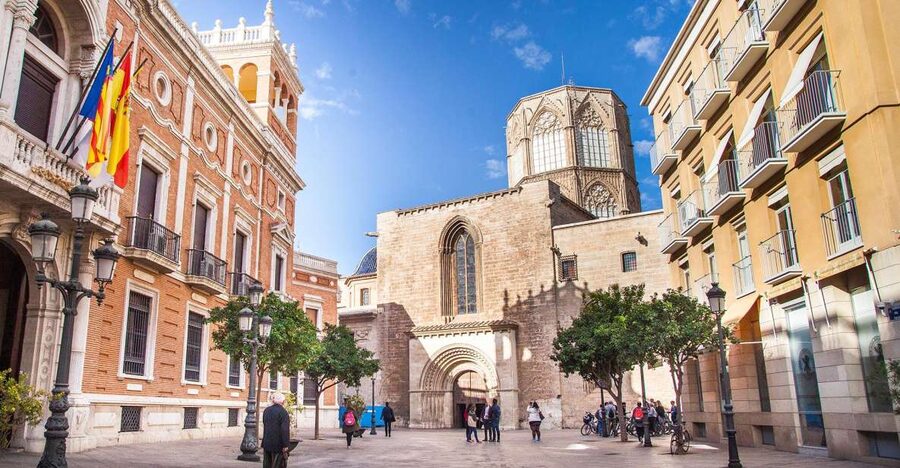
The walk generally finishes around the cathedral area after passing through the main historic sights. Gavin described a route from Nord Station through City Hall, plazas, the Central Market, the Silk Exchange, and the cathedral. That sequence works well because it moves from the modern transport hub into the older commercial and religious center.
The cathedral area is a useful ending point. From there, you can continue exploring, stop for food, or return to a monument that caught your interest. The tour gives you a map in your head, which is often more valuable than a long list of places.
The cathedral itself should be understood as part of the historic center route, not necessarily as an included interior visit. The stated inclusions cover the Silk Exchange and City Hall when open. If entering the cathedral is important to you, ask the guide about the best time to do it after the walk.
A guide can also help you notice how close the main sights are. Valencia’s center is compact enough for a short walking introduction, but it contains more than you can absorb in one pass. Michelle described the experience as a fast introduction that left her wanting to learn more. That is a fair way to judge the route: it opens doors rather than trying to be the whole city.
How the guides shape the experience
The guide is the main variable in any walking tour, and here the feedback is unusually consistent. Gabor is praised for his warmth, patience, city knowledge, photography help, and restaurant suggestions. Sara receives similar praise for enthusiasm, clear English, and her ability to explain history and architecture.
Maria is often described as friendly, professional, and easy to understand. Other praised guides include Sofi, Belén, Eugenia, Carlos, and Paulina. You should not assume which person will lead your departure, but the overall pattern suggests a strong guide team.
The best comments focus on three things:
- Clear delivery: Guides explain complicated history in understandable English and maintain a comfortable pace.
- Personal connection: They show affection for Valencia and relate the city’s past to daily life.
- Useful advice: They answer questions about food, later sightseeing, and places that are easy to miss alone.
Small groups can make the experience even better. Katarina described a small group, and Iliyana had a tour with only two participants plus the guide. A tiny group is not guaranteed, but it can allow more questions and a more flexible conversation.
If you need a different language group, a change is subject to availability and costs an additional €5 per person. The listed tour language is English, so confirm your needs before booking.
Is two hours enough?

Two hours is enough for a strong orientation. You can see several major locations, enter the Silk Exchange when open, possibly visit City Hall, and receive a useful outline of Valencia’s past and present.
It is not enough for a slow examination of every interior. You will not get an extended museum visit, a long market lunch, or a full explanation of every street. The pace is designed for coverage and context.
That short format suits several types of visitors:
- You are visiting Valencia for the first time.
- You have only a short stay.
- You want history explained rather than simply photographed.
- You prefer a manageable walk instead of a full-day excursion.
- You want restaurant and sightseeing suggestions from a local guide.
- You are traveling with older relatives or prefer shorter distances.
It may be less suitable if you already know the old center well, want a specialist architecture tour, or prefer to spend an hour inside each monument. In that case, use the walk as an orientation and return independently to the places you want to study.
What the $21 price really buys
At $21 per person, the tour offers good value if both monument admissions are available. The price includes the guide, Silk Exchange entry, and City Hall entry according to opening conditions. You are also paying for the route design and for explanations that can save you from wandering past important details.
The value is strongest when you take the tour early in your visit. You can use the rest of your stay more efficiently because you already know where the major sights are and which ones deserve a second look.
The price is less compelling if closures remove both indoor entries or if you want a long, specialist visit to one building. The Silk Exchange closure policy provides a ticket solution, but an independent afternoon visit will not feel exactly the same as hearing the site explained in place.
Free cancellation up to 24 hours before the start and the reserve-now, pay-later option make the booking relatively flexible. Wheelchair access is listed, but the operator should still be contacted about any specific mobility requirements, especially since historic buildings and public streets can vary.
Practical advice before you go
Meet at the Tourism Hub inside the west tower of Nord Station, not simply somewhere outside the station. Arrive with enough time to find the ground-floor meeting point.
Choose a morning departure if possible. The tour can help you understand the city before you spend the day exploring, and cooler conditions may make the walking more comfortable. In hot weather, bring water and use the guide’s advice about shaded stopping points.
If rain is forecast, dress for it. Daniela found the tour excellent despite wet weather, but Valencia’s plazas and streets are less pleasant when you are unprepared.
Ask questions during the walk. The guides are praised for answering them thoughtfully, and the experience improves when you connect the general history to your own interests. If food matters to you, ask for current recommendations rather than relying only on a fixed list.
Finally, keep some time afterward. The route may leave you wanting to enter another building, revisit the Silk Exchange, explore the market, or see a place the guide mentioned.
Should you book the Valencia heritage walk?
I would book this tour if you want a well-paced introduction to Valencia’s old center at a modest price. The combination of the Silk Exchange, possible City Hall access, UNESCO context, and strong English-speaking guides gives you more than a simple landmark checklist.
Book it early in your stay, especially if you value orientation and local advice. Gabor, Sara, and Maria receive especially warm praise, but guide assignments can change. Just keep your expectations practical: City Hall depends on the working calendar, the Silk Exchange can close for events, and two hours can only present the city’s highlights.
For first-time visitors, families, short stays, and anyone who wants history made understandable, this is an easy recommendation. For repeat visitors seeking a specialist tour, it may be better as a brief refresher than as your main cultural experience.
FAQ
Where does the Valencia walking tour meet?
It meets at the Tourism Hub in Estación del Norte, Valencia’s main railway station. Use the west tower, the one on the right when facing the station, on the ground floor at Carrer de Xàtiva, 24. The metro stop is Xàtiva.
How long does the tour last?
The tour lasts two hours. Starting times vary, so you need to check availability for the date you want.
What language is the tour offered in?
The listed tour language is English. Changing to another language group is subject to availability and costs an additional €5 per person.
Is the Silk Exchange admission included?
Yes. Admission to the Silk Exchange is included according to the monument’s opening conditions. If an event closes it during the tour, the operator may send you the ticket for an afternoon visit or try to exchange it for another museum or monument ticket of the same value.
Is City Hall always open during the tour?
No. The guided City Hall visit takes place on working days unless an official event is scheduled. Entry is included according to opening conditions.
Can I cancel the booking?
Yes. You can cancel up to 24 hours in advance for a full refund. You can also reserve now and pay later.
Recently listed in Valencia
- Valencia Tourist City Card – 7 Days★ 4.0 · 102 reviews
- Valencia: Tapas and Drinks Evening Tour★ 4.7 · 334 reviews
- Valencia: San Nicolas Church Entry Ticket★ 4.6 · 258 reviews
- Valencia: Exclusive Sunset Cruise with Drink★ 4.2 · 567 reviews
- Welcome to Valencia: Private Tour with a Local Host★ 4.8 · 284 reviews
- Valencia: Port Saplaya Boat Tour with Free Drink & Swimming★ 4.4 · 183 reviews
- Valencia: San Nicolas, Silk Museum and Santos Juanes Church★ 4.3 · 391 reviews
- Valencia: Evening Guided Paella Workshop, Tapas, and Drinks★ 4.9 · 326 reviews
Walking Tours, compared.
Barcelona Tapas and Wine Experience Small-Group Walking Tour
Read our review →
Tapas Walking Tour with Food, Wine, and History
Read our review →
Albaicín and Sacromonte Guided Sunset Walking Tour
Read our review →
Toledo Tour & Vineyard Walk with Wine Tasting from Madrid
Read our review →
Madrid Walking Tour from Puerta del Sol to Retiro Park
Read our review →
Barcelona Tapas Walking Tour: Food, Wine & History
Read our review →
Madrid Old Town & Royal Palace Walking Tour Skip the Line Ticket
Read our review →
Browse the lists this tour appears in