
Reviewed · VALENCIA TOURS
Valencia: Hortensia Herrero Art Center Ticket or Guided Tour
Contemporary art meets Valencia’s buried past. I like the old Valeriola Palace setting, where wooden beams, ceramic masonry, and modern art share the same rooms. I also like the remains of the Roman circus, Jewish quarter, medieval oven, and Islamic fountain. The main caution is that some of the art may feel more interesting than thrilling, especially if you expect a large blockbuster museum.
The visit lasts about 90 minutes and covers two connected four-story buildings with 17 exhibition spaces. At $14 per person, it offers good value if you enjoy contemporary art and unusual buildings, though the experience is less convincing for anyone who prefers classic paintings or a clearly explained historical tour.
In This Review
- Key points to know before you go
- Entering the Valeriola Palace in Valencia
- Roman remains and the old Jewish quarter
- The international collection inside 17 exhibition spaces
- Multimedia art and works made for the rooms
- What the guided option adds
- Is $14 good value for 90 minutes?
- Who will enjoy this art center most?
- Practical planning for your 1.5-hour visit
- Should you book the Hortensia Herrero Art Center?
- FAQ
- Where is the Hortensia Herrero Art Center located?
- How long does the visit take?
- What does the $14 ticket include?
- Can I visit without a guide?
- What languages are available for the guided experience?
- Is the art center wheelchair accessible?
- Can I cancel my booking?
Key points to know before you go
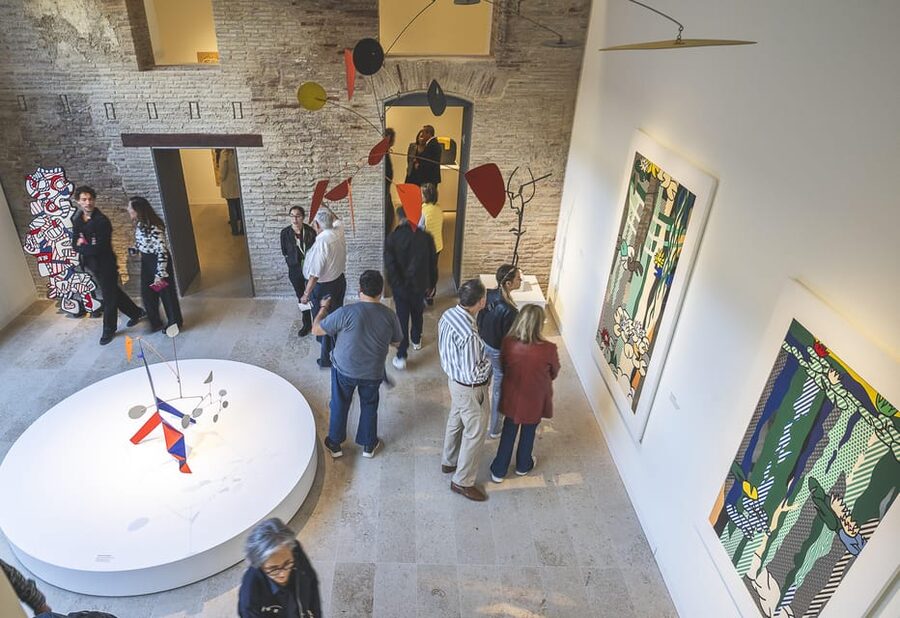
- A 17th-century palace becomes the main artwork: The Valeriola Palace gives the visit its character, with original wooden beams and ceramic masonry in the main hall.
- Roman and Jewish remains sit beside modern art: You can see part of Valencia’s Roman circus and an alley from the former Jewish quarter within the museum complex.
- The collection reaches well beyond Spain: Works are associated with Andreas Gursky, Anselm Kiefer, Georg Baselitz, Tomás Saraceno, Jaume Plensa, Olafur Eliasson, Cristina Iglesias, Sean Scully, and Mat Collishaw.
- You have two ways to visit: Choose an entry ticket for a self-guided look, or select the guided option in English, Spanish, French, Italian, or Catalan.
- The visit is compact but full: Plan on 1.5 hours, enough time to see the major spaces without giving up half a day in Valencia.
- The experience divides opinion: A high overall rating reflects strong interest in the setting and art, but some people find the exhibitions pleasant rather than unforgettable.
Entering the Valeriola Palace in Valencia
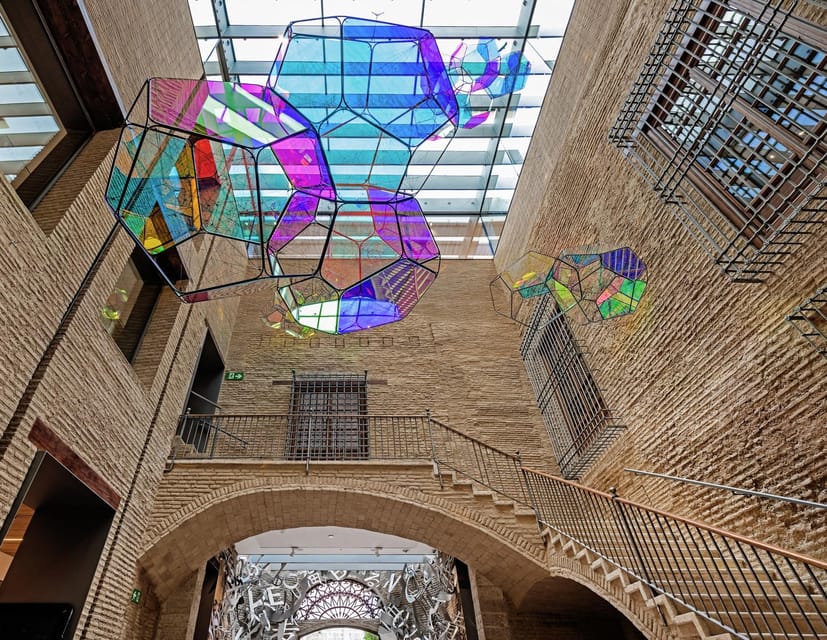
The Hortensia Herrero Art Center is not a plain white-box gallery dropped into the center of Valencia. It occupies the Valeriola Palace, a historic building in the old city, and the architecture shapes the visit from the start.
You move through two buildings, each rising four stories, with 17 exhibition spaces spread across about 3,500 square meters. That is enough room for a serious collection, but not so much that you need to rush from room to room. I would allow the full 90 minutes, especially if you want to stop and think rather than simply tick off the artists’ names.
The palace itself deserves attention. Look for the original wooden beams and the ceramic masonry in the main hall. These details give the building a strong sense of place and help explain why this art center feels different from a newly built gallery.
The contrast is part of the appeal. A historic ceiling may sit above a large contemporary installation. A medieval architectural feature may appear close to a video work or a piece designed for the room. You are not only looking at art on walls. You are also seeing how modern artists respond to old spaces.
That combination works best if you enjoy buildings as much as art. If you want each room to feel neutral and every painting to receive equal attention, the palace may occasionally get in the way. Here, the architecture is an active part of the experience.
A few more Valencia ideas to compare
- Valencia: Oceanogràfic Entry Ticket
★ 4.7 · 9,893 reviews - Valencia: 24 or 48-Hour Hop-on Hop-off Bus Ticket
★ 3.9 · 5,611 reviews - Valencia: Palosanto Flamenco Show Ticket
★ 4.8 · 3,876 reviews
Roman remains and the old Jewish quarter
The center gives you more than a private art collection. Its archaeological remains add a second story to the visit, one that reaches well below the 17th-century palace.
You can see remains of Valencia’s Roman circus, a reminder that the city’s public life began long before the buildings around you. There is also an alley connected with the ancient Jewish quarter, along with a medieval oven and an Islamic fountain.
These fragments are not presented as a separate archaeological museum experience. Instead, they appear as part of your route through the art center. That makes them valuable, but it also means you should not expect a long historical explanation at every stop.
I like this arrangement because it gives your visit some local grounding. Contemporary art can sometimes feel detached from its location. Here, the Roman, Jewish, Islamic, medieval, and early modern layers keep bringing you back to Valencia.
Take your time when you reach the historic remains. They are easy to treat as a quick photo stop, particularly when a striking artwork is nearby. Yet these modest fragments may tell you more about the city’s long development than a room full of abstract forms.
The drawback is simple: anyone hoping for a full archaeological tour may find the historical material too brief. The center is still primarily a contemporary art venue. The remains are an important bonus, not the main subject.
The international collection inside 17 exhibition spaces
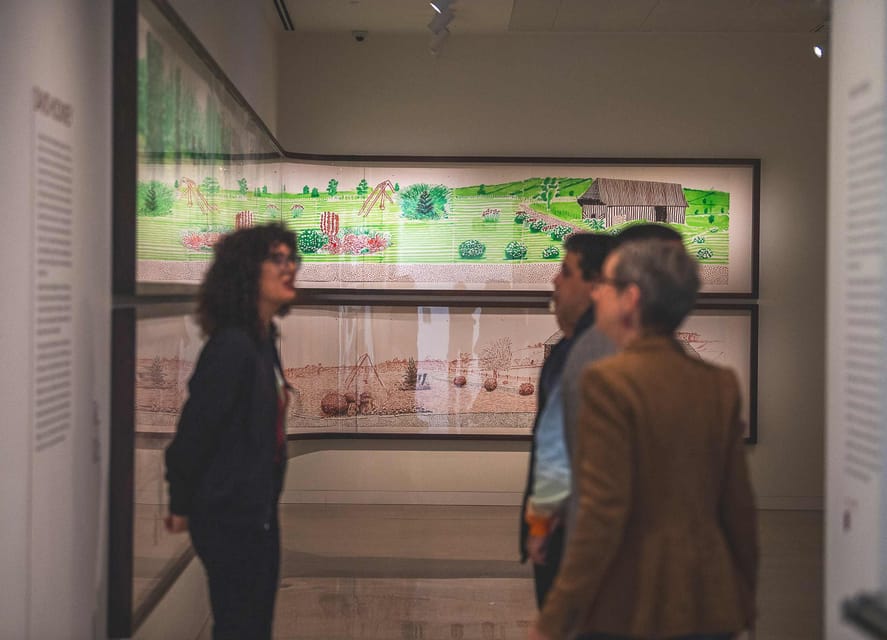
Hortensia Herrero’s collection includes major names from the international contemporary art world. The program features artists such as Andreas Gursky, Anselm Kiefer, Georg Baselitz, Tomás Saraceno, Jaume Plensa, Olafur Eliasson, Cristina Iglesias, Sean Scully, and Mat Collishaw.
That list gives you a useful sense of the range. You may encounter photography, sculpture, painting, installation, multimedia work, and pieces designed for a particular room. The variety keeps the route from feeling like a single-artist survey.
Some art is made to be contemplated from a distance. Other works ask you to look at material, scale, light, or movement. The center also includes interactive and multimedia pieces, which can change the pace after several more traditional gallery displays.
I especially like the emphasis on works created for the palace spaces. A piece made for a specific room has a different effect from an artwork moved into a standard gallery. Doorways, ceilings, stone, beams, and narrow passages can become part of how the work is read.
Still, contemporary art is personal. The center does not promise a crowd-pleasing collection where every room delivers an instant wow. One person may find a large installation absorbing, while another sees it as clever but thin.
That uneven reaction is worth considering before you pay. The center has a strong range of names and settings, but a famous artist’s presence does not guarantee that every piece will connect with you.
Multimedia art and works made for the rooms
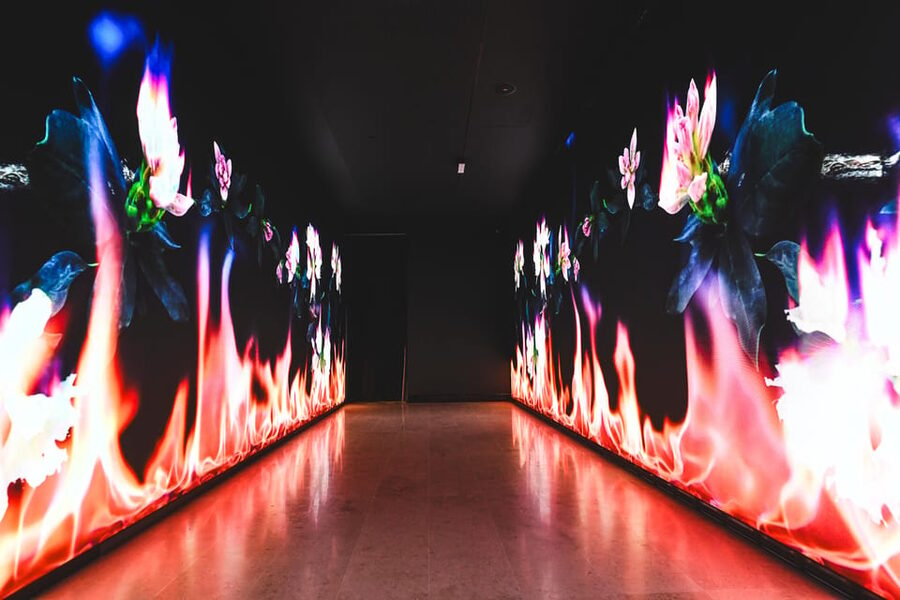
The center’s most distinctive quality may be the way art and setting interact. You might find an installation that changes your sense of the room, a multimedia piece that relies on sound or moving images, or a sculpture that seems to continue the building’s lines.
The interactive works can make the visit feel more active than a standard painting collection. They also suit people who want something beyond framed objects and quiet galleries. Families and first-time contemporary art visitors may find this variety easier to approach, though the supplied information does not specify a particular family program or child-focused route.
The palace adds real texture. Contemporary art often depends on clean walls and controlled light, but here the old structure remains visible. The result can be visually memorable even when an individual work does not appeal to you.
I would resist trying to understand every piece at once. Give yourself a few minutes with each work, then ask a basic question: does this piece use the room well, or could it be anywhere? That simple test helps you separate the works that belong to the building from those that merely occupy space.
The center can also reward a second look at details. A beam, a wall surface, or a glimpse of archaeological stone may matter as much as the headline artwork. You are paying for access to a connected set of spaces, not just a checklist of artists.
Same base, a different kind of afternoon:
- Valencia: Catamaran Cruise with Sunset Option
★ 4.0 · 3,566 reviews - Valencia Old Town Tour with Wine & Tapas in 11th Century Historic Monument
★ 5.0 · 3,234 reviews - Valencia: Oceanogràfic, Hemisfèric & Science Museum Combo
★ 4.4 · 2,959 reviews - Valencia: City Highlights Guided Bike Tour
★ 4.7 · 2,373 reviews
What the guided option adds
You can buy entry only or select a guided tour. The available host languages are English, Spanish, French, Italian, and Catalan, which makes the guided option practical for many international visitors and local residents.
A guide can help with the basic problem of contemporary art: you may understand what you see, but not why it is placed there or how it connects to the collection. In a palace with archaeological remains, historical context can also make the route easier to follow.
The guided option is most useful if you are new to contemporary art or want a clearer explanation of the works. It may also help you notice links between the Roman circus, the Jewish quarter, the palace structure, and the art installations.
The self-guided ticket makes more sense if you like to set your own pace. You can pause longer in rooms that interest you and move quickly past works that do not. That freedom matters in a 90-minute visit because your attention is better spent on the pieces you actually want to study.
The information provided does not identify individual guides, so I would choose based on language and your interest in interpretation rather than expecting a particular named guide. If the choice is available at booking, the guided tour is probably worth the extra structure for a first visit. Art fans who already know the major artists may prefer entry only.
Is $14 good value for 90 minutes?
At $14, the center is reasonably priced for Valencia, provided you care about contemporary art, architecture, or city archaeology. You are not paying only for a collection of artworks. The admission also covers the palace, its historic details, and access to remains from several periods of Valencia’s past.
The value improves if you use the entire 1.5 hours. Rushing through the rooms would make the ticket feel less worthwhile, particularly if your main interest is seeing famous artist names. Slow down in the main hall, study how installations relate to the building, and give the archaeological remains more than a passing glance.
The price is less attractive if you want traditional Spanish painting, a large historical collection, or a museum built around one clear story. This is a modern art center with a mixed route. Its appeal depends heavily on your taste.
The high overall rating of 4.6 from 151 ratings suggests that the combination works well for many people. At the same time, the range of individual scores is a useful warning. Some visitors describe the experience as immersive and well worth the detour, while others find the exhibitions interesting but not especially exciting. One particularly critical response focused on the conditions of the visit, and other moderate assessments described it as nice without being extraordinary.
I read that as a reason to set the right expectation. Think of this as a thoughtful, visually varied museum visit in a historic palace, not a guaranteed emotional knockout.
Who will enjoy this art center most?
I would recommend the Hortensia Herrero Art Center to you if you enjoy modern and contemporary art but also want a strong sense of place. The palace makes the visit more distinctive than a standard gallery, and the archaeological remains add local meaning.
It suits an afternoon in Valencia’s historic center, especially if you want a compact indoor activity. Ninety minutes is long enough to feel substantial but short enough to fit around other sights, meals, or a walk through the old city.
The center is also a good pick if you recognize some of the artists in the collection. Seeing works connected with Gursky, Kiefer, Baselitz, Saraceno, Plensa, Eliasson, Iglesias, Scully, and Mat Collishaw gives you a reason to visit beyond the building itself.
You may want to skip it if your interest stops at classical art or if you need extensive labels and historical explanation to enjoy a museum. The mixture of installations, multimedia works, archaeology, and palace rooms can feel scattered when you prefer a simple chronological layout.
The venue is wheelchair accessible. The activity is offered in English, Spanish, French, Italian, and Catalan, so you can choose the language that makes the art and history easiest to follow.
Practical planning for your 1.5-hour visit
Check the available starting times before you book, since the visit lasts 1.5 hours and the schedule matters if you are connecting it with another Valencia plan. The experience includes entry, while the guided tour is included only when you select that option.
If your plans may change, you can cancel up to 24 hours in advance for a full refund. You can also reserve now and pay later, which helps if you are arranging several activities before your travel dates are fixed.
I would not treat this as a quick ten-minute stop. The 3,500 square meters and four-story buildings create a larger route than the 90-minute duration may suggest. Wear comfortable shoes and keep enough time to move through the spaces without turning the visit into a race.
Start by noticing the palace before focusing on individual artists. Once you understand the building, the modern works make more sense because you can see how they respond to the available rooms and historic surfaces.
If you choose entry only, bring patience and curiosity. If you choose the guided tour, use the guide to ask how the art relates to the palace and archaeological remains. Those questions are likely to give you more than a simple list of artist names.
Should you book the Hortensia Herrero Art Center?
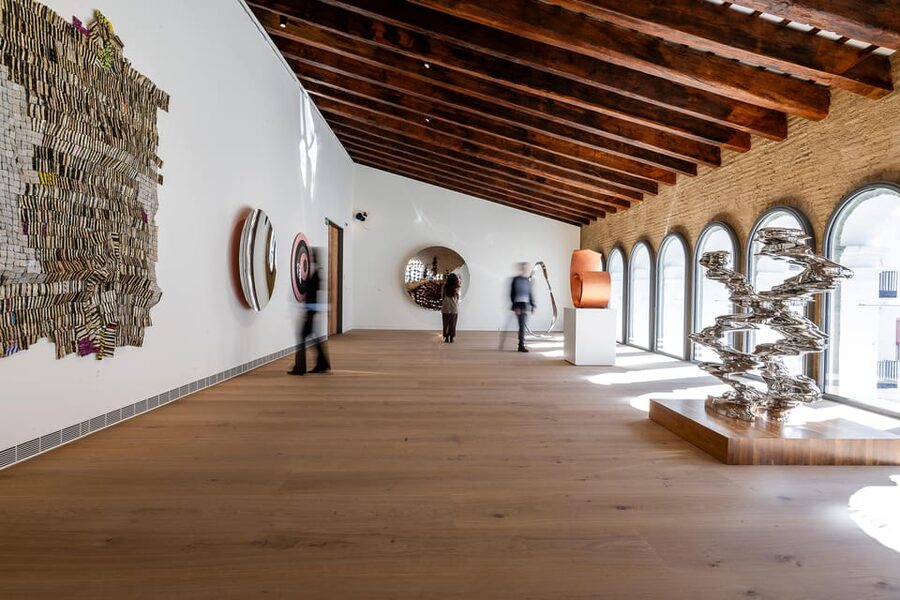
Book it if you want contemporary art in a setting with real architectural and archaeological character. The combination of the Valeriola Palace, Roman circus remains, Jewish quarter alley, medieval oven, Islamic fountain, and international collection gives you a concentrated look at several layers of Valencia.
I would choose the guided option for a first visit if you want help making sense of multimedia and interactive works. Choose entry only if you prefer freedom and already feel comfortable forming your own opinions about contemporary art.
At $14, the risk is modest, but your expectations matter. You may leave impressed by the setting and a few memorable pieces rather than loving every exhibition. That is still a good reason to go, especially when you want a modern museum experience that feels tied to Valencia itself.
FAQ
Where is the Hortensia Herrero Art Center located?
It is located in Valencia’s historic center in the Valencian Community of Spain. The center occupies the Valeriola Palace.
How long does the visit take?
The stated duration is 1.5 hours. The route covers two four-story buildings, 17 exhibition spaces, and about 3,500 square meters.
What does the $14 ticket include?
The $14 price includes entry to the Hortensia Herrero Art Center. A guided tour is included only if you select the guided option.
Can I visit without a guide?
Yes. You can select an entry-only ticket and explore the art center independently.
What languages are available for the guided experience?
The available languages are English, Spanish, French, Italian, and Catalan.
Is the art center wheelchair accessible?
Yes. The activity is listed as wheelchair accessible.
Can I cancel my booking?
You can cancel up to 24 hours in advance for a full refund. The booking also offers a reserve-now, pay-later option.
Recently listed in Valencia
- Valencia: Tapas and Drinks Evening Tour★ 4.7 · 334 reviews
- Valencia Tourist City Card – 7 Days★ 4.0 · 102 reviews
- Valencia: San Nicolas Church Entry Ticket★ 4.6 · 258 reviews
- Valencia: Exclusive Sunset Cruise with Drink★ 4.2 · 567 reviews
- Welcome to Valencia: Private Tour with a Local Host★ 4.8 · 284 reviews
- Valencia: Port Saplaya Boat Tour with Free Drink & Swimming★ 4.4 · 183 reviews
- Valencia: San Nicolas, Silk Museum and Santos Juanes Church★ 4.3 · 391 reviews
- Valencia: Evening Guided Paella Workshop, Tapas, and Drinks★ 4.9 · 326 reviews
Valencia Tours, compared.




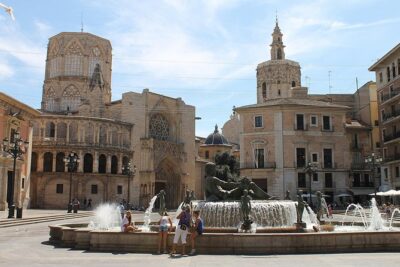
Valencia Old Town Tour with Wine & Tapas in 11th Century Historic Monument
Read our review →
Oceanogràfic, Hemisfèric & Science Museum Combo
Read our review →

Sunset or Daytime Catamaran Cruise with Drink
Read our review →Browse the lists this tour appears in