

Reviewed · HISTORICAL TOURS
Barcelona Historical Walking Tour: Gothic Quarter and El Born
Barcelona’s oldest streets tell surprising stories. This two-hour walk through the Gothic Quarter and El Born links Roman remains, medieval squares, Civil War scars, Jewish heritage, Catalan identity, and two beautiful churches. I like that it reaches narrow lanes and tucked-away corners that a bus cannot touch. I also like the human details, from Picasso’s café to legends about a bishop’s bridge.
The price is $30.25 per person, a fair deal for a small-group introduction to central Barcelona. The main consideration is that two church admissions are not included, and the tour covers many stops in a short time. You get a lively overview, not a slow architectural study.
The tour receives a 4.9 rating from 217 reviews, with 97 percent of participants recommending it. Guides such as Juan, Lidia, Vanesa, Darren, Jordan, Sonia, Petra, and Thami are repeatedly praised for energy, clear explanations, humor, and useful local suggestions. One poor experience involved a guide who spoke too softly, and one booking was cancelled, so the usual high standard is not guaranteed every time.
In This Review
- Key points to know before booking
- Starting at Plaça del Vuit de Març
- Els 4 Gats and Barcelona’s artistic crowd
- A mosaic about Catalan identity
- Barcelona Cathedral and the story of Saint Eulalia
- Roman traces at Casa de l’Ardiaca
- Pont del Bisbe and a local superstition
- Plaça Sant Felip Neri and the scars of war
- MUHBA El Call and Barcelona’s Jewish quarter
- Plaça de Sant Jaume and city government
- Plaça del Rei and Barcelona’s royal past
- Plaça de l’Àngel and the old Wheat Square
- Santa Maria del Mar in El Born
- What the guides add to the experience
- Is $30.25 a good value?
- Who should book this walking tour?
- Should you book it?
- FAQ
- How long does the Barcelona Historical Walking Tour last?
- What areas does the tour cover?
- Where does the tour start?
- Where does the tour end?
- Is the tour offered in English?
- Are church admission tickets included?
- How large is the tour group?
- Can I cancel for a full refund?
Key points to know before booking
- The tour connects two old districts: You begin in the Gothic Quarter and finish near Santa Maria del Mar in El Born.
- Eleven stops fit into about two hours: Expect short explanations at each place, with a steady but generally easy pace.
- Roman Barcelona is part of the story: Casa de l’Ardiaca, the old streets, and the Jewish quarter help reveal the city beneath today’s streets.
- The guides make the difference: Juan’s iPad images, Jordan’s humor, and Tammy’s food and drink tips show how personal the experience can be.
- Two church admissions cost extra: Entry tickets for Barcelona Cathedral and Santa Maria del Mar are not included.
- Morning is a smart choice: One participant specifically found the cooler air and quieter streets helpful.
Starting at Plaça del Vuit de Març
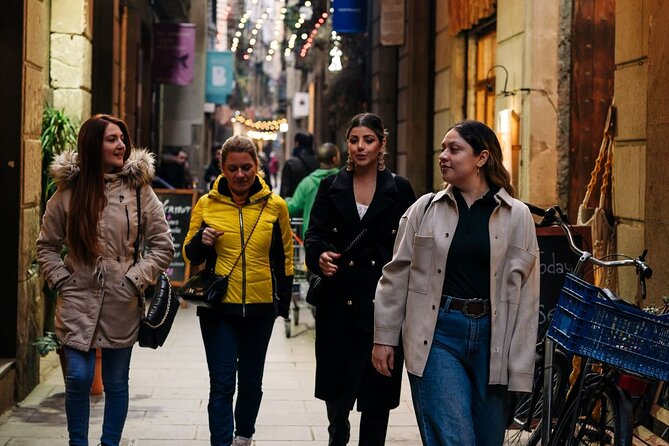
The walk begins at Plaça del Vuit de Març in Ciutat Vella, the old-city district. This is a useful starting point because you are already surrounded by the narrow streets and layered buildings that define central Barcelona.
Your guide leads on foot, with a maximum group size of 20. That is not a private tour, but it is small enough to hear most explanations and stay together in the tight lanes. Several guides are praised for answering questions, using humor, and keeping children and teenagers involved.
The tour is offered in English. It runs for about two hours, so you should arrive ready to keep moving. The pace has been described as relaxed and manageable, with enough time for photographs. Still, eleven stops in 120 minutes means each explanation is fairly compact.
More History Tours in Barcelona
- Barcelona: Tapas Walking Tour with Food, Wine, and History
★ 4.8 · 4,261 reviews - Barcelona Tapas Walking Tour: Food, Wine & History
★ 4.5 · 1,928 reviews - Barcelona: 2.5-Hour Bike or E-Bike Historical Tour
★ 4.5 · 1,262 reviews
Els 4 Gats and Barcelona’s artistic crowd
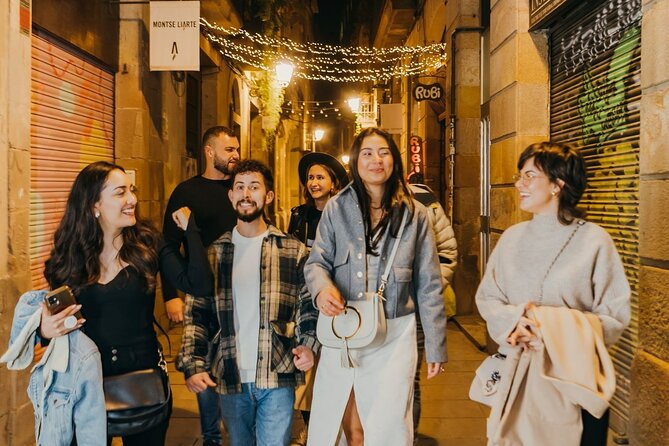
The first stop is Els 4 Gats, a historic café and restaurant linked with Barcelona’s modernist art scene. Its Art Nouveau design gives you an immediate sense of the city’s artistic past.
The café is especially interesting because Pablo Picasso and Antoni Gaudi were among the artists and intellectuals associated with it. The stop does not promise a long interior visit, and the admission is free, but the setting gives useful context before you encounter more of Gaudi’s city.
This is one of those places where a guide adds real value. Without background, it is simply an attractive old café. With a good explanation, it becomes part of the social world that helped shape modern Barcelona.
A mosaic about Catalan identity
Next comes El Mon Neix En Cada Besada, a large photo mosaic installed in 2014. Its title means The World Begins with Every Kiss, and the artwork is tied to Catalonia’s defeat on September 11, 1714, during the War of the Spanish Succession.
That defeat is connected with La Diada, Catalonia Day, and the mosaic’s idea of freedom. This brief stop moves the tour beyond buildings and dates. It introduces the political feeling that still shapes how many people in Barcelona understand Catalan identity.
The artwork also makes a good photo stop. Your guide can explain why a modern public artwork belongs in a tour focused on medieval streets and Roman remains. The answer is that Barcelona’s past is still part of its present.
Barcelona Cathedral and the story of Saint Eulalia
Barcelona Cathedral is the most imposing church on the Gothic Quarter portion of the walk. Built in the Gothic style, it honors Saint Eulalia, Barcelona’s patron saint, who was tortured and killed by the Romans.
The tour includes a stop outside or around the cathedral, but the admission ticket is not included. You should treat this as an orientation visit unless you choose to pay for entry separately.
The short format works well for first-time visitors who want to understand the cathedral’s place in the city before returning on their own. If church interiors are your main interest, you may want more time than this tour allows.
More Walking Tours in Barcelona
- Barcelona Tapas and Wine Experience Small-Group Walking Tour
★ 5.0 · 5,804 reviews - Barcelona: Tapas Food Crawl Walking Tour with Tastings
★ 4.9 · 1,798 reviews - Barcelona: Gothic Quarter Ghosts and Legends Walking Tour
★ 4.7 · 1,443 reviews - Barcelona Helicopter, Sailboat & Old Town Private Walking Tour
★ 5.0 · 1,395 reviews
Roman traces at Casa de l’Ardiaca
Casa de l’Ardiaca is one of the more unusual stops. This building combines Gothic and Renaissance features and incorporates the vertical face of the Roman wall and aqueducts.
Here, you begin to see how Barcelona has been built in layers. Roman Barcino is not presented as a distant archaeological subject. It appears in the walls and structures around you, mixed with later medieval and Renaissance construction.
The stop is free, and the guide’s explanation matters more than the building’s exterior alone. Look closely at the stonework and listen for how the Roman city fits beneath the Gothic Quarter. This is one of the strongest parts of the walk for anyone who likes urban archaeology.
Pont del Bisbe and a local superstition
Carrer de Bisbe was one of the main routes through Roman-occupied Barcino. Today, the street is best known for the Neo-Gothic Pont del Bisbe, or Bishop’s Bridge.
The bridge is photogenic, but its appeal goes beyond the stone arches. It is tied to a superstitious legend that your guide will explain. This is the sort of story that can make a short stop memorable, even if you are not normally interested in folklore.
The bridge also shows why walking is the right way to explore this district. A bus can pass the broad avenues, but it cannot take you through a narrow medieval street and pause beneath a bridge built into its walls.
Plaça Sant Felip Neri and the scars of war
Plaça Sant Felip Neri is a quiet square with a serious past. Its history is connected with the Spanish Civil War, and marks on the square still point to its tragic history.
This stop changes the mood. After cafés, legends, and artistic connections, you encounter a place where the physical setting carries painful memory. The square is picturesque, but the guide should help you look beyond the pretty view.
I appreciate this kind of stop because it keeps the tour from becoming a parade of attractive façades. Barcelona’s old center is not only charming. It also carries evidence of conflict, loss, and political change.
MUHBA El Call and Barcelona’s Jewish quarter
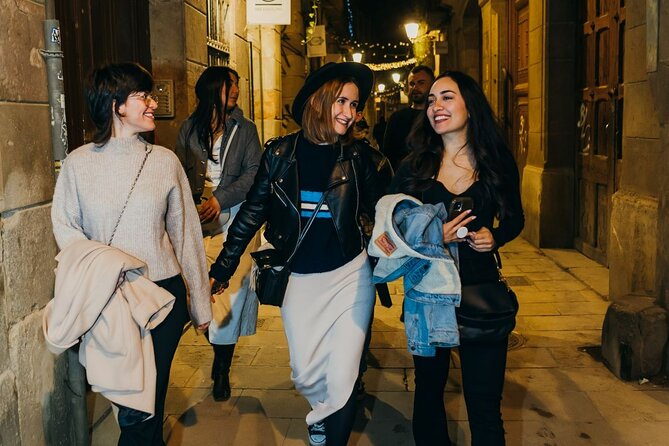
The route then enters El Call, Barcelona’s former Jewish quarter. Its narrow lanes and medieval buildings offer a look at Jewish life in the city, including a synagogue and local legends.
This is a compact introduction rather than a full study of Jewish Barcelona. Still, it gives you a reason to pay attention to street width, building lines, and the way the quarter differs from nearby squares.
The Museum of the History of Barcelona connection is useful because the area is not treated as a random cluster of old streets. It is part of the city’s recorded past. If this subject interests you, make a note of the area and return later for a longer visit.
Plaça de Sant Jaume and city government
Plaça de Sant Jaume is a central government square surrounded by important historic buildings. It remains a hub of civic activity, making it a good place to connect old Barcelona with the city you see today.
The square can feel more open after the tight lanes of the Gothic Quarter. Your guide explains the role of the surrounding buildings and the square’s place in public life.
This stop is also practical. It helps you understand the city center as a working part of Barcelona, not just a preserved historic zone. You may pass through here again during your stay, and the guide gives you a useful mental map.
Plaça del Rei and Barcelona’s royal past
Plaça del Rei brings the tour to a grander setting. The square houses the Royal Palace and offers a glimpse into Barcelona’s regal past.
The stop also points toward the city’s darker side. The square looks calm and elegant, but the stories connected with it are not simply decorative. This contrast is typical of the tour: beautiful spaces are paired with political, religious, or personal history.
The guide’s storytelling is important here. Several guides are praised for adding trivia and connected stories about Spain, rather than reciting isolated facts. Juan, in particular, has been praised for using an iPad to show historical images, which can make the past easier to picture.
Plaça de l’Àngel and the old Wheat Square
The next stop is Plaça de l’Àngel, once known as Wheat Square because it was a major place for grain trading. Its current name comes from a heavenly legend.
This is a small but useful example of how street names preserve old work and old beliefs. A square that may seem ordinary today once had a practical role in the city’s economy.
I like these brief explanations because they help you read Barcelona after the tour. Instead of seeing only plazas and streets, you begin to ask what happened there before the cafés, shops, and modern traffic arrived.
Santa Maria del Mar in El Born
The tour finishes at the Basilica of Santa Maria del Mar, on Plaça de Santa Maria in El Born. This Catalan Gothic church is linked with Barcelona’s maritime past and provides a fitting final stop after the Roman and medieval sections of the walk.
Admission is not included here either. You can admire the exterior as part of the tour, then decide if you want to pay for entry and spend more time inside.
Ending in El Born is useful because the district has a different feel from the Gothic Quarter. The walk has shown you old religious sites, government squares, Jewish streets, and royal buildings. Santa Maria del Mar brings the story back to the sea and the city’s trading life.
What the guides add to the experience
The strongest pattern across the guide team is personality. Juan is praised for historical detail, connected stories, trivia, answers to questions, and restaurant and bar suggestions. David receives praise for his explanation of Gaudi and for including people in the group.
Lidia is described as energetic, warm, and funny. Vanesa is singled out for her friendly approach with children. Darren has kept a teenager interested while explaining several neighborhoods. Jordan uses comedy to make Spanish and Barcelona history easier to follow.
Other guides named in positive feedback include Petra, Sonia, Thami, Craig, Justin, Sara, Mariah, and Tammy. Tammy is noted for sending food and drink recommendations after the walk, while a guide named Jorge is praised for keeping the pace slow enough for photographs.
That variety is both a strength and a slight uncertainty. You are booking a tour company rather than one fixed personality. Most of the guide experiences sound strong, but one participant found a guide too quiet to hear and eventually left. If you have hearing concerns, stay close to the guide and speak up early.
Is $30.25 a good value?
At $30.25, the tour costs more than simply walking the same streets with a map. You are paying for structure, local interpretation, and the chance to ask questions while moving through the old city.
The value is best if you are new to Barcelona or want a clear introduction at the start of your stay. You cover eleven historic locations, hear links between Roman, medieval, Catalan, and modern history, and finish in an area worth exploring on your own.
It is less useful if you already know the Gothic Quarter well and prefer to spend a long time inside each church or museum. The two-hour schedule offers breadth rather than depth, and the two church admissions are extra.
Group discounts may improve the price for several people booking together. The maximum group size is 20, which should keep the walk more personal than a large city tour.
Who should book this walking tour?
I would choose this experience for a first or second day in Barcelona. It gives you a working map of the oldest center and points you toward places you may want to revisit.
It also suits families, since Vanesa and other guides have been praised for engaging children and teenagers. The walk is generally easy and was specifically described as manageable for most people, but you should still be comfortable walking through old streets for two hours.
History fans will appreciate the range of subjects. You get Roman engineering, Gothic architecture, Catalan memory, Jewish Barcelona, royal power, religious traditions, maritime culture, and Civil War history in one compact route.
For the best experience, book a morning departure if available. The streets are likely to be cooler and less busy, and you will have more energy for the rest of your day.
Should you book it?
Book this tour if you want a lively first look at Barcelona’s oldest districts, especially if stories and local context matter more to you than long interior visits. The route is well chosen, the price is reasonable, and the guide can turn ordinary-looking streets into places with meaning.
Skip it if you want a private tour, extensive church time, or a specialist-level study of Gothic architecture. For most first-time visitors, though, this is a practical way to get oriented, learn where Picasso and Gaudi spent time, and discover the old city on foot.
Free cancellation is available up to 24 hours before the start time for a full refund. Changes or cancellations made less than 24 hours in advance are not refundable.
FAQ
How long does the Barcelona Historical Walking Tour last?
The tour lasts approximately two hours.
What areas does the tour cover?
It covers Barcelona’s Gothic Quarter and El Born, beginning in Ciutat Vella and ending near the Basilica of Santa Maria del Mar.
Where does the tour start?
The meeting point is Plaça del Vuit de Març, Ciutat Vella, 08002 Barcelona, Spain.
Where does the tour end?
The tour ends at Basílica de Santa Maria del Mar, Plaça de Santa Maria, 1, Ciutat Vella, 08003 Barcelona, Spain.
Is the tour offered in English?
Yes. The experience is offered in English.
Are church admission tickets included?
No. Admission to Barcelona Cathedral and the Basilica of Santa Maria del Mar is not included.
How large is the tour group?
The maximum group size is 20 participants.
Can I cancel for a full refund?
Yes. You can cancel at least 24 hours before the experience start time for a full refund. Cancellations made less than 24 hours in advance are not refunded.
Recently listed in Barcelona
- Transfers From Cruise Port to Barcelona Airport★ 4.5 · 155 reviews
- Bohemian Barcelona Neighborhood Evening Tapas & Wine Tour★ 5.0 · 419 reviews
- Park Guell Guided Tour with Skip the Line Tickets★ 4.0 · 739 reviews
- Barcelona Sunset Cruise with Light Snacks and Open Bar★ 5.0 · 476 reviews
- Montserrat very early : Hiking, Abbey, very small group★ 5.0 · 127 reviews
- Barcelona: Sagrada Familia, Park Guell & Tapas Private Tour★ 5.0 · 903 reviews
- Authentic Flamenco Show Barcelona : Intimate Casa Sors Experience★ 5.0 · 809 reviews
- Barcelona Expert Tour with Local Guide in Eco Tuk Tuk Private★ 5.0 · 216 reviews
Historical Tours, compared.
Madrid Essential: Historic Center, Plaza Mayor & Royal Palace
Read our review →
Tapas Walking Tour with Food, Wine, and History
Read our review →
Sevilla Food Tour: Tapas, Wine, History & Traditions
Read our review →
Valencia Old Town Tour with Wine & Tapas in 11th Century Historic Monument
Read our review →
Barcelona Tapas Walking Tour: Food, Wine & History
Read our review →
Ultimate Seville Tapas, Wine & History Small Group Tour
Read our review →
Skip-the-Line Great Mosque-Cathedral History Tour
Read our review →
Browse the lists this tour appears in