
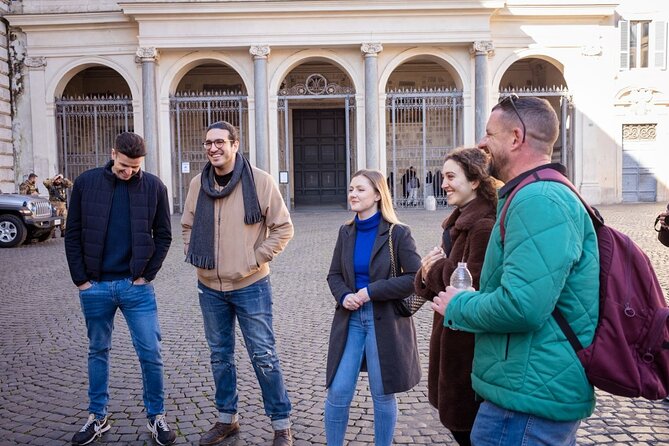
Reviewed · HISTORICAL TOURS
Barcelona in 2 Hours: Guided Walk Through History and Sights
Barcelona gives away its secrets slowly. This two-hour walk helps you catch them faster, moving from Picasso’s old café haunt through Gothic lanes, Jewish Barcelona, royal squares, and El Born. I like the way it connects famous sights to Catalan identity, rather than treating the old city as a string of pretty buildings.
I especially like the route’s strong mix of art, religion, and politics, and the chance to see places you might pass without understanding. The guides also add useful local advice. Jorge, Sonia, Vanessa, Petra, and others receive praise for their storytelling and recommendations, including a successful tapas suggestion from Sonia. The main concern is pace: eleven stops in two hours means quick explanations, and city noise can make a guide hard to hear without a speaker.
In This Review
- Key points before you book
- Why this two-hour walk works for a first day
- Starting with Els 4 Gats and Barcelona’s creative spirit
- A mosaic that turns a photo stop into a political story
- Barcelona Cathedral and the story of Saint Eulalia
- Roman Barcelona at Casa de l’Ardiaca
- Bishop’s Bridge and a legend underfoot
- Plaça Sant Felip Neri and the city’s painful memory
- El Call and the memory of Jewish Barcelona
- Plaça de Sant Jaume, where history becomes public
- Plaça del Rei and the darker royal story
- Plaça de l’Àngel and the legend of Saint Eulalia
- Santa Maria del Mar and the finish in El Born
- What the guides add to the route
- Pace, group size, and what to wear
- Who should book this Barcelona walk?
- FAQ
- How long is the Barcelona walking tour?
- How much does the tour cost?
- What language is offered?
- Where does the tour begin?
- Where does the tour end?
- What neighborhoods does the route cover?
- How many people can join the group?
- Is admission to Barcelona Cathedral included?
- Is admission to Santa Maria del Mar included?
- Can I cancel for a full refund?
- Should you book it?
Key points before you book
- Picasso and Gaudí’s old café: Els 4 Gats links Barcelona’s café culture with two of the city’s best-known artists.
- Catalan identity runs through the route: Expect stories about the 1714 defeat, La Diada, independence, and local saints.
- Two historic districts in one walk: The route covers the Gothic Quarter and El Born, with a finish at Santa Maria del Mar.
- A fast, compact introduction: Eleven stops receive roughly ten minutes each, so you get breadth rather than long indoor visits.
- Small enough to stay personal: The group has a maximum of 20 people, with a private upgrade available.
- Good first-day choice: At $22.99, it gives you a useful map of central Barcelona before you explore on your own.
Why this two-hour walk works for a first day
Barcelona’s old center can feel like a puzzle. A lane leads to a church, a Roman wall appears beside a modern doorway, and a quiet square carries a painful story that is easy to miss. This walk gives you a framework for making sense of those details.
The route begins in the Gothic Quarter and ends in El Born. That progression matters. You move from Roman and medieval Barcelona into a neighborhood shaped by trade, religion, and the sea. By the end, you should have a better sense of how the city grew and why Catalan culture remains such a strong part of daily life.
The tour costs $22.99 per person. I consider that fair value if you want a fast orientation and enjoy learning through stories. Several major sights are seen from outside, and admission to Barcelona Cathedral and Santa Maria del Mar is not included. You are paying mainly for the guide, route, context, and local perspective, not for a series of paid entries.
A group limit of 20 keeps the price down but still allows questions. If you want more time at each stop or prefer to control the pace, the private option is worth considering. English is the offered language, and mobile tickets make arrival simple.
More History Tours in Barcelona
- Barcelona: Tapas Walking Tour with Food, Wine, and History
★ 4.8 · 4,261 reviews - Barcelona Tapas Walking Tour: Food, Wine & History
★ 4.5 · 1,928 reviews - Barcelona: 2.5-Hour Bike or E-Bike Historical Tour
★ 4.5 · 1,262 reviews
Starting with Els 4 Gats and Barcelona’s creative spirit
The walk starts at Plaça del Vuit de Març, then heads to Els 4 Gats. This café and restaurant is more than a decorative Art Nouveau stop. It was a meeting place for artists and thinkers, including Pablo Picasso and Antoni Gaudí.
That connection gives the opening real energy. Instead of beginning with a broad lecture about Barcelona, your guide can point to a specific place where creative life gathered. The exterior also introduces the city’s love of unusual design, which you will see again and again on the walk.
You do not pay an entry fee here, and the planned stop is about ten minutes. That is enough for the setting and story, but not a full meal or an extended look inside. If Els 4 Gats interests you, note it as a possible return stop after the tour.
A mosaic that turns a photo stop into a political story
Next comes El Mon Neix En Cada Besada, a large photomosaic often treated as a quick picture opportunity. The guide’s explanation gives it more weight.
The artwork connects to Catalonia’s defeat on September 11, 1714. That date later became La Diada, Catalonia Day, and remains tied to Catalan identity and political feeling. This is one of the tour’s useful habits: it takes a familiar visual stop and explains the history beneath it.
You get about ten minutes here, with no admission fee. The lesson is short, but it helps you recognize that Barcelona’s public art can carry political meaning, not just decoration.
Barcelona Cathedral and the story of Saint Eulalia

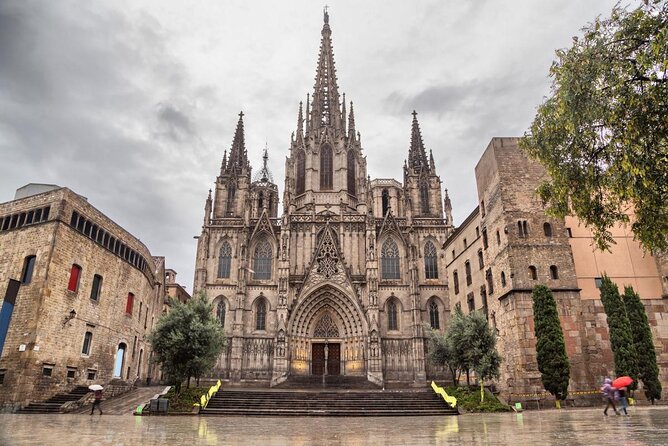
Barcelona Cathedral brings the route into the heart of the Gothic Quarter. Built over several centuries, the church is tied to Eulalia, the city’s patron saint, whose death made her a martyr.
The stop offers a chance to connect architecture with faith and local tradition. You will hear about the cathedral’s Gothic form and the life and death of Eulalia, rather than simply taking a quick photograph of the façade.
Admission is not included, so check the cost if you plan to enter. The guided portion lasts about ten minutes. That is enough for an introduction, but you should not expect a full visit to the interior during this compact walk.
More Walking Tours in Barcelona
- Barcelona Tapas and Wine Experience Small-Group Walking Tour
★ 5.0 · 5,804 reviews - Barcelona: Tapas Food Crawl Walking Tour with Tastings
★ 4.9 · 1,798 reviews - Barcelona: Gothic Quarter Ghosts and Legends Walking Tour
★ 4.7 · 1,443 reviews - Barcelona Helicopter, Sailboat & Old Town Private Walking Tour
★ 5.0 · 1,395 reviews
Roman Barcelona at Casa de l’Ardiaca
Casa de l’Ardiaca is the kind of place that rewards a guide’s eye. This small building combines Gothic and Renaissance elements, while nearby Roman remains point back to Barcino, the ancient city beneath modern Barcelona.
The surviving wall and aqueduct arcades show how the city’s water supply once worked. You get a glimpse of several periods in one place: Roman foundations, medieval architecture, and later design.
The stop is free and lasts around ten minutes. I like this part because it shows how Barcelona’s past is layered rather than neatly separated into museum rooms. You might walk past it alone and notice an attractive building, but miss the Roman engineering nearby.
Bishop’s Bridge and a legend underfoot
Pont del Bisbe, or Bishop’s Bridge, is one of the route’s most recognizable photo spots. The bridge links buildings above a narrow Gothic street and has a reputation as one of Barcelona’s most photographed places.
The guide also shares its unsettling legend. The story may appeal to superstitious people, while skeptics may still think twice before walking underneath. That playful moment breaks up the heavier political and religious material.
The bridge is free to see and receives roughly ten minutes. Expect other people nearby, since the setting is popular. The value here comes less from the structure itself than from learning the story attached to it.
Plaça Sant Felip Neri and the city’s painful memory
Plaça Sant Felip Neri changes the mood. This quiet square carries a sombre history and still shows scars from its tragic past. Its story connects with Catalonia’s long struggle for independence and the difficult memories held in Barcelona’s old center.
This is not a stop for a rushed photo and a quick joke. The square asks you to look closely and listen. The guide’s role matters here, since the physical marks alone do not explain what happened or why the place remains important.
The stop is free and planned for about ten minutes. Because the story is serious, you may want to give it your full attention rather than treating it as a pause between more cheerful sights.
El Call and the memory of Jewish Barcelona
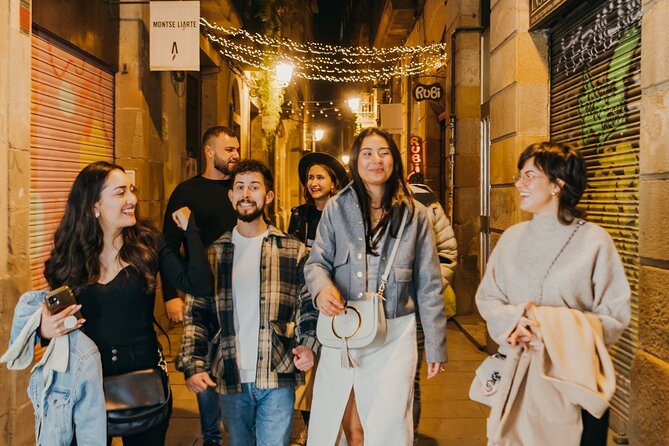
The route then reaches MUHBA El Call, the old Jewish district. Its narrow streets and medieval buildings preserve the outline of a community that once formed part of Barcelona’s urban life.
This section adds an important perspective to the city’s story. Barcelona is not only Roman, Christian, royal, or Catalan. Its past includes Jewish residents, religious divisions, and changing power within a tightly packed medieval city.
The stop is free and lasts around ten minutes. You may find the lanes especially useful after hearing how the area functioned. The guide helps you picture a district as a lived neighborhood, not just an old quarter built for photographs.
Plaça de Sant Jaume, where history becomes public
Plaça de Sant Jaume is Barcelona’s main civic square. It contains the seat of the Catalan government and City Hall, making it a natural place to discuss public power.
The square has hosted celebration and protest. It also connects to an important figure remembered during one of Catalonia’s beloved holidays. In this setting, Catalan identity becomes something public and current, not only a subject from the past.
The stop costs nothing and takes about ten minutes. The square can be active and noisy, so stay close to the guide. A past tour had trouble with background noise because no speaker or audio guide was used. That is a useful practical warning, especially if you have hearing difficulties.
Plaça del Rei and the darker royal story
Plaça del Rei feels grander and more enclosed than several earlier stops. The Royal Palace gives the square its formal character, while the guide turns attention to Barcelona’s darker past during the Spanish Inquisition.
This is a good example of the tour’s range. In a single morning or afternoon, you move from artists and cafés to saints, civic politics, Jewish history, and religious persecution. The route does not present Barcelona as a simple postcard city.
The square is free to visit during the walk, with about ten minutes for the explanation. If you want extensive interior time at the royal complex, this tour is not designed for that. Think of it as an introduction that helps you choose where to return.
Plaça de l’Àngel and the legend of Saint Eulalia
Plaça de l’Àngel once served as a grain-trading hub and was known as Wheat Square. Its later name, Angel’s Square, comes from a heavenly apparition connected with a procession carrying Saint Eulalia’s body.
This story brings the saint back into the route and shows how religious tradition shaped street names and public spaces. It is a small detail, but these details are often what make an old city easier to remember.
The stop is free and takes about ten minutes. It is not a major monument, which is precisely why the explanation helps. You get a sense of how Barcelona’s history survives in ordinary urban spaces.
Santa Maria del Mar and the finish in El Born
The final stop is Basilica de Santa Maria del Mar in El Born. This Gothic basilica is closely tied to Barcelona’s maritime past and gives the tour a strong architectural finish.
After the narrow lanes of the Gothic Quarter, the basilica feels like a clear endpoint. Its scale and Gothic design help pull together the themes of trade, faith, and the sea that shaped El Born.
Admission is not included. The guided stop lasts about ten minutes, so plan another visit if you want to explore inside at length. The tour ends at Plaça de Santa Maria, 1, which is convenient if you want to continue around El Born afterward.
What the guides add to the route
The guide can make or break a compact walking tour. The strongest feedback centers on clear storytelling, friendly energy, and useful answers to questions.
Darren is praised for explaining the history and culture in clear English, then offering suggestions for seeing more of Barcelona. Petra brings Catalan culture into the walk, while Jorge is noted for hidden corners and practical local tips. Sonia adds an archaeological point of view and recommended Tapas 2254, a suggestion that worked well for one participant.
Vanessa receives particular credit for linking many parts of the city: an original main gate, the government square, Picasso’s first solo exhibition site, religious buildings, the Jewish quarter, and Catalan political tensions. Lydia is described as conversational and energetic, while Sarah brings a spirited approach. Rolene handled a large amount of history in a fun way, though one account found the content less satisfying on an early tour.
Guide quality can vary from day to day. The route is strong, but the experience depends on how clearly the guide speaks and manages city noise. If the group is spread out or the street is loud, move closer and ask questions when needed.
Pace, group size, and what to wear
Eleven stops in two hours is brisk. Each listed stop has about ten minutes, leaving the rest of the time for walking between them. You will cover a lot, but you will not linger at every church, square, or art site.
Wear good walking shoes. One guide also specifically advised sunblock, which matters on bright days when you are outside for the full two hours. The route is near public transportation, and most people can participate, according to the supplied tour details.
A group maximum of 20 is reasonable for city streets. It is not a private conversation, but it is small enough for a guide to answer questions if the group stays together. The private upgrade suits you if personal attention matters more than keeping the lowest price.
Who should book this Barcelona walk?
I would choose this tour for a first visit, especially on your first day. It gives you names, stories, and geographic bearings that can make later wandering more rewarding.
It also suits you if you enjoy history but do not want a long museum lecture. The mix is broad: art, Roman remains, Gothic architecture, religion, Jewish Barcelona, royal power, Catalan politics, and maritime culture.
You may want something else if you prefer deep interior visits, a slow photography walk, or a tour focused only on architecture. The price does not include entry to Barcelona Cathedral or Santa Maria del Mar, and the schedule leaves little room for extended stops.
Free cancellation is available if you cancel at least 24 hours before the start time. Changes or cancellations made inside that window are not accepted for a refund.
FAQ
How long is the Barcelona walking tour?
The experience lasts approximately two hours.
How much does the tour cost?
The listed price is $22.99 per person.
What language is offered?
The tour is offered in English.
Where does the tour begin?
It starts at Plaça del Vuit de Març in Ciutat Vella, Barcelona.
Where does the tour end?
It ends at Basílica de Santa Maria del Mar, Plaça de Santa Maria, 1, in Ciutat Vella.
What neighborhoods does the route cover?
The walk covers the Gothic Quarter and El Born.
How many people can join the group?
The maximum group size is 20 people.
Is admission to Barcelona Cathedral included?
No. Admission to Barcelona Cathedral is not included.
Is admission to Santa Maria del Mar included?
No. Admission to Basilica de Santa Maria del Mar is not included.
Can I cancel for a full refund?
Yes, if you cancel at least 24 hours before the experience start time. Cancellations made less than 24 hours before the start time are not refunded.
Should you book it?
Book this walk if you want a lively, history-centered introduction to central Barcelona for a modest price. Its best feature is the way it links ordinary streets with major themes, from Picasso and Gaudí to Saint Eulalia, the 1714 defeat, Jewish Barcelona, and Catalan political life.
Go in with the right expectations. You will see many places, but most stops are brief and some require a later return for interior visits. If that sounds useful rather than limiting, this is a smart way to get your bearings fast and decide what deserves more of your time.
Recently listed in Barcelona
- Transfers From Cruise Port to Barcelona Airport★ 4.5 · 155 reviews
- Bohemian Barcelona Neighborhood Evening Tapas & Wine Tour★ 5.0 · 419 reviews
- Park Guell Guided Tour with Skip the Line Tickets★ 4.0 · 739 reviews
- Montserrat very early : Hiking, Abbey, very small group★ 5.0 · 127 reviews
- Barcelona Sunset Cruise with Light Snacks and Open Bar★ 5.0 · 476 reviews
- Barcelona: Sagrada Familia, Park Guell & Tapas Private Tour★ 5.0 · 903 reviews
- Authentic Flamenco Show Barcelona : Intimate Casa Sors Experience★ 5.0 · 809 reviews
- Barcelona Expert Tour with Local Guide in Eco Tuk Tuk Private★ 5.0 · 216 reviews
Historical Tours, compared.
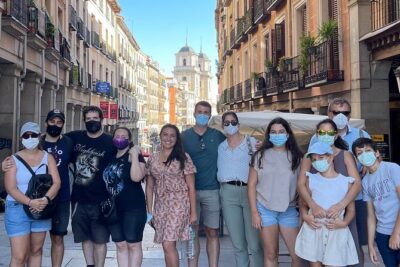
Madrid Essential: Historic Center, Plaza Mayor & Royal Palace
Read our review →
Tapas Walking Tour with Food, Wine, and History
Read our review →
Sevilla Food Tour: Tapas, Wine, History & Traditions
Read our review →
Valencia Old Town Tour with Wine & Tapas in 11th Century Historic Monument
Read our review →
Barcelona Tapas Walking Tour: Food, Wine & History
Read our review →
Ultimate Seville Tapas, Wine & History Small Group Tour
Read our review →
Skip-the-Line Great Mosque-Cathedral History Tour
Read our review →
Browse the lists this tour appears in