
Reviewed · HISTORICAL TOURS
Barcelona: The Spanish Civil War Historical Walking Tour
Barcelona’s past is not all Gaudí and sunshine. This 2.5-hour Spanish Civil War tour takes you through the old town, where political factions fought in the streets, bombs fell, and the consequences lasted through 36 years of dictatorship. I like the way it connects George Orwell’s Homage to Catalonia with real places, and I also like the guide’s use of photographs to make vanished scenes easier to picture. The main drawback is that the subject is serious, complex, and sometimes politically heavy, so this is not a light sightseeing stroll.
You meet beside the Foot Locker at Plaça de Catalunya, then walk toward the Gothic Quarter with an English-speaking guide. The route includes plenty of stops for explanation, so you are not marching for two and a half hours, but you will be on your feet throughout. Bring comfortable shoes, water, and a warm layer in cool weather. On rainy days, the tour continues.
In This Review
- Key points to know before booking
- Starting at Plaça de Catalunya
- Why Barcelona matters to the Civil War story
- Into the old town, where politics became street fighting
- Understanding the factions without getting lost
- Foreign involvement, from Hitler to the International Brigades
- George Orwell’s Barcelona
- Bombing, religion, and the experience of ordinary people
- From victory to 36 years under Franco
- Finishing near Barcelona City Hall
- What $46 gets you
- Practical advice for a smoother walk
- Should you book the Spanish Civil War walking tour?
- FAQ
- Where does the Spanish Civil War walking tour begin?
- How long does the tour last?
- What language is the tour conducted in?
- Is the tour mostly continuous walking?
- Does the tour run in bad weather?
- Are children allowed to join?
- Is the tour wheelchair accessible?
Key points to know before booking
- Barcelona’s Civil War scars: Look beyond the polished façades of the old town for traces of conflict, political division, and wartime bombing.
- A clear guide to confusing factions: Fascists, republicans, anarchists, labor movements, the Catholic Church, and foreign powers all enter the story.
- George Orwell’s Barcelona: See locations connected with the events described in Homage to Catalonia.
- History told with photographs: Guides use visual material to support the story and show how places looked during the war.
- A thoughtful look at memory: The tour explains how Spain deals with the war, Franco’s dictatorship, and unresolved historical questions today.
- Good value for serious history fans: At $46 per person, the price is reasonable if you want context that ordinary city sightseeing rarely provides.
Starting at Plaça de Catalunya
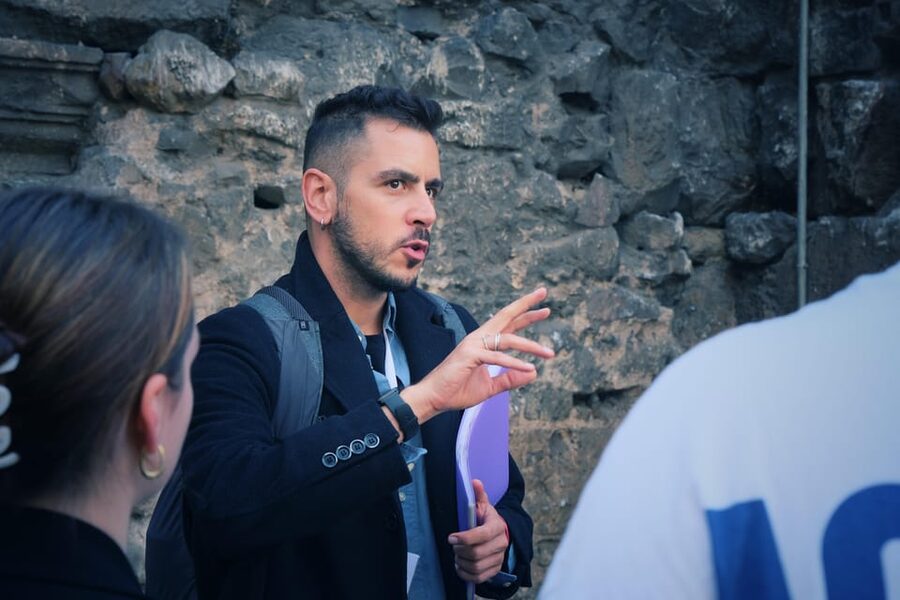
The tour begins on the sidewalk in front of Foot Locker at Plaça de Catalunya. Look for the guide carrying a white umbrella. This is a busy central meeting point, so allow a few minutes to find the exact spot and keep your phone handy for any meeting instructions.
The location works well. Plaça de Catalunya sits between the newer central city and the old town, making it a natural place to begin a story about Barcelona’s changing society. You start near a familiar tourist hub, then move into streets where the past is less polished and much more political.
Your guide may use a wireless tour system. There is an additional charge of €1 per person at the start, payable by cash or card. That small cost matters because old-town streets can be noisy, and hearing the explanation clearly is especially useful when the guide is sorting out several factions and time periods.
The group walks at an easy pace, but the format is closer to a moving outdoor lecture than a standard photo stop tour. You walk a little, pause while the guide explains an event or shows an image, then move on. One particularly useful detail is that the tour is not two and a half hours of constant walking. It is manageable for most people who can remain standing for long periods.
More History Tours in Barcelona
- Barcelona: Tapas Walking Tour with Food, Wine, and History
★ 4.8 · 4,261 reviews - Barcelona Tapas Walking Tour: Food, Wine & History
★ 4.5 · 1,928 reviews - Barcelona: 2.5-Hour Bike or E-Bike Historical Tour
★ 4.5 · 1,262 reviews
Why Barcelona matters to the Civil War story
The Spanish Civil War is often presented as a national conflict, but Barcelona gives you a close view of its social and political pressure points. The tour sets the scene before the fighting by explaining the forces that helped push Spain toward war.
You learn how competing ideas about Spain’s future shaped daily life. The story includes fascists, loyalists, anarchists, labor unions, political movements, and the Catholic Church. Those labels can become a jumble in a book. On the streets, with a guide putting each group into place, the divisions become easier to follow.
The best guides take time to explain motives rather than reducing the war to heroes and villains. Javier, Chrisa, Yannis, Filipa, Henrieta, and Evan have all been praised for making difficult material easier to understand, though each guide will have a different style. Chrisa has been especially effective at explaining the factions and discussing the role of women and the Mujeres Libres movement. Yannis is known for linking the war to Barcelona’s industrial growth and the social forces that came before it.
You should still expect a serious amount of information. One useful tip is to read a short introduction to the Spanish Civil War before arriving. You do not need prior study, and the tour is designed to explain the basics, but a little preparation helps you recognize names, ideologies, and turning points.
Into the old town, where politics became street fighting
As the route enters Barcelona’s old town, the architecture becomes part of the lesson. The guide points out places connected with political struggle, street fighting, and the wartime experience of ordinary people.
This is where the tour moves beyond the usual Gothic Quarter script. Instead of hearing only about medieval buildings and picturesque lanes, you consider how these streets were used during a modern political crisis. The old town’s narrow passages and layered façades can feel very different once you understand that they were also places of fear, protest, resistance, and surveillance.
The tour’s value comes from this contrast. Barcelona can look carefree on the surface, but the city carries difficult memories that are not always marked with official signs. Since there are few formal museums or memorials devoted to the Civil War, a walking tour can provide context that you would otherwise miss.
Do not expect every stop to have a large plaque or preserved exhibit. Some locations may look ordinary. That is part of the point. You are learning to read the city through photographs, stories, and political context rather than through grand monuments alone.
Understanding the factions without getting lost
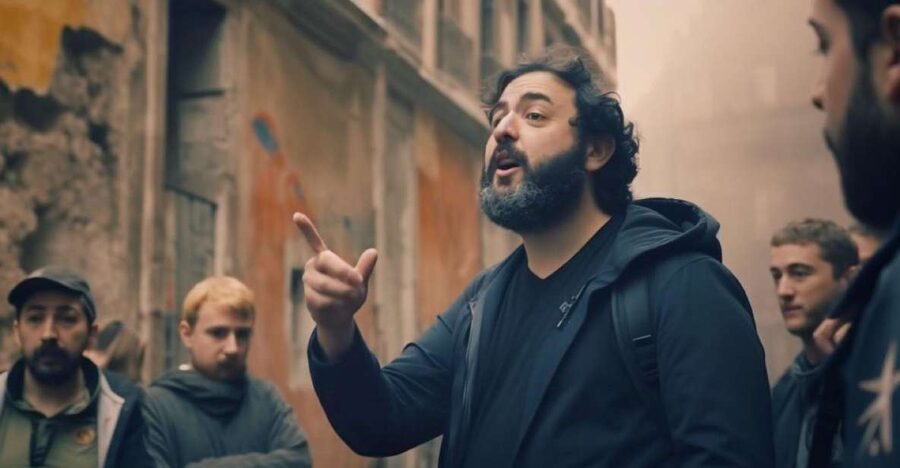
The hardest part of this subject is the number of groups involved. The tour tackles that problem directly, explaining who the factions were, what they wanted, and why alliances shifted.
You hear about the fascist side and Franco’s eventual dictatorship, as well as the forces that defended the Republic. The story also covers anarchists and labor movements, whose goals did not always match those of other anti-Franco groups. The result was not a simple two-sided contest.
A strong guide keeps returning to the central question: what kind of country did each movement want to create? That approach is more helpful than memorizing a list of organizations. It also shows why Barcelona had its own particular experience of the war, different from other parts of Spain.
Evan has been praised for presenting the factions in an even-handed way, while Javier’s dry humor can make dense explanations easier to absorb. The humor is used carefully because the subject includes political violence, war, repression, and dictatorship. You will have time to ask questions, and guides are encouraged to make sure the group is following the story.
More Walking Tours in Barcelona
- Barcelona Tapas and Wine Experience Small-Group Walking Tour
★ 5.0 · 5,804 reviews - Barcelona: Tapas Food Crawl Walking Tour with Tastings
★ 4.9 · 1,798 reviews - Barcelona: Gothic Quarter Ghosts and Legends Walking Tour
★ 4.7 · 1,443 reviews - Barcelona Helicopter, Sailboat & Old Town Private Walking Tour
★ 5.0 · 1,395 reviews
Foreign involvement, from Hitler to the International Brigades
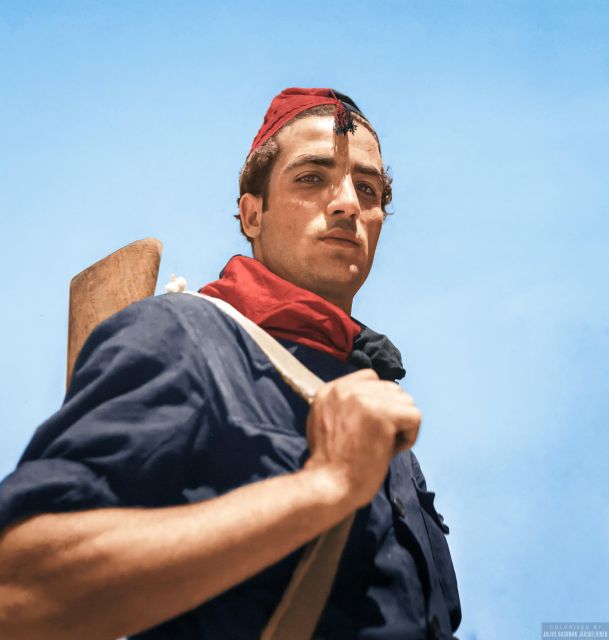
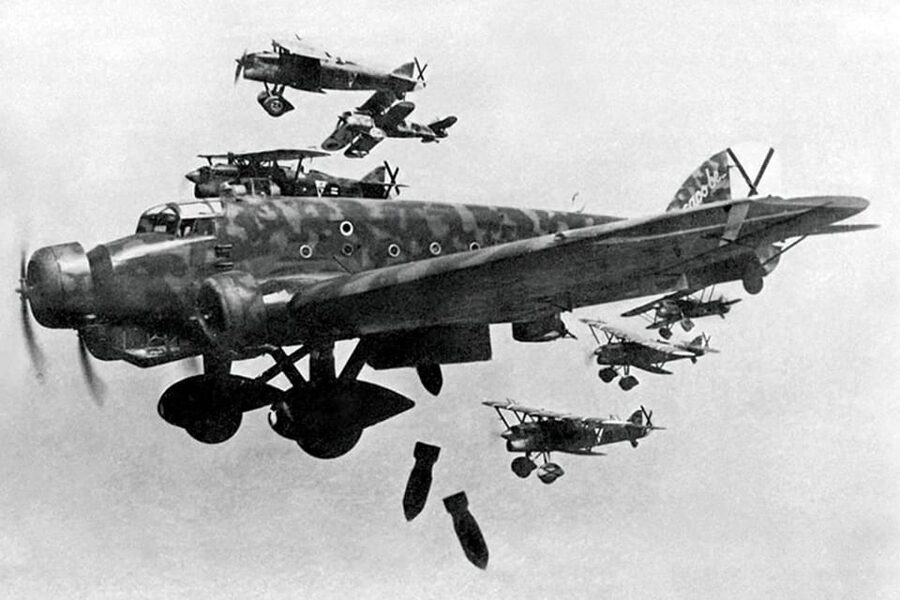
The tour also places Spain’s conflict in an international setting. You learn about Hitler and Mussolini, the International Brigades, and the response of the Western Allies.
This section explains why the Spanish Civil War mattered far beyond Spain. Foreign governments and volunteers shaped the conflict, while the response from other countries affected what happened on the ground and after the war. The tour does not treat Spain as an isolated case. It shows how outside powers viewed the war and how international involvement influenced its course.
The International Brigades are especially important for understanding the mix of idealism, politics, and international solidarity surrounding the conflict. You do not need to arrive with detailed knowledge. The guide supplies the basic framework, then connects the larger events to the Barcelona streets around you.
This is one of the tour’s stronger features because it gives the war a wider setting without losing sight of local experience. You learn about international forces, but you also return to the people who lived through shortages, fear, political pressure, and violence in the city.
George Orwell’s Barcelona
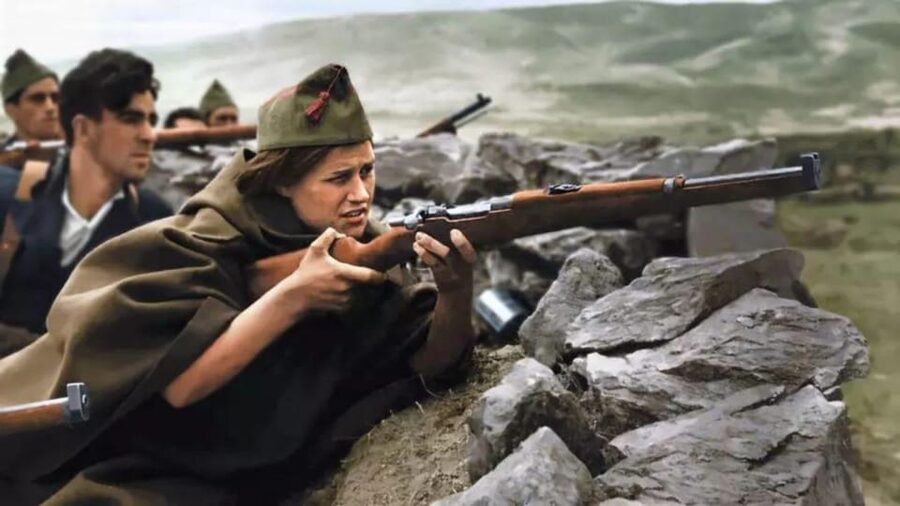
For many visitors, the connection with George Orwell provides a personal entry point. The tour visits places associated with Homage to Catalonia, Orwell’s account of his experience during the war.
Seeing these locations adds weight to the book. Instead of treating Orwell’s account as a distant literary work, you can connect his observations with actual streets and neighborhoods. The guide explains the political conflict behind the scenes Orwell described, helping you understand why Barcelona’s internal divisions were so important.
This part will appeal most to readers who have read Homage to Catalonia, but it remains useful if you have not. The guide supplies the necessary background and uses photographs to show how the locations and their surroundings have changed.
I would not book the tour solely for Orwell. The literary connection is one thread in a much larger story. Still, it gives the walk a memorable human viewpoint and helps turn abstract political conflict into something more immediate.
Bombing, religion, and the experience of ordinary people
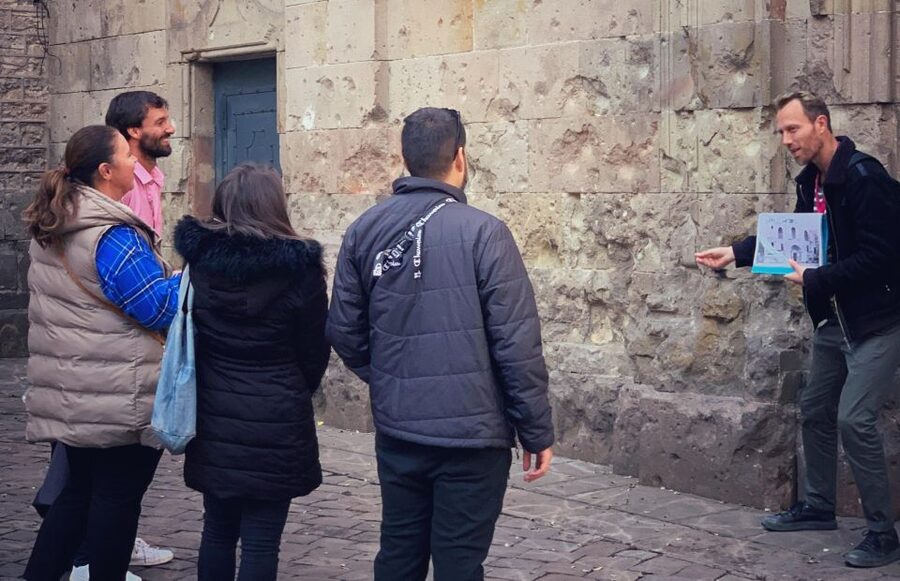
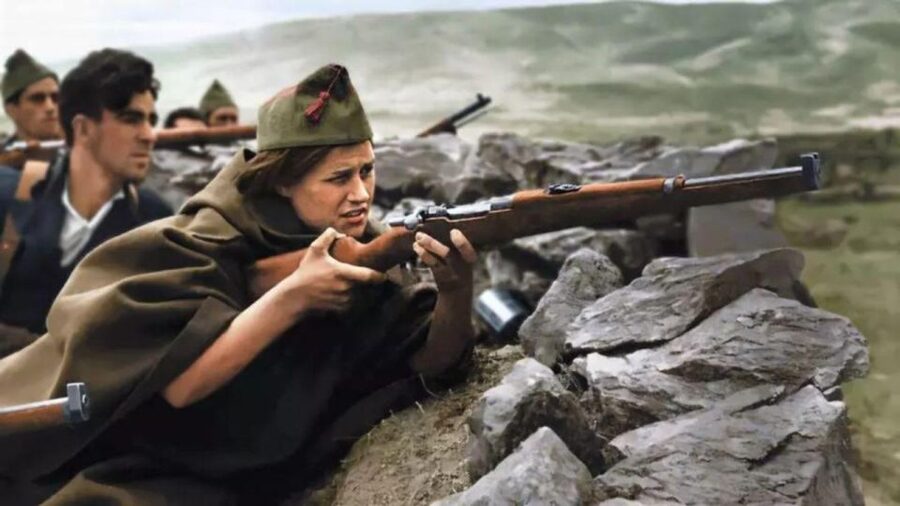
The tour addresses the fascist bombings that struck Barcelona and the effect of war on civilians. The emphasis is not only on famous leaders. You also hear about ordinary people and how the conflict changed everyday life.
That human focus is one of the most useful aspects of the experience. Political history can become a procession of generals, parties, and dates. Here, the guide returns to the people who had to live with the consequences.
The role of the Catholic Church receives attention as well. Religion was not a side issue in the political struggle, and understanding the church’s position helps explain some of the divisions that continued after the war.
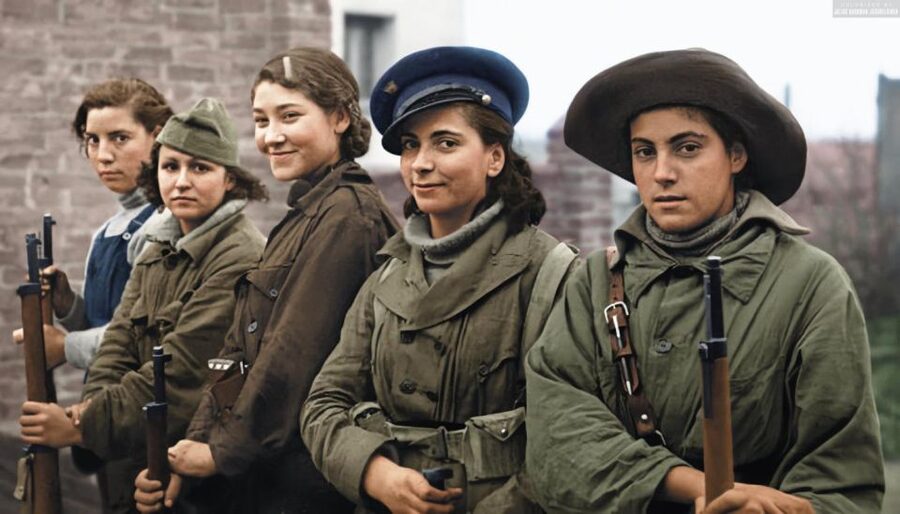
Women’s political participation is another welcome part of the discussion. The Mujeres Libres movement is addressed, giving you a wider view of the period than a story centered only on male politicians and military leaders. This makes the tour more useful for anyone who wants to understand society, not just battlefield events.
From victory to 36 years under Franco
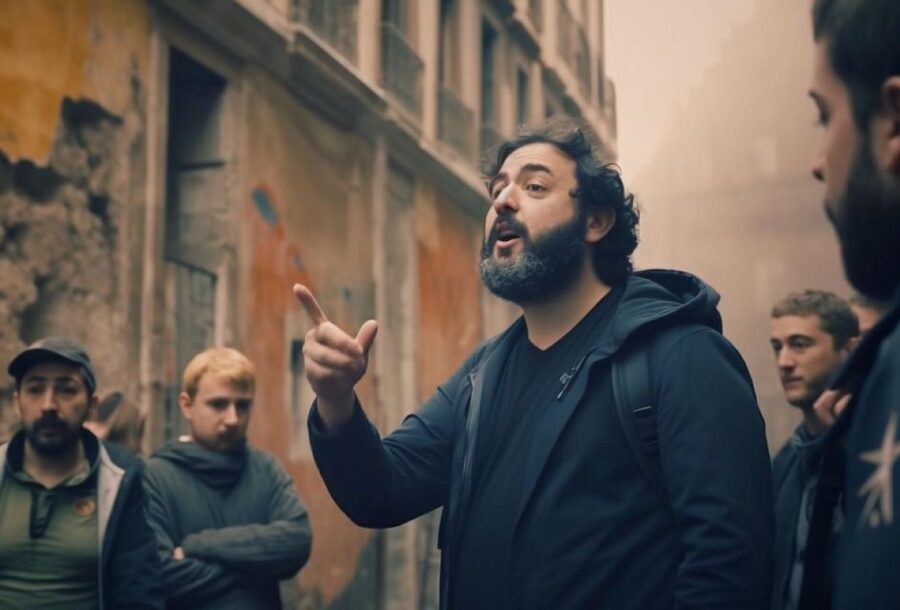
The war did not end the story. The tour continues into Franco’s dictatorship, which lasted 36 years, and explains how the regime shaped Spain after the fighting stopped.
This longer view is essential. Without it, you might understand the war but miss why its memory remains sensitive. The guide explains the dictatorship’s legacy and asks how Spain deals with this period now.
The subject is still less visible in Barcelona than the city’s Roman, medieval, and modernist past. You may not find a formal memorial at every place where something important happened. Instead, the guide helps you understand the silences, missing markers, and difficult memories that remain part of the city.
The discussion also reaches modern Spanish politics. Guides connect the Civil War and Franco era with present-day questions about historical memory, democracy, political extremism, and the country’s unresolved trauma. This is handled best when the guide gives context rather than turning the walk into a partisan speech.
Chrisa has been praised for connecting the past with current Spanish politics in a clear way. Yannis also links the history to the need to learn from it. If you prefer a strictly dated timeline with little modern commentary, this part may feel more political than expected.
Finishing near Barcelona City Hall
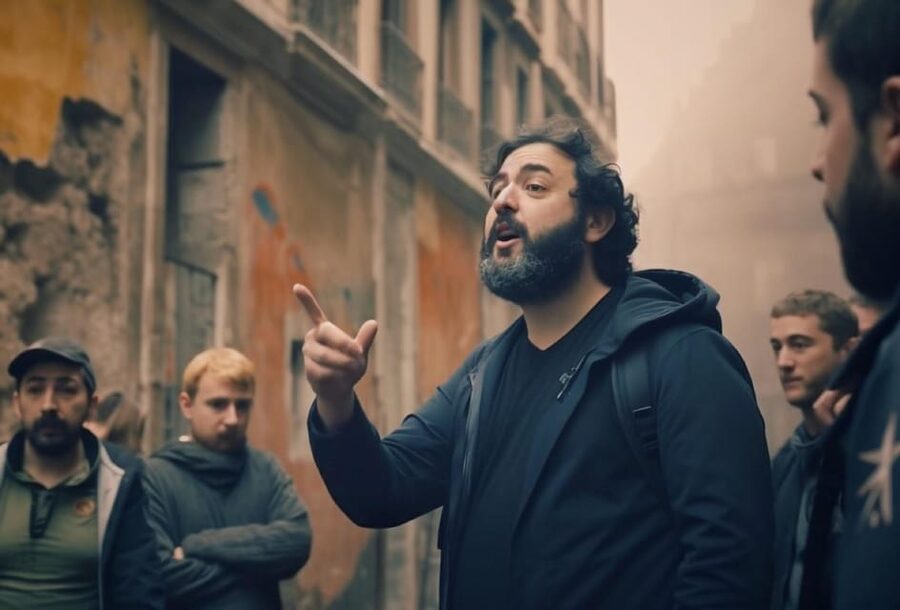
After about two and a half hours, the tour ends in the middle of the Gothic Quarter, near Barcelona City Hall. This is a convenient finish because you are already in one of the city’s main sightseeing areas, with plenty of options for food and further exploring nearby.
The ending also feels logical. You begin in the modern center and finish in the old town, having moved through several layers of Barcelona’s political past. You are not left at a remote site or required to arrange transport back to your hotel.
Guides may offer restaurant or activity suggestions afterward. That can be handy, especially because the walk finishes around mealtime for some departure times. Food and drinks are not included, so plan to stop on your own.
What $46 gets you
At $46 per person, this is not the cheapest walking tour in Barcelona. The value depends on what you want from your time in the city.
If you are looking for a quick introduction to famous buildings, this is the wrong choice. You will spend much of the tour listening, thinking, and looking at places that may not appear dramatic at first glance. There is no meal, hotel pickup, or included museum admission.
For a serious history experience, the price is fair. You receive a dedicated English-speaking guide for 2.5 hours, a structured explanation of a difficult subject, visual material, and access to places connected with Barcelona’s wartime story. It fills a gap that the city’s usual sightseeing routes often leave open.
A private group is available if you want more control over the pace or a more personal discussion. The standard experience may suit solo visitors and mixed groups better, especially if you enjoy hearing questions from other people.
The tour has a 4.9 rating from 239 bookings, and the praise centers on the guides’ clarity, passion, organization, and ability to answer questions. Javier, Chrisa, Yannis, Filipa, Henrieta, and Evan are repeatedly singled out for making complex material accessible. That matters here more than flashy scenery because the guide is the main attraction.
Practical advice for a smoother walk
Wear shoes that are comfortable for uneven old-town streets. You will not walk continuously for 2.5 hours, but you will stand through several explanations.
Dress for the weather. The tour runs rain or shine, and one January participant found the waiting period especially cold. A waterproof layer and warm clothing are sensible outside the warmer months.
Children may join, but the experience is not designed for young ones. Politics, war, dictatorship, repression, and civilian suffering shape the discussion. Teenagers and older children with an interest in history may follow it well, but families should decide based on maturity.
The tour is wheelchair accessible, though the old town can still require attention to street surfaces and group movement. Ask the provider for any route details you need before booking.
Free cancellation is available up to 24 hours before the start, and you can reserve now and pay later. These options are useful if your Barcelona schedule is still shifting.
Should you book the Spanish Civil War walking tour?
Book it if you want to understand Barcelona beyond its beautiful façade. It is especially well suited to history enthusiasts, readers of Orwell, students, politically curious visitors, and anyone who wants context for Spain’s modern identity.
I would also recommend it if you know very little about the war. The guides explain the basic story, then add enough detail to show why the conflict was so tangled. Just arrive ready to listen, stand, and think.
Skip it if you want a relaxed architectural walk, a family activity for small children, or a tour focused on food and scenery. The subject is demanding, and some stops may look ordinary without the explanation.
For the right audience, this is one of Barcelona’s more meaningful tours. You leave with fewer easy answers, but a much clearer sense of how war, ideology, dictatorship, memory, and everyday life shaped the city you are visiting.
FAQ
Where does the Spanish Civil War walking tour begin?
It begins on the sidewalk in front of the Foot Locker at Plaça de Catalunya. Your guide will carry a white umbrella.
How long does the tour last?
The tour lasts about 2.5 hours and finishes near Barcelona City Hall in the Gothic Quarter.
What language is the tour conducted in?
The live tour guide speaks English. An optional English audio guide may also be available.
Is the tour mostly continuous walking?
No. You walk between locations, then stop while the guide explains the history. You will still be standing for much of the tour, so comfortable shoes are a good idea.
Does the tour run in bad weather?
Yes. The tour takes place rain or shine. Dress appropriately, especially during colder months.
Are children allowed to join?
Children are allowed, but the tour is not advised for young children because it discusses politics, war, and dictatorship.
Is the tour wheelchair accessible?
Yes, the activity is listed as wheelchair accessible. A private group option is also available.
Recently listed in Barcelona
- Transfers From Cruise Port to Barcelona Airport★ 4.5 · 155 reviews
- Bohemian Barcelona Neighborhood Evening Tapas & Wine Tour★ 5.0 · 419 reviews
- Park Guell Guided Tour with Skip the Line Tickets★ 4.0 · 739 reviews
- Barcelona Sunset Cruise with Light Snacks and Open Bar★ 5.0 · 476 reviews
- Montserrat very early : Hiking, Abbey, very small group★ 5.0 · 127 reviews
- Barcelona: Sagrada Familia, Park Guell & Tapas Private Tour★ 5.0 · 903 reviews
- Authentic Flamenco Show Barcelona : Intimate Casa Sors Experience★ 5.0 · 809 reviews
- Barcelona Expert Tour with Local Guide in Eco Tuk Tuk Private★ 5.0 · 216 reviews
Historical Tours, compared.
Madrid Essential: Historic Center, Plaza Mayor & Royal Palace
Read our review →
Tapas Walking Tour with Food, Wine, and History
Read our review →
Sevilla Food Tour: Tapas, Wine, History & Traditions
Read our review →
Valencia Old Town Tour with Wine & Tapas in 11th Century Historic Monument
Read our review →
Barcelona Tapas Walking Tour: Food, Wine & History
Read our review →
Ultimate Seville Tapas, Wine & History Small Group Tour
Read our review →
Skip-the-Line Great Mosque-Cathedral History Tour
Read our review →
Browse the lists this tour appears in