
Reviewed · MUSEUMS
Cartagena : Roman Theatre Museum Entry Ticket
Ancient stone can still surprise you. Cartagena’s Roman Theatre Museum takes you from archaeological discoveries and Roman mosaics to one of Spain’s largest ancient theaters, with room for about 7,000 spectators. I like the way the museum gives the site a clear story before you reach the ruins, and I also like the modest $8 price, which makes this one of Cartagena’s better-value cultural stops. The main drawback is that some open stairways lack handrails, so access to the lowest part of the theater can be difficult.
The museum was designed by architect Rafael Moneo, and its route through the site feels carefully planned rather than like a pile of old stones. I recommend adding the audioguide, especially if Roman theater, politics, and archaeology are new to you. Finding the correct entrance can be confusing, though, since map directions may lead you toward the museum exit instead.
In This Review
- Key points to know before you go
- Why Cartagena’s theater is such a surprising find
- The museum route starts with the buried city
- The Passageway of History puts the site in context
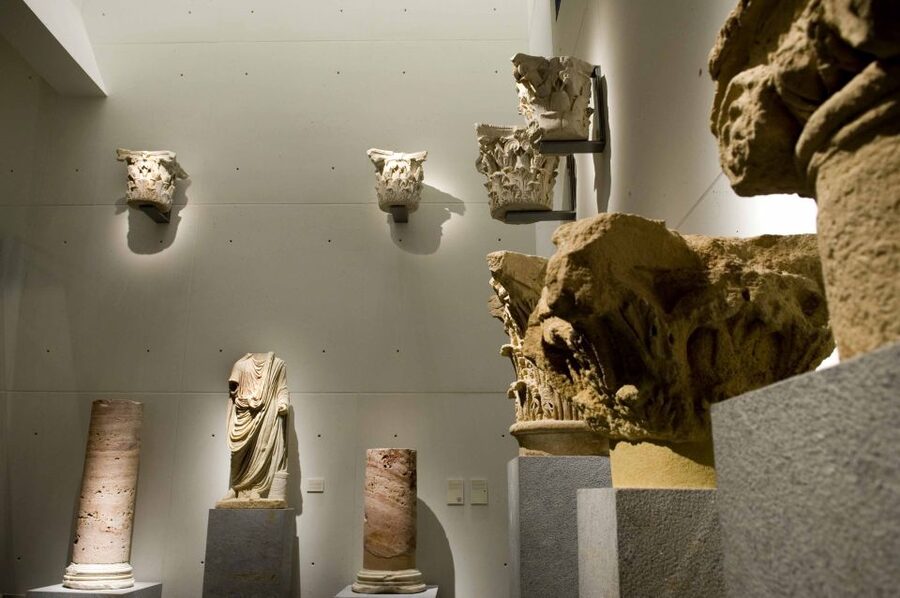
- Roman objects and a destroyed house add human detail
- Step outside into the 7,000-seat theater
- How the theater worked in Roman Cartagena
- Rafael Moneo’s museum makes the archaeology easier to read
- Price, timing, and the best way to plan your visit
- Finding the entrance without wasting time
- Is the audioguide worth adding?
- Who will enjoy this visit most?
- Should you book Cartagena’s Roman Theatre Museum?
- FAQ
- How much does the Roman Theatre Museum ticket cost?
- How long is the ticket valid?
- Is an audioguide included?
- What languages are available for the host or greeter?
- Where do I enter the Roman Theatre?
- Is the Roman Theatre Museum wheelchair accessible?
- Are electric wheelchairs allowed?
- Does the museum open all day on Sundays?
- Can I cancel the booking?
Key points to know before you go
- The theater held about 7,000 spectators: This was a major public building, not a small local performance space.
- The museum comes before the ruins: You learn the site’s story indoors, then walk out into the theater itself.
- Rafael Moneo designed the museum: The modern building creates a controlled route through ancient remains.
- An audioguide adds useful context: It is available in Spanish, English, French, German, and Russian.
- The entrance can be hard to spot: Look for the museum entrance, not the visible theater exit.
- The lowest steps may not suit everyone: Wheelchair users and anyone unsteady on open stairs should plan carefully.
Why Cartagena’s theater is such a surprising find
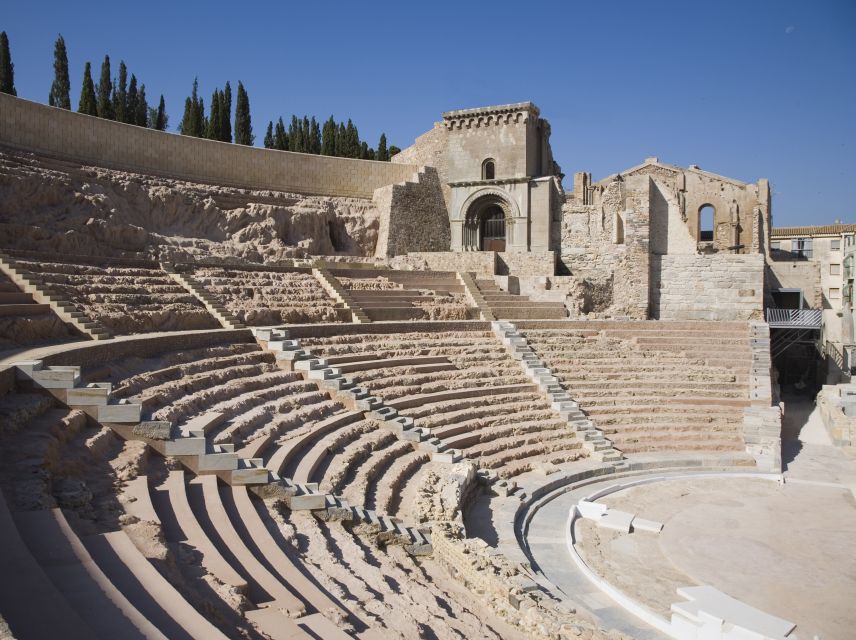
Cartagena is known today as a port city in Murcia, but beneath its modern streets lies a long Roman story. The Roman Theatre Museum explains how the theater was buried over time and then found again, turning what might have been an ordinary city walk into an archaeological lesson.
The site dates back to the 1st century B.C. That date matters because it places the theater near the beginning of Roman power in Cartagena, when public buildings helped shape the city’s identity. This was not just a place to watch a play. Roman theaters were public stages for entertainment, social order, civic pride, and political messaging.
I find that context especially useful before seeing the seating and stage area. Without it, you may admire the curved rows of stone and move on. With it, you can start to picture how thousands of people gathered, how performances were organized, and how Roman art supported the wider political world.
The theater’s reported capacity of 7,000 spectators gives the ruins their scale. Even if sections are incomplete, the size helps you understand that ancient Cartagena was no minor outpost. It had the money, population, and political importance to support a major performance venue.
More Museum Tours in Spain:
- Madrid: Prado Museum Entry Ticket
★ 4.6 · 17,509 reviews - Barcelona: FC Barcelona Museum “Barça Immersive Tour” Ticket
★ 4.4 · 10,944 reviews - Madrid: Reina Sofía Museum Entrance Ticket
★ 4.5 · 6,889 reviews
The museum route starts with the buried city
The visit begins inside the Roman Theatre Museum, not in the open ruins. This is an important practical point. If you follow a map pin to the visible theater area, you may end up at the exit and wonder where the tour starts. Head to the museum entrance first.
Inside, the route explains the development of the theater site and the processes that hid it from view. The museum’s modern design by Rafael Moneo gives the visit a strong sense of direction. You are not simply looking at disconnected objects in glass cases. You are being led through the story of how the site changed, disappeared, and returned to public view.
The first part is often the most helpful for families and anyone who likes a little explanation with their archaeology. Children can see actual objects and follow a clear sequence, while adults get the background needed to make sense of the ruins ahead.
The building includes several levels, with lifts and escalators available according to the information provided. That makes the museum portion easier to manage than the open theater steps. It also gives you different angles on the archaeological remains as you move through the building.
The Passageway of History puts the site in context
One of the museum’s key sections is called the Passageway of History. It presents the development of the theater site from its beginnings in the 1st century B.C. and helps connect the Roman building with the later story of Cartagena.
This part is valuable because Roman remains rarely appear in isolation. Cities are built, altered, damaged, and rebuilt. The theater was eventually covered, and its disappearance was part of the city’s later development. The museum lets you see that process rather than pretending the Roman period was frozen in place.
I recommend taking your time here instead of hurrying toward the outdoor theater. The archaeological displays give you names, objects, and dates that make the open-air remains easier to read. If you choose the audioguide, this is where it can be especially useful, since a voice-led explanation helps you follow the site’s long sequence without stopping to read every panel.
The audio option is offered in Spanish, English, French, German, and Russian. It is optional, so you can visit independently if you prefer. Still, I would add it unless you already have a strong understanding of Roman theaters and Cartagena’s ancient past.
Roman objects and a destroyed house add human detail
The museum does more than explain the theater’s grand public role. It also displays archaeological finds from the Roman period, including remains of a Roman house with mosaic tiles.
That house was destroyed when the theater was built. This is a small but revealing detail. Large public projects always change the lives and buildings around them, and the mosaic house shows that Roman urban planning involved choices, removal, and disruption. The theater was impressive, but it did not appear on an empty patch of land.
The mosaics also offer a more personal way into the past. A theater tells you about crowds and civic life. A house suggests domestic routines, decoration, and the people who lived in the city before the new public building took priority.
I like this combination of monumental and ordinary evidence. You see the political face of Roman Cartagena in the theater, then get a glimpse of private life through household remains. That balance keeps the museum from feeling like a single-object visit.
A few more Spain ideas to compare
- Barcelona: Sagrada Familia Entry Ticket with Audio Guide
★ 4.6 · 105,312 reviews - Barcelona: Park Güell Admission Ticket
★ 4.4 · 76,534 reviews - Seville: Royal Alcázar Entry Ticket
★ 4.6 · 28,378 reviews - Seville: Cathedral and La Giralda Entry Ticket
★ 4.5 · 24,592 reviews
Step outside into the 7,000-seat theater
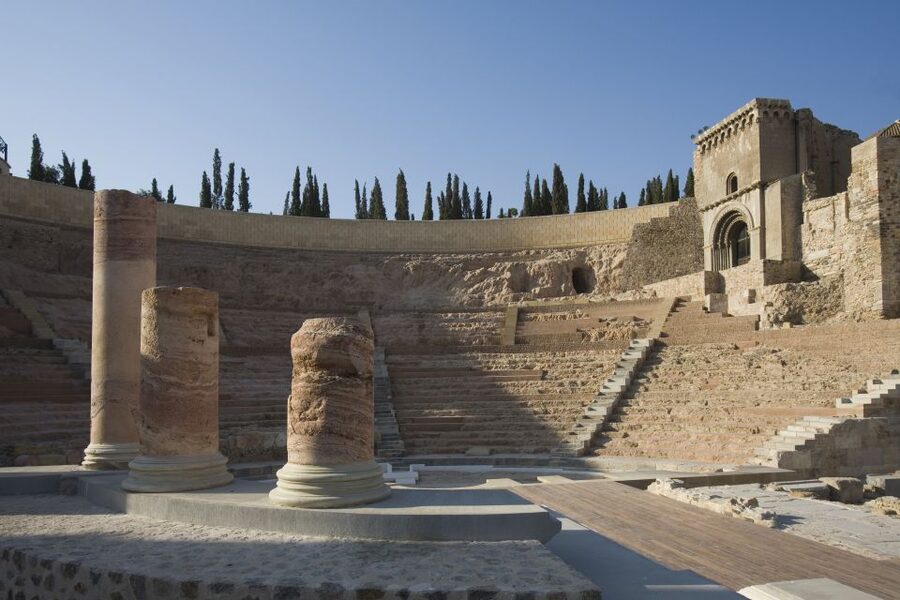
After the museum route, you reach the Roman Theatre site itself. This is the moment when the scale of the visit becomes clear. The open seating area, stage zone, and surviving stonework show how the building was arranged for a large audience.
The theater is not presented as a fully restored performance venue. You are looking at archaeological remains, and the open stairs can be uneven or exposed. That makes the site feel genuine, but it also means you need to watch your footing.
You can walk around the theater and view it from the accessible upper areas. To reach the lowest stage area, you may need to use open steps without handrails. This is the chief physical limitation of the visit. Some people can manage it easily, while others may prefer to remain at the top.
Wheelchair access is available in the museum and parts of the site, but the information provided notes that wheelchairs and prams may need to stay at the upper level of the theater. Electric wheelchairs are not allowed. If you use a wheelchair, rely on a pram, or feel uncertain on open stairs, contact the attraction before booking and plan on enjoying the upper viewpoints.
The limitation is frustrating because the stage area is an important part of understanding how the theater worked. Still, the upper viewing areas provide a strong sense of the building, and the museum helps fill in what you cannot reach physically.
How the theater worked in Roman Cartagena
The visit explains how plays were performed in Roman times and why theater mattered politically. That is more useful than simply labeling the ruins as ancient.
A Roman theater brought together architecture, performance, social rank, and public image. Seating arrangements could reflect status, while the stage provided a place for stories, spectacle, and ideas that supported Roman authority. The building’s size sent a message before a performer even spoke: Cartagena was connected to Roman culture and capable of hosting a mass audience.
The audioguide can help you think about the theater as a working institution rather than a silent ruin. You can consider where the audience sat, how attention was directed toward the stage, and how public entertainment fitted into city life.
This is also a good stop for families with older children. Young visitors may not care about dates on a wall, but the combination of a buried site, a destroyed mosaic house, and a huge ancient theater gives them several different ways to connect with the past. One family found it especially suitable for children aged 10 and 13, which seems fair based on the museum’s visual route and the open ruins.
Rafael Moneo’s museum makes the archaeology easier to read
The modern museum is one of the strongest parts of the visit. Rafael Moneo designed it to frame the archaeological story, and the architecture gives the site a sense of order.
That matters because archaeological remains can be confusing. Ancient walls, fragments, and foundations do not always explain themselves. A well-planned museum route gives you a starting point, then sends you outside with a better idea of what you are seeing.
The design does not need to compete with the Roman remains. Instead, it acts as a transition between modern Cartagena and the buried theater. You begin in a controlled indoor setting, move through the history of the site, and finish with the open ruins.
I would allow enough time to look at the museum displays before heading out. The site is self-paced, so you do not need to rush behind a guide or keep up with a group. A visitor who wants only photographs can move quickly, but the museum rewards anyone willing to read and listen.
Price, timing, and the best way to plan your visit
At $8 per person, this is an easy recommendation for most people already spending time in Cartagena. The price covers both the museum and the Roman Theatre site, so you are not paying only for a viewpoint or a short look at ruins.
The value comes from the complete sequence: archaeological objects, the story of excavation and burial, Roman urban life, and the theater itself. You can also add an audioguide in five languages. For a low-cost cultural stop, that is a strong package.
The ticket is valid for one day, with starting times based on availability. You should check the selected time before arriving, since the ticket is not simply an unrestricted pass at any hour.
The museum closes at 2:00 PM on Sundays. That makes Sunday morning the safer choice. Do not leave this visit until late Sunday afternoon, especially if you are coordinating it with a harbor boat trip or another timed activity.
The venue allows free cancellation up to 24 hours in advance, and you can reserve now while paying later. Those options are useful if your Cartagena schedule depends on port arrangements, weather, or another booking.
You must bring the official voucher. A screenshot of the QR code is not accepted, so keep the proper voucher available rather than relying on an image saved on your phone.
Food and drinks are not allowed inside. Pets are not allowed, except for assistance dogs. Alcohol, drugs, and explosive substances are prohibited. There is no mention of a refreshment stand, so bring your planning hat and have water before or after the visit, particularly on a hot day.
Finding the entrance without wasting time
The entrance deserves special attention because it has caused confusion. The museum and theater are connected, but the point you can see from outside may look like the way in.
Map directions can lead you to the museum exit instead of the entrance. Signs may also feel limited. I would look specifically for the Roman Theatre Museum entrance and ask locally if you are unsure, rather than walking around the ruins trying to find a ticket door.
Booking ahead is sensible during busy periods. A pre-booked ticket can help you avoid a long ticket line, and one visitor specifically found the on-site queue lengthy. At $8, securing your place before arrival is a small bit of planning with a useful payoff.
The meeting point can vary by the option you book, so check your confirmation carefully. This matters most if you choose an option that includes an audioguide or a host.
Is the audioguide worth adding?
I think it is. The theater’s stones are impressive, but the site becomes much more interesting when you understand the political role of Roman performance, the theater’s construction, and the way the building was used.
The audioguide is available in Spanish, English, French, German, and Russian. It lets you move at your own pace, stop for photographs, and replay information if needed. That is a good match for a museum where some people want a quick cultural stop and others want a longer look.
There is also evidence that guided options may be available with a host or greeter in the same language range. One particularly positive account names Bruno and describes a city tour lasting more than two hours, with clear answers to questions. Do not assume every Roman Theatre ticket includes Bruno or a live tour, though. Check the option you select, since the basic visit is self-paced and the audioguide is optional.
Who will enjoy this visit most?
I would recommend the Roman Theatre Museum to:
- First-time visitors to Cartagena who want a major historical site without paying for a long tour.
- Families with school-age children who respond well to objects, mosaics, and large ruins.
- Architecture fans interested in Rafael Moneo’s museum design.
- History enthusiasts who want context about Roman Spain and public theater.
- Cruise or port visitors with a free block of time, provided the schedule allows for the museum’s opening hours.
- Independent sightseers who prefer to use an audioguide rather than join a fixed group.
You may want to reconsider or plan carefully if you have difficulty with open steps, need full wheelchair access to the lowest theater level, or are visiting on a hot day with small children. The museum itself is more manageable, but the outdoor theater has limited shade and some difficult stairs.
Should you book Cartagena’s Roman Theatre Museum?
Yes, if you want a reasonably priced cultural visit that gives you both explanation and atmosphere. The $8 ticket buys more than a quick look at old stone. You get a modern museum, Roman objects, a mosaic house, the story of the site’s burial and rediscovery, and a theater built for 7,000 people.
Add the audioguide if you want the political and archaeological details to make sense. Book ahead when possible, locate the museum entrance carefully, and avoid late Sunday visits because of the 2:00 PM closing time.
I would not choose this as the only activity for someone who cannot manage open stairs, but the museum and upper viewpoints still offer plenty. For most people in Cartagena, it is a short, affordable, and worthwhile look at the city beneath the city.
FAQ
How much does the Roman Theatre Museum ticket cost?
The ticket costs $8 per person and includes entrance to the museum and Roman Theatre site.
How long is the ticket valid?
The ticket is valid for one day. Available starting times depend on the option and availability when you book.
Is an audioguide included?
An audioguide is optional rather than automatic. It is available in Spanish, English, French, German, and Russian.
What languages are available for the host or greeter?
Host or greeter services are available in Spanish, English, French, German, and Russian, depending on the option booked.
Where do I enter the Roman Theatre?
You enter through the Roman Theatre Museum. The correct entrance can be difficult to identify, and map directions may take you to the museum exit instead.
Is the Roman Theatre Museum wheelchair accessible?
The museum is wheelchair accessible, with lifts and escalators available on its various levels. Access to the lowest theater area may be limited because of open steps, and wheelchairs may need to remain at the upper level.
Are electric wheelchairs allowed?
No. Electric wheelchairs are listed among the items not allowed at the attraction.
Does the museum open all day on Sundays?
No. The Roman Theatre Museum closes at 2:00 PM on Sundays.
Can I cancel the booking?
Yes. You can cancel up to 24 hours in advance for a full refund. A reserve-now-and-pay-later option is also available for selected bookings.
Recently listed in Spain
- Transfers From Cruise Port to Barcelona Airport★ 4.5 · 155 reviews
- Bohemian Barcelona Neighborhood Evening Tapas & Wine Tour★ 5.0 · 419 reviews
- Park Guell Guided Tour with Skip the Line Tickets★ 4.0 · 739 reviews
- Barcelona Sunset Cruise with Light Snacks and Open Bar★ 5.0 · 476 reviews
- Montserrat very early : Hiking, Abbey, very small group★ 5.0 · 127 reviews
- Barcelona: Sagrada Familia, Park Guell & Tapas Private Tour★ 5.0 · 903 reviews
- Authentic Flamenco Show Barcelona : Intimate Casa Sors Experience★ 5.0 · 809 reviews
- Barcelona Expert Tour with Local Guide in Eco Tuk Tuk Private★ 5.0 · 216 reviews
Museums, compared.

FC Barcelona Museum “Barça Immersive Tour” Ticket
Read our review →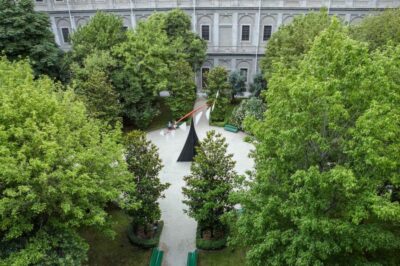
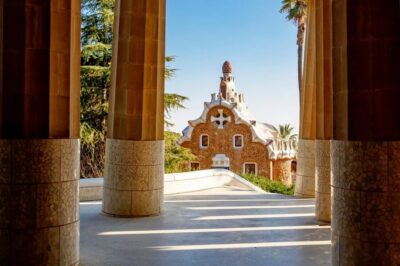
Park Güell and Gaudí House Museum Entry Ticket
Read our review →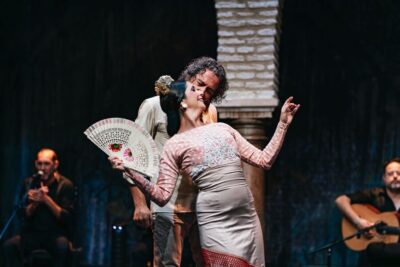
Puro Flamenco Show with Optional Museum Ticket
Read our review →
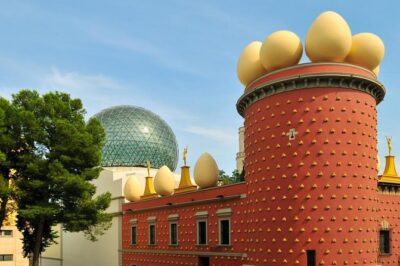
Girona & Dali Museum Small Group Tour with Pick-up from Barcelona
Read our review →
Oceanogràfic, Hemisfèric & Science Museum Combo
Read our review →Browse the lists this tour appears in