
Reviewed · MUSEUMS
Madrid: Reina Sofía Museum Entrance Ticket
Picasso’s Guernica is reason enough to go. At Madrid’s Reina Sofía Museum, you can see that famous antiwar painting alongside major works by Salvador Dalí, Joan Miró, and other Spanish artists. The collection contains more than 21,000 works, ranging from paintings and photography to film, sound, and dance.
I like the ticket’s simple, self-guided format and the chance to enter without waiting in the main ticket line. I also like the museum’s mix of famous names and less familiar 20th-century Spanish art. The main drawback is that the building can be confusing to navigate, and galleries or entire floors may be closed during your visit.
In This Review
- Key points to know before you go
- What makes Reina Sofía different
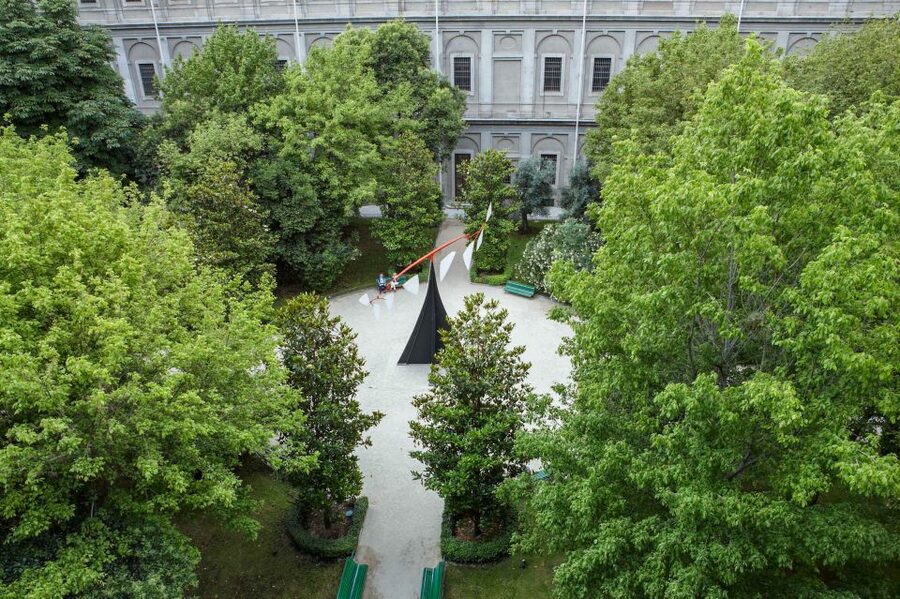
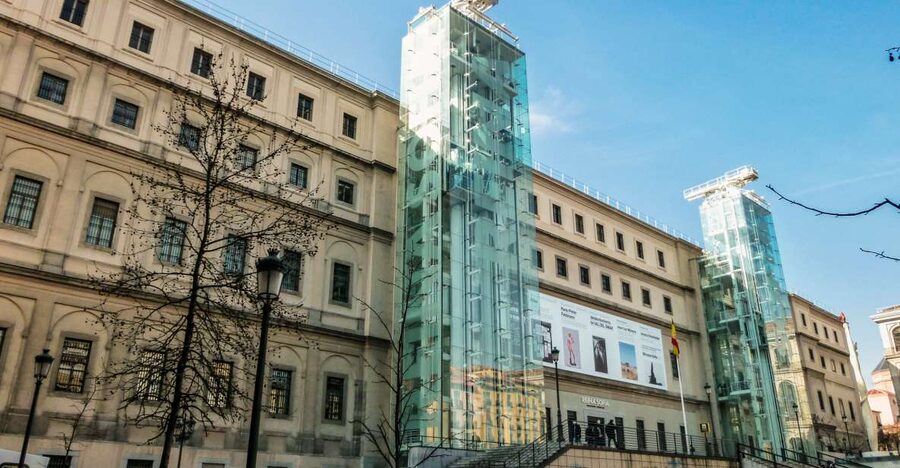
- Entering through the Nouvel courtyard
- Finding Picasso’s Guernica
- Dalí’s surreal rooms
- Miró and the language of color
- The rest of the collection and changing galleries
- How much time should you allow?
- Opening hours and the best time to enter
- Is the $14 ticket worth it?
- Practical advice for a smoother visit
- Who will enjoy this museum most?
- Should you book the Reina Sofía ticket?
- FAQ
- How long is the Reina Sofía ticket valid?
- How much does the entrance ticket cost?
- Is the audio guide included?
- Is a tour guide included?
- Where do I enter the museum?
- Is the museum wheelchair accessible?
- When is the museum closed?
- Can I visit during free admission hours?
Key points to know before you go
- Guernica is the main event: Picasso’s huge, powerful painting is the museum’s essential stop.
- Allow at least half a day: The collection is large, and readers who study the labels could easily spend most of the day.
- Buy online for easier entry: A paid ticket can help you avoid a long ticket-buying queue, especially around midday.
- Dalí and Miró receive strong attention: You can see about 20 works by Dalí and a selection of Miró’s bright, boldly colored paintings.
- The layout takes patience: Signage can be confusing, and the open galleries change from time to time.
- The ticket is good value at $14: It makes the most sense when you have enough time to explore rather than rushing in for one painting.
What makes Reina Sofía different
Madrid’s great museum trio is easy to divide by period. The Prado is the place for older European masters. The Thyssen-Bornemisza covers a broad sweep of Western art. Reina Sofía focuses mainly on 20th-century and contemporary art, with Spanish artists at its center.
That focus gives the museum a clear purpose. You are not simply moving from one famous canvas to the next. You are following the artistic arguments of a turbulent century: war, politics, surrealism, Cubism, modern design, photography, film, and changing ideas about what art can be.
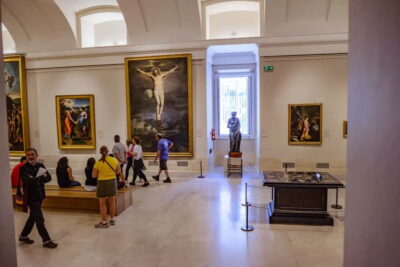
The museum’s collection is presented through several connected stories rather than one fixed march through time. Traditional paintings share space with photographs, moving images, sound, and other forms. That can feel less tidy than a classic painting museum, but it also gives you a better sense of how artists responded to the same events in different ways.
I find that approach especially useful if you are new to modern art. A painting may be placed near a photograph, poster, or film that helps explain its setting. At other times, the connection may be less obvious. You need to slow down and read the wall text if you want the full point.
More Museum Tours in Madrid
- Madrid: Prado Museum Entry Ticket
★ 4.6 · 17,509 reviews - Madrid: Small Group of Prado Museum Tour & Optional Tapas
★ 4.6 · 2,437 reviews - Madrid: Prado Museum Guided Tour with Skip-the-Line Ticket
★ 4.5 · 2,018 reviews
Entering through the Nouvel courtyard
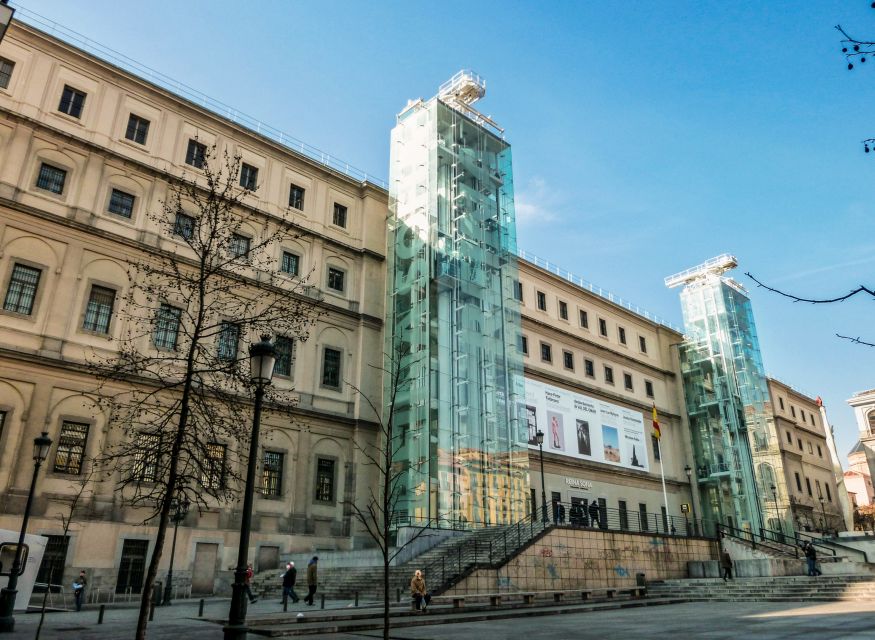
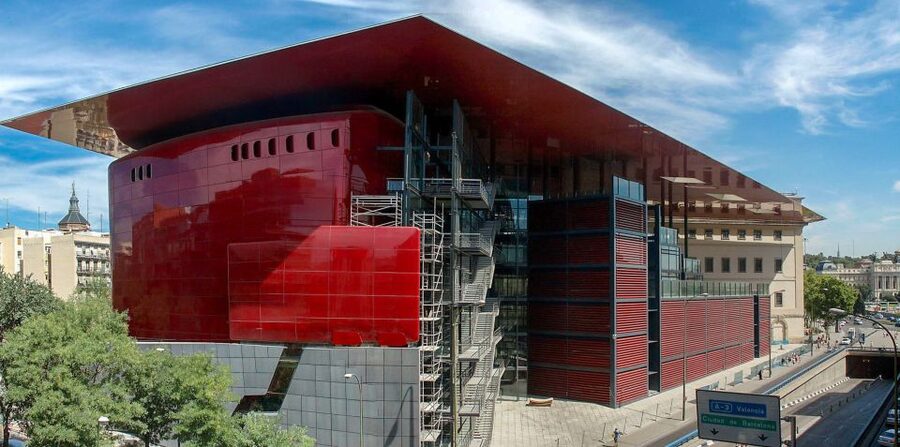
Your access point is through the Nouvel courtyard at Ronda de Atocha 2. This matters because the museum has several architectural sections, and arriving at the wrong entrance can cost you time.
Have your ticket ready before you reach the entrance. Paid online tickets have often allowed visitors to go directly inside while a separate line grows for people buying admission. That is one of the strongest reasons to book ahead, particularly if you are visiting during the middle of the day or working with a tight Madrid schedule.
Security rules are strict. Food and drinks are not allowed, and large bags or luggage cannot enter. Bags, purses, and backpacks should be no larger than the recommended 40 by 30 by 10 centimeters. Sharp objects, tools, knives, scissors, toys, balls, and similar items are not permitted.
Only closed folding umbrellas are allowed. Assistance dogs are welcome, as are emotional support dogs when properly justified. The museum is wheelchair accessible, and children should remain under adult supervision.
Finding Picasso’s Guernica
For most people, the visit builds toward Picasso’s Guernica. Created in response to the bombing of the Basque town of Guernica during the Spanish Civil War, it is one of the most recognized political paintings of the 20th century.
The scale matters. Reproductions and photographs cannot prepare you for how much space the work occupies. Its limited black, white, and gray palette gives the painting a newspaper-like force, while the broken bodies, open mouths, sharp angles, and frightened faces create a scene that is hard to read in one glance.
Give yourself time here. The room can become crowded, and some people stop directly in front of the painting for photographs or selfies. That makes it harder for everyone else to see the work properly. I suggest first standing back for the whole composition, then moving closer when the crowd allows.
The rooms around Guernica add useful context. Picasso’s studies and related works show how the image developed. Even if you know the painting well, seeing it within a group of connected works changes the experience. It becomes less like a single famous object and more like the center of a larger artistic and political story.
If your schedule is short, head to Guernica early in your visit. You can then decide how much time remains for the rest of the museum, rather than spending an hour elsewhere and rushing through the work you came to see.
Dalí’s surreal rooms
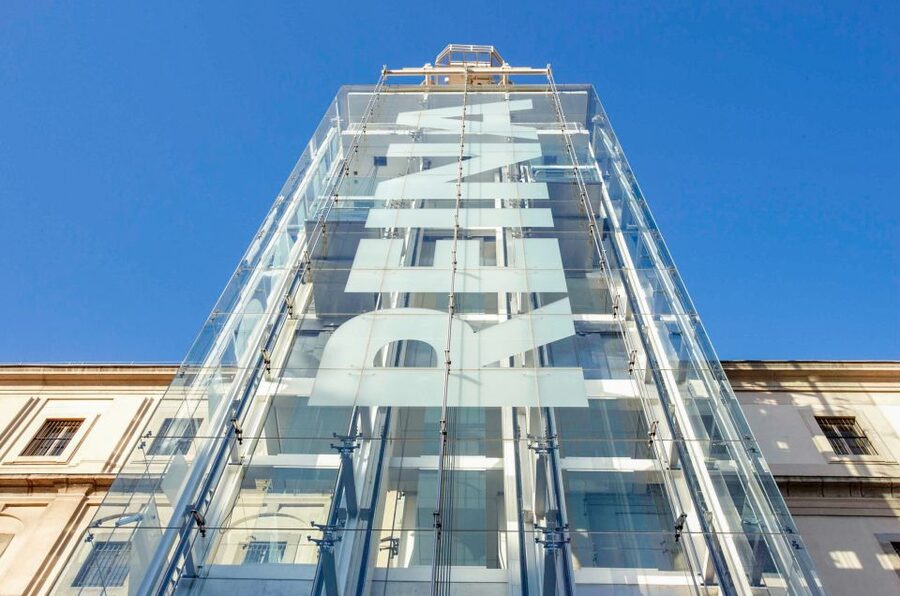
Salvador Dalí receives a major share of attention, with roughly 20 canvases in the collection. His surrealist painting El gran masturbador is one of the key works to seek out.
Dalí’s paintings reward patience, even when their titles or images seem strange at first glance. Look for the way familiar objects shift into dream-like forms. His work can be funny, unsettling, theatrical, and technically precise at the same time.
The Dalí rooms are also a good match for visitors who are less comfortable with modern art. The images are often immediately memorable, giving you something concrete to follow while you learn about surrealism. You do not need a long art background to enjoy the visual puzzles.
Many people find the Dalí collection one of the strongest parts of the museum. If you are visiting with teenagers or family members who might tire of abstract work, these paintings can provide an easier point of entry. Still, do not assume the most famous artists are the only worthwhile stops. Some of the lesser-known Spanish works provide the wider context that makes the celebrated paintings more meaningful.
Same base, a different kind of afternoon:
- Madrid: Tour Bernabéu Entry Ticket
★ 4.5 · 21,573 reviews - Madrid: Royal Palace Fast-Access Admission Ticket
★ 4.6 · 13,856 reviews - Madrid: “Emociones” Live Flamenco Performance
★ 4.8 · 12,866 reviews - Madrid: Panoramic Route City Tour
★ 4.1 · 12,259 reviews
Miró and the language of color
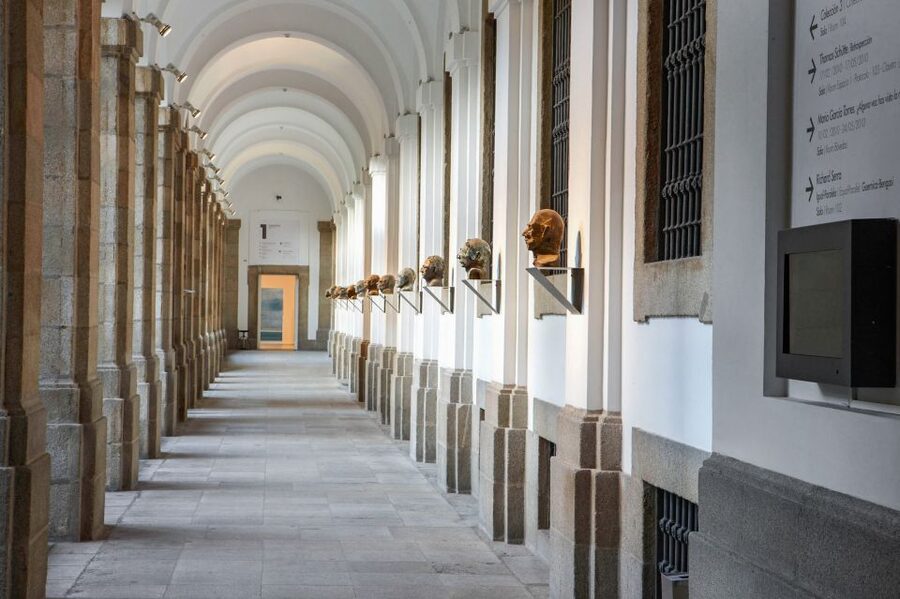
Joan Miró’s work offers a different mood. His paintings are defined by bright primary colors, simplified forms, symbols, and open space. Next to Picasso’s fractured figures and Dalí’s dream imagery, Miró can feel playful and spare.
That simplicity is deceptive. Spend a moment looking at how a few lines and shapes control the whole surface. Miró’s paintings ask you to respond to color and rhythm rather than search for a traditional scene.
The museum’s Miró works help show how Spanish artists took modern art in different directions. Picasso could break the visible world into sharp planes. Dalí could turn it into a private dream. Miró could reduce it to marks and colors that seem almost childlike, but remain carefully balanced.
This is a good section for a slower pace. You may find that the paintings open up after you have looked at them for several minutes, especially if you resist the temptation to judge them with the question, What is this supposed to be?
The rest of the collection and changing galleries
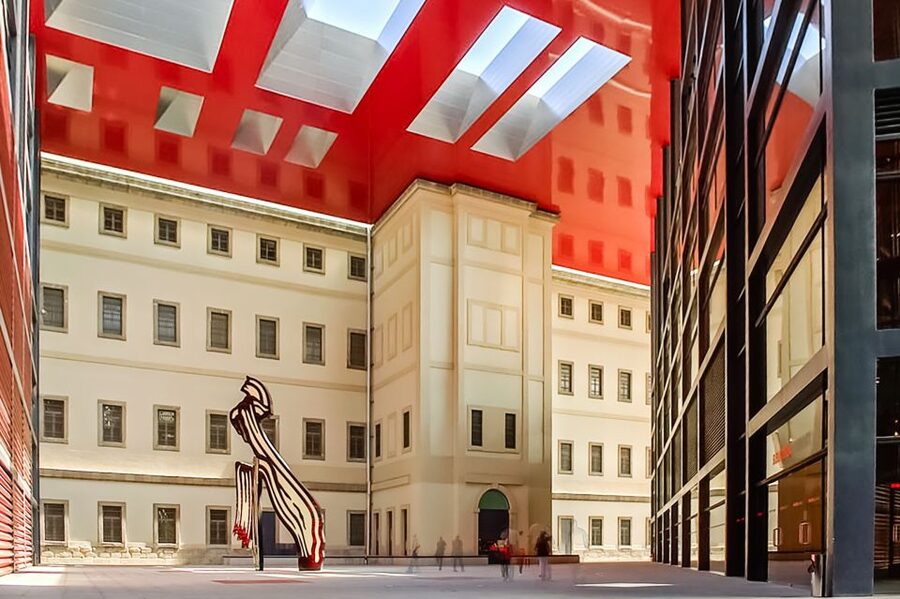
The collection extends well beyond Picasso, Dalí, and Miró. You will encounter work by many 20th-century Spanish artists, along with photography, film, sound, and other media.
The museum’s multi-narrative presentation means the route is not always obvious. Some floors may have fewer displays than expected, and temporary closures can change what you see. At times, first, third, or fourth-floor areas may be closed or less rewarding than the main Picasso and Dalí sections. Check the current gallery situation when you arrive and ask staff if a particular work is a priority.
Signage has been a weak point for some visitors. Labels and room directions can feel inconsistent, and English assistance may not always be available. Take a photo of the floor plan if one is posted, and note the room numbers for works you want to revisit.
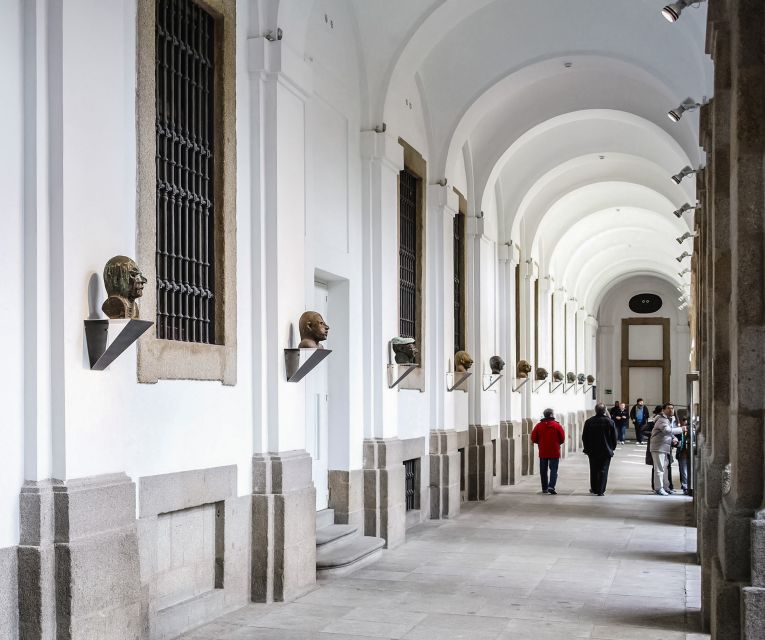
The building itself is worth your attention. The museum combines an older hospital structure with the modern Nouvel addition, including the courtyard entrance. Its architecture creates a contrast between historic walls and modern museum spaces. You are visiting both a collection and a building shaped around different eras.
How much time should you allow?
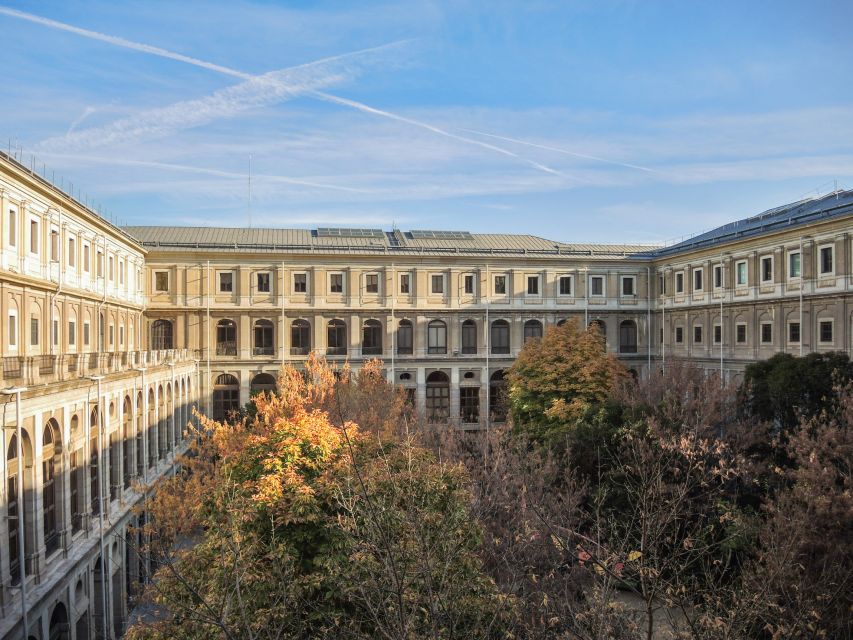
A quick visit focused on Guernica, Dalí, and Miró could take around two hours, though the time depends on crowds and how much you read. A more relaxed visit needs at least half a day.
If you like to study labels, watch films, and pause at unfamiliar artists, plan for much longer. One day is plenty for the ticket’s validity, but it does not mean you must stay all day. It means you have room to set your own pace during the museum’s opening hours.
I would use this plan:
- Start with Guernica before the largest crowds arrive.
- Continue to the Dalí works and El gran masturbador.
- Look for Miró’s primary-color paintings.
- Explore the connected rooms of Spanish art.
- Return to any major work you rushed past.
- Leave time for the architecture and a break if needed.
The museum can be tiring because modern art demands a different kind of attention from room to room. You may move from a dense historical display to a quiet painting, then into a film or sound installation. That variety is part of the appeal, but it makes a short, hurried visit feel less satisfying.
Opening hours and the best time to enter
The museum is open Mondays from 10 a.m. to 9 p.m., Wednesdays through Saturdays from 10 a.m. to 9 p.m., and Sundays from 10 a.m. to 2:30 p.m. It is closed every Tuesday, with occasional Sunday closures.
It is also closed on January 1 and 6, May 1 and 15, November 9, and December 24, 25, and 31. Check your exact date before booking, especially around Spanish public holidays.
Free admission is offered Monday through Saturday from 7 p.m. to 9 p.m., and Sundays and public holidays from 12:30 p.m. to 2:30 p.m. That changes the value calculation. If you can comfortably visit during the free period, paying $14 may not be necessary. The tradeoff is that those short windows can be crowded and give you little time for a large collection.
For a paid visit, I prefer arriving early. An early start can mean a calmer first look at Guernica and easier movement through the galleries. Around noon, queues can grow quickly. The online ticket is most useful when it helps you avoid spending part of your day standing at the admissions desk.
Is the $14 ticket worth it?
At $14 per person, the ticket is fair value for anyone who wants more than a quick look at Guernica. The admission covers the main museum collection for one day and includes booking and handling fees.
The value drops if you are visiting only for one painting and arrive during a free admission period. It also drops when several important galleries are closed. Since gallery access can change, you should check what is open before committing your whole day to the museum.
The ticket does not include an audio guide. You can rent one inside for €4.50. I consider that a sensible extra if modern art is not your comfort zone or if you want help identifying the main works. It can also reduce the confusion caused by the museum’s layout.
You may prefer to explore independently. The museum’s labels and displays can lead you into unexpected rooms, and a self-guided visit lets you stop whenever something catches your eye. Just do not expect the ticket itself to provide a tour guide or detailed explanation of every gallery.
Practical advice for a smoother visit
Keep your bag small. Large luggage is not allowed, and the recommended bag size is quite limited. Avoid bringing food, drinks, umbrellas that do not fold, or anything sharp.
Wear shoes suitable for several hours on your feet. The collection is spread across a large building, and you may walk farther than expected while trying to locate a particular artist or floor.
Do not plan your visit too tightly around one temporary exhibition. Temporary displays that require an hourly schedule are not included with this basic entrance ticket. If one is important to you, confirm its separate requirements before you arrive.
The museum is family-friendly in the sense that children can enter, but the art and layout require supervision. Remind young children not to touch objects and stay close in crowded rooms.
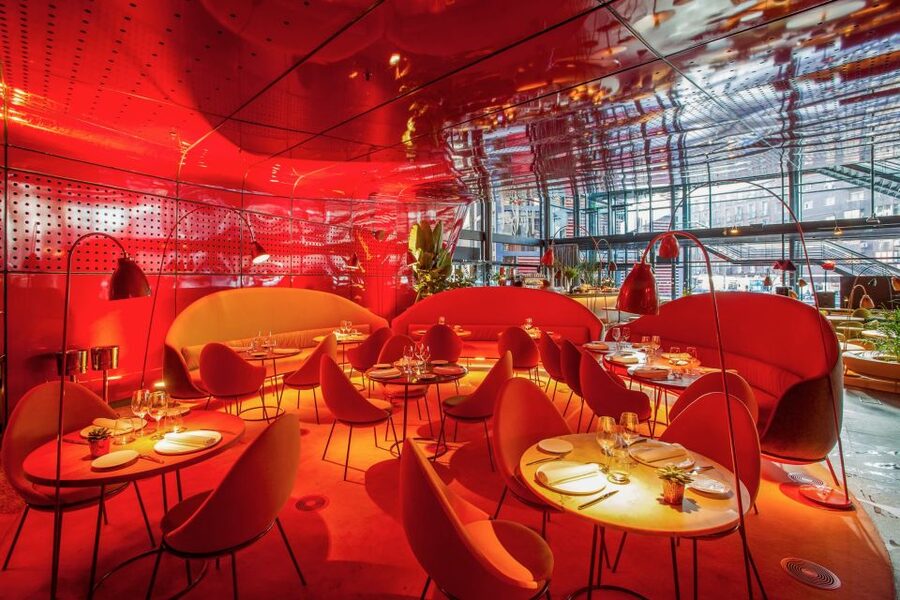
A café is available downstairs, though service can feel disorganized at times. Since food and drink are not allowed in the galleries, treat it as a separate stop rather than something you can carry through the museum.
Who will enjoy this museum most?
You should book this ticket if Picasso, Dalí, Miró, or modern Spanish art is high on your Madrid list. It is also a strong choice if you want a self-guided visit and would rather spend your time looking at art than waiting to buy admission.
The museum suits curious visitors who enjoy making connections between paintings, photography, film, and political events. You do not need to recognize every artist. In fact, the lesser-known rooms may become some of your best discoveries.
I would be more cautious if you dislike large museums, have only 45 minutes in Madrid, or find modern art frustrating without a guide. In that case, focus on Guernica, Dalí, and Miró, then leave. You will get more from three thoughtful stops than from racing through all 21,000 works.
Should you book the Reina Sofía ticket?
Book it if you want a practical way to see Guernica and the museum’s major modern artists. The $14 price is reasonable, and advance admission can save valuable time when the ticket line is long.
Arrive early, start with Picasso, and allow at least two hours, preferably half a day. Add the €4.50 audio guide if you want more structure. Before booking, check the opening day, free admission periods, and current gallery access. With those details in mind, Reina Sofía is one of Madrid’s most worthwhile stops for 20th-century art.
FAQ
How long is the Reina Sofía ticket valid?
The ticket is valid for one day. Check the available starting times when booking.
How much does the entrance ticket cost?
The ticket costs $14 per person and includes the booking and handling fee.
Is the audio guide included?
No. An audio guide can be purchased inside the museum for €4.50.
Is a tour guide included?
No. This is an entrance ticket without a guide inside the museum.
Where do I enter the museum?
Enter through the Nouvel courtyard at Ronda de Atocha 2.
Is the museum wheelchair accessible?
Yes, the activity is wheelchair accessible.
When is the museum closed?
The museum is closed every Tuesday and occasionally on Sundays. It is also closed on January 1 and 6, May 1 and 15, November 9, and December 24, 25, and 31.
Can I visit during free admission hours?
Yes. Admission is free Monday through Saturday from 7 p.m. to 9 p.m., and Sundays and public holidays from 12:30 p.m. to 2:30 p.m. These periods may be crowded and provide limited time to see the collection.
Recently listed in Madrid
- Madrid: Don Quixote de la Mancha Windmills & Toledo Tour★ 4.9 · 254 reviews
- Tour Madrid: Secrets in a Electric Tuk Tuk★ 4.6 · 155 reviews
- Madrid: Toledo Day Trip with Winery Visit and Wine Tasting★ 4.4 · 177 reviews
- Madrid: Guided Tour of Toledo with Cathedral Visit★ 4.3 · 399 reviews
- Madrid: 6-Hour Day Trip to Toledo with Guided Walking Tour★ 4.0 · 865 reviews
- Madrid: Tasty Tapas Tour & Visit to a Terrace with Views★ 4.5 · 118 reviews
- Madrid: Flamenco Show&Drink at Tablao 1911 (World’s Oldest)★ 4.7 · 253 reviews
- Madrid: Street Art Tour with Local Graffiti Hunter★ 4.8 · 270 reviews
Museums, compared.

FC Barcelona Museum “Barça Immersive Tour” Ticket
Read our review →
Park Güell and Gaudí House Museum Entry Ticket
Read our review →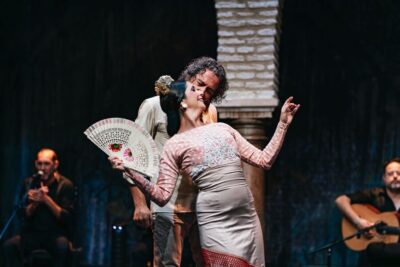
Puro Flamenco Show with Optional Museum Ticket
Read our review →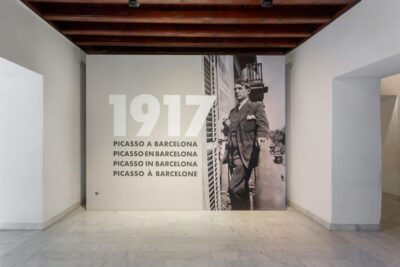
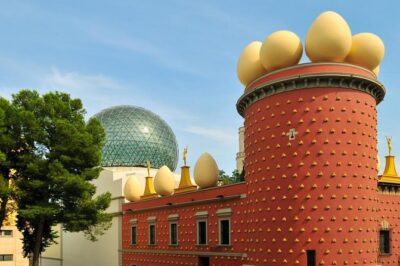
Girona & Dali Museum Small Group Tour with Pick-up from Barcelona
Read our review →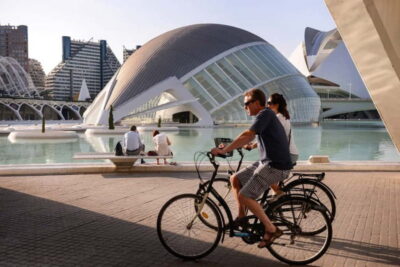
Oceanogràfic, Hemisfèric & Science Museum Combo
Read our review →
Small Group of Prado Museum Tour & Optional Tapas
Read our review →Browse the lists this tour appears in