
Reviewed · MADRID TOURS
Madrid: Street Art Tour with Local Graffiti Hunter
Madrid’s walls tell stories museums miss. This two-hour walk through Lavapiés, Embajadores, and La Latina brings you close to the city’s graffiti, stencils, stickers, and legal murals, with an English-speaking guide who works inside Madrid’s urban-art scene. I love the local artist perspective, and I like that the tour uses street art to explain the neighborhoods themselves, not just the paint on the walls. The main drawback is simple: outdoor art can change, fade, or disappear, and rain does not necessarily cancel the walk.
The meeting point is outside Teatro Valle Inclán on Calle de Valencia, near Lavapiés Metro station. At $29 per person, the price feels fair for a small-group, two-hour walk led by someone connected with events such as CALLE Lavapies, Urvanity, and Muros Tabacalera. Guides have included Esther, Julien, Santiago, Hector, Javier, Ana, Mario, and others, so the exact personality and route may vary.
In This Review
- Six things to know before you go
- Why Lavapiés is the right starting point
- Reading the walls of Lavapiés
- Calle Argumosa and Calle de Embajadores
- La Tabacalera and Madrid’s largest central mural
- Esta es una Plaza and Plaza del Sombrerete
- What the guide adds to the art
- How much value do you get for $29?
- Who should book this walk?
- Practical details that make the walk easier
- Should you book the Madrid street-art tour?
- FAQ
- How long does the Madrid street-art tour last?
- Where does the tour meet?
- Which neighborhoods does the tour visit?
- Is the tour conducted in English?
- What is included in the price?
- Is the tour wheelchair accessible?
- What should I bring?
Six things to know before you go
- A real street-art guide: The tour is led by local artists or writers, giving you more than a general city walk.
- Three central districts: You move through Lavapiés, Embajadores, and La Latina, areas many first-time visitors otherwise see only briefly.
- La Tabacalera is a major stop: The former tobacco factory has walls covered with changing urban art and hosts free creative workshops.
- Esta es una Plaza adds a community angle: This small urban space helps explain how art, shared projects, and neighborhood life overlap.
- The pace suits curious walkers: The route lasts two hours and includes time for questions, photos, and discussion.
- Weather matters: Bring comfortable shoes, and check the forecast carefully because the tour may continue in rain.
Why Lavapiés is the right starting point
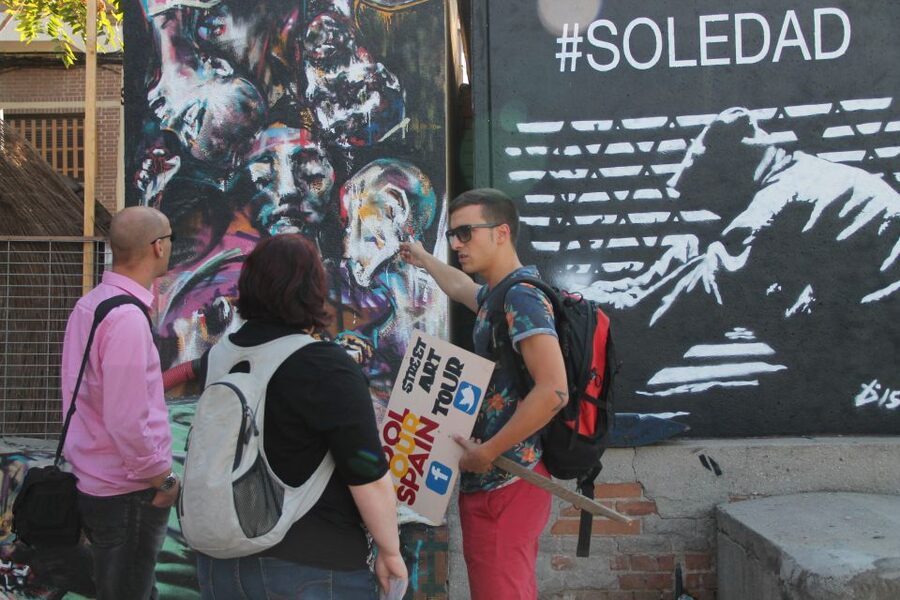
Lavapiés gives this experience its character. It is a multicultural Madrid neighborhood where public art appears alongside ordinary streets, local businesses, old buildings, and community spaces. You are not being led from one grand monument to another. Instead, you learn to look at walls, shutters, corners, and shared spaces with more care.
That change in attention is the real value of the tour. A guide can point out how a piece was made, who created it, what technique it uses, and how it relates to the neighborhood. A passerby might see a colorful wall. You get a reason to stop.
The walk begins near Teatro Valle Inclán, making Lavapiés Metro the easiest arrival point. I would allow a few minutes to find the theater entrance and arrive in shoes suited to city pavement. You will be on foot for the full two hours, with regular stops rather than a hard march.
The guides are one of the strongest parts of the experience. Esther has been praised for combining graffiti technique with neighborhood history and for asking questions along the way. Julien has a clear voice, a lively manner, and a reputation for giving useful Madrid nightlife tips. Hector, who is an accomplished street artist, has explained both the art and the cultures represented in it.
You may meet Santiago, Javier, Yago, Ana, Mario, or another member of the guide team instead. That means the tone can change from one departure to the next, but the common thread is direct experience with urban art rather than a memorized sightseeing script.
A few more Madrid ideas to compare
- Madrid: Tour Bernabéu Entry Ticket
★ 4.5 · 21,573 reviews - Madrid: Prado Museum Entry Ticket
★ 4.6 · 17,509 reviews - Madrid: Royal Palace Fast-Access Admission Ticket
★ 4.6 · 13,856 reviews
Reading the walls of Lavapiés
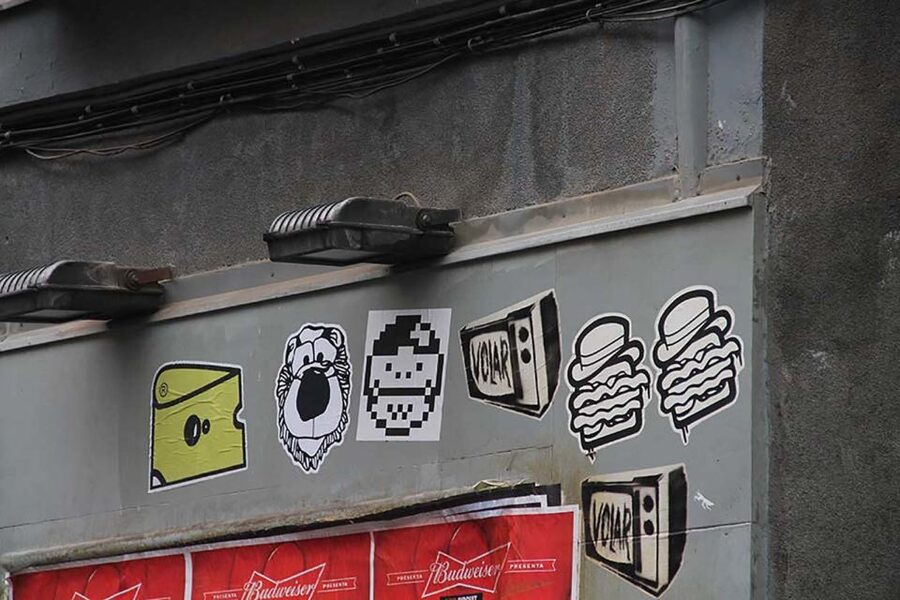
The first part of the walk focuses on the streets of Lavapiés and the work of local urban artists. Expect a mix of large painted surfaces, small stencils, stickers, and graffiti tags. These forms do not all carry the same purpose, and a good guide helps you notice the difference.
A stencil can deliver a sharp image with very few marks. A sticker may be quick to place and easy to repeat in different locations. A large mural takes planning, permission, materials, and time. Graffiti writing has its own lettering styles, codes, and debates. The tour gives you a basic vocabulary for seeing these forms instead of treating every mark as one broad category.
This matters because street art is not simply decoration. The pieces can raise questions about ownership, permission, public space, and who gets to shape the appearance of a neighborhood. One family group found the walk useful because it prompted teenagers to think about art, ethics, and community. That is a good sign if you want more than a photo stop.
The guide may also explain how urban art affects changing neighborhoods. A painted wall can make an area more attractive to outsiders, but it can also raise difficult questions about redevelopment and local identity. The supplied information does not promise a formal lecture on these issues, yet the guides clearly use the art to discuss social context and the changing use of urban spaces.
You should expect time to take photographs. The pace has been described as relaxed, with enough room to stop without feeling rushed or bored. Still, this is a walking tour in public streets, not a private gallery visit. You need to stay with the group, listen near traffic, and avoid blocking residents or businesses.
Calle Argumosa and Calle de Embajadores

The route continues along Calle Argumosa and Calle de Embajadores, two useful links between the art and the daily life of Lavapiés and Embajadores. These streets help the tour feel like a neighborhood walk rather than a collection of isolated murals.
The art here may appear on walls connected to older buildings, commercial streets, and the former tobacco factory. Your guide explains the artists and techniques as you go, but the exact pieces can change. Street art is temporary by nature. New work may cover an older piece, weather may soften the colors, and a building owner may repaint a wall.
That uncertainty is part of the experience, though it can also disappoint if you arrive expecting a fixed checklist. I would think of the tour as an introduction to Madrid’s urban-art culture, not a guarantee that every image shown in promotional photographs will still be present.
The route also gives you a useful first look at parts of Madrid outside the classic museum circuit. If you have already visited the Prado or Thyssen-Bornemisza, this walk offers a sharp change in setting. You are still looking closely at art, but now the gallery has no ticket desk, climate control, or quiet white walls.
La Tabacalera and Madrid’s largest central mural
The former tobacco factory of La Tabacalera is one of the tour’s strongest anchors. Its exterior walls are used for urban art, and the building is also linked with free workshops in photography, dance, yoga, cycling, longboarding, and other activities.
That detail gives La Tabacalera a wider meaning. You are not seeing an art wall in isolation. You are seeing a former industrial site connected with creative and community programs. The guide can explain how the building’s public role fits into Madrid’s street-art scene and why it attracts artists and local projects.
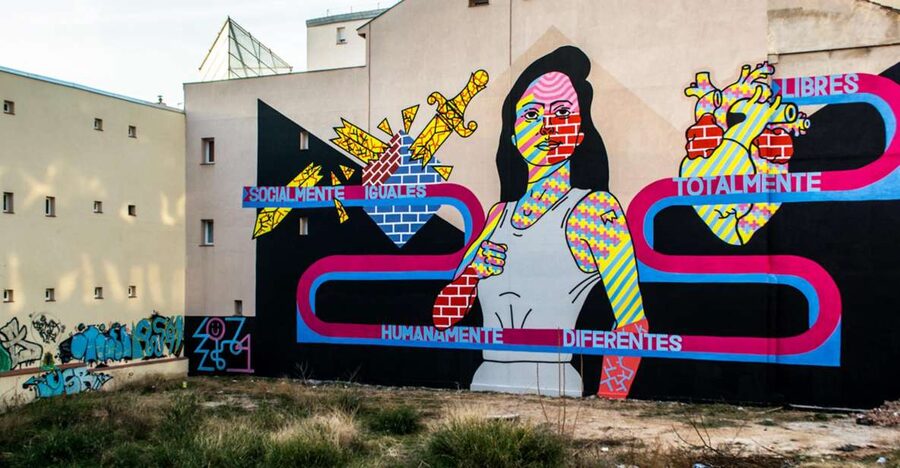
The walls can include large legal murals, pieces by established artists, and newer work. One especially useful feature is the chance to hear about the difference between authorized and unauthorized painting. A guide who writes graffiti can explain the practical and cultural distinctions in a way a standard city guide may not.
The tour also offers the chance to see what is described as the biggest mural in Madrid’s Center District. It is a strong moment for photography, but the guide’s explanation is more valuable than scale alone. Large murals show the planning, techniques, and teamwork involved in public art, while their legal status opens a discussion about how cities decide what belongs on a wall.
Do not count on meeting an artist, but it can happen. One group came across TeTous working on a new mural and had a brief conversation. Other walks have included surprise encounters with artists connected to the work. Treat that as luck, not part of the promised schedule.
Same base, a different kind of afternoon:
- Madrid: “Emociones” Live Flamenco Performance
★ 4.8 · 12,866 reviews - Madrid: Panoramic Route City Tour
★ 4.1 · 12,259 reviews - Madrid: Live Flamenco Show with Food and Drinks Options
★ 4.5 · 9,901 reviews - Avila & Segovia Tour with Tickets to Monuments from Madrid
★ 5.0 · 9,762 reviews
Esta es una Plaza and Plaza del Sombrerete
Esta es una Plaza offers a different view of public art. The guide gives context about veteran artists and the role of this shared space, helping you see how a small plaza can function as more than a backdrop for photographs.
The point is not simply to collect another mural. You learn how artistic work can sit inside a community setting, where residents use the space and visitors need to behave thoughtfully. Previous guides have emphasized responsible tourism, including keeping groups from obstructing local traffic and avoiding disruption to people who live and work nearby.
The walk then includes Calle del Sombrerete, often referred to as Plaza del Sombrerete in the tour information. Here you may see work by newer artists as well as pieces by more established names. The contrast helps you understand that Madrid’s street-art scene is not frozen in one style or period.
You may also hear about festivals and organized projects such as CALLE Lavapies, Urvanity, and Muros Tabacalera. These events help explain how some public art reaches a legal wall, how artists gain visibility, and how a temporary festival can change the appearance of a district.
What the guide adds to the art
A street-art tour succeeds or fails on explanation. Without context, you may walk past a mural, take a picture, and forget it by dinner. With a good guide, you begin to notice lettering, layering, materials, scale, and the choices behind an image.
The guide team has earned strong praise for clear English, humor, enthusiasm, and patient answers. Julien has been especially appreciated for speaking clearly enough to be understood while people pause to take photos. Esther has been described as an engaging teacher, while Santiago has been praised for warmth and an interactive style.
That range matters if your group has mixed interests. You do not need to know anything about graffiti before booking. People already interested in urban art can ask about artists and methods, while newcomers can start with the basic difference between tags, murals, stencils, and stickers.
The social side is also part of the appeal. Small groups allow more questions and discussion, and one couple liked having time to get to know the others in the group. The exact group size is not stated as a fixed number, so you should not assume every departure will be tiny, but the experience has often been run in an intimate format.
How much value do you get for $29?
At $29, this is a reasonably priced way to spend two hours in central Madrid. You are paying for a live English-speaking guide with direct links to the local scene, a route through several districts, and interpretation that would be hard to gain from walking alone.
The price is especially sound if you enjoy museums but want to see how art works outside formal institutions. It also covers a useful orientation to Lavapiés and Embajadores, two districts with more texture than a quick visit to the main central sights.
The value drops if you dislike walking, have no interest in public art, or want a fixed list of famous attractions. There are no beverages included, and the tour does not promise entry to a museum or a private indoor collection. You are buying ideas, access to local context, and a guided look at public streets.
The two-hour length is well judged. It is long enough to introduce artists, techniques, and neighborhood background, but short enough to fit before dinner or another Madrid plan. Several people found the time passed quickly, which suggests the stops are varied and the guides keep the talk moving.
Who should book this walk?
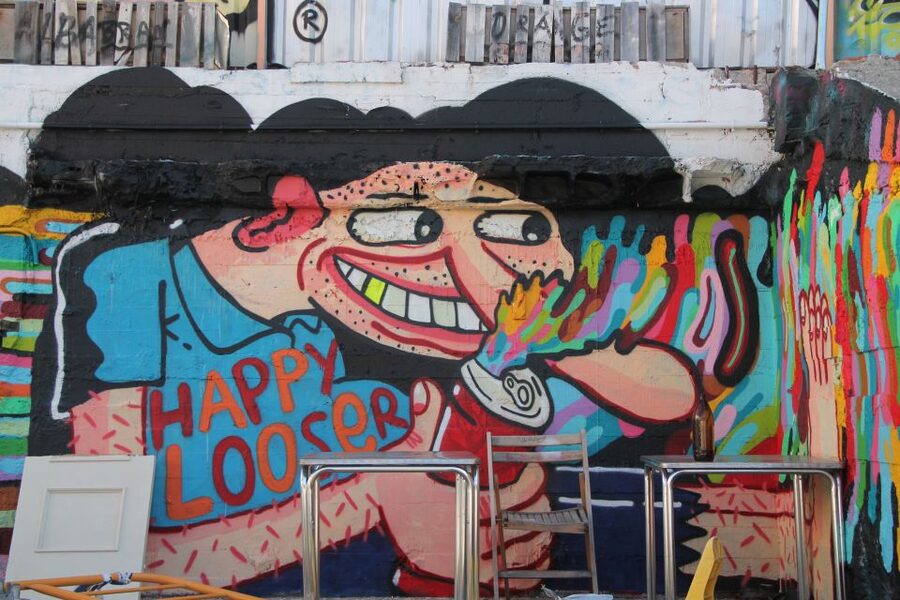
I would recommend it to anyone who likes art, photography, city neighborhoods, or unusual ways to get oriented. It is particularly good early in a Madrid visit because you learn where Lavapiés and Embajadores are while picking up ideas for further exploring.
Families with older children and teenagers can get a lot from it. The tour raises questions about who controls public space and how communities respond to art, so it has more substance than a simple mural hunt.
It also suits repeat visitors who have already covered the Prado, Royal Palace, and major plazas. You will see Madrid from street level and may find areas you would not have chosen on a standard sightseeing route.
I would hesitate to book it if you need shelter from bad weather or cannot comfortably walk for two hours. One person had difficulty changing plans when rain was forecast, and the tour is not automatically canceled for wet conditions. Check the weather before you commit and bring suitable clothing.
The tour is wheelchair accessible, but the supplied information does not explain the exact pavement conditions or route adjustments. If you use a wheelchair, contact the provider before booking so you can confirm the current path and meeting details.
Practical details that make the walk easier
Meet at the entrance of Teatro Valle Inclán, Calle de Valencia, 1, 28012 Madrid. Lavapiés is the nearest Metro station, so public transport is straightforward.
Bring a passport or ID card and comfortable shoes. The identity-document requirement is worth taking seriously, even for a short city walk. You should also bring a phone or camera if you want to record pieces, since some may be painted over later.
The tour operates in English with a live guide. Guides have generally been easy to hear and understand, but public streets are not silent, so staying close during explanations is sensible.
Free cancellation is available up to 24 hours before the start for a full refund, and you can reserve now and pay later. Those policies help if your Madrid schedule is still moving, but they do not remove the need to consider the weather.
Should you book the Madrid street-art tour?
Book it if you want art with local context, a relaxed walk through Lavapiés, and a guide who can explain why a wall matters rather than merely point at it. The strongest reasons are the artist-led perspective, the stops at La Tabacalera and Esta es una Plaza, and the chance to see a less conventional side of central Madrid.
Skip it if your priority is indoor art, famous monuments, or a route protected from rain. For most curious visitors, though, $29 is a sensible price for two hours of lively discussion, neighborhood discovery, and public art that may not be there forever.
FAQ
How long does the Madrid street-art tour last?
The tour lasts two hours.
Where does the tour meet?
It meets at the entrance of Teatro Valle Inclán, Calle de Valencia, 1, 28012 Madrid, Spain. The nearest Metro station is Lavapiés.
Which neighborhoods does the tour visit?
The walk explores Lavapiés, Embajadores, and La Latina.
Is the tour conducted in English?
Yes. The tour has a live English-speaking guide and operates in English.
What is included in the price?
An English-speaking guide is included. Beverages are not included.
Is the tour wheelchair accessible?
Yes, the activity is listed as wheelchair accessible.
What should I bring?
Bring a passport or ID card and comfortable shoes.
Recently listed in Madrid
- Madrid: Don Quixote de la Mancha Windmills & Toledo Tour★ 4.9 · 254 reviews
- Tour Madrid: Secrets in a Electric Tuk Tuk★ 4.6 · 155 reviews
- Madrid: Toledo Day Trip with Winery Visit and Wine Tasting★ 4.4 · 177 reviews
- Madrid: Guided Tour of Toledo with Cathedral Visit★ 4.3 · 399 reviews
- Madrid: 6-Hour Day Trip to Toledo with Guided Walking Tour★ 4.0 · 865 reviews
- Madrid: Tasty Tapas Tour & Visit to a Terrace with Views★ 4.5 · 118 reviews
- Madrid: Flamenco Show&Drink at Tablao 1911 (World’s Oldest)★ 4.7 · 253 reviews
- Small Group Prado Museum Guided Tour with Skip the Line★ 4.2 · 106 reviews
Madrid Tours, compared.





Live Flamenco Show with Food and Drinks Options
Read our review →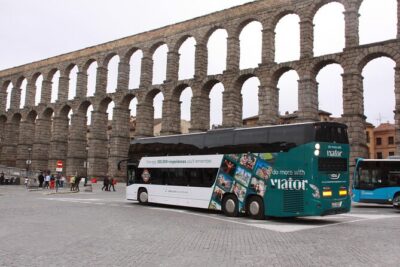
Avila & Segovia Tour with Tickets to Monuments from Madrid
Read our review →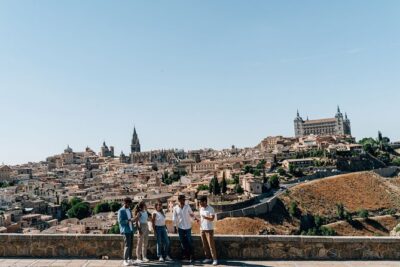
Three Cities in One Day: Segovia, Avila and Toledo from Madrid
Read our review →Browse the lists this tour appears in