
Reviewed · PRADO MUSEUM TOURS
Small Group Prado Museum Guided Tour with Skip the Line
Great art deserves a little context. This two-hour Prado Museum tour pairs skip-the-line entry with a small-group format, so you spend more time looking at paintings and less time waiting at the door. I especially like the focus on major works by Goya, Velázquez, El Greco, and Rubens, plus the chance to ask questions of a guide such as Enrique, Juan, Eve, or Nerea. The main consideration is pace: two hours is a useful introduction, but it can feel rushed when you reach artists you want to study longer.
I also like the practical meeting point at the Velázquez Monument, right outside the museum area, and the strong emphasis on stories, symbolism, and historical setting rather than simply naming paintings. Guides such as Carla and José have been praised for making sure visitors see the essential works. Still, you should arrive on time, since the courtesy wait is only 10 minutes and the tour requires a minimum number of participants.
In This Review
- Key points at a glance
- Meeting the guide at the Velázquez Monument
- Entering the Prado without the main queue
- Goya and the violence behind the canvas
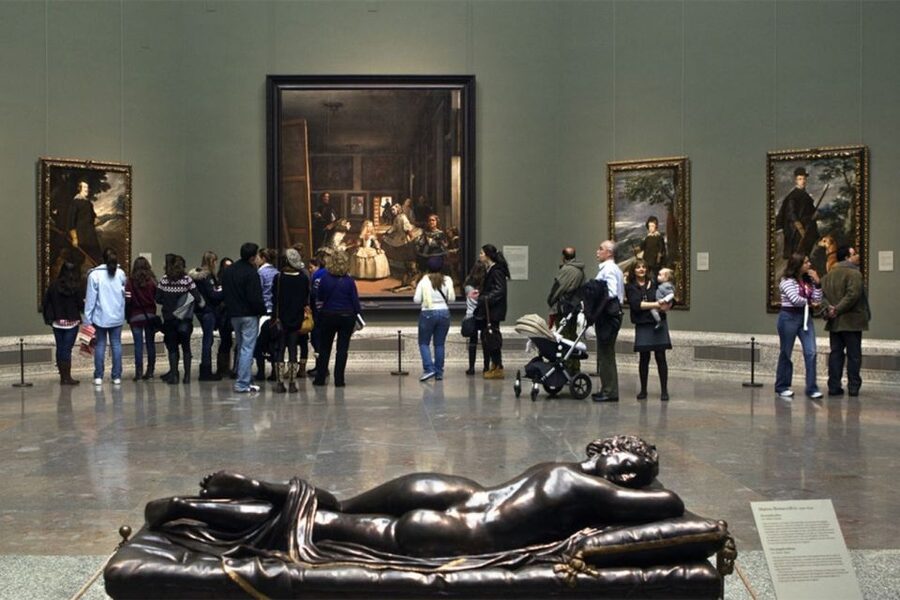
- Velázquez and the puzzle of Las Meninas
- El Greco’s spiritual intensity
- Rubens and the drama of the Baroque
- Why the small-group format matters
- Two hours, museum fatigue, and what you will miss
- Is $67 a fair price?
- Practical details before you book
- Who should book this Prado tour?
- Should you book it?
- FAQ
- Where does the Prado Museum tour begin?
- Where does the tour end?
- How long does the guided Prado Museum visit last?
- What is included in the $67 price?
- Is the Prado tour wheelchair accessible?
- Can I cancel the booking for a refund?
Key points at a glance
- Goya gets serious attention: Expect discussion of The Third of May 1808 and the disturbing Black Paintings.
- Velázquez is a central stop: Las Meninas receives the kind of explanation that helps you make sense of its strange, clever composition.
- Small groups improve the conversation: Guides can answer questions more directly, and solo visitors may find it easier to join the discussion.
- The two-hour length is sensible: It gives you a clear introduction without leaving you worn out by the museum’s size.
- The meeting point is easy to identify: Start at the Monument to Velázquez on Paseo del Prado 11.
- The price includes the important basics: At $67 per person, you get museum admission, separate skip-the-line access, and a professional English-speaking guide.
Meeting the guide at the Velázquez Monument
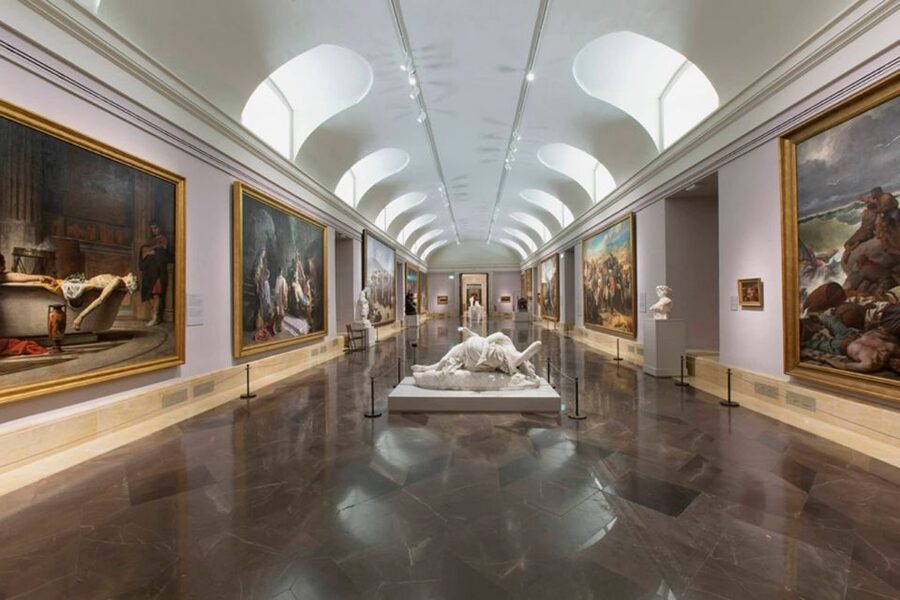
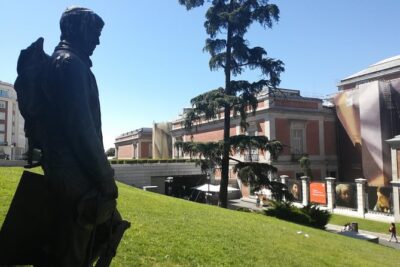
The tour begins at the Monument to Velázquez, at Paseo del Prado 11. This is also where the tour ends, so you do not need to arrange a separate transfer back to your hotel or another part of Madrid.
The starting point fits the subject nicely. Diego Velázquez is one of the Prado’s most important painters, and his sculpture gives you an immediate hint of the artistic company you are about to keep. Allow enough time to find the monument and check in. The operator allows only 10 minutes of waiting, so arriving early is wise.
The information describes the guide as English-speaking, while the included guide is also described as bilingual. Named guides connected with the tour include Juan, Eve, Enrique, Nerea, Carla, José, and Nerja. The quality of the experience depends greatly on who leads your group, but the strongest praise centers on guides who explain symbolism, ask questions, and connect the paintings to the political and social pressures of their time.
That distinction matters. At a museum like the Prado, a guide should do more than point at famous canvases. A good guide helps you notice what your eye might miss, then gives you enough background to understand why the work mattered.
More Museum Tours in Madrid
- Madrid: Prado Museum Entry Ticket
★ 4.6 · 17,509 reviews - Madrid: Reina Sofía Museum Entrance Ticket
★ 4.5 · 6,889 reviews - Madrid: Small Group of Prado Museum Tour & Optional Tapas
★ 4.6 · 2,437 reviews
Entering the Prado without the main queue
The tour includes skip-the-line tickets and access through a separate entrance. That can be valuable at a major museum, especially when you have a fixed sightseeing schedule or only a short stay in Madrid.
Skip-the-line access does not mean the entire museum becomes empty. Once inside, you are still sharing galleries with other visitors. The real benefit is saving time before the tour begins, then getting organized with a guide who knows where to go.
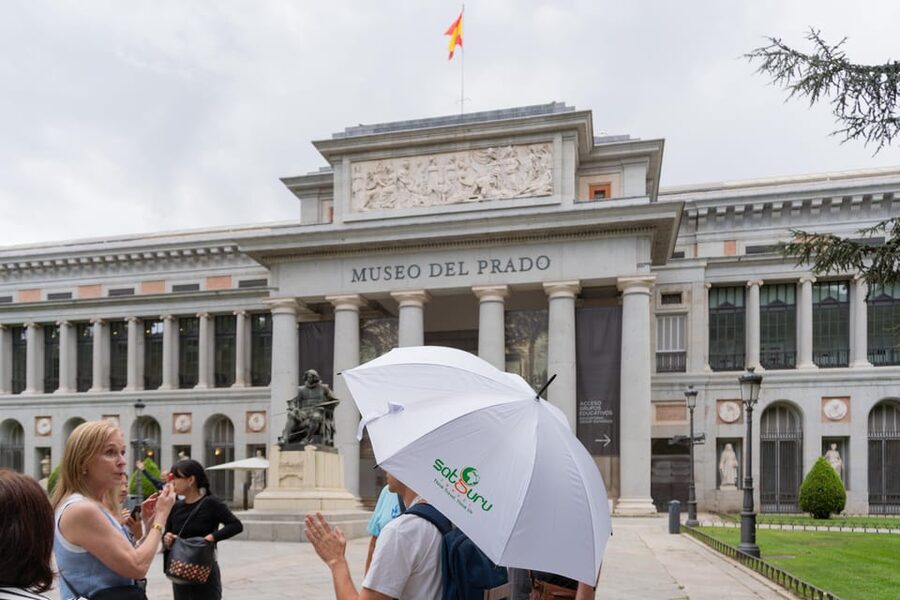
The Prado collection covers European art from the 12th century through the early 20th century. Two hours cannot cover every room, school, and painter, so this is best understood as a guided highlights tour. You will get a framework for the collection, not an exhaustive visit.
That is a sensible trade. The Prado can become tiring when you try to see everything at once. A focused route helps you leave with a few paintings firmly in mind instead of a blur of gilt frames and unfamiliar names.
Goya and the violence behind the canvas
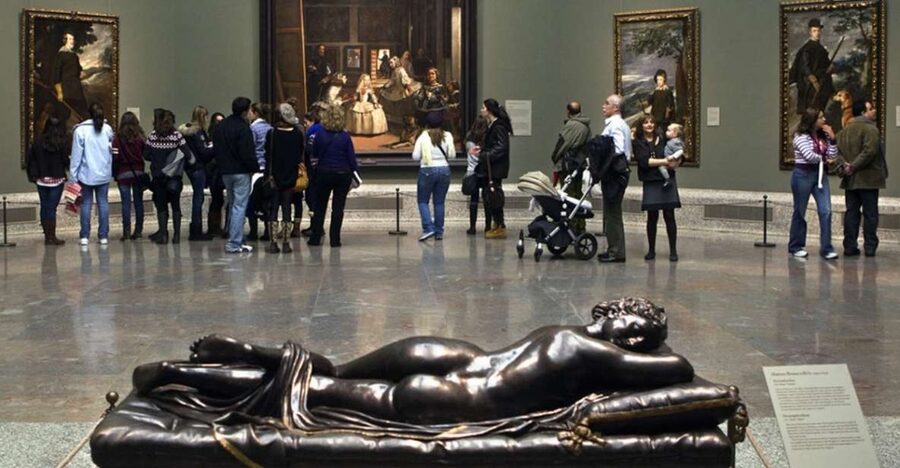
Francisco de Goya is one of the main reasons to take this tour. His work gives the Prado a sharp emotional edge, and the guide uses his paintings to connect art with Spain’s troubled political past.
The Third of May 1808 is a particularly important stop. Its execution scene is not presented as a polished heroic battle image. Instead, the painting centers on fear, suffering, and the human cost of war. A guide can point out how the composition directs your attention and why the work became such a powerful anti-war statement.
The Black Paintings offer a very different view of Goya. Their dark mood and unsettling subjects can be difficult to absorb without some explanation. A strong guide helps you see them not simply as frightening pictures, but as works shaped by Goya’s later outlook and the troubled world around him.
I would pay close attention during this section. The guide’s background stories and visual pointers are likely to add the most value here, especially if you know Goya mainly from a few famous reproductions.
The limitation is time. If Goya is your main reason for visiting, two hours may leave you wanting more. You can use the guided portion to identify the works that matter most to you, then return on your own only if your ticket and schedule allow for it.
Velázquez and the puzzle of Las Meninas
The tour then turns to Diego Velázquez, whose Las Meninas is one of the Prado’s essential paintings. Even visitors who know little about Spanish art often find this work intriguing because it makes you question who is looking at whom.
The painting shows members of the royal household, yet Velázquez also appears inside the scene. A mirror, the arrangement of figures, and the implied position of the viewer create a clever play between painter, subject, and audience.
This is where a guide can make a major difference. Without context, Las Meninas may look like a large court portrait with an unusual layout. With a clear explanation, you begin to notice its technical skill and its statement about the role of the artist at court.
Juan has been praised for taking visitors through the museum’s most important pieces while keeping the group discussion open. José is also noted for being attentive and making sure the highlights were not missed. That kind of guidance is useful at Las Meninas, where a few well-timed observations can change the way you see the whole composition.
Do not expect a long private study of the painting. The tour must keep moving, and other people may be gathered around the work. Still, the guide provides a clear starting point for understanding why this painting has such a major place in art history.
More Prado Museum tickets:
- Madrid: Prado Museum Guided Tour with Skip-the-Line Ticket
★ 4.5 · 2,018 reviews - Madrid: Prado Museum Guided Tour With Fast Access
★ 4.8 · 1,785 reviews - Prado Museum Small Group Tour with Skip the Line Ticket
★ 5.0 · 1,738 reviews - Royal Palace & Prado Museum Skip the Line Guided Tour
★ 4.5 · 1,347 reviews
El Greco’s spiritual intensity
El Greco brings a strong change in mood. His elongated figures, dramatic colors, and spiritual force look very different from the controlled court world of Velázquez.
The tour presents works such as The Burial of the Count of Orgaz, which blends earthly figures with a heavenly scene. That meeting of the real and the divine gives the painting much of its power. The stretched bodies and expressive faces may seem unusual at first, but they help create a sense of movement and religious drama.
This section deserves time, and one useful warning comes directly from the structure of the tour: the El Greco portion may feel brief. One guide was praised overall but was said to move quickly through this artist, leaving a visitor wishing for more explanation.
If El Greco is high on your list, tell the guide early. In a small group, you may have a better chance of asking for a little extra attention than you would on a large coach tour. The operator cannot promise a custom route, but a direct question is sensible.
Nerea has been praised for patience, enthusiasm, and clear explanations. Nerja, who has pursued a PhD in Spanish art, was also noted for sharing unusual details about paintings and guiding the group with energy. A guide with that kind of subject knowledge can help El Greco’s unusual style feel purposeful rather than merely strange.
Rubens and the drama of the Baroque
Peter Paul Rubens provides another shift in style. His paintings are full of movement, strong bodies, rich color, and theatrical emotion. The tour highlights works including The Descent from the Cross, where the arrangement of figures and the physical effort of the scene create a powerful sense of action.
Rubens is a good example of why a chronological or artist-based museum tour helps. You can compare his Baroque energy with Goya’s darker psychological force, Velázquez’s quiet control, and El Greco’s spiritual tension.
A guide may point out how Rubens uses anatomy, gesture, and composition to pull your eye through the painting. These are details you might not notice during a quick independent visit, especially when you are trying to orient yourself in a large museum.
The tour does not promise a complete account of Rubens or every major European school. Its value is the comparison among several major artists. You leave with a clearer sense of how different artistic aims can appear under the same roof.
Why the small-group format matters
The phrase small group is more important here than it might seem. The Prado is large, and a guide who has to speak over a crowd can turn art into a lecture. A smaller party allows for more direct conversation and makes it easier to hear explanations in front of busy paintings.
The format also suits solo visitors. Juan’s group included a solo participant who appreciated being able to discuss the museum with other people. That is a modest but real benefit: you get company without being tied to a large organized crowd.
Families may also find the format useful. One guide was praised for patience with children and for explaining the art in a way that held their attention. The subject matter can be serious, especially in Goya’s work, but a thoughtful guide can adjust the explanation to the group.
The exact number of participants is not provided, so I would not book expecting a private tour. In one case, a booking became a private tour because only two people attended, but that should be treated as a pleasant possibility, not a promise.
Two hours, museum fatigue, and what you will miss
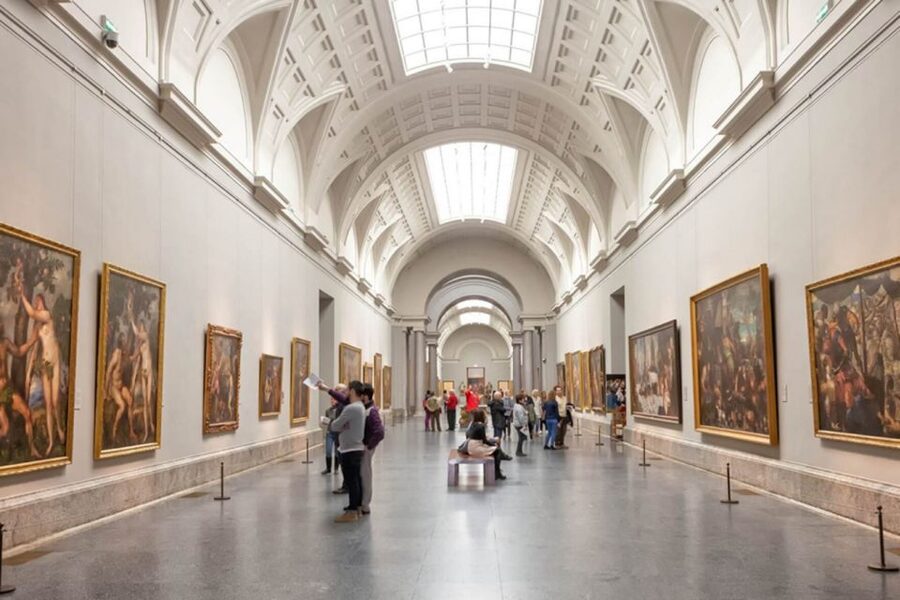
Two hours is a good length for a first visit. The Prado contains far more art than most people can absorb in one sitting, and concentration drops after too many rooms. One guide even suggested that two hours is ideal because the museum can be crowded and tiring.
You will see the main names and receive a useful introduction to Spanish and European art. You will not see everything. Smaller artists, lesser-known rooms, and works outside the guide’s chosen route may receive little or no attention.
That makes this tour a strong first step rather than a complete Prado study. If you have a full afternoon, you can ask whether you may continue independently after the guided portion, but the supplied details do not guarantee this arrangement.
Wear comfortable clothing, but do not overprepare for outdoor conditions. The tour is indoors, and one practical tip from a guide’s experience is to avoid bringing warm clothing you will not need. Water may also be taken away by museum staff, so do not count on carrying a bottle inside.
Is $67 a fair price?
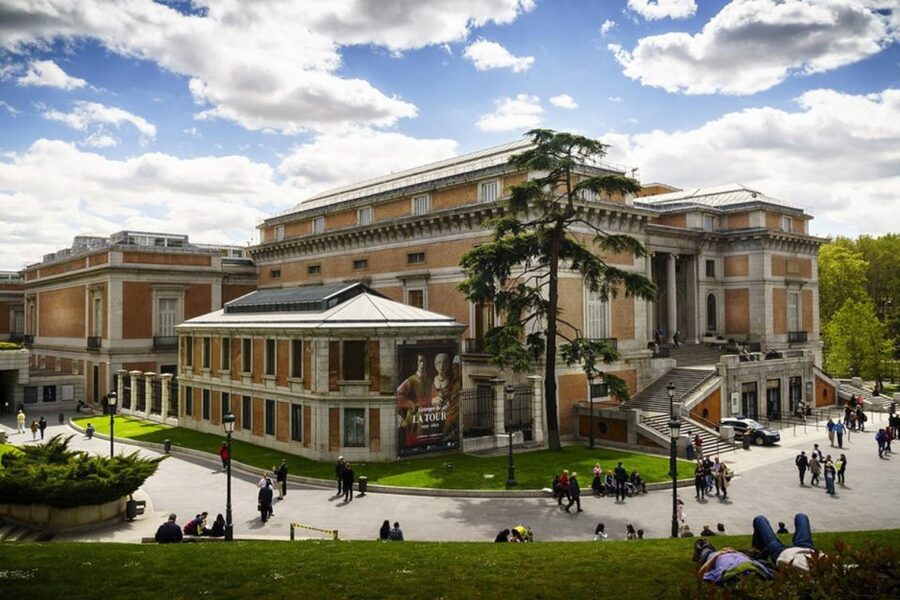
At $67 per person, this is not the cheapest way to enter the Prado. The price includes admission, separate skip-the-line access, and a professional English-speaking guide. You are paying for time saved and for a structured explanation of major works.
For someone who would otherwise wander without knowing where to focus, the price can be reasonable. The guide’s comments about symbolism, technique, and the artists’ social setting give you more than a simple entrance ticket.
The value is strongest when you care about the major Spanish painters but do not have the background to interpret them alone. It is also useful if your Madrid schedule is tight. Saving the main entry queue and spending two focused hours inside can make the difference between a useful museum visit and a hurried one.
The value is weaker for experienced art students or repeat Prado visitors who already know Goya, Velázquez, El Greco, and Rubens well. In that case, you may prefer to visit at your own pace and choose less familiar rooms.
The overall rating is 4.2 from 106 ratings, which suggests a generally positive experience with some variation. That fits the nature of a guided museum tour: the route is fixed, but the guide’s skill shapes how much you gain from it.
Practical details before you book
The tour runs for two hours, with starting times that vary by date and availability. It does not operate on certain holidays, including December 25 and January 1.
The activity is wheelchair accessible. Food and drinks are not included, and there is no hotel pickup or transfer, so plan your route to and from Paseo del Prado 11.
You can cancel up to 24 hours before the scheduled start for a full refund. The reserve-now, pay-later option also gives you some flexibility while you settle your Madrid plans.
Most important, be punctual. Arrive at the Velázquez Monument before the stated meeting time, not at the last minute. With only a 10-minute courtesy wait and a minimum participant requirement, a late arrival could create an avoidable problem.
Who should book this Prado tour?
I would choose this tour for a first-time Prado visitor who wants the major works explained in plain language. It suits you especially well if Goya, Velázquez, El Greco, and Rubens are on your Madrid list, but you do not want to spend hours reading wall labels.
It also fits families, solo visitors, and anyone who prefers conversation over a recorded audio guide. The small format gives you a better chance to ask questions, and guides such as Enrique have used questions about the paintings to make the visit more active.
I would think twice if your main goal is slow, independent study. Two hours moves at a useful but steady pace, and the El Greco section may feel short. You should also avoid booking it as a complete survey of the Prado. It is a highlights route with strong historical and artistic context.
Should you book it?
Book this Prado Museum tour if you want to see the essential Spanish masters without wasting time at the entrance. The combination of separate entry, a two-hour route, and guides praised for clear explanations makes $67 a fair choice for many first visits.
Go in with realistic expectations. You will not cover the entire museum, and the exact depth of each artist depends on the guide and the group. Arrive early, ask about the works you most want to understand, and treat the tour as your introduction to the Prado rather than your final word on it.
FAQ
Where does the Prado Museum tour begin?
The tour begins at the Monument to Velázquez, Paseo del Prado 11, 28014, Madrid.
Where does the tour end?
The activity ends back at the Monument to Velázquez, the same meeting point where it begins.
How long does the guided Prado Museum visit last?
The guided tour lasts two hours. Starting times depend on availability for your selected date.
What is included in the $67 price?
The price includes skip-the-line tickets to the Prado Museum and a professional English-speaking tour guide.
Is the Prado tour wheelchair accessible?
Yes, the activity is listed as wheelchair accessible.
Can I cancel the booking for a refund?
Yes. You can cancel up to 24 hours in advance for a full refund. A reserve-now, pay-later option is also available.
Recently listed in Madrid
- Madrid: Don Quixote de la Mancha Windmills & Toledo Tour★ 4.9 · 254 reviews
- Tour Madrid: Secrets in a Electric Tuk Tuk★ 4.6 · 155 reviews
- Madrid: Toledo Day Trip with Winery Visit and Wine Tasting★ 4.4 · 177 reviews
- Madrid: Guided Tour of Toledo with Cathedral Visit★ 4.3 · 399 reviews
- Madrid: 6-Hour Day Trip to Toledo with Guided Walking Tour★ 4.0 · 865 reviews
- Madrid: Tasty Tapas Tour & Visit to a Terrace with Views★ 4.5 · 118 reviews
- Madrid: Flamenco Show&Drink at Tablao 1911 (World’s Oldest)★ 4.7 · 253 reviews
- Madrid: Street Art Tour with Local Graffiti Hunter★ 4.8 · 270 reviews
Prado Museum Tours, compared.
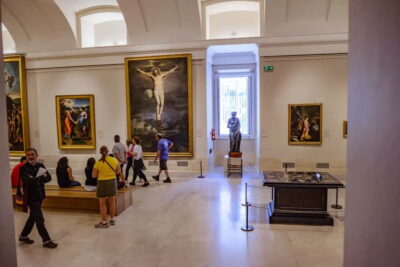

Small Group of Prado Museum Tour & Optional Tapas
Read our review →
Prado Museum Guided Tour with Skip-the-Line Ticket
Read our review →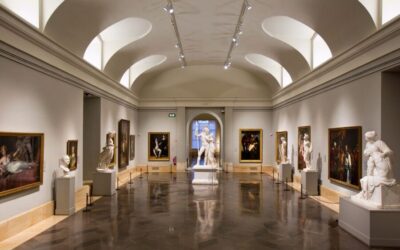
Prado Museum Small Group Tour with Skip the Line Ticket
Read our review →
Royal Palace & Prado Museum Skip the Line Guided Tour
Read our review →

Prado Museum Guided Tour with Skip-the-Line Ticket
Read our review →Browse the lists this tour appears in