Reviewed · MADRID TOURS
From Madrid: Gems of Andalusia 6-Day Sightseeing Tour
Spain packs a lot into six days. This escorted journey links Roman Mérida, Córdoba, Seville, Ronda, the Costa del Sol, and Granada without asking you to plan every hotel, highway, or major admission yourself. I especially like the access to the Mosque-Cathedral of Córdoba and the Alhambra, plus the excellent local guides often assigned in Córdoba, Seville, and Granada.
I also like the mix of guided sightseeing and free time, particularly the open afternoon in Seville. The main caution is the pace: long coach rides, cobbled streets, steep sections, and large bilingual groups can make the trip tiring. It suits you best if you want to see many major sights quickly rather than settle into one or two Andalusian cities.
In This Review
- Key points to know before booking
- What this six-day route really gives you
- Day 1: Roman Mérida, then onward to Córdoba
- Day 2: Córdoba’s Mosque-Cathedral and the Jewish Quarter
- Day 3: Seville Cathedral, Santa Cruz, and Plaza de España
- Day 4: Ronda’s bridge views and the Costa del Sol
- Day 5: Granada and the Alhambra
- Day 6: The long return to Madrid
- Guides, coach travel, and group rhythm
- Hotels, meals, and optional extras
- Walking, luggage, and who should book
- Should you book this Andalusia tour?
- FAQ
- What is included in the six-day Andalusia tour?
- Where does the tour start and end?
- Is the tour conducted in English?
- How much luggage can I bring?
- Is the Alhambra included?
- How fit do I need to be?
Key points to know before booking
- The Alhambra and Generalife are included, a major saving and one of Spain’s essential cultural visits.
- Mérida adds Roman ruins that many southern Spain tours skip, including its theater, amphitheater, and Roman bridge.
- Seville gives you a useful free afternoon, but the included visit does not cover every major attraction.
- The tour is bilingual, with a guide speaking English and Spanish, and the group may be much larger than 40 people despite the stated maximum.
- Hotels vary by city and room type, with Granada receiving the most consistent criticism.
- Pack light and expect plenty of walking, including uneven paving, hills, and busy sightseeing days.
What this six-day route really gives you
At $1,189.45 per person, the tour bundles five breakfasts, five hotel nights, coach transportation, travel insurance, a bilingual tour director, local sightseeing, and admission to three major monuments. You also avoid arranging one-way rail tickets, rental-car routes, parking, and several hotel changes on your own.
That price can be fair if you value structure. The Alhambra, Seville Cathedral, and Córdoba Mosque-Cathedral alone are costly and difficult to arrange at short notice, especially the Alhambra, where entry times and group tickets must be coordinated well in advance.
The trade-off is control. You do not choose the hotel neighborhood, restaurant, departure time, or length of stay in each city. Some accommodation is outside the historic center, and group logistics can consume time. I would view this as a high-coverage introduction to Andalusia, not a slow cultural holiday.
The advertised maximum is 40 people, but past departures connected several Julia Travel groups and became much larger. Groups of 60 or more have been reported, and that changes the feel of the trip. City guides may be excellent, but moving a large group through narrow streets and timed entrances takes patience.
A few more Madrid ideas to compare
- Madrid: Tour Bernabéu Entry Ticket
★ 4.5 · 21,573 reviews - Madrid: Prado Museum Entry Ticket
★ 4.6 · 17,509 reviews - Madrid: Royal Palace Fast-Access Admission Ticket
★ 4.6 · 13,856 reviews
Day 1: Roman Mérida, then onward to Córdoba
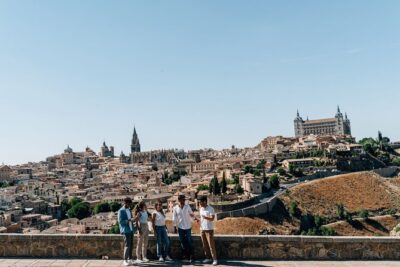
The first day begins at 8:30 a.m. at the Aloft Madrid Gran Via on Calle de Jacometrezo. You head west through Extremadura, a region linked to several explorers of the New World, before reaching Mérida.
Mérida is a strong opening stop. This former Roman center has an unusually visible ancient core, with a theater, amphitheater, Roman bridge, and other remains. Since the city is a UNESCO World Heritage Site, it gives you a useful introduction to Spain’s Roman past before the trip turns toward Islamic and Christian Andalusia.
The weakness is time. The itinerary allocates a full day block to the stop, but the route also includes the journey onward to Córdoba. You should expect a sightseeing visit rather than a leisurely archaeological day. Have your camera ready, but do not count on examining every ruin in detail.
After free time, the coach continues to Córdoba for the night. This is a long first day, and the combination of an early start, road time, and a new hotel can leave you worn out before the main Córdoba visit begins. Keep your first evening simple.
Day 2: Córdoba’s Mosque-Cathedral and the Jewish Quarter
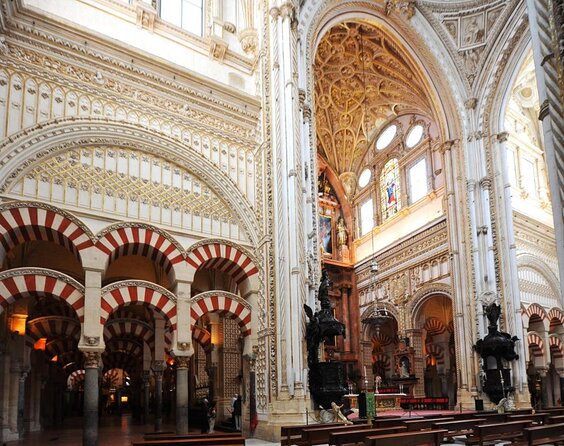
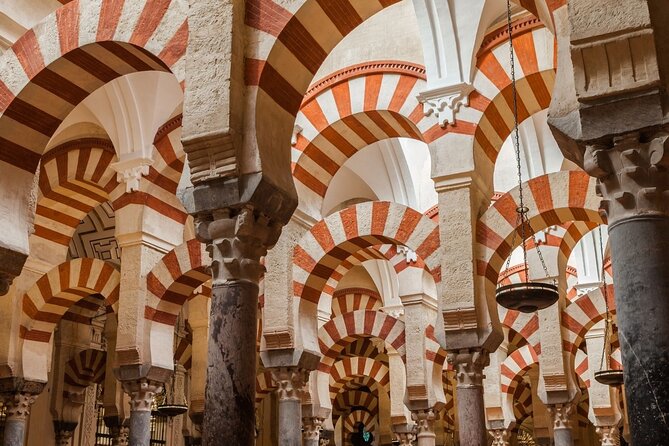
Córdoba is one of the strongest parts of the trip. The guided visit to the Mosque-Cathedral takes you into a building shaped by centuries of religious and political change. Its forest of arches and columns is the visual centerpiece, but the real interest lies in how a former mosque became a cathedral.
The tour also walks through the Jewish Quarter, where narrow, winding streets make a sharp contrast with the monument’s broad interior. This is a place where a local guide adds real value. Guides such as Ismael have been praised for giving detailed historical explanations without turning the visit into a dry lecture. Local guides in Córdoba have also been singled out for clear, engaging presentation.
Time is the problem. The organized visit can feel compressed, with too little room for photographs or a walk across the Roman bridge. If you are interested in Córdoba beyond the main monument, use any free minutes carefully. Have a short list ready before you arrive instead of deciding on the spot.
In the afternoon, the coach makes the roughly two-hour journey to Seville. You check into your hotel there and may have an evening to eat independently, depending on the group schedule and any optional activity.
Day 3: Seville Cathedral, Santa Cruz, and Plaza de España
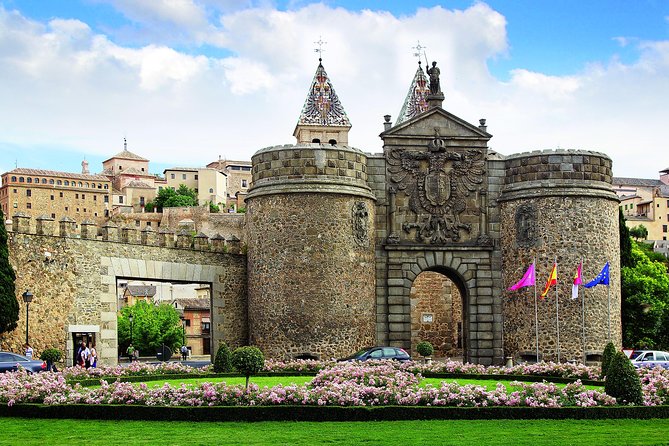
Seville receives the fullest sightseeing block of the tour, which is appropriate. The morning city visit includes the cathedral, the Barrio de Santa Cruz, María Luisa Park, and Plaza de España.
Seville Cathedral is the stated highlight. It is described as the second-largest Catholic cathedral in the world after St. Peter’s in Rome, and the interior is suitably grand. The included entry is valuable, but check exactly what your guided visit covers. The Alcázar is not included, and some departures have not included entry to every cathedral feature or the Giralda tower.
The Santa Cruz quarter is especially enjoyable on foot. Its lanes, small plazas, and whitewashed buildings connect with the legends of Carmen and Don Juan. Those stories are part of Seville’s theatrical character, but the quarter is also worth seeing simply for its street life and old urban plan.
Plaza de España gives you a different Seville. Built for the 1929 Ibero-American Exposition, it is broad, ornate, and easy to photograph. María Luisa Park provides a welcome change from stone streets and crowded monument interiors.
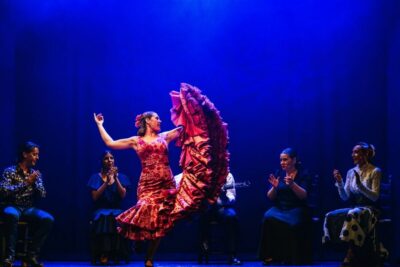
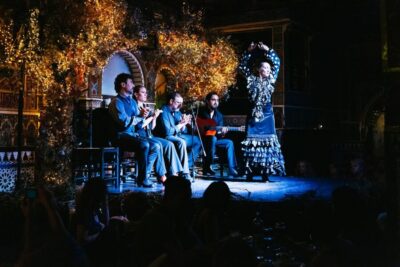
The afternoon is yours, and this is one of the tour’s best features. I would use it for the Alcázar if you can obtain a ticket, then spend the remaining time eating tapas or walking back through Santa Cruz. The optional flamenco show can appeal if you want a planned evening, although some people find the Seville performance more polished for tourists than intimate.
Be ready for the bilingual format. English explanations are provided, but Spanish commentary takes time too. On a large coach, that can make the ride and city introductions feel choppy.
Same base, a different kind of afternoon:
- Madrid: “Emociones” Live Flamenco Performance
★ 4.8 · 12,866 reviews - Madrid: Panoramic Route City Tour
★ 4.1 · 12,259 reviews - Madrid: Live Flamenco Show with Food and Drinks Options
★ 4.5 · 9,901 reviews - Avila & Segovia Tour with Tickets to Monuments from Madrid
★ 5.0 · 9,762 reviews
Day 4: Ronda’s bridge views and the Costa del Sol
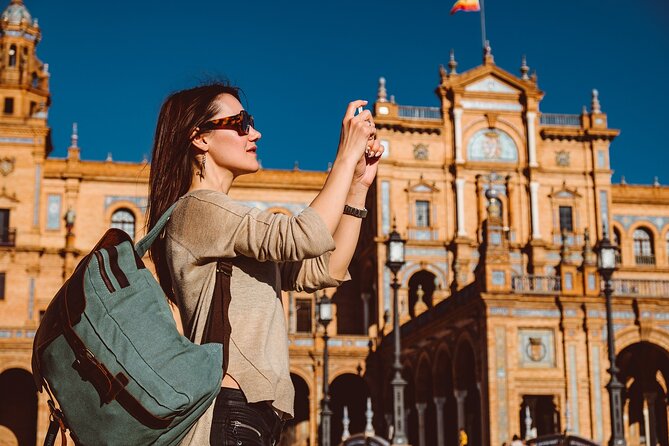
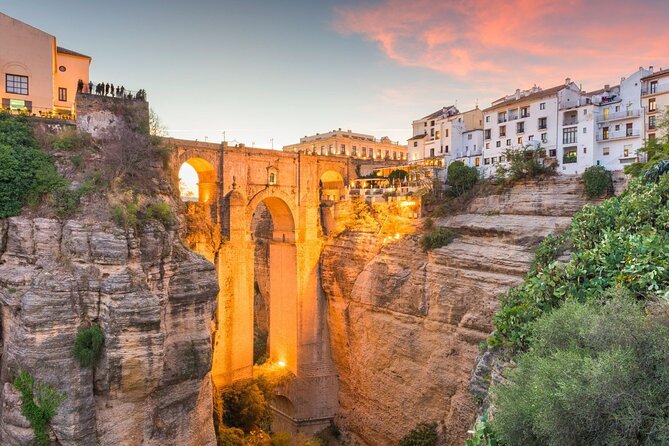
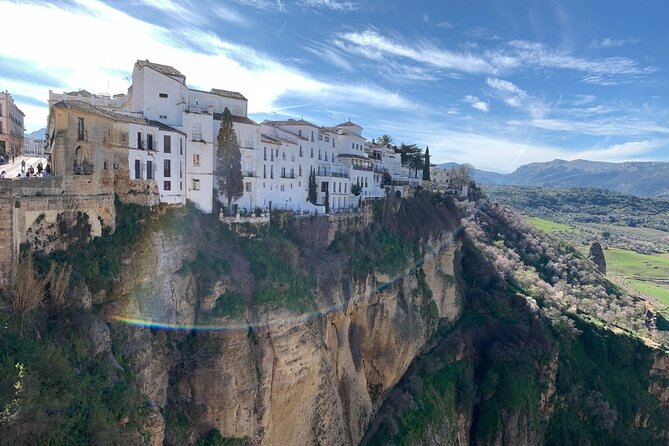
The route leaves Seville after breakfast and heads south through typical Andalusian villages toward Ronda. The town is dramatically positioned above a deep gorge, with broad views over the surrounding hills and valleys.
Ronda’s bullring is a popular photo stop. It is often described as Spain’s oldest bullring, and its historic importance is easy to understand even if you have no interest in bullfighting. The tour gives you leisure time, but the amount may not be enough for a full visit to the old town, the bullring, and the gorge viewpoints.
This is another place where advance planning helps. Know the key viewpoints and streets before you arrive, and do not spend all your time at a café if you want to see the town properly. Optional guided visits have not always offered good value, particularly when the bullring is viewed from outside rather than entered.
Later, the coach continues to the Costa del Sol. This is a sharp change of mood. Ronda feels historic and dramatic; the coast is a modern international resort area designed for sun, hotels, and leisure.
The coastal overnight stop is practical for the route, but not everyone likes it. Some hotels sit away from the main sights, and the stay can feel more like a transport connection than an authentic Andalusian town visit. On the positive side, upgraded properties have included comfortable resorts such as the Sol Don Pablo, and some people have found the Costa del Sol hotel the best of the trip.
Day 5: Granada and the Alhambra
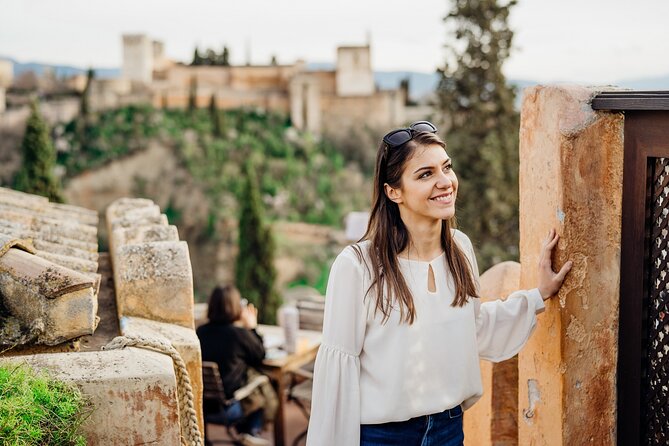
Granada is the emotional high point for many people. It was the last stronghold of the Moorish kingdoms until 1492, and the Alhambra remains one of Europe’s most memorable palace complexes.
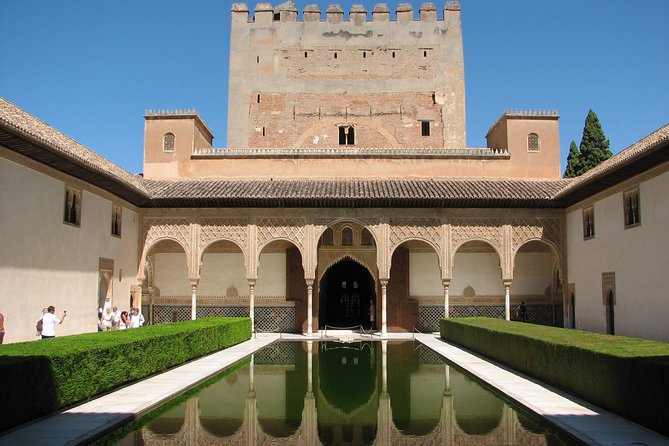
Admission to the Alhambra and Generalife Gardens is included. That matters. You avoid one of the most difficult tickets to arrange independently, and the site’s gardens, courtyards, water channels, and palace decoration reward a guided introduction.
The Generalife gardens offer a calmer counterpoint to the palace interiors. Washington Irving drew on Granada for Tales of the Alhambra, and it is easy to see why the setting has inspired writers. Give yourself time to look beyond the famous photographs: small tile patterns, carved details, and carefully framed views are part of the pleasure.
The day can be logistically rough. Group ticket problems have caused long waits at the entrance, and unclear communication during those delays can be frustrating. Bring water, wear comfortable shoes, and be prepared to stand around even though the monument visit itself is carefully scheduled.
The city visit may not include enough time in central Granada for the Royal Chapel or other sights. The Albaicín district is also not part of the core program, although optional evening excursions may include it. If you choose an optional Albaicín and flamenco evening, check the timing and price in advance. Past optional programs have cost around 33 euros for a dance show and Albaicín visit, while a flamenco show with a drink has cost about 50 euros. Prices and arrangements can change, so ask before paying.
Granada hotels are the most uncertain part of the accommodation plan. Some rooms have been described as dated, noisy, or poorly located, with properties such as Hotel Los Angeles and Hotel Gran Luna receiving particularly negative comments. The hotel grade does not guarantee a central address or a quiet room.
Day 6: The long return to Madrid
After breakfast, you travel north toward Madrid, where the tour ends back at the original meeting point.
This final day is mainly a transfer. The route gets you back without forcing you to arrange a separate ticket, but it does not leave time for more sightseeing in Madrid. If you have an evening flight, confirm the expected arrival schedule before booking it. The trip ends at the meeting point, not at the airport.
Guides, coach travel, and group rhythm
The guide can make or break this kind of tour. Ismael has received especially warm praise for his historical knowledge, organization, and care with timekeeping. Margarita, Laura, and Sonsoles have also been praised for warmth, humor, and attention to the group. When the main guide is strong, the long drives become useful lessons rather than dead time.
Local guides are often the best part of the daily visits, especially in Córdoba, Seville, and Granada. They know how to explain the monuments and usually provide more focused information than the main tour director can manage while also handling hotel keys, luggage, roll calls, and departure times.
The bilingual setup is a serious consideration. If you speak English, you may spend a large share of each explanation waiting through Spanish commentary. Some groups are mostly Spanish-speaking, while English speakers may form only a small minority. If you want an English-only experience, confirm the language arrangement before booking.
Coach comfort has varied. Some departures used good vehicles, while others had uncomfortable seats, weak air conditioning, dirty windows, damaged fittings, or limited legroom. Luggage handling is your responsibility, and you are allowed one regular suitcase plus one handbag. Pack light. You will handle that bag repeatedly.
Hotels, meals, and optional extras
Hotel quality ranges from acceptable to very good, with upgraded accommodation generally offering a better experience. Location is just as important as room quality, though. A clean hotel outside the center can cost you 15 to 25 minutes of walking, along with taxi fares and lost sightseeing time.
Five breakfasts are included. Food at the hotels has been mixed, and buffet dinners on upgraded plans have not always matched the extra cost. I would treat the included meals as convenient fuel, not a reason to choose the tour.
Food and drinks are otherwise excluded. Andalusia deserves independent meals, so I prefer this arrangement to a rigid full-board plan. Use free time for local restaurants, tapas, and regional dishes instead of eating every meal at the hotel.
Optional excursions require special care. Ask about the price, payment method, duration, and return time before committing. Cash has been required for some activities, and late flamenco returns can push past midnight. That may be fine for night owls, but it is a poor match for anyone who needs an early start.
Walking, luggage, and who should book
You need moderate fitness. Expect cobblestones, uneven surfaces, hills, long monument visits, and repeated boarding and unloading from the coach. Ronda, Córdoba, Seville, and Granada all reward walking, but the pace can be hard on anyone with mobility problems.
I would recommend this tour if you:
- Want to see the major Andalusian highlights in one organized trip
- Prefer a coach and arranged hotels to driving and independent planning
- Enjoy history, architecture, art, and guided explanations
- Can handle long days and changing hotels
- Like having some free time but do not need complete freedom
I would look elsewhere if you want small groups, an English-only guide, central hotels, slow mornings, or substantial time in each city. A self-guided rail trip through Córdoba, Seville, and Granada would offer more control, though you would need to arrange the Alhambra and hotels yourself.
Should you book this Andalusia tour?
Book it if your priority is breadth and convenience. In six days, you see Roman Mérida, Córdoba’s Mosque-Cathedral, Seville’s cathedral and plazas, Ronda’s cliffside setting, the Costa del Sol, and Granada’s Alhambra. That is a lot of Spain for the money, especially with transportation and major admissions included.
Think twice if the group size and bilingual format would bother you. The itinerary is ambitious, and the best moments depend on a capable guide and smooth logistics. Before paying, ask about the exact departure group, hotel grade and locations, optional-excursion prices, language split, and the current plan for Mérida and any Caceres reference. The published highlights mention UNESCO-listed Cáceres, but the detailed six-day schedule provided here lists Mérida instead, so that point deserves clarification.
FAQ
What is included in the six-day Andalusia tour?
The tour includes hotel accommodation, five breakfasts, luxury-coach transportation, travel insurance, a bilingual English and Spanish tour director, guided visits in Córdoba, Seville, and Granada, and admission to the Mosque-Cathedral of Córdoba, Seville Cathedral, and the Alhambra and Generalife Gardens.
Where does the tour start and end?
It starts at the Aloft Madrid Gran Via, Calle de Jacometrezo 4, at 8:30 a.m. The tour ends back at the meeting point in Madrid on Day 6.
Is the tour conducted in English?
English is offered, but the tour director is bilingual in English and Spanish. The group may include many more Spanish-speaking participants, so English explanations may be paired with Spanish commentary.
How much luggage can I bring?
Each person may bring one regular suitcase and one handbag. Extra luggage may incur a charge, and you are responsible for handling your own bags.
Is the Alhambra included?
Yes. Entrance to the Alhambra and Generalife Gardens is included in the tour price.
How fit do I need to be?
You should have a moderate level of physical fitness. The trip includes substantial walking, cobbled streets, steep areas, monument visits, and frequent movement between the coach and hotels.
Recently listed in Madrid
- From Madrid: Ribera del Duero Tour of 3 Wineries w/ Tastings★ 4.9 · 150 reviews
- Madrid: Royal Palace VIP Tour with Skip-the-Line Ticket★ 4.3 · 645 reviews
- Madrid: Las Ventas Bullring VIP Private Guided Tour★ 5.0 · 151 reviews
- Photographic tour of Madrid with a professional photographer★ 5.0 · 104 reviews
- Zarzuela Opera and Dinner at La Castafiore Restaurant in Madrid★ 5.0 · 143 reviews
- Madrid Local’s Wine and Tapas Lunch Tour with a side of History★ 5.0 · 101 reviews
- Tapas and history tour ending with churros with chocolate★ 5.0 · 119 reviews
- Atletico de Madrid Stadium & Interactive Museum Admission Ticket★ 4.5 · 183 reviews
Madrid Tours, compared.

Live Flamenco Show with Food and Drinks Options
Read our review →
Avila & Segovia Tour with Tickets to Monuments from Madrid
Read our review →