
Reviewed · NATIONAL PARKS
From Seville: Doñana National Park Day Trip
Wild Spain begins just beyond Seville. This 10-hour outing takes you from the Guadalquivir River to marshes, pine woods, rice fields, dunes, and the Atlantic coast, giving you a broad look at one of Andalusia’s most important natural areas. I like the way the trip covers several very different habitats in one day, and I also like the guides’ clear passion for wildlife. The main drawback is simple: you spend a lot of time in the vehicle, with less walking than some people expect.
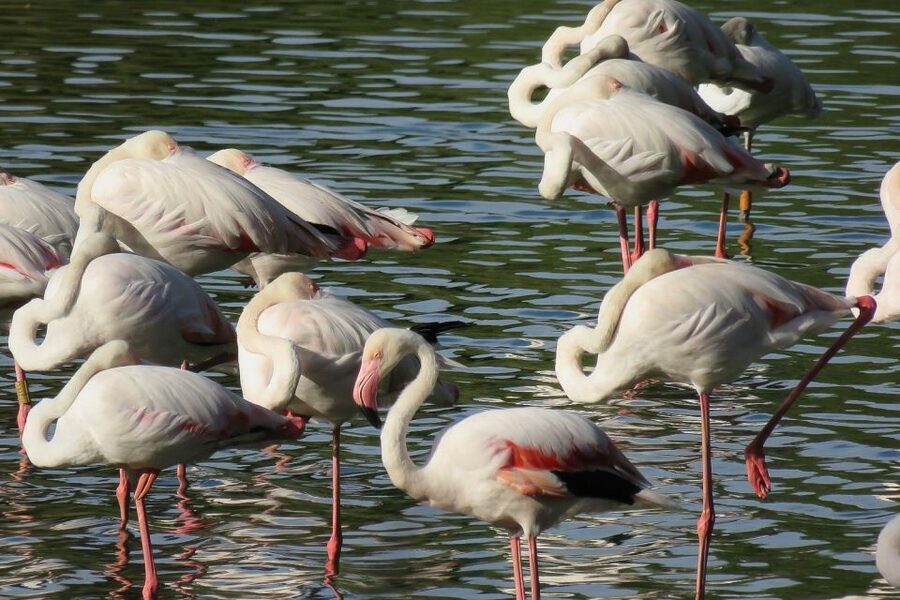
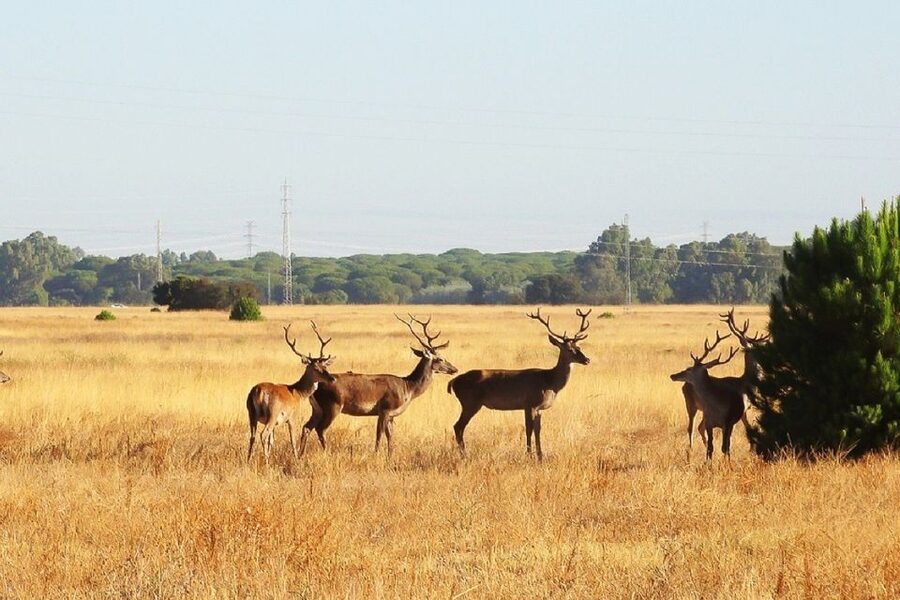
The wildlife is never guaranteed, but the odds are good for birds. Flamingos, storks, egrets, herons, ibises, black kites, and many other species may appear, while deer and wild boar are possible in the wooded areas. The Iberian lynx is a lucky sighting, not a scheduled attraction. You may see tracks instead, as one group did while getting close to the area where a lynx had passed.
In This Review
- Key details before you book
- Why Doñana makes a worthwhile day from Seville
- Leaving Seville through Coria del Río
- Dehesa de Abajo and the northern marshes
- El Rocío, a village unlike anywhere else
- La Rocina trails and the feel of the park
- Matalascañas, dunes, and the Atlantic
- Wildlife: birds are realistic, lynx is luck
- What the guide adds to the day
- Is $105 a fair price?
- Who should book this Doñana day trip?
- Should you book it?
- FAQ
- How long is the Doñana National Park day trip from Seville?
- What places does the tour visit?
- Is hotel pickup included?
- Are meals and drinks included?
- Can I see a lynx on this tour?
- Are binoculars provided?
- Is the tour available in languages other than English?
Key details before you book
- A full north-to-south outing: The route links the northern marshes, El Rocío, the La Rocina trails, Matalascañas, the dunes, and the Asperillo pine forest.
- Birdwatching is the strongest feature: Guides carry binoculars, and prismatics are supplied, though bringing your own binoculars is useful if birds are a major interest.
- The guides make the difference: José, Sergio, Luis Miguel, Luismi, Patricia, Diego, and others have been praised for spotting animals, explaining the park, and adjusting the route.
- Expect a road trip with short walks: The day includes guided stops, but much of Doñana is seen from the van or vehicle.
- Summer adds a beach stop: At Matalascañas, you may have time for the Atlantic and possibly a swim, depending on the day’s schedule.
- Small-group and private options are available: The $105 price is strongest for people who value transport, guiding, wildlife spotting, and hotel pickup in one package.
Why Doñana makes a worthwhile day from Seville
Seville is famous for palaces, churches, tiled courtyards, and late dinners. Doñana offers a sharp change of pace. Within an hour or so, the city gives way to open marshes, pasture, pine forest, and long stretches of sand.
The park matters because several habitats meet here. Water attracts huge numbers of birds. Rice fields and marshes provide feeding grounds. Pine woods and pasture support deer, wild boar, and smaller animals. The dunes and beach bring yet another setting, one that feels far removed from the city.
I like this tour because it does not reduce Doñana to one viewpoint. You get a sense of its scale by moving through the park from north to south. That broad coverage comes at a cost, though. If you want a quiet half-day walk in one small part of the reserve, this is not the right format. If you want a first look at the whole area without renting a car, it makes good sense.
The tour earns a 4.3 rating from 380 ratings, with especially strong praise for the guides. That pattern matters. Doñana is not a place where animals pose beside the road on command. A good guide knows where to slow down, where to look, and how to explain what you are seeing.
A few more Seville ideas to compare
- Seville: Royal Alcázar Entry Ticket
★ 4.6 · 28,378 reviews - Seville: Cathedral and La Giralda Entry Ticket
★ 4.5 · 24,592 reviews - Seville: Live Flamenco Dancing Show Ticket at the Theater
★ 4.7 · 16,396 reviews
Leaving Seville through Coria del Río
Pickup is available from your hotel, and you should wait in the reception or lobby 10 minutes before the arranged time. The trip begins in a van, with about 50 minutes of driving toward Coria del Río and the Guadalquivir River.
This opening stretch is practical rather than scenic in a grand sightseeing sense. It gets you out of Seville and toward the wetland zone. One useful point: the operator may contact you through WhatsApp, so check your messages before departure. One person missed that detail and experienced some confusion at pickup.
The vehicle has been described as comfortable and modern, though a full seven-seat van can feel tight, especially from the back. Seating matters on a long day, since you may spend several hours driving between habitats. A vehicle problem also caused noise and vibration on one departure, so it is fair to say comfort can depend on the particular van used that day.
Dehesa de Abajo and the northern marshes
The first major stop is the visitor center at Dehesa de Abajo, in the northern part of Doñana’s marshes. You get roughly two hours here, including a guided visit and time for photographs.
This area introduces the park’s wetland side. Pine woods and pasture surround water-filled spaces where birds gather. The area is home to about 300 bird species, including flamingos and Spanish imperial eagles. That does not mean you will see every famous bird on every visit, but it explains why this first stop can be so productive.
The rice fields are another important part of the morning. They are known for Europe’s largest colony of storks, so keep your eyes open across the fields and tree lines. Guides may also point out smaller birds that you could easily miss on your own.
This is where the supplied binoculars become useful. The operator provides prismatics, and a telescope has also been used on some departures. Still, I would bring your own binoculars if you care about bird identification. Shared optics can be well used, and you may spend time waiting for your turn.
Birdwatchers can have an especially rewarding day here. One keen observer counted around 70 species, including Thekla’s lark, griffon vulture, great spotted cuckoo, osprey, purple swamphen, lesser short-toed lark, and a barn owl seen at close range. That is an exceptional list, not a promise, but it shows the range possible in the right season and with a sharp-eyed guide.
El Rocío, a village unlike anywhere else
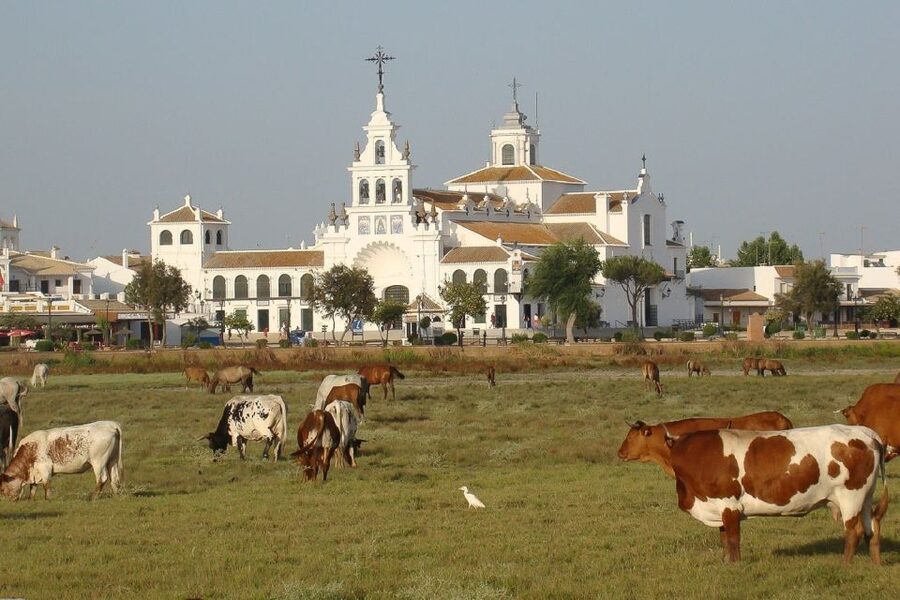
The next stop is El Rocío, about an hour with a guided visit and photographs. The village is best known for its chapel dedicated to the Virgin of El Rocío and its connection to the famous pilgrimage held around Pentecost.
The setting has a distinctive feel. Sandy streets and a wide-open layout give El Rocío a rural character quite unlike Seville. The chapel is the main cultural point, while an observatory connects the village back to the surrounding wetlands.
The scheduled time here is useful, but it can feel short if you want to study the village, visit the chapel, and watch birds. Some people would prefer less time at El Rocío and more time beside the water or in the dunes. Others will appreciate the cultural pause after a wildlife-focused morning.
Lunch is not included, and meals and drinks are your responsibility. The day includes time to relax for lunch, with one outing allowing about 90 minutes. Bring snacks or plan to buy food during the stop, but do not expect lunch to be part of the $105 price.
Same base, a different kind of afternoon:
- Seville: Casa de la Memoria Flamenco Show
★ 4.8 · 12,964 reviews - Seville: 1-Hour Guadalquivir River Sightseeing Eco Cruise
★ 4.2 · 10,281 reviews - Seville: Cathedral, Giralda, and Royal Alcázar Guided Tour
★ 4.7 · 9,165 reviews - Seville: Setas de Sevilla Entry Ticket
★ 4.6 · 8,901 reviews
La Rocina trails and the feel of the park
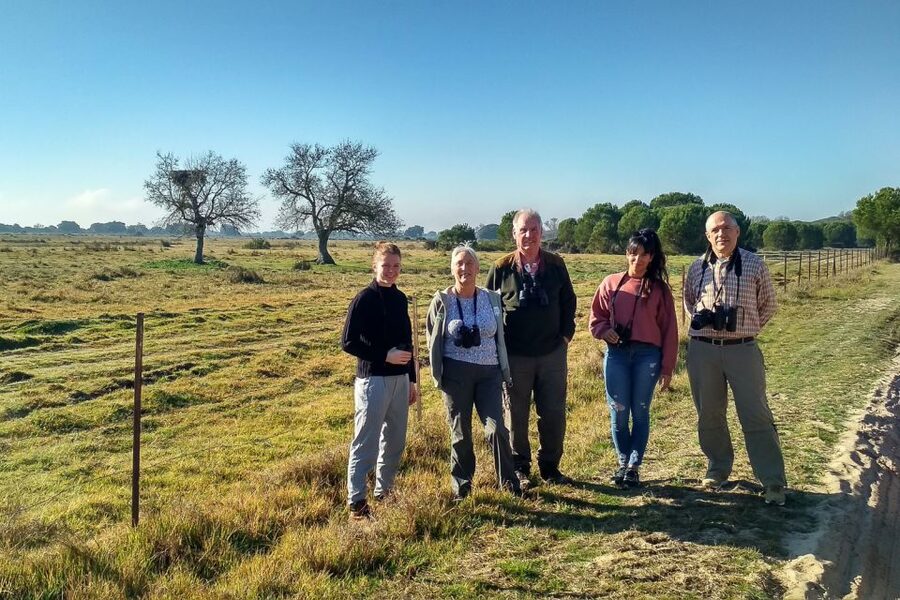
After El Rocío, the route continues along trails near the La Rocina stream. This is one of the better chances to get out and walk among the park’s plant life rather than only viewing it from the road.
The walk helps explain how water shapes Doñana. Marshland, woodland, and open ground can look very different even within a short distance. Your guide may discuss local plants, animal signs, and the traditions connected with the area.
The amount of walking is one point to clarify before booking. This is not a hiking tour. One person expected more time on foot and found that the trip was more driving than anticipated. That is not a flaw if you want broad coverage, but it is important if your ideal day means several hours on trails.
Wear comfortable shoes, even though the walking is not described as strenuous. Sunglasses, a sun hat, and sunscreen are sensible in every season, especially during the open stops.
Matalascañas, dunes, and the Atlantic
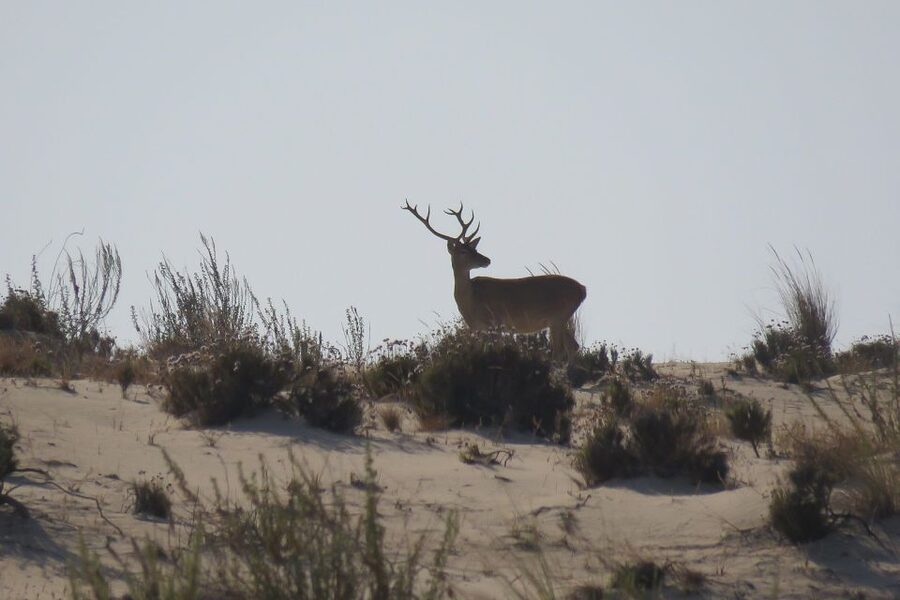
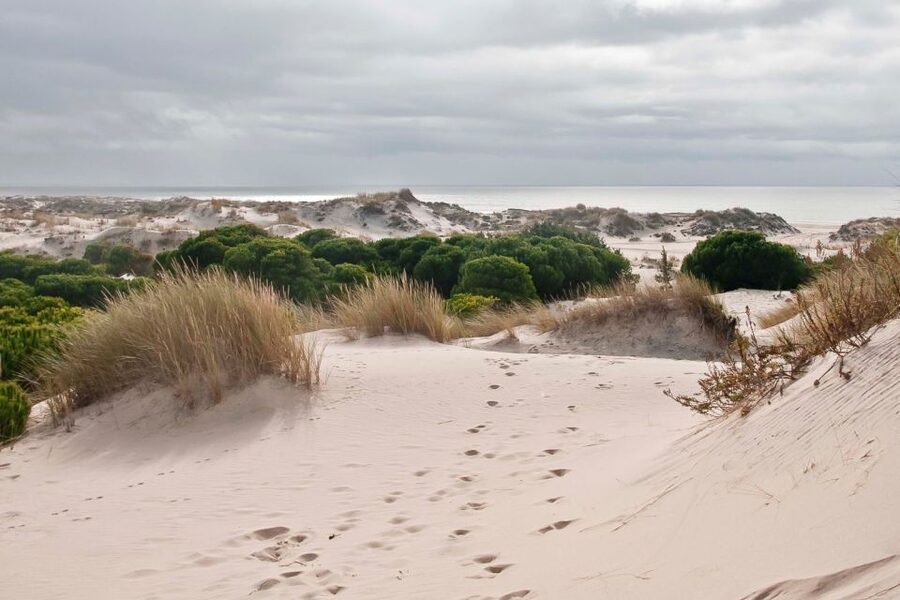
The longest scheduled stop comes at Matalascañas, with about two and a half hours for photographs and a guided visit. This section brings you to the coast, including Spain’s largest dune system and a huge, largely pristine beach.
The dunes are one of the tour’s most striking changes of scene. After marshes and pine woods, the sand feels almost spare and enormous. The Asperillo area is especially attractive late in the day, when the return route passes through pine forest and may offer a fine sunset.
In summer, the beach stop can include a swim in the Atlantic. That option makes the trip more than a wildlife outing, particularly on a hot Andalusian day. Bring suitable swimwear if you want to take advantage of it, though the supplied essentials list only mentions shoes, sunglasses, a hat, and sunscreen.
Allow for some uncertainty in the beach timing. One person felt that only about 35 minutes was available for the beach and dunes on a particular departure. The published schedule gives Matalascañas the longest block, but wildlife sightings, traffic, and group needs can affect how the time is divided. If the coast is your main reason for booking, ask how much beach time is expected before you reserve.
Wildlife: birds are realistic, lynx is luck
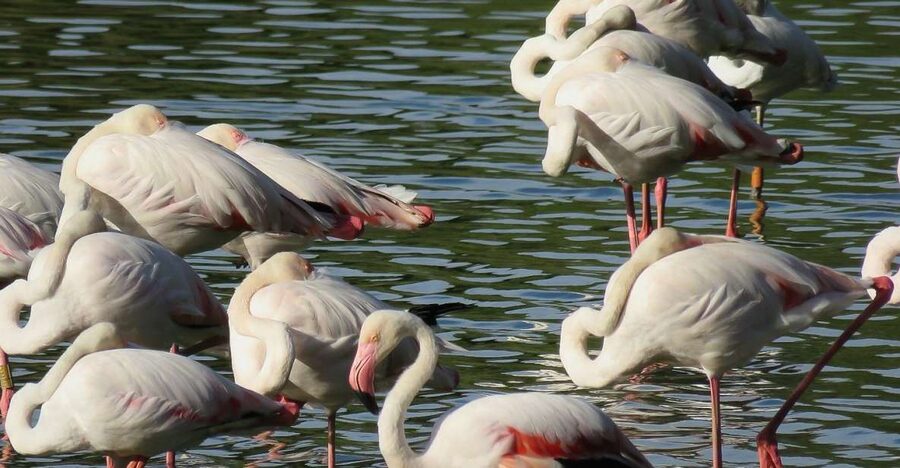
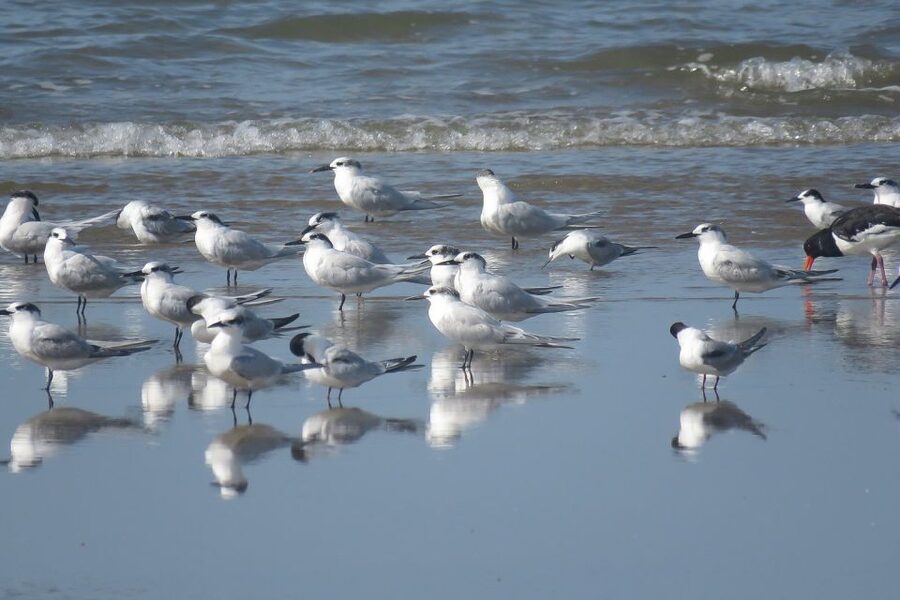
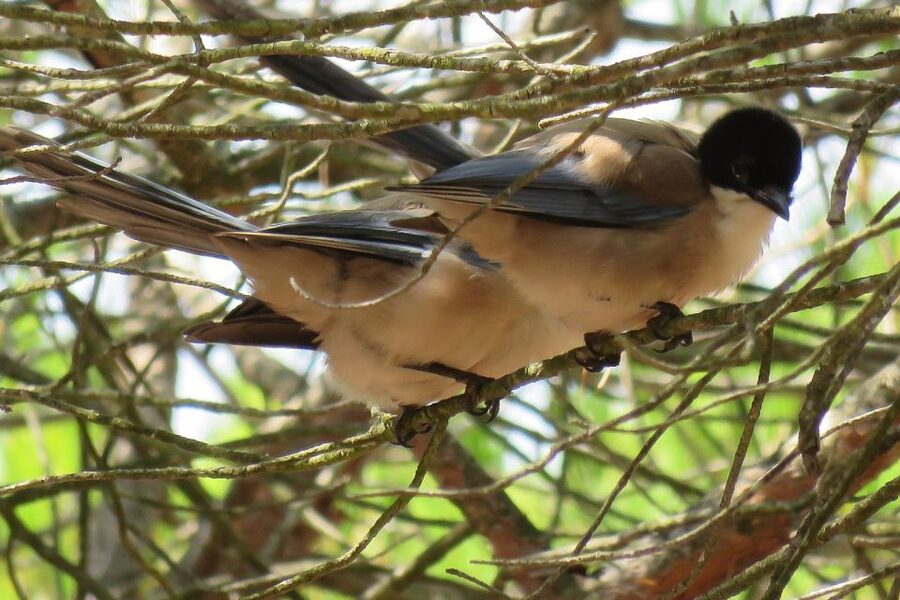
Doñana’s birdlife is the safest reason to choose this outing. Flamingos may appear in the reserve areas, and the park can also produce glossy ibises, blue herons, little egrets, great white egrets, storks, black kites, spoonbills, and many less famous species.
The guides are repeatedly praised for finding animals quickly. José was noted for reversing and repositioning the vehicle so everyone could get a better view. Sergio was praised for making detours and slowing down when something interesting appeared. Luismi, Patricia, Diego, and Luis Miguel were also singled out for explaining the park and looking after the group.
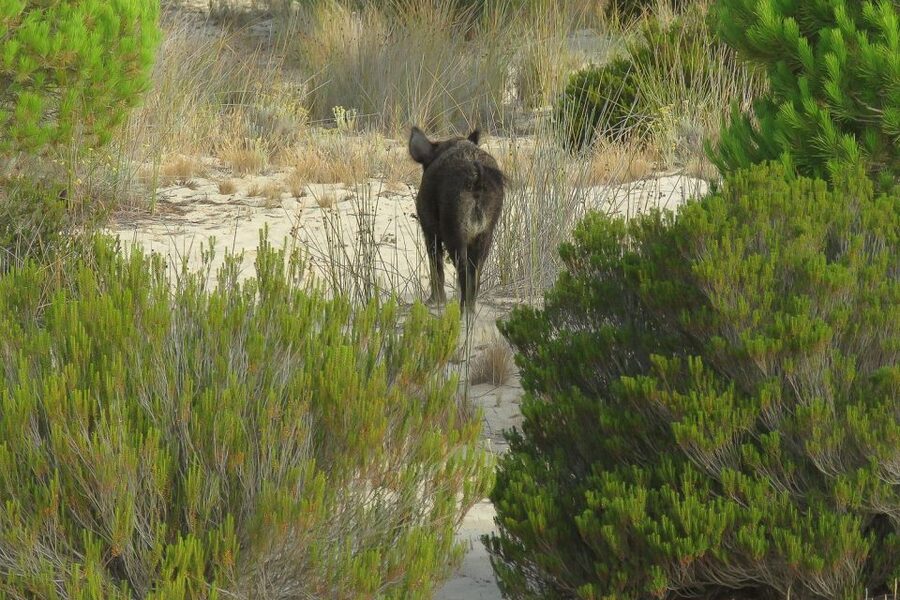
Large mammals are possible too. Keep watch for deer and wild boar in the forest and pasture. The lynx is the prize, but it is elusive. The promotional material mentions it because it lives in the wider Doñana area, not because a sighting is likely on every trip. A guide may take you near known territory or show you pawprints, but you should treat an actual lynx sighting as a bonus.
Season changes the experience. Winter can be strong for birds around the lakes and wetlands. Spring brings more activity and is often a good choice for seeing nature at its best. Summer offers the beach and swimming, but the scenery can be drier. Autumn may bring quieter conditions, while November has been described as greener and less crowded than the warmer months.
What the guide adds to the day
A self-drive visit would give you access to the region, but it would not give you the same chance of finding wildlife. Doñana is large, and animals can be hidden, distant, or active for only a few moments.
The best guides combine field skills with local context. José has been praised for spotting wildlife and explaining the park’s history. Sergio brings strong interest in biodiversity. Patricia has been praised for answering questions throughout the day and explaining environmental issues. Diego has been described as both friendly and well informed about the area.
Language choices include English, French, Italian, and Spanish. If you need a particular language, at least four people who speak that language are required. Even after confirmation, the operator may need to offer another language, date, or a full refund if that minimum is not met.
The small-group format is a good middle ground. You get more personal attention than on a large coach, while the price remains below what a fully private day can cost. A private option makes more sense if you have a strong birding focus, want more control over stops, or are traveling with a group that shares one language and pace.
Is $105 a fair price?
At $105 per person, the value comes from what is bundled together: hotel pickup and drop-off, transport from Seville, a live guide, park access arrangements, binoculars or prismatics, and a full 10-hour day.
It is not a cheap sightseeing bus, nor is it a specialist private safari. You are paying for distance, time, field knowledge, and the chance to cover places that would be awkward to connect without your own car. Meals and drinks cost extra, and the tour’s long driving sections may not suit everyone.
I consider the price fair for a first visit, especially if you care about birds or want to see more than one part of Doñana. The value is strongest when the guide is actively spotting wildlife and explaining what you see. It is weaker if you mainly want a long beach day or several hours of independent walking.
Free cancellation up to 24 hours before departure and the option to reserve now and pay later make planning easier. Infant seats are available if requested in advance. Pets are not allowed.
Who should book this Doñana day trip?
I would choose this tour if you are staying in Seville and want a full day outdoors without arranging a rental car. It suits birdwatchers, nature lovers, photographers, and anyone curious about a less familiar side of Andalusia.
Families may like the variety, though the long day and vehicle time could test very young children. Ask for an infant seat in advance if needed. Comfortable shoes and protection from the sun are more important than specialist hiking gear.
I would hesitate if you dislike roads, expect guaranteed sightings, or want to spend most of the day walking. The park is huge, and the trip’s strength is its range. You see many habitats, but you do not linger in every one.
Should you book it?
Book this outing if you want a wide introduction to Doñana, with birds, marshes, forest, dunes, El Rocío, and the Atlantic coast in one long day. The guides are the strongest part of the experience, and their ability to spot wildlife can turn an ordinary-looking stretch of reeds or pasture into a memorable stop.
Choose spring for a strong nature focus, winter for birdwatching, or summer if the beach and a possible swim appeal to you. Bring your own binoculars if birds matter, pack food or money for lunch, and set realistic expectations about the lynx.
For most people based in Seville, this is a worthwhile use of a day. It gives you genuine contact with the region’s wild side, provided you are happy to trade some walking time for a long, well-guided road trip.
FAQ
How long is the Doñana National Park day trip from Seville?
The tour lasts 10 hours, including transportation, guided stops, time for photographs, and the return journey to Seville.
What places does the tour visit?
The route includes Dehesa de Abajo in the northern marshes, El Rocío, trails near the La Rocina stream, Matalascañas, the dune system, and the Asperillo pine forest area.
Is hotel pickup included?
Hotel pickup and drop-off are included. You should wait in your hotel reception or lobby 10 minutes before the scheduled pickup time.
Are meals and drinks included?
No. Meals and drinks are not included, so you should bring snacks or plan to arrange lunch during the day.
Can I see a lynx on this tour?
A lynx sighting is possible but not guaranteed. You may instead see signs such as pawprints. Deer and wild boar are also possible, while bird sightings are generally the main wildlife focus.
Are binoculars provided?
Prismatics are included, and binoculars or other viewing equipment may be available during the wildlife stops. If birdwatching is a priority, bringing your own binoculars is recommended.
Is the tour available in languages other than English?
Yes. Live guides are available in English, French, Italian, and Spanish. A minimum of four people speaking the requested language is required, and an alternative language, date, or refund may be offered if that minimum is not reached.
Recently listed in Seville
- Seville: Small Group Jewish Quarter Tour with Tapas & Drinks★ 5.0 · 119 reviews
- Seville: Alcázar Fast-Track Access with Guided Tour★ 4.2 · 432 reviews
- Seville: Small-Group Jewish Quarter Discovery Walking Tour★ 4.9 · 499 reviews
- Seville: VIP Exclusive Early Access Tour of The Alcazar★ 4.8 · 276 reviews
- Seville: Sunset Roof Top Walking Tour★ 4.5 · 122 reviews
- Seville: Flamenco Show at Tablao Almoraima in Triana★ 4.6 · 483 reviews
- Seville: Authentic and Romantic Horse-Drawn Carriage Ride★ 4.5 · 341 reviews
- Seville: 3.5-Hour Spanish Cooking Class & Triana Market Tour★ 4.9 · 751 reviews
National Parks, compared.

Teide National Park Sunset & Stargazing with Dinner (Star Safari)
Read our review →
Arrecife/Playa Blanca: Timanfaya National Park Area Day Tour
Read our review →
Jávea: Cala Tango and San Antonio Nature Reserve Kayak Tour
Read our review →
Browse the lists this tour appears in