
Reviewed · WORKSHOPS
Guided Gaudí’s Trencadís Mosaic Workshop in Barcelona
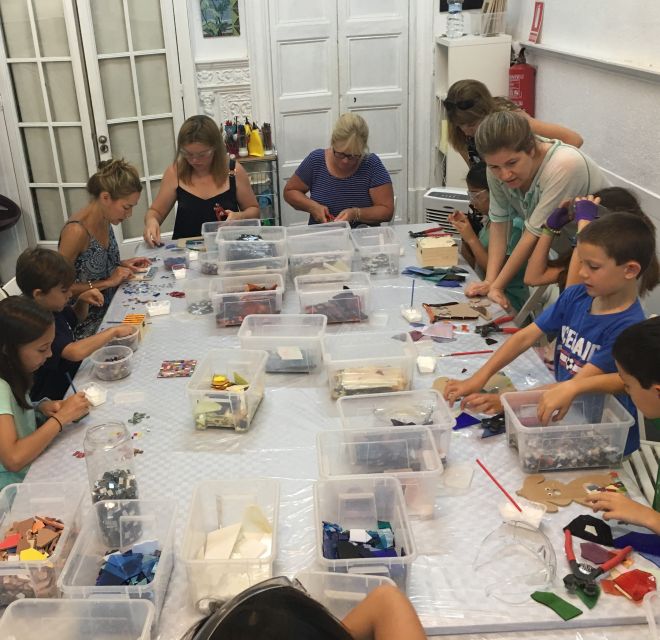
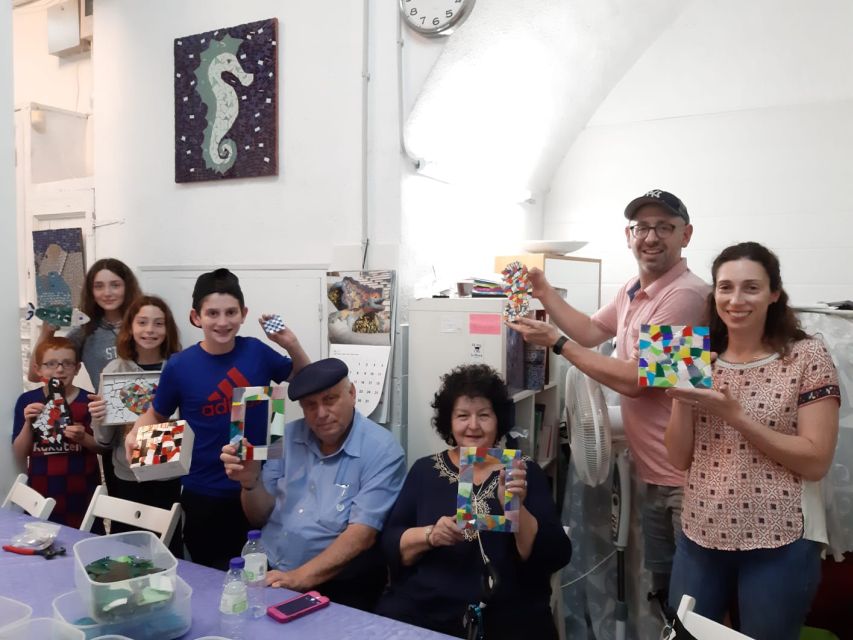
Make your own piece of Barcelona. This hands-on workshop introduces you to Trencadís, the broken-tile mosaic style associated with Antoni Gaudí, then lets you use colorful ceramic pieces to create a photo frame, box, coaster, animal, or another small object. I like the personal result: you leave with something you made, not another mass-produced souvenir. I also like the patient, family-friendly instruction, especially from guides such as Melissa, who has helped children and adults finish detailed pieces without feeling rushed.
The main drawback is time. A one-hour booking may feel tight if you choose a rounded animal or an intricate design, and the tile cutters require some hand strength. You also cannot take your finished piece straight away because staff must grout it after the class. Plan to collect it later that day or the next day.
- Gaudí’s broken-tile method: Learn how irregular ceramic pieces create color, movement, and playful shapes.
- A useful Barcelona location: The studio is on Carrer dels Assaonadors, about five minutes from the Picasso Museum.
- A personal souvenir: Make a photo frame, box, coaster, animal figure, or another object, then take it home after grouting.
- Good for families: Children can use pre-cut acrylic tiles, while those over 10 may work with regular ceramic pieces.
- Flexible class length: Sessions range from one to four hours, but two or three hours is a safer choice for detailed work.
- Strong value at $35: Materials, tools, safety goggles, instruction, and grouting are included.
In This Review
- Why Trencadís Belongs in Barcelona
- Finding the Studio Near the Picasso Museum
- Choosing Between One and Four Hours
- Picking Your Object and Building the Design
- Cutting Ceramic Pieces Safely
- A Patient Class for Families
- Grouting and Collecting Your Barcelona Keepsake
- Is $35 a Fair Price?
- Sustainability and Responsible Tourism
- Who Should Book This Workshop?
- Final Recommendation
- FAQ
- Where is the Trencadís mosaic workshop held?
- How much does the workshop cost?
- How long does the workshop last?
- Do I need previous mosaic experience?
- Can children take part?
- Can I take my mosaic home immediately?
- Is the workshop wheelchair accessible?
Why Trencadís Belongs in Barcelona
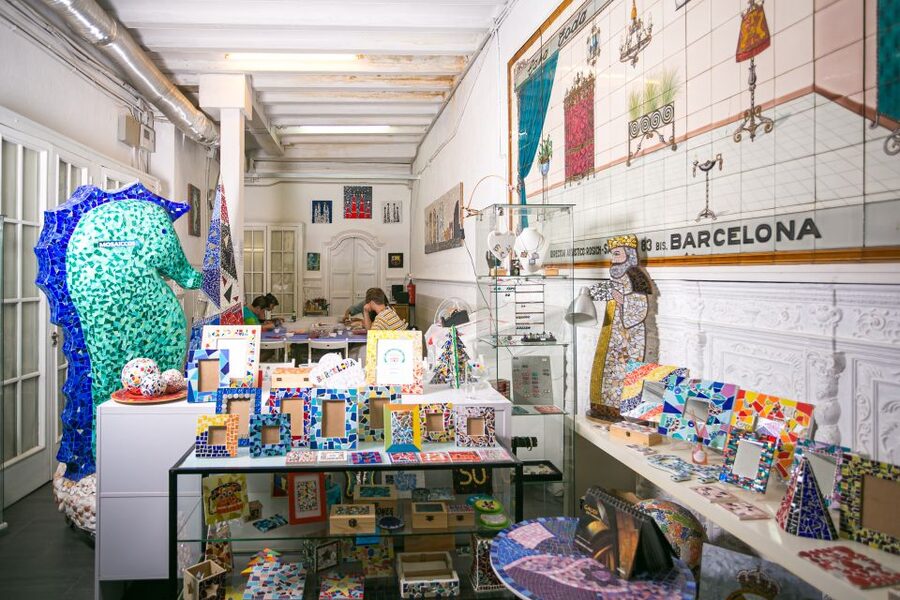
Barcelona is full of polished stone, painted ceramics, and fanciful architectural details. Gaudí’s Trencadís technique adds something less formal. Instead of cutting every tile into neat squares, artists use broken or irregular pieces and arrange them into flowing patterns, pictures, and colorful surfaces.
This workshop gives you a chance to understand that style with your hands. You are not simply looking at mosaic benches in a park or taking pictures of a famous façade. You are making decisions about color, shape, spacing, and balance. The result may be a little wonky, which is part of the charm.
The class is suitable for beginners. You do not need drawing skills or previous experience with ceramics. The instructors explain the tools and methods, then help you work through each stage. That makes the experience less intimidating than it may sound. You can concentrate on choosing pieces and building your design while asking for help when the pattern refuses to cooperate.
I especially like the cultural connection. The class does not attempt to reproduce a major Gaudí building. Instead, it gives you a small, practical way to understand a technique that helped define Barcelona’s visual character.
Finding the Studio Near the Picasso Museum
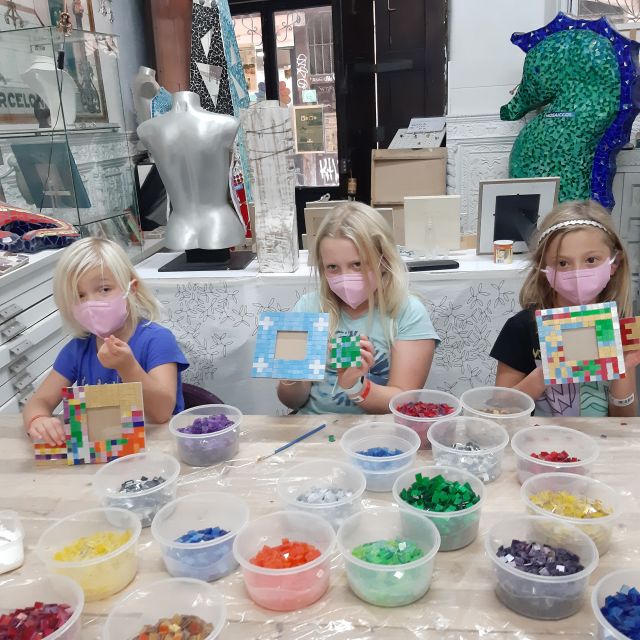
The meeting point is Carrer dels Assaonadors, 10, in the 08003 area of Barcelona. It is about five minutes from the Picasso Museum, making it easy to pair the workshop with a museum visit or a walk through the surrounding old city.
That location matters because the activity fits neatly into a day of sightseeing. You can visit the museum before the class, make your mosaic, and then continue exploring while the grout dries. If your session finishes late in the day, collect the piece the next morning instead.
Arrive on time. The class is hands-on from the start, and arriving late can cost you useful design and cutting time. The studio is wheelchair accessible, and a small-group option is available. Instruction can be provided in Catalan, English, French, German, Spanish, Turkish, or Portuguese.
A few more Barcelona ideas to compare
- Barcelona: Sagrada Familia Entry Ticket with Audio Guide
★ 4.6 · 105,312 reviews - Barcelona: Park Güell Admission Ticket
★ 4.4 · 76,534 reviews - Barcelona: Casa Batlló Entry with Self-Audioguide Tour
★ 4.7 · 25,359 reviews
Choosing Between One and Four Hours
The booking options range from one to four hours. That is a wide range, and your choice affects the whole experience.
A one-hour session can work if you pick a simple object and make a straightforward design. It may suit someone who wants a short creative break between sightseeing stops. Still, you should not assume that one hour means you will be holding a finished object at the end. The piece must still be grouted after you leave.
For a photo frame with a basic pattern, one hour may be enough for a confident adult or an older child who works quickly. But if you want to add many colors, create a picture, or use rounded pieces, the clock becomes noticeable.
I would choose two hours as the minimum for a relaxed session, and three hours if your main goal is the activity rather than a quick introduction. One participant with a 13-year-old son found that the one-hour booking was not enough to finish, although the instructors allowed extra time and offered help. Another person specifically found two hours too short and advised booking three.
The four-hour option makes sense for a group that wants to work carefully or create more than one object. It also gives you room to experiment rather than choosing the first tile that fits. The actual starting times depend on availability, so check the schedule before building the rest of your day around the workshop.
Picking Your Object and Building the Design
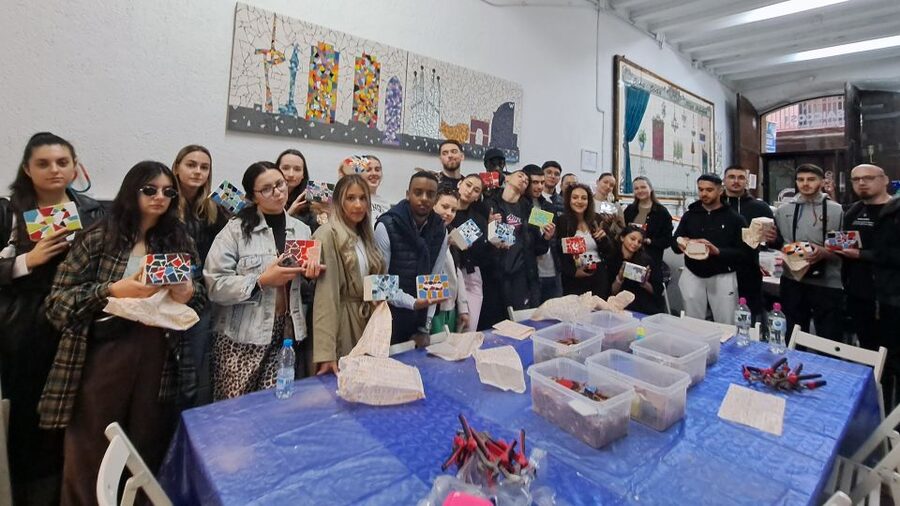
Once you have learned the basic method, you choose what to decorate. Options can include a photo frame, box, coaster, animal figure, or another available shape. The object gives you a practical base, but the decoration is up to you.
A square photo frame is a forgiving first project. Straight edges make it easier to place small pieces, and the finished object has an obvious use. Several family groups chose frames and appreciated being able to create different designs side by side.
Animal figures offer more personality but can take longer. Curved edges and small areas require more careful placement. A salamander or penguin may look simple at first, yet rounded forms make the cutting and fitting more demanding.
The best approach is to decide early how detailed you want the finished piece to be. A large number of tiny pieces can produce an intricate effect, but each piece takes time to select and place. Larger, squarer pieces are easier to handle and give you a cleaner pattern.
You can ask the instructor for help with composition. The staff may suggest extra pieces or show you how to fill a gap without disturbing the rest of your design. That support is useful for children, but adults benefit from it too. Mosaic work looks spontaneous when finished, yet a little planning prevents awkward empty spaces.
Cutting Ceramic Pieces Safely
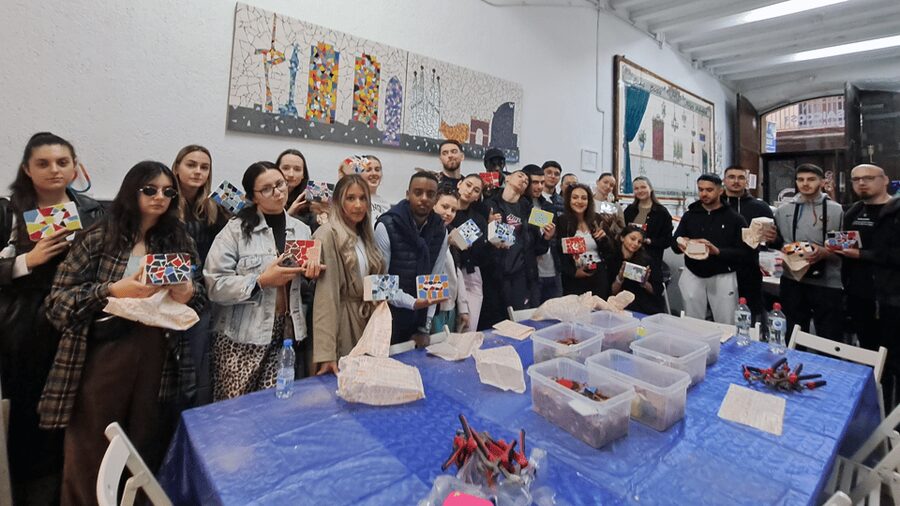
The class includes all needed materials and tools, including safety goggles, a ceramic cutter, and the object you decorate. The instructor introduces the equipment before you begin, so you are not left guessing how much pressure to use.
This is the most physical part of the workshop. Cutting ceramic pieces requires hand strength and control. If you have arthritis or limited grip strength, you may find the tile clippers uncomfortable. Ask for help when needed rather than forcing the tool.
Rounded designs are harder than square ones because each piece needs to follow a curve. For an easier first project, choose an object with clear edges and use mostly square or rectangular pieces. If you want an animal or curved pattern, allow extra time and accept that the shape may develop slowly.
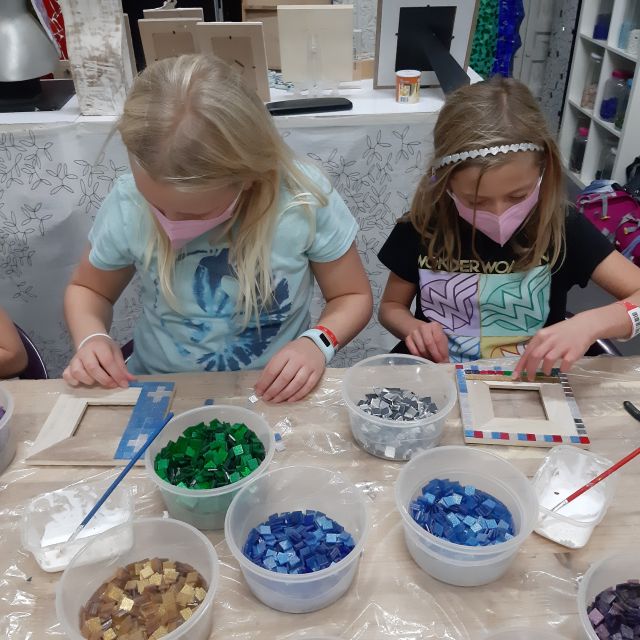
Younger children work with pre-cut acrylic tiles. This removes the sharpest and most demanding part of the process while keeping the color and arrangement decisions intact. Children over 10 may also work with regular ceramic pieces, provided they are comfortable using the tools with guidance.
The safety rules are simple. Food, alcohol, drugs, fireworks, and explosive substances are not allowed. Meals are not permitted in the studio, and only soft drinks are allowed. This is a work area with tools and small pieces, not a café stop.
Same base, a different kind of afternoon:
- Barcelona: 24 or 48-Hour Hop-On Hop-Off Bus Tour
★ 4.4 · 20,872 reviews - Barcelona: Park Guell Guided Tour with Skip The Line Entry
★ 4.7 · 17,563 reviews - Barcelona in 1 Day: Sagrada Familia, Park Guell,Old Town & Pickup
★ 5.0 · 13,541 reviews - Barcelona Aquarium: Entry Ticket
★ 4.3 · 13,335 reviews
A Patient Class for Families
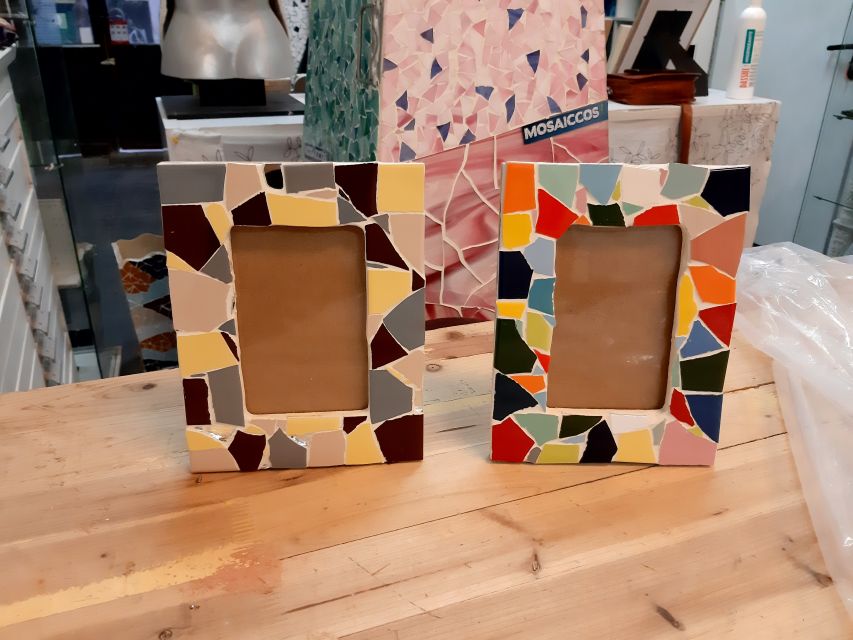
The workshop has earned its strongest praise for the way instructors help children and adults. The teaching is not limited to a quick demonstration followed by a strict finish time. Instructors may offer design ideas, help with difficult sections, and give you extra minutes when the schedule allows.
Melissa is one instructor who has been singled out for being warm, funny, and helpful. She has guided families through the process while keeping the mood relaxed. Music also contributes to the casual studio atmosphere.
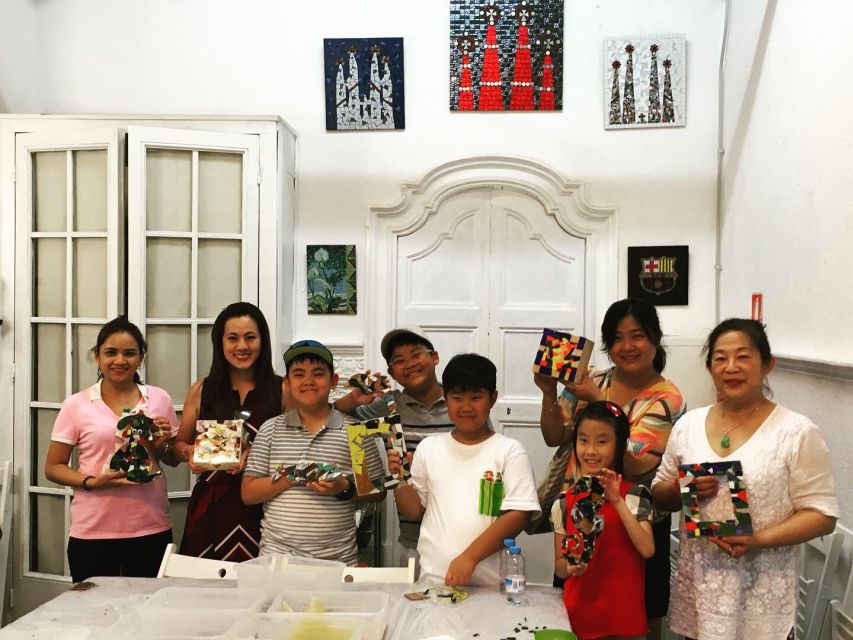
The class works well for families because everyone can choose a different object or design. A parent and teenager can make separate frames, while younger children use acrylic tiles. That creates a shared activity without forcing everyone to produce the same thing.
Still, parents should plan around the child’s age and patience. The activity requires small-piece handling, concentration, and some waiting while designs come together. Children at least seven have enjoyed it, but the supplied information does not set a firm minimum age. For younger children, ask the provider about the current materials and supervision arrangements when booking.
This is also a good choice for adults who want a quiet creative hour. You do not need to be an artist. The point is not to produce museum-quality work. It is to make a personal object and learn how the technique works.
Grouting and Collecting Your Barcelona Keepsake
When your ceramic pieces are in place, the staff apply the grout. Grouting fills the gaps and gives the mosaic a lasting finish, but it also means the object needs time after the creative part is over.
A morning workshop may be ready for pickup in the afternoon. An afternoon session may require collection the following day. Build this into your plans before booking, especially if Barcelona is your last stop before an early flight.
One family finished their pieces in time to pack them for a flight home the next day. That is a sensible plan, but you should not count on taking the object immediately after class. Ask the staff about the expected pickup time when you arrive.
Delivery is not included. If you cannot return to the studio, check whether another arrangement is available and what it costs before you begin. The activity price covers the class, materials, tools, safety goggles, and grouting, but not delivery.
The finished object is a more meaningful souvenir than a standard shop purchase because you made the choices yourself. A slightly uneven tile, an unexpected color combination, or a small design change becomes part of the story.
Is $35 a Fair Price?
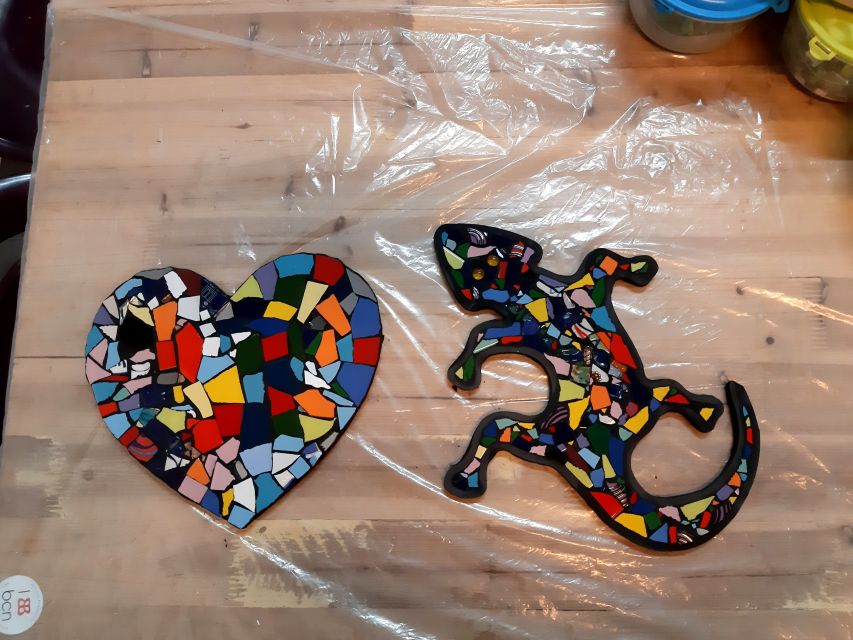
At $35 per person, the workshop offers good value if you want more than a short demonstration. The price includes instruction, all materials, safety goggles, the ceramic cutter, and the object you decorate. You also receive a finished piece after the staff grout it.
Compare that with buying a decorative mosaic in Barcelona. A shop purchase may be quicker, but it does not give you the creative time or the connection to the technique. Here, the cost covers an activity and a souvenir in one.
The value is strongest for families and pairs. Two people can work beside each other, compare designs, and leave with separate keepsakes. It is also useful on a rainy day or when you need a break from museums and architecture.
The price is less attractive if you only want a very short session and do not care about making an object. Since pickup may require a second visit, you should also consider how long you will remain in Barcelona.
Free cancellation is available up to 24 hours before the activity for a full refund. You can also reserve and pay later, which helps if your sightseeing schedule is still changing.
Sustainability and Responsible Tourism
The workshop holds BIOSPHERE Certification 2026, reflecting a stated commitment to responsible tourism and environmental respect. The practical details of the certification are not specified here, so I would not treat it as a reason to book by itself.
Still, the format has an appealing low-waste character. You work with ceramic pieces and turn them into a useful object rather than buying a factory-made souvenir. The final item is small, personal, and easy to keep.
If sustainable choices matter to you, ask the studio how it handles leftover tiles, packaging, and materials. The certification is a helpful sign, but direct questions give you a clearer picture.
Who Should Book This Workshop?
I would recommend it to:
- Families looking for a shared activity that suits different ages
- Couples or friends who want matching or contrasting Barcelona souvenirs
- Adults who enjoy crafts but have no formal art training
- Anyone spending time near the Picasso Museum
- Visitors with a spare morning or afternoon who want something more active than sightseeing
- People who can return later for pickup, or stay in Barcelona until the next day
I would be more cautious if you have limited hand strength, very little time in the city, or a tight departure schedule. You can still enjoy the class, but choose a simple design, ask for assistance with cutting, and confirm the collection time before booking.
Final Recommendation
I like this workshop because it gives you a real creative connection to Barcelona without requiring artistic talent. The $35 price includes the tools, materials, instruction, and finished object, and the friendly help from instructors such as Melissa makes the class approachable for families.
Book at least two hours, and choose three if you want an animal shape, rounded design, or a detailed pattern. Arrive on time, avoid scheduling it immediately before a departure, and leave room to collect the piece after grouting. If you can make that small adjustment, this is a thoughtful, hands-on souvenir and one of the better ways to spend a few creative hours in the city.
FAQ
Where is the Trencadís mosaic workshop held?
The meeting point is Carrer dels Assaonadors, 10, 08003 Barcelona. It is about five minutes from the Picasso Museum.
How much does the workshop cost?
The price is $35 per person. The mosaic class, materials, tools, safety goggles, ceramic cutter, and decorating object are included.
How long does the workshop last?
Available sessions range from one to four hours. Starting times depend on availability. Two hours is a more comfortable choice for many designs, while three hours is advised for detailed or rounded pieces.
Do I need previous mosaic experience?
No. The class is guided, and no prior experience is needed. The instructor introduces the tools, materials, and Trencadís method.
Can children take part?
Yes. Younger children use pre-cut acrylic tiles. Children over 10 may also work with regular ceramic pieces. The activity has been enjoyed by families with children at least seven years old.
Can I take my mosaic home immediately?
Usually not. Staff apply grout after you finish. A morning piece may be ready in the afternoon, while an afternoon piece may be ready the following day.
Is the workshop wheelchair accessible?
Yes, the workshop is wheelchair accessible. Instruction is available in Catalan, English, French, German, Spanish, Turkish, and Portuguese.
Recently listed in Barcelona
- Transfers From Cruise Port to Barcelona Airport★ 4.5 · 155 reviews
- Bohemian Barcelona Neighborhood Evening Tapas & Wine Tour★ 5.0 · 419 reviews
- Park Guell Guided Tour with Skip the Line Tickets★ 4.0 · 739 reviews
- Barcelona Sunset Cruise with Light Snacks and Open Bar★ 5.0 · 476 reviews
- Montserrat very early : Hiking, Abbey, very small group★ 5.0 · 127 reviews
- Barcelona: Sagrada Familia, Park Guell & Tapas Private Tour★ 5.0 · 903 reviews
- Authentic Flamenco Show Barcelona : Intimate Casa Sors Experience★ 5.0 · 809 reviews
- Barcelona Expert Tour with Local Guide in Eco Tuk Tuk Private★ 5.0 · 216 reviews
Workshops, compared.

Barcelona Paella Cooking Class with Market Visit, Tapas & Sangria
Read our review →
Spanish Cooking Class Paella Tapas and Sangria in Madrid
Read our review →
Paella and Sangria Workshop in the City Center
Read our review →
Paella Cooking Class, Wine Tasting & Central Market in Valencia
Read our review →
Group Surfing Lesson at Playa de las Américas, Tenerife
Read our review →
Paella Cooking Class in Madrid with Bottomless Wine Pairing
Read our review →
Playa de las Américas: Private or Small-Group Surf Lesson
Read our review →Browse the lists this tour appears in