Reviewed · TAPAS TOURS
Spanish Cooking Class Paella Tapas and Sangria in Madrid
Come hungry, leave with recipes. This four-hour Madrid cooking class turns Spanish food into a social, hands-on experience, with a local English-speaking chef guiding you through a meal you help prepare. I especially like the small group of up to 12 people, which gives you room to cook rather than simply watch, and the morning market visit, where you help choose fresh ingredients before heading to the kitchen. The class also offers a useful choice: paella and gazpacho in the morning, or a full tapas menu in the evening.
The main thing to watch is the booking choice. The two sessions are not the same menu, and the evening tapas class does not necessarily include paella. At $102.79 per person, this is not a cheap meal, but the price covers instruction, food, drinks, a local guide, and a recipe booklet. For a special meal with practical cooking skills attached, it can be good value.
In This Review
- At a glance
- Starting in Madrid’s Centro
- Choosing morning paella or evening tapas
- The market visit and the Spanish food lesson
- Cooking paella, gazpacho, and sangria
- Building an evening tapas meal
- What the chef adds
- Eating together and taking the recipes home
- Price, group size, and overall value
- Who should book this class
- Should you book it?
- FAQ
- Where does the cooking class begin?
- Where does the experience end?
- How long does the class last?
- Is the class offered in English?
- What is included in the price?
- Does the morning class include a market visit?
- Does the evening tapas class include paella?
- Can dietary requirements be accommodated?
- What is the minimum drinking age?
- How many people can join the class?
- Is hotel pickup included?
- What is the cancellation policy?
At a glance
- Morning market visit: The morning class includes a trip to a local market to choose ingredients and learn about Spanish food habits.
- Two different menus: Morning is built around paella, gazpacho, and sangria. Evening focuses on tapas, including tortilla, garlic shrimp, chorizo in cider, and crema Catalana.
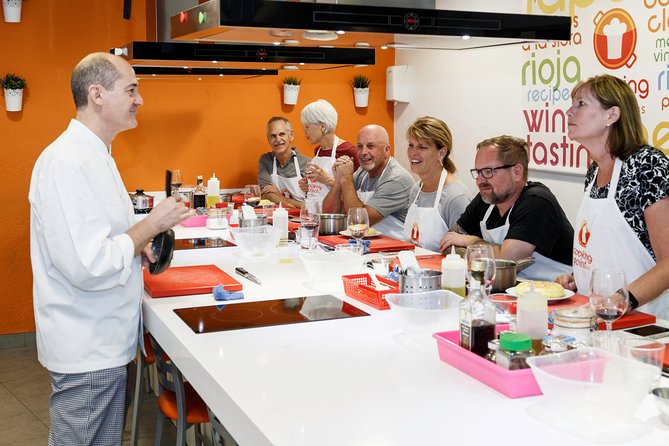
- Real participation: You work in pairs and prepare the food yourself, with the chef stepping in to guide rather than simply perform.
- Personal instruction: The group is limited to 12 people, and solo participants are matched with a cooking partner.
- Flexible for food needs: Dietary requirements can be accommodated when you provide them at booking.
- A meal and a lesson: You eat what you make with the group, then take home recipes for repeating the dishes.
Starting in Madrid’s Centro
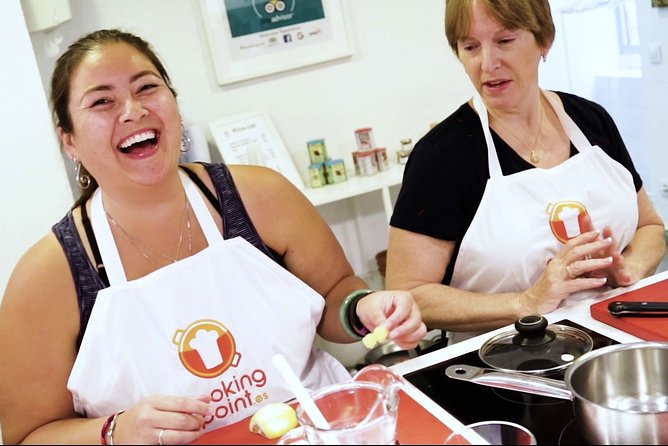
The class begins at Cooking Point, at Calle de Moratín 11 in Madrid’s Centro district. It ends at the same place, so you do not need to arrange a second pickup point or work out a return transfer.
The location is near public transportation, which makes it practical for a morning or evening plan. Hotel pickup and drop-off are not included, so you will need to make your own way there. Build in a little extra time, especially if you are crossing central Madrid from another neighborhood.
The class lasts about four hours. That is long enough to include instruction, cooking, conversation, and a sit-down meal, but it also means you should not place a tight museum reservation or train departure immediately afterward. The cooking itself is only part of the experience. Much of the pleasure comes from preparing food with other people and hearing how the dishes fit into daily life in Spain.
More Cooking Classes in Madrid
- Paella Cooking Class in Madrid with Bottomless Wine Pairing
★ 5.0 · 985 reviews - Taste of Spain: Tapas Cooking Class with Bottomless Wine Pairing
★ 5.0 · 414 reviews - Madrid: Half-Day Spanish Cooking Class
★ 5.0 · 345 reviews
Choosing morning paella or evening tapas
Your first important decision is the session. The morning paella class includes paella, gazpacho, and sangria. The local market visit is an extra reason to choose this option, since you get to see the ingredients before they reach the cooking table.
The evening tapas class has a broader spread of small dishes. The sample menu includes Spanish potato omelet, garlic shrimp, chorizo in cider, patatas bravas, tomato bread with ham, crema Catalana, and sangria. It is a generous menu, and the variety lets you try several familiar Spanish flavors in one sitting.
Do not assume the tapas class also includes paella. This is the most important practical warning for booking. If making paella is your main goal, choose the morning class and check the session details carefully before paying.
The morning option suits you if you want a food market visit and a substantial central dish. The evening option is better if you want to understand the way tapas combine several smaller plates, from potatoes and eggs to seafood, cured ham, sausage, and dessert.
The market visit and the Spanish food lesson
The market stop is one of the most useful parts of the morning class. Chef Angel, Chef Eduardo, Chef Teresa, or Chef Elisa may lead the session, depending on the date. The chefs have different personalities, but the experience consistently centers on explaining ingredients, shopping, and Spanish eating habits.
At the market, you can expect an introduction to local produce, seafood, and meats, along with some context about how food is sourced and eaten around Spain. The chef helps the group choose the ingredients for the class menu, rather than treating shopping as a quick errand.
That matters because a paella lesson is not only about following a recipe. It is also about understanding the ingredients that give the dish its character. Seeing the food first helps connect the market, the kitchen, and the finished plate.
The market walk also adds a bit of neighborhood life to the class. You are not spending the whole four hours inside a cooking studio, and the outing can help you get your bearings in the area if you are staying nearby.
This part applies to the morning class. If you book the evening tapas session, do not count on the market visit unless the operator confirms it for your date.
Cooking paella, gazpacho, and sangria
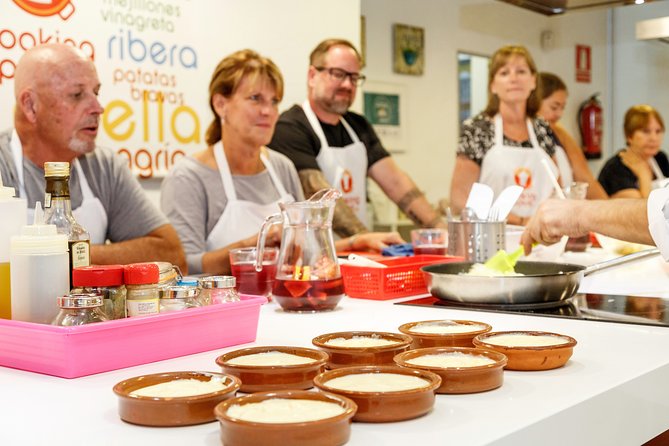
In the morning session, you work in pairs to prepare the menu. If you come alone, the class matches you with a cooking partner. That arrangement helps keep the work moving and gives you someone to share tasks with, although it also means you may not control every part of the recipe yourself.
The class is designed to be hands-on. You chop, prepare, and cook under the chef’s direction instead of watching a long demonstration while the instructor does the important work. One particularly useful feature is the balance between prepared ingredients and actual cooking. The kitchen can stay organized, but you still take part in the steps that matter.
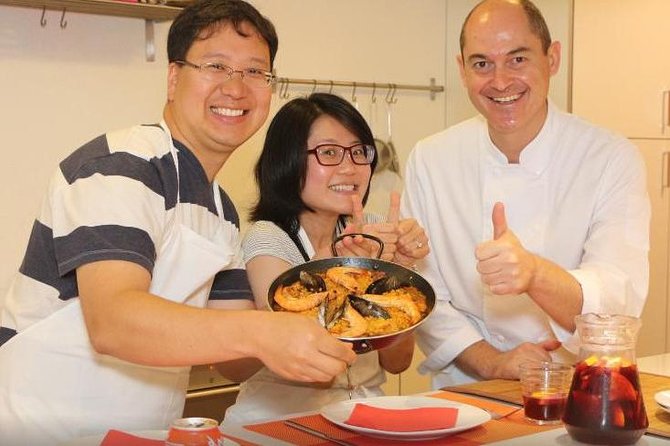
The morning meal centers on paella, with gazpacho as the starter and sangria alongside it. The chef explains the method, the ingredients, and the background of the dish while helping you avoid common mistakes. You should come away with enough understanding to try the recipes at home, not just a memory of having watched someone else cook.
Gazpacho is a practical dish to learn because it is simple to repeat once you understand the balance of ingredients. Paella is more of a project, but the class gives you a clear path through it. Several participants found the instructions manageable even if they were not expert cooks.
Sangria is prepared as part of the experience, and the drink helps turn the cooking into a shared lunch. The minimum drinking age is 18, so underage participants should not expect to take part in the alcoholic drink preparation or service.
More Paella Classes in Madrid
- Madrid: Paella and Sangria Workshop in the City Center
★ 4.9 · 1,264 reviews - Paella Workshop with Bottomless Sangria in Central Madrid
★ 5.0 · 763 reviews - Madrid: Paella and Sangria Workshop with Tapas
★ 4.9 · 128 reviews
Building an evening tapas meal
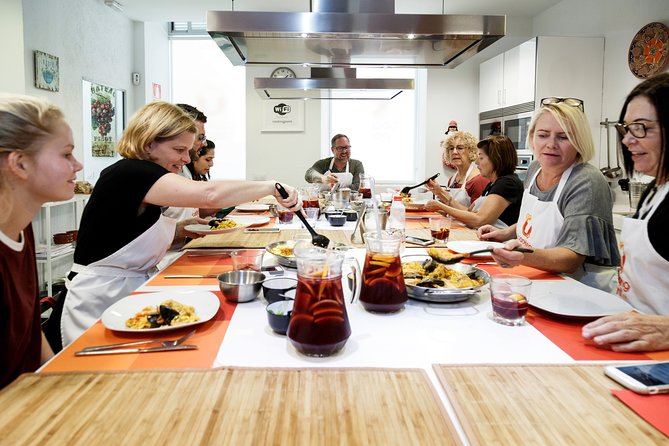
The evening class is less about one centerpiece dish and more about putting together a Spanish table. You may prepare a Spanish potato omelet, garlic shrimp, chorizo in cider, patatas bravas, tomato bread with ham, crema Catalana, and sangria.
This menu gives you several useful techniques in a single lesson. The potato omelet shows how a few basic ingredients can become a substantial dish. Patatas bravas introduce one of Spain’s best-known bar foods. Garlic shrimp and chorizo in cider bring stronger flavors, while tomato bread with ham offers a simple preparation that depends on good ingredients.
Crema Catalana gives the class a sweet finish and adds a technique beyond chopping and frying. One participant specifically appreciated learning custard-making and the traditional way of pouring cider. Those are the kinds of small details that can make a cooking class more memorable than a standard meal.
The tapas menu may be especially good for families and mixed groups. A six-year-old was able to enjoy the activity, and the range of dishes gives people different jobs and flavors to try. Still, the cooking involves shared kitchen work and an alcoholic drink, so adults should use their judgment about how much of the class younger children can handle.
What the chef adds
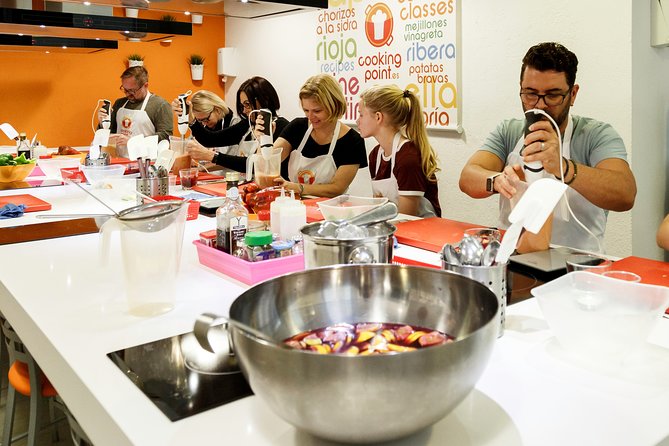
The chef makes or breaks a cooking class, and this experience has several named instructors associated with particularly warm, useful teaching.
Angel is described as funny, patient, and clear. He explains what the group will do, leads the market visit, and gives background on paella and Spanish food. Teresa is upbeat and enthusiastic, with a good balance of humor and practical instruction. Elisa is personable, funny, and well informed, while Eduardo is praised for his patience, cleanliness, and calm guidance.
The strongest part of the teaching style is that you are encouraged to cook rather than pushed aside. The chef prepares the room and ingredients, then lets the class do the work. At the right moments, the instructor suggests a correction or explains a technique.
That approach suits beginners, but experienced home cooks should find value too. You can ask questions about ingredients, Spanish eating customs, and recipe methods. The class is social, so conversation often extends beyond food into local culture and everyday life.
Because the group can have as many as 12 people, the amount of individual attention may vary. A smaller class can feel almost private, while a full session will be more communal. The pair system keeps everyone involved, but you should not expect a one-to-one chef lesson.
Eating together and taking the recipes home
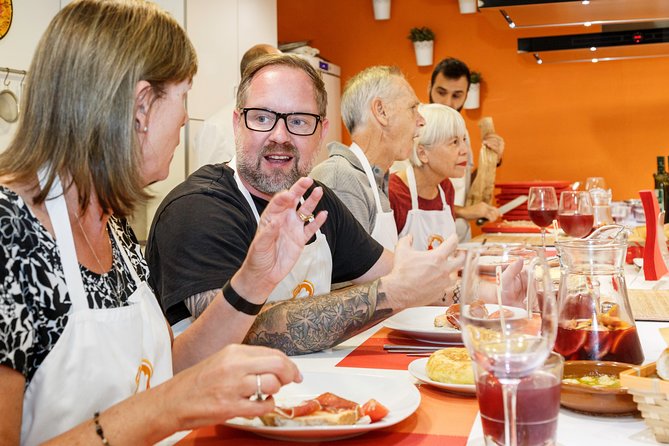
After the cooking is finished, you sit down with the class and eat the meal you prepared. This is more than a final tasting. It gives you time to compare results, talk with other people, and turn a kitchen lesson into a shared Madrid experience.
The food portions can be generous. Some people have had enough left over to take food away, though you should not book the class solely as a guaranteed takeaway meal. The main value is the meal at the end, along with the skills and recipes.
You receive a recipe booklet containing the dishes prepared during your session. That is a real advantage over a cooking class that ends when you leave the table. Gazpacho, tomato bread, and sangria are approachable recipes to try soon after returning home, while paella and crema Catalana give you more ambitious projects.
I would keep the booklet with your travel papers rather than burying it in a suitcase. The whole point is to use it while the flavors and techniques are still fresh in your mind.
Price, group size, and overall value
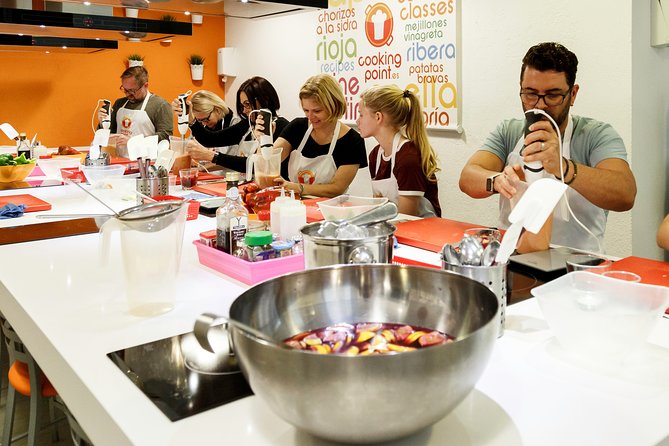
At $102.79 per person, the class costs more than simply ordering paella or tapas in Madrid. But the comparison is not quite fair. You are paying for roughly four hours, a local chef, instruction, ingredients, drinks, a shared meal, and a recipe booklet.
The group limit of 12 helps justify the price. You are not in a large demonstration where the chef cooks everything at the front. You work in pairs and handle the food yourself. For a couple, family, or small group looking for an activity as well as dinner, the price can make sense.
The value is strongest if you care about learning. If you only want to eat Spanish food, a market or tapas crawl will probably cost less and offer more choice. If you want a planned social activity with a meal built in, this class gives you more than a restaurant visit.
It is also a useful choice early in a Spain trip. Learning about tortilla, paella, patatas bravas, gazpacho, and local ingredients can help you recognize dishes during the rest of your visit. You begin to understand what you are ordering instead of treating every menu as a guessing game.
Who should book this class
I would recommend it to:
- Couples looking for a birthday or holiday activity
- Families who enjoy practical, shared activities
- Solo visitors comfortable being paired with another participant
- Beginners who want clear guidance
- Experienced cooks who enjoy learning regional techniques
- Anyone who wants a social meal rather than a formal food tour
The morning class is the better fit for paella fans, market lovers, and people who want a full lunch. The evening class suits you if tapas are your main interest and you want several small dishes rather than one central plate.
I would think twice if your schedule is packed, if you dislike group cooking, or if you are mainly seeking a quiet meal. Four hours is a serious block of time, and the social side is central to the experience.
Dietary requirements can be accommodated, but you need to provide them when booking. Do not wait until you arrive. The activity is conducted in English, which makes it a practical choice if you want detailed cooking explanations without a language barrier.
Cancellation is free if you cancel at least 24 hours before the local start time. Changes or cancellations inside that window are not accepted for a refund.
Should you book it?
Yes, if you want to learn Spanish cooking by doing it. The market visit, small group, patient chefs, drinks, and shared meal make this more personal than a basic cooking demonstration. The strongest choice is the morning paella class if paella is your priority.
Book the evening session if you want a wide sample of tapas and a relaxed dinner activity. Just check the menu before confirming, since paella belongs to the morning option rather than automatically appearing in both classes.
For me, the class offers good value for a special occasion or an early Madrid activity that shapes how you eat for the rest of your trip. It is not simply dinner, and it is not a private lesson. It is a friendly, practical introduction to Spanish food, with enough cooking in your hands to make the experience last after Madrid.
FAQ
Where does the cooking class begin?
The class begins at Cooking Point, Calle de Moratín 11, Centro, 28014 Madrid, Spain.
Where does the experience end?
The activity ends back at the same meeting point.
How long does the class last?
The experience lasts approximately four hours.
Is the class offered in English?
Yes. The class is offered in English and includes an English-speaking local chef.
What is included in the price?
The price includes the tapas or paella cooking class, drinks, a local guide, and a recipe booklet.
Does the morning class include a market visit?
Yes. The morning class includes a visit to a local market to shop for fresh ingredients.
Does the evening tapas class include paella?
The listed evening menu focuses on tapas and does not include paella. The morning class is the paella option, so check the session details carefully when booking.
Can dietary requirements be accommodated?
Yes. Dietary needs can be accommodated, but you must provide the information at the time of booking.
What is the minimum drinking age?
The minimum drinking age is 18.
How many people can join the class?
The class has a maximum of 12 participants.
Is hotel pickup included?
No. Hotel pickup and drop-off are not included. You need to reach the meeting point on your own.
What is the cancellation policy?
You can cancel at least 24 hours before the start time for a full refund. Cancellations or changes made less than 24 hours in advance are not accepted for a refund.
More Tapas Tours in Madrid
- Madrid: Small Group of Prado Museum Tour & Optional Tapas
★ 4.6 · 2,437 reviews - Madrid: Tapas & Wine Tasting Tour with Local Guide
★ 4.8 · 2,171 reviews - Madrid Tapas & Wine Tour with Rooftop Views and Local Guide
★ 5.0 · 2,047 reviews - Madrid by Night Small Group Tour: Stories, Sights and Tapas Bites
★ 5.0 · 1,956 reviews
Recently listed in Madrid
- Madrid: Don Quixote de la Mancha Windmills & Toledo Tour★ 4.9 · 254 reviews
- Tour Madrid: Secrets in a Electric Tuk Tuk★ 4.6 · 155 reviews
- Madrid: Toledo Day Trip with Winery Visit and Wine Tasting★ 4.4 · 177 reviews
- Madrid: Guided Tour of Toledo with Cathedral Visit★ 4.3 · 399 reviews
- Madrid: 6-Hour Day Trip to Toledo with Guided Walking Tour★ 4.0 · 865 reviews
- Madrid: Tasty Tapas Tour & Visit to a Terrace with Views★ 4.5 · 118 reviews
- Madrid: Flamenco Show&Drink at Tablao 1911 (World’s Oldest)★ 4.7 · 253 reviews
- Madrid: Street Art Tour with Local Graffiti Hunter★ 4.8 · 270 reviews
Tapas Tours, compared.
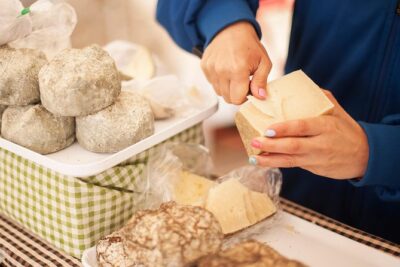
Montserrat Half-Day Tour with Tapas and Gourmet Wines
Read our review →
Montserrat & Cogwheel Train, Gourmet Wine Tasting & Tapas/Lunch
Read our review →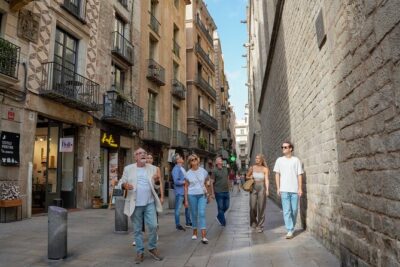
Barcelona Tapas and Wine Experience Small-Group Walking Tour
Read our review →
Montserrat with Black Madonna & Medieval Winery with Tapas/Lunch
Read our review →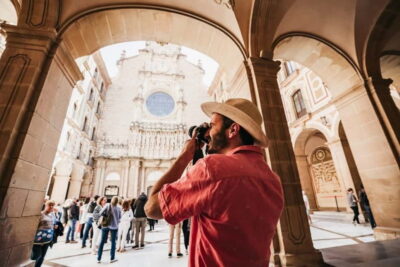
Montserrat and Winery Tour with Tapas or Lunch
Read our review →
Tapas Walking Tour with Food, Wine, and History
Read our review →
Sevilla Food Tour: Tapas, Wine, History & Traditions
Read our review →