
Reviewed · COOKING CLASSES
Madrid: Half-Day Spanish Cooking Class
Good food makes Madrid easier to understand. This four-hour class gives you a practical look at Spanish food culture while you cook a full meal with local chefs. I especially like the hands-on format, since you prepare the dishes instead of simply watching a demonstration, and the morning option adds a useful visit to a local market. The main consideration is the price: at $100 per person, it is not a cheap meal, though the ingredients, drinks, instruction, recipes, and lunch or dinner are included.
You choose between two distinct sessions. The morning class centers on paella, gazpacho, sangria, and market shopping. The evening class focuses on five tapas, Catalan crème, and sangria. Both are taught in English, and the cooking is done in pairs, so solo participants are matched with a partner.
In This Review
- Key points before you book
- Choosing between paella in the morning and tapas at night
- Starting at the market with paella ingredients
- Cooking paella, gazpacho, and sangria
- Making five tapas for an evening meal
- Why the chefs make such a difference
- Eating what you cook around a shared table
- What to expect from the kitchen and group setup
- Dietary needs, families, and practical limits
- Who will get the most from this class
- Should you book the Madrid cooking class?
- FAQ
- How long is the Madrid Spanish cooking class?
- What food do you make in the morning class?
- What food do you make in the evening class?
- Is the cooking class suitable for solo participants?
- Can food allergies and dietary requirements be accommodated?
- What is included in the $100 price?
Key points before you book
- The morning market visit adds real local context: You shop for ingredients before cooking and learn about products such as Spanish ham, seafood, and seasonal produce.
- You cook an entire meal: This is not a quick lesson followed by a tasting. You prepare the food from start to finish, then sit down and eat it.
- The evening menu is generous: Five tapas, a Catalan dessert, and sangria make this a full casual dinner rather than a small snack.
- The class suits beginners and families: Clear instructions, shared cooking, and an easygoing pace help children, first-time cooks, and experienced home chefs take part.
- The chefs are a major part of the experience: Angel, Eduardo, Teresa, Elisa, and Maria are praised for clear teaching, humor, patience, and warmth.
- Dietary needs can be accommodated: Food allergies, intolerances, and other requirements are accepted, but you should make them clear when booking.
Choosing between paella in the morning and tapas at night
The two options feel different enough that your choice should depend on the kind of Madrid memory you want.
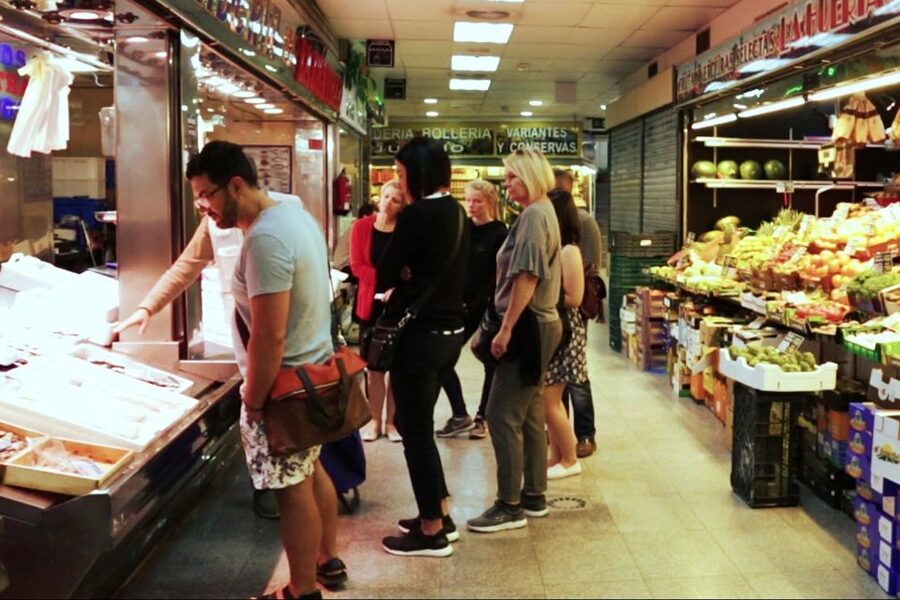
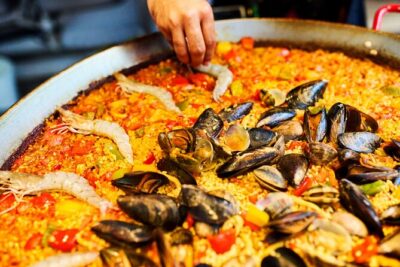
The morning paella class begins with a trip to a local food market. You shop for many of the ingredients that will later go into the meal, then return to the cooking school. The menu includes mixed chicken and seafood paella, gazpacho, and sangria. This option is the better pick if you want food shopping, Spanish ingredients, and a little more connection with daily life in Madrid.
The market is not just a place to collect groceries. The guide explains how local people shop and points out ingredients along the way. Eduardo has been praised for explaining the fish counter and the origins of the food, while another class included a useful lesson about Spanish hams. Angel has also shared practical cooking advice, including how to devein prawns.
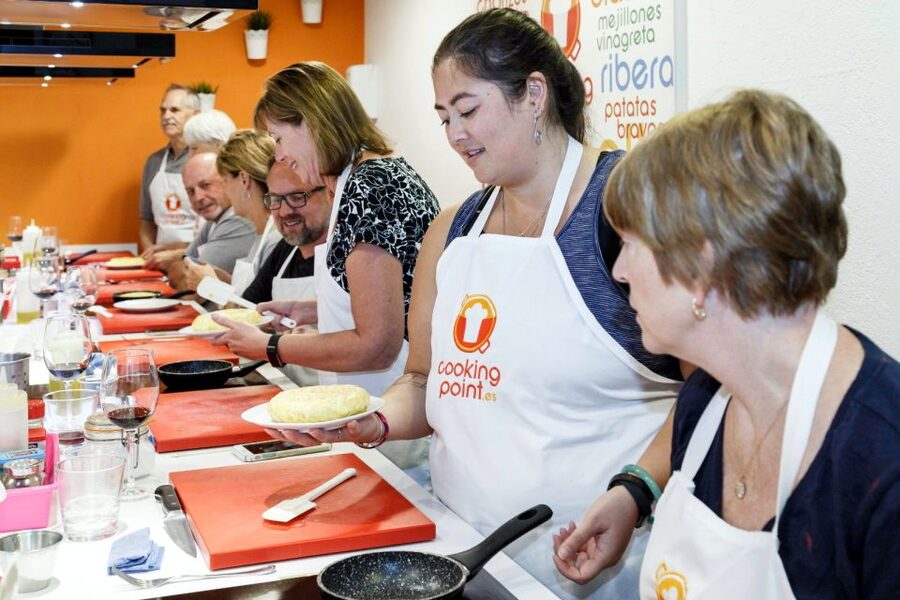
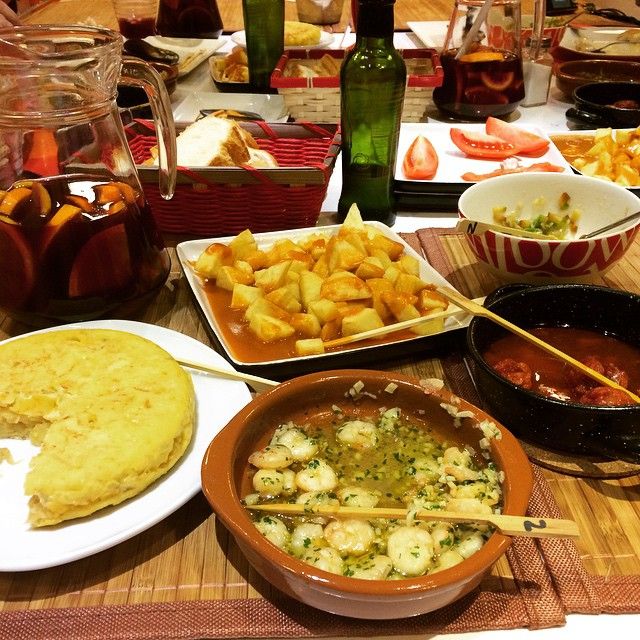
The evening tapas class is more direct. You meet at the cooking venue and prepare five familiar Spanish dishes, one dessert, and sangria. The tapas menu includes Spanish potato omelet, garlic shrimp, chorizo cooked in apple cider, patatas bravas, and tomato bread with ham. Dessert is Catalan crème.
If you want a relaxed dinner with plenty of variety, I would choose the evening option. You get to practice several different methods instead of concentrating on one large dish. If paella is the food you most want to master, choose the morning class. It also gives you the market visit, which is an important part of its value.
More Cooking Classes in Madrid
- Spanish Cooking Class Paella Tapas and Sangria in Madrid
★ 5.0 · 1,340 reviews - Paella Cooking Class in Madrid with Bottomless Wine Pairing
★ 5.0 · 985 reviews - Taste of Spain: Tapas Cooking Class with Bottomless Wine Pairing
★ 5.0 · 414 reviews
Starting at the market with paella ingredients
The morning session gives the class a natural rhythm. You begin outside the kitchen, looking at the ingredients as food rather than as a list of items on a recipe card. You then return to the school and turn those purchases into lunch.
That sequence matters. You see the products before learning how they are used, and the chef can explain Spanish shopping habits, seafood, ham, vegetables, and other ingredients in context. It is a small but useful window into everyday food culture.
The market portion does not replace the cooking lesson, so you still have most of the four-hour session for preparation and eating. I like this balance. Some food tours spend too much time walking and too little time doing. Here, the market is tied to the meal you are about to make.
The exact meeting point can vary with the option you select, so check your booking details carefully. Hotel pickup and drop-off are not included. You will need to make your own way to the meeting point and confirm the location before setting out.
Cooking paella, gazpacho, and sangria
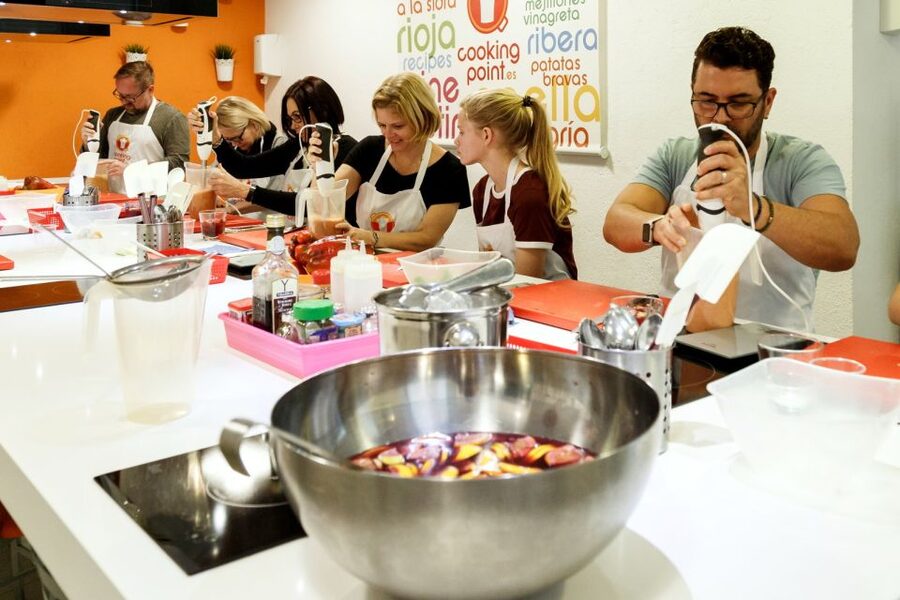
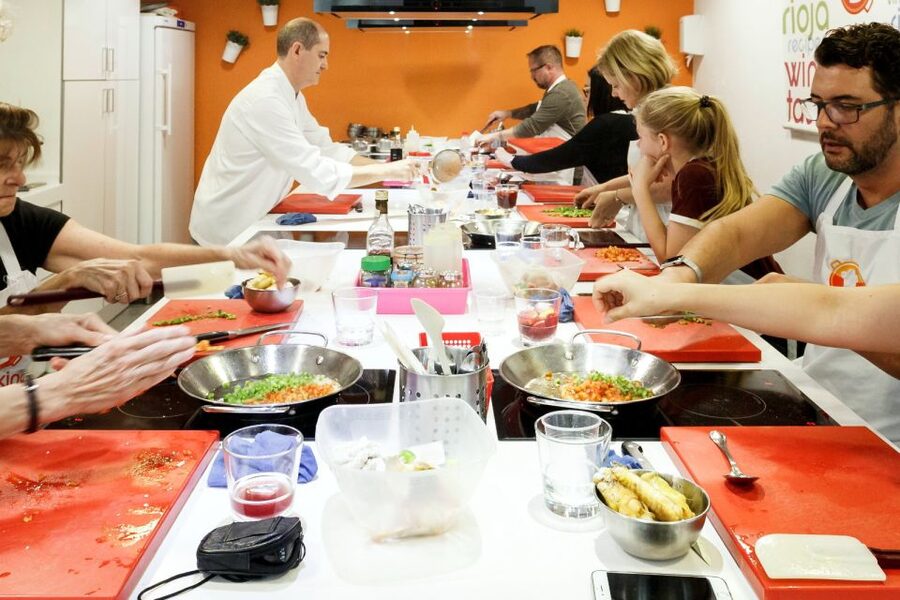
Back at the school, you work in pairs. The chef gives directions step by step, and you prepare the food rather than watching someone else do all the work. If you arrive alone, the provider assigns you a cooking partner, so you are still part of the process.
The paella menu gives you three different tasks. Paella requires attention to timing and ingredients, gazpacho involves balancing fresh flavors, and sangria adds a social element from the start. You should expect a substantial lunch at the end, not a small sample.
The class is designed for mixed ability levels. First-time cooks receive direct guidance, while more experienced cooks can pay closer attention to technique and Spanish cooking habits. The strongest praise goes to the chefs who demonstrate briefly, then let participants take over. That approach gives you enough help without turning the class into a performance.
Angel, Eduardo, and other instructors are repeatedly praised for clear explanations and a relaxed manner. Eduardo in particular is noted for keeping the class organized without making it feel rushed. That is important in a four-hour activity with several dishes on the schedule.
The class also provides a recipe booklet. You can take the recipes home and try them again, which improves the value of the experience. A cooking lesson is much more useful when you can recreate the meal after your holiday.
Making five tapas for an evening meal
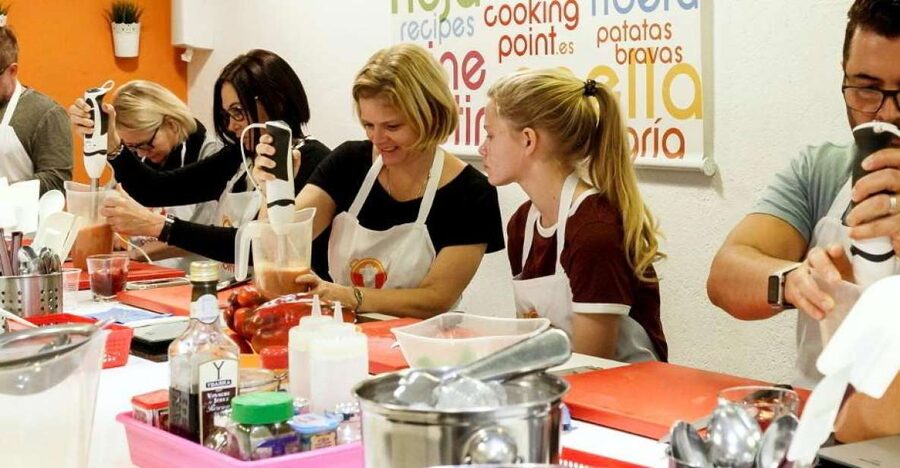
The evening session has the broadest menu. You prepare five tapas, a dessert, and sangria, then eat the meal together at the end.
Each tapa gives you a different lesson. The potato omelet teaches one of Spain’s best-known home dishes. Garlic shrimp brings seafood and seasoning into the mix. Chorizo in apple cider shows how a few bold ingredients can create a rich dish. Patatas bravas covers one of the country’s most familiar bar snacks, while tomato bread with ham keeps things simple and fresh.
This is a good menu for anyone who wants to bring Spanish cooking home. The dishes use ingredients and methods that do not require a professional kitchen, and participants have found the recipes approachable enough to repeat at home. You do not need previous cooking experience.
Catalan crème finishes the meal with something sweet. The menu is large for a four-hour class, but the session is structured so that several people can work at once. The cooking is done in pairs, which means you share tasks and equipment rather than working alone at an individual station.
The evening class also has a social advantage. You sit around the table with the people you cooked beside, share the food, and talk over drinks. Groups can include couples, families, solo participants, and people from different countries. The shared meal gives the class a friendly finish without requiring you to join a separate dinner afterward.
Same base, a different kind of afternoon:
- Madrid: Tour Bernabéu Entry Ticket
★ 4.5 · 21,573 reviews - Madrid: Prado Museum Entry Ticket
★ 4.6 · 17,509 reviews - Madrid: Royal Palace Fast-Access Admission Ticket
★ 4.6 · 13,856 reviews - Madrid: “Emociones” Live Flamenco Performance
★ 4.8 · 12,866 reviews
Why the chefs make such a difference
The food matters, but the instructor can make or break a cooking class. Here, the teaching style receives unusually strong praise.
Angel is often described as funny, patient, and clear. Eduardo is praised for his organization and explanations of Spanish food culture. Teresa is noted for her energy, humor, and ability to keep children and adults involved. Elisa has been appreciated for combining cooking instruction with stories about Spain. Maria is described as informative, patient, and amusing.
You should not assume you will receive a particular chef, since the instructor can vary by session. The consistent point is the teaching approach: explain the step, let you try it, correct you when needed, and keep the group moving.
The English instruction is another practical strength. You can ask questions and follow the directions without depending on translation. That makes a difference when several dishes are being prepared at once.
The class also appears to work well for families. A 14-year-old participant enjoyed the evening session, and families with young children found the instructions accessible. Kids may not care about the finer points of Spanish food history, but they can take part in mixing, chopping, assembling, and eating.
Eating what you cook around a shared table
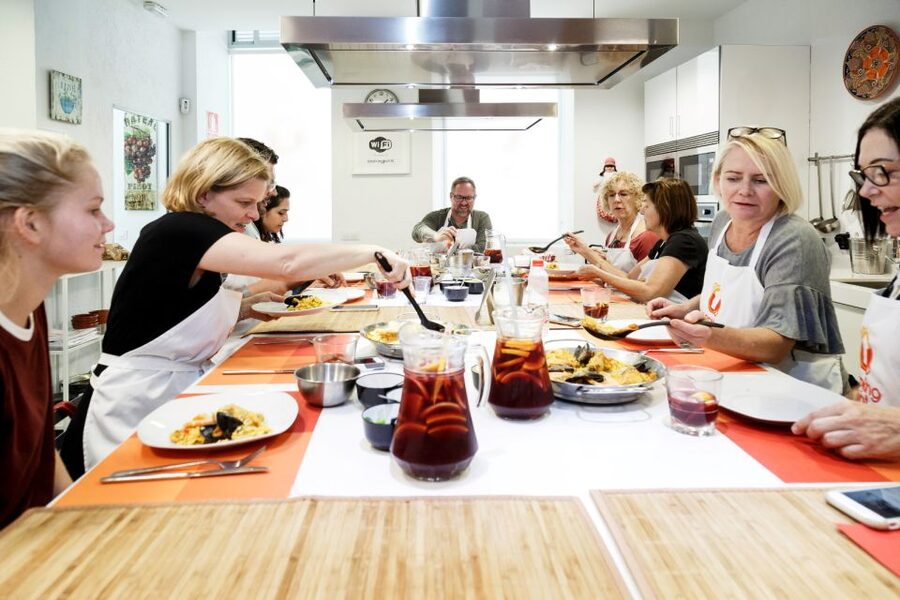
The best reward comes at the end. You sit down and eat the food you prepared, with drinks included.
That meal changes the mood of the class. You are not simply carrying a recipe booklet out the door. You have spent several hours working with other people, and the final dishes become a shared achievement. The sangria helps keep things sociable, while the food provides a proper lunch or dinner.
The amount of food is another reason the $100 price can make sense. The package includes ingredients, drinks, the recipe booklet, the market tour for the paella option, and the meal itself. At four hours, you are paying about $25 per hour before accounting for the meal and instruction.
That is still a significant expense, especially for a family. You could eat tapas or paella for less in Madrid. The extra cost pays for the teaching, preparation, kitchen use, market experience, and chance to make the dishes yourself. I think it is fair value for someone who enjoys cooking, but less appealing if you mainly want a cheap lunch.
What to expect from the kitchen and group setup
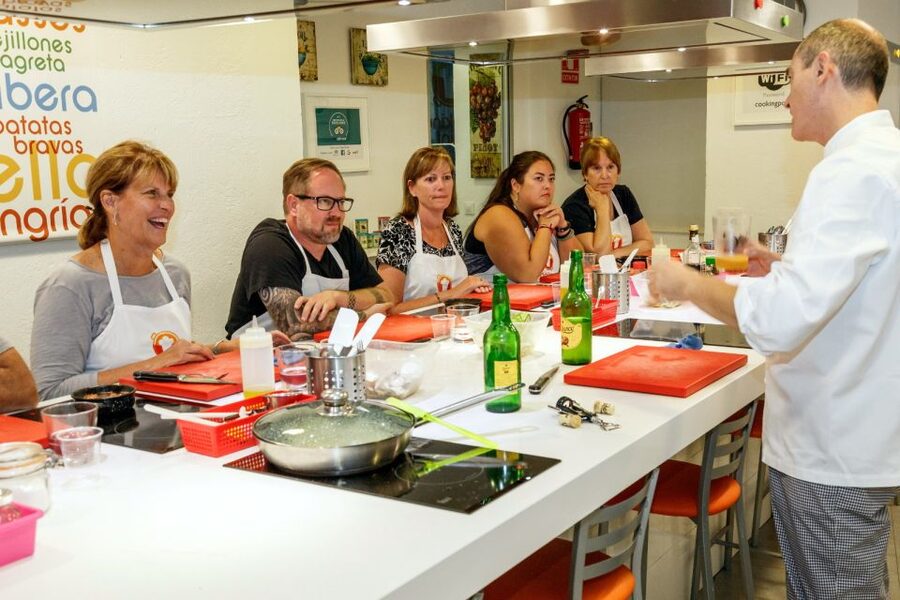
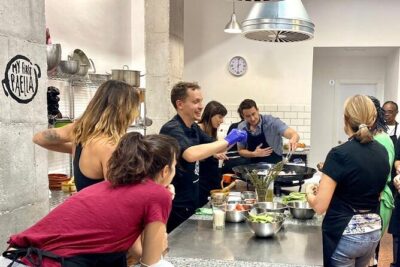
The cooking school is described as clean, comfortable, and well equipped. Participants have access to the tools needed for the recipes, and the class is organized so that pairs can work together.
You should expect a group activity, not private instruction. That brings energy and conversation, but it also means you will share the chef’s attention. People who want a quiet, one-on-one lesson may find the format less suitable.
The pair system helps keep everyone involved. If you are with a partner or friend, you work together. If you are alone, you are matched with someone else. This can feel slightly awkward for a minute, but it also makes it easier to meet people.
The four-hour duration sounds long on paper. In practice, the cooking, explanations, market visit in the morning, and shared meal fill the time. The class is not a quick tourist stop, so leave room in your schedule afterward. You may also want to avoid placing it immediately before another fixed appointment.
Dietary needs, families, and practical limits
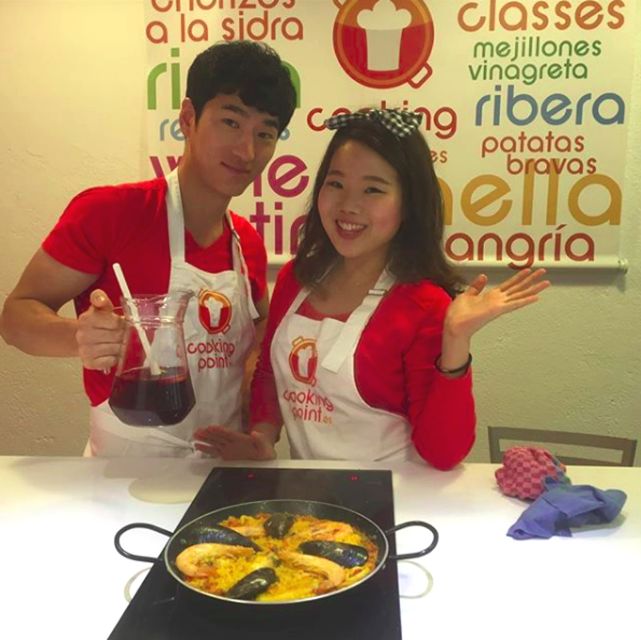
Food allergies, intolerances, and dietary requirements can be accommodated. Be precise about your needs when you reserve so the provider can plan the ingredients.
The class is family-friendly, but children still need to take part in a shared kitchen environment. The available information confirms that children have enjoyed the experience, though it does not specify a minimum age or particular child facilities. If you are booking for young children, confirm any age rules directly.
The class is taught in English. That makes it a straightforward choice for English-speaking visitors, and the chefs are praised for explaining steps clearly.
Meeting points vary by the option booked. Since hotel transport is not included, allow time to find the venue. Free cancellation is available up to 24 hours before the activity for a full refund, and you can reserve now and pay later. Those terms are useful if your Madrid schedule is still changing.
Who will get the most from this class
I would recommend the morning paella option to you if you:
- Want to visit a food market as part of the activity
- Care about Spanish ingredients and shopping habits
- Specifically want to learn paella
- Prefer a lunch activity
- Enjoy a slower food experience with cultural explanation
I would point you toward the evening tapas option if you:
- Want a full Spanish-style dinner
- Prefer learning several recipes in one session
- Like casual food and shared tables
- Are visiting Madrid as a couple, family, or solo participant
- Want recipes that are easy to repeat at home
Experienced cooks can enjoy the class, but it is particularly well suited to beginners. The chefs keep the instructions simple while adding useful technique and cultural context for people who already cook.
The main drawback is cost. The other is that the class is social by design. You may share a work area and partner with someone you have just met. For most people that is part of the fun, but it is worth knowing before you book.
Should you book the Madrid cooking class?
Yes, if you want to do more than eat Spanish food. The class gives you a meal, practical recipes, local food context, and several hours of relaxed participation. The market visit makes the morning session especially worthwhile, while the evening tapas menu offers the most variety.
At $100, I would not book it simply because you need dinner. I would book it because you want to learn, cook, meet people, and take a piece of Madrid’s food culture home. Choose paella for the market and the flagship Spanish dish. Choose tapas for a generous evening meal with more recipes.
FAQ
How long is the Madrid Spanish cooking class?
The activity lasts four hours. The morning paella option includes the market visit, cooking, and lunch. The evening tapas option includes cooking and dinner.
What food do you make in the morning class?
You prepare mixed chicken and seafood paella, gazpacho, and sangria. The class also includes a visit to a local market to shop for groceries.
What food do you make in the evening class?
You prepare five tapas: Spanish potato omelet, garlic shrimp, chorizo in apple cider, patatas bravas, and tomato bread with ham. You also make Catalan crème and sangria.
Is the cooking class suitable for solo participants?
Yes. Cooking is done in pairs, and a solo participant is assigned a cooking partner by the activity provider.
Can food allergies and dietary requirements be accommodated?
Yes. Food allergies, intolerances, and other dietary requirements can be accommodated.
What is included in the $100 price?
The price includes all ingredients and drinks, a recipe booklet, lunch or dinner, and the market tour when you choose the morning paella class. Hotel pickup and drop-off are not included.
Recently listed in Madrid
- Madrid: Don Quixote de la Mancha Windmills & Toledo Tour★ 4.9 · 254 reviews
- Tour Madrid: Secrets in a Electric Tuk Tuk★ 4.6 · 155 reviews
- Madrid: Toledo Day Trip with Winery Visit and Wine Tasting★ 4.4 · 177 reviews
- Madrid: Guided Tour of Toledo with Cathedral Visit★ 4.3 · 399 reviews
- Madrid: 6-Hour Day Trip to Toledo with Guided Walking Tour★ 4.0 · 865 reviews
- Madrid: Tasty Tapas Tour & Visit to a Terrace with Views★ 4.5 · 118 reviews
- Madrid: Flamenco Show&Drink at Tablao 1911 (World’s Oldest)★ 4.7 · 253 reviews
- Madrid: Street Art Tour with Local Graffiti Hunter★ 4.8 · 270 reviews
Cooking Classes, compared.
Barcelona Paella Cooking Class with Market Visit, Tapas & Sangria
Read our review →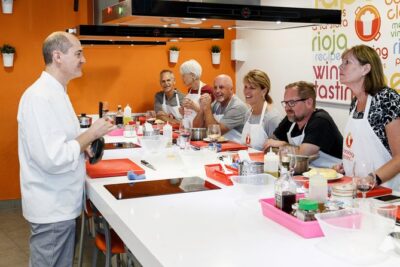
Spanish Cooking Class Paella Tapas and Sangria in Madrid
Read our review →
Paella Cooking Class, Wine Tasting & Central Market in Valencia
Read our review →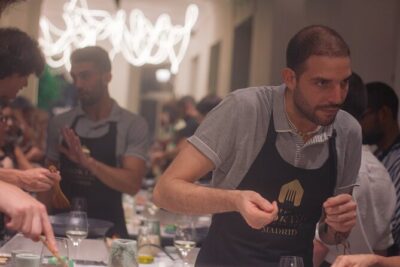
Paella Cooking Class in Madrid with Bottomless Wine Pairing
Read our review →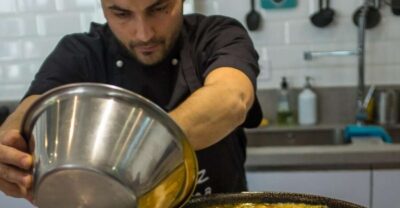
Valencian paella cooking class, tapas and visit to Ruzafa market.
Read our review →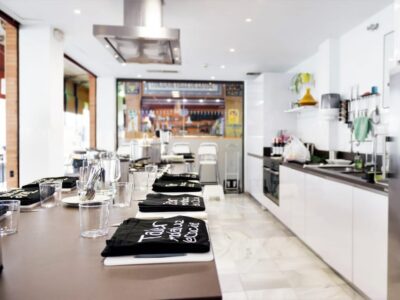
3.5-Hour Spanish Cooking Class & Triana Market Tour
Read our review →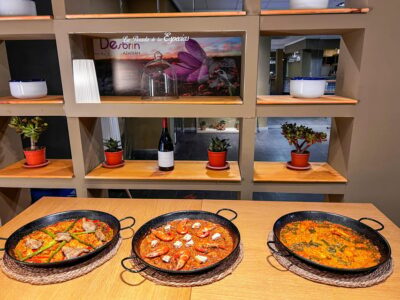
Browse the lists this tour appears in