
Reviewed · MUSEUMS
Guided Tour of the Factory + Anchovy Museum
Anchovies tell Santoña’s story. This small tour brings you close to the working canning process, then carries you into a playful museum built around the fishing and preserving traditions of Cantabria. I like the chance to see production while artisans are actually working, and I like that the low price includes an anchovy and wine pintxo. The main catch is timing: the live factory visit is offered only at 12:30 p.m. from Monday to Friday, and only when the working calendar allows it.
The tour is in Spanish, so language matters. One Dutch visitor found the visit difficult without English, while Spanish-speaking visitors praised the friendly staff and the clear look at how hard the work can be. You should also allow a little flexibility: the activity is advertised as 45 minutes, but the full museum description puts the visit at about one hour.
In This Review
- Key points to know before you go
- Meeting the cannery at C. Baldomero Villegas, 38
- Why the 12:30 p.m. factory visit matters
- Entering the museum beneath the seabed
- Hearing the Santoña fish market auction
- Seeing how an octavillo is made
- Following the anchovy from sea to jar
- The anchovy and wine tasting
- What the staff and language mean for your visit
- Choosing the right time and setting expectations
- Who will enjoy this $8 Santoña tour?
- Should you book the factory and museum visit?
- FAQ
- Where does the tour begin?
- How much does the tour cost?
- How long does the visit last?
- When can I see the factory working?
- Is the factory visit available every day?
- What language is the tour in?
- Is the visit wheelchair accessible?
- Is food included?
- Can I buy products after the tour?
Key points to know before you go
- Live factory work happens at 12:30 p.m. on weekday mornings: This is the most valuable part for many visitors, but it is not available every day or at every departure.
- The tour begins at C. Baldomero Villegas, 38: Look carefully for the address, since one visitor noted that the number 38 was not clearly marked on the street.
- The museum uses all five senses: You will hear auction sounds, see old fishing tools, smell the setting, taste anchovies, and handle or observe objects linked to the trade.
- A craftswoman demonstrates an octavillo: This traditional tin container shows how anchovies were packed before modern factory methods took over.
- The price is $8 per person: With a guided factory visit, museum tour, anchovy tasting, and wine pintxo, that is a strong value.
- Spanish is the only listed tour language: The visit is wheelchair accessible, but you should be comfortable following explanations in Spanish or arrange your own translation help.
Meeting the cannery at C. Baldomero Villegas, 38
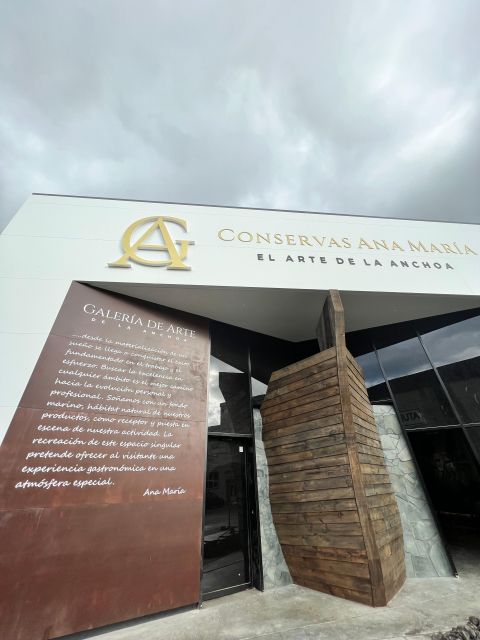
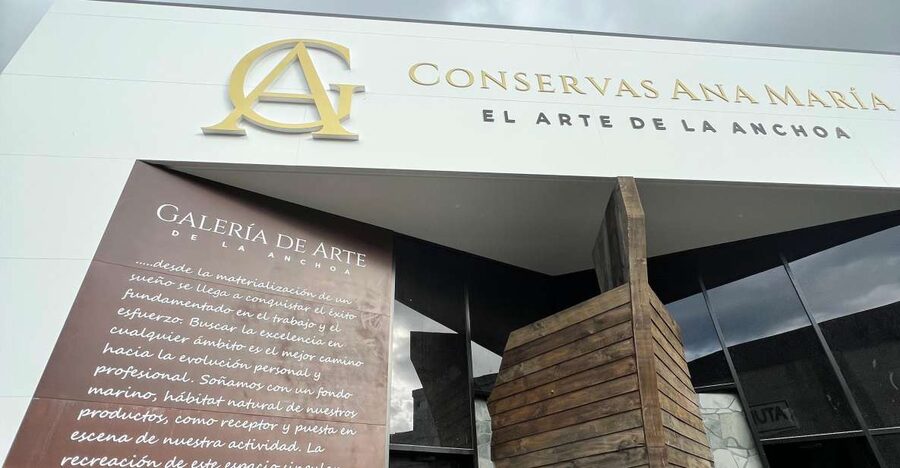
You meet at the entrance to the Ana María Canned Food Anchovy Art Gallery, also known as the Santoña Anchovy Museum. The address is C. Baldomero Villegas, 38, in Santoña.
Give yourself time to locate the entrance. A recent visitor specifically pointed out that the number 38 was not displayed clearly on the street. That is a small issue, but it can matter when you are standing outside a cannery and watching the clock.
The tour is run by Conservas Ana Maria S.L., the company connected with both the factory and the museum. The setting lets you see anchovies as more than a snack on a restaurant plate. Here, the fish is tied to local work, tools, processing methods, and the daily rhythm of a canning business.
The basic admission price is $8. That is modest for a guided activity, especially since the fee includes a tasting and the possibility of watching production. You are not paying only for a display of old objects. If you visit at the correct weekday time, you also see the current trade in action.
More Museum Tours in Spain:
- Madrid: Prado Museum Entry Ticket
★ 4.6 · 17,509 reviews - Barcelona: FC Barcelona Museum “Barça Immersive Tour” Ticket
★ 4.4 · 10,944 reviews - Madrid: Reina Sofía Museum Entrance Ticket
★ 4.5 · 6,889 reviews
Why the 12:30 p.m. factory visit matters
The live factory visit is the part you should plan around. It is available only in the morning at 12:30 p.m., Monday through Friday, and only when artisans are working according to the company calendar.
That restriction is important. A tour outside this window may focus on the museum rather than the live production floor. Check the date and starting time before booking if seeing the factory is your main reason for coming.
At the factory, you can observe the anchovy or bonito production process and hear an explanation of the steps involved. The tour connects the fish caught in the Cantabrian Sea with the finished jar or tin you eventually eat.
This is also where the visit gains its human scale. The work is not presented as an abstract industrial process. You see the hands-on side of preparing and preserving fish, and the staff explain the labor involved from fishing through final packing. One Spanish-speaking visitor especially appreciated learning how demanding the job is from the moment the boquerón, or anchovy, is caught until it reaches the table.
The factory portion is not a long technical lesson in machinery. It is a short, guided look at working production. That makes it useful for curious food lovers, families, and anyone who wants to understand the effort behind a local specialty.
If you want a quiet museum visit with no working activity around you, the weekday morning schedule may feel less convenient. If you want to see real production, though, this is the time to choose.
Entering the museum beneath the seabed
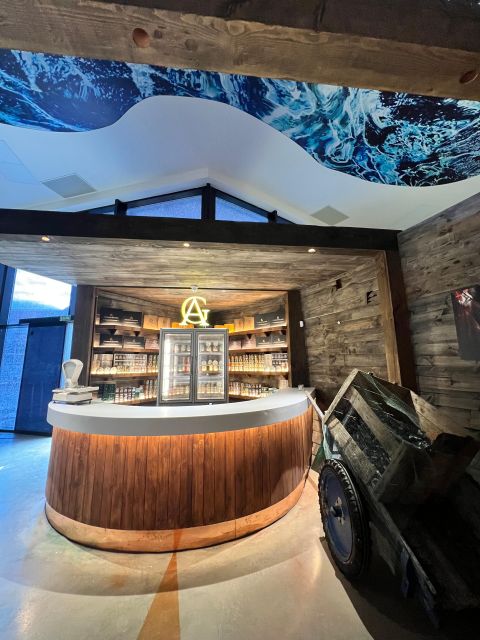
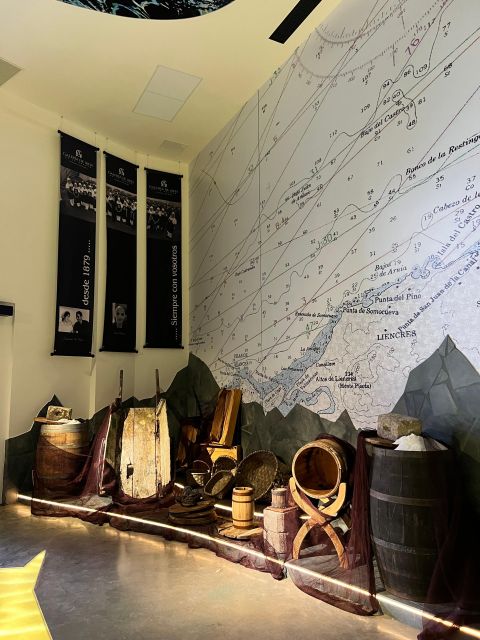
After the factory, you go to the Ana María anchovy art gallery. The building is designed to suggest the seabed, creating a more theatrical setting than a standard food museum.
The display even includes the remains of a stranded ship. The wreck gives the visit a little playful drama, especially for children, but it also fits the subject. Fishing is not treated as a detached business. The sea, boats, fish markets, tools, and preservation methods all form part of the story.
The museum aims for a total sensory visit. You hear sounds connected with the fish market, see historic tools, smell the setting, taste the product, and touch objects connected with the work. That approach is useful because anchovy production is a physical trade. The story is easier to grasp when it is not limited to wall panels.
The museum also includes utensils from the last century. These objects were used in fishing and preserving anchovies from the Cantabrian Sea. They offer a practical look at earlier working methods, rather than only showing polished finished tins.
I especially like this part for visitors who want context before tasting. A bite of anchovy means more after you have seen the equipment and heard how the fish moves from sea to container.
Hearing the Santoña fish market auction
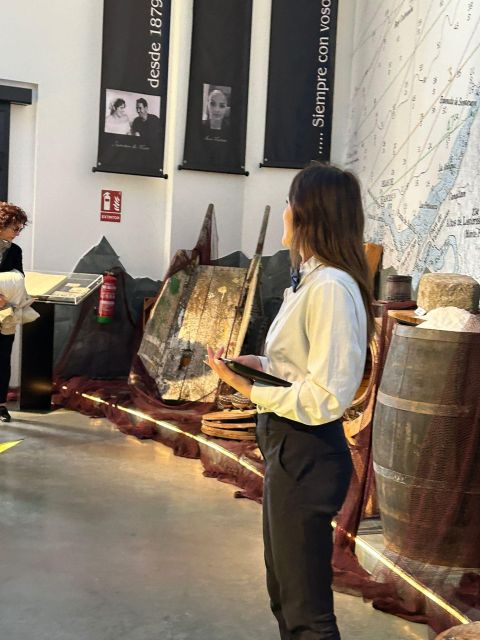
The guided tour begins with the sound of an auction. You hear the three sirens of the Santoña fish market, which signal that fish is about to be sold.
This is a smart opening because it places the anchovy within a local chain of work. The fish does not simply appear at the cannery. It arrives through fishing and the market, then continues through preparation and preservation.
The audio element also helps the museum feel active. You are not just looking at old tools in a quiet room. The sirens suggest the pace and noise of the fish trade, even though the tour itself remains short.
Your guide then leads you through the seabed display and the historic equipment. The exact amount of time at each section can vary, particularly because the listed duration is not fully consistent. The activity is promoted as 45 minutes, while the detailed museum program says the visit lasts about one hour.
For planning purposes, I would avoid scheduling anything immediately afterward. Think of this as a compact 45-minute to one-hour visit, especially if you want time for the tasting and shopping.
A few more Spain ideas to compare
- Santander: 1-Hour City Cruise Around the Bay
★ 4.4 · 579 reviews - El Capricho Entrance Ticket
★ 4.7 · 242 reviews - Santander: Picos, Santo Toribio Monastery and Potes Day Tour
★ 4.7 · 208 reviews - Cabarceno Natural Park Guided Visit from Santander
★ 4.0 · 161 reviews
Seeing how an octavillo is made
One of the most specific demonstrations is the making of an octavillo. This is the tin container traditionally used to preserve anchovies.
A craftswoman shows the process live. That demonstration gives you a close look at the practical side of packaging, and it helps explain why the container is part of the food tradition rather than a minor detail.
The octavillo also links old and current methods. The factory shows a working modern business, while the demonstration points to the craft skills that shaped anchovy preservation over time.
This is the sort of detail I value in a short tour. You do not need a long lecture to remember a traditional tin being made in front of you. The object gives the food story a clear shape.
If you are expecting a large industrial plant with an extended machinery tour, adjust your expectations. The visit is a guided introduction to the process, with the octavillo demonstration as one of its memorable hands-on moments.
Following the anchovy from sea to jar
The projection room provides the broader explanation. A video follows the anchovy from fishing at sea through preservation in a jar or can.
That sequence helps tie the separate parts together. The auction sounds explain the sale, the old tools show earlier methods, the factory reveals current work, and the film fills in the full path from catch to finished product.
I find this especially helpful if you are not familiar with anchovy preparation. The fish served in Cantabria is not just placed in a tin and sent out. It passes through a series of careful steps, and the tour shows you where those steps fit.
The company’s anchovies have received national and international awards for the best anchovy in the Cantabrian Sea in recent years. That does not mean you must prefer them to every other brand, but it does give the tasting a clear purpose. You are trying the product made by the same company whose work you have just seen.
The anchovy and wine tasting
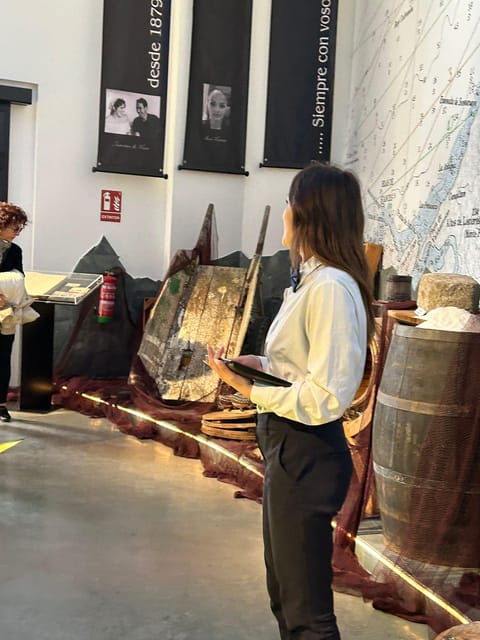
The visit ends with a tasting of Conservas Ana María anchovies. The included anchovy and wine pintxo adds a pleasant local touch, and it keeps the $8 admission from feeling like a simple museum entry.
The tasting is brief, but it completes the story. You have heard the market sirens, seen tools, watched the factory or the production explanation, and learned about the octavillo. Now you taste the finished result.
The wine pairing also gives the end of the tour a social feel. It is not a full meal, and you should not treat it as one. Think of it as a small sample that lets you judge the texture and flavor of the preserved anchovy for yourself.
Afterward, you can purchase products at the establishment. This is useful if you want to take home tins or jars connected directly with the visit. I would wait until after the tasting before deciding what to buy. You will have a better idea of what you actually enjoy.
What the staff and language mean for your visit
The strongest praise focuses on the staff. Spanish-speaking visitors repeatedly described the personnel as kind, attentive, and helpful. That matters in a small factory tour, where the guide and craftworker shape much of the experience.
The tour language is Spanish. There is no English option listed. One visitor from the Netherlands found the visit difficult because they could not speak English and the tour did not provide English explanations.
You can still get something from the visual parts if your Spanish is limited, particularly the factory activity, historic tools, film, and tasting. But the tour depends on spoken explanation, so Spanish speakers will receive the fullest version.
The language issue is not a minor footnote. It should be one of your main booking decisions. If you understand Spanish, the guide’s explanations add real value. If you do not, you may want to bring translation support and accept that some details will be harder to follow.
The site is wheelchair accessible, which makes it a practical choice for visitors who need step-free access. The supplied information does not specify details about individual room layouts, so you may still want to confirm any particular access needs before arrival.
Choosing the right time and setting expectations
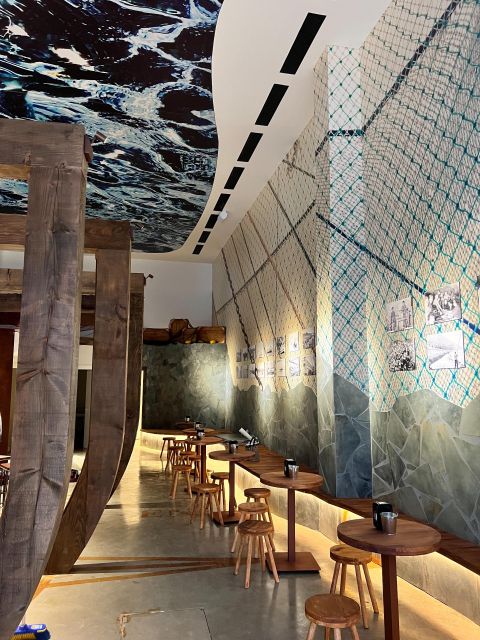
The live production schedule is the key practical point. Book the 12:30 p.m. weekday visit if you want to see artisans working. The factory activity depends on the working calendar, so even that time is subject to confirmation.
If your schedule does not fit Monday through Friday at 12:30 p.m., the museum portion may still be worthwhile. You can see the seabed-themed exhibition, hear the auction sounds, watch the preservation film, learn about the octavillo, taste anchovies, and shop for products.
The stated duration is short enough to fit into a day in Santoña. It also means you should not expect a full morning at the factory. The attraction is its focus: one local product, explained through work, objects, sound, and taste.
Reserve enough time to find the entrance at number 38. The unclear street numbering has caused at least one visitor some confusion. You can also cancel up to 24 hours before the visit for a full refund, and the reserve-now, pay-later option keeps your plans flexible.
Who will enjoy this $8 Santoña tour?
I would recommend this tour most strongly to:
- Food lovers who want to understand how anchovies are preserved and packed.
- Visitors interested in local work rather than only major monuments.
- Families who enjoy unusual displays, shipwreck remains, sounds, and a tasting.
- Spanish speakers who can follow the guided explanations in full.
- Shoppers looking for local food products to take home.
- Anyone traveling on a modest budget, since the admission includes several elements for $8.
It may be less satisfying if you want an English-language tour, a long factory visit, or a broad museum about all of Cantabria. The subject is narrow by design. You will spend your time on anchovies, bonito, fishing, preservation, and the Ana María business.
That narrow focus is also its strength. You leave with a clear understanding of one important local food instead of a quick skim across many unrelated subjects.
Should you book the factory and museum visit?
Book it if you can attend at 12:30 p.m. on a Monday through Friday and want to see live production. That timing gives you the fullest version of the tour, and the factory visit adds the most direct connection to Santoña’s anchovy trade.
At $8, the combination of guided explanations, museum displays, production viewing, an anchovy and wine pintxo, and shopping access is good value. The staff’s friendly manner is another reason to give it a place in your plans.
Skip it, or choose it with caution, if you need English explanations or have only a tightly scheduled afternoon. In that case, the language barrier and uncertain duration may take some of the pleasure out of the visit.
For Spanish-speaking food lovers, I would make this a smart short stop in Santoña. It is modest in scale, local in subject, and honest about the work behind a familiar little fish.
FAQ
Where does the tour begin?
It begins at C. Baldomero Villegas, 38, at the entrance to the Ana María Canned Food Anchovy Art Gallery, also known as the Santoña Anchovy Museum.
How much does the tour cost?
The price is $8 per person.
How long does the visit last?
The activity is listed as lasting 45 minutes. The detailed museum description says the visit lasts approximately one hour, so allow some flexibility.
When can I see the factory working?
The live factory visit is available at 12:30 p.m. from Monday to Friday, subject to the working calendar and the presence of artisans working at the factory.
Is the factory visit available every day?
No. The live production visit is only available on weekday mornings when the artisans are working.
What language is the tour in?
The live tour guide speaks Spanish. Spanish is the only language listed for the activity.
Is the visit wheelchair accessible?
Yes, the activity is listed as wheelchair accessible.
Is food included?
Yes. The visit includes an anchovy and wine pintxo, as well as a tasting of Conservas Ana María anchovies.
Can I buy products after the tour?
Yes. You can purchase products at the establishment at the end of the visit.
Recently listed in Spain
- Transfers From Cruise Port to Barcelona Airport★ 4.5 · 155 reviews
- Bohemian Barcelona Neighborhood Evening Tapas & Wine Tour★ 5.0 · 419 reviews
- Park Guell Guided Tour with Skip the Line Tickets★ 4.0 · 739 reviews
- Barcelona Sunset Cruise with Light Snacks and Open Bar★ 5.0 · 476 reviews
- Montserrat very early : Hiking, Abbey, very small group★ 5.0 · 127 reviews
- Barcelona: Sagrada Familia, Park Guell & Tapas Private Tour★ 5.0 · 903 reviews
- Authentic Flamenco Show Barcelona : Intimate Casa Sors Experience★ 5.0 · 809 reviews
- Barcelona Expert Tour with Local Guide in Eco Tuk Tuk Private★ 5.0 · 216 reviews
Museums, compared.

FC Barcelona Museum “Barça Immersive Tour” Ticket
Read our review →
Park Güell and Gaudí House Museum Entry Ticket
Read our review →
Puro Flamenco Show with Optional Museum Ticket
Read our review →
Girona & Dali Museum Small Group Tour with Pick-up from Barcelona
Read our review →
Oceanogràfic, Hemisfèric & Science Museum Combo
Read our review →Browse the lists this tour appears in