
Reviewed · HISTORICAL TOURS
Historical Italica: Half-Day Guided Tour from Seville
Ancient Rome is only 20 minutes from Seville. This half-day outing takes you to Italica, the Roman settlement often described as the first Roman city on the Iberian Peninsula, then adds a visit to the San Isidoro del Campo monastery. I like the remarkable floor mosaics and the chance to walk through upper-class Roman houses, and I like that round-trip transport and admission are included. The main drawback is timekeeping: late departures or extra pickup stops have occasionally shortened the visit.
The tour costs about $47.18 per person and runs for roughly four hours. That is fair value if you want context from a guide, a comfortable shared bus, and a second historic site without arranging transport yourself. Just bring water, sun protection, and identification, and keep some flexibility in your schedule if you have a train or another fixed appointment afterward.
In This Review
- Key points to know before you book
- Why Italica makes a smart half-day trip from Seville
- Walking into the Italica amphitheater
- Mosaic floors and the houses of Italica
- What a guide adds to old stones
- San Isidoro del Campo: worthwhile bonus or weak second act?
- Transport, group size, and the cost of convenience
- Heat, water, identification, and what to pack
- How much time do you really get?
- Who will enjoy this tour most?
- Should you book the Italica half-day tour?
- FAQ
- How long does the Italica tour last?
- What is included in the price?
- Are food and drinks included?
- Is the tour offered in English?
- How large can the group be?
- Can I cancel for a full refund?
Key points to know before you book
- Italica is close to Seville: The short shared transfer leaves more time for the archaeological site rather than spending half the day on the road.
- The mosaics are the star: The preserved Roman floor designs and large domus houses give you a clearer picture of daily life than a pile of disconnected ruins.
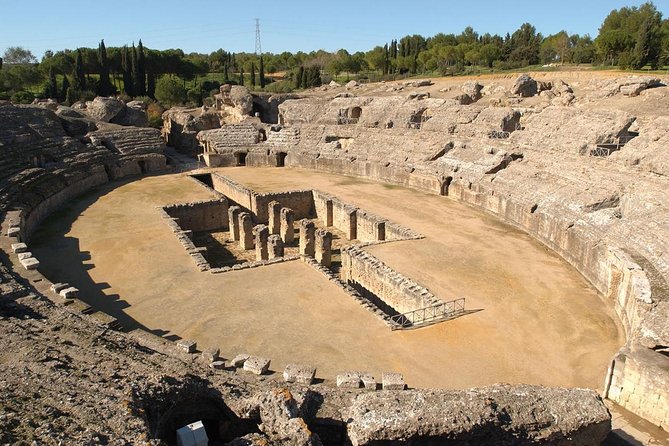
- The amphitheater is enormous: It was capable of holding about 25,000 spectators and includes tunnels beneath the remains.
- San Isidoro del Campo adds an unexpected second stop: The monastery brings medieval religious art and history into a Roman-focused outing.
- Guide quality can shape the day: Guides such as Jesús, Rebecca, Miguel, Leon, Juanra, Alberto, and Catherine have received especially warm praise for clear explanations and lively storytelling.
- Plan for heat and delays: Italica is largely open-air, food and drinks are not included, and late departures have caused trouble for people with tight return plans.
Why Italica makes a smart half-day trip from Seville
Seville offers more than enough to fill several days, but Italica gives you a change of scale. Instead of another palace, church, or tiled courtyard, you walk through the remains of a Roman city spread across an archaeological site just outside town.
The short drive matters. You get a real historical excursion without giving up a full day to transport. The round-trip shared transfer also removes the need to work out the route yourself, which is useful if you want a simple outing in English.
The site is especially good for people who enjoy Roman history and archaeology. It is not a polished reconstruction. Excavation remains incomplete, and some areas are still being worked on. That unfinished quality helps you see archaeology as an ongoing process rather than a neatly packaged ancient theme park.
The visit has earned a 4.7 rating from 416 reviews, with 93 percent recommending it. Those numbers fit the strongest pattern in the feedback: Italica itself is considered well worth seeing, and the guide can make the difference between looking at stones and understanding a city.
More History Tours in Seville
- Sevilla Food Tour: Tapas, Wine, History & Traditions
★ 5.0 · 3,468 reviews - Ultimate Seville Tapas, Wine & History Small Group Tour
★ 5.0 · 1,766 reviews - Seville: Tapas, Taverns, and History Walking Tour
★ 4.9 · 676 reviews
Walking into the Italica amphitheater
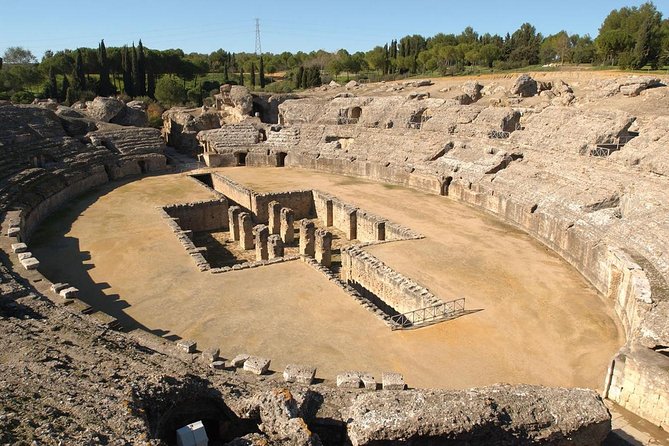
The main stop lasts about two hours and includes admission. The amphitheater is the natural anchor for the visit. Its size is immediately impressive, and the remains give you a sense of how public entertainment worked in the Roman world.
The amphitheater was capable of holding around 25,000 spectators and was considered one of the largest in the Roman Empire. You can also walk into tunnels beneath the surviving structure, a detail that makes the building easier to picture as a working venue rather than a silent ruin.
Be aware of the wording used for the site. Some descriptions refer to a Roman theater, while the itinerary centers on the amphitheater. They are not the same type of building. The amphitheater is the large oval arena associated with spectacles, while a theater is designed for staged performances. Some people have found that the theater and baths were not covered during a particular visit, so you should ask your guide at the start which areas are included that day.
That small question can save disappointment. The amphitheater is the major sight, but Italica contains more than one important structure.
Mosaic floors and the houses of Italica
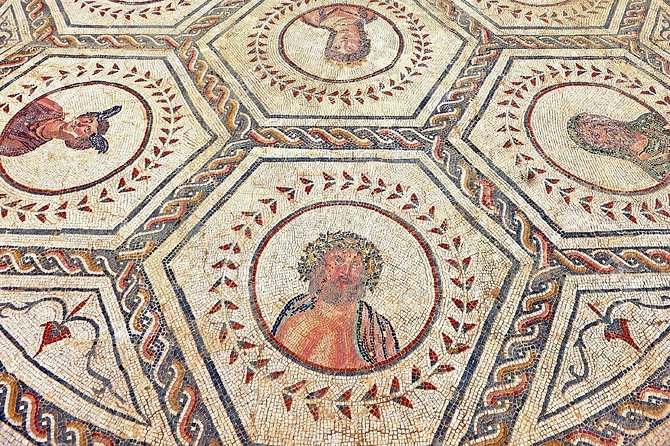
For many people, the mosaics are the finest part of the outing. These are not just scraps of colored stone. Several floors preserve detailed patterns that reveal the wealth and taste of the people who lived in the larger houses.
The domus houses were homes for the upper classes. Their size and decoration help explain the social gap within the Roman city. I find this more useful than hearing only dates and emperors because the houses show how status appeared in everyday surroundings.
The mosaics also reward a slower pace. You may want to take photographs or return briefly to a floor that caught your eye. Some guides allow free time after the main explanation, which is valuable in a large group. It gives you a chance to look without having to keep your attention fixed on the guide every second.
Look closely at the designs and the layout of each house. You might find that the best part is not one famous pattern, but the way several rooms, courtyards, and decorated floors fit together. The remains let you imagine movement through a Roman home, from public areas to more private spaces.
What a guide adds to old stones
A self-guided visit can show you the outlines of streets and buildings. A good guide explains what those outlines mean. The strongest feedback names Jesús, Rebecca, Miguel, Leon, Juanra, Alberto, Inez, and Catherine for their clear delivery, enthusiasm, or ability to bring ordinary Roman life into focus.
Alberto, in particular, was praised for turning the city into a story rather than a collection of facts. Jesús received strong marks for both Roman history and the monastery, while Rebecca was appreciated for pointing out details that could easily be missed. Leon was praised for making a large group feel included and for allowing time to explore independently.
Guide quality is not perfectly consistent. One English-language guide was difficult for some people to understand, and another tour had to combine English and Spanish when a guide failed to arrive. There was also a complaint about a bilingual English and French explanation at the monastery, despite the tour being sold in English.
You should expect an English tour, but the exact guide and group arrangements can vary. If precise historical language matters to you, pay attention to how the guide handles names and explanations. One particularly critical assessment found some historical accounts too simplified, including the Roman arrival in Spain and the later Reconquista. I would treat this as a general sightseeing introduction, not an academic seminar.
That distinction is important. The tour can give you a strong framework, but you should not expect every political or cultural issue to receive full historical nuance.
Same base, a different kind of afternoon:
- Seville: Royal Alcázar Entry Ticket
★ 4.6 · 28,378 reviews - Seville: Cathedral and La Giralda Entry Ticket
★ 4.5 · 24,592 reviews - Seville: Live Flamenco Dancing Show Ticket at the Theater
★ 4.7 · 16,396 reviews - Seville: Casa de la Memoria Flamenco Show
★ 4.8 · 12,964 reviews
San Isidoro del Campo: worthwhile bonus or weak second act?
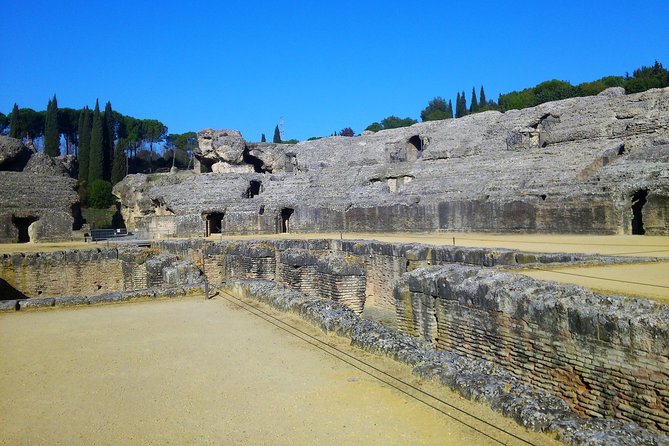
The monastery visit lasts about an hour and includes admission. San Isidoro del Campo is a former fortress monastery, and its buildings add a different layer of Spanish history to the day.
This stop can be a pleasant surprise. Several guides have given the monastery a detailed explanation, and some people enjoyed its art and religious history as much as the Roman ruins. It is also a place you might not think to visit on your own while planning a Roman site excursion.
The appeal depends on your interests and your itinerary. If you enjoy churches, monasteries, art, and medieval history, the extra stop adds value. If you have already visited several cathedrals and religious buildings in Spain, it may feel like an unnecessary detour after the main event.
That split is clear in the feedback. One person called the monastery boring compared with Italica, while another described it as beautiful and well explained. I would not book this outing solely for San Isidoro del Campo. Think of it as an included bonus that may broaden the day, not as an equal partner to the Roman site.
Transport, group size, and the cost of convenience
At about $47.18, the price covers a professional guide, shared round-trip transport, admission, and taxes. Food and drinks are not included.
You could potentially reach Italica independently for only a few euros by commuter bus, according to one detailed assessment. That makes the guided option more expensive than simply getting there. The extra money pays for transport coordination, admission, and interpretation, not for luxury.
The bus has been described as clean and comfortable, and the short ride keeps the outing efficient. The maximum group size is 60, which is large enough to affect the feel of the visit. In practice, the company may divide people into language groups, and English, Spanish, and French groups have been used.
A large group is not automatically a problem. Strong guides have kept people involved and allowed free time for photographs. Still, you may need to stay close and listen carefully, especially outdoors where sound can scatter.
The largest practical concern is punctuality. Some departures have been delayed by around 30 minutes, and multiple pickup points have caused slow returns. That is not a minor issue if you have a train, timed entry, or dinner reservation soon after the stated end of the tour. Leave a buffer.
Heat, water, identification, and what to pack
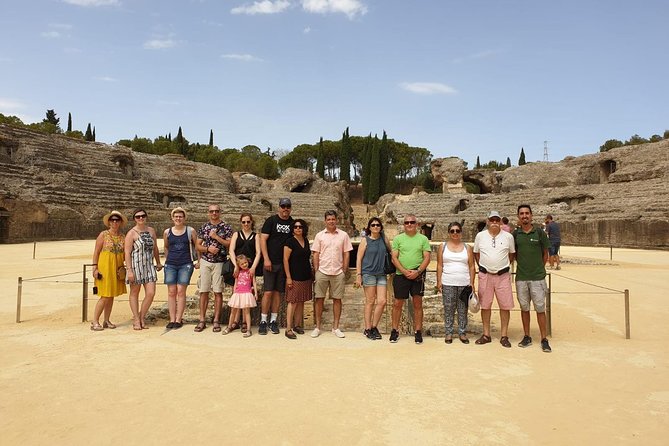
Italica is an open archaeological site, so weather affects the experience. August can be very hot, with little shade in some areas. On a hot day, people may find themselves moving from one patch of shade to another.
Bring more water than you think you need. The official inclusions do not cover food or drinks, and one person became light-headed after expecting refreshments that were not provided. The safest approach is simple: carry your own water and a snack.
Useful items include:
- Water
- Sun cream and a hat
- Comfortable walking shoes
- A phone or camera
- Identification
Identification deserves special attention. One person was not told to bring ID and only had passport images saved on a phone. Since identification requirements can matter at admissions or during organized transport, carry the required document or confirm the current instruction before departure.
Most people can participate, and the tour is near public transportation. The provided information does not give a detailed accessibility assessment, so anyone with mobility concerns should ask the operator about surfaces, walking distances, and assistance before booking.
How much time do you really get?
The advertised duration is about four hours. The listed site visits total roughly three hours, with the remaining time used for the transfer between Seville, Italica, and the monastery.
A smooth outing can fit the plan well. One reported schedule ran from around 10 a.m. until 3 p.m., though actual timing can vary. At Italica, two hours is enough to see the main structures and mosaics with a guide, especially because the site is close to Seville.
The schedule becomes less comfortable when the bus starts late. A delayed departure may force the guide to shorten explanations or rush the return. If you have a hard deadline, an independent visit may give you more control, though it will not provide the same on-site interpretation.
I would avoid booking this on the same day as a train unless you have generous spare time. The tour is best placed on a day when you can absorb a delay without turning a good morning into a scramble.
Who will enjoy this tour most?
I would recommend it to:
- People with a real interest in Roman history
- First-time visitors to Seville who want a nearby excursion
- Anyone who prefers explanations while looking at ruins
- Solo visitors who like the ease of joining a group
- People who want both Roman archaeology and a medieval monastery
- Visitors who do not want to arrange transport independently
It may be less suitable if you already have strong academic knowledge of Roman Spain and want detailed debate rather than a broad introduction. It may also disappoint you if your only goal is the amphitheater and you dislike religious buildings.
Families and older visitors may appreciate the short transfer, but heat, uneven archaeological surfaces, and group walking pace still matter. Check the physical requirements if anyone in your party has limited mobility.
Should you book the Italica half-day tour?
I would book this tour if you want an easy, guided visit to Italica and value having transport, admission, and historical explanation handled together. The mosaics, domus houses, and huge amphitheater justify the trip, while the monastery gives you an extra hour of Spanish history.
I would skip it in favor of independent transport if you already know the subject well, want to control every minute, or have a tight afternoon schedule. You can save money by taking public transport, but you will need to provide your own interpretation on site.
For most visitors, the tour is good value at $47.18, provided you pack water and allow extra time for delays. Book at least a day ahead if your plans change easily, since cancellations are free only up to 24 hours before the start time. The minimum group requirement also means the operator may offer a different date or experience if the outing is canceled.
FAQ
How long does the Italica tour last?
The experience lasts about four hours, including shared transfers from Seville and visits to Italica and San Isidoro del Campo.
What is included in the price?
The price includes a professional guide, round-trip shared transfer, admission tickets, and taxes.
Are food and drinks included?
No. Food and drinks are not included, so you should bring your own water and anything you may need during the outing.
Is the tour offered in English?
Yes. The experience is offered in English, although language group arrangements can vary when English, Spanish, or French groups are operating together.
How large can the group be?
The activity can have a maximum of 60 participants. Groups may be divided by language.
Can I cancel for a full refund?
Yes, if you cancel at least 24 hours before the experience start time. Cancellations or changes made less than 24 hours ahead are not accepted for a refund.
Recently listed in Seville
- White Villages and Ronda: Day trip from Seville.★ 4.7 · 171 reviews
- Private Guided Day Trip to the White Villages and Ronda from Seville★ 5.0 · 158 reviews
- Private personalized Seville street tour of 2.5 hours★ 5.0 · 116 reviews
- White Villages and Ronda Day Trip from Seville★ 5.0 · 295 reviews
- White Villages and Ronda Day Trip from Seville★ 4.0 · 142 reviews
- Cathedral of Seville English Guided Tour with Skip the Line & Access to Giralda★ 4.5 · 139 reviews
- Alcazar of Seville with Cathedral & Giralda English Tour★ 4.5 · 661 reviews
- Skip the Line: Tablao Flamenco Pura Esencia Ticket★ 5.0 · 735 reviews
Historical Tours, compared.
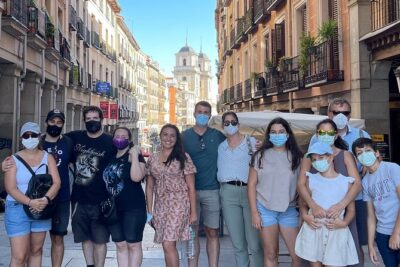
Madrid Essential: Historic Center, Plaza Mayor & Royal Palace
Read our review →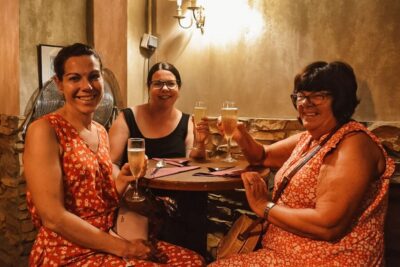
Tapas Walking Tour with Food, Wine, and History
Read our review →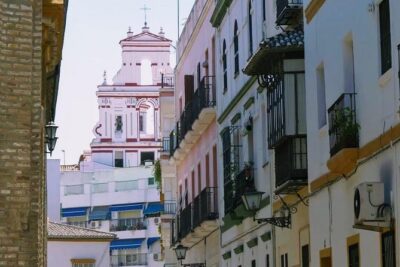
Sevilla Food Tour: Tapas, Wine, History & Traditions
Read our review →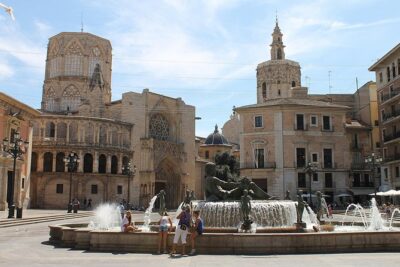
Valencia Old Town Tour with Wine & Tapas in 11th Century Historic Monument
Read our review →
Barcelona Tapas Walking Tour: Food, Wine & History
Read our review →
Ultimate Seville Tapas, Wine & History Small Group Tour
Read our review →
Skip-the-Line Great Mosque-Cathedral History Tour
Read our review →
Browse the lists this tour appears in