
Reviewed · 1-DAY TOURS
Madrid: Avila and Segovia Day Trip with Tickets to Monuments
Two great cities, one very full day. This $74 day trip from Madrid packs Ávila and Segovia into nine hours, with transport, a guide, monument tickets, headphones, an aperitif, and a drink included. I like the way it gives you both a fortified medieval city and a Roman-and-royal city without making you arrange several complicated connections yourself. I also like the strong guiding, with guides such as Beatrice, Carlos, David, Oscar, Rafa, and Laura praised for clear explanations, good pacing, and lively stories.
The tradeoff is simple: free time is limited, especially in Segovia. You will see major sights rather than linger over lunch, shop at length, or wander every side street. Expect a lot of walking, uneven medieval streets, and a schedule that rewards people who want a broad first look rather than a slow, independent visit.
In This Review
- The key points at a glance
- Why these two cities make a good pair
- Meeting in Madrid and setting out
- Ávila’s walls and a city shaped by faith
- Saint Teresa’s church and the included Ávila admission
- Segovia begins with the Roman aqueduct
- The Lady of the Cathedrals
- Entering the Alcázar of Segovia
- The walking load and the pace
- Guides, headsets, and how much context you get
- What the $74 price really covers
- Who should book this day trip?
- Practical verdict: book it for breadth, not lingering
- FAQ
- How long does the day trip last?
- Where does the tour begin and end?
- How long is the journey from Madrid to Ávila?
- How long is the return journey from Segovia to Madrid?
- Are monument tickets included?
- Is lunch included?
- Are drinks included?
- What languages are available?
- Is transportation included?
- Is the tour suitable for wheelchair users?
The key points at a glance
- Ávila’s complete medieval walls: See one of Spain’s best-preserved fortified city centers, with the massive 11th-century circuit forming the city’s unmistakable profile.
- Saint Teresa’s birthplace: Enter the 17th-century church-convent built by the Discalced Carmelites on the traditional site of Teresa of Ávila’s birth.
- A Roman engineering marvel: Segovia’s aqueduct is not a ruin tucked away in a museum. It runs directly through the city and remains its central symbol.
- Three major Segovia admissions included: Your ticket covers the cathedral and the Alcázar, along with the Basilica of San Vicente in Ávila and Saint Teresa’s church.
- Comfortable long-distance transport: The air-conditioned coach includes WiFi, and several departures have used clean, modern double-decker buses with charging points.
- Best for first-time visitors: You get structure, historical context, and easy transport, but less independent time than you would have on separate day trips.
Why these two cities make a good pair
Ávila and Segovia are close enough to visit from Madrid, but they feel quite different. Ávila is a walled medieval religious center, shaped by stone fortifications, churches, and the life of Saint Teresa. Segovia mixes Roman engineering, a Gothic cathedral, and a fairy-tale castle above the meeting point of two rivers.
That contrast gives the day a pleasing rhythm. In the morning, you focus on walls, Romanesque buildings, and religious history. In the afternoon, you move into Segovia’s grand public spaces and royal architecture. I find that pairing more satisfying than spending nine hours in places that all tell the same story.
The coach ride matters here. Driving from Madrid to Ávila takes about an hour, and the return from Segovia takes roughly 70 minutes. Those are useful stretches to rest, especially after walking through stone-paved streets. The bus has been praised for being quiet, roomy, clean, and comfortable, although WiFi can be patchy.
A few more Madrid ideas to compare
- Madrid: Tour Bernabéu Entry Ticket
★ 4.5 · 21,573 reviews - Madrid: Prado Museum Entry Ticket
★ 4.6 · 17,509 reviews - Madrid: Royal Palace Fast-Access Admission Ticket
★ 4.6 · 13,856 reviews
Meeting in Madrid and setting out
The day begins at Fun and Tickets on San Bernardo, 7. The meeting point is central, but you should arrive with enough time to identify the correct departure group. A few people found the early wait outside chilly, and clearer signs for different destinations would have helped.
Bring a phone with your booking details, comfortable shoes, and clothing suited to the forecast. The trip runs in both Spanish and English, and headphones with a radio guide help you hear the guide while walking through busy squares or spread-out historic areas.
The company sometimes divides the larger party into smaller walking groups. That is a useful arrangement because it lets the guide explain details without having to shout across a huge crowd. One English-language group was reported at 13 people, though group size can vary.
Ávila’s walls and a city shaped by faith
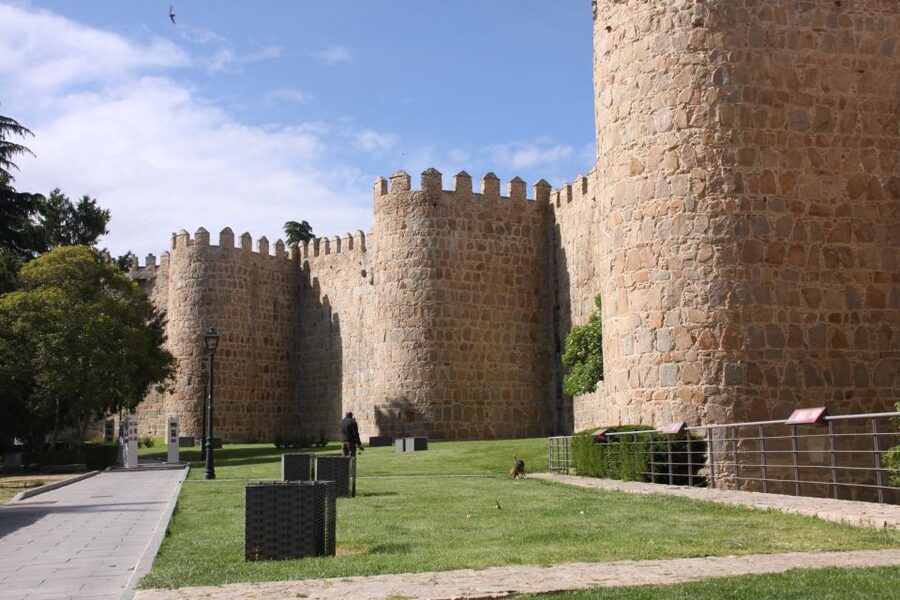
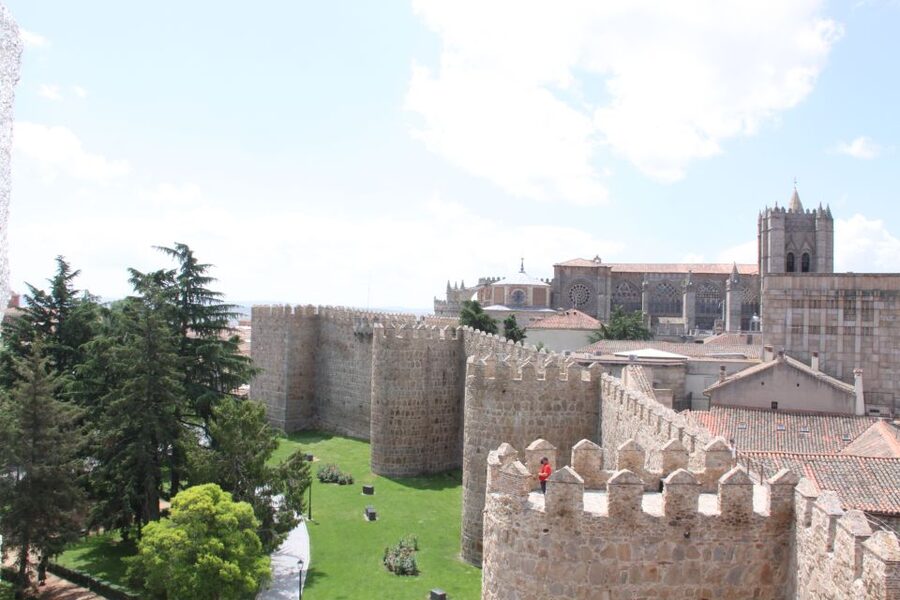
Ávila makes its first impression before you enter it. The 11th-century walls surround the old city with a remarkably complete ring of towers and battlements. They are among the most intact fortifications in Spain, and the tour uses them as the main introduction to the city.
You will not simply be pointed toward the walls for a photo. The guide explains how the fortifications shaped Ávila’s identity and protected its religious and civic center. From street level, the scale is impressive. The pale stone, repeated towers, and compact old town create a strong sense of stepping into another period.
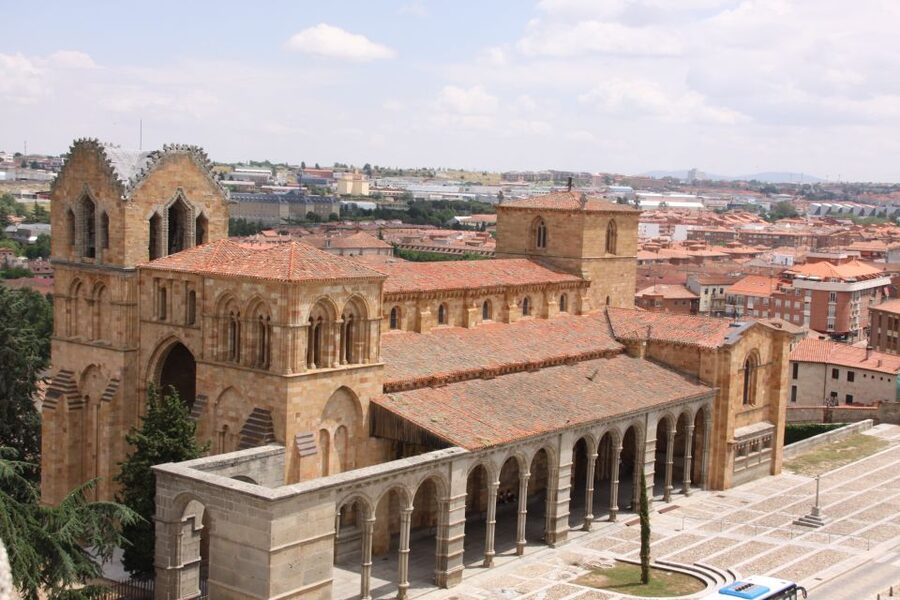
The program then takes you inside the Basilica of San Vicente. This is one of Spain’s finest Romanesque churches, and the interior visit gives the morning some depth beyond exterior sightseeing. Look for the solid forms, rounded arches, and restrained medieval design that make Romanesque architecture feel powerful even when decoration is limited.
The tour also passes the Plaza Mayor and Ávila Cathedral. The cathedral is closely tied to the city walls, forming part of the defensive structure. That blend of church and fortress is one of Ávila’s most interesting features, and a guide can help you notice it quickly during a short visit.
Saint Teresa’s church and the included Ávila admission
The stop at the Church of Saint Teresa of Jesus adds a personal thread to the city. It was built in the 17th century by the Order of the Discalced Carmelites on the traditional birthplace of Saint Teresa of Ávila, the Carmelite reformer and major figure in Roman Catholic history.
This is not just another church entrance. The site connects the city’s buildings to a person whose work shaped religious life far beyond Ávila. If you have an interest in Spanish spirituality, church history, or the development of the Carmelite order, this visit will mean more than a quick architectural stop.
After the guided sightseeing, you receive an aperitif and one drink. The drink may be wine, beer, or a soft drink, according to the activity details. This is a pleasant pause, but it is not lunch. You should budget separately for a meal and use the available break carefully.
That break is one of the day’s pressure points. You can have a snack and drink, continue looking around, or find food, but you cannot do all three at a leisurely pace. If lunch is important to you, make a plan before departure rather than expecting a long restaurant stop.
Same base, a different kind of afternoon:
- Madrid: “Emociones” Live Flamenco Performance
★ 4.8 · 12,866 reviews - Madrid: Panoramic Route City Tour
★ 4.1 · 12,259 reviews - Madrid: Live Flamenco Show with Food and Drinks Options
★ 4.5 · 9,901 reviews - Avila & Segovia Tour with Tickets to Monuments from Madrid
★ 5.0 · 9,762 reviews
Segovia begins with the Roman aqueduct
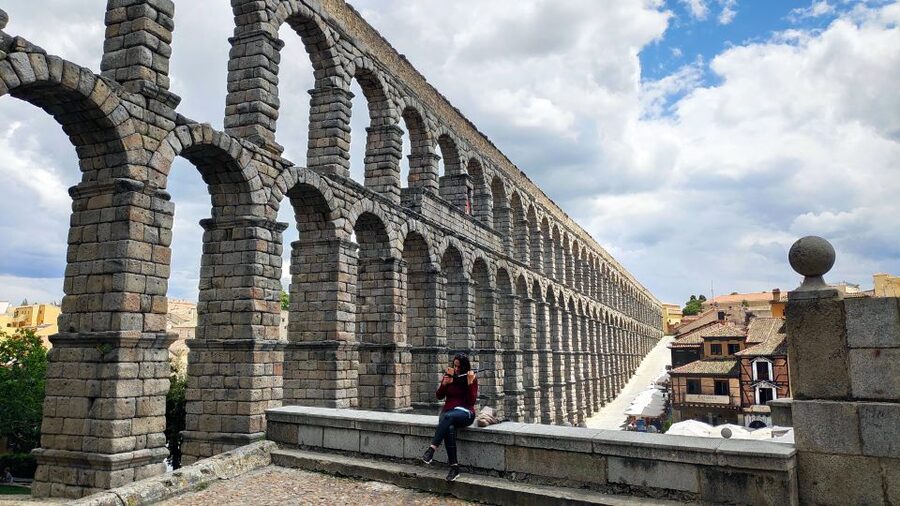
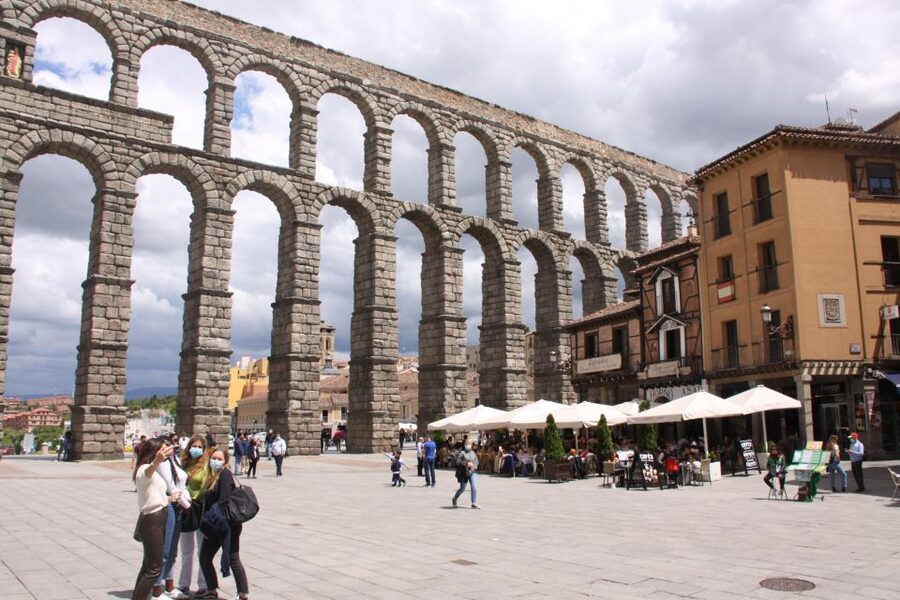
The afternoon starts at Segovia’s Roman aqueduct, the city’s most recognizable monument. It is also featured on Segovia’s coat of arms, which tells you how central it is to the city’s identity.
The aqueduct is especially effective because it remains part of the urban fabric. You see it in the open, rising above the surrounding streets rather than behind a ticket barrier. Its rows of stone arches show the precision of Roman construction, and the guide provides the historical frame that turns a striking photograph into a clearer understanding of the engineering involved.
This is a good place to listen closely through the radio headset. The group may spread out around the monument, and the headset allows you to keep looking while following the explanation. You can also take photographs without losing the thread of the tour.
From the aqueduct, the walking route continues past the Casa de los Picos, Plaza de Juan Bravo, and Plaza Mayor. These stops help you see how Segovia changes as you move from Roman infrastructure into medieval and early modern city life.
The Lady of the Cathedrals
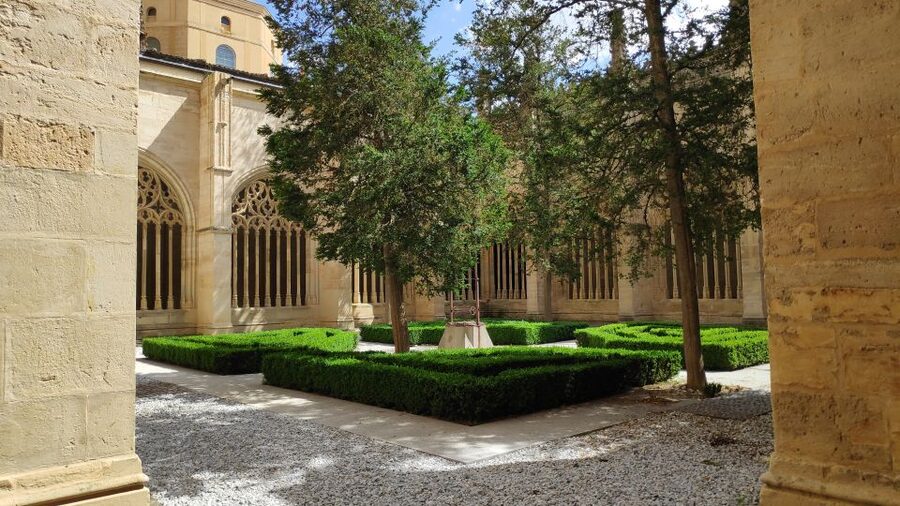
Segovia Cathedral is dedicated to Our Lady of the Assumption and San Frutos. The tour includes entry, so you can see the interior rather than relying on an outside view.
The cathedral is often called the Lady of the Cathedrals because of its size and elegance. Its main style is late Gothic, with Renaissance touches that reflect the long period of construction and changing artistic tastes. The result is more refined than fortress-like, a useful contrast to both Ávila’s defensive cathedral and Segovia’s rugged Alcázar.
I like this part of the program because it gives you time inside a major monument rather than rushing past another facade. Still, the visit follows a set route and schedule. If you prefer to sit quietly, study individual chapels, or photograph architectural details at length, you will want a separate return visit.
Entering the Alcázar of Segovia
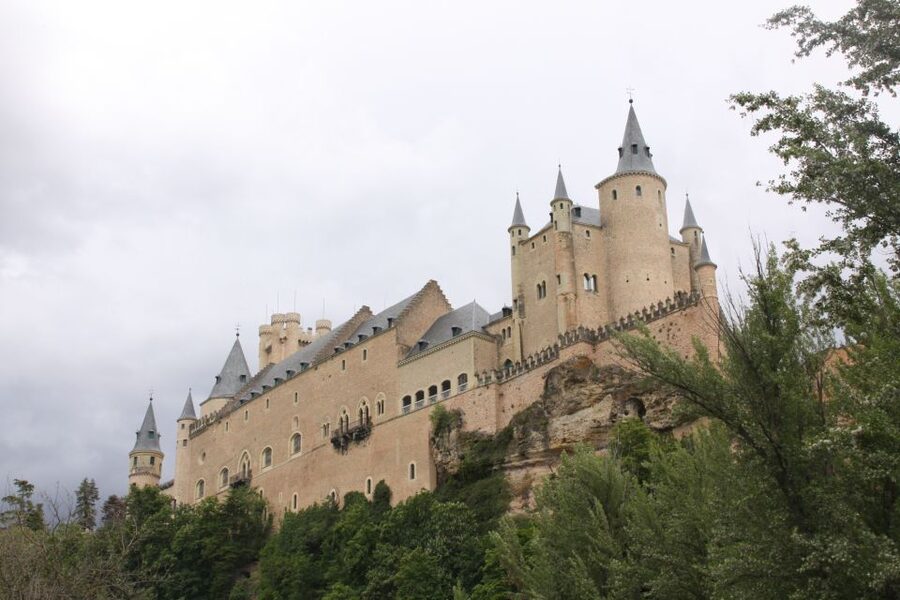
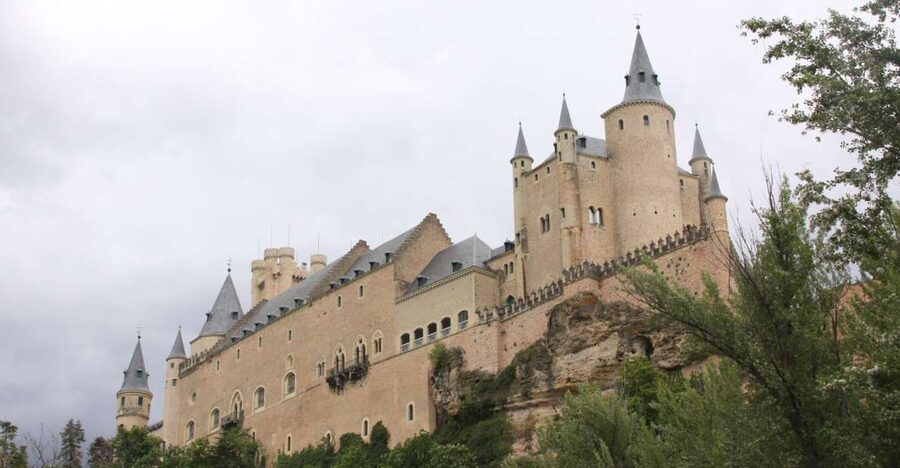
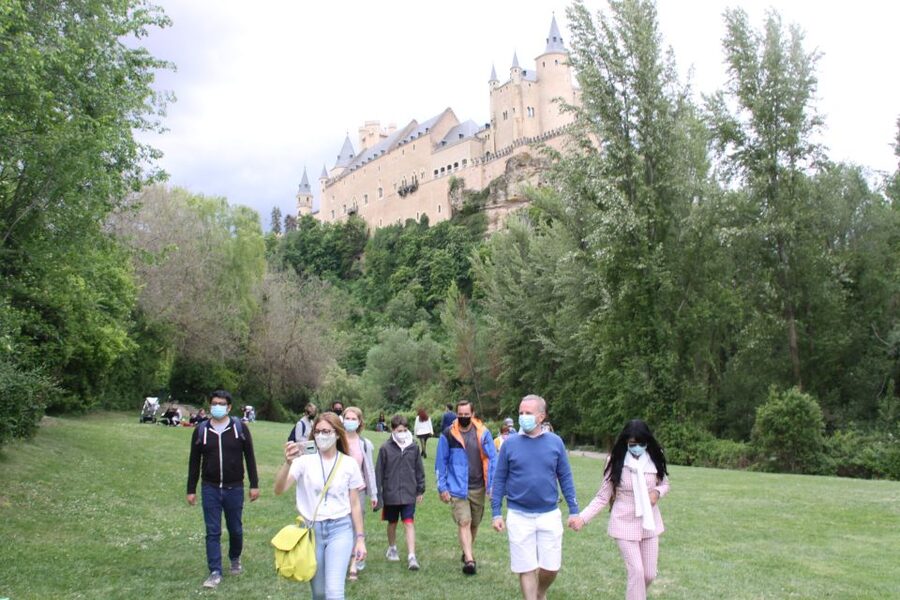
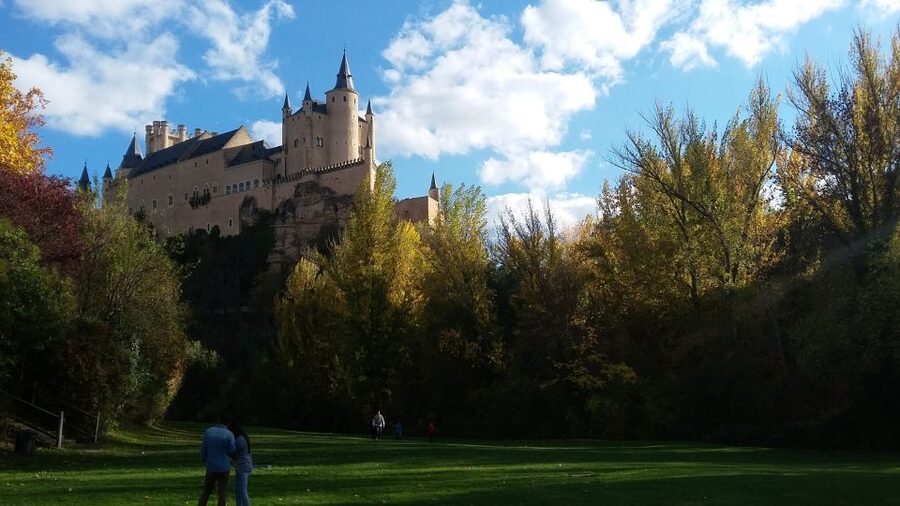
The Alcázar is the dramatic finale. The medieval fortress sits on a rocky crag where two rivers meet near the Sierra de Guadarrama. Its unusual profile, including the pointed towers and long sloping shape, has often been compared to a storybook or Walt Disney castle.
The comparison is easy to understand once you see it. The fortress looks less like a plain military stronghold and more like a royal castle designed for a film. Its position above the surrounding terrain adds to the effect, while the interior gives you a chance to see why it is considered one of Spain’s most distinctive castle-palaces.
Entry is included, which strengthens the value of the trip. The Alcázar is the kind of place where a ticket and a guide save time, particularly on a tightly organized day. The guide can point out the building’s royal and military functions while you move through the rooms and viewpoints.
This is also the stop most likely to make the day memorable for children. A family with children aged 10 and 12 found the castle, the city, and the guide engaging. The combination of towers, stone corridors, and stories works well for young visitors who might lose interest in a long church-heavy tour.
The walking load and the pace
Do not mistake a coach tour for a low-effort day. One person recorded about seven miles of walking, and that is a useful warning. You will cover historic centers on foot, use stone-paved streets, and spend much of the day standing or moving between sights.
Wear supportive walking shoes. Trolleys and wheeled luggage are awkward on medieval streets, so avoid bringing anything you do not need. Weather can change the experience quickly. Rain made Segovia harder for some, while summer heat made the walks more tiring, even with a well-paced guide.
The schedule is organized, but not identical to a relaxed private visit. The Ávila portion begins in the morning, includes the main churches and city landmarks, and regroups at about 2 PM for the drive to Segovia. The return to Madrid follows the Alcázar visit.
Some people found the pace comfortable, with useful breaks and enough time to stroll. Others wanted more time for shopping, lunch, or independent exploration, especially in Segovia. Both impressions make sense. The tour gives you a strong overview, but you should not book it expecting a full day in either city.
Guides, headsets, and how much context you get
The guides are a major part of the experience. Names praised for strong delivery include Beatrice, Carlos, David, Oscar, Rafa, Laura, Clara, Elizabeth, and Federico. Individual guide assignments can change, but the pattern is clear: the experience depends heavily on a guide who can make history understandable while keeping the group moving.
Beatrice was praised for making facts easy to remember and for handling questions patiently. David was noted for watching the group carefully and keeping everyone together. Carlos received repeated praise for his explanations in Spanish and his passion for local history. Laura and Clara were singled out for strong Segovia tours.
The best guides on this route do not trap you in one spot for long speeches. They explain while walking, then pause at the right monuments. That approach suits a nine-hour day because you keep moving without losing the story.
The radio system is useful, but bring realistic expectations. Headsets let you hear the guide when the group spreads through a square, though you will need to keep the device with you and pay attention to the channel. The activity offers live guiding in Spanish and English.
What the $74 price really covers
At $74 per person, the price is reasonable for a guided day with two long coach transfers and several paid entrances. You are paying for transport from Madrid, an air-conditioned bus, a guide, headphones, the Basilica of San Vicente, Saint Teresa’s church, Segovia Cathedral, and the Alcázar.
Buying separate transport and tickets would take planning, and you would need to coordinate arrival times in two different cities. The included Alcázar and cathedral admissions are especially useful because they cover the two largest paid highlights in Segovia.
The value is less clear if you want slow meals or long shopping breaks. Lunch is not included, and the time set aside for food is limited. If your ideal day involves sitting over a long Castilian meal, this is not the right format.
The included aperitif and drink soften the short break, but they do not replace lunch. Bring water or buy it during the day. One person noted that water was sold on the bus for one euro, which can be convenient, though you should not rely on onboard sales for every need.
Who should book this day trip?
I would choose this tour if you are staying in Madrid for several days and want to see Ávila and Segovia without handling regional transport yourself. It suits first-time visitors, families, and anyone who prefers historical explanation to wandering without context.
It is also a strong choice if the Alcázar, cathedral, aqueduct, and Ávila walls are your priorities. You will see the headline sights, enter the most important monuments, and return to Madrid the same day.
I would hesitate if you have mobility limitations. The activity is not suitable for wheelchair users or people with mobility impairments, and the walking load can be substantial. I would also hesitate if you want to photograph every corner, shop for local goods, or enjoy a long lunch.
For a slower visit, spend a full day in each city or choose one destination and explore it independently. For a broad, well-organized introduction, the combined route works very well.
Practical verdict: book it for breadth, not lingering
This is a busy but rewarding day. Ávila gives you massive walls, Romanesque architecture, a cathedral tied to the fortifications, and the story of Saint Teresa. Segovia follows with a Roman aqueduct, an elegant Gothic cathedral, and a castle that looks almost too theatrical to be real.
I like the reliable transport, included admissions, comfortable coaches, and the care shown by guides such as Beatrice, David, Carlos, and Oscar. I also like that the route has enough structure to keep a complicated day from becoming confusing.
Book it if you want to cover two major Castilian cities from Madrid at a fair price and you are prepared to walk. Skip it if free time and food are central to your plans. Either way, bring good shoes, check the weather, and treat the day as an impressive first taste rather than a complete visit to both cities.
FAQ
How long does the day trip last?
The experience lasts about nine hours, including travel between Madrid, Ávila, Segovia, and Madrid.
Where does the tour begin and end?
It begins and ends at Fun and Tickets, San Bernardo, 7, in Madrid.
How long is the journey from Madrid to Ávila?
The drive from Madrid to Ávila takes about one hour.
How long is the return journey from Segovia to Madrid?
The return bus journey takes about 70 minutes.
Are monument tickets included?
Yes. Admission is included for the Basilica of San Vicente in Ávila, the Church of Saint Teresa of Jesus, Segovia Cathedral, and the Alcázar of Segovia.
Is lunch included?
No. Lunch is not included. The tour includes one aperitif and one drink, but you should plan and pay separately for lunch.
Are drinks included?
One drink is included, along with one aperitif. The drink may be wine, beer, or a soft drink.
What languages are available?
The live guide is available in Spanish and English.
Is transportation included?
Yes. Transportation is provided by air-conditioned bus, with WiFi onboard.
Is the tour suitable for wheelchair users?
No. The activity is not suitable for wheelchair users or people with mobility impairments. Comfortable shoes and weather-appropriate clothing are recommended.
Recently listed in Madrid
- Madrid: Don Quixote de la Mancha Windmills & Toledo Tour★ 4.9 · 254 reviews
- Tour Madrid: Secrets in a Electric Tuk Tuk★ 4.6 · 155 reviews
- Madrid: Toledo Day Trip with Winery Visit and Wine Tasting★ 4.4 · 177 reviews
- Madrid: Guided Tour of Toledo with Cathedral Visit★ 4.3 · 399 reviews
- Madrid: 6-Hour Day Trip to Toledo with Guided Walking Tour★ 4.0 · 865 reviews
- Madrid: Tasty Tapas Tour & Visit to a Terrace with Views★ 4.5 · 118 reviews
- Madrid: Flamenco Show&Drink at Tablao 1911 (World’s Oldest)★ 4.7 · 253 reviews
- Madrid: Street Art Tour with Local Graffiti Hunter★ 4.8 · 270 reviews
1-Day Tours, compared.
Barcelona in 1 Day: Sagrada Familia, Park Guell,Old Town & Pickup
Read our review →
Three Cities in One Day: Segovia, Avila and Toledo from Madrid
Read our review →
Montserrat, Girona & Costa Brava Guided Day Trip from Barcelona
Read our review →
The Original Andorra, France & Spain Day Trip
Read our review →
Browse the lists this tour appears in