
Reviewed · WALKING TOURS
Madrid: Guided Walking Tour of Monasterio de las Descalzas
Madrid hides remarkable art behind plain doors. This 75-minute tour takes you inside the Descalzas Reales Monastery, a former royal convent filled with paintings, murals, grand staircases, and old legends. I like the focused length, which fits neatly into a day of sightseeing, and I like that the ticket includes skip-the-line entry. The main drawback is that photography is not allowed inside, so you will need to rely on your eyes and memory.
I also appreciate the chance to see rooms that are easy to miss when visiting Madrid on your own, including the cloister, Choir Room, and Hall of Tapestries. The guide brings context to a quiet, highly decorated building that can otherwise feel hard to understand. The tour operates with a minimum of seven passengers, so the small private-style visit described by some recent participants is possible, but not guaranteed.
In This Review
- Key points to know before you book
- Why this quiet convent deserves a place on your Madrid list
- Meeting at Plaza de las Descalzas
- The cloister and the procession route
- The main staircase and Claudio Coello’s ceiling
- Paintings by major European artists
- The textile hall, Choir Room, and decorated doors
- Legends, royal connections, and convent life
- Is $28 a fair price?
- Who will enjoy this 75-minute visit most
- Small practical details that improve the visit
- Should you book the Descalzas Reales tour?
- FAQ
- Where does the tour meet?
- How long does the tour last?
- What parts of the monastery are included?
- Is photography allowed inside?
- What languages are available?
- Are there restrooms inside the monastery?
Key points to know before you book
- The main staircase is the star: Murals cover its walls, and the ceiling painting attributed to Claudio Coello gives this part of the visit real drama.
- You enter an active historic monastery: The cloister is connected with Madrid’s Good Friday Procession of the Holy Burial.
- The art collection is the real reason to go: Works by Zurbarán, Antonio Moro, and Luca Giordano are among the major names linked to the rooms.
- The visit lasts 75 minutes: That is enough time for the principal spaces without taking half a day from your Madrid plans.
- Spanish is included, with other languages listed: French and English tours are also offered, so confirm your preferred language when booking.
- Bring practical patience: There are no public restrooms inside, and interior photography is forbidden.
Why this quiet convent deserves a place on your Madrid list
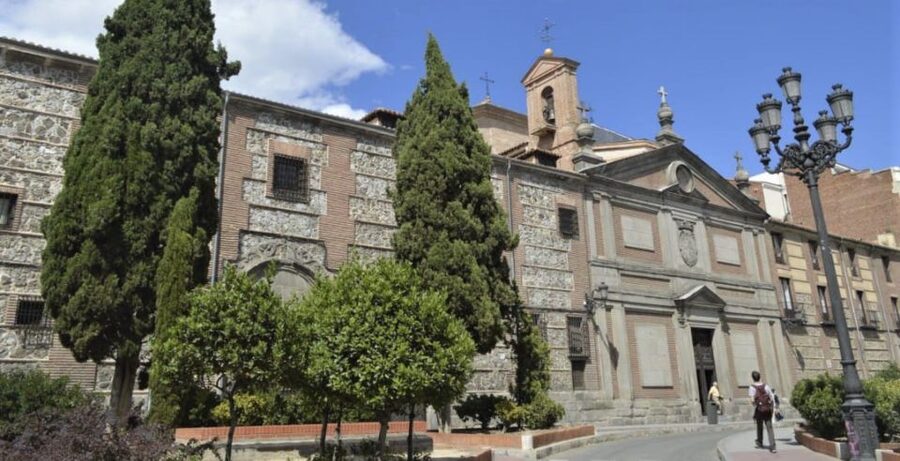
The Monastery of Descalzas Reales sits in the center of Madrid, close to the busy streets around Puerta del Sol and Plaza de Callao. Outside, it can seem modest. Inside, the mood changes quickly. You find a religious complex shaped by royal wealth, noble families, paintings, ritual, and centuries of cloistered life.
The convent was once regarded as the richest in Europe. That claim helps explain the quality of what you see. This is not simply a pretty church or a quick stop for a grand facade. Its importance is in the combination of architecture and objects: decorated walls, formal doors, paintings, rooms for communal life, and spaces tied to religious ceremonies.
I think the guided format matters here. A room full of old paintings can blur together when you do not know who made them or why they were placed there. A guide can point out the details that give the building its shape and meaning. The supplied tour information promises legends and stories as well as art history, which should make the visit more lively than a silent walk through a museum.
The setting also gives you a useful contrast with Madrid’s better-known royal attractions. The Royal Palace presents power in a grand, public way. Descalzas Reales shows another side of royal life, where wealth, devotion, family connections, and retreat from the world met behind convent walls.
More Walking Tours in Madrid
- Toledo Tour & Vineyard Walk with Wine Tasting from Madrid
★ 5.0 · 2,546 reviews - Madrid Walking Tour from Puerta del Sol to Retiro Park
★ 5.0 · 2,285 reviews - Madrid Old Town & Royal Palace Walking Tour Skip the Line Ticket
★ 4.5 · 1,829 reviews
Meeting at Plaza de las Descalzas
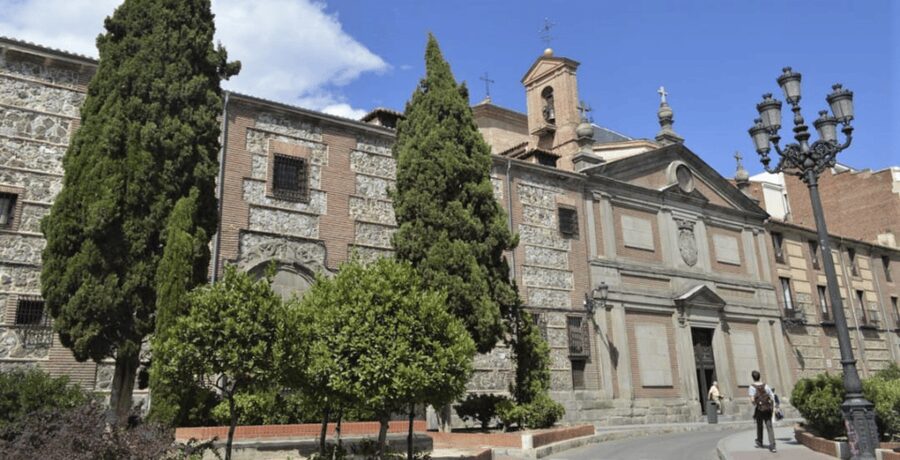
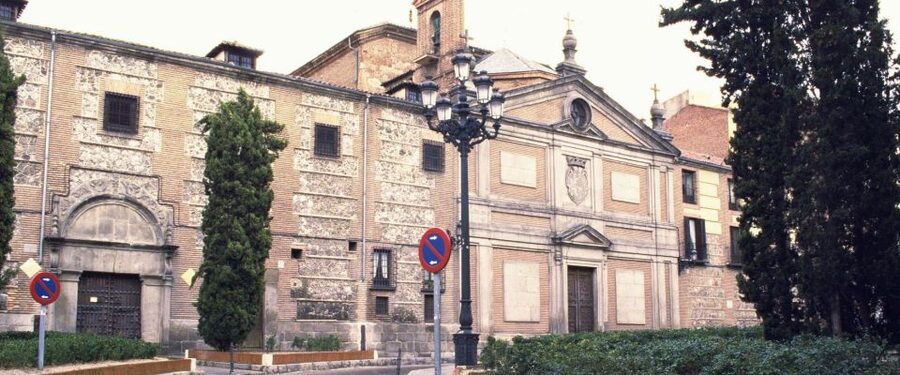
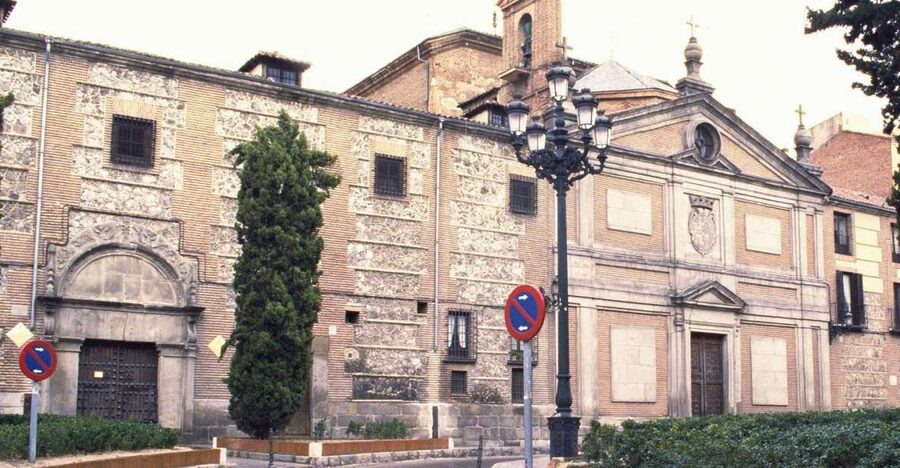
You meet at Plaza de las Descalzas, at number 3, directly in front of the monastery entrance. Look for the guide near the benches and statues, holding a sign or an IBE TOURS umbrella.
This is a sensible meeting place because you do not need to hunt for a side street or enter a separate ticket office. Still, arrive with enough time to identify the group. The plaza is central and can be busy, and the tour begins outside with an explanation of the facade and exterior.
That short introduction is useful. The building’s exterior does not announce everything hidden within it, so the guide’s comments help set up the visit. You learn what kind of place you are entering before passing through the door, rather than stepping straight into a series of rooms without a frame of reference.
The tour runs rain or shine. Since the first part takes place outdoors, carry a small umbrella or rain layer if the forecast looks uncertain. You will not spend long outside, but it is still wise to be ready.
The cloister and the procession route
The cloister is one of the first major spaces you see. Its enclosed design reflects the private nature of the convent, but it also has a public ceremonial role during the Good Friday Procession of the Holy Burial.
That detail gives the cloister more weight than its architecture alone. You are not just looking at a covered walkway. You are seeing a place connected to an annual religious event, where movement through the building becomes part of the ceremony.
Pay attention to the sense of enclosure. The monastery was made for nuns living a cloistered life, and the arrangement of rooms reflects separation from ordinary city life. At the same time, the quality of the art shows how closely this convent was connected to royal and aristocratic circles.
The cloister may appeal most to visitors who like architecture and religious history rather than quick visual spectacle. It is a calm start to the tour, with the larger artistic surprises still ahead.
The main staircase and Claudio Coello’s ceiling
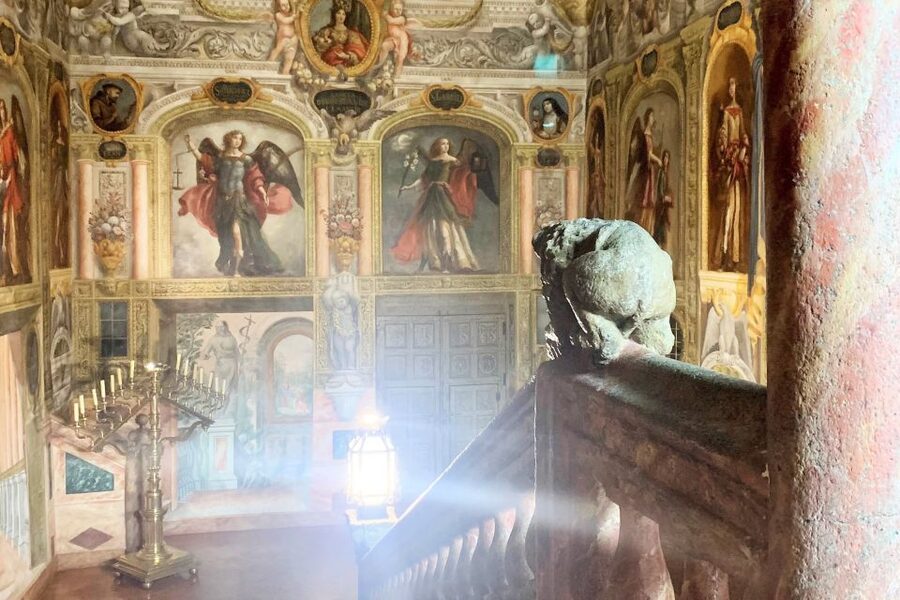
The main staircase is described as the true jewel of the monument, and it is easy to see why. Staircases are often treated as simple passageways. Here, the walls and ceiling turn the route between floors into one of the building’s most decorated spaces.
Look up. The ceiling painting is attributed to Claudio Coello, one of the major Spanish painters of the late seventeenth century. Even if you do not know his work beforehand, the placement makes the painting memorable. You are standing in a transitional space, yet the decoration asks you to stop and study it.
Murals from different periods cover the walls. This layering is important because it lets you see how the building changed over time. The monastery is not presented as a single moment preserved perfectly. Its decoration reflects different campaigns, tastes, and generations.
I would give the staircase your full attention. The space may be compact, and the group could need to keep moving, so do not wait until the end to look carefully. If your guide points out a specific figure or scene, take a moment to locate it before the tour advances.
Because photography is forbidden inside, this is also one of the places where you will need to slow down. You cannot depend on taking a picture and examining it later. Look at the ceiling, then the walls, then the relationship between the two.
Same base, a different kind of afternoon:
- Madrid: Tour Bernabéu Entry Ticket
★ 4.5 · 21,573 reviews - Madrid: Prado Museum Entry Ticket
★ 4.6 · 17,509 reviews - Madrid: Royal Palace Fast-Access Admission Ticket
★ 4.6 · 13,856 reviews - Madrid: “Emociones” Live Flamenco Performance
★ 4.8 · 12,866 reviews
Paintings by major European artists
The monastery contains thousands of works of art, including paintings associated with Francisco de Zurbarán, Antonio Moro, and Luca Giordano. Those names cover different periods and styles, which helps show how the collection grew and changed.
Zurbarán is known for religious paintings with strong figures and a serious mood. Antonio Moro worked in the sixteenth century and is associated with formal portraiture. Luca Giordano was an energetic Italian painter whose work brought a different visual character to Spanish collections. You should not expect a gallery arranged like the Prado, with every work isolated and labeled for long study. The appeal here is seeing important art in the setting for which religious and royal patrons valued it.
This is where the guide adds the most value. Without explanation, you may notice that a painting is beautiful but miss its maker, period, or role within the monastery. With a live guide, the names become part of a story about patronage and convent life.
The art is not the only point. Notice how paintings relate to doors, corridors, staircases, and rooms. The building itself is part of the display. You are seeing works in an architectural setting rather than walking through a modern exhibition hall.
If you are an art specialist, 75 minutes will feel brief. You will not have time to study thousands of works in detail. For most visitors, though, the limited duration is a benefit. You get a strong introduction without giving up a full morning or afternoon.
The textile hall, Choir Room, and decorated doors
The tour also reaches the Hall of Tapestries and the Choir Room. These rooms broaden the visit beyond the staircase and paintings.
The textile hall points to the material wealth of the convent. Large woven works were costly, difficult to produce, and valuable as both decoration and status symbols. Here, the setting matters again. You are seeing these pieces as part of a religious foundation with royal connections, not as isolated museum objects.
The Choir Room offers a different atmosphere. Its purpose connects directly with the spiritual life of the nuns, and it helps you imagine how music and worship fitted into the daily rhythm of the monastery. The visit does not promise a performance, so go for the room and its function rather than expecting a musical event.
Keep an eye out for the Plateresque doors. Plateresque design is associated with richly detailed Spanish decoration from the late Gothic and early Renaissance period. A door can be easy to ignore when a large painting is nearby, but these entrances show how much care went into even the parts of the building used simply to move from one room to another.
The guide can also help you separate the monastery’s different layers. Murals from different periods, decorated doors, religious rooms, and works by several painters create a complicated visual mix. The tour’s greatest service is giving that mix a clear path.
Legends, royal connections, and convent life
The tour places strong emphasis on legends and stories. That is a good match for this building. A list of dates and artists would not fully explain why the monastery feels so distinctive.
Stories make the rooms easier to remember. You may hear about the convent’s former wealth, the people connected with it, and the way religious ceremony shaped its spaces. The precise stories will depend on the guide and the language of the tour, but the advertised focus is clear: this is meant to be more than a basic architectural walk.
The guides have received especially strong praise for being friendly, clear, and entertaining. One recent French participant described the content as well documented and pleasant. A Spanish-speaking participant praised the guide’s kindness and explanations, while another French-language visit was described as having an excellent guide and a beautiful tour.
A Swedish-speaking visitor happened to be in a group of only two people and found that the visit felt private. That is a useful detail, but do not book expecting a private tour. The minimum operating requirement is seven passengers, and the final group size can vary.
Is $28 a fair price?
At $28 per person, this is a reasonable price if you value context and skip-the-line entry. The ticket covers access to a monument that is difficult to appreciate fully without background, and the guide leads you through several spaces in only 75 minutes.
The value is strongest for first-time visitors to Madrid who want to see something beyond the major public palaces and art museums. You get a concentrated look at architecture, religious art, royal connections, and convent life in one visit.
The value is weaker if you prefer to wander slowly and study every object alone. Photography is not allowed, and the pace of a guided visit may not suit someone who wants to linger over each painting. You also pay for the guide’s interpretation, so the tour makes less sense if you already know the monastery well.
Skip-the-line entry adds practical value, especially when your Madrid schedule is tight. It means you can place the visit between other central sights rather than building an entire morning around admission. Since no hotel pickup, food, or drinks are included, treat the $28 as an entrance and guiding fee, not a full sightseeing package.
Who will enjoy this 75-minute visit most
I would recommend this tour to several types of visitors:
- Art lovers who want to see works linked to Zurbarán, Antonio Moro, and Luca Giordano in their original setting.
- Architecture fans who enjoy decorated staircases, cloisters, murals, and Plateresque details.
- History-minded visitors who like stories about royal institutions, religious communities, and old Madrid.
- Short-stay visitors who need a compact cultural stop with a central meeting point.
- First-time monastery visitors who would find a silent walk through unfamiliar rooms difficult to interpret.
Families may also like the legends and visual details, though the tour’s appeal depends on how well younger children handle a quiet historic building. You should also consider your language needs. Spanish is specifically included, while French and English are listed among the available live tour languages. Confirm your preferred option when reserving.
This is less suitable for anyone who needs interior photographs, public restrooms during the visit, or a fully private experience. There are no public restrooms in the monument, so use facilities before meeting the guide.
Small practical details that improve the visit
Wear comfortable shoes. The tour is on foot inside a historic building, and the experience includes moving through several rooms and the main staircase.
Arrive at the Plaza de las Descalzas meeting point a little early. Look for the sign or IBE TOURS umbrella near the entrance, benches, and statues. That makes the start simple, but only if you know what to look for.
Do not plan to take interior photos. This rule applies throughout the monument, so set your camera aside and pay attention to the ceiling paintings, murals, doors, and artworks as you see them.
The tour can be canceled up to 24 hours before the start for a full refund, and you can reserve now and pay later. Those options help if your Madrid schedule is still changing. The tour operates in all weather and requires at least seven passengers, so keep both points in mind when arranging a tightly timed day.
Should you book the Descalzas Reales tour?
Book it if you want a guided look at an unusual Madrid monument, especially if you enjoy art but want a setting with more atmosphere than a standard gallery. The main staircase, Claudio Coello ceiling, cloister, Choir Room, and major paintings give the 75-minute visit plenty of substance.
I would skip it if your priority is photography, a private visit, or a long unhurried study of individual artworks. For most visitors, though, $28 is a fair charge for skip-the-line entry and a clear route through one of central Madrid’s most surprising interiors. Confirm your language, use a restroom beforehand, and give the guide your full attention. This is a place best remembered in the moment.
FAQ
Where does the tour meet?
Meet at Plaza de las Descalzas, 3, directly in front of the monastery entrance. The guide will be near benches and statues with a sign or an IBE TOURS umbrella.
How long does the tour last?
The guided visit lasts 75 minutes.
What parts of the monastery are included?
The tour includes the exterior explanation, cloister, main staircase, Hall of Tapestries, Choir Room, Plateresque doors, and other interior areas containing artworks.
Is photography allowed inside?
No. Photography is not allowed inside the monument.
What languages are available?
The activity lists French, English, and Spanish live guides. Spanish is specifically included, so confirm your preferred language when booking.
Are there restrooms inside the monastery?
No. There are no public restrooms in the monument, so plan ahead before the tour begins.
Recently listed in Madrid
- Madrid: Don Quixote de la Mancha Windmills & Toledo Tour★ 4.9 · 254 reviews
- Tour Madrid: Secrets in a Electric Tuk Tuk★ 4.6 · 155 reviews
- Madrid: Toledo Day Trip with Winery Visit and Wine Tasting★ 4.4 · 177 reviews
- Madrid: Guided Tour of Toledo with Cathedral Visit★ 4.3 · 399 reviews
- Madrid: 6-Hour Day Trip to Toledo with Guided Walking Tour★ 4.0 · 865 reviews
- Madrid: Tasty Tapas Tour & Visit to a Terrace with Views★ 4.5 · 118 reviews
- Madrid: Flamenco Show&Drink at Tablao 1911 (World’s Oldest)★ 4.7 · 253 reviews
- Madrid: Street Art Tour with Local Graffiti Hunter★ 4.8 · 270 reviews
Walking Tours, compared.
Barcelona Tapas and Wine Experience Small-Group Walking Tour
Read our review →
Tapas Walking Tour with Food, Wine, and History
Read our review →
Albaicín and Sacromonte Guided Sunset Walking Tour
Read our review →
Toledo Tour & Vineyard Walk with Wine Tasting from Madrid
Read our review →
Madrid Walking Tour from Puerta del Sol to Retiro Park
Read our review →
Barcelona Tapas Walking Tour: Food, Wine & History
Read our review →
Madrid Old Town & Royal Palace Walking Tour Skip the Line Ticket
Read our review →
Browse the lists this tour appears in