

Reviewed · MADRID TOURS
Madrid Oscuro: Torture, Ghosts, Crimes and Legends
Madrid has a darker story to tell. This 2-hour-25-minute walking tour moves through old squares, churches, alleys, and palace-side streets while mixing documented crime, Spanish Inquisition tales, ghosts, satanic legends, and local folklore. It is less a haunted-house show than a lively history walk with a sinister filter.
I like the strong storytelling and the route through central Madrid, where each stop adds a different kind of tale. I also like the value: the listed price is just $3.62 per group of up to 15, though the guide’s tip is expected at the end. The main drawback is that this is an outdoor evening walk, and several reviews warn that cold wind can make the long stops uncomfortable.
I would choose this for a second or third day in Madrid, once you have seen the major sights and want something less polished and more unusual. Guides such as David, Jacqueline, Paul, Lidia, Íñigo, Adria, Ana, Javier, Jose, and Rambo have all been praised for making the stories lively, often through jokes, acting, or audience participation.
In This Review
- Key points before you book
- What Madrid Oscuro is really offering
- Starting beneath the arcades of Plaza Mayor
- The cursed Iglesia de Santa Cruz
- Pasadizo del Panecillo and the Alley of Hunger
- Plaza del Conde de Miranda and Raimundita’s ghost
- The Fallen Angel, aviation, and alleged satanic rites
- Calle Mayor and the city’s darker religious lore
- The crime of Captain Sánchez at Santiago and San Juan Bautista
- Plaza de Oriente and Madrid’s first cemetery
- The guides matter more than the script
- Price, tipping, and what the value means
- Timing, weather, and practical comfort
- Who will enjoy this dark Madrid walk
- Should you book Madrid Oscuro?
- FAQ
- Where does Madrid Oscuro begin?
- Where does the tour end?
- How long does the tour last?
- What language is the tour offered in?
- Are entrance tickets included?
- Is the guide’s tip included?
- Can I cancel for a full refund?
Key points before you book
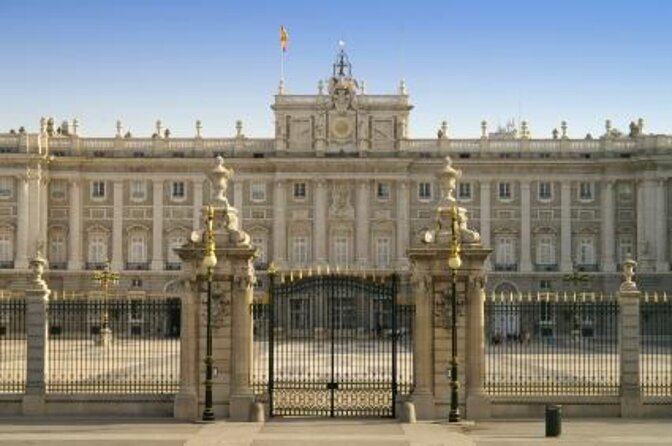
- The route covers eight central Madrid stops, beginning at Plaza Mayor and ending near the Royal Palace at Plaza de Oriente.
- The stories mix fact, crime, religion, and folklore, including the Spanish Inquisition, a famous murder, ghosts, alleged satanic rites, and Madrid’s first cemetery.
- Guides are the heart of the experience, with David, Paul, Jacqueline, Íñigo, Lidia, and others praised for humor, energy, and dramatic reenactments.
- The price is unusually low, but tipping is not included and one booking note says a suggested contribution may be around $15.
- You walk outdoors for more than two hours, so wear warm layers and comfortable shoes, especially in colder months.
- The finish near Plaza de Oriente is useful, placing you close to the Royal Palace and several central Madrid attractions.
What Madrid Oscuro is really offering
Madrid Oscuro is a free-style city walk in the traditional sense. You pay a small booking amount, then give the guide a tip at the end. The experience is built around narration rather than entry tickets, so you do not go inside monuments or museums as part of the route.
That matters because the setting does much of the work. You hear about a cursed church while standing near the church itself. A narrow passage becomes more memorable when connected to hunger and hardship. A quiet plaza feels different after you learn about a ghost said to haunt it.
The tone is not pure horror. The material includes crimes, religious persecution, alleged rituals, aviation tragedy, and supernatural stories. Some stories are presented as historical fact, while others belong to Madrid’s legends. I would expect a guide to make that distinction through tone and explanation, but you should still treat the ghost stories as folklore rather than proven events.
The high rating, 5 out of 5 from 1,363 reviews, reflects a clear pattern: the guide can make or break the evening. David has been praised for acting out characters, Paul for combining humor with serious historical detail, and Jacqueline for keeping the group involved. Jose, Íñigo, Adria, Lidia, and Javier have also received warm comments for their energy and delivery.
A few more Madrid ideas to compare
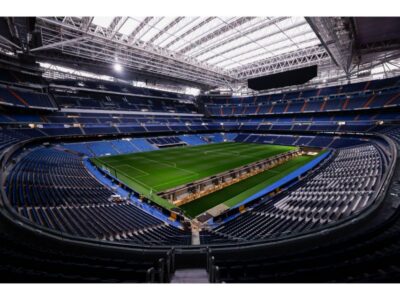
- Madrid: Tour Bernabéu Entry Ticket
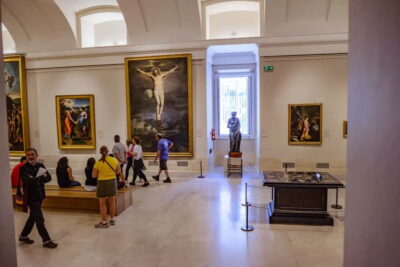
★ 4.5 · 21,573 reviews - Madrid: Prado Museum Entry Ticket
★ 4.6 · 17,509 reviews - Madrid: Royal Palace Fast-Access Admission Ticket
★ 4.6 · 13,856 reviews
Starting beneath the arcades of Plaza Mayor
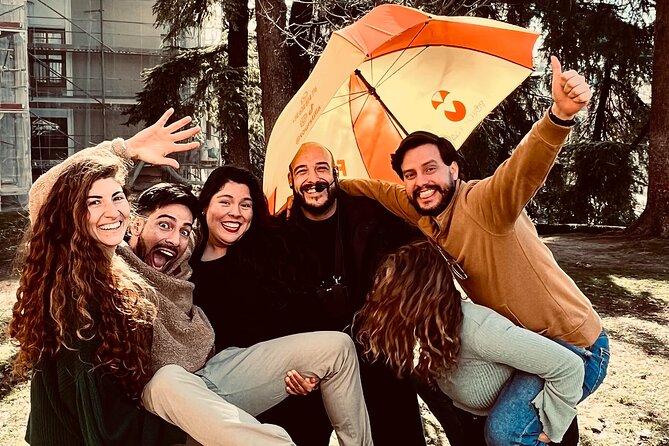
The meeting point is Plaza Mayor, one of Madrid’s most recognizable public spaces. It is a practical place to begin because it is easy to locate and close to public transportation. You meet the guide here, with the first stop taking about 15 minutes.
Do not expect a long architectural lecture at this point. The purpose is to set the mood and introduce Madrid as a city with a public face and a less comfortable past. Plaza Mayor has seen ceremonies, celebrations, punishment, and public spectacle, making it a suitable opening for a tour about crime and fear.
Arrive with enough time to find the group. The square is large, and meeting points can be harder to spot once crowds gather. Your mobile ticket is accepted, and admission to the square costs nothing.
The cursed Iglesia de Santa Cruz
The second stop is the Iglesia de Santa Cruz, with about 10 minutes devoted to its curse. The church gives the tour a change of mood after the open space of Plaza Mayor.
This is the kind of stop where the guide’s delivery matters more than the length. Ten minutes is enough for a focused story, but not enough for a full church tour or detailed art discussion. You will likely hear the legend, its connection to the building, and why it has remained part of Madrid’s darker folklore.
The route does not require entrance fees, so you should not expect to go inside. That keeps the tour inexpensive, but it also means the experience depends on what you can see from the street and how well the guide frames the tale.
Pasadizo del Panecillo and the Alley of Hunger

Next comes Pasadizo del Panecillo, known here as the Alley of Hunger. This is one of the more unusual names on the route, and the stop lasts about 15 minutes.
A narrow passage can reveal a different side of Madrid than the grand squares and royal buildings. The story here focuses on hunger, giving the tour a social edge. Not every dark story is about ghosts or murder. Poverty and desperation also shaped old cities, and this stop helps widen the subject.
I like this part of the route because it promises a more grounded kind of darkness. You are not just collecting spooky tales. You are also hearing about the hard conditions behind a place name and the fears that grew from them.
Same base, a different kind of afternoon:
- Madrid: “Emociones” Live Flamenco Performance
★ 4.8 · 12,866 reviews - Madrid: Panoramic Route City Tour
★ 4.1 · 12,259 reviews - Madrid: Live Flamenco Show with Food and Drinks Options
★ 4.5 · 9,901 reviews - Avila & Segovia Tour with Tickets to Monuments from Madrid
★ 5.0 · 9,762 reviews
Plaza del Conde de Miranda and Raimundita’s ghost
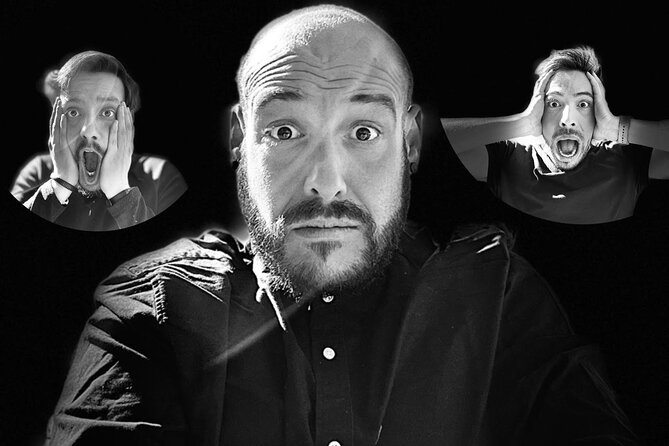
At Plaza del Conde de Miranda, the subject changes to Raimundita’s ghost and the Apostolic Nuncio. The stop lasts about 10 minutes.
Ghost stories work best when tied to a specific address, square, or institution. Here, the story gives the group a reason to look closely at an otherwise easy-to-miss part of central Madrid. The reference to the Apostolic Nuncio adds a religious and political layer, rather than presenting the ghost as an isolated campfire tale.
You may find this part more atmospheric after sunset, but the tour is still a public outdoor walk. It is not designed as a theatrical haunted attraction with special effects. The guide, the location, and your imagination provide the tension.
The Fallen Angel, aviation, and alleged satanic rites

The fifth stop, labeled Accidente Aereo, links the Fallen Angel with satanic rites in Madrid. It lasts about 15 minutes and appears to be one of the tour’s more theatrical sections.
The Fallen Angel is a striking subject for a dark city walk because it connects religious imagery, artistic symbolism, and urban myth. The added aviation reference gives the story another unsettling turn. The exact balance between documented events and legend may depend on the guide, so listen for the clues that separate a recorded incident from a later supernatural interpretation.
This is also where a dramatic guide can shine. David has been praised for acting out characters, while other guides have been described as energetic and passionate. If your guide uses gestures, voices, or short reenactments, this section will likely feel more like live storytelling than a standard walking lecture.
Calle Mayor and the city’s darker religious lore
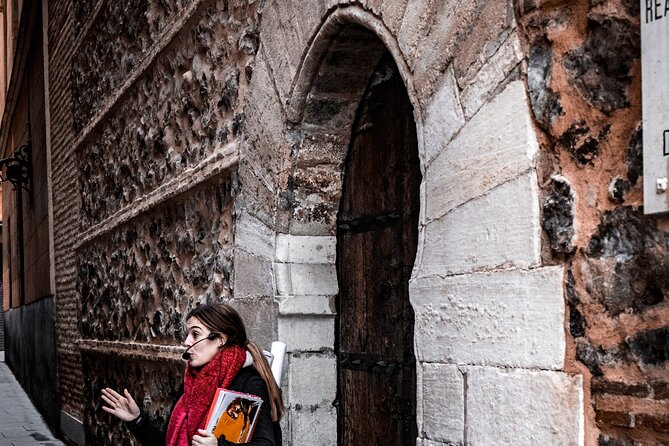
The route continues along Calle Mayor for about 10 minutes. The subject returns to the Fallen Angel and alleged satanic rituals, giving the story a second setting.
Repeating a theme at another location can work well if the guide adds new context. Instead of rushing through many unrelated legends, the walk can build a connected story about fear, religion, rumor, and public belief. Calle Mayor also keeps you in the middle of Madrid rather than sending you far from the historic center.
The tradeoff is that the content may feel repetitive if you prefer a new subject at every stop. You are paying for the guide’s interpretation, not a series of museum exhibits, so the experience is strongest when you enjoy a story developing across several locations.
The crime of Captain Sánchez at Santiago and San Juan Bautista

The seventh stop is the Real Iglesia Parroquial de Santiago y San Juan Bautista, where the guide tells the story of the crime of Captain Sánchez. Allow about 10 minutes.
This is the tour’s clearest true-crime segment. It shifts the focus from supernatural claims to a named crime and gives you a more concrete piece of Madrid’s past. The church setting adds weight, but the key attraction is the human story and the guide’s ability to explain what happened without losing the suspense.
Adria has been praised for telling true-crime stories with humor, while Jose has been praised for bringing the tales to life. That combination suits this stop. The subject is grim, but the tour’s style is not meant to leave you in a gloomy silence. Expect a lively presentation, with the guide likely encouraging questions or reactions.
Plaza de Oriente and Madrid’s first cemetery
The walk ends at Plaza de Oriente, near the Royal Palace, after about 10 minutes focused on the Vallecas file and the first cemetery in Madrid.
This is a good finishing point for your evening. Plaza de Oriente is central, easy to recognize, and close to the Royal Palace. You can continue sightseeing, find dinner, or use public transportation from here. The final subject also brings together the tour’s main themes: death, place, memory, and the strange stories that cities preserve.
The ending does not include a final attraction ticket or a formal indoor conclusion. The value comes from reaching a major part of Madrid with a new set of stories attached to it.
The guides matter more than the script
The most praised part of Madrid Oscuro is the guide. That is not a minor detail. A dark-history walk can become flat if the guide simply recites dates and names, but the strongest guides here seem to perform the material.
David has been described as especially theatrical. Paul has earned praise for being funny, patient, and well informed, with one family enjoying the tour as a way to learn about the Spanish Inquisition. Jacqueline has been praised for keeping the walk interactive and interesting. Íñigo has been described as talented and energetic, while Lidia has been noted for warmth and useful Madrid recommendations.
Jose, Adria, Ana, Javier, Rambo, and others have also received strong praise. You may not receive the same guide every time, so the exact personality of the evening can vary. Still, the repeated praise for energy, humor, and storytelling suggests that Tours Madrid, also known as TOURSTILLA, puts real weight on presentation.
The guide also offers printed material and teaching tools during the route. Those items may help make complex stories easier to follow, especially when the tour moves quickly between religious history, crime, and folklore. Afterward, you receive a link with personalized recommendations for things to do in Madrid, plus continued personal attention from the guide.
Price, tipping, and what the value means
The listed price is $3.62 per group of up to 15 people. At that rate, this is excellent value if you want a guided introduction to central Madrid without paying entrance fees.
The important catch is the tip. It is not included, and one booking experience describes a suggested contribution of about $15. Electronic payment may be possible with some guides, but cash is easier. You should treat the low upfront price as a pay-what-you-think-it-was-worth arrangement rather than the total cost of the evening.
The activity allows a maximum of 26 participants, while the group price is listed for up to 15. That difference is worth checking when you book because group size affects how easily you can hear the guide and stay close on city streets. A smaller group usually makes questions and interaction easier.
There are no food, drinks, or required entry fees included. Plan to eat before or after the walk. The end near Plaza de Oriente gives you plenty of options in central Madrid, though no specific restaurant is promised.
Timing, weather, and practical comfort
This is an outdoor walk lasting roughly 2 hours and 25 minutes. You need comfortable shoes, since the route links eight stops across the historic center. The walk is not presented as strenuous, and most people can participate, but standing outdoors for that long may feel tiring.
Cold weather is the main practical warning. Several comments point to cold wind, and one direct tip is to dress for the cold. Take that seriously in winter and on clear evenings. A warm coat, scarf, and shoes suited to Madrid’s streets will help more than any special equipment.
The tour is offered in English and uses a mobile ticket. Service animals are allowed, and the meeting point is near public transportation. The route begins at Plaza Mayor and ends at Plaza de Oriente, so you do not return to the starting point. Keep that in mind when planning your evening.
Free cancellation is available if you cancel at least 24 hours before the start time. A cancellation within 24 hours is not refunded, and changes in that period are not accepted. The tour also requires a minimum number of participants, so a cancellation by the provider could result in another date, another experience, or a full refund.
Who will enjoy this dark Madrid walk
I would recommend Madrid Oscuro to you if you like:
- Ghost stories with a connection to real places
- True crime and unusual local history
- The Spanish Inquisition and religious folklore
- Guides who act, joke, and involve the group
- Evening walks that do not require museum tickets
- A different view of Madrid after seeing the main sights
Families with older children and teenagers may enjoy it, especially if they like spooky subjects. One family specifically found the tour suitable for teenagers. Very young children may find the crime, torture, and satanic themes too intense, and the late outdoor format may not suit them.
This is less suitable if you want a quiet, academic lecture or a detailed architectural tour. It is also not the best choice if you dislike legends presented alongside historical events. The walk’s appeal comes from the blend, not from strict separation between proven fact and popular belief.
Should you book Madrid Oscuro?
Book it if you want a low-cost way to see central Madrid through stories of ghosts, crimes, torture, religion, and legend. The route is well placed, the price is modest, and the strongest guides turn the walk into an entertaining piece of live history.
I would book it early because the experience is booked around 17 days in advance on average. Bring warm clothes, comfortable shoes, and enough cash for the guide’s tip. If you want the best evening, focus on the guide’s style: a theatrical storyteller such as David or an energetic presenter such as Jacqueline, Íñigo, Paul, or Lidia can make the full 2 hours and 25 minutes pass quickly.
Skip it if you want guaranteed indoor shelter, formal museum access, or a tour devoted only to verified events. For everyone else, Madrid Oscuro offers a memorable way to look at familiar streets with fresh suspicion.
FAQ
Where does Madrid Oscuro begin?
The tour begins at Plaza Mayor in central Madrid.
Where does the tour end?
It ends at Plaza de Oriente, near the Royal Palace.
How long does the tour last?
The experience lasts approximately 2 hours and 25 minutes.
What language is the tour offered in?
The tour is offered in English.
Are entrance tickets included?
There are no required entrance fees for the stops, and the tour does not include food, drinks, or optional entry tickets.
Is the guide’s tip included?
No. The tip is given at the end of the tour. One booking note describes a suggested contribution of about $15, and cash is easier for some guides.
Can I cancel for a full refund?
Yes, if you cancel at least 24 hours before the experience start time. Cancellations within 24 hours are not refunded, and changes during that period are not accepted.
Recently listed in Madrid
- Madrid: Don Quixote de la Mancha Windmills & Toledo Tour★ 4.9 · 254 reviews
- Tour Madrid: Secrets in a Electric Tuk Tuk★ 4.6 · 155 reviews
- Madrid: Toledo Day Trip with Winery Visit and Wine Tasting★ 4.4 · 177 reviews
- Madrid: Guided Tour of Toledo with Cathedral Visit★ 4.3 · 399 reviews
- Madrid: 6-Hour Day Trip to Toledo with Guided Walking Tour★ 4.0 · 865 reviews
- Madrid: Tasty Tapas Tour & Visit to a Terrace with Views★ 4.5 · 118 reviews
- Madrid: Flamenco Show&Drink at Tablao 1911 (World’s Oldest)★ 4.7 · 253 reviews
- Madrid: Street Art Tour with Local Graffiti Hunter★ 4.8 · 270 reviews
Madrid Tours, compared.
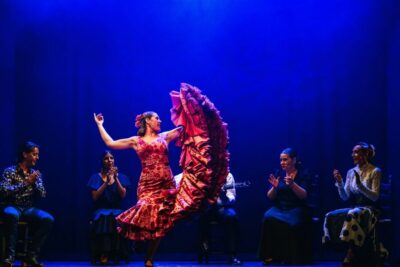

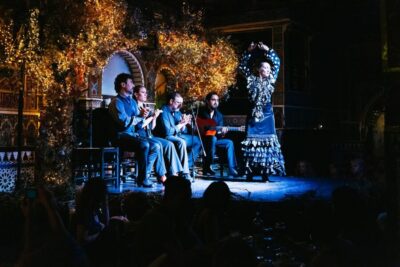
Live Flamenco Show with Food and Drinks Options
Read our review →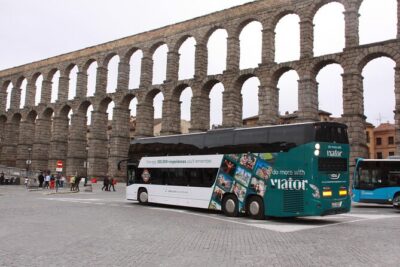
Avila & Segovia Tour with Tickets to Monuments from Madrid
Read our review →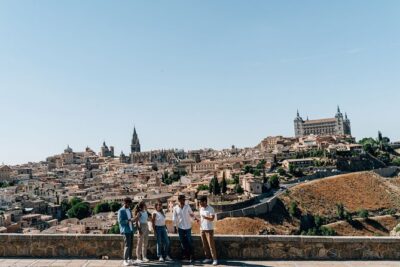
Three Cities in One Day: Segovia, Avila and Toledo from Madrid
Read our review →Browse the lists this tour appears in