
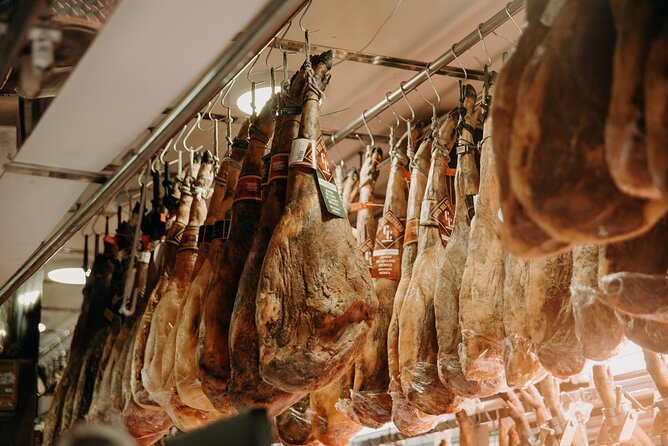
Reviewed · FOOD & DRINK
Madrid Ultimate Spanish Cuisine Food Tour
Come hungry, leave happily overfed. This three-hour walk gives you a tasty introduction to Madrid through small local food shops, markets, and bars, rather than through a parade of tourist restaurants. I especially like the generous range of samples, from thick hot chocolate and churros to jamón, vermouth, cheese, croquettes, and a calamari sandwich. I also like how the guide connects each bite to Spanish customs and regional food traditions.
The main consideration is that this is a substantial amount of food in a short time. The calamari sandwich can be filling, and some tastings may be salty or rich. You also need to walk at a moderate pace, and the tour is not suitable for vegans or people with celiac disease.
In This Review
- Key points at a glance
- What this Madrid food walk gets right
- Chocolat and the proper Madrid breakfast
- Moega and the chorizo-stuffed bread
- Antón Martín Market and Spain’s pantry
- Casa González, cheese, wine, and a political past
- Tapas, croquettes, and the Madrid bar tradition
- Bar La Campana and Madrid’s calamari sandwich
- Plaza Mayor and the final sweet stop
- How much food do you really get?
- The guides are a major part of the value
- Price, timing, and practical value
- Who should book this Madrid food tour?
- Should you book the Madrid Ultimate Spanish Cuisine Food Tour?
- FAQ
- How long is the Madrid Ultimate Spanish Cuisine Food Tour?
- Where does the tour begin?
- Where does the tour end?
- Is the tour offered in English?
- How many people can join the tour?
- Does the morning tour include churros?
- Is enough food included for a meal?
- Can the tour accommodate dietary restrictions?
Key points at a glance
- Start with Madrid’s famously thick hot chocolate: Morning departures open with churros at Chocolat, while the 5 pm departure replaces this with two tapas and a beer.
- Antón Martín Market feels like real daily Madrid: You taste olives, cured meats, produce, olive oil, and red vermouth while watching locals shop.
- The menu covers a full day of Spanish eating: Expect enough food for breakfast and lunch, with 15 or more tastes and one included drink.
- The calamari sandwich is the city’s great oddball classic: At Bar La Campana, you eat it standing outside, close to Plaza Mayor.
- A small group matters here: The maximum is 12 people, useful when visiting narrow bakeries, delis, and compact bars.
- Guides make a major difference: David, Flo, Mitzi, José, Dani, Isabel, Arantxa, and others have been praised for their food knowledge, humor, care, and practical Madrid tips.
What this Madrid food walk gets right
Madrid is easy to enjoy through its grand squares and museums, but food explains the city in a more personal way. You learn how people start the morning, where they buy bread, how vermouth fits into the day, and why a simple fried-calamari roll became a local favorite.
That is the strength of this experience. It is not just a succession of snacks. The guide explains what you are eating, where it comes from, and how people in Spain order or enjoy it. You move between cafés, a bakery, a market, a deli, a bar, and a pastry shop. Each stop shows a different part of the city’s food culture.
The tour begins near the Monument to Calderón de la Barca on Plaza de Santa Ana. You should arrive 15 minutes early. It ends at Plaza Mayor, which makes the route useful for a first full day in Madrid. You finish close to one of the city’s main sights, rather than having to return to the starting point.
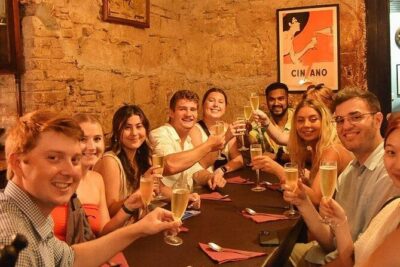
The maximum group size is 12. That is a sensible limit. Some of the places are tiny, and a large group would make the experience awkward. With fewer people, it is easier to ask about the food, hear the guide, and settle around a small table at Casa González.
More Food Tours in Madrid
- Madrid: Live Flamenco Show with Food and Drinks Options
★ 4.5 · 9,901 reviews - Toledo Tour & Vineyard Walk with Wine Tasting from Madrid
★ 5.0 · 2,546 reviews - Madrid: Tapas & Wine Tasting Tour with Local Guide
★ 4.8 · 2,171 reviews
Chocolat and the proper Madrid breakfast
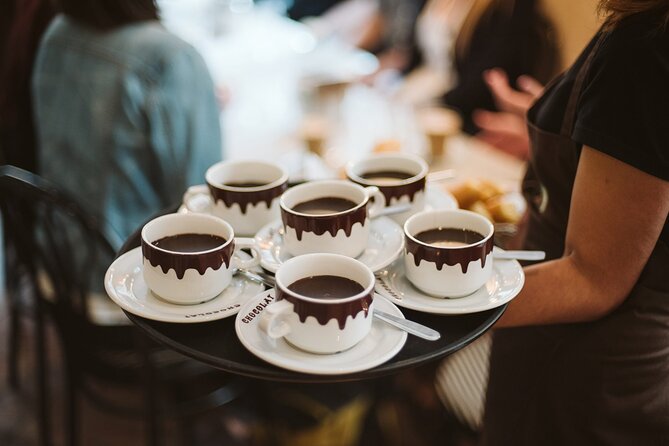
On morning tours, the first stop is Chocolat, a well-loved neighborhood café. Here you get a cup of thick, almost pudding-like hot chocolate with churros.
This is not the thin, watery cocoa you might get from a machine. The chocolate is dense and designed for dipping. The churros are crisp enough to hold up to it, giving you a sweet and indulgent start.
The guide also uses this stop to explain the origins of chocolate and the way churros fit into Spanish eating habits. That context matters. You are not simply checking off a famous dish. You are learning why this combination is treated as a proper breakfast or late-night snack.
The stop lasts about 30 minutes, so you are not rushed. Still, it is only available on the morning departure. If you book the 5 pm tour, this first stop changes to a popular tapas bar, where you try two traditional tapas with a beer. That evening version may suit you better if you prefer savory food and a drink to a sweet breakfast.
Moega and the chorizo-stuffed bread
Next comes Moega Empanadas y Pan Gallego, a small bakery connected with the bread traditions of northern Spain. You taste a homemade roll filled with chorizo.
The portion is modest, but the idea is important. Bread is a daily purchase in Spain, and a good neighborhood bakery tells you much about ordinary routines. The guide explains why finding excellent bread in Madrid can be harder than you might expect, then lets the roll make the argument for this particular shop.
This is one of the stops that makes the tour feel less polished and more local. You are not entering a grand food hall prepared for sightseeing groups. You are visiting a small storefront with a baker who cares about the product.
The stop is scheduled for about 15 minutes. It is quick, but that helps the route keep moving. By this point, you have had a sweet breakfast, bread, and sausage. You are already building a useful picture of Spanish flavors: wheat, pork, salt, spice, and plenty of appetite.
Antón Martín Market and Spain’s pantry
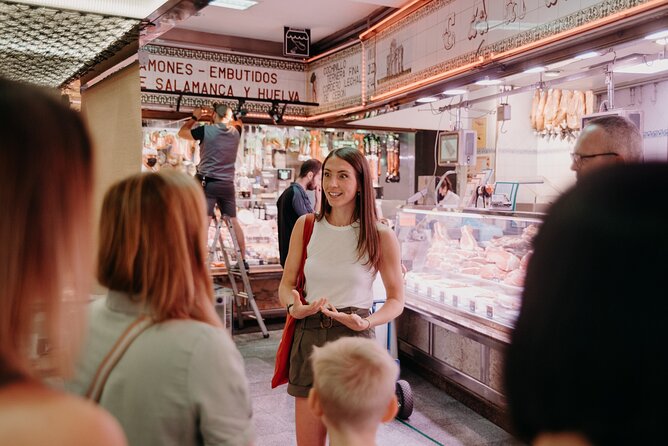
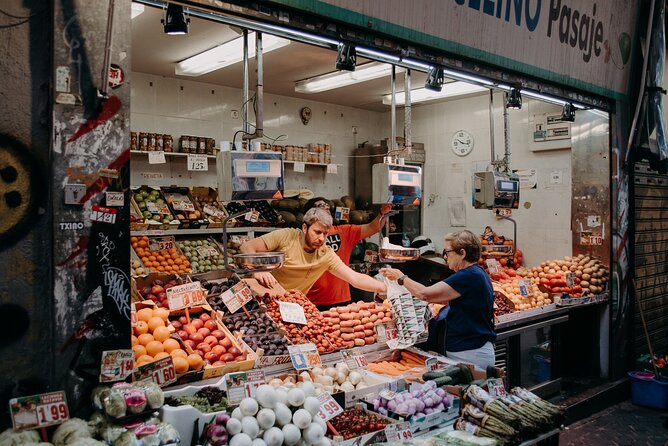
Mercado de Antón Martín is the longest stop, at about 40 minutes. This is where the food tour becomes a lesson in shopping as well as eating.
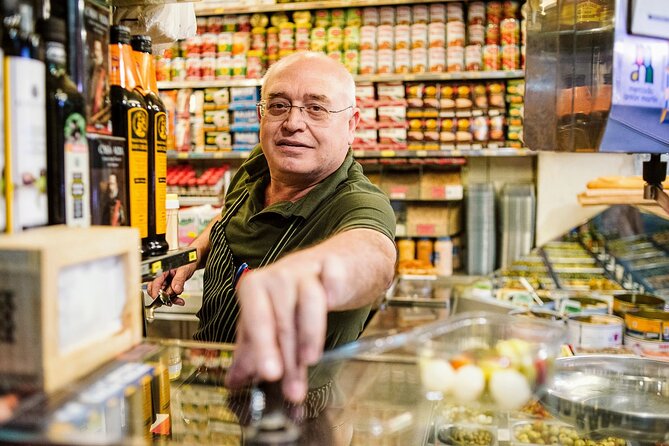
You browse stalls selling produce and prepared foods, then sample olives, cured meats, jamón, fruit, and other local specialties. You also taste extra virgin olive oil and learn why Spain’s oils differ in quality and style. The discussion of regular, virgin, and extra virgin olive oil gives you something practical to use later, especially if you want to take a bottle home.
The market also introduces Spanish vermouth. You sip red vermouth and hear when people drink it and why it has such a strong place in local social life. This is a useful correction to the idea that Spanish drinking culture is only about wine and sangria. Vermouth can be part of a relaxed daytime ritual, often with a small bite.
I like the market stop because it shows Madrid as a working city. You see people shopping for food, not just posing for photographs. The guide can point out regional products and explain the differences between types of ham, cheeses, olives, and breads.
The tasting list may vary slightly, but you should expect a broad spread rather than one large plate. That is good for comparison. You can notice how curing changes ham, how olive varieties differ, and how bread affects the taste of chorizo or cheese.
A few more Madrid ideas to compare
- Madrid: Tour Bernabéu Entry Ticket
★ 4.5 · 21,573 reviews - Madrid: Prado Museum Entry Ticket
★ 4.6 · 17,509 reviews - Madrid: Royal Palace Fast-Access Admission Ticket
★ 4.6 · 13,856 reviews - Madrid: “Emociones” Live Flamenco Performance
★ 4.8 · 12,866 reviews
Casa González, cheese, wine, and a political past
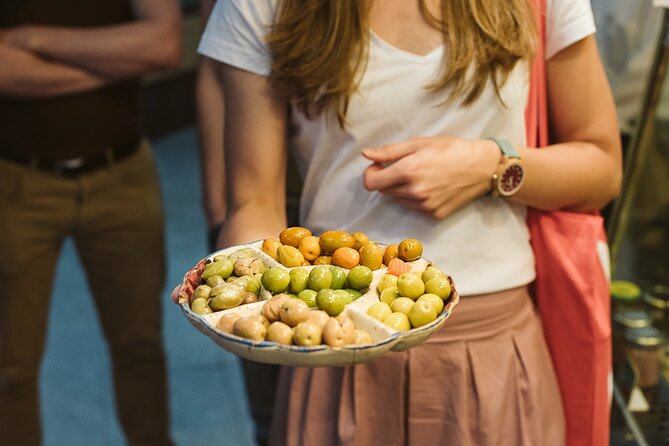
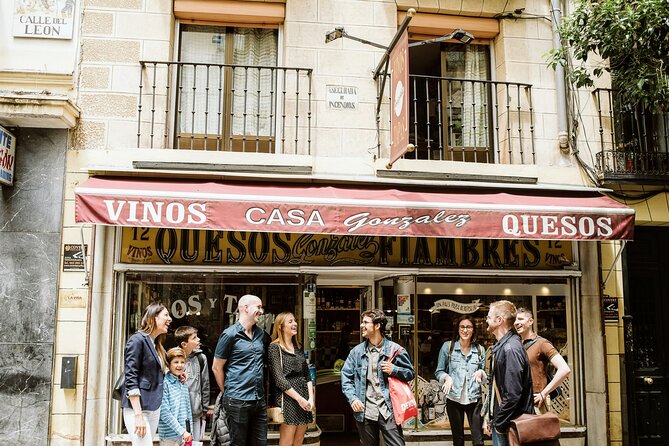
Casa González looks like an unassuming neighborhood deli, but the story attached to it gives the stop extra character. The shop was once associated with clandestine meetings against Spain’s newly established dictatorship in the 1930s. Today, you sit down for a tasting of cheeses from different parts of Spain.
This is a fine place for the guide to slow the pace. You have been standing and snacking through the market. Here, you can sit, taste carefully, and ask questions.
Expect cheeses paired with two wines. You learn how to order wine in Spain, not just how to drink it. That is a small but useful skill. Spanish wine service can feel casual, and knowing the basic terms makes ordering less intimidating at a bar or restaurant.
The cheeses may include strong and unusual styles. One particularly enthusiastic account praised Spanish blue cheese, while another mentioned unusual dairy products such as rabbit cheese. Because the exact selection can change, you should think of this as a regional cheese lesson rather than a fixed menu.
Non-alcoholic options are available, including coffee, but you should tell the company about your needs after booking. The tour can adapt for pescatarians, vegetarians, dairy-free diets, pregnant people, and those avoiding alcohol. There may not be a replacement at every stop, so this is easier for flexible eaters than for strict ones.
Tapas, croquettes, and the Madrid bar tradition
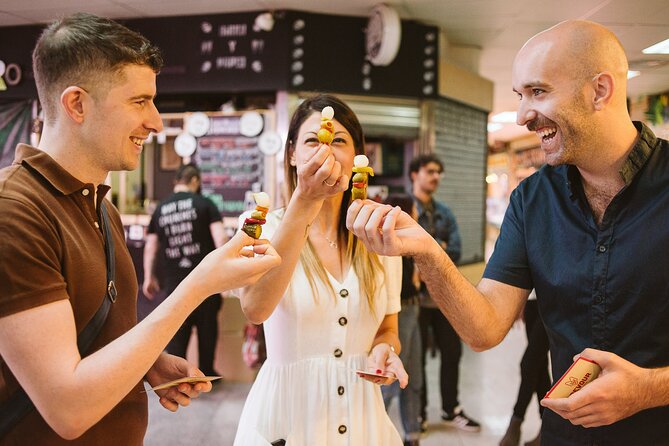
The route includes tapas at a local favorite, usually with croquettes and a cold beer. Some schedules and guide-led groups have included several tapas bars, so the precise tasting order can vary.
Croquettes are a useful choice for this tour because they show how Spanish bars turn simple ingredients into something crisp and comforting. The filling is enclosed in a creamy center, then coated and fried. They are easy to share and familiar enough for first-time visitors, but still worth discussing.
The guide explains tapas culture along the way. You get a better sense of how food and conversation work together in Spain, and why a short stop at a bar can be part of the day rather than a formal meal.
The tour is not built around sitting down for long restaurant courses. You stand at some stops and keep moving. That makes the experience feel active, but it also means you should wear comfortable shoes and avoid expecting a slow, leisurely lunch.
Bar La Campana and Madrid’s calamari sandwich
Near Plaza Mayor, you stop at Bar La Campana for Madrid’s signature calamari sandwich. It sounds strange until you consider the logic: fried calamari rings, a light crunchy batter, bread, and a quick meal eaten near the square.
You eat it standing outside the bar, like a local. That small detail is part of the fun. It is informal, messy, and very different from a carefully plated seafood dish.
The sandwich is also the point at which you may begin to feel full. Portions can be generous, and the salt level may be noticeable. If you are pacing yourself, take smaller bites and remember that dessert is still ahead.
I like that the tour does not pretend every dish will suit every palate. Spanish food uses salt, cured meats, olive oil, frying, and strong cheeses with confidence. You may love the sandwich, or you may decide that one is enough. Either reaction is useful. A good food tour gives you a local reference point, not a guarantee that every flavor will become your favorite.
Plaza Mayor and the final sweet stop
The route finishes at Plaza Mayor, Madrid’s central square. The square has hosted important events over the centuries, and the guide adds context as you look around.
The supplied route also describes a final stop at a historic pastry shop, where you have dessert with coffee or tea. The menu lists coffee and dessert, and the tasting accounts describe a very sweet marzipan cake. Depending on the schedule and the exact route that day, this may be folded into the final section near Plaza Mayor.
That ending makes sense. After salty ham, olives, cheese, fried food, and vermouth, you finish with something sweet. Coffee or tea helps bring the pace down, and you leave with a full stomach rather than a single famous dish checked off a list.
The route is listed as eight tasting stops with more than 15 tastes and one drink, although the main itinerary names the principal venues rather than every individual tasting point. You should expect plenty of small samples across the three hours, not eight full meals.
How much food do you really get?
You get enough food for breakfast and lunch. This is not a light nibble tour.
The menu includes:
- Chocolate and churros
- Chorizo-stuffed bread
- Olives
- Cured meats and jamón
- Fruit and other market products
- Extra virgin olive oil
- Vermouth
- Regional cheeses
- Two wines
- Croquettes and beer
- A calamari sandwich
- Coffee and dessert
The exact combination can change, especially between morning and evening departures. Some guides also add details such as octopus, additional tapas, or different cheese selections.
I would not eat a large meal before the tour. A small breakfast may be sensible if you are taking a later departure, but arriving hungry is the better plan. Pace yourself at the market because the sandwich and dessert come later.
The guides are a major part of the value
The food is the reason you book, but the guide determines how much you take away.
David is praised for combining food, wine, history, and practical advice. He has also been singled out for getting to know everyone in the group and offering useful Madrid recommendations. Flo is known for high energy, humor, and a lively way of explaining food and vendors. Mitzi is described as warm, inclusive, and well informed about Spanish traditions.
Other guides named in the feedback include José, Dani, Isabel, Arantxa, Liliana, and Frank. Their styles differ, but the strongest pattern is clear: the company depends on guides who can explain food while managing a small moving group.
That matters when the venues are compact. A guide who answers questions, checks dietary needs, and keeps everyone together can turn a series of crowded stops into an easy morning.
Price, timing, and practical value
At $95.53 per person, the tour is not the cheapest way to eat in Madrid. It is also more than the cost of buying a few churros or a calamari sandwich on your own.
The value comes from the range and guidance. You receive a meal-sized amount of food, more than 15 tastes, wine or beer depending on the departure, an English-speaking guide, and access to small businesses you might not identify on your own. You also get a useful introduction to food shopping, regional products, ordering wine, and tapas customs.
For a first visit, I think the price is reasonable if you want one organized food experience that covers breakfast, market food, snacks, drinks, and dessert. If you already know Madrid’s food scene well, or prefer choosing each bar yourself, the cost may feel high.
The tour lasts about three hours and is offered in English. It begins in central Madrid near Plaza de Santa Ana and ends at Plaza Mayor. Public transportation is nearby, but hotel pickup and drop-off are not included.
The tour is free to cancel up to 24 hours before the start time for a full refund. Changes or cancellations made later are not accepted for a refund.
Who should book this Madrid food tour?
I would recommend it to first-time visitors who want a fast, tasty introduction to Madrid. It also suits curious eaters who enjoy learning why a dish matters, not just taking a photograph of it.
It is a good match for:
- Couples and friends who want a shared meal with local context
- Solo visitors who like the social ease of a small group
- People who want market food without planning every stop
- Anyone keen to try jamón, vermouth, Spanish cheese, tapas, and calamari
- Visitors starting their Madrid stay and looking for ideas for later meals
It is less suitable for vegans, people with celiac disease, and anyone who cannot tolerate a menu built around bread, dairy, cured meat, frying, and alcohol. Vegetarians, pescatarians, dairy-free diners, pregnant people, and those avoiding alcohol may be accommodated, but you must contact the Guest Experience team after booking.
You also need to walk at a moderate pace. The route is not described as strenuous, but comfortable shoes are a must.
Should you book the Madrid Ultimate Spanish Cuisine Food Tour?
Book it if you want a full meal with a guide, not just a short tasting. The best parts are the market visit, the variety of Spanish products, the small neighborhood businesses, and the stories that explain how Madrid eats.
Choose a morning departure if churros and thick hot chocolate are high on your list. Choose the 5 pm option if you prefer tapas and beer at the start. Either way, plan to skip a heavy meal beforehand, wear good shoes, and arrive ready to share a few small spaces with a group of up to 12.
I would book this tour early, especially since it is often reserved weeks ahead. For a first Madrid visit, it offers plenty of food, useful cultural background, and several dishes you can seek out again on your own.
FAQ
How long is the Madrid Ultimate Spanish Cuisine Food Tour?
The tour lasts approximately three hours.
Where does the tour begin?
It begins at the Monument to Calderón de la Barca on Plaza de Santa Ana in central Madrid.
Where does the tour end?
The tour ends at Plaza Mayor in central Madrid.
Is the tour offered in English?
Yes. An English-speaking local guide leads the tour.
How many people can join the tour?
The maximum group size is 12 people.
Does the morning tour include churros?
Yes. Morning tours include thick hot chocolate and churros at Chocolat. The 5 pm tour replaces this stop with two tapas and a beer.
Is enough food included for a meal?
Yes. The tastings provide enough food for breakfast and lunch, with more than 15 tastes across the tour.
Can the tour accommodate dietary restrictions?
The tour can adapt for vegetarians, pescatarians, gluten-free diets that are not celiac, dairy-free diets, non-alcoholic preferences, and pregnant people. It is not suitable for vegans or those with celiac disease, and you must email the Guest Experience team after booking to arrange ingredients.
Recently listed in Madrid
- Madrid: Don Quixote de la Mancha Windmills & Toledo Tour★ 4.9 · 254 reviews
- Tour Madrid: Secrets in a Electric Tuk Tuk★ 4.6 · 155 reviews
- Madrid: Toledo Day Trip with Winery Visit and Wine Tasting★ 4.4 · 177 reviews
- Madrid: Guided Tour of Toledo with Cathedral Visit★ 4.3 · 399 reviews
- Madrid: 6-Hour Day Trip to Toledo with Guided Walking Tour★ 4.0 · 865 reviews
- Madrid: Tasty Tapas Tour & Visit to a Terrace with Views★ 4.5 · 118 reviews
- Madrid: Flamenco Show&Drink at Tablao 1911 (World’s Oldest)★ 4.7 · 253 reviews
- Madrid: Street Art Tour with Local Graffiti Hunter★ 4.8 · 270 reviews
Food & Drink, compared.
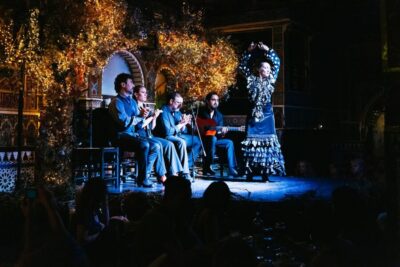
Live Flamenco Show with Food and Drinks Options
Read our review →
Montserrat & Cogwheel Train, Gourmet Wine Tasting & Tapas/Lunch
Read our review →
Ibiza Beach Hopping Cruise with Paddleboards, Drinks and Food 6h
Read our review →
Tapas Walking Tour with Food, Wine, and History
Read our review →
Sevilla Food Tour: Tapas, Wine, History & Traditions
Read our review →
Toledo Tour & Vineyard Walk with Wine Tasting from Madrid
Read our review →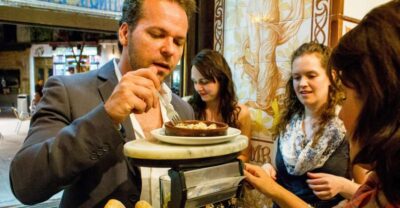
Barcelona Tapas Walking Tour: Food, Wine & History
Read our review →Browse the lists this tour appears in