
Reviewed · MALAGA TOURS
Málaga: Alcazaba and Roman Theatre Guided Tour With Entry
Málaga’s past is packed into one hillside. This 1.5-hour tour links the Roman Theatre with the Alcazaba, giving you a clear introduction to the city’s ancient and Moorish chapters without spending half the day in queues. I especially like the friendly guides, including Cristina, Salvador, Lucia, Imma, and Belén, and the fact that you can remain inside the fortress after the guided portion. The main drawback is the walking: steep paths, steps, and uneven surfaces make this a poor match for wheelchair users or anyone with serious mobility limits.
I also like the price. At $14 per person, including entry tickets and a live guide in English, Spanish, or Italian, this is a useful way to add context without committing to a long, costly sightseeing program. The tour can feel short at the Roman Theatre, especially when the site is crowded, but the Alcazaba gets most of the attention and the pace generally leaves room for photos.
In This Review
- Key points to know before you book
- Why this Málaga tour works well
- Finding the red umbrella at the Roman Theatre
- The Roman Theatre: a short but useful opening stop
- Walking uphill into the Alcazaba
- Courtyards, gardens, arches, and defensive walls
- The Christian conquest and the harder parts of the story
- Views over Málaga, the harbour, and the sea
- Why the tour ending matters
- The guides make the difference
- Timing, crowds, and the 90-minute limit
- Who should book this tour?
- Is Málaga’s Alcazaba tour worth $14?
- FAQ
- How long does the Málaga Alcazaba and Roman Theatre tour last?
- What is the tour price?
- Are entrance tickets included?
- Where is the meeting point?
- Which languages are available?
- Does the tour include the Roman Theatre?
- Can I stay inside the Alcazaba after the tour?
- What should I bring?
- Is the tour suitable for wheelchair users?
- Can I cancel for a full refund?
Key points to know before you book
- Start at the glass pyramid: Meet in front of the Roman Theatre, where your guide waits beside the pyramid with a red umbrella.
- Two major sites in 90 minutes: You see the Roman remains first, then continue uphill into Málaga’s Moorish fortress-palace.
- Guide quality is the big strength: Cristina is praised for humor and theatrical storytelling, while Salvador, Lucia, Imma, and Belén are noted for clear explanations and care for the group.
- Fast-track group entry saves time: You enter through a preferred access point rather than joining the standard line.
- The tour ends inside the Alcazaba: You can stay to take pictures, rest in the gardens, and enjoy the views after the guide leaves.
- Wear proper shoes: The route includes a hill, steps, and uneven ground, and the activity is not suitable for wheelchair users or people with mobility impairments.
Why this Málaga tour works well
The Alcazaba is easy to admire and easy to misunderstand. Its walls, towers, arches, gardens, and courtyards are attractive enough to keep you busy with your camera, but without a guide you may miss how the pieces fit together. This tour gives you the basic story of the fortress, explains its Muslim-era design, and connects the site to Málaga’s wider past.
I like the way the experience begins with the Roman Theatre rather than rushing straight through the Alcazaba gates. That small stop puts Málaga’s timeline in order. You first see the remains of the Roman city, then move into the period of Al-Andalus and the later Christian conquest.
The tour is also priced sensibly. For $14, you are paying for a guided visit and admission to both landmarks. It is not a full-day historical program, and you should not expect every corner of the fortress to receive a long explanation. But for a short first visit, the cost is low enough to make a guide worthwhile.
A few more Malaga ideas to compare
- Málaga: Caminito del Rey Guided Tour with Transportation
★ 4.8 · 12,183 reviews - Caminito del Rey: Guided Tour and Entry Ticket
★ 4.6 · 11,286 reviews - Málaga: Museo Picasso Málaga Entry Ticket
★ 4.4 · 11,138 reviews
Finding the red umbrella at the Roman Theatre
Your meeting point is the glass pyramid in front of the Roman Theatre. The guide waits on one side of the pyramid with a red umbrella, a useful marker in a busy central area.
Arrive with enough time to locate the exact side of the pyramid. The meeting point is simple once you see it, but the Roman Theatre area can have several groups gathering at once. The red umbrella matters, so look for it rather than relying only on a general view of the monument.
The tour is conducted in Italian, Spanish, or English. Check the language and starting time when you reserve, since the available times depend on the date.
The opening meeting is also a chance to settle into the group. Guides such as Cristina have been praised for making people feel welcome, keeping the group together, and speaking loudly enough for everyone to follow. That practical skill matters more than a long list of facts. A guide who loses half the group on the first slope can turn a good visit into a scavenger hunt.
The Roman Theatre: a short but useful opening stop
The Roman Theatre is the oldest chapter in this visit. Here, you look at the remains of Málaga’s Roman heritage while the guide explains the structure and its function.
Expect this section to be an introduction rather than a lengthy archaeological lecture. The total tour lasts only 90 minutes, and the Alcazaba takes up most of the time. One person specifically wished for more time at the theatre during a crowded 11 a.m. visit, which is a fair warning if Roman sites are your main interest.
Still, the stop earns its place. It gives you a visual reminder that Málaga was important long before the Moorish fortress rose above it. The guide can also connect the site to the wider story of the city and region, rather than treating the theatre as an isolated pile of stones.
Crowds can affect this part of the visit. School groups and other tour parties may make it noisy, so you might need to stand close to the guide. Experienced guides have handled this by moving to quieter corners for explanations, but the atmosphere will not always be calm.
If you want a slow, detailed study of Roman architecture, plan a separate visit or allow extra time around the theatre before or after the tour. If you want a quick historical starting point, this stop does the job.
Walking uphill into the Alcazaba
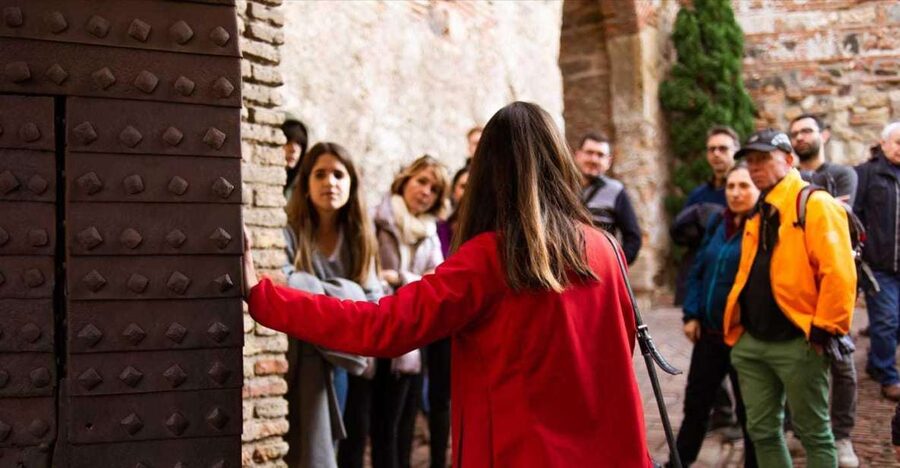
From the theatre, the route continues toward the Alcazaba. The fortress sits above the city, so the approach involves an uphill walk. Comfortable shoes are not just a polite suggestion here. They are the difference between enjoying the stone paths and thinking about your feet.
The physical effort is moderate for many people, but it is not a flat museum visit. Expect steps, slopes, and surfaces that may feel uneven. A guest recovering from a sprained ankle found the pace manageable because the guide allowed frequent stops for discussion and views. That suggests the experience can work for some people with limited stamina, but the official restrictions remain important: it is not suitable for wheelchair users or people with mobility impairments.
Tell the guide early if you need a slower pace or a short rest. Belén was praised for checking on a participant several times, and that kind of attention can make the climb feel far less stressful.
The uphill route is part of the story. You begin to understand the fortress as a defensive position, not just a pretty palace. As the city drops behind you, the location makes practical sense.
Same base, a different kind of afternoon:
- El Chorro: Caminito del Rey Guided Tour with Shuttle Bus
★ 4.7 · 7,091 reviews - Caminito del Rey: Tour with Official Guide and Drink
★ 4.7 · 6,190 reviews - Caminito del Rey: Entry Ticket
★ 4.8 · 4,710 reviews - Malaga: Teatro Flamenco Malaga Live Flamenco Show
★ 4.7 · 4,254 reviews
Courtyards, gardens, arches, and defensive walls
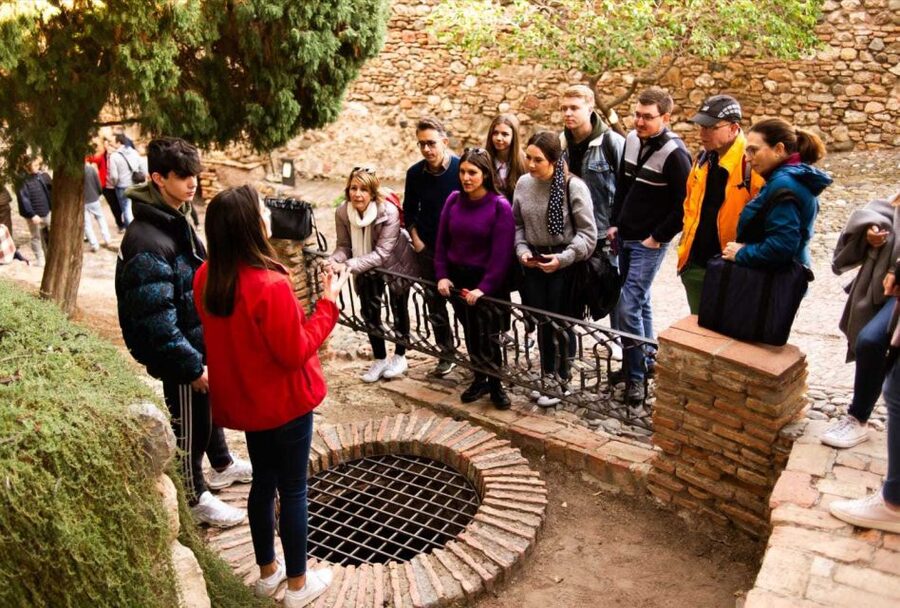
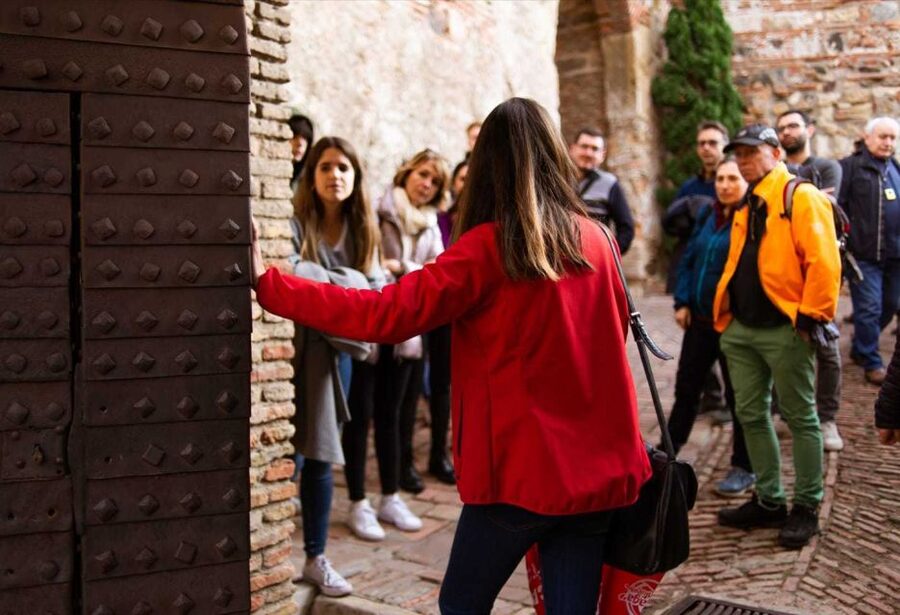
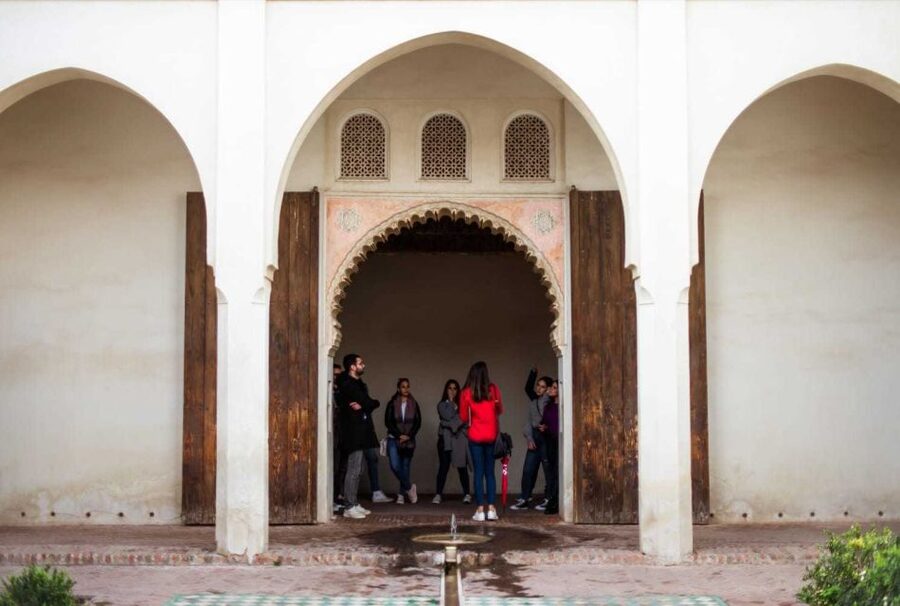
Inside the Alcazaba, the tour shifts from Roman remains to Islamic architecture and the history of Al-Andalus. You pass through courtyards, gardens, defensive towers, and arched spaces while the guide explains how the monument worked and what its design tells you about the period.
The appeal is not only visual. The courtyards and gardens soften the military character of the walls, while the towers and narrow passages remind you that this was built for protection. A good guide helps you notice both sides at once: the fortress was a place of power and defense, but it was also designed as an elegant residence.
This is where the guides earn their fee. Cristina is repeatedly praised for combining humor, acting, and historical detail. Salvador is valued for answering questions and linking the Alcazaba to Málaga and Spain more broadly. Lucia is described as clear and easy to follow, and Imma is praised for keeping her Italian group together and explaining complicated points in an accessible way.
The storytelling includes legends and small anecdotes, not only dates and names. That makes the visit easier to remember. You may not retain every architectural term, but you are more likely to recall a story connected to a tower or courtyard.
The tone suits mixed groups. If you love history, you get a useful framework. If you prefer a lighter visit, the guide keeps the talk lively rather than turning the morning into a classroom. One of the tour’s strongest qualities is this balance.
The Christian conquest and the harder parts of the story
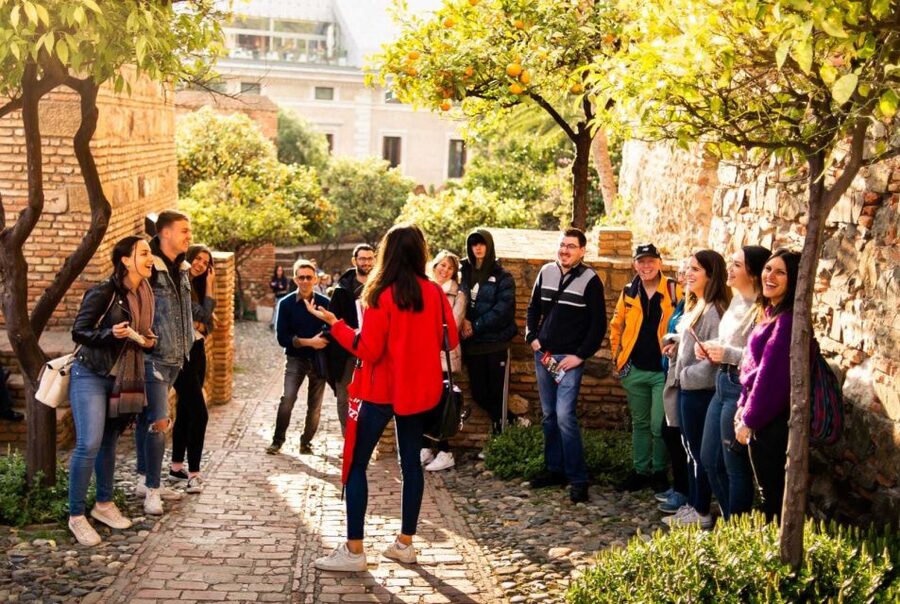
The Alcazaba is also a place of conflict. The tour addresses the Christian conquest of Málaga and the changes that followed. This is important because the monument is not merely an attractive example of Muslim architecture. Its walls carry the story of competing powers, religious change, and the eventual shift from Islamic to Christian rule.
The guide’s job here is to make the subject understandable without flattening it into a simple good-versus-bad tale. Belén was praised for handling difficult subjects with tact, which is a useful quality at a site shaped by conquest.
You should expect the tour to cover both the art and the politics of the monument. It will not provide an academic treatment of every event, but it gives you enough context to see the Alcazaba as part of Málaga’s changing identity.
I value this approach because it helps you look beyond the postcard view. The arches and gardens are lovely, but their meaning becomes stronger when you understand who built them, why the site was defended, and how the city changed hands.
Views over Málaga, the harbour, and the sea
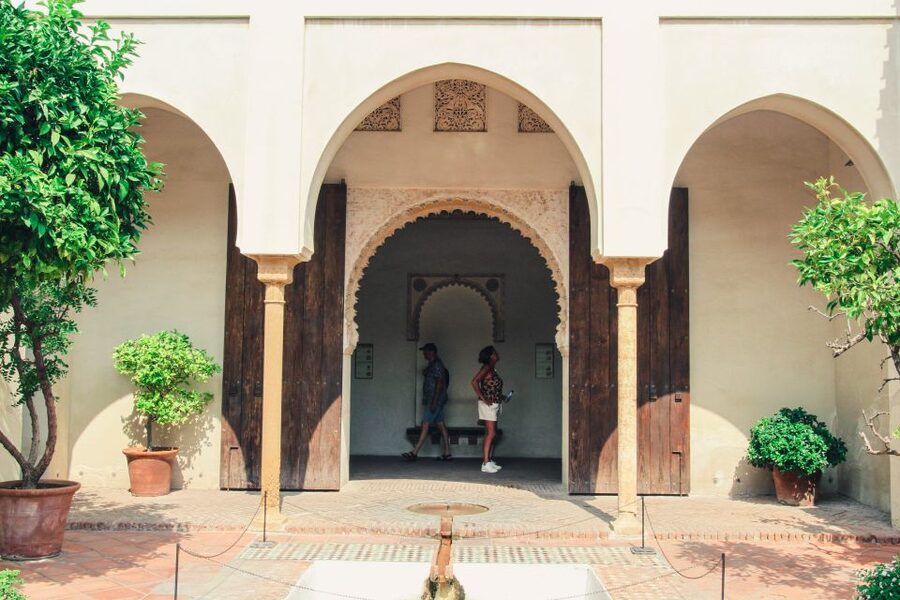
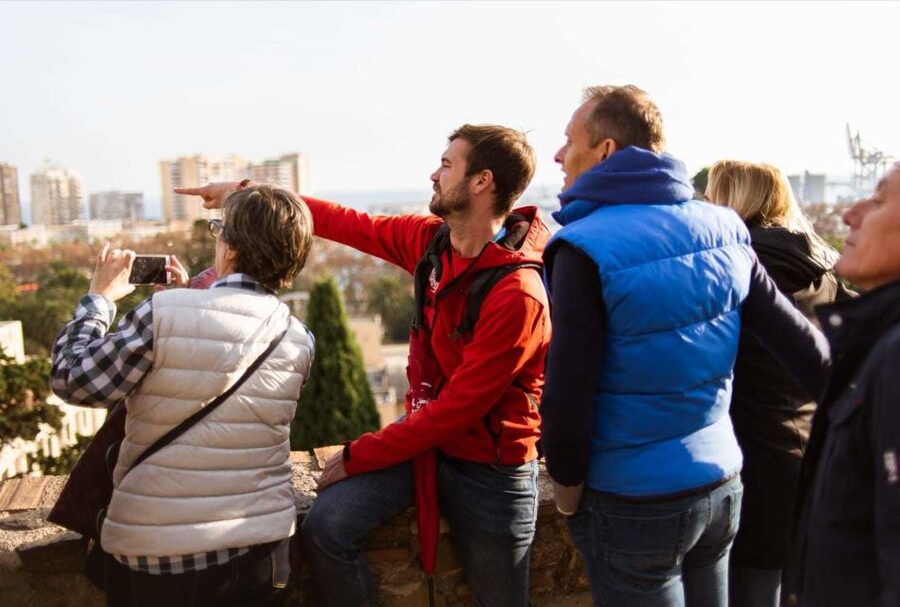
The higher parts of the Alcazaba offer broad views across Málaga, including the harbour and the sea. These are among the best rewards for making the climb.
Take your time with this section. The guided commentary may pause for photographs, and several guides are praised for allowing plenty of picture stops. You can frame the city below, watch the harbour, and see how the fortress relates to the modern streets around it.
The views also help explain the Alcazaba’s position. From above, the connection between defense, access to the coast, and control of the city becomes easier to grasp. You are not simply looking at Málaga from a pretty terrace. You are seeing why this site mattered.
Bring your camera, but do not rush through the rest of the fortress just to reach the highest viewpoint. The gardens, arches, and inner spaces give you a different sense of the monument. The best visit combines the big panorama with the smaller details.
Why the tour ending matters

Many guided visits end at the exit, leaving you to decide if you want to buy another ticket to continue. This one ends inside the Alcazaba. That is a real advantage.
Once the guided portion finishes, you can stay on your own to take more photos, sit in the gardens, revisit a courtyard, or simply enjoy the atmosphere. The information provided does not specify how long you may remain, so follow the monument’s closing rules, but you are not hurried straight back to the street by the guide.
This arrangement gives you both structure and freedom. The guide provides the essential story, then you get personal time to look around. I find that especially useful at a site like this, where a group naturally moves at one pace but each person wants different things from the final half hour.
Photography is another reason to appreciate the ending. You can return to a view or architectural detail without trying to listen and take pictures at the same time.
The guides make the difference
The experience depends heavily on who leads your group, and the guide team has earned strong praise for warmth, humor, and clear delivery.
Cristina appears especially good at bringing energy to the history. She uses a playful style, keeps people focused, and has even waited briefly for late arrivals. Salvador adds local tips, restaurant suggestions, and wider background about Málaga. Lucia is valued for her calm, easy explanations, while Imma has shown care in keeping an Italian-speaking group together, even in poor weather.
Belén has also been praised for patience, thoughtful pacing, and checking on people who need extra care. Those details tell you what to look for in a good group tour: not just facts, but awareness of the people standing at the back, asking questions, or struggling with the hill.
Guide assignments can change, so you cannot choose a particular person when booking unless the operator confirms it. Still, the range of strong guide feedback suggests that the quality is not tied to one individual alone.
Timing, crowds, and the 90-minute limit
Ninety minutes is enough for a focused introduction, but it requires a sensible pace. You will cover two sites, walk uphill, stop for explanations, and have time for photographs. The Roman Theatre receives less attention than the Alcazaba, so keep your expectations in line with the schedule.
A late-morning start can be busier, especially when school groups are present. Noise may make some explanations harder to hear, although guides have moved groups to quieter spots when possible. If you prefer a calmer visit, choose an available time that suits you, but the supplied information does not promise a specific crowd level at any departure.
The tour starts on time and is designed to complete the stated 1.5-hour duration. Rain does not automatically stop the experience, as one Italian-language group continued successfully in wet weather, but bad weather can affect access. On another occasion, the Alcazaba closed because of weather and the guide provided a detailed city tour instead. That was a helpful response, but you should understand that monument access can depend on official conditions.
Who should book this tour?
I would choose this tour if you want a short, affordable introduction to Málaga’s main historic sites. It suits first-time visitors, couples, families with older children, and anyone who likes stories more than silent plaques.
It is also a good fit if you want a guide who can fill in the gaps between architecture, local history, and everyday Málaga. The restaurant and sightseeing tips offered by guides such as Salvador and Cristina can be useful if you are still planning the rest of your stay.
You may want another option if your priority is an exhaustive study of Roman archaeology, a private experience, or a fully accessible route. The group format and 90-minute limit mean you will not linger at every feature, and the hill and steps require reasonable walking ability.
The free cancellation up to 24 hours before the start and the reserve-now, pay-later option make it easier to fit into a changing itinerary. Pets are not allowed, and comfortable shoes are essential.
Is Málaga’s Alcazaba tour worth $14?
Yes, for most visitors. The price includes admission and a live guide, and the tour combines two important sites in a compact format. The fast-track group access is useful when lines are long, while the chance to stay inside the Alcazaba after the tour gives you extra value.
I would book it early in your Málaga visit, not on your last afternoon. The guide’s wider suggestions about restaurants, bars, and nearby sights are more useful when you still have time to act on them.
Book it if you want the Alcazaba to make sense, not just look attractive. Skip it if you need a fully accessible route or want to spend a long time at the Roman Theatre alone.
FAQ
How long does the Málaga Alcazaba and Roman Theatre tour last?
The tour lasts 1.5 hours.
What is the tour price?
The listed price is $14 per person.
Are entrance tickets included?
Yes. Entrance tickets and a guided tour of the Alcazaba are included.
Where is the meeting point?
Meet at the glass pyramid in front of Málaga’s Roman Theatre. The guide waits beside the pyramid with a red umbrella.
Which languages are available?
The tour is available with a live guide in English, Spanish, or Italian.
Does the tour include the Roman Theatre?
Yes. The visit begins with an explanation of the Roman Theatre before continuing to the Alcazaba.
Can I stay inside the Alcazaba after the tour?
Yes. The tour ends inside the Alcazaba, allowing you to remain and explore, take photos, or relax in the gardens. Follow the monument’s closing rules.
What should I bring?
Bring comfortable shoes for the uphill walk, steps, and uneven surfaces.
Is the tour suitable for wheelchair users?
No. The activity is not suitable for wheelchair users or people with mobility impairments.
Can I cancel for a full refund?
You can cancel up to 24 hours in advance for a full refund. A reserve-now, pay-later option is also available.
Recently listed in Malaga
- Tour to Gibralfaro★ 4.7 · 182 reviews
- Málaga: Picasso Birthplace Museum Ticket & City Audio Guide★ 4.1 · 158 reviews
- From Costa del Sol: Mijas, Marbella and Puerto Banús Tour★ 4.3 · 234 reviews
- Malaga: Wine and Tapas Tour with Tastings and Drinks★ 4.8 · 217 reviews
- Malaga: Tuk tuk tour★ 4.8 · 402 reviews
- Málaga: Traditional Andalusian Tapas and Wine Tour★ 4.7 · 167 reviews
- Malaga: The Ultimate Tapas Workshop with Market Visit★ 4.9 · 108 reviews
- Malaga: Organic Vineyard Tour with 6 Wines, Tapas & Transfer★ 4.8 · 334 reviews
Malaga Tours, compared.
Caminito del Rey Guided Tour with Transportation
Read our review →
Caminito del Rey: Guided Tour and Entry Ticket
Read our review →
Caminito del Rey Guided Tour with Shuttle Bus
Read our review →
Caminito del Rey: Tour with Official Guide and Drink
Read our review →

Ronda+Setenil de las Bodegas with Little Train
Read our review →Browse the lists this tour appears in